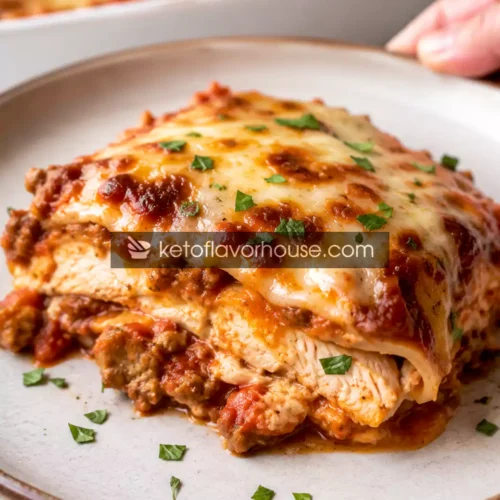
Cheesy Keto Chicken Lasagna Bake Recipe

This cheesy keto chicken lasagna bake delivers all the comforting flavor of classic lasagna without the carbs from pasta noodles. Layered with sliced chicken, rich meat sauce, creamy ricotta, and bubbling mozzarella cheese, it’s hearty, satisfying, and perfect for keto comfort food cravings. Whether for meal prep or family dinner, this easy low-carb casserole is deeply comforting and incredibly filling.
Ingredients
- 1 1/2 pounds sliced deli chicken
- 1 pound ground beef
- 3 cups low-carb marinara sauce
- 1 1/2 cups ricotta cheese
- 3 cups mozzarella cheese
- 1/2 cup parmesan cheese
- 1/2 cup onion
- 4 garlic cloves
- 2 eggs
- 2 tsp Italian seasoning
- Salt and pepper
- 1 tbsp olive oil
Instructions
- Preheat your oven to 375°F and lightly grease a 9x13 baking dish with olive oil or nonstick spray. This helps prevent the cheesy layers from sticking to the sides and makes cleanup much easier later. If your baking dish tends to bubble over with casseroles, you can also place it on a baking sheet before baking.
- Place a large skillet over medium heat and add the olive oil. Once the oil is warm, add the diced onion and cook for about 4–5 minutes, stirring occasionally, until the onion becomes soft, lightly translucent, and slightly golden around the edges. Cooking the onion first helps build a richer flavor base for the entire lasagna bake.
- Add the minced garlic into the skillet and stir continuously for about 1 minute until fragrant. Be careful not to let the garlic brown too much because burnt garlic can make the sauce bitter. The garlic should smell warm and aromatic without turning dark.
- Add the ground beef into the skillet with the onions and garlic. Use a spatula or wooden spoon to break the meat apart into small crumbles as it cooks. Continue cooking until the beef is fully browned with no pink remaining. If there’s excess grease in the pan, carefully drain some of it so the final casserole doesn’t become overly oily while baking.
- Pour the low-carb marinara sauce directly into the skillet with the cooked beef. Add the Italian seasoning, salt, and black pepper, then stir everything together until evenly combined. Allow the sauce to simmer gently for about 10 minutes so the flavors can deepen and the sauce thickens slightly. A slightly thicker sauce helps the lasagna layers stay structured instead of watery.
- In a separate mixing bowl, combine the ricotta cheese, eggs, and parmesan cheese. Stir thoroughly until the mixture becomes smooth, creamy, and fully blended. The eggs help stabilize the ricotta layer while the parmesan adds extra savory flavor and richness throughout the casserole.
- Spread a thin layer of the meat sauce across the bottom of the prepared baking dish. This prevents sticking and creates a flavorful base layer. Arrange slices of deli chicken evenly across the sauce, slightly overlapping them to mimic traditional lasagna noodle layers. Don’t worry if the chicken slices aren’t perfectly even — the layers settle beautifully while baking.
- Spoon portions of the ricotta mixture over the chicken layer and gently spread it out with the back of a spoon or spatula. Top with another layer of meat sauce, then sprinkle a generous handful of shredded mozzarella cheese over the surface. The mozzarella helps create those gooey, cheesy layers everyone loves in lasagna.
- Continue repeating the layers of chicken, ricotta mixture, meat sauce, and mozzarella cheese until all the ingredients are used. Finish the top with an extra generous layer of mozzarella and parmesan cheese so it develops a golden, bubbly crust in the oven. Slightly uneven or rustic layers are completely fine — homemade lasagna always looks more comforting that way.
- Cover the baking dish loosely with aluminum foil and place it into the preheated oven. Bake for about 25 minutes so the layers heat through evenly and the cheese melts completely. Then carefully remove the foil and continue baking for another 10–15 minutes until the top becomes deeply golden, bubbly, and slightly crisp around the edges. If you want extra browning, you can broil it for the final 1–2 minutes while watching carefully.
- Remove the lasagna bake from the oven and allow it to rest for at least 10 minutes before slicing and serving. This resting time helps the layers settle and makes the casserole much easier to cut into clean portions without sliding apart. Serve warm while the cheese is still gooey and melty for the ultimate keto comfort food experience.