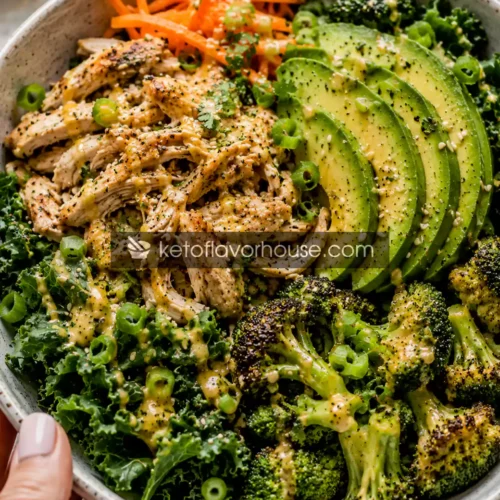
Anti-Inflammatory Chicken Avocado Veggie Bowl Recipe

This Anti-Inflammatory Chicken Avocado Veggie Bowl Recipe is fresh, satisfying, and packed with colorful ingredients that make healthy eating feel comforting and enjoyable. Lean chicken, creamy avocado, vibrant vegetables, and a bright turmeric lime dressing create a balanced high-protein meal that feels energizing without being heavy. It’s perfect for meal prep, healthy lunches, or quick weeknight dinners when you want something nourishing and flavorful. Simple ingredients and bold textures make this bowl one you’ll want to make on repeat.
Ingredients
For the Bowl
- 2 cups cooked shredded chicken
- 4 cups chopped kale or cabbage
- 1 cup shredded carrots
- 1 cup broccoli florets
- ½ cup sliced green onions
- 1 avocado sliced
- 1 tablespoon olive oil
- Salt and black pepper to taste
Optional Add-Ins
- Sesame seeds
- Cooked quinoa or brown rice
- Fresh cilantro
- Red pepper flakes
Anti-Inflammatory Dressing
- 3 tablespoons olive oil
- 1 tablespoon lime juice
- 1 teaspoon garlic herb seasoning
- 1 teaspoon honey
- ½ teaspoon turmeric
- ¼ teaspoon black pepper
Instructions
- Wash all the vegetables thoroughly under cool running water before starting the recipe. Dry everything completely using paper towels or a clean kitchen towel, especially the kale, cabbage, and broccoli. Removing excess moisture is important because wet vegetables tend to steam instead of sauté properly, which can make the bowl watery and reduce the fresh texture. Taking a few extra minutes to dry the vegetables well helps everything cook more evenly and keeps the final bowl vibrant and flavorful.
- Slice the kale or cabbage into bite-sized pieces that are easy to eat with a fork. If using kale, remove the thick stems first since they can be tougher than the leafy parts. Cut the broccoli into small florets so they cook quickly and evenly in the skillet without becoming overly soft. Try to keep the vegetable pieces relatively similar in size for balanced texture and even cooking throughout the bowl.
- In a small bowl, combine the olive oil, fresh lime juice, garlic herb seasoning, honey, turmeric, and black pepper. Whisk everything together thoroughly until the dressing looks smooth and slightly emulsified. The olive oil creates a rich base, while the lime juice adds brightness and freshness. Turmeric brings warm earthy flavor and a beautiful golden color, and the black pepper helps balance the dressing while complementing the turmeric naturally. Taste the dressing and adjust the seasoning if needed by adding a pinch of salt or a little extra lime juice for more brightness.
- Heat olive oil in a large skillet over medium heat. Allow the skillet to warm for a minute or two before adding the vegetables so they sauté properly instead of absorbing excess oil immediately. A properly heated skillet helps create better flavor and texture while lightly caramelizing the vegetables.
- Add the broccoli and kale or cabbage to the skillet first since they require slightly more cooking time than the other ingredients. Stir everything gently so the vegetables coat evenly in the olive oil. Sauté for about 3–4 minutes until the broccoli becomes slightly tender and the greens begin to soften while still keeping their vibrant color. Avoid overcooking at this stage because the vegetables should still have a little texture and freshness instead of becoming mushy.
- Stir the shredded chicken and carrots into the skillet with the vegetables. Continue cooking for another 2–3 minutes until the chicken is fully warmed through and the carrots soften slightly while still keeping a little crunch. Stir occasionally to distribute the heat evenly and prevent sticking. If the skillet seems dry, add a very small drizzle of olive oil or a splash of water to keep everything moist without making the mixture greasy.
- Once everything is heated and lightly sautéed, remove the skillet from the heat and carefully transfer the warm chicken and vegetable mixture into serving bowls. Try to evenly distribute the broccoli, greens, carrots, and chicken so each bowl has balanced texture and flavor in every bite.
- Arrange the sliced avocado over the top of each bowl along with the sliced green onions. The avocado adds creamy richness that balances the warm savory vegetables beautifully, while the green onions bring freshness and a light sharp flavor that brightens the entire dish.
- Drizzle the anti-inflammatory dressing evenly over the bowls just before serving. Start with a moderate amount and add more if desired so the vegetables stay flavorful without becoming overly wet. The dressing should lightly coat the ingredients while adding fresh citrusy flavor and warmth from the turmeric and herbs.
- Sprinkle sesame seeds, fresh cilantro, or red pepper flakes over the top if desired for extra flavor, texture, and color. Sesame seeds add crunch, cilantro adds freshness, and red pepper flakes bring gentle heat that pairs especially well with the creamy avocado and savory chicken.
- Serve the bowls immediately while still warm for the most comforting texture and flavor. If preferred, the bowls can also be enjoyed chilled after refrigeration, making them excellent for meal prep lunches or refreshing high-protein dinners on warmer days.