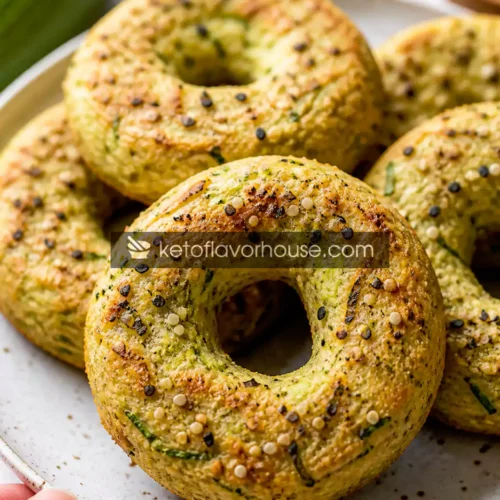
Anti-Inflammatory Low-Carb Zucchini Bagels Recipe

These zucchini bagels are soft, satisfying, and full of clean, nourishing ingredients that support anti-inflammatory eating. They offer the comfort of traditional bagels without the heaviness, making them perfect for light, balanced meals. Easy to make and incredibly versatile, they’re a recipe you’ll keep coming back to whenever you want something warm, healthy, and satisfying.
Ingredients
- Zucchini – 1 cup grated
- Almond flour – 1 ½ cups
- Eggs – 2
- Olive oil – 2 tbsp
- Garlic powder – ½ tsp
- Baking powder – 1 tsp
- Salt – ½ tsp
Instructions
- Start by preheating your oven to 180°C (350°F) so it’s fully heated and ready when your bagels go in. Line a baking tray with parchment paper to prevent sticking and make cleanup easier. If you have it, lightly grease the parchment with a few drops of olive oil to ensure the bagels release easily after baking.
- Wash the zucchini well, then grate it using the fine side of a grater. Once grated, place it in a clean kitchen towel or cheesecloth and squeeze out as much moisture as possible. This step is very important—excess water will make your dough too wet and result in soft, soggy bagels instead of a firm, bakery-style texture.
- In a large mixing bowl, crack the eggs and add the olive oil. Whisk them together until the mixture is smooth, slightly frothy, and fully combined. This creates a strong base that helps bind the dough and gives the bagels structure.
- Add the almond flour, baking powder, garlic powder, and salt into the same bowl. Mix everything gently until you get a thick, slightly sticky batter. Make sure there are no dry pockets of flour left—everything should be evenly combined.
- Now add the drained zucchini into the mixture. Fold it in using a spatula or spoon until it’s evenly distributed throughout the dough. The dough should feel soft and slightly moist but still hold its shape when pressed. If it feels too wet, you can add a tablespoon of almond flour to balance it.
- Divide the dough into equal portions (about 5–6 pieces depending on size). Roll each portion into a ball using your hands, then gently shape it into a ring by poking a hole in the center and widening it slightly. Keep the thickness even so the bagels bake uniformly.
- Place each shaped bagel onto the prepared baking tray, leaving a little space between them. For a better finish, you can lightly brush the tops with olive oil or sprinkle some seeds (like sesame or chia) for added texture and flavor.
- Transfer the tray to the oven and bake for 20–25 minutes, or until the bagels turn golden brown on the outside. Avoid opening the oven too often, as this can affect the rise and texture. You’re looking for a firm outer layer with a soft, cooked interior.
- Once baked, remove the tray from the oven and let the bagels cool for at least 5–10 minutes. This helps them set properly and makes them easier to handle. Serve warm for the best texture, or allow them to cool completely if you plan to store or slice them later.