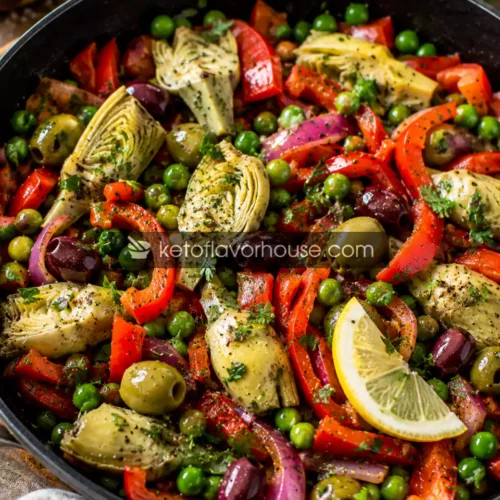
Anti-Inflammatory Mediterranean Vegetable Skillet Recipe

This Anti-Inflammatory Mediterranean Vegetable Skillet is colorful, cozy, bright, and deeply satisfying. Artichokes, olives, peppers, peas, olive oil, and lemon create rich Mediterranean flavor while still feeling fresh and balanced. It’s the kind of healthy comfort food that leaves you feeling nourished instead of heavy. Whether served alone or paired with protein, this skillet makes healthy eating feel genuinely delicious.
Ingredients
- 2 tablespoons olive oil
- 1 can artichoke hearts drained
- 1 cup green peas
- 1 large red bell pepper
- 1/2 cup olives
- 4 garlic cloves
- Juice of 1 lemon
- 1 medium onion
- Salt and pepper to taste
- Fresh herbs for garnish
Instructions
- Begin by washing all of the vegetables thoroughly under cold running water to remove any dirt or residue. Pat everything dry with a clean kitchen towel so the vegetables sauté properly instead of steaming. Chop the onion into small even pieces, slice the bell peppers into thin strips, drain the artichoke hearts well, and roughly chop any fresh herbs you plan to use for garnish. Having everything prepped before cooking makes the process much smoother and helps the vegetables cook evenly.
- Place a large skillet or sauté pan over medium heat and add the olive oil. Allow the oil to warm for about 30 seconds until it looks slightly glossy and fluid across the surface of the pan. Properly heated olive oil helps develop better flavor and gives the vegetables a beautiful light caramelization.
- Add the chopped onion to the skillet and cook for about 4–5 minutes, stirring occasionally. The onions should gradually soften, become slightly translucent, and develop a gentle sweetness as they cook. If the onions start browning too quickly, slightly lower the heat to avoid burning.
- Stir in the minced garlic and cook for about 30–60 seconds until fragrant. Keep the garlic moving around the pan so it doesn’t burn, since garlic can become bitter very quickly. At this stage, the kitchen will start smelling warm, savory, and deeply comforting.
- Add the sliced bell peppers to the skillet and stir well to coat them in the olive oil, onion, and garlic mixture. Cook for another 4–5 minutes, stirring occasionally, until the peppers become slightly tender but still keep a little bite and vibrant color. Avoid overcooking them so the skillet keeps its fresh Mediterranean texture.
- Gently stir in the drained artichoke hearts and green peas. Cook for another 3–4 minutes, allowing the vegetables to warm through and absorb all the flavors in the skillet. The artichokes become rich and savory while the peas add little bursts of sweetness throughout the dish.
- Add the olives along with your seasonings, such as salt, black pepper, oregano, or Italian herbs. Stir everything together carefully so the softer vegetables stay intact. Taste as you go since olives naturally add saltiness to the dish.
- Continue cooking the skillet for another few minutes, stirring occasionally, until the vegetables are fully warmed and lightly caramelized around the edges. You want the vegetables to stay colorful, tender, and slightly firm instead of becoming soft or mushy.
- Remove the skillet from the heat and squeeze fresh lemon juice over the vegetables just before serving. The lemon instantly brightens the flavors and balances the richness of the olive oil and olives beautifully. Finish with freshly chopped parsley, basil, or extra herbs for a fresh Mediterranean touch. Serve warm while the vegetables are still vibrant, juicy, and flavorful.