This post may contains Amazon affiliate and other affiliate links. If you make a purchase through these links, I may earn a small commission at no extra cost to you. Your support helps me continue to provide quality content. I only recommend products I personally trust and believe will add value to your experience. For more details, please visit my Privacy Policy.
Introduction
There are evenings when my body craves vegetables in the most specific way.
Not sad salads. Not steamed vegetables that feel like an obligation. I mean warm, colorful, olive-oil-coated vegetables that fill the kitchen with garlic, lemon, herbs, and that cozy Mediterranean aroma that somehow makes everything feel calmer.
This Anti-Inflammatory Mediterranean Vegetable Skillet was born on one of those nights.
I had spent the entire week eating on the go, grabbing convenience foods, and ignoring the vegetables sitting in my refrigerator drawer. By Friday evening, I felt sluggish, bloated, and completely drained. I didn’t want another heavy takeout meal, but I also didn’t have the energy for anything complicated.
So I started pulling together simple ingredients I already had:
artichokes, olives, peas, red peppers, lemon, olive oil, and garlic.
Nothing fancy.
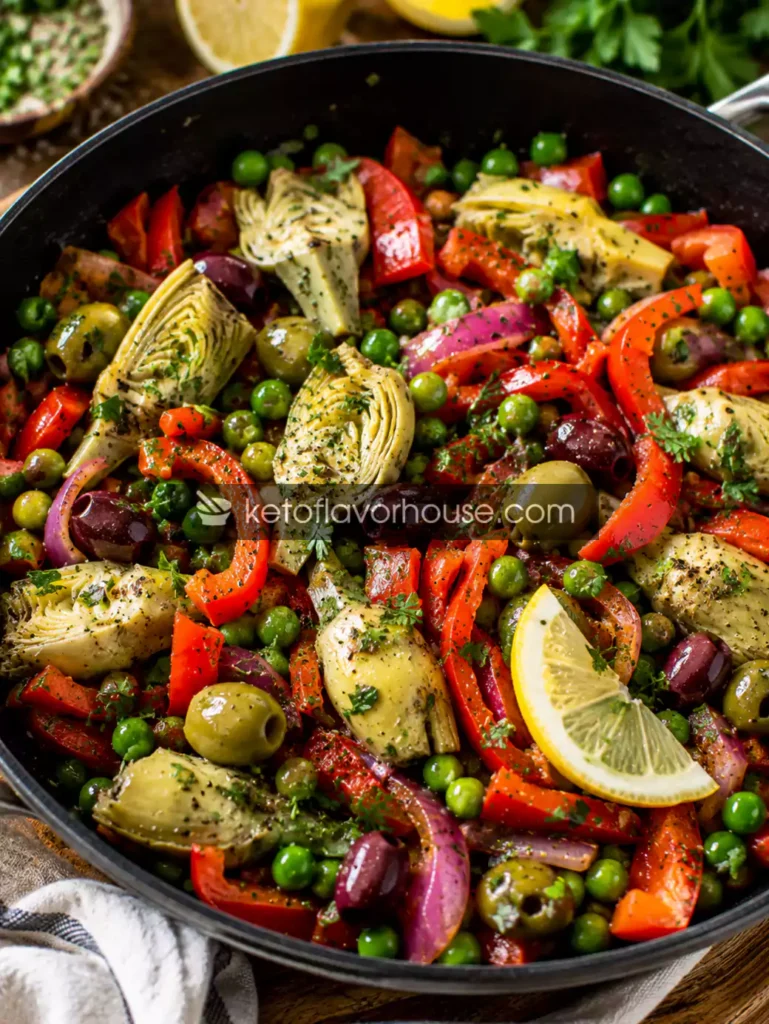
But the moment everything started sizzling together in the skillet, the kitchen smelled incredible — warm olive oil, sweet roasted peppers, salty olives, and bright lemon filling the air. It instantly felt comforting in the kind of way only simple homemade food can.
And honestly, that first bite surprised me.
The vegetables stayed vibrant and slightly crisp instead of mushy. The artichokes added richness, the olives gave salty Mediterranean flavor, and the lemon brightened everything without needing heavy sauces.
Now this Anti-Inflammatory Mediterranean Vegetable Skillet has become one of those recipes I return to constantly.
Sometimes I serve it beside grilled chicken or salmon. Sometimes I spoon it over quinoa or cauliflower rice. And occasionally I eat it straight from the skillet with warm flatbread because it’s genuinely that satisfying.
That’s what I love most about this recipe.
It supports anti-inflammatory eating naturally while still tasting comforting, hearty, and deeply flavorful.
No bland “diet vegetables.” No complicated ingredients.
Just colorful Mediterranean vegetables cooked in a way that makes healthy eating feel warm, satisfying, and genuinely enjoyable.
Whether you’re looking for an easy anti-inflammatory dinner, a healthy Mediterranean skillet recipe, a one-pan vegetable meal, or simply a cozy way to eat more vegetables, this recipe delivers every single time.
💚 Why You’ll Love This Recipe
- 🥬 Loaded with anti-inflammatory Mediterranean ingredients
- ⚡ Feels energizing and nourishing without feeling heavy
- 🍽️ Bright, savory, lemony flavor with satisfying texture
- 👩🍳 Easy one-pan meal perfect for busy weeknights
- 🧡 Warm comforting flavors with fresh vibrant vegetables
- 🥣 Great for meal prep and leftovers
- 🔥 Naturally flavorful without heavy sauces
- 💪 Rich in fiber, nutrients, and plant-based goodness
- 🌿 Gluten-free and Mediterranean diet friendly
- 🧠 Colorful, cozy, and genuinely satisfying to eat
🧠 My Personal Experience
This skillet recipe completely changed how I think about vegetable-heavy meals.
For a long time, I associated healthy vegetable dinners with food that looked beautiful but somehow never felt satisfying enough. Either the vegetables turned soggy, or everything tasted bland unless I drowned it in sauce.
This recipe fixed that.
The trick was realizing vegetables need texture and balance.
The peas stay slightly sweet and tender, the bell peppers soften while keeping a little bite, the olives add salty richness, and the artichokes bring that deep savory Mediterranean flavor that makes the whole skillet feel more substantial.
And the lemon at the end?
That’s what ties everything together.
The first time I squeezed fresh lemon over the hot skillet, the aroma instantly lifted the entire dish. It suddenly tasted brighter, fresher, and somehow lighter without losing comfort.
Now I make this recipe constantly whenever I want something that feels grounding but still healthy.
It’s one of those dinners that leaves you feeling satisfied instead of sluggish afterward, and honestly, that’s exactly the kind of comfort food I want more of these days.
🧰 Required Equipment
Large Skillet
A large skillet gives the vegetables enough room to cook properly instead of steaming.
Cast iron works especially beautifully for caramelization.
Sharp Knife
Important for evenly chopping peppers, artichokes, onions, and herbs.
Uniform pieces cook more evenly.
Cutting Board
Keeps prep organized and efficient.
Wooden Spoon or Spatula
Helps stir vegetables gently without crushing them.
Citrus Juicer
Fresh lemon juice makes a huge difference in flavor.
🥬 Ingredients & Substitutions
Olive Oil — 2 Tablespoons
Olive oil creates richness and helps vegetables caramelize beautifully.
Substitutions:
- Avocado oil
Olive oil provides the most Mediterranean flavor.
Artichoke Hearts — 1 Can (Drained)
Artichokes add savory depth and satisfying texture.
Substitutions:
- Hearts of palm
- Mushrooms
- Roasted zucchini
Green Peas — 1 Cup
Peas add sweetness, color, and soft texture.
Substitutions:
- Edamame
- Green beans
- Chickpeas
Red Bell Pepper — 1 Large
Bell peppers add sweetness and vibrant color.
Substitutions:
- Yellow peppers
- Orange peppers
Olives — 1/2 Cup
Olives create salty Mediterranean richness.
Substitutions:
- Capers
- Sun-dried tomatoes
Garlic — 4 Cloves
Garlic builds savory warmth and aroma.
Substitutions:
- Garlic powder
Fresh garlic works best.
Lemon Juice — Juice of 1 Lemon
Lemon brightens and balances the skillet beautifully.
Substitutions:
- Red wine vinegar
Onion — 1 Medium
Onion creates sweetness and flavor foundation.
Substitutions:
- Shallots
- Red onion
Herbs
Fresh parsley, oregano, or basil add freshness.
👩🍳 How to Make Anti-Inflammatory Mediterranean Vegetable Skillet
Step 1: Prepare the Vegetables
Wash and chop all vegetables before cooking.
Cut peppers into strips, slice onions evenly, and drain the artichokes thoroughly.
Having everything prepped beforehand makes cooking much smoother.
Step 2: Heat the Olive Oil
Heat olive oil in a large skillet over medium heat.
Allow it to warm fully before adding vegetables.
Warm oil helps vegetables caramelize instead of steaming.
Step 3: Cook the Onion and Garlic
Add onion first and cook until softened and slightly translucent.
Then stir in garlic and cook briefly until fragrant.
The smell at this stage already starts becoming warm and deeply comforting.
Step 4: Add Bell Peppers
Add sliced bell peppers and cook for several minutes.
You want them:
- Tender
- Slightly caramelized
- Still vibrant
Avoid overcooking until mushy.
Step 5: Add Artichokes and Peas
Stir in the artichokes and peas gently.
The artichokes absorb the olive oil and garlic flavor beautifully while the peas stay bright and slightly sweet.
Step 6: Add Olives and Seasoning
Add olives, black pepper, oregano, and salt carefully.
Because olives already contain saltiness, season gradually.
Step 7: Finish with Lemon
Turn off the heat and squeeze fresh lemon juice over the skillet.
This final step completely brightens the dish.
Step 8: Garnish and Serve
Top with fresh herbs before serving.
Serve warm while vegetables still feel vibrant and fresh.
⚠️ Common Mistakes to Avoid
Overcrowding the Pan
Too many vegetables cause steaming instead of caramelization.
Overcooking the Vegetables
Vegetables should stay vibrant and slightly firm.
Adding Lemon Too Early
Fresh lemon flavor dulls when overcooked.
Add at the end.
Oversalting
Olives already add saltiness.
Taste first.
Using Low Heat
Medium heat creates better flavor and texture.
🔥 Pro Tips for Best Results
- Use fresh lemon juice instead of bottled
- Let vegetables caramelize slightly before stirring
- Add fresh herbs right before serving
- Use high-quality olive oil
- Don’t overcook peas
- Drain artichokes well before adding
- Finish with cracked black pepper for extra depth
🧬 Anti-Inflammatory Benefits of Mediterranean Vegetables
This Anti-Inflammatory Mediterranean Vegetable Skillet combines colorful vegetables and Mediterranean ingredients that naturally fit into wellness-focused eating patterns.
Artichokes contribute fiber and savory richness while making the dish feel more satisfying.
Bell peppers add brightness, sweetness, and vibrant color.
Olives and olive oil create richness and deep Mediterranean flavor while helping the vegetables feel comforting and balanced.
Green peas contribute plant-based protein and natural sweetness that softens the savory elements beautifully.
Lemon and herbs brighten the entire skillet and keep the dish feeling fresh instead of heavy.
Together, these ingredients create a colorful healthy dinner that feels comforting, nourishing, and deeply flavorful.
🌿 Variations You Can Try
Higher-Protein Version
Add:
- Grilled chicken
- Salmon
- Shrimp
- Chickpeas
Dairy-Free Version
Recipe is naturally dairy free.
Lower-Carb Version
Reduce peas slightly and add:
- Zucchini
- Mushrooms
- Cauliflower
Spicy Mediterranean Version
Add:
- Chili flakes
- Harissa
- Cayenne
Grain Bowl Version
Serve over:
- Quinoa
- Cauliflower rice
- Brown rice
🍽️ Tips for This Recipe
- Chop vegetables evenly for consistent cooking
- Don’t skip the fresh herbs
- Use medium heat for best caramelization
- Add lemon gradually and taste
- Store leftovers separately from grains for best texture
- Reheat gently to preserve vegetables
➕ Optional Additions
- Feta cheese
- Pumpkin seeds
- Hemp hearts
- Fresh basil
- Avocado slices
- Chickpeas
- Red pepper flakes
- Sun-dried tomatoes
- Toasted pine nuts
- Hummus drizzle
🍴 Serving Ideas
This skillet pairs beautifully with:
- Grilled salmon
- Chicken breast
- Mediterranean bowls
- Warm flatbread
- Quinoa
- Roasted potatoes
It also works wonderfully as:
- Healthy lunch
- One-pan dinner
- Meal prep bowl
- Mediterranean side dish
- Vegetable wrap filling
On KetoFlavorHouse.com, this recipe fits perfectly alongside anti-inflammatory meals, Mediterranean recipes, healthy comfort-food dinners, and colorful vegetable-based meals.
🧊 Storage Recommendations
Refrigerator
Store in airtight containers for up to 4 days.
Freezer
Freezing is possible but vegetables soften slightly after reheating.
Reheating
Warm gently in skillet for best texture.
Avoid microwaving too long.
❓ Frequently Asked Questions
What makes this skillet anti-inflammatory?
Ingredients like olive oil, artichokes, peppers, peas, lemon, and olives naturally fit into anti-inflammatory eating patterns.
Can I add protein?
Absolutely. Chicken, shrimp, salmon, or chickpeas work beautifully.
Is this recipe meal prep friendly?
Yes. It reheats very well.
Can I use frozen peas?
Yes. Frozen peas work perfectly.
What vegetables work best here?
Bell peppers, artichokes, peas, zucchini, spinach, and onions all work wonderfully.
Is this Mediterranean diet friendly?
Yes. It uses classic Mediterranean ingredients like olive oil, vegetables, olives, and lemon.
Can I make this vegan?
Yes. The recipe is naturally vegan as written.
🧮 Nutritional Breakdown (Per Serving)
Approximate values per serving:
- Calories: 220
- Protein: 6g
- Fat: 12g
- Total Carbs: 22g
- Fiber: 8g
- Net Carbs: 14g
📌 Recipe Snapshot
Prep Time: 15 minutes
Cook Time: 20 minutes
Total Time: 35 minutes
Course: Dinner / Side Dish
Cuisine: Mediterranean
Servings: 4
Calories: 220
Anti-Inflammatory Mediterranean Vegetable Skillet Recipe

Ingredients
- 2 tablespoons olive oil
- 1 can artichoke hearts drained
- 1 cup green peas
- 1 large red bell pepper
- 1/2 cup olives
- 4 garlic cloves
- Juice of 1 lemon
- 1 medium onion
- Salt and pepper to taste
- Fresh herbs for garnish
Instructions
- Begin by washing all of the vegetables thoroughly under cold running water to remove any dirt or residue. Pat everything dry with a clean kitchen towel so the vegetables sauté properly instead of steaming. Chop the onion into small even pieces, slice the bell peppers into thin strips, drain the artichoke hearts well, and roughly chop any fresh herbs you plan to use for garnish. Having everything prepped before cooking makes the process much smoother and helps the vegetables cook evenly.
- Place a large skillet or sauté pan over medium heat and add the olive oil. Allow the oil to warm for about 30 seconds until it looks slightly glossy and fluid across the surface of the pan. Properly heated olive oil helps develop better flavor and gives the vegetables a beautiful light caramelization.
- Add the chopped onion to the skillet and cook for about 4–5 minutes, stirring occasionally. The onions should gradually soften, become slightly translucent, and develop a gentle sweetness as they cook. If the onions start browning too quickly, slightly lower the heat to avoid burning.
- Stir in the minced garlic and cook for about 30–60 seconds until fragrant. Keep the garlic moving around the pan so it doesn’t burn, since garlic can become bitter very quickly. At this stage, the kitchen will start smelling warm, savory, and deeply comforting.
- Add the sliced bell peppers to the skillet and stir well to coat them in the olive oil, onion, and garlic mixture. Cook for another 4–5 minutes, stirring occasionally, until the peppers become slightly tender but still keep a little bite and vibrant color. Avoid overcooking them so the skillet keeps its fresh Mediterranean texture.
- Gently stir in the drained artichoke hearts and green peas. Cook for another 3–4 minutes, allowing the vegetables to warm through and absorb all the flavors in the skillet. The artichokes become rich and savory while the peas add little bursts of sweetness throughout the dish.
- Add the olives along with your seasonings, such as salt, black pepper, oregano, or Italian herbs. Stir everything together carefully so the softer vegetables stay intact. Taste as you go since olives naturally add saltiness to the dish.
- Continue cooking the skillet for another few minutes, stirring occasionally, until the vegetables are fully warmed and lightly caramelized around the edges. You want the vegetables to stay colorful, tender, and slightly firm instead of becoming soft or mushy.
- Remove the skillet from the heat and squeeze fresh lemon juice over the vegetables just before serving. The lemon instantly brightens the flavors and balances the richness of the olive oil and olives beautifully. Finish with freshly chopped parsley, basil, or extra herbs for a fresh Mediterranean touch. Serve warm while the vegetables are still vibrant, juicy, and flavorful.