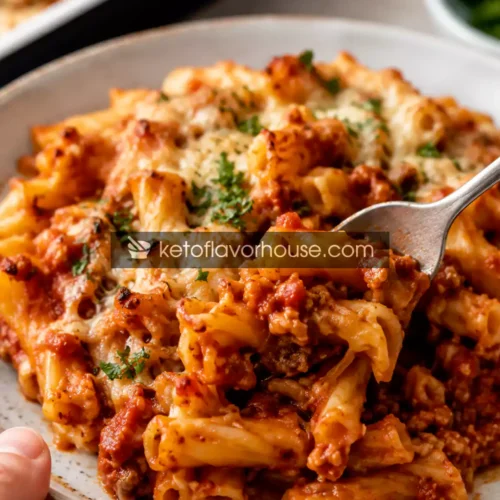
High-Protein Vegan Pasta Bake for Weight Loss Recipe

This High-Protein Vegan Pasta Bake for Weight Loss is hearty, comforting, budget-friendly, and packed with plant-based protein from soy granules and pasta. The rich tomato sauce, savory seasonings, and baked texture create a satisfying comfort-food meal that still supports weight-loss and fitness goals. It’s perfect for meal prep, busy weeknights, or anyone looking for a filling vegan dinner that actually keeps them full. Once you try this protein-packed pasta bake, it quickly becomes one of those dependable recipes you keep making on repeat.
Ingredients
- 250 g dry pasta
- 125 g soy granules TVP
- 500 ml vegetable broth
- 2 cups tomato sauce
- 1 onion
- 3 garlic cloves
- 1 tablespoon olive oil
- Salt
- Black pepper
- Smoked paprika
- Italian seasoning
Instructions
- Preheat your oven to 375°F (190°C) and lightly grease a medium baking dish or casserole tray with cooking spray or a thin layer of olive oil. This helps prevent the pasta from sticking to the dish while also making cleanup much easier later. If you want extra crispy edges, use a metal or ceramic baking dish instead of glass.
- Bring a large pot of salted water to a boil over high heat. Once boiling, add the pasta and cook until slightly under al dente according to the package instructions. The pasta should still have a little firmness in the center because it will continue cooking while baking in the oven. Overcooking at this stage can lead to mushy pasta later. Drain the pasta well and set it aside while preparing the sauce.
- Place the dry soy granules into a large mixing bowl and carefully pour the hot vegetable broth over the top. Stir briefly so all the granules absorb moisture evenly, then let the mixture sit for about 10 minutes. During this time, the soy granules will soften, expand, and become fluffy with a meat-like texture. If any excess liquid remains after soaking, gently drain it off before cooking.
- While the soy granules hydrate, heat the olive oil in a large skillet over medium heat. Add the diced onion and cook for about 5–6 minutes, stirring occasionally, until the onion becomes soft, translucent, and slightly golden around the edges. Cooking the onion slowly helps develop deeper sweetness and richer flavor throughout the final pasta bake.
- Stir the minced garlic into the skillet with the onions and cook for another 30–60 seconds until fragrant. Be careful not to let the garlic burn because burnt garlic can create bitterness in the sauce. The kitchen should smell rich, savory, and aromatic at this stage.
- Add the fully hydrated soy granules into the skillet and season generously with salt, black pepper, smoked paprika, and Italian seasoning. Stir thoroughly so the granules absorb all the spices and aromatics evenly. Allow the soy mixture to cook for a few minutes so the seasonings deepen and the texture becomes slightly firmer and more savory.
- Pour the tomato sauce into the skillet and stir everything together until fully combined. Reduce the heat slightly and let the mixture simmer for about 5–7 minutes, stirring occasionally. This simmering step helps the flavors blend together while slightly thickening the sauce. If the mixture becomes too thick, add a small splash of water or broth to loosen it.
- Add the cooked pasta into the skillet and gently fold everything together until every piece of pasta is evenly coated with the rich tomato-soy sauce. Take your time mixing so the sauce distributes evenly throughout the dish without breaking the pasta apart.
- Transfer the pasta mixture into the prepared baking dish and spread it evenly using a spoon or spatula. For extra flavor, sprinkle nutritional yeast or vegan cheese evenly across the top before baking. This creates a more comforting pasta-bake finish with a lightly golden surface after baking.
- Place the baking dish into the preheated oven and bake uncovered for about 20 minutes, or until the pasta is bubbling around the edges and the top becomes slightly golden and lightly crisp in spots. Remove the pasta bake from the oven and allow it to rest for 5–10 minutes before serving. Resting helps the sauce thicken slightly and allows the flavors to settle, creating a richer and more cohesive final texture.