This post may contains Amazon affiliate and other affiliate links. If you make a purchase through these links, I may earn a small commission at no extra cost to you. Your support helps me continue to provide quality content. I only recommend products I personally trust and believe will add value to your experience. For more details, please visit my Privacy Policy.
There are certain flavor combinations that never go out of style, and chocolate with peanut butter is undoubtedly one of them. Rich, creamy, indulgent, and deeply satisfying, it’s a pairing that feels more like dessert than breakfast. That’s exactly why this 35g Protein Chocolate Peanut Butter Smoothie Bowl has earned a permanent place in my breakfast rotation. It delivers everything I crave in a comforting treat while supporting my high-protein nutrition goals.
The first time I made this 35g Protein Chocolate Peanut Butter Smoothie Bowl, I was searching for a breakfast that could satisfy my sweet tooth without derailing my healthy eating habits. I wanted something refreshing enough for busy mornings, substantial enough to keep me full until lunch, and packed with enough protein to support muscle recovery after workouts. After a little experimentation, this smoothie bowl quickly became one of my favorite breakfast solutions.
The combination of chocolate protein powder, creamy Greek yogurt, frozen banana, natural peanut butter, and cocoa powder creates a thick, velvety smoothie base that tastes remarkably similar to a chocolate peanut butter milkshake. Chia seeds add fiber and healthy fats, while crunchy peanuts and cacao nibs provide texture that transforms a simple smoothie into a satisfying breakfast experience.
High-protein breakfasts have become increasingly popular because they may help improve satiety, support muscle maintenance, stabilize energy levels, and reduce cravings later in the day. Whether your goals include supporting an active lifestyle, maintaining lean muscle mass, managing your appetite, or simply creating more balanced meals, starting your morning with adequate protein can make a significant difference.
What makes this smoothie bowl especially appealing is its ability to feel indulgent while still being nutrient-dense. It proves that healthy eating doesn’t require sacrificing flavor or enjoyment. Sometimes the best recipes are the ones that nourish both your body and your love of delicious food.
If you’ve been searching for a breakfast that combines the comfort of dessert with the nutrition of a balanced meal, this 35g Protein Chocolate Peanut Butter Smoothie Bowl deserves a spot in your weekly breakfast routine.
Why You’ll Love This Recipe
- 🍫 Delivers approximately 35 grams of protein per serving
- 🥜 Combines the classic flavors of chocolate and peanut butter
- ⏰ Ready in less than 10 minutes
- 💪 Supports muscle recovery and active lifestyles
- ❤️ Keeps you full and satisfied for hours
- 🌱 Provides fiber and omega-3 fats from chia seeds
- 🍌 Naturally sweetened with frozen banana
- 🥣 Thick and creamy enough to eat with a spoon
- 👨👩👧 Family-friendly and easy to customize
- 😋 Tastes like dessert while supporting your nutrition goals
My Personal Experience with This Recipe
I’ve always loved chocolate and peanut butter together.
Growing up, anything featuring this combination immediately caught my attention. Peanut butter cups, chocolate peanut butter ice cream, peanut butter brownies—they all felt like the ultimate comfort foods. As I became more intentional about my nutrition, I worried that enjoying these flavors regularly might become difficult.
Fortunately, recipes like this smoothie bowl proved otherwise.
I first created this recipe after an early morning workout when I wanted something cool, refreshing, and satisfying. Traditional smoothies often left me wanting something more substantial, while heavier breakfasts didn’t always appeal to me after exercise.
The first spoonful completely exceeded my expectations.
The chocolate flavor was rich without being overly sweet. The peanut butter added creaminess and depth, while the frozen banana contributed natural sweetness and a perfectly thick consistency. The crunch from the peanuts and cacao nibs transformed the entire experience into something that felt genuinely indulgent.
Even better, I stayed full and energized for hours afterward.
Since then, this smoothie bowl has become one of my favorite reminders that healthy eating doesn’t have to feel restrictive. Sometimes, the most sustainable habits are built around foods you genuinely look forward to eating.
Why High-Protein Breakfasts Matter
Protein serves many important functions within the body, including:
- Supporting muscle growth and repair
- Contributing to hormone production
- Supporting immune system function
- Promoting satiety and appetite regulation
- Helping maintain lean muscle mass
Unfortunately, many traditional breakfast options are relatively low in protein while being rich in refined carbohydrates. Although carbohydrates provide valuable energy, pairing them with adequate protein can significantly improve fullness and help support more stable energy levels throughout the morning.
Research from organizations such as the Academy of Nutrition and Dietetics suggests that distributing protein intake throughout the day may support muscle protein synthesis and overall health. Consuming approximately 25–35 grams of protein at breakfast may be particularly beneficial for physically active individuals and those pursuing body composition goals.
Potential benefits of high-protein breakfasts include:
- Improved feelings of fullness and satisfaction
- Reduced hunger and cravings later in the day
- Support for muscle recovery following exercise
- Enhanced preservation of lean muscle mass
- More stable blood sugar and energy levels
- Greater consistency with healthy eating habits
This Chocolate Peanut Butter Smoothie Bowl was intentionally designed to provide approximately 35 grams of protein while also delivering fiber, healthy fats, and essential nutrients.
Required Equipment
High-Speed Blender
A powerful blender is essential for achieving the thick, smooth consistency that makes smoothie bowls so satisfying.
I personally prefer using a high-speed blender because it easily handles frozen fruit and creates an ultra-creamy texture.
Alternative: A standard blender or food processor can work, although additional blending time may be needed.
Measuring Cups and Spoons
Accurate measurements help maintain consistency in flavor and nutritional content.
They’re especially useful when portioning peanut butter, almond milk, chia seeds, and cocoa powder.
Alternative: Once familiar with the recipe, you can adjust ingredients according to preference.
Serving Bowl
A medium-sized bowl provides enough space for both the smoothie base and toppings.
I prefer wider bowls because they allow toppings to be distributed more evenly.
Alternative: Any cereal bowl or meal prep container works well.
Silicone Spatula
A spatula helps transfer every bit of the thick smoothie mixture from the blender into the bowl.
This is especially helpful since smoothie bowls are intentionally thicker than traditional smoothies.
Measuring Scoop
Using the scoop included with your protein powder ensures accurate protein measurements.
Consistency is especially important when preparing high-protein recipes regularly.
Ingredients & Substitutions
1 Scoop Chocolate Protein Powder
Protein powder provides the majority of the protein content in this recipe.
Nutritional Role: Supports muscle recovery, maintenance, and satiety.
Why It’s Great: Adds rich chocolate flavor while significantly boosting protein.
Substitutions:
- Whey protein isolate
- Casein protein powder
- Plant-based chocolate protein powder
½ Frozen Banana
Frozen banana contributes sweetness and creaminess.
Nutritional Role: Provides potassium, carbohydrates, and natural sugars.
Why It’s Great: Creates the thick texture that defines smoothie bowls.
Substitutions:
- Frozen cauliflower (lower sugar option)
- Frozen mango
- Frozen avocado
½ Cup Plain Greek Yogurt
Greek yogurt enhances both creaminess and protein content.
Nutritional Role: Rich in complete protein, calcium, and probiotics.
Substitutions:
- Skyr yogurt
- Blended cottage cheese
- High-protein dairy-free yogurt
½ Cup Unsweetened Almond Milk
Almond milk provides liquid needed for blending.
Nutritional Role: Keeps calories moderate while supporting texture.
Substitutions:
- Dairy milk
- Soy milk
- Oat milk
- Coconut milk beverage
1 Tablespoon Natural Peanut Butter
Peanut butter adds richness and healthy fats.
Nutritional Role: Provides monounsaturated fats, protein, and vitamin E.
Why It’s Great: Complements the chocolate flavor beautifully.
Substitutions:
- Almond butter
- Cashew butter
- Sunflower seed butter
1 Teaspoon Unsweetened Cocoa Powder
Cocoa powder intensifies the chocolate flavor.
Nutritional Role: Contains antioxidant compounds called flavonoids.
Substitutions:
- Dutch-process cocoa powder
- Cacao powder
1 Tablespoon Chia Seeds
Chia seeds provide fiber and healthy fats.
Nutritional Role: Rich in omega-3 fatty acids and dietary fiber.
Substitutions:
- Ground flaxseed
- Hemp seeds
Toppings: ½ Tablespoon Chopped Peanuts
Peanuts add crunch and additional flavor.
Nutritional Role: Provide healthy fats and a small amount of protein.
Substitutions:
- Almonds
- Walnuts
- Pumpkin seeds
Toppings: 1 Teaspoon Cacao Nibs
Cacao nibs contribute rich chocolate flavor and texture.
Nutritional Role: Provide antioxidants and minerals.
Substitutions:
- Dark chocolate chips
- Additional chopped nuts
How to Make 35g Protein Chocolate Peanut Butter Smoothie Bowl
Step 1: Add Ingredients to the Blender
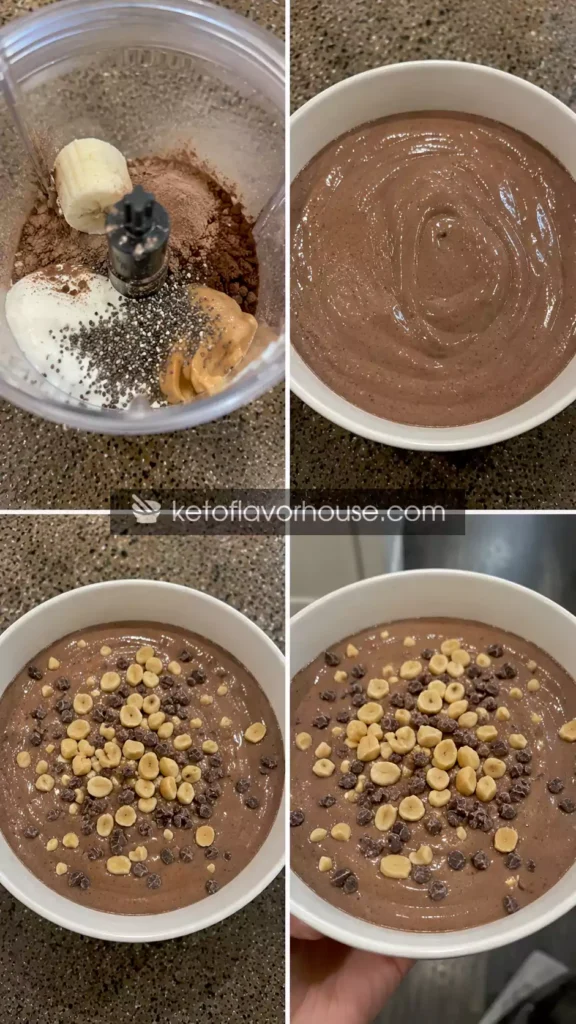
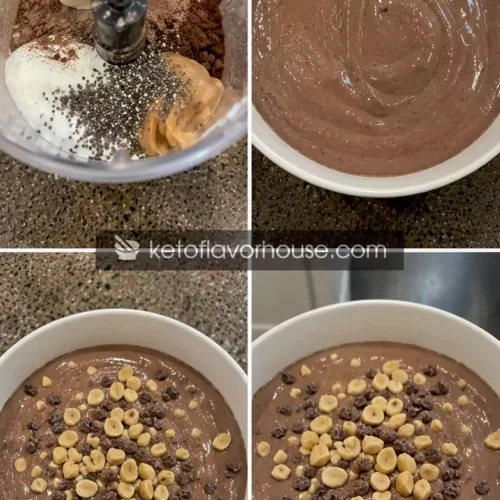
Place the chocolate protein powder, frozen banana, Greek yogurt, almond milk, peanut butter, cocoa powder, and chia seeds into a high-speed blender.
Mini Tip: Add the liquid ingredients first to help the blender operate more efficiently.
Step 2: Blend Until Smooth
Blend on high speed until the mixture becomes thick, smooth, and creamy.
Pause occasionally to scrape down the sides if necessary.
Mini Tip: Add almond milk one tablespoon at a time if the mixture is too thick to blend.
Step 3: Transfer to a Bowl
Using a spatula, transfer the smoothie mixture into a serving bowl.
Spread evenly to create a smooth surface for toppings.
Mini Tip: The consistency should be thick enough to eat with a spoon.
Step 4: Add Toppings
Sprinkle the chopped peanuts and cacao nibs evenly across the top.
These toppings provide texture and enhance the chocolate peanut butter flavor.
Mini Tip: Arrange toppings neatly for a visually appealing presentation.
Step 5: Serve Immediately
Enjoy the smoothie bowl immediately after preparation.
Mini Tip: Smoothie bowls are best consumed fresh before the texture changes.
Common Mistakes to Avoid
Adding Too Much Liquid
Excess liquid creates a drinkable smoothie rather than a thick bowl.
Fix: Add almond milk gradually.
Using Fresh Instead of Frozen Banana
Fresh bananas won’t provide the same thick consistency.
Fix: Freeze banana slices beforehand.
Overblending
Excessive blending can warm the mixture.
Fix: Blend only until smooth.
Skipping Toppings
Texture plays an important role in smoothie bowl satisfaction.
Fix: Include crunchy toppings whenever possible.
Using Sweetened Yogurt
Sweetened yogurts may contribute unnecessary added sugars.
Fix: Choose plain Greek yogurt.
Pro Tips for Best Results
- Freeze banana slices in advance for convenience.
- Use high-quality chocolate protein powder.
- Blend Greek yogurt and banana first if needed.
- Add liquid gradually to control consistency.
- Serve immediately after preparation.
- Experiment with different toppings.
- Keep frozen bananas stocked for easy breakfasts.
High-Protein Nutrition & Strategy
This smoothie bowl demonstrates how indulgent flavors can coexist with balanced nutrition.
The combination of protein powder and Greek yogurt provides approximately 35 grams of complete protein, supporting muscle recovery and prolonged satiety. Chia seeds contribute fiber and omega-3 fatty acids that further enhance fullness and nutritional quality.
The banana provides carbohydrates that support energy needs and workout recovery, while peanut butter contributes healthy fats that help slow digestion and improve satisfaction.
For active individuals, this smoothie bowl serves as an excellent post-workout breakfast. For those focused on managing hunger throughout the day, the combination of protein, fiber, and healthy fats can support appetite control and sustained energy.
Most importantly, this recipe proves that healthy eating doesn’t have to feel restrictive. Nutritious breakfasts can be delicious, satisfying, and something you genuinely look forward to enjoying.
Variations You Can Try
One of the reasons this 35g Protein Chocolate Peanut Butter Smoothie Bowl has become a regular part of my breakfast routine is its flexibility. Once you master the basic recipe, you can easily create new flavor combinations while maintaining the high-protein benefits that make this bowl so satisfying.
Mocha Chocolate Protein Smoothie Bowl
Add ½ teaspoon of instant espresso powder to the blender mixture.
How it affects nutrition: Minimal nutritional changes while adding a rich coffee flavor.
Best For: Coffee lovers who want a morning energy boost.
Chocolate Berry Smoothie Bowl
Replace the frozen banana with ½ cup frozen mixed berries.
How it affects nutrition: Slightly lowers sugar while increasing antioxidant content.
Best For: Those who enjoy fruity chocolate combinations.
Double Peanut Butter Bowl
Drizzle an extra teaspoon of natural peanut butter on top before serving.
How it affects nutrition: Increases healthy fats and calories while enhancing satiety.
Best For: Active individuals with higher energy needs.
Mint Chocolate Smoothie Bowl
Add ¼ teaspoon peppermint extract to the blender.
How it affects nutrition: Minimal changes with a refreshing flavor twist.
Best For: Fans of mint chocolate desserts.
Extra Protein Power Bowl
Add ¼ cup blended cottage cheese to the smoothie base.
How it affects nutrition: Boosts total protein to approximately 40–42 grams per serving.
Best For: Athletes and individuals aiming to maximize protein intake.
Tips for This Recipe
These simple strategies can help you achieve the perfect smoothie bowl consistency every time.
- Freeze banana slices ahead of time for easier preparation.
- Start with less almond milk and add more only if needed.
- Use a high-quality chocolate protein powder you genuinely enjoy.
- Scrape down the blender sides as needed for an even mixture.
- Chill your serving bowl beforehand to keep the smoothie colder longer.
- Add toppings immediately before serving to maintain crunch.
- Enjoy the smoothie bowl fresh for the best texture and flavor.
Optional Additions
If you’d like to customize your smoothie bowl even further, these nutritious add-ins work beautifully.
Hemp Seeds
Add 1 tablespoon of hemp seeds.
Benefits:
- Provides complete plant-based protein
- Rich in omega-3 and omega-6 fatty acids
- Supports muscle recovery
Protein Boost: Approximately 3 grams.
Ground Flaxseed
Add 1 tablespoon to the blender.
Benefits:
- Increases fiber intake
- Supports digestive health
- Provides plant-based omega-3 fats
Collagen Peptides
Blend in 1 scoop of collagen peptides.
Benefits:
- Supports skin, hair, and joint health
- Dissolves easily into smoothies
Protein Boost: Approximately 10 grams.
Dark Chocolate Chips
Sprinkle a few mini dark chocolate chips on top.
Benefits:
- Adds indulgence
- Provides antioxidant compounds
Sliced Banana
Add extra banana slices as a topping.
Benefits:
- Enhances natural sweetness
- Provides additional potassium
Serving Ideas
This smoothie bowl is satisfying on its own but pairs well with other nutritious foods.
Enjoy After Workouts
Consume within an hour after exercise.
Perfect For: Supporting muscle recovery and replenishing energy stores.
Pair with Fresh Fruit
Serve with berries or orange slices.
Perfect For: Increasing vitamin and antioxidant intake.
Enjoy as a Weekend Breakfast
Take time to add extra toppings and enjoy slowly.
Perfect For: Relaxing mornings at home.
Serve as a Healthy Dessert
Enjoy this smoothie bowl as a nutrient-dense dessert alternative.
Perfect For: Satisfying sweet cravings mindfully.
Create a Smoothie Bowl Bar
Offer different toppings for family members to customize.
Perfect For: Family breakfasts and brunches.
Storage Recommendations
Smoothie bowls are best enjoyed immediately after preparation, but some components can be prepared in advance.
Refrigerator Storage
The prepared smoothie bowl may be stored in an airtight container.
Storage Time: Up to 24 hours.
The texture may soften slightly over time.
Freezer Storage
Freeze the smoothie base without toppings.
Storage Time: Up to 1 month.
Allow to thaw slightly before serving.
Meal Prep Tips
Pre-portion frozen banana slices into freezer bags.
Measure dry ingredients such as chia seeds and cocoa powder ahead of time.
Best Practice
For optimal texture, prepare and enjoy the smoothie bowl fresh.
Frequently Asked Questions (FAQ)
Can I use plant-based protein powder?
Absolutely. Plant-based chocolate protein powders work very well in this recipe and maintain a similar protein content.
Can I make this smoothie bowl dairy-free?
Yes. Use dairy-free Greek-style yogurt and ensure your protein powder is dairy-free.
Is this smoothie bowl good for weight loss?
It can be. The combination of protein, fiber, and healthy fats promotes fullness, which may help manage hunger throughout the day.
Can I prepare this smoothie bowl ahead of time?
It’s best enjoyed immediately, although the smoothie base can be refrigerated for up to 24 hours.
Why is my smoothie bowl too thin?
Too much liquid was likely added during blending. Start with less almond milk and increase gradually as needed.
Can I use fresh bananas instead of frozen bananas?
Frozen bananas are strongly recommended because they provide the thick consistency that defines a smoothie bowl.
Is this recipe suitable after workouts?
Yes. The 35 grams of protein support muscle recovery, while the carbohydrates help replenish energy stores.
Nutritional Breakdown (Per Serving)
- Calories: 420
- Protein: 35g
- Fat: 16g
- Total Carbohydrates: 32g
- Fiber: 8g
- Net Carbohydrates: 24g
- Sugar: 15g
- Sodium: 230mg
Nutrition values are estimates and may vary depending on ingredient brands used.
📌 Recipe Snapshot
Prep Time: 10 minutes
Cook Time: 0 minutes
Total Time: 10 minutes
Course: Breakfast
Cuisine: American
Servings: 1 serving
Calories: 420 calories
Protein: 35 grams
35g Protein Chocolate Peanut Butter Smoothie Bowl Recipe

Ingredients
- 1 scoop chocolate protein powder
- ½ frozen banana
- ½ cup plain Greek yogurt
- ½ cup unsweetened almond milk
- 1 tablespoon natural peanut butter
- 1 teaspoon unsweetened cocoa powder
- 1 tablespoon chia seeds
Toppings
- ½ tablespoon chopped peanuts
- 1 teaspoon cacao nibs
Instructions
- Add the chocolate protein powder, frozen banana, plain Greek yogurt, unsweetened almond milk, natural peanut butter, unsweetened cocoa powder, and chia seeds to a high-speed blender. Adding the liquid ingredients first can help the blender process the mixture more efficiently.
- Blend on high speed for 45–60 seconds until the mixture becomes thick, smooth, and creamy. If necessary, stop and scrape down the sides of the blender to ensure all ingredients are fully incorporated.
- Check the consistency of the smoothie bowl. If it is too thick for your blender to process properly, add almond milk one tablespoon at a time until you achieve a thick but spoonable texture. Avoid adding too much liquid, as smoothie bowls should remain substantially thicker than traditional smoothies.
- Once blended, use a silicone spatula to transfer the smoothie mixture into a serving bowl. Spread the surface evenly to create a smooth base for the toppings.
- Sprinkle the chopped peanuts evenly across the top of the smoothie bowl. The peanuts add crunch, healthy fats, and additional flavor that complements the peanut butter beautifully.
- Scatter the cacao nibs over the bowl to provide rich chocolate flavor and a satisfying texture contrast. Arrange the toppings evenly so every spoonful includes a balance of flavors.
- Serve immediately while the smoothie bowl is cold and thick. Enjoy this protein-packed breakfast as a delicious way to support your energy levels, muscle recovery, and overall nutrition goals.