This post may contains Amazon affiliate and other affiliate links. If you make a purchase through these links, I may earn a small commission at no extra cost to you. Your support helps me continue to provide quality content. I only recommend products I personally trust and believe will add value to your experience. For more details, please visit my Privacy Policy.
There’s a reason more people are becoming interested in anti-inflammatory eating. Many of us have experienced periods where we constantly feel tired, bloated, sluggish, achy, or mentally foggy without fully understanding why. While stress, poor sleep, and lifestyle habits all play a role, the foods we eat every day can significantly influence how our bodies feel and function.
Inflammation itself is not necessarily bad. In fact, it’s one of the body’s most important natural defense systems. Acute inflammation helps the body heal from injuries, infections, and harmful invaders. The problem begins when inflammation becomes chronic and low-grade over long periods of time. Chronic inflammation has been associated with conditions such as heart disease, obesity, diabetes, arthritis, digestive disorders, and even cognitive decline.
The encouraging part is that food can become one of the most powerful tools for supporting overall wellness naturally. A diet rich in colorful vegetables, healthy fats, antioxidant-rich fruits, herbs, spices, and nutrient-dense whole foods may help support the body’s natural inflammatory balance while also improving energy, digestion, heart health, and daily well-being.
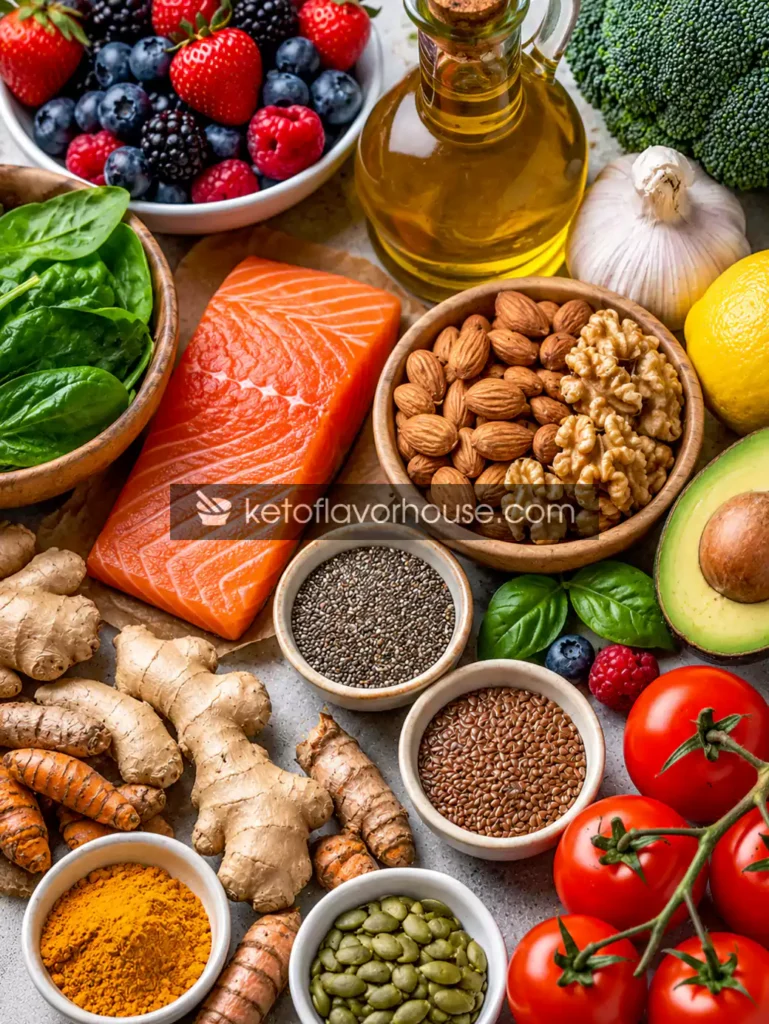
That’s why anti-inflammatory foods have become such a major focus in modern wellness nutrition. These foods are not restrictive or overly complicated. In many cases, they are simple ingredients that have been part of traditional diets for centuries — olive oil, berries, leafy greens, fish, nuts, turmeric, garlic, ginger, and avocados.
The goal of an anti-inflammatory lifestyle is not perfection. It’s consistency. Small changes made daily can often have a meaningful impact over time.
This guide breaks down the best anti-inflammatory foods, how they work, why they matter, and simple ways to include them naturally in everyday meals.
What Is Inflammation?
Inflammation is the body’s built-in protective response. When your body detects injury, infection, or harmful substances, the immune system activates inflammatory processes to help repair tissues and defend against threats.
Short-term inflammation is completely normal and necessary. For example:
- Swelling around a cut
- Redness after an injury
- Fever during illness
These are all examples of acute inflammation helping the body heal.
Chronic inflammation is different. It occurs when inflammatory responses continue for long periods of time, sometimes silently and without obvious symptoms. Over time, this ongoing stress may contribute to damage within the body.
Several factors may contribute to chronic inflammation, including:
- Highly processed diets
- Excess sugar consumption
- Poor sleep
- Smoking
- Chronic stress
- Sedentary lifestyle
- Excess alcohol intake
- Obesity
While food alone is not a cure or treatment, anti-inflammatory eating patterns can help support overall health and wellness naturally.
What Is an Anti-Inflammatory Diet?
An anti-inflammatory diet focuses on whole, minimally processed foods rich in nutrients, antioxidants, fiber, healthy fats, vitamins, and plant compounds.
Rather than following rigid restrictions, this style of eating emphasizes:
- Colorful vegetables
- Fruits
- Healthy fats
- Lean proteins
- Herbs and spices
- Fiber-rich foods
- Omega-3 fatty acids
Many anti-inflammatory eating principles overlap with the Mediterranean diet, which is widely recognized for its heart-supportive and wellness-focused approach.
The focus is less about counting calories and more about choosing foods that nourish the body consistently.
Top Anti-Inflammatory Foods
Berries
Berries are among the most nutrient-dense fruits available. Blueberries, strawberries, raspberries, and blackberries are packed with antioxidants, vitamin C, fiber, and plant compounds called anthocyanins.
Anthocyanins are associated with antioxidant activity that may help support healthy inflammatory responses and protect cells from oxidative stress.
Benefits of Berries
- Rich in antioxidants
- Naturally high in fiber
- Support heart and brain health
- Lower in sugar than many fruits
- Easy to add to meals
Easy Ways to Eat More Berries
- Add to Greek yogurt
- Blend into smoothies
- Top oatmeal or chia pudding
- Eat with nuts for snacks
- Freeze for smoothie packs
Turmeric
Turmeric has become one of the most popular anti-inflammatory spices for good reason. It contains curcumin, a natural compound widely studied for its antioxidant and anti-inflammatory properties.
Turmeric is commonly used in:
- Golden milk
- Curries
- Wellness shots
- Soups
- Smoothies
Curcumin is often paired with black pepper because black pepper contains piperine, which may help improve absorption.
Benefits of Turmeric
- Rich in antioxidant compounds
- Supports wellness-focused eating
- Adds warm earthy flavor naturally
- Works in both savory and sweet recipes
Easy Ways to Use Turmeric
- Add to soups
- Blend into smoothies
- Mix into rice dishes
- Add to roasted vegetables
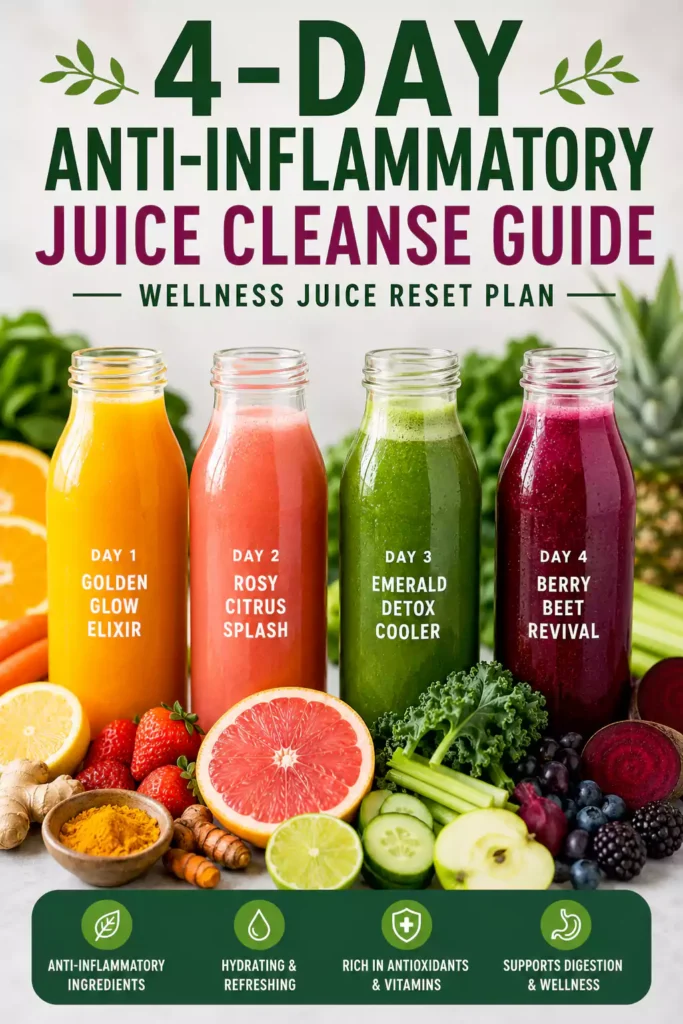
- Use in wellness drinks
Ginger
Ginger has been used traditionally for centuries in both cooking and wellness practices. It contains bioactive compounds associated with digestive support and balanced inflammatory responses.
Many people enjoy ginger because of its warming, refreshing flavor and versatility.
Benefits of Ginger
- Naturally flavorful
- Commonly used for digestive comfort
- Pairs well with citrus and turmeric
- Works in hot or cold recipes
Easy Ways to Use Ginger
- Fresh ginger tea
- Smoothies
- Stir-fries
- Marinades
- Wellness cubes
Leafy Greens
Dark leafy greens such as spinach, kale, Swiss chard, and arugula are rich in vitamins, minerals, chlorophyll, and antioxidants.
These vegetables are often considered foundational foods for overall wellness because they deliver high nutrient density with relatively low calories.
Benefits of Leafy Greens
- High in vitamins A, C, and K
- Rich in antioxidants
- Excellent fiber source
- Support healthy digestion
Easy Ways to Eat More Greens
- Smoothies
- Salads
- Soups
- Omelets
- Grain bowls
Fatty Fish
Fatty fish like salmon, sardines, trout, and mackerel are rich in omega-3 fatty acids. Omega-3s are among the most researched nutrients related to healthy inflammatory balance.
Many wellness experts encourage consuming fatty fish regularly as part of a balanced diet.
Benefits of Fatty Fish
- High-quality protein
- Rich in omega-3 fats
- Supports heart and brain health
- Highly satisfying and nutrient-dense
Easy Ways to Eat More Fish
- Grilled salmon bowls
- Sardine toast
- Salmon salads
- Fish tacos
- Mediterranean-style dinners
Avocados
Avocados are rich in monounsaturated fats, fiber, potassium, and antioxidants. They add creaminess and satisfaction to meals naturally without relying on heavily processed ingredients.
Benefits of Avocados
- Healthy fats
- Fiber-rich
- Supports satiety
- Versatile in meals
Easy Ways to Use Avocados
- Salads
- Smoothies
- Avocado toast
- Guacamole
- Grain bowls
Olive Oil
Extra virgin olive oil is considered one of the healthiest fats in Mediterranean-style eating patterns. It contains beneficial plant compounds including oleocanthal, which has been studied for its anti-inflammatory properties.
Benefits of Olive Oil
- Heart-supportive fats
- Rich flavor
- Versatile for cooking
- Contains antioxidant compounds
Best Ways to Use Olive Oil
- Salad dressings
- Roasted vegetables
- Drizzled over meals
- Marinades
- Light sautéing
Nuts and Seeds
Nuts and seeds provide healthy fats, fiber, protein, minerals, and antioxidants.
Particularly beneficial options include:
- Walnuts
- Almonds
- Chia seeds
- Flaxseeds
- Pumpkin seeds
Benefits of Nuts and Seeds
- Healthy fats
- Plant protein
- Fiber-rich
- Easy nutrient boost
Easy Ways to Use Them
- Smoothie toppings
- Yogurt bowls
- Homemade trail mix
- Salads
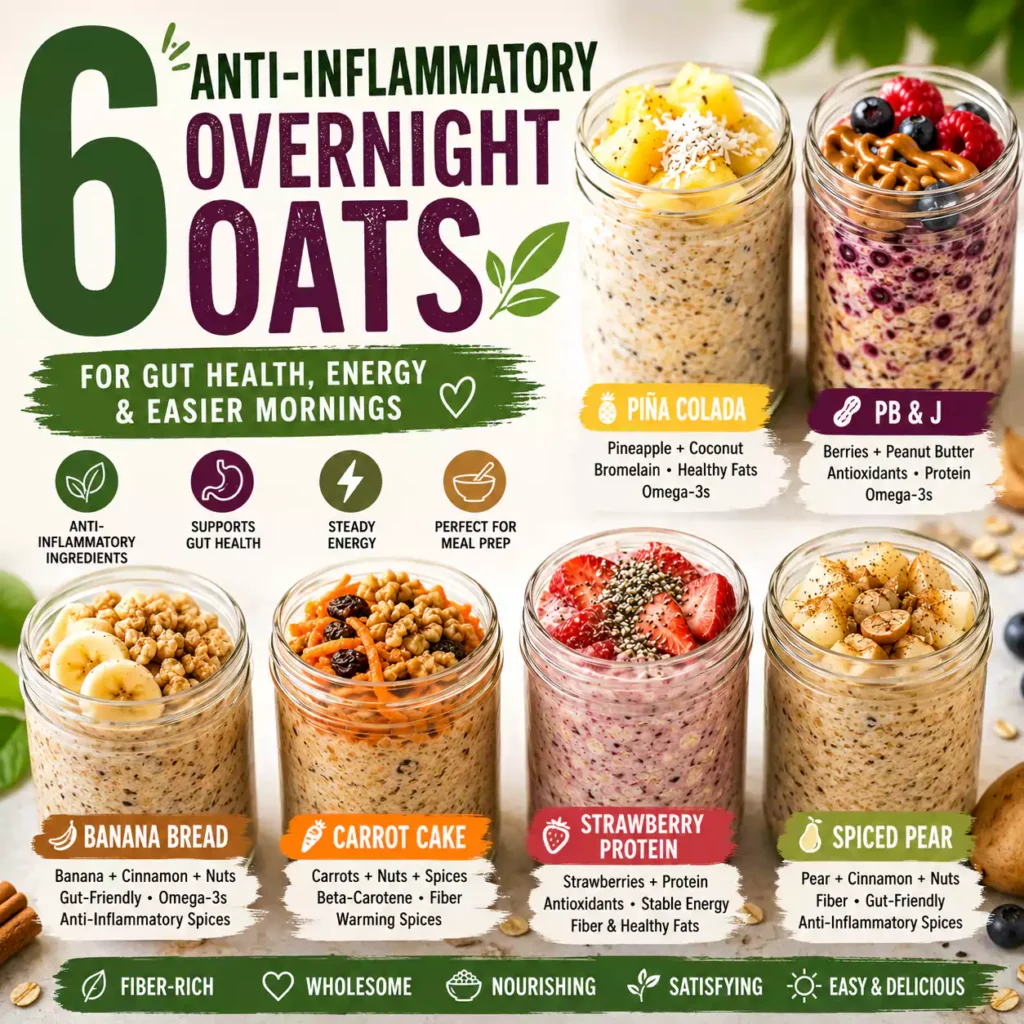
- Overnight oats
Garlic
Garlic is one of the most powerful flavor-building ingredients in healthy cooking. It contains sulfur compounds associated with immune-supportive and wellness-focused eating.
Benefits of Garlic
- Adds flavor naturally
- Supports clean eating
- Works in countless savory dishes
Easy Ways to Use Garlic
- Roasted vegetables
- Soups
- Sauces
- Marinades
- Dressings
Tomatoes
Tomatoes are rich in lycopene, an antioxidant associated with heart-supportive eating patterns.
Cooked tomatoes may provide even higher lycopene availability than raw tomatoes.
Benefits of Tomatoes
- Rich in antioxidants
- Naturally low-calorie
- Versatile ingredient
- Adds brightness to meals
Easy Ways to Use Tomatoes
- Salads
- Soups
- Pasta sauces
- Roasted dishes
- Mediterranean meals
Green Tea
Green tea contains catechins and antioxidants that are widely studied in wellness nutrition.
Many people enjoy green tea as a lower-caffeine alternative to sugary drinks.
Benefits of Green Tea
- Rich in antioxidants
- Supports hydration
- Naturally calming
- Pairs well with wellness routines
Foods That May Increase Inflammation
Just as some foods support balanced wellness, others may contribute to inflammatory stress when consumed excessively.
These may include:
- Highly processed foods
- Excess refined sugar
- Fried foods
- Processed meats
- Excess alcohol
- Sugary beverages
- Trans fats
- Refined carbohydrates
The goal is not perfection or complete restriction. Instead, anti-inflammatory eating focuses on improving overall dietary quality over time.
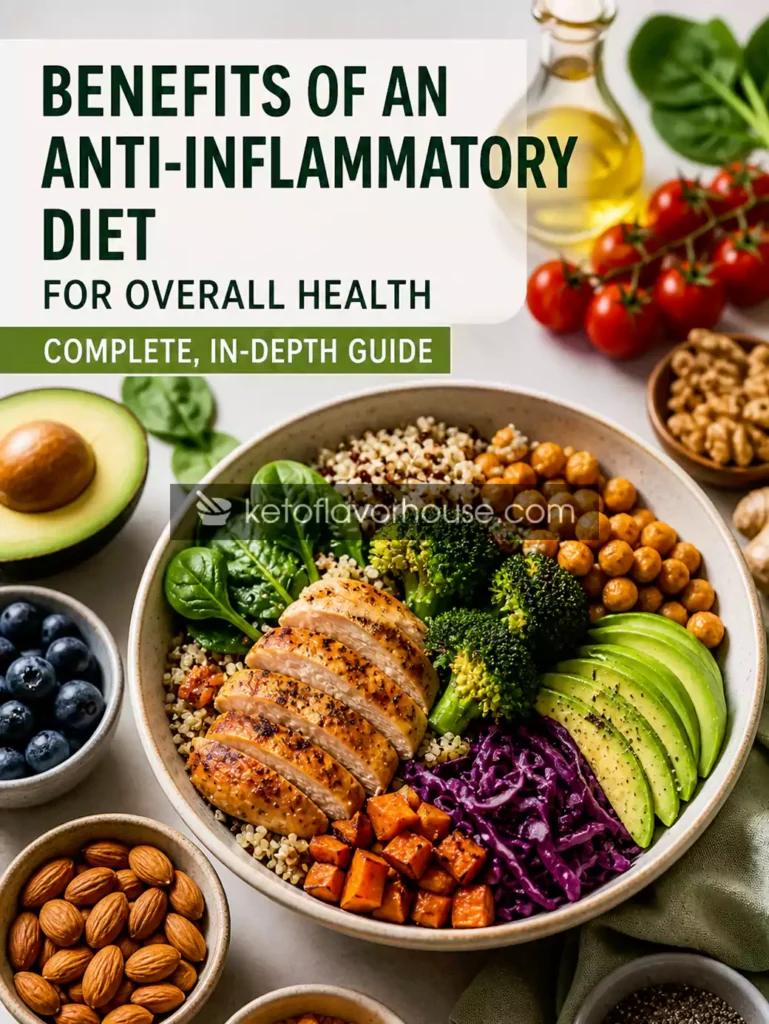
Benefits of an Anti-Inflammatory Diet
A nutrient-rich anti-inflammatory eating pattern may help support:
Heart Health
Foods rich in healthy fats, fiber, and antioxidants may support cardiovascular wellness.
Digestion
Fiber-rich vegetables, fruits, and fermented foods may help support gut-friendly eating patterns.
Energy Levels
Balanced meals rich in protein, healthy fats, and whole foods often help maintain steadier energy throughout the day.
Brain Health
Certain antioxidants and omega-3 fats are associated with cognitive wellness and brain support.
Healthy Aging
Antioxidant-rich foods may help protect cells from oxidative stress over time.
Immune Function
Many anti-inflammatory foods contain vitamins and minerals associated with immune support.
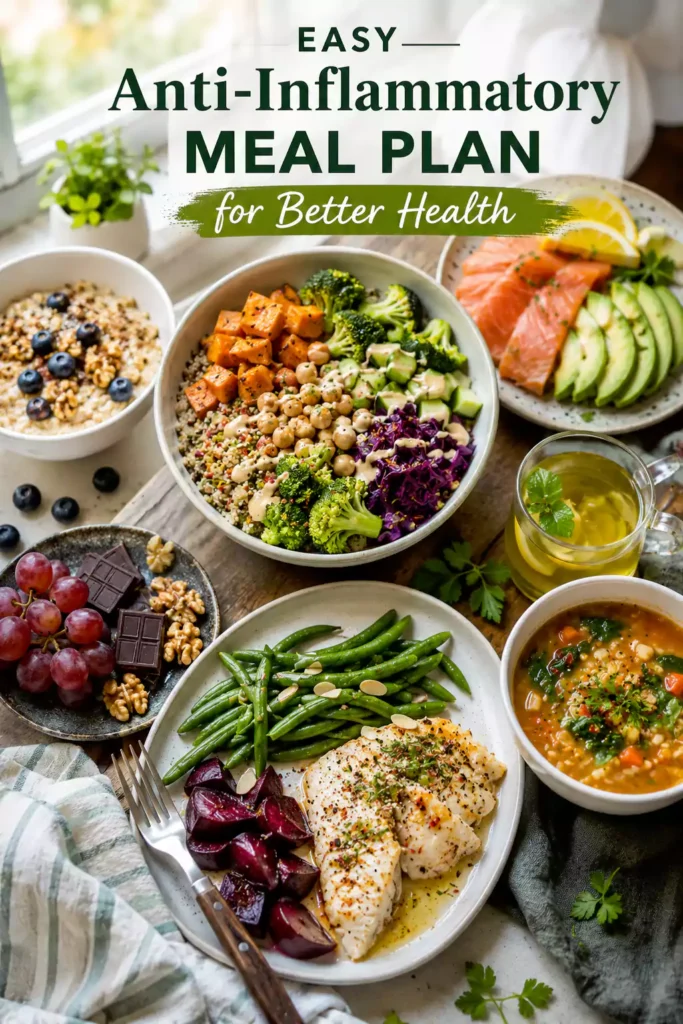
Simple Anti-Inflammatory Meal Ideas
Breakfast
- Greek yogurt with berries and chia seeds
- Avocado toast with eggs
- Green smoothie with spinach and ginger
Lunch
- Salmon salad with olive oil dressing
- Quinoa bowl with roasted vegetables
- Mediterranean chickpea salad
Dinner
- Grilled salmon with vegetables
- Anti-inflammatory vegetable soup
- Turmeric chicken with cauliflower rice
Snacks
- Mixed nuts
- Celery with herbed cottage cheese
- Berries with yogurt
- Wellness cubes in sparkling water
Tips for Starting an Anti-Inflammatory Lifestyle
Making dietary changes does not need to feel overwhelming.
Start small:
- Add vegetables to one extra meal daily
- Replace sugary drinks with herbal tea
- Cook with olive oil instead of processed oils
- Add berries to breakfast
- Use herbs and spices more often
Consistency matters more than perfection.
Common Myths About Anti-Inflammatory Eating
Myth: It’s overly restrictive
In reality, anti-inflammatory eating is usually focused on abundance rather than restriction.
Myth: Healthy food is bland
Herbs, spices, garlic, olive oil, citrus, and fresh ingredients create incredible flavor naturally.
Myth: You need expensive supplements
Many anti-inflammatory foods are simple everyday ingredients.
Final Thoughts
Anti-inflammatory eating is not about chasing perfection or following complicated food rules. It’s about creating meals centered around whole, nourishing ingredients that help you feel your best consistently.
Small habits matter:
- Choosing berries instead of sugary snacks
- Cooking with olive oil
- Adding greens to meals
- Using turmeric and ginger more often
- Eating more colorful vegetables
Over time, these small choices can support better energy, digestion, heart health, and overall wellness.
The best anti-inflammatory diet is one that feels realistic, enjoyable, sustainable, and satisfying long-term. When healthy meals taste genuinely delicious and comforting, consistency becomes much easier.
Frequently Asked Questions
What are the best anti-inflammatory foods?
Some of the most popular anti-inflammatory foods include berries, leafy greens, salmon, olive oil, turmeric, ginger, garlic, nuts, seeds, and avocados.
Is coffee inflammatory?
Moderate coffee intake may fit into anti-inflammatory eating patterns for many people, especially when consumed without excessive sugar.
Can anti-inflammatory foods help with bloating?
Fiber-rich whole foods and less processed eating patterns may support digestion and reduce feelings of heaviness for some people.
Is the Mediterranean diet anti-inflammatory?
Yes. Many anti-inflammatory eating principles overlap heavily with Mediterranean-style diets.
How long does it take to notice benefits?
Many people notice gradual improvements in energy, digestion, and overall wellness over time with consistent healthy habits.
Are anti-inflammatory foods expensive?
Not necessarily. Simple foods like oats, greens, garlic, beans, carrots, frozen berries, and olive oil can all support anti-inflammatory eating affordably.