This post may contains Amazon affiliate and other affiliate links. If you make a purchase through these links, I may earn a small commission at no extra cost to you. Your support helps me continue to provide quality content. I only recommend products I personally trust and believe will add value to your experience. For more details, please visit my Privacy Policy.
Introduction
There’s a quiet moment most people experience at some point—usually after a heavy meal, a stressful week, or a stretch of poor sleep—when the body just doesn’t feel right. You feel bloated. Your energy dips for no clear reason. Your mind feels foggy, and even simple tasks take more effort than usual.
It’s not always dramatic. It’s subtle. But it’s consistent.
That’s often where the conversation around an anti-inflammatory diet begins—not as a trend, but as a response to how we feel.
The benefits of an anti-inflammatory diet for overall health go far beyond weight or appearance. This way of eating focuses on supporting your body at a deeper level—helping you feel lighter, think clearer, and maintain steady energy throughout the day.
Instead of restriction, it’s about alignment—choosing foods that work with your body, not against it.
This guide breaks down everything you need to know in a clear, practical, and deeply detailed way—so you can understand not just the what, but the why behind it.
What Is Inflammation (And Why It Matters)?
Before diving into benefits, we need to understand the foundation.
🔥 Inflammation Is Not the Enemy
Inflammation is your body’s natural defense system. It plays a critical role in:
- Fighting infections
- Healing injuries
- Repairing tissues
When you cut your finger or get sick, inflammation helps you recover. That’s acute inflammation—short-term and beneficial.
⚠️ The Problem: Chronic Inflammation
The issue arises when inflammation becomes constant—low-grade but ongoing. This is called chronic inflammation, and it can quietly affect how your body functions day-to-day.
It’s often linked to:
- Poor dietary habits
- High intake of processed foods
- Lack of sleep
- Chronic stress
- Sedentary lifestyle
Unlike acute inflammation, chronic inflammation doesn’t resolve quickly. It lingers, subtly affecting energy, digestion, and overall balance.
What Is an Anti-Inflammatory Diet?
An anti-inflammatory diet isn’t a strict plan—it’s a long-term eating pattern designed to support your body’s natural balance.
🥬 Core Principles
- Prioritize whole, minimally processed foods
- Include healthy fats
- Focus on fiber-rich vegetables
- Choose clean protein sources
- Use natural herbs and spices
🚫 What It Reduces
- Refined sugars
- Ultra-processed foods
- Artificial additives
- Excess industrial seed oils
💡 The Key Idea
Instead of asking “What should I avoid?”
This approach asks: “What nourishes my body best?”
💚 Core Benefits of an Anti-Inflammatory Diet
⚡ 1. More Stable, Consistent Energy
One of the most noticeable benefits is steady energy throughout the day.
Instead of:
- Midday crashes
- Sugar spikes and dips
- Feeling tired after meals
You experience:
- Sustained energy
- Better focus
- Fewer cravings
This happens because anti-inflammatory foods:
- Support stable blood sugar
- Reduce energy-draining inflammation
- Improve nutrient absorption
🌿 2. Improved Digestion & Reduced Bloating
Digestive discomfort is often one of the first signs your body gives you.
An anti-inflammatory diet supports gut health by:
- Increasing fiber intake
- Reducing irritants
- Supporting beneficial gut bacteria
Result:
- Less bloating
- Better digestion
- More comfort after meals
Over time, your body begins to process food more efficiently, and meals feel lighter instead of heavy.
🧠 3. Better Mental Clarity & Focus
What you eat doesn’t just affect your body—it directly impacts your brain.
Chronic inflammation is often associated with:
- Brain fog
- Difficulty concentrating
- Mental fatigue
An anti-inflammatory diet helps support:
- Clearer thinking
- Better concentration
- Improved mood stability
Many people report feeling more mentally “sharp” within weeks of improving their diet.
🛌 4. Improved Sleep Quality
Sleep and inflammation are closely connected.
When inflammation is high:
- Sleep can feel restless
- You may wake up tired
- Recovery is slower
When your diet supports balance:
- Sleep becomes deeper
- You wake up more refreshed
- Your body recovers better overnight
⚖️ 5. Supports Healthy Weight Management
This isn’t about extreme dieting—it’s about natural balance.
An anti-inflammatory diet supports weight management by:
- Reducing cravings
- Improving satiety
- Supporting metabolic efficiency
Instead of constant hunger or restriction, your body begins to regulate itself more effectively.
❤️ 6. Supports Heart Health
Healthy fats and whole foods play a major role in maintaining cardiovascular balance.
Key benefits include:
- Better lipid balance
- Reduced dietary stressors
- Improved circulation support
This is less about restriction and more about adding the right foods.
🧬 7. Supports Long-Term Cellular Health
Every meal you eat sends signals to your body.
Anti-inflammatory foods:
- Provide antioxidants
- Support cellular repair
- Reduce oxidative stress
Over time, this contributes to better long-term health and resilience.
🦠 8. Strengthens Immune Function
Your immune system depends heavily on what you eat.
A balanced, anti-inflammatory diet supports:
- Nutrient intake (vitamins, minerals)
- Gut health (which is closely tied to immunity)
- Reduced internal stress
This creates a more stable internal environment for your body to function efficiently.
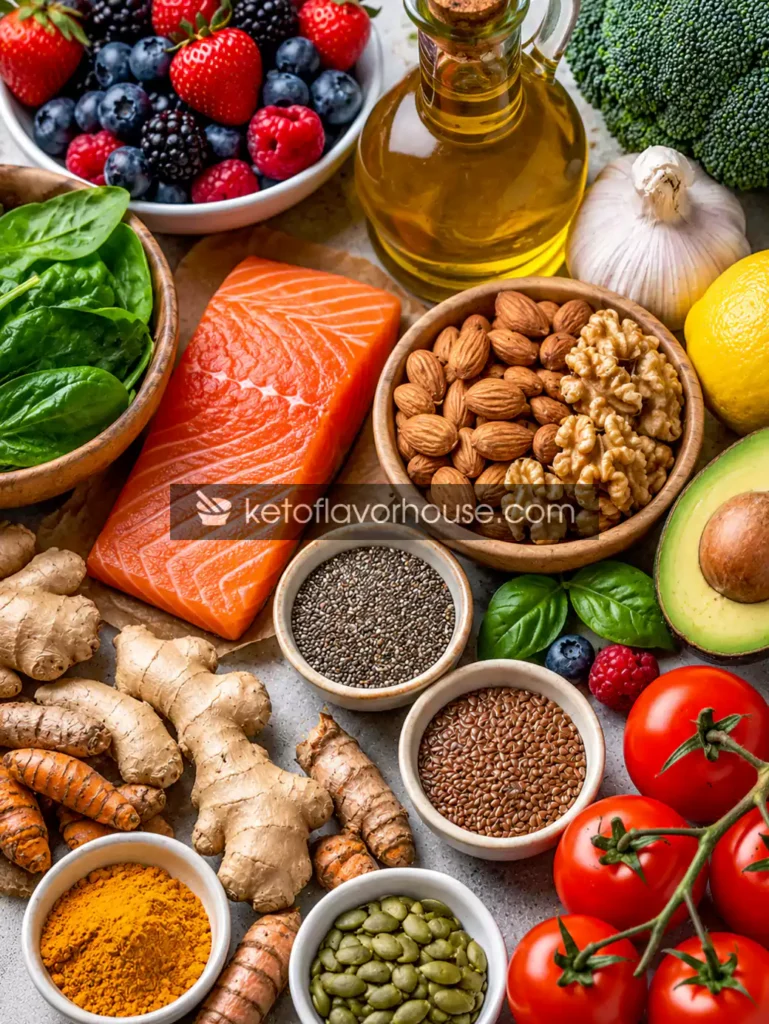
🥗 Key Foods in an Anti-Inflammatory Diet
🥬 Vegetables
- Leafy greens
- Broccoli
- Carrots
- Cabbage
🍓 Fruits
- Berries
- Citrus
🍗 Protein
- Chicken
- Fish
- Eggs
- Plant-based proteins
🫒 Healthy Fats
- Olive oil
- Avocado
- Nuts and seeds
🌿 Herbs & Spices
- Garlic
- Ginger
- Turmeric
⚠️ Foods That May Increase Inflammation
- Processed foods
- Refined sugar
- Excess fried foods
- Artificial ingredients
The goal isn’t perfection—it’s consistency over time.
🧠 The Gut-Inflammation Connection
Your gut plays a central role in inflammation.
A healthy gut:
- Supports digestion
- Improves nutrient absorption
- Helps regulate inflammation
An anti-inflammatory diet feeds beneficial gut bacteria, creating a stronger internal balance.
🔄 How Fast Do You Notice Results?
This varies, but many people notice:
Within days:
- Less bloating
- Lighter feeling
Within weeks:
- Better energy
- Improved digestion
Long-term:
- Consistent balance
- Improved overall well-being
🛠️ How to Start an Anti-Inflammatory Diet (Practical Guide)
Step 1: Start Simple
Replace processed foods with whole options.
Step 2: Build Balanced Meals
Include protein + healthy fats + vegetables.
Step 3: Upgrade Ingredients
Switch to olive oil, fresh herbs, and clean proteins.
Step 4: Stay Consistent
Small daily improvements matter more than perfection.
❓ Frequently Asked Questions
1. Is this diet restrictive?
No—it focuses on adding nourishing foods rather than strict restriction.
2. Can I still enjoy treats?
Yes, balance is key.
3. Is it suitable for weight loss?
It supports natural weight balance without extreme dieting.
4. How long should I follow it?
It’s designed as a long-term lifestyle.
5. Do I need supplements?
Not necessarily—whole foods provide most nutrients.
✍️ Final Thoughts
The real power of an anti-inflammatory diet isn’t in dramatic changes—it’s in how consistently good you begin to feel.
- Meals feel lighter
- Energy becomes steady
- Your body feels more balanced
It’s not about chasing perfection. It’s about creating a way of eating that supports you—every single day.
When you start choosing foods that nourish instead of overwhelm, everything else begins to shift naturally.
And that’s where real, lasting health begins.