This post may contains Amazon affiliate and other affiliate links. If you make a purchase through these links, I may earn a small commission at no extra cost to you. Your support helps me continue to provide quality content. I only recommend products I personally trust and believe will add value to your experience. For more details, please visit my Privacy Policy.
Homemade bread has a way of making a kitchen feel warm, comforting, and alive. Few things compare to the smell of freshly baked flatbread coming out of the oven or sizzling in a skillet. But if you’ve ever eaten heavily processed breads and felt bloated, sluggish, overly full, or low-energy afterward, you’re definitely not alone.
Many traditional breads and store-bought flatbreads are made with highly refined flour, excess sodium, inflammatory oils, preservatives, and added sugars that can leave people feeling weighed down instead of nourished. That’s why more home cooks are starting to explore healthier baking methods using anti-inflammatory ingredients that support overall wellness while still delivering the comforting texture and flavor we all love.
The good news is that homemade flatbread dough can absolutely fit into a balanced anti-inflammatory lifestyle. With a few simple ingredient upgrades — like whole grain flours, olive oil, herbs, yogurt, seeds, and natural flavor boosters — you can transform classic breads like naan, pita, focaccia, wraps, and skillet flatbreads into more nourishing options without sacrificing softness or flavor.
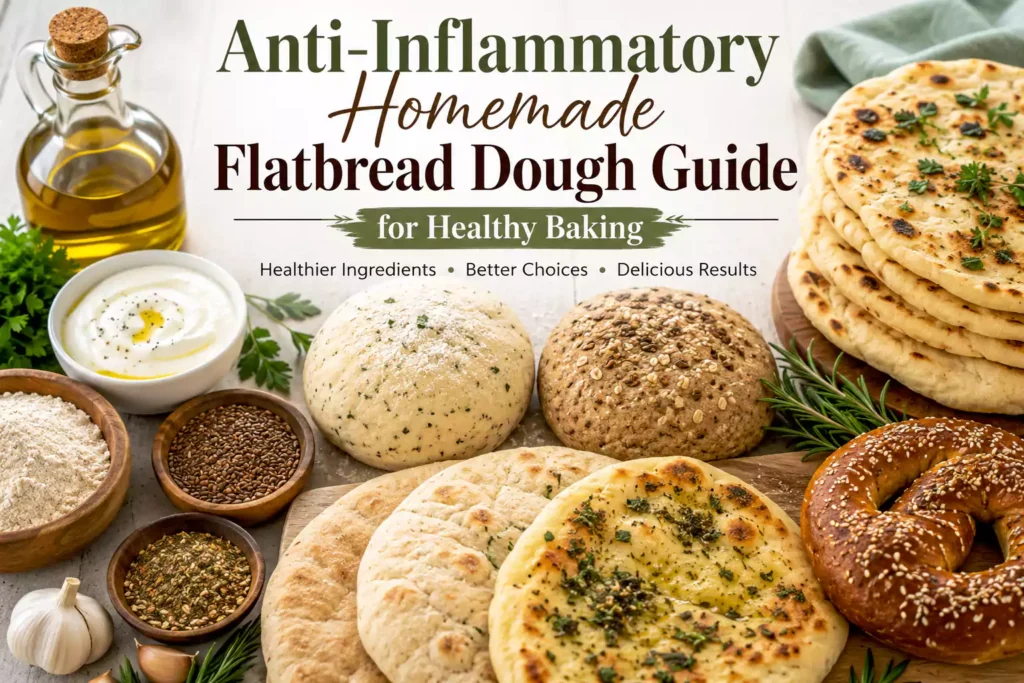
This Anti-Inflammatory Homemade Flatbread Dough Guide for Healthy Baking is designed to help you understand exactly how to create healthier homemade doughs, which ingredients work best, which swaps actually improve nutrition, and how to make anti-inflammatory baking feel realistic and enjoyable instead of restrictive.
Whether you’re looking to improve digestion, eat more whole foods, reduce processed ingredients, support balanced energy, or simply create healthier homemade bread recipes for your family, this guide breaks everything down in a practical, beginner-friendly way.
What Makes Bread Potentially Inflammatory?
Bread itself is not automatically unhealthy. In fact, many traditional cultures have enjoyed homemade breads for centuries. The issue often comes from the modern processing of commercial bread products.
Many packaged breads contain:
- Refined white flour
- Excess sodium
- Added sugars
- Preservatives
- Highly processed vegetable oils
- Dough conditioners
- Artificial additives
These ingredients may contribute to inflammatory stress when consumed excessively, especially alongside highly processed diets overall.
Additionally, refined flour digests quickly and often lacks the fiber, minerals, and nutrients found in less processed grains.
Homemade flatbread allows you to control:
- Flour quality
- Oil choice
- Sodium levels
- Additives
- Fermentation
- Flavor ingredients
That control alone can make homemade bread feel significantly lighter, fresher, and more balanced.
What Is an Anti-Inflammatory Flatbread?
An anti-inflammatory flatbread focuses on ingredients commonly associated with:
- Whole-food nutrition
- Healthy fats
- Fiber
- Antioxidants
- Gut-friendly ingredients
- Balanced blood sugar support
Rather than creating an ultra-processed dough, the goal is to build a more nourishing version using:
- Whole grain flours
- Olive oil
- Yogurt
- Herbs
- Seeds
- Garlic
- Turmeric
- Natural fermentation
This approach supports healthier baking habits while still creating soft, flavorful bread that works for wraps, dipping, sandwiches, pizzas, or side dishes.
Best Anti-Inflammatory Flour Choices
Whole Wheat Flour
Whole wheat flour is one of the easiest upgrades from refined white flour. Because it contains more of the grain’s natural fiber and nutrients, it creates a more balanced nutritional profile.
Benefits
- Higher fiber content
- More vitamins and minerals
- Better satiety
- Supports digestive health
Flavor and Texture
Whole wheat flour creates a slightly nutty flavor and denser texture compared to white flour.
Best Uses
- Naan
- Pita bread
- Focaccia
- Skillet flatbreads
Spelt Flour
Spelt flour is an ancient grain flour with a slightly sweeter and milder flavor than whole wheat.
Benefits
- Naturally rich in nutrients
- Good source of fiber
- Often easier to digest for some people
Texture
Spelt creates softer flatbreads while still maintaining a hearty texture.
Best Uses
- Soft wraps
- Flatbreads
- Rustic pizzas
Oat Flour
Oat flour creates softer doughs and adds subtle sweetness naturally.
Benefits
- Rich in beta-glucan fiber
- Supports heart-friendly eating
- Naturally gluten-free if certified
Texture
Creates softer, more tender flatbread.
Best Uses
- Quick skillet breads
- Soft wraps
- Pancake-style flatbreads
Almond Flour
Almond flour is popular in lower-carb and gluten-free baking.
Benefits
- Healthy fats
- Protein-rich
- Lower in carbohydrates
Texture
Creates softer, more delicate doughs and is best combined with other flours.
Best Uses
- Keto flatbreads
- Gluten-free doughs
- Low-carb wraps
Flaxseed Meal
Flaxseed meal is not typically used alone but works beautifully as an addition to anti-inflammatory dough.
Benefits
- Omega-3 fatty acids
- Fiber
- Plant compounds associated with wellness support
Texture
Adds nuttiness and density.
Best Uses
- Flatbread blends
- Crackers
- Seeded breads
Best Anti-Inflammatory Oils for Dough
Extra Virgin Olive Oil
Extra virgin olive oil is one of the best choices for healthier baking and Mediterranean-style dough recipes.
Benefits
- Rich in monounsaturated fats
- Contains antioxidant compounds
- Adds softness and flavor
Best Uses
- Naan
- Focaccia
- Pita bread
- Pizza dough
Avocado Oil
Avocado oil has a mild flavor and works well in high-heat cooking.
Benefits
- Healthy fats
- Neutral flavor
- Good heat stability
Best Uses
- Crispy flatbreads
- Skillet breads
- Roasted dough recipes
Ingredients That Boost Anti-Inflammatory Benefits
Garlic
Garlic adds savory depth while contributing sulfur compounds associated with immune-supportive eating.
Best Ways to Use
- Mixed into dough
- Garlic herb toppings
- Roasted garlic spreads
Turmeric
Turmeric adds warmth and a beautiful golden color.
Best Ways to Use
- Mixed into dough
- Herb oil toppings
- Flatbread seasoning blends
Pair with black pepper for better flavor balance.
Rosemary
Rosemary creates a fragrant Mediterranean-style flavor.
Best Ways to Use
- Focaccia
- Olive oil toppings
- Rustic breads
Oregano
Oregano pairs beautifully with olive oil and garlic.
Best Uses
- Savory flatbreads
- Mediterranean doughs
- Pizza-style breads
Parsley
Fresh parsley brightens heavier breads beautifully.
Yogurt in Anti-Inflammatory Dough
Greek yogurt is one of the easiest ways to improve flatbread texture naturally while supporting a more balanced ingredient profile.
Benefits
- Protein
- Probiotic cultures
- Moisture and tenderness
Why It Works So Well
Yogurt creates soft, flexible dough without relying heavily on excess oil or processed ingredients.
It works especially well in:
- Naan
- Soft skillet flatbreads
- Yogurt-based wraps
Reducing Inflammatory Ingredients in Bread
Reduce Refined Flour
Instead of using 100% white flour:
- Use partial whole grain flour
- Blend with spelt or oat flour
- Add flaxseed meal
Lower Sodium
Many breads contain unnecessary sodium.
Try:
- Herbs
- Garlic
- Olive oil
- Lemon zest
- Seeds
to increase flavor naturally.
Reduce Added Sugar
Some dough recipes contain far more sugar than necessary.
Natural alternatives include:
- Small amounts of honey
- Maple syrup
- Unsweetened yogurt for flavor balance
Avoid Highly Processed Oils
Skip:
- Hydrogenated oils
- Excess soybean oil
- Artificial shortening
Choose:
- Olive oil
- Avocado oil
instead.
Best Anti-Inflammatory Flatbread Ideas
Anti-Inflammatory Naan
A healthier naan can include:
- Whole wheat flour
- Greek yogurt
- Olive oil
- Garlic
- Parsley
This creates a softer, protein-rich flatbread with more fiber and balanced fats.
Healthy Pita Bread
For anti-inflammatory pita:
- Use whole grain flour
- Add flaxseed meal
- Brush with olive oil
Perfect for wraps and Mediterranean meals.
Healthy Focaccia
Focaccia works beautifully with:
- Olive oil
- Rosemary
- Garlic
- Tomatoes
- Oregano
A healthier focaccia still feels indulgent while using more wholesome ingredients.
Better Homemade Pretzels
Traditional pretzels are often high in refined carbs and sodium.
Healthier versions can include:
- Whole wheat flour
- Chia seeds
- Sesame seeds
- Reduced coarse salt
Skillet Flatbread
Quick skillet flatbreads are ideal for healthy weeknight meals.
Try adding:
- Yogurt
- Herbs
- Garlic
- Olive oil
for extra flavor and softness.
Tips for Making Better Homemade Dough
Allow Time for Resting
Resting dough improves:
- Texture
- Elasticity
- Flavor
Even short rest periods make a noticeable difference.
Don’t Overwork the Dough
Overkneading may create tough flatbread.
Mix until:
- Smooth
- Soft
- Slightly elastic
Use Warm Water, Not Hot
Very hot water can damage yeast activity.
Warm water should feel comfortably warm, not scalding.
Add Herbs After Cooking Too
Fresh herbs added after baking create brighter flavor and fresher texture.
Healthy Toppings for Flatbread
Healthy toppings help turn simple dough into nutrient-rich meals.
Great options include:
- Olive oil
- Avocado
- Roasted vegetables
- Garlic yogurt sauce
- Fresh herbs
- Grilled chicken
- Salmon
- Hummus
- Arugula
- Feta cheese
- Tomato slices
Anti-Inflammatory Meal Pairing Ideas
Mediterranean Plate
Serve flatbread with:
- Hummus
- Olives
- Cucumbers
- Tomatoes
- Grilled salmon
Wellness Breakfast
Use flatbread with:
- Eggs
- Avocado
- Spinach
- Herbs
Healthy Lunch Wrap
Fill with:
- Chicken
- Greens
- Yogurt sauce
- Roasted vegetables
Cozy Dinner Side
Serve alongside:
- Soups
- Lentils
- Curry
- Anti-inflammatory casseroles
Common Mistakes to Avoid
Using Too Much Flour
Dry dough often creates dense flatbread.
Fix
Use enough flour to prevent sticking while keeping dough soft.
Overcooking
Flatbread can dry out quickly.
Fix
Cook until lightly golden and soft.
Skipping Rest Time
Resting improves softness and flexibility.
Overloading With Heavy Toppings
Too many toppings may overpower the flatbread.
Fix
Balance protein, vegetables, and healthy fats.
Benefits of Homemade Flatbread
Making homemade flatbread allows you to:
- Control ingredients
- Reduce preservatives
- Improve nutritional quality
- Customize flavors
- Support anti-inflammatory eating
- Reduce processed food intake
Many people also find homemade breads more satisfying and easier to digest than heavily processed store-bought versions.
Final Thoughts
Healthy baking does not mean giving up comforting foods. In fact, some of the best anti-inflammatory meals are deeply satisfying, warm, flavorful, and nourishing.
By making simple ingredient upgrades — like choosing whole grain flours, olive oil, herbs, yogurt, garlic, and seeds — homemade flatbread can become part of a balanced wellness-focused lifestyle rather than something to avoid.
The beauty of anti-inflammatory baking is flexibility. You don’t need perfection or complicated ingredients. Small improvements made consistently can help transform everyday comfort foods into meals that feel lighter, fresher, and more nourishing overall.
Whether you’re making naan, pita, skillet bread, wraps, or focaccia, homemade flatbread offers one of the easiest ways to combine comfort food with healthier everyday eating habits.
Frequently Asked Questions
What is the healthiest flour for flatbread?
Whole wheat flour, spelt flour, oat flour, and partial almond flour blends are popular healthier choices.
Is homemade bread healthier than store-bought bread?
Homemade bread allows better control over ingredients, oils, sodium, preservatives, and additives.
Can flatbread fit into anti-inflammatory eating?
Yes. Choosing whole-food ingredients and healthier fats can help create more balanced flatbread recipes.
Is olive oil good in bread dough?
Absolutely. Olive oil adds softness, flavor, and healthy fats associated with Mediterranean-style eating.
Can I make anti-inflammatory flatbread gluten-free?
Yes. Almond flour, oat flour, chickpea flour, and gluten-free blends can all work.
Why use yogurt in flatbread dough?
Yogurt adds softness, moisture, protein, and probiotic cultures while improving texture naturally.