This post may contains Amazon affiliate and other affiliate links. If you make a purchase through these links, I may earn a small commission at no extra cost to you. Your support helps me continue to provide quality content. I only recommend products I personally trust and believe will add value to your experience. For more details, please visit my Privacy Policy.
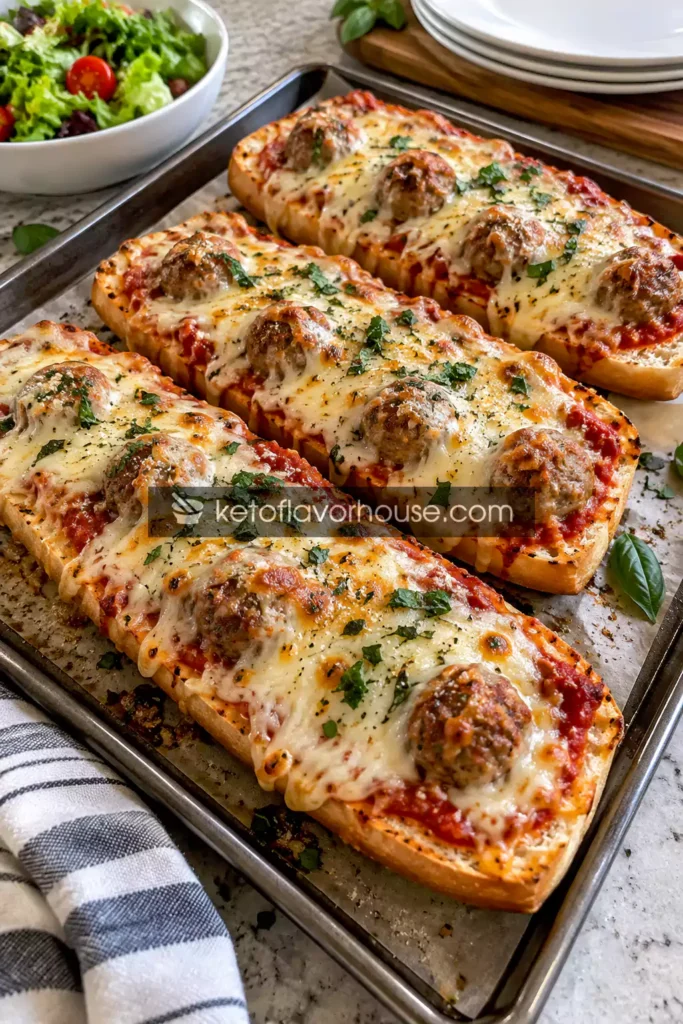
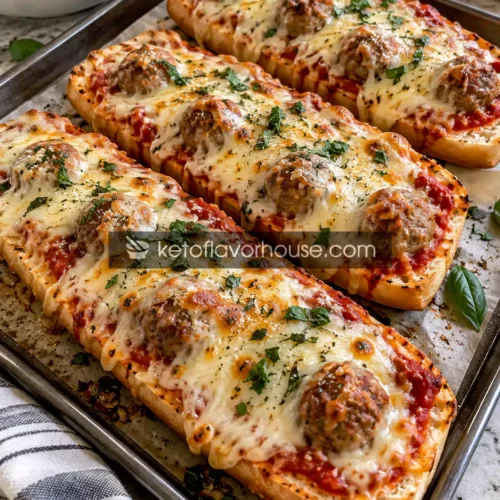
There is something especially satisfying about High-Protein Cheesy Meatball French Bread Pizzas when you want the comforting flavors of pizza without preparing a traditional pizza dough. Imagine a crisp-edged piece of French bread topped with seasoned beef meatballs, rich marinara sauce, and a generous layer of bubbling mozzarella. The cheese stretches as you pull away a slice, the tomato sauce adds tanginess, and the Italian-seasoned meatballs make every bite hearty and savory.
This recipe takes familiar ingredients and turns them into a practical family dinner. Instead of shaping pizza dough or waiting for it to rise, you use a loaf of French bread as the base. Homemade mini meatballs cook while you prepare the other ingredients, then everything goes into the oven for a final round of baking. The result is a satisfying combination of crunchy bread, tender beef, tomato sauce, and melted cheese.
These meatball French bread pizzas are particularly useful for anyone trying to include more protein in everyday meals. The beef supplies most of the protein, while mozzarella, Parmesan, and egg contribute additional amounts. With approximately 49 grams of protein per serving in this version, the recipe can make a substantial contribution to a high-protein day. The exact nutrition depends on the bread, beef, cheese, and sauce you use.
The key is balancing the toppings with the bread. Too little sauce can make the pizza dry, but too much can leave the middle soggy. Small meatballs distribute more evenly than large ones, and a short initial toast helps the bread stay crisp beneath the toppings.
Here is a quick overview before you start cooking.
Cheesy, saucy and satisfying
French bread topped with homemade beef meatballs, marinara, mozzarella, and Parmesan for an easy, protein-rich dinner.
Why You’ll Love These High-Protein Cheesy Meatball French Bread Pizzas
A good family dinner needs to taste satisfying, be manageable to prepare, and work with ingredients that are easy to find. These French bread pizzas bring together the familiar flavors of meatballs and pizza in a format that requires relatively little assembly.
- 🍞 A convenient bread base: French bread eliminates the need to mix, knead, or proof pizza dough.
- 🥩 A substantial protein source: Lean ground beef provides most of the protein, with mozzarella, Parmesan, and egg adding more.
- 🧀 Plenty of cheesy flavor: Mozzarella melts over the sauce and meatballs, while Parmesan adds a sharper, savory finish.
- 🍅 A familiar pizza combination: Marinara, garlic, Italian seasoning, and cheese create a comforting Italian-inspired flavor.
- ⏱️ Practical preparation: The meatballs cook while you get the bread and toppings ready, keeping the process organized.
- 🥗 Easy to serve with vegetables: A green salad or roasted vegetables balance the richer bread, meat, and cheese.
A shortcut that still feels homemade
French bread is a useful shortcut because it gives you a ready-made base with a soft center and a crust that can become pleasantly crisp in the oven. A short initial toast helps protect the bread from the moisture in the marinara sauce.
The meatballs are homemade rather than simply added from a package. Mixing ground beef with egg, breadcrumbs, Parmesan, and seasonings lets you control the flavor and the size of each meatball. Small meatballs are especially practical here because they are easy to distribute across the bread.
Why the protein content matters
Protein is a major part of this recipe’s nutritional appeal. A serving provides protein from several ingredients, especially beef and cheese. However, French bread also contributes a significant amount of carbohydrates, so this is a high-protein comfort-food recipe rather than a keto or low-carb pizza.
The approximately 49-gram estimate assumes four equal portions and the specified ingredients. If you use a different loaf, fattier ground beef, or different amounts of cheese, the figures will change. The protein amount is substantial, but it should still be considered as part of your overall daily food intake.
The Flavor and Texture of Meatball French Bread Pizza
The best bite combines several textures. The bread should have a lightly crisp base and edges, the meatballs should remain tender, and the mozzarella should melt into the marinara rather than form a thick, rubbery layer.
The meatballs are seasoned simply with garlic powder, Italian seasoning, Parmesan, salt, and black pepper. This keeps the beef flavorful without competing with the tomato sauce. Parmesan adds a concentrated savory note, while the egg helps bind the meatball mixture and the breadcrumbs provide structure.
Marinara provides acidity and moisture. A modest amount is enough because the meatballs and cheese will contribute their own flavor and texture. If the bread is covered with too much sauce, the middle can become soft before the cheese has finished melting.
Mozzarella is the primary melting cheese. Parmesan is used in the meatball mixture and as an optional finishing ingredient, bringing a stronger flavor. Together, they create a familiar pizza-style topping without needing a long list of extra ingredients.
These pizzas are best served hot from the oven after resting for a few minutes. During that brief rest, the melted cheese settles slightly and the toppings become easier to handle. Letting them stand too long, however, can allow the bread to soften beneath the sauce.
My Approach to Making a Better French Bread Pizza
For this type of recipe, I would focus on three details: consistent meatball size, a quick toast for the bread, and careful control of the sauce.
The first detail is easy to overlook. Large meatballs can dominate the topping and make it difficult to cut or eat the bread neatly. Smaller, evenly shaped meatballs distribute better and cook more predictably. They also allow each portion to contain a balanced combination of beef, sauce, and cheese.
The second detail is bread preparation. French bread already has a crust, but the cut surface can absorb sauce quickly. Giving the bread a brief initial toast creates a firmer surface and helps the finished pizza retain some texture. It is not necessary to toast it until hard; a light crispness is sufficient.
Finally, avoid adding more sauce simply because the bread looks dry before baking. The cheese and meatballs will contribute moisture during the final bake. Spread a thin, even layer of marinara, arrange the cooked meatballs, and cover with mozzarella. That approach helps the ingredients heat together without making the bread soggy.
The recipe can be adjusted to suit your preferences, but the core proportions are important. If you increase the cheese, for example, the finished pizza becomes richer and more calorie-dense. If you use leaner beef, the meatballs may be slightly less juicy but will generally contain less fat. Small, deliberate adjustments are more useful than changing several ingredients at once.
Required Equipment
Large Mixing Bowl
A large bowl gives you room to combine the ground beef, egg, breadcrumbs, Parmesan, and seasonings without crushing the mixture excessively. Use clean hands or a fork to mix until the ingredients are evenly incorporated. Mixing longer than necessary can make the meatballs dense.
Rimmed Baking Sheet
A rimmed baking sheet is suitable for baking the meatballs and helps contain drippings. Lining it with parchment makes cleanup easier and reduces sticking. Leave space between the meatballs so hot air can circulate around them.
Baking Sheet for the Bread
Use a sturdy sheet pan large enough to hold the bread pieces in a single layer. If you do not have a second tray, bake the meatballs first, transfer them to a plate, and use the same tray for the bread. A tray that is too crowded can make the bread warm unevenly.
Sharp Knife and Cutting Board
A sharp serrated knife is useful for cutting French bread without crushing it. Cut the loaf lengthwise first, then divide the halves into four equal portions. A stable cutting board helps keep the cuts straight and makes the finished portions easier to serve.
Measuring Cups and Spoons
Consistent measurements help you reproduce the meatball texture and estimate the nutrition. Measuring the breadcrumbs and cheese is especially useful because adding more can alter both the texture and the amount of protein, fat, and carbohydrates per portion.
Instant-Read Thermometer
An instant-read thermometer is a practical way to check doneness. Ground beef meatballs should reach an internal temperature of 160°F (71°C). Check a meatball near the center of the tray rather than relying entirely on browning, because the exterior can look cooked before the center reaches a safe temperature.
Ingredients for High-Protein Cheesy Meatball French Bread Pizzas
This recipe makes four dinner servings. Each serving consists of one quarter of the French bread loaf topped with an equal share of the beef meatballs, marinara, and cheeses.
Ingredients
For the meatballs
- 1 pound (454 g) lean ground beef, approximately 90% lean
- 1 large egg
- ¼ cup (about 27 g) plain breadcrumbs
- ¼ cup (about 25 g) finely grated Parmesan cheese
- 1 teaspoon Italian seasoning
- ½ teaspoon garlic powder
- ½ teaspoon salt
- ¼ teaspoon ground black pepper
For the French bread pizzas
- 1 large French bread loaf, approximately 16 ounces (454 g)
- 1 cup (about 240 g) marinara sauce
- 1½ cups (about 170 g) shredded mozzarella cheese
- 2 tablespoons (about 10 g) grated Parmesan cheese, optional for topping
- 1 tablespoon chopped fresh basil or parsley, optional
Choose a plain marinara sauce and check its label for added sugar and sodium. The recipe does not require pork or pork bacon. The meatballs use beef, so their protein and fat values can be estimated from the nutritional information for the specific ground beef you purchase.
What each ingredient contributes
Lean ground beef: This supplies most of the protein. Using approximately 90% lean beef provides a balance of meat flavor and moisture without adding as much fat as a higher-fat grind. Leaner beef may produce slightly firmer meatballs, so avoid overmixing or overcooking.
Egg: The egg binds the meatball mixture and contributes protein and moisture. It helps the beef, Parmesan, and breadcrumbs hold together during shaping and baking.
Breadcrumbs: Breadcrumbs absorb moisture and help create a tender texture. They also contribute carbohydrates, so they should be measured rather than added freely. A gluten-free breadcrumb product may work, but texture and nutrition depend on the ingredients.
Parmesan cheese: Parmesan adds saltiness and a concentrated, savory flavor to the meatballs. It also contributes protein and fat. A finely grated texture helps it blend evenly with the beef.
Italian seasoning: This dried herb blend supplies familiar Italian-inspired notes. Some blends emphasize oregano and basil, while others include rosemary or thyme. No particular brand is needed.
Garlic powder: Garlic adds savory depth throughout the meatballs without introducing the extra moisture of fresh garlic. If you prefer fresh garlic, use a small amount finely minced, understanding that it can create a slightly different texture.
Salt and black pepper: These seasonings bring out the beef flavor. The Parmesan and marinara also contain sodium, so use the measured salt and avoid adding extra seasoning automatically.
French bread: The bread forms the base and provides the crisp edges associated with French bread pizza. It is also a major source of carbohydrates in this recipe. Choose a loaf with a relatively even shape so each serving has a similar amount of bread.
Marinara sauce: Marinara contributes tomato flavor, acidity, and moisture. One cup is enough to add flavor without overwhelming the bread. Sauce brands differ in sugar, sodium, and thickness, which can affect the final nutrition and texture.
Mozzarella cheese: Mozzarella is the main topping because it melts well and creates the familiar cheesy finish. It contributes protein and fat, with its exact values depending on the brand and whether you use whole-milk or part-skim cheese.
Optional Parmesan and herbs: Extra Parmesan adds a stronger cheese flavor, while basil or parsley provides a fresh finish. These are optional additions, not essential ingredients.
The ingredient guide below highlights the main roles of the ingredients and what to consider when making substitutions.
Substitutions and their effects
Ground turkey instead of beef: Ground turkey can work in the same general quantity. Choose a product with a fat content suitable for meatballs, since very lean turkey may be drier. The flavor will be milder, and calories, fat, and protein depend on the specific product.
Ground chicken instead of beef: Ground chicken can produce a lighter-tasting meatball. Because its texture can be soft and some products are very lean, mix gently and make small meatballs. Its nutrition will differ from beef, so recalculate the protein and fat values.
Whole-wheat breadcrumbs: These can replace regular breadcrumbs, but they do not automatically reduce carbohydrates. Fiber, flavor, and texture depend on the product.
Part-skim mozzarella: This can reduce fat and calories compared with some whole-milk mozzarella products. The degree of change depends on the label, and the cheese may melt differently.
Gluten-free French bread: This can accommodate some gluten-free dietary needs, provided the product itself is suitable. It will not automatically be lower in carbohydrates or calories. Check the package rather than assuming nutritional equivalence.
Extra lean beef: A leaner grind can lower fat and calories, but the meatballs may become firmer if overcooked. Keeping the egg and breadcrumbs at the stated quantities helps maintain their structure.
How to Make High-Protein Cheesy Meatball French Bread Pizzas
The recipe has three main stages: bake the meatballs, prepare the bread, and finish the pizzas in the oven. Keep the meatballs small and the sauce layer moderate so the finished bread is easy to slice and serve.
Step 1: Preheat the oven and prepare the tray
Preheat the oven to 400°F (204°C). Line a rimmed baking sheet with parchment paper or use a suitable lightly greased tray.
Gather the meatball ingredients before mixing. This makes it easier to work quickly and prevents excessive handling of the beef mixture while you search for seasonings or measuring spoons.
Step 2: Mix and shape the beef meatballs
Place the ground beef in a large bowl. Add the egg, breadcrumbs, Parmesan, Italian seasoning, garlic powder, salt, and black pepper. Mix gently with clean hands or a fork until the ingredients are evenly distributed.
Avoid squeezing or kneading the mixture repeatedly. Overworking ground beef can produce dense meatballs. Divide the mixture into approximately 16 small meatballs, keeping their sizes as consistent as possible.
Place them on the prepared baking sheet with some space between them. They should be small enough to distribute across the bread without overwhelming each portion.
Step 3: Bake the meatballs
Bake the meatballs for approximately 15–18 minutes, checking doneness with an instant-read thermometer. Ground beef meatballs should reach 160°F (71°C) internally. Cooking time varies with size and oven performance, so use temperature rather than appearance alone to determine when they are safely cooked.
While they bake, prepare the bread and measure the sauce and cheese. If the meatballs release excess grease, transfer them using a slotted spoon or drain them briefly on a clean paper towel before assembly.
Step 4: Slice and lightly toast the French bread
Once the meatballs are cooked, keep the oven on. Cut the French bread lengthwise, then divide it into four equal portions. Place the pieces cut-side up on a baking sheet.
Toast the bread in the oven for approximately 3–4 minutes, just until the cut surfaces begin to feel slightly firm. Watch carefully so the bread does not dry out or become too hard. This initial toast helps the bread stand up to the sauce and cheese.
Step 5: Add the marinara sauce
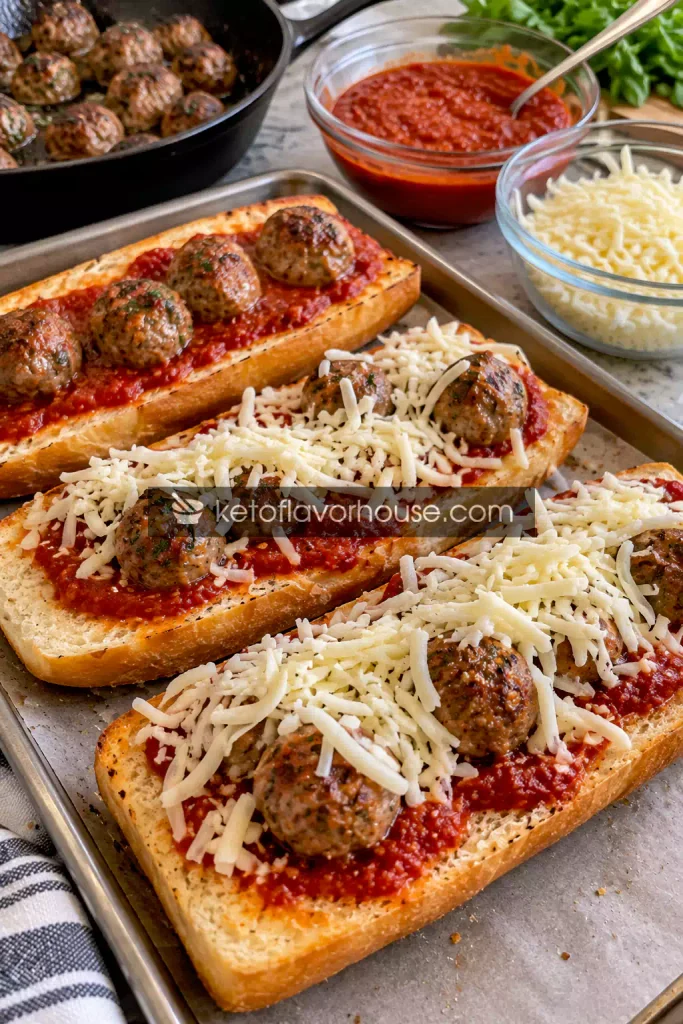
Spread the marinara across the cut surface of each bread portion. Use a thin, even layer and leave a small border near the edges.
The goal is to cover the bread without soaking it. If your sauce is particularly thin, use a little less than the full cup and reserve the remainder for serving. Thick sauce tends to stay in place more easily during baking.
Step 6: Arrange the meatballs and mozzarella
Divide the cooked meatballs evenly among the four portions. Depending on their exact size, each piece should receive approximately four meatballs.
Scatter the shredded mozzarella over the meatballs and sauce, distributing it toward the edges without letting too much cheese fall onto the tray. Sprinkle with the optional Parmesan if you want a stronger cheese flavor.
Step 7: Bake until the cheese melts
Return the assembled French bread pizzas to the oven for approximately 8–10 minutes, until the mozzarella is melted and the toppings are hot. If you want slightly more browning, use the broiler briefly while watching continuously. Broilers can brown cheese quickly, so do not leave the tray unattended.
Step 8: Rest, garnish, and serve
Remove the pizzas from the oven and let them rest for about 2–3 minutes. This helps the cheese settle slightly and makes the bread easier to cut or handle.
Add fresh basil or parsley if desired. Serve hot with a green salad or roasted vegetables. If you are portioning the recipe for meal prep, divide the bread and meatballs evenly before placing the portions into storage containers.
The step-by-step guide below summarizes the process.
From beef mixture to cheesy bread pizza
Mix
Combine beef, egg, breadcrumbs, Parmesan, and seasonings gently.
Shape
Form 16 similar-sized mini meatballs for even cooking.
Bake
Cook at 400°F until the beef reaches 160°F internally.
Toast
Lightly toast the cut bread surfaces for 3–4 minutes.
Top
Spread marinara, arrange meatballs, and add mozzarella.
Finish
Bake 8–10 minutes until the cheese melts; rest briefly before serving.
Common Mistakes to Avoid
Overmixing the meatball mixture
Mixing ground beef too aggressively can make meatballs compact and firm. The egg, breadcrumbs, cheese, and seasonings need to be distributed, but the mixture should not be kneaded like dough.
Solution: Combine the ingredients only until evenly mixed, then shape gently. If the mixture feels sticky, lightly dampen your hands rather than adding a large amount of breadcrumbs.
Making meatballs that are too large
Large meatballs take longer to cook and can dominate the bread. They may also be awkward to bite through when the pizza is served.
Solution: Divide the mixture into roughly 16 small meatballs of similar size. Consistency matters more than achieving a perfect sphere.
Skipping the bread toast
Un-toasted bread can absorb marinara and become soft in the middle. This is especially noticeable when the sauce is thin or the bread has a soft interior.
Solution: Toast the cut side briefly before adding toppings. A few minutes is usually sufficient; the goal is a firmer surface, not completely dry bread.
Adding too much sauce
A thick layer of marinara can slide off the bread and leave the center wet.
Solution: Spread a moderate layer and reserve any extra sauce for serving. Choose a thicker marinara when possible.
Overloading the cheese
More cheese is not always better. A very heavy layer can hide the meatballs and create an oily surface, depending on the cheese used.
Solution: Measure the mozzarella and distribute it evenly. If you increase the amount, remember that calories, protein, fat, and sodium will change.
Cutting the pizza too soon
Freshly baked cheese is very hot and can slide when the bread is moved.
Solution: Let the portions rest for 2–3 minutes before cutting or transferring them to plates. Use a serrated knife for cleaner slices through the bread crust.
The troubleshooting guide below brings these issues together.
French bread pizza troubleshooting
Use the texture of the bread and meatballs to guide small adjustments.
Likely cause: overmixing or overcooking. Mix gently, shape evenly, and check internal temperature.
Likely cause: too much sauce or no initial toast. Toast the cut surface and use a thinner sauce layer.
Likely cause: different sizes or a crowded tray. Make evenly sized meatballs and leave space between them.
Likely cause: excessive broiler heat or a tray too close to the element. Use the middle rack and monitor closely.
Likely cause: cutting while the cheese is extremely hot. Rest for 2–3 minutes and use a serrated knife.
Pro Tips for the Best Results
Use lean but not extremely lean beef. Around 90% lean beef provides a practical balance between protein and moisture. Very lean ground beef can become dry if overcooked, while higher-fat beef may leave more grease on the tray.
Keep the meatballs small and consistent. This makes the cooking time more predictable and ensures that each serving receives a similar amount of meat.
Use freshly shredded mozzarella if convenient. Pre-shredded cheese is convenient, but some products contain anti-caking ingredients that can affect melting. Either can work; use the cheese you prefer and avoid piling it too thickly.
Choose marinara with a thick consistency. A thicker sauce is easier to spread in a modest layer and less likely to soak the bread. If your sauce is thin, start with a smaller amount.
Do not confuse browned meatballs with fully cooked meatballs. Color can be misleading, especially with ground meat. Use an instant-read thermometer and check for 160°F (71°C).
Add herbs at the end. Fresh basil or parsley gives a fresher finish when added after baking. Dried Italian seasoning is more suitable for the meatball mixture because its flavor disperses during cooking.
Portion before serving. Divide the meatballs and bread into four equal shares so the protein estimate per serving stays meaningful. If one portion receives much more beef or cheese than another, the actual macros will differ.
High-Protein Nutrition and Meal-Planning Strategy
These pizzas provide protein from beef, egg, mozzarella, and Parmesan. The beef is the main contributor, making portioning an important part of calculating the amount of protein in each serving.
Why beef is a useful protein source
Beef contains complete protein, meaning it supplies all nine essential amino acids. It also provides nutrients such as vitamin B12, zinc, and iron. Those nutrients contribute to normal body functions, but the amount you obtain from this recipe will depend on the beef quantity and the products used.
Egg and cheese add smaller amounts of protein. Together, these ingredients help the recipe reach an estimated 49 grams of protein per serving. This makes it a substantial protein-containing dinner, although it is not a low-calorie or low-carbohydrate meal.
How it fits into a high-protein day
Protein needs vary with body size, activity, age, and individual goals. Instead of relying on one unusually large protein-rich meal, many people find it practical to include meaningful protein sources at breakfast, lunch, dinner, and snacks.
The International Society of Sports Nutrition discusses total daily intake and distributing protein across meals as considerations for physically active adults. This recipe can contribute to that broader pattern, but your daily needs depend on your own circumstances and overall diet.
How to build a balanced plate
Because French bread is the base, the recipe also supplies substantial carbohydrates. To balance the meal, serve it with a green salad, steamed broccoli, or roasted vegetables. These additions provide variety, fiber, and different micronutrients without changing the pizza itself.
If your goal is to reduce calories while maintaining a substantial protein portion, you could use a leaner ground beef product, measure the cheese carefully, and serve a generous portion of vegetables alongside the pizza. However, reducing cheese or meat changes the nutrition, so recalculate the recipe rather than retaining the original estimates.
The visual guide below shows ways to use the recipe in meal planning.
Build the meal around your portion
Protein anchor
Divide the beef meatballs evenly among four portions; beef and cheese provide most of the protein.
Carbohydrate source
French bread supplies much of the meal’s carbohydrates. Consider your overall daily needs when choosing a portion.
Add vegetables
Serve with a green salad or roasted vegetables for variety and additional fiber.
Plan leftovers
Store equal portions so the amount of bread, meat, and cheese is easier to track.
Variations You Can Try
Spicy Meatball French Bread Pizzas
Add crushed red pepper flakes to the meatball mixture or use a spicy marinara. This creates a little heat without changing the cooking method. Packaged spicy sauces may contain more sodium or added sugar, so check the label.
Extra-Cheesy Meatball Pizzas
Add a modest amount of extra mozzarella or a little provolone. The result will be richer, with a more pronounced melted-cheese layer. Additional cheese increases calories, fat, protein, and sodium; it should not be assumed that more cheese automatically makes the meal more balanced.
Turkey Meatball French Bread Pizzas
Replace the beef with ground turkey. The flavor will be milder, and lean turkey may produce a firmer texture if cooked too long. Use an appropriate internal temperature for the specific ground turkey product and update the nutrition from the package label.
Chicken Meatball French Bread Pizzas
Ground chicken offers another pork-free alternative. It works with Italian seasoning, Parmesan, marinara, and mozzarella, though the mixture may be softer to handle. Shape gently and ensure the meatballs reach a safe internal temperature.
Vegetable-Loaded French Bread Pizzas
Add finely chopped bell peppers, mushrooms, or spinach. Cook watery vegetables first if needed, then drain off excess moisture. Adding raw vegetables directly in large amounts can release liquid onto the bread. Vegetables change the texture and add carbohydrates, fiber, and other nutrients depending on quantity.
Whole-Wheat French Bread Version
Whole-wheat French bread may add more fiber than a comparable white loaf, depending on the product. Its flavor is more robust, and the texture can be slightly denser. It is not necessarily lower in calories or carbohydrates, so check the package information.
The comparison below outlines the main changes to consider.
Choose your meatball pizza variation
Keep the basic method, then make one measured change.
Spicy marinara
Adds a warm, spicy kick; check sauces for added sugar and sodium.
Mozzarella + provolone
Creates a richer cheese flavor and changes fat, calories, protein, and sodium.
Ground turkey
A lighter flavor; texture and nutrition depend on the fat content.
Mushrooms & peppers
Adds color and vegetables; cook watery toppings before assembling.
Additional Tips for This Recipe
A few small adjustments can make the recipe more convenient without changing its identity.
- Prepare the meatball mixture earlier: You can mix and shape the meatballs ahead of time, keep them refrigerated, and bake them when ready to assemble the pizzas.
- Use a thick marinara: This reduces the chance of the bread becoming soggy and makes the finished portions easier to handle.
- Measure the cheese: A measured quantity makes it easier to compare nutrition between batches.
- Cut the bread evenly: Four similar portions make the recipe easier to serve as four meals.
- Add the fresh herbs after baking: This preserves their fresh flavor and prevents them from darkening in the oven.
- Let the pizzas rest briefly: A few minutes is enough to make the topping easier to manage without letting the bread become cold.
Optional Additions
Fresh basil: Adds a bright, herbal finish. It contributes very little protein at typical garnish quantities, but gives the pizza a fresher aroma.
Red pepper flakes: Add heat without significantly changing the overall texture. Use a small amount and adjust to taste.
Sautéed mushrooms: Bring an earthy flavor and additional texture. Cook them first so excess water does not soak into the bread.
Chopped bell pepper: Adds sweetness and crunch. Use a moderate amount and consider sautéing it briefly for a softer topping.
Extra lean beef: If you want to increase the proportion of lean meat in a larger batch, additional beef can supply more protein, but it also changes the serving count, calorie level, and topping balance.
Part-skim mozzarella: Can reduce fat compared with some whole-milk mozzarella products. It may melt differently, so choose a product you enjoy.
Avoid mixing protein powder into the meatball mixture. It is not a natural substitute for beef or breadcrumbs in this recipe, and it can create a dry or unusual texture. For a practical increase in protein, adjust the quantity of meat or serve the pizza with another suitable protein source.
Serving Ideas
With a crisp green salad
A green salad with lettuce, cucumber, and a light vinaigrette contrasts with the warm bread, melted cheese, and tomato sauce. It also provides vegetables without requiring another cooked dish.
With roasted vegetables
Broccoli, zucchini, green beans, or bell peppers make useful companions. Roasting adds texture and can be done while the meatballs are baking if oven space allows.
As a family dinner
Serve each person one portion of French bread pizza with a vegetable side. The recipe has a familiar pizza flavor, making it straightforward to serve to family members with different preferences.
For meal prep
Divide the baked pizzas into equal portions and store them individually. Reheating one portion at a time helps you manage portions and avoid repeatedly warming the entire batch.
For a casual gathering
Cut the bread portions into smaller pieces after baking and arrange them on a platter. Smaller servings are convenient for sharing, but count the portions appropriately if you are tracking nutrition.
The serving ideas below give a quick visual guide.
What to serve with meatball French bread pizza
Choose a fresh or vegetable-based side to round out the meal.
Green salad
Fresh greens and a light dressing balance the rich cheese and meat.
Roasted broccoli
Adds a warm vegetable side with a firm texture and browned edges.
Roasted zucchini
A mild side that pairs naturally with tomato sauce and Italian herbs.
Meal-prep box
Pack an equal pizza portion with vegetables for a ready-to-reheat meal.
Storage and Reheating Recommendations
Because this recipe contains cooked ground beef, cheese, and sauce, leftovers should be refrigerated promptly.
Refrigerating leftovers
Allow the pizzas to stop steaming heavily, then place leftovers in shallow, airtight containers and refrigerate within two hours of cooking. Use them within 3–4 days when properly stored at 40°F (4°C) or below. For the best texture, refrigerate individual portions rather than stacking hot pieces together.
Reheating in the oven
Preheat the oven to around 350°F (177°C). Place a portion on a baking sheet and heat for approximately 8–12 minutes, checking that the center is hot. The bread will generally regain more of its crispness in the oven than in the microwave.
Actual reheating time varies with portion size and refrigerator temperature. If the cheese begins to brown too much before the center is hot, cover the portion loosely with foil.
Reheating in an air fryer
An air fryer can work well for one or two portions. Start at 325–350°F (163–177°C) and heat for several minutes, checking frequently so the bread does not burn. A smaller appliance may heat faster than a full oven.
Reheating in the microwave
The microwave is the quickest option, but the bread tends to become softer rather than crisp. Use short intervals until hot, and allow the portion to stand briefly before eating.
Can you freeze them?
You can freeze assembled, fully cooked portions, although the bread may lose some of its original texture after thawing. Cool the pizzas promptly, wrap individual portions securely, and freeze in a suitable airtight container. For best quality, use within about 2 months.
Thaw in the refrigerator when possible, then reheat in the oven or air fryer until thoroughly hot. Do not thaw at room temperature. If the bread becomes softer after thawing, an oven or air fryer can help restore some crispness.
The storage timeline below summarizes the process.
Storage and reheating timeline
Cool briefly
Divide into portions and refrigerate promptly, within two hours.
3–4 days
Store in shallow, airtight containers at 40°F (4°C) or below.
Best within 2 months
Freeze wrapped portions for better quality; bread texture may change.
Oven or air fryer
Heat until hot throughout; these methods usually preserve crispness better than microwaving.
Frequently Asked Questions
Is this recipe genuinely high-protein?
This version provides an estimated 49 grams of protein per serving, based on four equal servings and the specified amounts of beef, egg, and cheese. The actual value depends on the bread and ingredient brands. Calculate the recipe using the nutrition labels on your products before publishing a final macro claim.
Can I use ground turkey instead of beef?
Yes. Ground turkey works as a substitute, although its flavor and fat content may differ. Very lean turkey can become dry, so mix gently and avoid overcooking. Recalculate the calories, protein, and fat using the specific turkey product.
Can I add protein powder to the meatballs?
Protein powder is not recommended here. It does not replace the structural role of the beef, egg, or breadcrumbs, and it may produce a dry or chalky texture. If you want more protein, using a measured amount of additional lean meat or adjusting the portion balance is a more practical approach.
Is this recipe suitable for post-workout meals?
It can be one option in a post-workout meal because it provides protein and carbohydrates. Whether it fits your needs depends on your overall diet, appetite, training schedule, and individual goals. The recipe does not independently guarantee muscle growth or improved recovery.
Can I use plant-based meatballs?
You can use plant-based meatballs, but their protein content varies widely. Some products contain considerably less protein than lean beef, while others are designed to provide more. Choose a product whose taste and texture you enjoy, cook according to package directions, and recalculate the nutrition.
Can I prepare the recipe ahead?
Yes. You can shape the meatballs ahead and refrigerate them before cooking, provided you handle raw meat safely. You can also bake the meatballs ahead, chill them promptly, and assemble the bread pizzas closer to serving time. This separates the preparation into manageable stages.
How do I keep the bread from becoming soggy?
Toast the cut bread surface briefly before adding toppings, use a moderately thick marinara, and avoid overloading each portion with sauce. These steps help the bread remain firm beneath the meatballs and cheese. Let the finished pizzas rest only briefly before serving.
Can I make this recipe gluten-free?
You can use a suitable gluten-free bread and gluten-free breadcrumbs, but the final texture and nutrition will depend on the products selected. Check the labels of the bread, breadcrumbs, and marinara. A gluten-free version is not necessarily lower in carbohydrates or higher in protein.
Can I freeze the leftovers?
Yes, although the bread may soften slightly after freezing and thawing. Freeze individual cooked portions in secure wrapping and use within about two months for best quality. Thaw in the refrigerator when possible and reheat in the oven or air fryer until thoroughly hot.
How can I increase the protein further?
You could increase the beef portion modestly, choose a leaner high-protein meatball mixture, or serve the pizza with a suitable protein-rich side. Adding more mozzarella also adds protein, but it increases calories and fat as well. Any change to the ingredients or portions requires a new nutrition estimate.
Nutritional Breakdown Per Serving
The nutrition estimate below assumes the full recipe is divided into four equal servings, with one quarter of the bread loaf, four small beef meatballs, one quarter of the marinara, and an equal share of the cheese in each portion.
| Nutrient | Estimated amount per serving |
|---|---|
| Calories | 720 kcal |
| Protein | 49 g |
| Total fat | 27 g |
| Total carbohydrates | 71 g |
| Fiber | 4 g |
| Net carbohydrates | 67 g |
| Sugar | 9 g |
| Sodium | 1,350 mg |
These figures are estimates based on typical ingredient values and may vary with the bread loaf, ground beef, marinara, and cheese brands. Sodium can vary particularly widely because both bread and cheese may contain more sodium than expected. The optional topping cheese and fresh herbs should be included in your calculation if you use them.
Net carbohydrates are calculated by subtracting dietary fiber from total carbohydrates. In this estimate, 71 grams of total carbohydrates minus 4 grams of fiber equals approximately 67 grams of net carbohydrates per serving.
For a more accurate result, calculate each ingredient using the label on the exact product you use, add the figures for the entire recipe, and divide by the number of servings. Do not treat these estimates as laboratory-tested values.
Per serving · ¼ of the recipe
Based on the stated French bread, lean beef, egg, breadcrumbs, marinara, and cheeses.
All values are approximate. Product labels and actual portion weights may change the nutritional totals.
Recipe Snapshot
- Recipe Name: High-Protein Cheesy Meatball French Bread Pizzas – Easy Family Dinner
- Prep Time: 15 minutes
- Cook Time: 25 minutes
- Total Time: Approximately 40 minutes
- Course: Dinner / Main Dish
- Cuisine: American, Italian-inspired
- Servings: 4
- Calories per serving: Approximately 720 kcal
- Protein per serving: Approximately 49 g
- Short ingredients list: French bread, lean ground beef, egg, breadcrumbs, Parmesan, Italian seasoning, garlic powder, marinara, mozzarella, and optional fresh herbs.
Closing Note
These meatball French bread pizzas make it easy to serve a familiar, cheesy dinner with a substantial amount of protein and straightforward preparation. The most important details are to cook the beef safely, keep the meatballs evenly sized, toast the bread briefly, and use just enough sauce to bring the toppings together. Serve them hot with a simple vegetable side, and store any leftovers promptly for another meal. With measured portions and flexible toppings, this recipe can become a practical part of a varied, high-protein meal plan.
High-Protein Cheesy Meatball French Bread Pizzas – Easy Family Dinner

Ingredients
For the meatballs:
- 1 pound 454 g lean ground beef, approximately 90% lean
- 1 large egg
- ¼ cup about 27 g plain breadcrumbs
- ¼ cup about 25 g finely grated Parmesan cheese
- 1 teaspoon Italian seasoning
- ½ teaspoon garlic powder
- ½ teaspoon salt
- ¼ teaspoon ground black pepper
For the pizzas:
- 1 large French bread loaf approximately 16 ounces (454 g)
- 1 cup about 240 g marinara sauce
- 1½ cups about 170 g shredded mozzarella cheese
- 2 tablespoons about 10 g grated Parmesan cheese, optional
- 1 tablespoon chopped fresh basil or parsley optional
Instructions
- Preheat the oven to 400°F (204°C). Line a rimmed baking sheet with parchment.
- Combine the ground beef, egg, breadcrumbs, Parmesan, Italian seasoning, garlic powder, salt, and pepper in a bowl. Mix gently until evenly combined.
- Shape the mixture into approximately 16 small, evenly sized meatballs and arrange them on the prepared baking sheet.
- Bake for approximately 15–18 minutes, or until the ground beef reaches an internal temperature of 160°F (71°C).
- Cut the French bread lengthwise and divide it into four equal portions. Place cut-side up on a baking sheet and toast for 3–4 minutes.
- Spread marinara sauce evenly across each bread portion, using a moderate layer to prevent sogginess.
- Distribute the cooked meatballs among the four portions, then top evenly with mozzarella and optional Parmesan.
- Return to the oven for 8–10 minutes, until the cheese has melted and the toppings are hot. Watch closely if using the broiler for extra browning.
- Rest for 2–3 minutes, garnish with fresh basil or parsley if desired, and serve warm.