This post may contains Amazon affiliate and other affiliate links. If you make a purchase through these links, I may earn a small commission at no extra cost to you. Your support helps me continue to provide quality content. I only recommend products I personally trust and believe will add value to your experience. For more details, please visit my Privacy Policy.
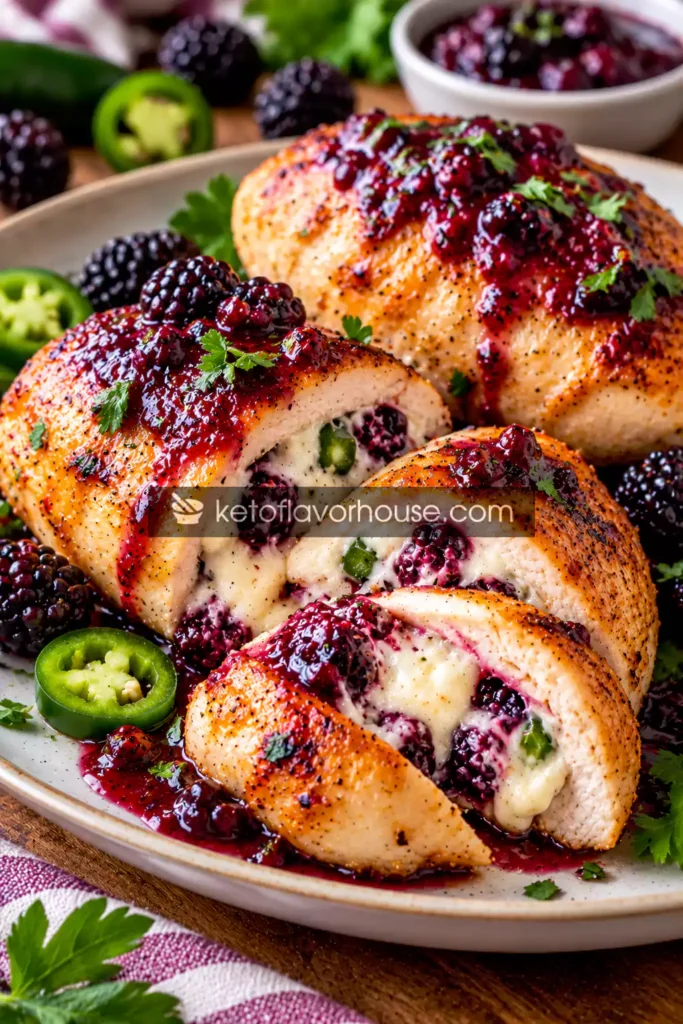
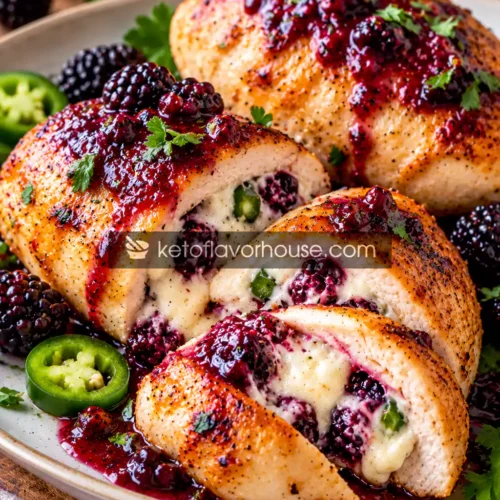
This 43g Protein Melty Blackberry Jalapeño Stuffed Chicken brings together juicy chicken breast, melted mozzarella, tangy cottage cheese, fresh blackberries, and a little jalapeño heat for a dinner that feels special without requiring complicated cooking. The combination may sound unexpected, but sweet-tart blackberries, creamy cheese, and spicy peppers balance one another beautifully. As the chicken bakes, the cheese filling becomes soft and melty, while a quick blackberry pan sauce adds a glossy, fruity finish.
The idea behind this recipe is to make a high-protein dinner more interesting than the usual chicken breast with a side of rice or vegetables. Chicken provides the main protein, cottage cheese adds creaminess and a little extra protein, and mozzarella creates the satisfying melted center. Fresh blackberries bring a burst of fruit flavor, while jalapeño keeps the filling from tasting too rich or sweet. A touch of balsamic vinegar in the sauce ties everything together with a little acidity.
For anyone trying to include more protein in everyday meals, this stuffed chicken is a practical option for dinner, meal prep, or a post-workout meal paired with suitable sides. The recipe uses familiar ingredients and straightforward cooking techniques: make a pocket in each chicken breast, fill it carefully, sear for color, and finish in the oven. The key is controlling the filling and checking the chicken’s internal temperature so the meat stays juicy and the center cooks safely.
The title’s 43 grams of protein per serving is an estimate, based on using four similarly sized chicken breasts and dividing the recipe into four portions. Actual protein will vary with chicken size, product labels, and how much filling stays in each breast. The goal is a flavorful, protein-rich meal—not a promise that every chicken breast will contain exactly the same macros.
Why You’ll Love This Recipe
- 🍗 A high-protein centerpiece: Chicken breast supplies most of the protein, making this a substantial main dish.
- 🫐 A surprising sweet-savory combination: Blackberries add tart fruit flavor that pairs well with salty cheese and spicy jalapeño.
- 🧀 A melty, creamy middle: Mozzarella stretches as it melts, while cottage cheese softens the filling and contributes additional protein.
- 🌶️ Easy to adjust the heat: Remove the jalapeño seeds for a milder version, or leave some in if you prefer more spice.
- 🍳 Simple cooking method: A quick sear develops color, and the oven finishes cooking the stuffed chicken.
- 🍱 Meal-prep friendly: The chicken can be refrigerated and reheated for convenient lunches or dinners.
- 🥗 Flexible sides: Serve it with roasted vegetables, a green salad, cauliflower rice, quinoa, or your preferred grain.
- ⏱️ No complicated ingredients: Everything is available at a typical grocery store, and the blackberry sauce takes only a few minutes.
A protein-rich dinner with more flavor
Chicken breast is a convenient protein source, but it can taste dry or repetitive when cooked the same way every week. Stuffing creates a different texture and gives each serving a creamy center. The cheese filling adds richness, while the blackberry sauce brings a bright, slightly tangy finish that makes the chicken feel more like a special-occasion dish.
The recipe also makes portioning straightforward. One stuffed breast is the main protein serving, and the sauce is divided across the four portions. You can pair it with vegetables for a lighter dinner or add a whole grain when you want a more substantial meal.
Sweet, spicy, and creamy in every bite
Blackberries are not just a decorative garnish here. Their tartness cuts through the richness of melted cheese, while jalapeño brings a fresh, grassy heat. Balsamic vinegar helps the sauce taste balanced instead of overly sweet. If your berries are particularly tart, a small amount of honey can soften the sharpness without turning the sauce into a sugary glaze.
The filling is intentionally modest rather than overloaded. Too much cheese can escape from the pocket during cooking, so the goal is a creamy center that stays mostly inside the chicken. Keeping the ingredients measured also makes the nutrition estimate more consistent.
My Recipe Notes
The most important part of stuffed chicken is making a pocket that is deep enough for the filling but doesn’t cut through the breast. A sharp knife helps, but the technique is simple: hold the chicken steady on the board, place your hand flat on top, and carefully cut horizontally into the thickest side. Stop short of the opposite edge so the breast opens like a pocket rather than becoming two separate pieces.
The filling should be thick enough to stay in place. Cottage cheese can contain quite a bit of moisture, so draining off any excess liquid before mixing is useful. Small-curd cottage cheese blends more easily with mozzarella, and finely chopped blackberries distribute better than whole berries. The cheese will melt as the chicken cooks, so you don’t need to add large amounts of filling to create a soft, cheesy center.
The other detail that matters is cooking temperature. Chicken breasts vary considerably in thickness, and a stuffed breast takes longer to cook than a thin piece of chicken. Searing adds flavor, but it doesn’t guarantee that the middle is cooked. Use a food thermometer in the thickest part of the chicken, avoiding the cheese-filled pocket where possible, and make sure the chicken reaches 165°F (74°C) before serving.
For a more reliable result, let the chicken rest for about five minutes after cooking. This gives the juices time to settle and makes the breasts easier to serve without the filling spilling out immediately. Spoon the blackberry sauce over the top just before serving so its color and fruity aroma remain noticeable.
Required Equipment
Sharp Knife and Cutting Board
A sharp knife makes it easier to create a pocket in the chicken without cutting completely through it. Use a separate cutting board for raw poultry, and wash and sanitize the board, knife, and surrounding surfaces before handling ready-to-eat foods.
Mixing Bowl
Use a medium bowl to combine the cottage cheese, mozzarella, Parmesan, blackberries, jalapeño, garlic, and lemon zest. A sturdy bowl gives you room to fold the ingredients together without crushing the berries into a watery mixture.
Large Oven-Safe Skillet
An oven-safe skillet is useful because you can sear the chicken on the stovetop and transfer the same pan to the oven. This keeps cleanup simple and allows you to use the flavorful browned bits from the chicken when making the blackberry sauce.
If your skillet isn’t oven-safe, transfer the seared chicken to a lightly greased baking dish before baking.
Kitchen Tongs
Tongs help turn the chicken during searing without puncturing the meat and releasing too much filling. If you’re using toothpicks to secure the pockets, handle the breasts carefully so the filling stays inside.
Instant-Read Food Thermometer
This is the most useful tool for stuffed chicken. The breast may look golden on the outside while the center remains undercooked. Check the thickest part of the chicken and aim for 165°F (74°C). This follows USDA food-safety guidance for poultry.
Small Saucepan
A small saucepan is helpful if you prefer to make the blackberry sauce separately. It allows the berries, balsamic vinegar, and a little water to simmer gently until they form a spoonable sauce.
Ingredients and Substitutions
The recipe makes four servings, with one stuffed chicken breast per serving. For the most consistent result, choose chicken breasts of similar size and distribute the filling evenly.
For the chicken
- 4 boneless, skinless chicken breasts, about 6 ounces (170 g) each: The main protein source. Choose similarly sized breasts so they cook at roughly the same rate. Larger breasts may need additional oven time.
- 2 teaspoons olive oil: Used for searing and helps develop a golden surface. Avocado oil is a suitable alternative.
- 1 teaspoon smoked paprika: Adds mild smokiness and color. Regular paprika works if you prefer a more neutral flavor.
- ½ teaspoon garlic powder: Seasons the outside of the chicken without adding moisture.
- ½ teaspoon dried oregano: Adds a savory herbal note that works with the cheese and fruit.
- ½ teaspoon black pepper: Provides warmth without overpowering the blackberry filling.
- ½ teaspoon salt, or to taste: Enhances the flavor. Parmesan and mozzarella already contribute salt, so start modestly.
For the blackberry jalapeño filling
- ½ cup low-fat cottage cheese, about 110 g, drained if watery: Adds moisture and protein. Small-curd cottage cheese creates an even filling. For a smoother texture, briefly blend it before combining with the other ingredients.
- ½ cup shredded part-skim mozzarella, about 56 g: Creates the melty center. Freshly shredded mozzarella is useful, but pre-shredded cheese also works.
- 2 tablespoons finely grated Parmesan, about 10 g: Adds savory depth and helps balance the fruit’s sweetness. Pecorino can substitute, but it generally tastes saltier.
- ½ cup fresh blackberries, about 70 g, chopped: Provides juicy fruit flavor. Cut the berries into small pieces so they distribute through the filling without creating large wet pockets.
- 1 small jalapeño, finely diced: Brings fresh heat. Remove the seeds and inner membrane for a gentler flavor, or retain a small amount for more spice.
- 1 garlic clove, minced: Adds aroma and savory flavor inside the filling.
- 1 teaspoon lemon zest: Brightens the cheese and blackberry combination without making the mixture watery.
- Pinch of black pepper: Adds a little extra seasoning to the filling.
For the quick blackberry sauce
- ½ cup fresh or frozen blackberries, about 70 g
- 1 tablespoon balsamic vinegar
- 1 teaspoon honey, optional
- 1 teaspoon water, plus more as needed
- Small pinch of salt
The sauce uses a modest quantity of honey, and it can be omitted if you prefer a tarter finish. Blackberries already contain natural sugars, so you don’t need much additional sweetness. Frozen berries can be used without thawing first, although they may release liquid more quickly.
Ingredient substitutions and their effects
Cottage cheese: Blended cottage cheese gives the filling a smoother consistency. Ricotta can be substituted, but protein content varies and is often lower than that of cottage cheese. The filling may also become softer.
Mozzarella: Monterey Jack melts well and gives a slightly richer flavor. Cheddar creates a sharper taste but may separate more visibly as it melts. The protein and fat values will differ by cheese.
Blackberries: Raspberries can provide a similar tart fruit flavor, while chopped strawberries create a sweeter filling. Fruit substitutions change the water content, natural sugar, fiber, and final sauce consistency.
Jalapeño: Finely diced poblano pepper offers milder heat. Red pepper flakes can also be used, but they provide a drier, more direct heat and lack the fresh texture of chopped pepper.
Parmesan: A little extra mozzarella can replace it, although the filling will lose some of its sharp, savory character. If using a saltier hard cheese, reduce the added salt.
How to Make 43g Protein Melty Blackberry Jalapeño Stuffed Chicken
Step 1: Preheat the oven and prepare the filling
Preheat the oven to 400°F (200°C). Pat the chicken breasts dry with paper towels and set them on a clean cutting board.
In a bowl, combine the cottage cheese, mozzarella, Parmesan, chopped blackberries, jalapeño, minced garlic, lemon zest, and a pinch of black pepper. Fold the mixture gently so the berries remain in small pieces rather than turning into a puree.
If the cottage cheese has liquid pooled around it, drain it first. The mixture should look thick enough to spoon into the chicken without running. If it appears loose, place it in the refrigerator for 5–10 minutes while you prepare the chicken.
Step 2: Cut a pocket in each chicken breast
Lay one chicken breast flat on the cutting board. Hold it steady with your non-knife hand and carefully cut horizontally into the thickest side to create a pocket. Stop before cutting through the opposite edge.
Repeat with the remaining breasts. The opening should be wide enough for the filling but still have intact sides and a base to contain it. If you accidentally cut through one side, don’t worry: use a little less filling and secure the opening with toothpicks.
Avoid making the pocket extremely deep or close to the thin edge of the breast. A wide opening in the thickest area allows more even filling distribution and reduces the chance of the chicken splitting as it cooks.
Step 3: Season the chicken
Mix the smoked paprika, garlic powder, oregano, salt, and black pepper in a small bowl. Rub the seasoning evenly over the outside of each chicken breast, including around the pocket opening.
Seasoning the outside is important because the filling should not have to carry all the flavor. The chicken itself will taste better when each bite includes the smoky, herbal coating along with the cheese and berries.
Use clean hands or tongs once the raw chicken is seasoned. Keep the filling bowl and other ready-to-eat ingredients away from surfaces that have touched raw poultry.
Step 4: Stuff the chicken breasts
Divide the filling evenly among the four pockets, using a spoon to push it into the center. Leave enough space near the opening to close the chicken without squeezing the filling out.
Don’t force every last bit into the breasts. A modest amount of filling that fits comfortably is better than an overstuffed breast that splits during cooking. If necessary, secure the opening with one or two toothpicks. Keep track of them so they can be removed before serving.
The filling will soften as it heats, and some cheese may escape. A small amount of leakage is normal; the aim is simply to keep most of the mixture inside each breast.
Step 5: Sear the chicken
Heat the olive oil in a large oven-safe skillet over medium-high heat. When the oil is shimmering, add the stuffed breasts carefully, placing the seam-side up if possible so the opening has less direct pressure against the pan.
Sear for about 3–4 minutes on the first side, until the chicken develops a golden surface. Turn gently and sear the second side for another 2–3 minutes.
Do not try to cook the chicken completely at this stage. Searing develops flavor and color, while the oven finishes cooking the center. If the pan is crowded, work in batches or use a larger skillet.
Step 6: Bake until the chicken is safely cooked
Transfer the skillet to the preheated oven. If the skillet isn’t oven-safe, move the chicken to a lightly greased baking dish and scrape any browned bits from the skillet into the dish.
Bake for approximately 12–18 minutes, depending on the size and thickness of the breasts. Start checking the temperature early rather than relying entirely on the clock.
The thickest part of each chicken breast should reach 165°F (74°C). Insert the thermometer into the chicken meat without placing the probe directly in the melted cheese pocket, which can give a misleading reading. If one breast is thicker than the others, it may need a few extra minutes.
Step 7: Make the blackberry sauce
While the chicken bakes, place the remaining blackberries, balsamic vinegar, honey if using, water, and a pinch of salt in a small saucepan. Set over medium-low heat and cook for about 4–6 minutes, stirring and gently crushing some of the berries.
As the fruit softens, the mixture should turn glossy and lightly thickened. Add a teaspoon of water if the sauce becomes too concentrated before the berries break down. If it is too thin, simmer for another minute or two.
Taste before adding honey. Ripe blackberries may already provide enough sweetness, while tart berries may benefit from the small amount. The sauce should remain fruity and tangy, not candy-sweet.
Step 8: Rest, remove toothpicks, and serve
Transfer the chicken to a clean plate or board and let it rest for about 5 minutes. Remove all toothpicks before serving.
Spoon the warm blackberry sauce over each breast or serve it at the side. A little chopped parsley or thyme makes a fresh finishing touch, while a few extra berries add color. Serve with roasted vegetables, a crisp salad, or another side that fits your meal plan.
The process is easier to remember when broken down into the following stages.
Common Mistakes to Avoid
Stuffed chicken is easier than it looks, but a few details can affect whether the filling stays inside and the meat stays juicy.
Cutting completely through the chicken
Why it happens: The knife goes too deep while creating the pocket, leaving the filling with an open path to escape.
How to fix it: Cut horizontally into the thickest side and leave the opposite edge intact. If the pocket does split, use less filling and secure the opening with toothpicks.
Overfilling the pockets
Why it happens: The filling looks small in the bowl, so it is tempting to push all of it into each breast. As the cheese melts, however, the mixture expands and becomes more fluid.
How to fix it: Divide the filling evenly and leave room to close each pocket. If a little filling remains, cook it in a small oven-safe dish alongside the chicken rather than forcing it inside.
Using wet cottage cheese
Why it happens: Some cottage cheese products have liquid around the curds, which can thin the filling and create excess moisture.
How to fix it: Drain visible liquid before measuring or mixing. If the filling still feels loose, chill it briefly before stuffing the chicken.
Cooking over very high heat
Why it happens: High heat can brown the chicken too quickly without giving the center enough time to cook. The cheese may also leak before the meat has finished.
How to fix it: Sear over medium-high heat for color, then finish in a moderate oven. Check the internal temperature instead of increasing the heat to save time.
Skipping the resting period
Why it happens: Cutting the chicken immediately can release juices and allow the hot filling to spill out.
How to fix it: Rest the chicken for about five minutes after cooking. Remove toothpicks carefully, then spoon the sauce over the top.
Making the blackberry sauce too sweet
Why it happens: The natural sweetness of the berries is overlooked, and extra honey is added before tasting.
How to fix it: Simmer the berries with balsamic vinegar first, taste, and add the honey only if needed. A slightly tart sauce balances the cheese better than an overly sweet one.
Pro Tips for the Best Results
Choose chicken breasts of similar thickness. A thin breast may finish cooking before a much thicker one. If the pieces vary a lot, gently flatten the thicker ends with a meat mallet before making the pocket. Keep the meat covered while doing so, and avoid pounding so hard that the breast tears.
Keep the filling chunky, not watery. Finely chopped blackberries provide fruity pockets without turning the filling purple and liquid. If you prefer a more blended fruit flavor, mash only a small portion of the berries and keep the rest in pieces.
Use a thermometer. Chicken color can be misleading, especially when the outside is browned and the interior contains cheese. Insert the thermometer into the thickest chicken meat, not directly into the filling, and check each breast if they differ in size.
Let the skillet do the browning. Once the chicken touches the hot pan, give it time to develop color before turning. Constantly moving it can prevent browning and tear the pocket.
Don’t overreduce the sauce. The blackberry sauce should be thick enough to coat a spoon but loose enough to drizzle. It will thicken slightly as it cools, so stop cooking when it looks just a little thinner than your desired serving consistency.
Use honey as an adjustment, not the starting point. Ripe blackberries can be surprisingly sweet. Start with the berries and balsamic, taste, then add the optional honey only if the sauce needs it.
Balance the plate. Pairing the chicken with roasted vegetables or salad adds volume, texture, and nutrients without requiring a large portion of extra sauce. If you need more energy for a demanding training day, add an appropriate serving of rice, quinoa, or potatoes.
Keep garnish simple. Fresh thyme, parsley, or a few whole blackberries provide color without competing with the stuffed chicken. A little lemon zest just before serving can sharpen the fruity and cheesy flavors.
High-Protein Nutrition and Meal-Planning Strategy
The main protein source in this recipe is chicken breast, supported by cottage cheese and mozzarella in the filling. Together, they make the dish useful for people who want protein to be a noticeable part of lunch or dinner.
How the recipe contributes protein
A 6-ounce (170 g) raw chicken breast provides a substantial portion of the meal’s protein. Cottage cheese and mozzarella contribute additional protein while giving the stuffing its creamy texture. Parmesan adds flavor and a small amount of extra protein.
The estimated total is approximately 43 g per serving, but this figure depends on the chicken’s weight and the nutrition labels for the dairy products. A smaller chicken breast or a different cheese blend could lower the total. For precise tracking, weigh the chicken raw and calculate from the package information.
Protein distribution across the day
A high-protein dinner can help you reach a daily protein target, but your total needs depend on factors such as body size, activity, age, and individual goals. The International Society of Sports Nutrition discusses how protein needs vary with training and other individual factors; one meal does not determine muscle gain or recovery by itself.
If you prefer to spread protein across the day, this chicken can form one of several protein-containing meals, alongside options such as eggs, yogurt, fish, beans, or lean meat. Pair the chicken with a side that meets your energy needs rather than assuming a lower-calorie meal is always better.
Meal prep without sacrificing texture
This recipe can be meal-prepped, although the stuffed breasts are best served shortly after cooking. Cooked chicken, filling, and sauce all keep well enough for planned leftovers when stored promptly and safely.
For the best result, store the blackberry sauce separately and add it after reheating. The chicken can be portioned into individual containers with vegetables or grains, while the sauce stays in a small sealed container. This makes it easier to control the amount of sauce and avoids soaking the chicken during storage.
Post-workout meal ideas
This stuffed chicken can be part of a post-workout meal because it supplies protein. Depending on your training and energy needs, you may also want carbohydrates from potatoes, quinoa, rice, or whole grains, plus vegetables. There is no universal requirement to eat this exact dish after exercise; overall daily intake and a consistent eating pattern are more important than a single recipe.
Variations You Can Try
The blackberry-jalapeño combination is the signature flavor, but you can adjust the cheese, herbs, and spice level without changing the basic cooking method.
Extra-Spicy Blackberry Jalapeño Chicken
Leave some jalapeño seeds in the filling or add a small pinch of red pepper flakes. The heat will become more pronounced, so balance it with the creamy cottage cheese and mozzarella. Additional pepper contributes little protein and may slightly change the carbohydrate count, depending on the amount used.
Lemon-Herb Stuffed Chicken
Replace the smoked paprika with a little extra oregano and add more lemon zest. This gives the chicken a fresher, more herbal flavor that works well with a simple vegetable side. The cooking method remains unchanged.
Extra-Cheesy Version
Add 1–2 tablespoons of mozzarella across the four portions or use a little extra Parmesan. The filling becomes richer and may melt more readily out of the pocket, so do not overfill the chicken. Additional cheese increases calories and fat and may change protein and sodium values.
Raspberry Jalapeño Stuffed Chicken
Replace the blackberries in the filling and sauce with raspberries. Raspberries are similarly tart but can soften and break down more easily. Chop or crush them gently, and simmer the sauce only until it reaches a spoonable consistency.
Garlic-Herb Version
Add a little fresh thyme or parsley to the filling and use garlic powder in the exterior seasoning. This version emphasizes savory flavors and makes the fruit a little less dominant. Fresh herbs add aroma without substantially changing the nutrition in the small quantities used.
Chicken Thigh Version
Boneless, skinless chicken thighs can be used, but they are generally fattier and shaped differently from chicken breasts. You may need to roll or fold them around the filling and secure them carefully with toothpicks. Check the thickest part for 165°F (74°C), and calculate the protein and calorie values using the exact cut.
Tips for This Recipe
A few practical choices make the recipe easier to cook consistently and easier to fit into your usual meals.
Keep the chicken size consistent. The 43 g protein estimate assumes roughly 6-ounce chicken breasts. If some pieces are much smaller than others, protein and cooking time will vary. Choose similar sizes or weigh the portions before filling.
Use filling as a measured ingredient. Cheese contributes protein, but it also adds calories, fat, and sodium. More filling doesn’t necessarily make the recipe better, particularly if it leaks out during baking. Distribute it evenly instead.
Make the blackberry sauce while the chicken bakes. This uses the cooking time efficiently. Keep the sauce on low heat and stir it occasionally so it thickens without sticking.
Don’t discard the browned bits. If you sear the chicken in an oven-safe skillet and then make the sauce separately in the same pan after removing the chicken, the browned bits can add savory depth. If any drippings look burnt, wipe the pan rather than incorporating them.
Adjust the jalapeño gradually. Pepper heat varies. Taste a small piece of the raw pepper before deciding whether to use all of it, and wash your hands after handling. Avoid touching your eyes while preparing it.
Serve sauce separately if meal-prepping. This protects the outside of the chicken from becoming wet during storage and lets each person control the amount.
Optional Additions
These extras can change the flavor or make the meal more substantial. Keep additions modest and recalculate nutrition when the amounts become significant.
- Fresh thyme: A few leaves add an earthy, herbal note that works well with blackberries.
- Chopped parsley: Adds freshness and a bright green finish without competing with the sauce.
- Lemon zest: A little extra zest sharpens the fruit and cheese flavors.
- Red pepper flakes: Increase the heat without adding liquid to the filling.
- A small amount of extra Parmesan: Intensifies the savory flavor, but also adds salt and calories.
- Extra blackberries: Provide a fruitier sauce and more fiber, while increasing total carbohydrates and natural sugar.
- Roasted garlic: Brings a sweeter, mellow garlic flavor if raw garlic feels too sharp.
- Chopped walnuts on the side: Add crunch and unsaturated fat, but they also increase calories and are better served as a side garnish rather than inside the pocket where they could interfere with sealing.
Avoid adding protein powder directly into the filling. It can create a chalky texture and may absorb moisture unpredictably. The chicken, cottage cheese, and mozzarella already provide the recipe’s protein, so extra powder is unnecessary.
Serving Ideas
The stuffed chicken has a rich, fruity, cheesy center, so sides with fresh flavor or a slightly crisp texture work particularly well.
With roasted broccoli or green beans
Roast broccoli or green beans with a measured drizzle of olive oil, black pepper, and garlic. Their slightly crisp edges contrast with the soft cheese filling, and they add vegetables without competing with the blackberry sauce.
With a fresh green salad
Serve the chicken with spinach or mixed greens, cucumber, and a light lemon vinaigrette. The acidity balances the rich filling. Keep the dressing on the lighter side so it doesn’t compete with the blackberry sauce.
With cauliflower rice
Cauliflower rice creates a lower-carbohydrate side with a mild flavor that works well with the chicken. Season it with garlic, parsley, and lemon, and keep it fairly simple so the stuffed chicken remains the focus.
With quinoa or brown rice
If you want a more substantial meal, a modest portion of quinoa or brown rice provides carbohydrates and additional texture. This can be useful for people who need more energy around training or simply prefer a heartier dinner.
With roasted sweet potatoes
Roasted sweet potatoes bring gentle sweetness that complements the berries and jalapeño. Since the sauce is also fruit-forward, season the potatoes with smoked paprika and black pepper rather than adding more sweet toppings.
For meal prep lunches
Pack one stuffed chicken breast with a portion of vegetables or grains, and store the blackberry sauce in a small separate container. Add the sauce after reheating. This keeps the chicken from sitting in liquid and gives you a more appealing texture at lunchtime.
Storage and Reheating
This recipe is suitable for meal prep if you cool, store, and reheat the chicken correctly. The main concern is avoiding overcooking, since chicken breast can dry out after repeated heating.
Refrigerating leftovers
Allow the chicken to rest after cooking, then transfer leftovers to a shallow airtight container and refrigerate within two hours. Keep the refrigerator at 40°F (4°C) or below.
Cooked chicken leftovers are generally best used within 3–4 days. Store the blackberry sauce separately when possible. This makes it easier to reheat the chicken without thinning the sauce or making the outside wet.
Freezing
You can freeze cooked stuffed chicken, although the texture of the cheese filling may change slightly after thawing. Cool completely, wrap each breast securely, and place the portions in a freezer-safe airtight container. For best quality, use within about 2–3 months.
Freeze the sauce separately in a small container if desired. Blackberries may soften after thawing, but the sauce is forgiving because it is already cooked down.
Reheating in the oven
Preheat the oven to 325°F (165°C). Place the chicken in an oven-safe dish with a tablespoon or two of water or broth, cover loosely with foil, and heat until warmed through. The time depends on the size of the breast and whether it is chilled or thawed from frozen.
For food safety, reheated leftovers should reach 165°F (74°C) in the center. Add the blackberry sauce near the end or serve it on the side to preserve its flavor.
Reheating in the microwave
Place a serving on a microwave-safe plate and cover loosely. Heat in short intervals at medium power, turning the chicken if practical, until hot throughout. Avoid heating for a long period all at once, as the outer meat can become dry before the center warms.
Meal-prep strategy
For the best result, store the stuffed chicken and sauce separately, and portion the side dishes into their own compartments. Reheat only the portion you plan to eat. Repeatedly warming and cooling the same batch can reduce quality and make food handling more difficult.
Frequently Asked Questions
Does each serving really have 43 grams of protein?
The recipe is designed to provide approximately 43 grams of protein per serving, using a 6-ounce raw chicken breast and the listed cottage cheese and mozzarella quantities. However, chicken breasts vary in size, and dairy products have different protein values. For an accurate number, check your labels and calculate the recipe based on the weight of the chicken you actually use.
Can I use frozen blackberries?
Yes. Frozen blackberries work in both the filling and sauce. For the filling, thaw them first and drain excess liquid, then chop them into small pieces. For the sauce, frozen berries can go directly into the saucepan, although they may release water and need a little extra simmering time.
Can I make the stuffed chicken ahead of time?
You can prepare the filling in advance and refrigerate it in a sealed container. You can also cut the pockets in the chicken shortly before cooking. For the best food safety and texture, avoid leaving raw stuffed chicken sitting at room temperature; assemble it close to cooking time or keep it refrigerated until ready to cook.
Can I use chicken thighs instead of chicken breasts?
Yes, boneless, skinless thighs can be filled, folded, and secured with toothpicks. They have a different shape and are generally higher in fat, so cooking time and nutritional values will differ. Use a thermometer to check for 165°F (74°C) in the thickest portion.
Is this a good post-workout meal?
It can be part of a post-workout meal because it provides a substantial amount of protein. Depending on your training and energy needs, you may want to pair it with carbohydrates such as rice, potatoes, or quinoa and a serving of vegetables. Your overall daily intake matters more than whether a particular dish is eaten immediately after exercise.
Can I make this recipe dairy-free?
The filling relies on cottage cheese, mozzarella, and Parmesan for its creamy, melty texture. Dairy-free replacements may work, but they vary considerably in protein content, moisture, and melting behavior. The recipe would need adjustment, and it would be important to recalculate the macros using the actual plant-based products.
How can I increase the protein further?
The easiest approach is to use chicken breasts that meet your intended serving size and choose cottage cheese and mozzarella with protein values that suit your goals. Avoid simply adding large amounts of cheese, since this also increases calories, fat, and sodium. Serve the chicken with a side of plain Greek yogurt-based dip or another protein-containing food if you want to increase the protein in the whole meal.
Can I add protein powder to the filling?
I wouldn’t recommend it for this recipe. Protein powder can absorb moisture and produce a chalky or pasty filling, particularly when heated with cheese. The chicken already supplies most of the protein, with the cottage cheese and mozzarella providing additional protein without changing the flavor too much.
How do I keep the filling from leaking out?
Create a pocket without cutting completely through the chicken, use a moderate amount of filling, and secure the opening with a toothpick if needed. Sear gently and transfer the chicken carefully to the oven. A little melted cheese may escape, but most of the filling should stay inside when the pocket is properly formed.
Can I use another fruit?
Raspberries are the closest alternative because they have a tart flavor that balances the cheese. Chopped strawberries or blueberries can also work, although their sweetness and moisture differ. Keep the total fruit amount close to ½ cup for the filling and adjust the sauce according to the taste of the fruit.
Nutritional Breakdown Per Serving
The following values are approximate and assume four servings made with 6-ounce raw chicken breasts, low-fat cottage cheese, part-skim mozzarella, Parmesan, blackberries, a small jalapeño, olive oil, and the listed sauce ingredients, including the optional teaspoon of honey.
| Nutrient | Estimated amount |
|---|---|
| Calories | 315 kcal |
| Protein | 43 g |
| Fat | 13 g |
| Total carbohydrates | 8 g |
| Fiber | 2 g |
| Net carbohydrates | 6 g |
| Sugar | 4 g |
| Sodium | 550–700 mg |
These values are estimates, not laboratory-tested nutrition information. Actual values can vary depending on chicken size, cheese brands, cottage cheese moisture, and whether honey is used. Net carbohydrates are calculated as total carbohydrates minus fiber. If your chicken breasts are smaller or larger than 6 ounces raw, protein and calories will change.
Recipe Snapshot
- Recipe name: 43g Protein Melty Blackberry Jalapeño Stuffed Chicken
- Prep time: 20 minutes
- Cook time: 25–30 minutes
- Total time: Approximately 45–50 minutes
- Course: Main course / dinner
- Cuisine: American-inspired, sweet-savory
- Servings: 4
- Calories per serving: Approximately 315 kcal
- Protein per serving: Approximately 43 g
A Final Note
This stuffed chicken combines familiar high-protein ingredients with a fruit-and-pepper filling that makes dinner feel less repetitive. Chicken breast supplies the main protein, cottage cheese and mozzarella create the melty center, and blackberries with jalapeño add a sweet-tart, gently spicy contrast. Serve it with vegetables for a lighter plate or add grains or potatoes when you want a more substantial meal. Measure the chicken and filling if
43g Protein Melty Blackberry Jalapeño Stuffed Chicken Recipe

Ingredients
For the chicken
- 4 boneless skinless chicken breasts, about 6 ounces (170 g) each
- 2 teaspoons olive oil
- 1 teaspoon smoked paprika
- ½ teaspoon garlic powder
- ½ teaspoon dried oregano
- ½ teaspoon black pepper
- ½ teaspoon salt or to taste
For the filling
- ½ cup low-fat cottage cheese about 110 g, drained if watery
- ½ cup shredded part-skim mozzarella about 56 g
- 2 tablespoons finely grated Parmesan about 10 g
- ½ cup fresh blackberries about 70 g, chopped
- 1 small jalapeño finely diced
- 1 garlic clove minced
- 1 teaspoon lemon zest
- Pinch of black pepper
For the blackberry sauce
- ½ cup fresh or frozen blackberries about 70 g
- 1 tablespoon balsamic vinegar
- 1 teaspoon honey optional
- 1 teaspoon water plus more if needed
- Small pinch of salt
Instructions
- Preheat the oven to 400°F (200°C). Pat the chicken breasts dry. In a bowl, combine the cottage cheese, mozzarella, Parmesan, chopped blackberries, jalapeño, garlic, lemon zest, and a pinch of black pepper.
- Carefully cut a horizontal pocket into the thickest side of each chicken breast, stopping before cutting through the opposite edge.
- Mix the smoked paprika, garlic powder, oregano, salt, and black pepper. Season the outside of each chicken breast evenly.
- Divide the filling between the four pockets, leaving enough room to close them. Secure the openings with toothpicks if needed.
- Heat the olive oil in a large oven-safe skillet over medium-high heat. Sear the chicken for 3–4 minutes on the first side and 2–3 minutes on the second, until golden.
- Transfer the skillet to the oven, or move the chicken to a lightly greased baking dish. Bake for approximately 12–18 minutes, depending on thickness, until the thickest part of the chicken reaches 165°F (74°C).
- While the chicken bakes, combine the sauce blackberries, balsamic vinegar, optional honey, water, and a small pinch of salt in a saucepan. Simmer over medium-low heat for 4–6 minutes, gently crushing some of the berries until the sauce thickens. Add a little water if necessary.
- Rest the cooked chicken for 5 minutes. Remove all toothpicks, spoon the blackberry sauce over the breasts or serve it alongside them, and enjoy.