This post may contains Amazon affiliate and other affiliate links. If you make a purchase through these links, I may earn a small commission at no extra cost to you. Your support helps me continue to provide quality content. I only recommend products I personally trust and believe will add value to your experience. For more details, please visit my Privacy Policy.
Introduction
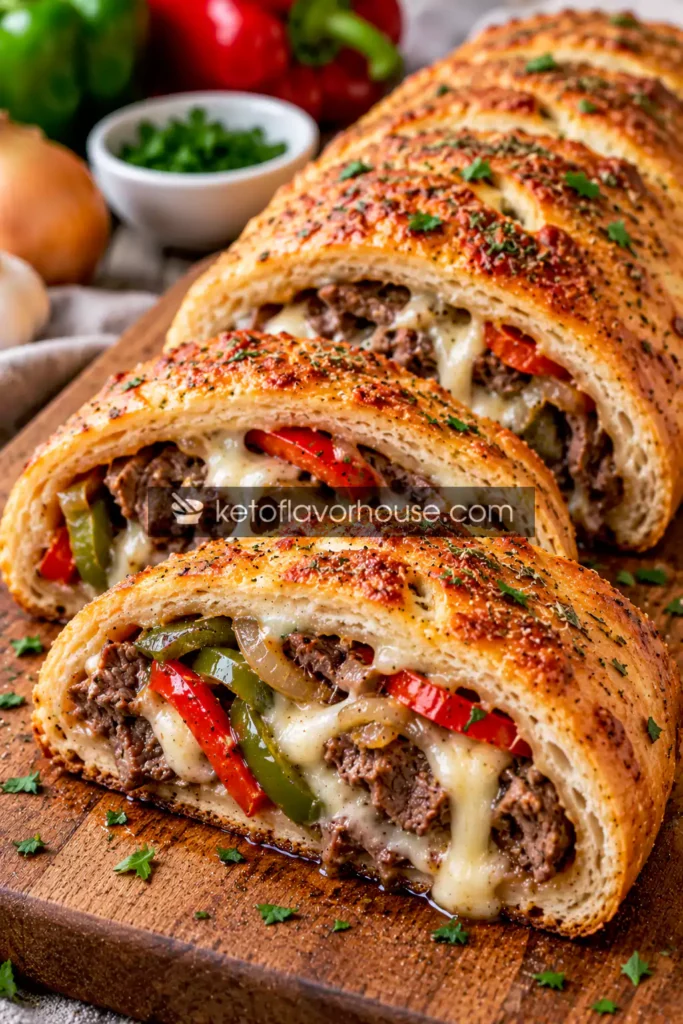
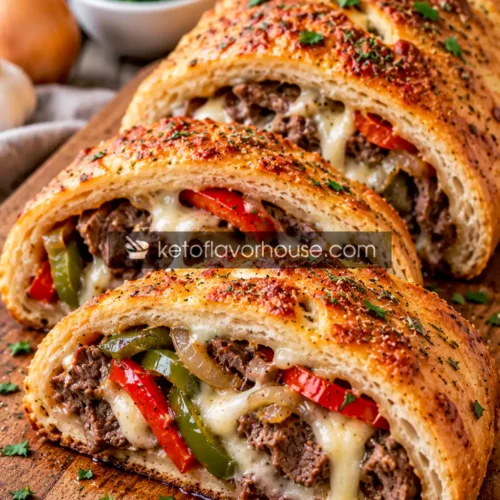
This 32g Protein Philly Cheesesteak Stromboli brings the familiar flavors of a cheesesteak sandwich into a golden, oven-baked roll filled with tender lean steak, sautéed peppers, sweet onions, and melted cheese. Instead of serving the filling inside a traditional hoagie roll, everything is wrapped in whole-wheat pizza dough and baked until the outside is crisp and golden. When you slice into it, you get savory steak, colorful vegetables, and gooey cheese tucked inside every piece.
The idea is to enjoy the comfort-food flavor of a Philly cheesesteak while making a few practical changes for an everyday healthy recipe. Lean sirloin supplies the main protein, whole-wheat dough adds a little more fiber than many refined-flour options, and peppers and onions bring extra vegetables and natural sweetness. A modest amount of cheese adds that classic cheesesteak flavor without letting the filling become overwhelmingly rich.
This stromboli works well for a family dinner, a weekend lunch, or meal prep when you want something more interesting than another plain chicken or steak plate. It is also easy to portion: slice the finished roll into four servings, pair it with a crisp salad or roasted vegetables, and you have a satisfying meal. The estimated 32 grams of protein per serving is a planning figure, not a guarantee; actual protein depends on the steak, dough, cheese, and how the stromboli is divided. The recipe is high-protein and designed with healthier ingredients, but it is not automatically keto or low-carb because it contains pizza dough.
The most important technique is to keep the filling relatively dry before it goes into the dough. Steak and vegetables can release moisture, and too much liquid can make the center soggy or cause the seams to open during baking. Cook the vegetables until tender, let the filling cool slightly, and roll the dough firmly without stretching it thin enough to tear.
Why You’ll Love This Recipe
- 🥩 Protein-rich filling: Lean sirloin provides most of the protein, with additional amounts from the cheese and dough.
- 🫑 Colorful vegetables: Bell pepper and onion add sweetness, color, and texture to the steak filling.
- 🧀 Classic cheesesteak flavor: A measured layer of provolone or part-skim mozzarella melts around the steak without making the filling excessively heavy.
- 🌾 Whole-wheat dough: Using whole-wheat pizza dough can provide more fiber than a comparable refined-flour dough, depending on the product.
- 🍽️ Easy to portion: One baked roll slices into four substantial servings for a family dinner.
- ⏱️ Practical preparation: The filling cooks in a skillet, then the oven finishes the stromboli.
- 🍱 Useful for leftovers: Slices can be refrigerated and reheated for another meal.
- 🥗 Easy to balance: Pair it with salad or roasted vegetables instead of relying on the stromboli alone to provide all the vegetables in your meal.
Cheesesteak flavor in a sliceable roll
A Philly cheesesteak is known for thinly sliced beef, softened onions, and melted cheese. This recipe keeps those familiar flavors but changes how they’re served. Rather than stuffing a hoagie roll at the last minute, you wrap the filling in dough and bake it all together. That makes the dish easier to slice, carry to the table, and pack for lunch.
Whole-wheat dough gives the crust a slightly nuttier taste and a heartier texture. It may be a little less elastic than conventional white pizza dough, so allow it to come to a workable temperature before rolling and avoid stretching it too thin. The aim is a crust that holds the filling while still baking into a tender, golden exterior.
A sensible balance of steak, vegetables, and cheese
A stromboli can quickly become heavy if it is packed with meat and cheese alone. Here, the peppers and onions provide volume and sweetness, while a modest quantity of cheese adds flavor and helps bind the filling. Lean sirloin provides the main protein source, keeping the recipe focused on the steak flavor rather than a very fatty filling.
That doesn’t mean this dish needs to be low in calories to be useful. The best portion depends on your overall needs and appetite. If you’re looking for a higher-energy meal, serve it with a more substantial side; if you prefer a lighter dinner, add a large green salad or extra roasted vegetables.
My Recipe Notes
When preparing a stromboli, I focus on three things: thinly sliced steak, filling that isn’t watery, and dough thick enough to hold everything. Thick chunks of beef can make the roll difficult to slice, while vegetables that haven’t released their moisture can leave a damp strip inside the crust. Cutting the steak thinly across the grain and cooking the vegetables before assembly helps create a more even filling.
The cheese should complement the steak rather than form a thick, greasy layer. Provolone is a familiar cheesesteak choice because it melts smoothly and adds a mild, savory tang. Part-skim mozzarella is another option if you want a milder flavor and stretchy texture. Either way, use a measured amount and distribute it evenly across the dough instead of piling it in the middle.
The seam is another detail worth paying attention to. Once the filling is spread over the dough, leave a clear border and roll the stromboli firmly without squeezing out the filling. Place it seam-side down on the baking sheet and cut a few small vents in the top. This gives steam a way out and helps reduce the chance of the roll splitting unpredictably during baking.
Finally, let the stromboli rest before slicing. The melted cheese and hot juices need a few minutes to settle, and the crust will be less likely to tear when you cut it. A serrated knife works particularly well because it cuts through the baked crust without crushing the filling.
Required Equipment
Large Skillet
A wide skillet gives the steak, peppers, and onions enough room to cook without steaming in excess moisture. If the pan is small, cook the beef in batches so it browns instead of releasing too much liquid. A nonstick or well-seasoned skillet also makes it easier to move the filling without leaving too much stuck to the bottom.
Cutting Board and Sharp Knife
A sharp knife is essential for cutting the steak into thin strips and slicing the vegetables evenly. If the steak is difficult to slice, chill it briefly in the freezer until firm but not frozen solid. Use a separate board for raw beef and wash the knife and board thoroughly before handling the dough or other ready-to-eat ingredients.
Mixing Bowl
A small bowl is useful for combining the steak seasonings before the meat goes into the skillet. Keeping the seasoning together helps distribute it evenly without adding multiple spices directly to the hot pan.
Rolling Pin
A rolling pin helps create an even rectangle of dough. If you don’t have one, a clean, smooth bottle can work in a pinch. Roll from the center outward and rotate the dough as needed, trying to maintain an even thickness rather than thinning the edges excessively.
Rimmed Baking Sheet
A rimmed baking sheet supports the stromboli and catches any cheese or juices that escape. Line it with parchment paper for easier cleanup, making sure the paper is suitable for the oven temperature and doesn’t extend near a heating element.
Pastry Brush or Small Spoon
A pastry brush or spoon can spread a light olive-oil coating over the top of the stromboli. This helps encourage browning, though too much oil can make the crust greasy.
Serrated Knife and Spatula
A serrated knife cuts through the baked crust cleanly, while a wide spatula helps transfer slices to plates. Letting the stromboli rest before cutting makes both tools more effective because the filling is less likely to spill out.
Ingredients and Substitutions
The ingredient list is intentionally simple. Lean steak brings the cheesesteak flavor, peppers and onions add color and sweetness, and a moderate amount of cheese creates a satisfying filling. Whole-wheat pizza dough makes the roll sturdy enough to slice and serve.
For the filling
- 1 pound (454 g) lean top sirloin steak, thinly sliced: The main protein source. Sirloin is flavorful without being as fatty as some other steak cuts. Slice thinly across the grain so the finished stromboli is easier to bite and slice.
- 2 teaspoons extra-virgin olive oil, divided: Used to sauté the vegetables and cook the steak. A measured amount helps brown the ingredients without leaving excess oil in the filling.
- 1 medium yellow onion, thinly sliced: Adds sweetness and the familiar aroma associated with cheesesteak fillings.
- 1 medium green bell pepper, thinly sliced: Provides the classic pepper flavor and a little crunch when cooked just until tender.
- 1 medium red bell pepper, thinly sliced: Adds extra color and a sweeter flavor. You can replace it with another green pepper, although the filling will taste less sweet.
- 2 garlic cloves, minced: Adds savory depth. Garlic is optional in some cheesesteak-style fillings, but it works well with the oregano and beef.
- 1 teaspoon Worcestershire sauce: Adds a savory, slightly tangy flavor. Check the label if you need to avoid particular allergens or ingredients; use a small splash of low-sodium beef broth instead if preferred.
- ½ teaspoon dried oregano: Gives the filling a subtle herbal note.
- ½ teaspoon smoked paprika: Adds mild smokiness and color without making the filling spicy.
- ½ teaspoon black pepper: Brings a gentle bite that balances the meat and cheese.
- ¼–½ teaspoon salt, to taste: Season conservatively because the cheese and Worcestershire sauce also contribute sodium.
For the stromboli
- 10 ounces (283 g) refrigerated whole-wheat pizza dough: Forms the golden outer layer and adds some protein and fiber. Use a dough that can be rolled thinly without tearing. Whole-wheat dough can be less elastic than white-flour dough, so let it rest briefly at room temperature if it resists rolling.
- 3½ ounces (about 100 g) part-skim provolone cheese, thinly sliced: Gives the stromboli its familiar cheesesteak flavor. Provolone melts smoothly and has a savory, slightly tangy taste.
- 1 teaspoon olive oil, optional, for brushing the dough: Encourages browning and helps the crust look golden. Use a thin coat rather than soaking the surface.
Why these ingredients work together
The steak and cheese create a savory, protein-rich center, while the onions and peppers provide natural sweetness that offsets the saltiness of provolone. Worcestershire sauce adds depth, and oregano and smoked paprika contribute gentle seasoning without overpowering the cheesesteak flavor.
Whole-wheat pizza dough gives the roll a little more fiber than some conventional refined-flour doughs, although the exact difference depends on the products. The dough still contributes a significant amount of carbohydrates, so this is best presented as a healthier, high-protein dinner rather than a keto recipe.
Practical substitutions
Top sirloin: Thinly sliced lean flank steak can work, though it may need careful slicing across the grain to remain tender. Lean shaved beef is another convenient option if its ingredient list is straightforward. Different cuts vary in fat, calories, and protein.
Provolone: Part-skim mozzarella gives a mild, stretchy center. Reduced-fat provolone can also work, but it may melt less smoothly or feel firmer. Cheddar has a sharper flavor that takes the stromboli in a different direction.
Whole-wheat pizza dough: Regular pizza dough is easier to stretch for some cooks, but it may have less fiber. A whole-wheat dough with added seeds or grains can change the texture and cooking time. Avoid substituting a thin tortilla directly; the result will resemble a wrap rather than a traditional stromboli.
Bell peppers: Use whichever color you prefer. Red and yellow peppers generally taste sweeter, while green peppers have a sharper flavor. Mushrooms can replace part of the pepper volume, but cook them first until their excess moisture evaporates.
Worcestershire sauce: A small amount of low-sodium beef broth can add moisture and some savory flavor, but it won’t reproduce the same tangy depth. If using broth, add just enough to season the filling without leaving liquid in the pan.
Olive oil: Avocado oil works well for cooking the beef and vegetables. It has a more neutral flavor, so the result may taste slightly different, but the cooking technique stays the same.
How to Make 32g Protein Philly Cheesesteak Stromboli
The filling needs to be cooked before it goes into the dough. This gives you better control over browning and moisture, and it allows the stromboli to bake mainly until the crust is golden and the cheese has melted.
Step 1: Prepare the oven and dough
Preheat the oven to 400°F (200°C). Line a rimmed baking sheet with parchment paper.
Remove the whole-wheat pizza dough from the refrigerator and let it rest according to the package directions until it is pliable enough to roll. Avoid leaving it out longer than necessary. Cold dough can spring back when rolled, while overly warm dough may become sticky and difficult to handle.
Step 2: Slice the steak
Trim away any large pieces of visible fat. Slice the sirloin very thinly across the grain, cutting long strips into shorter, bite-sized pieces. Thin slices cook quickly and are easier to chew once enclosed in the stromboli.
If the steak feels slippery or difficult to slice, place it in the freezer for 10–15 minutes to firm slightly. Don’t let it freeze solid; you only need the meat firm enough for clean, thin cuts.
Step 3: Cook the peppers and onions
Heat 1 teaspoon of olive oil in a large skillet over medium heat. Add the sliced onion and both bell peppers. Cook for about 6–8 minutes, stirring occasionally, until the vegetables soften and some edges begin to turn golden.
Add the minced garlic during the final 30–60 seconds. Garlic burns more quickly than onion and peppers, so it should be added near the end rather than cooked for the entire time.
Transfer the vegetables to a clean bowl. If they release liquid, continue cooking briefly until the pan is mostly dry. This matters because extra moisture trapped inside the dough can soften the bottom crust.
Step 4: Sear the steak
Add the remaining teaspoon of olive oil to the skillet. Increase the heat to medium-high and add the steak in a single layer, working in batches if needed.
Season with the Worcestershire sauce, oregano, smoked paprika, black pepper, and salt. Cook the thin strips for roughly 2–4 minutes, turning as needed, until browned and cooked to your preferred doneness. Thin steak cooks quickly, so avoid leaving it in the skillet while you prepare the rest of the ingredients.
Return the peppers and onions to the pan and toss everything together for about 30 seconds. Taste and adjust the seasoning if necessary. Remove the filling from the heat and let it cool for 5–10 minutes before assembling.
Step 5: Roll out the dough
Place the dough on a lightly floured surface and roll it into a rectangle roughly 10 by 14 inches, depending on the dough’s elasticity. Aim for an even thickness from the center to the edges.
Whole-wheat dough can sometimes crack along the edges. If this happens, press the dough back together rather than stretching it harder. Leave the outer border intact so the roll can be sealed without the filling showing through.
Step 6: Add the steak filling and cheese
Spread the cooled steak, peppers, and onions over the center of the dough, leaving a border around the edges. Keep the filling relatively even and avoid adding liquid from the skillet.
Lay the provolone slices over the filling. Try to distribute them across the steak rather than stacking all the cheese in the middle. This gives each slice a more consistent cheesy center.
Don’t overload the dough. If there is more filling than will comfortably fit, serve the excess alongside the stromboli rather than forcing the roll closed.
Step 7: Roll and seal the stromboli
Fold the long sides of the dough slightly inward, then roll the dough from one long edge toward the other to form a log. Seal the seam by pinching the dough gently. Fold the ends underneath or pinch them closed so the cheese has fewer places to escape.
Transfer the log to the baking sheet with the seam facing down. Brush the top lightly with the optional teaspoon of olive oil. Use a sharp knife to make 3–4 small diagonal vents in the top of the dough. These allow steam to escape during baking.
Step 8: Bake until golden
Bake for 22–28 minutes, checking at about 20 minutes. The crust should be golden, the dough should look cooked rather than wet, and melted cheese may appear at the vents.
If the top browns too quickly while the underside is still pale, move the tray to a lower rack for the remaining time. Avoid increasing the oven temperature to speed up cooking because the crust may darken before the dough in the center finishes baking.
Step 9: Rest before slicing
Remove the stromboli from the oven and let it rest for 8–10 minutes on the baking sheet. This gives the cheese time to settle and makes slicing easier.
Use a serrated knife to cut the roll into four portions. If the cheese is still very runny, wait another couple of minutes before cutting. Serve warm with a salad or roasted vegetables.
Common Mistakes to Avoid
Stromboli is forgiving once you get the dough thickness and filling moisture right. Most problems come from adding too much filling, rolling the dough too thin, or trying to slice the roll while the cheese is still extremely hot.
The bottom crust is soggy
Why it happens: The vegetables or steak release liquid that gets trapped between the dough and filling.
How to fix it: Cook off excess moisture before assembling. Let the filling cool slightly, and don’t pour any pan juices into the dough. Use a rimmed baking sheet and bake on the middle rack so the bottom has a chance to cook properly.
The stromboli opens during baking
Why it happens: The log is overfilled, the dough is stretched too thin, or the seam isn’t sealed.
How to fix it: Leave clear borders around the filling, pinch the seam closed, fold the ends underneath, and place the roll seam-side down. A few small vents on top let steam escape. If a little cheese leaks out, the recipe can still turn out delicious; just allow it to rest before slicing.
The dough is hard to roll
Why it happens: The dough is too cold and springs back, or it has become dry and begins to crack.
How to fix it: Let it rest briefly at room temperature according to the package instructions. Roll gradually instead of forcing it into a rectangle all at once. Whole-wheat dough may be less elastic than white dough, so patch small cracks and avoid making the center excessively thin.
The filling is difficult to slice
Why it happens: The steak strips are too thick, the vegetables are chunky, or the stromboli is cut while the cheese is still running.
How to fix it: Slice the steak thinly across the grain, cut vegetables into manageable strips, and let the baked roll rest for 8–10 minutes. Use a serrated knife and a gentle sawing motion.
The steak becomes tough
Why it happens: The meat is cut with the grain, the pan is crowded, or the thin strips are cooked for too long before baking.
How to fix it: Slice across the grain and work in batches over a sufficiently hot skillet. The steak only needs a quick sear before it goes into the oven; avoid leaving it in the pan while you prep the dough.
The crust browns too quickly
Why it happens: The oven runs hot, the roll is placed too close to the top heating element, or the dough is rolled very thin.
How to fix it: Check the stromboli early. If the top becomes dark before the center is cooked, loosely cover it with foil and continue baking until the dough is done.
Pro Tips for the Best Results
Chill the steak briefly for easier slicing. If you’re buying a whole sirloin steak, a short time in the freezer helps firm it up so you can cut thinner, more uniform strips. This is a practical trick when you don’t have access to pre-sliced steak.
Cook the vegetables before the steak if your pan is small. The peppers and onions take longer to soften than the steak strips need to sear. Cooking them first lets you remove excess moisture and gives the meat the hot surface it needs for browning.
Let the filling cool before rolling. Hot filling can soften the dough and begin melting the cheese too early, making the stromboli harder to shape. A short cooling period makes assembly easier and reduces the chance of tearing.
Leave a border at the edges. A clear border gives the dough room to seal. If filling sits directly on the edges, the seam can slide open when the cheese melts.
Don’t skip the steam vents. Three or four small slits in the top help steam escape. They reduce pressure inside the roll and give the finished crust a familiar stromboli appearance.
Use cheese strategically. Provolone provides a strong cheesesteak flavor without requiring an enormous quantity. Distribute the slices evenly so every serving gets cheese, but avoid piling a thick layer near the seam.
Let the roll rest. The filling stays hot after the crust is cooked. Resting helps the cheese settle, prevents the slices from collapsing, and makes portioning easier.
Keep the protein estimate honest. The 32-gram claim depends on the steak weight, dough, and cheese. Weigh the beef and use package labels if you need accurate tracking for a specific protein target. A larger slice is not automatically more protein-dense if it also contains more dough.
High-Protein Nutrition and Meal-Planning Strategy
The main source of protein in this stromboli is lean sirloin. Provolone and whole-wheat dough contribute additional amounts, so the filling and crust work together rather than relying on an oversized serving of meat alone.
Why lean beef works well here
Lean beef provides protein along with nutrients such as iron, zinc, and vitamin B12. It also has a rich savory flavor that pairs naturally with sautéed onions and peppers. Choosing a relatively lean cut helps manage the fat content compared with using a fattier cut, although the exact difference depends on trimming and the product.
Protein needs vary according to body size, age, activity level, and goals. The Academy of Nutrition and Dietetics emphasizes that a balanced eating pattern should provide adequate protein and a variety of nutrients rather than relying on one food. This stromboli can contribute to a high-protein meal, but it doesn’t determine your daily intake on its own.
How the cheese contributes
Provolone adds some protein while providing the melted texture expected in a cheesesteak-inspired dish. It also contributes saturated fat and sodium, which is why a measured portion works well. You can use a little less cheese and still retain flavor, especially if the beef is seasoned properly and the onions have softened and developed sweetness.
Use the 32-gram estimate as a guide
The estimated 32 grams per serving assumes four roughly equal portions and the specified ingredient quantities. Beef size, dough composition, and cheese labels can move the figure up or down. If you are tracking macros, calculate the nutrition from your actual ingredient weights rather than relying on the title alone.
Meal prep for busy weeks
This stromboli can be useful for planned lunches and dinners because the baked roll slices neatly. Store individual portions in airtight containers and pair them with a fresh side. When reheating, use the oven or air fryer to restore some crispness rather than relying on the microwave alone.
After exercise
A slice paired with vegetables provides protein alongside carbohydrates from the whole-wheat dough. Depending on your training and energy needs, you may choose to add fruit, yogurt, or another side. A meal’s value depends on overall dietary needs and consistency, not on a promise that one recipe will cause muscle gain or weight loss.
Variations You Can Try
The classic combination of beef, peppers, onions, and provolone is the heart of this stromboli. You can still make it your own by changing the cheese, adding vegetables, or adjusting the seasoning.
Spicy Philly Cheesesteak Stromboli
Add ¼ teaspoon of crushed red pepper flakes to the filling or use a small amount of finely chopped jalapeño. The heat adds a lively contrast to the beef and cheese. If using fresh peppers, cook them briefly with the onions so they soften and don’t release too much moisture into the dough.
Mushroom and Provolone Stromboli
Add 1 cup of thinly sliced mushrooms to the vegetables. Cook them until their moisture has evaporated and their edges begin to brown. Mushrooms bring a savory, earthy flavor that fits naturally with steak and provolone, but they can make the filling wet if they’re added raw.
Extra-Cheesy Version
Increase the cheese modestly or mix provolone with mozzarella. Mozzarella adds a stretchier texture, while provolone delivers the more recognizable cheesesteak flavor. More cheese adds calories, fat, sodium, and some protein, so update the nutrition estimate if you increase the amount.
Garlic-Herb Stromboli
Add a small amount of chopped parsley after cooking the filling, or mix a little extra dried oregano into the steak seasoning. Fresh parsley gives a brighter finish; additional oregano produces a more herbal flavor. Don’t add fresh herbs too early or cook them for a long time, because their aroma can fade.
Extra-Vegetable Version
Use an additional half pepper or a handful of baby spinach. If adding spinach, wilt it in the skillet and squeeze or cook away excess moisture before assembly. More vegetables increase the filling volume, but they also change the moisture balance, so keep the dough and filling proportions manageable.
A Leaner Cheese Version
Use 2½–3 ounces of provolone instead of 3½ ounces. The stromboli will have a less pronounced cheese pull but will still taste savory if the steak is well-seasoned. This lowers the amount of cheese used, although the precise calorie and saturated-fat difference depends on the brand.
Tips for This Recipe
A few small details can make the stromboli easier to prepare and more dependable for meal prep.
Measure the filling instead of guessing. Divide the steak and vegetables evenly across the dough. That helps the stromboli cook evenly and makes it easier to calculate nutrition per serving.
Keep the dough at an even thickness. Thin spots can tear under the filling, while thick edges may stay doughy. Roll gradually, aiming for a rectangle with edges that are slightly thicker than paper but thin enough to fold easily.
Use the seam as the underside. Placing the stromboli seam-side down helps keep the roll closed as the dough expands. Pinch the seam and ends before moving it to the baking tray.
Add seasoning before assembly. The steak mixture should taste well-seasoned before it goes into the dough. Once wrapped, it is difficult to correct an under-seasoned filling without adding a sauce at the table.
Rest before cutting. This helps the cheese stay in the roll rather than running out onto the cutting board. For clean slices, use a serrated knife and wipe it between cuts.
Reheat individual slices rather than the whole roll. This allows you to warm only what you need and helps preserve the crust. Store the sauce or dipping options separately if you use any.
Optional Additions
These additions can complement the cheesesteak flavors, but they aren’t necessary for the recipe to work.
- Fresh parsley: Sprinkle a little over the sliced stromboli for a fresh, green finish.
- Crushed red pepper flakes: Add heat without introducing extra moisture.
- Sliced mushrooms: Increase the savory, earthy flavor. Cook them first until their liquid evaporates.
- A small amount of Dijon mustard: Serve it on the side for a tangy dip. A thin amount can also be spread inside, but too much adds moisture and changes the classic flavor.
- Extra bell pepper: Adds color, sweetness, and vegetable volume. Cook it first to reduce moisture.
- A light brush of olive oil: Encourages the crust to brown, though extra oil also adds calories.
- A small handful of mozzarella: Adds stretch to the cheese layer. It will change the fat and protein totals depending on the quantity and product.
I wouldn’t add protein powder or egg whites directly to the stromboli filling. They won’t improve its texture, and protein powder can make the filling dry or chalky. The steak already provides most of the protein, so keeping the filling simple is the better choice.
Serving Ideas
This stromboli has steak, cheese, vegetables, and dough in one roll, so the best sides are usually fresh, crisp, or lightly seasoned.
With a green salad
A salad of mixed greens, cucumber, tomato, and a light vinaigrette adds freshness and crunch. Lemon or red wine vinegar helps balance the savory filling, while a modest amount of olive oil keeps the dressing flavorful.
With roasted broccoli
Roast broccoli florets with a small amount of olive oil, black pepper, and garlic until the edges turn lightly golden. This creates a vegetable side that complements the beef without competing with the cheese.
With roasted zucchini or green beans
These vegetables are easy to season simply, and their fresh flavor balances the rich filling. Keep the seasoning straightforward—garlic, pepper, and a little lemon are enough.
With a tomato-cucumber salad
A chilled tomato-cucumber salad adds moisture and freshness to the meal. Drain excess liquid before serving so the salad doesn’t become watery on the plate next to the stromboli.
For a high-protein lunch
Serve a slice with a side of plain Greek yogurt dip or a small portion of cottage cheese if that fits your preferences. Both provide additional protein, though the total calories and macros will rise.
For a family dinner
Slice the stromboli into four generous portions and serve on a shared board with roasted vegetables or salad. This makes the roll easy to portion and encourages a balanced plate without needing complicated side dishes.
Storage and Reheating
Stromboli is useful for meal prep because it slices well and can be reheated in individual portions. However, the crust gradually loses crispness in the refrigerator, so the reheating method matters.
How to store leftovers
Let the stromboli cool until it is no longer steaming, then slice it into portions and store in an airtight container. Refrigerate within two hours of cooking and keep at 40°F (4°C) or below.
Cooked meat leftovers are generally best used within 3–4 days. Store slices in a single layer if possible, or separate layers with parchment paper to reduce sticking. Avoid leaving the stromboli on the counter for extended periods.
How to reheat in the oven
Preheat the oven to 325°F (165°C). Place the slices on a baking sheet and heat for about 8–12 minutes, checking that the filling is hot throughout. For a softer interior, loosely cover with foil during the first part of reheating, then uncover briefly to refresh the crust.
How to reheat in an air fryer
Preheat the air fryer to 320–340°F (160–170°C). Reheat individual slices for approximately 3–5 minutes, checking early because thinner slices can brown quickly. If the cheese begins bubbling out or the crust is becoming too dark, reduce the temperature.
Can you freeze stromboli?
Yes. For best quality, cool the baked stromboli completely, slice it into portions, and wrap each piece before placing it in a freezer-safe container. Use within about 2–3 months for the best texture. Thaw overnight in the refrigerator before reheating.
The crust may be a little less crisp after freezing and thawing, but an oven or air fryer can help restore some texture. Avoid freezing slices that have already been repeatedly reheated.
Make-ahead preparation
The steak and vegetable filling can be cooked in advance and refrigerated separately. When you’re ready to bake, let the filling cool and assemble the stromboli with fresh dough. This approach prevents warm filling from softening the raw dough before baking.
You can also assemble the roll shortly before baking, provided it stays refrigerated if there’s a delay. For the best texture, avoid leaving raw dough wrapped around moist filling for many hours.
Frequently Asked Questions
Does each serving really contain 32 grams of protein?
The recipe is designed to provide approximately 32 grams of protein per serving when divided into four portions. The steak supplies most of it, while provolone and whole-wheat dough contribute smaller amounts. The exact number depends on the beef cut, the dough’s nutrition label, and the cheese used. If you track protein closely, weigh the ingredients and calculate the full recipe from their labels.
Can I use ground beef instead of steak strips?
Yes, but the texture will be different. Brown lean ground beef in the skillet, drain excess liquid or fat if necessary, and mix it with the cooked peppers and onions. Ground beef creates a more evenly distributed filling, while thin steak strips give the stromboli a texture closer to a traditional cheesesteak. Use the same overall amount and recalculate the macros using your product.
Can I use regular pizza dough instead of whole-wheat dough?
Yes. Regular pizza dough is often more elastic and may be easier to roll, but it can contain less fiber than whole-wheat dough. The flavor may be milder, and the crust may have a slightly different texture. Because dough ingredients and package sizes vary, check the nutrition label before calculating protein and carbohydrates.
Which cheese works best?
Provolone is a familiar choice for cheesesteak-inspired recipes because it melts smoothly and has a savory flavor. Part-skim mozzarella works if you prefer a milder taste and a stretchier texture. Cheddar adds a sharper flavor and can make the filling taste richer. Whichever cheese you choose, keep the quantity moderate to help prevent excess grease and filling leakage.
Can I add mushrooms?
Yes. Add about 1 cup of thinly sliced mushrooms to the skillet with the peppers and onions. Cook them until they release their moisture and begin to brown before adding them to the stromboli. Mushrooms contribute a savory flavor and extra vegetables, but their moisture can make the crust soggy if they are added raw.
Is this a good post-workout meal?
It can be part of a post-workout meal because it provides protein from steak and cheese, along with carbohydrates from the dough. Whether it suits your needs depends on your overall diet, training, portion size, and energy requirements. Pair it with vegetables, and add another carbohydrate source if your meal plan calls for it.
Can I make the stromboli ahead of time?
You can prepare the steak and vegetable filling in advance and refrigerate it separately. Let it cool before wrapping it in dough, and assemble the stromboli close to baking time for the best crust. You can also cook the full stromboli ahead and reheat portions later, although the crust may be less crisp than when freshly baked.
Can I freeze leftover stromboli?
Yes. Cool it completely, slice into portions, wrap well, and freeze in an airtight container. For best quality, aim to use the frozen portions within 2–3 months. Thaw in the refrigerator and reheat in the oven or air fryer until hot throughout. Freezing may change the crust texture slightly.
How do I keep the dough from getting soggy?
Cook the peppers and onions until their excess moisture evaporates, sear the steak in batches, and let the filling cool before assembling. Don’t pour pan juices into the dough, and keep a clear border around the filling so the seam seals properly. These steps help the dough bake evenly and reduce the risk of a damp bottom.
Can I make this recipe lower in calories?
You can reduce the amount of cheese slightly, use a lean cut of steak, and measure the oil rather than pouring it freely. Whole-wheat dough can be a useful option for fiber, but its calories may not be dramatically lower than refined dough. Smaller portions and a vegetable-rich side can also help balance the meal.
Nutritional Breakdown Per Serving
The estimates below assume the recipe is divided into four equal servings and uses 1 pound of lean sirloin, 10 ounces of whole-wheat pizza dough, 3½ ounces of part-skim provolone, the specified vegetables, and the measured olive oil.
| Nutrient | Estimated per serving |
|---|---|
| Calories | 450 kcal |
| Protein | 32 g |
| Fat | 16 g |
| Total carbohydrates | 37 g |
| Fiber | 4 g |
| Net carbohydrates | 33 g |
| Sugar | 5 g |
| Sodium | 700 mg |
These values are estimates rather than laboratory-tested results. The pizza dough has a particularly strong influence on calories, carbohydrates, fiber, and sodium. The beef cut, amount of visible fat, cheese brand, and portion size also affect the figures. Net carbohydrates are calculated as total carbohydrates minus fiber.
The stromboli is high in protein, but it is not a low-carb or keto recipe as written. If you use a different dough or cheese, calculate the nutrition from the actual product labels rather than carrying these values over unchanged.
Recipe Snapshot
- Recipe name: 32g Protein Philly Cheesesteak Stromboli
- Prep time: 20 minutes
- Cook time: 22–28 minutes
- Total time: Approximately 50–55 minutes, including a short rest
- Course: Lunch or dinner
- Cuisine: American-inspired
- Servings: 4
- Calories per serving: Approximately 450 kcal
- Protein per serving: Approximately 32 g
- Total carbohydrates per serving: Approximately 37 g
- Net carbohydrates per serving: Approximately 33 g
32g Protein Philly Cheesesteak Stromboli – Easy, Healthier Dinner

Ingredients
- 1 pound 454 g lean top sirloin steak, thinly sliced
- 2 teaspoons extra-virgin olive oil divided
- 1 medium yellow onion thinly sliced
- 1 medium green bell pepper thinly sliced
- 1 medium red bell pepper thinly sliced
- 2 garlic cloves minced
- 1 teaspoon Worcestershire sauce
- ½ teaspoon dried oregano
- ½ teaspoon smoked paprika
- ½ teaspoon black pepper
- ¼ –½ teaspoon salt to taste
- 10 ounces 283 g refrigerated whole-wheat pizza dough
- 3½ ounces 100 g part-skim provolone cheese, thinly sliced
- 1 teaspoon olive oil optional, for brushing
Instructions
- Preheat the oven to 400°F (200°C). Line a rimmed baking sheet with parchment paper and let the dough rest according to the package directions until pliable.
- Slice the sirloin thinly across the grain. Heat 1 teaspoon of olive oil in a large skillet over medium heat and sauté the onion and bell peppers for 6–8 minutes, until tender and some edges are golden.
- Add the minced garlic during the final 30–60 seconds. Cook until fragrant, then transfer the vegetables to a bowl and allow excess liquid to evaporate from the skillet.
- Add the remaining teaspoon of olive oil to the skillet. Sear the steak in batches over medium-high heat for approximately 2–4 minutes per batch, seasoning with Worcestershire sauce, oregano, smoked paprika, black pepper, and salt.
- Return the vegetables to the pan, combine with the steak, and cook briefly. Remove from heat and let the filling cool for 5–10 minutes.
- Roll the dough into a rectangle approximately 10 by 14 inches on a lightly floured surface, keeping the thickness even.
- Spread the steak and vegetable mixture down the center, leaving a clean border around the edges. Arrange the provolone evenly over the filling.
- Fold the long sides inward, roll the dough into a log, and pinch the seam and ends closed. Place the stromboli seam-side down on the baking sheet. Brush lightly with the optional olive oil and cut 3–4 small vents in the top.
- Bake for 22–28 minutes, checking around 20 minutes, until the crust is golden and the dough is cooked through. Cover loosely with foil if the top browns too quickly.
- Rest for 8–10 minutes, then slice into four portions with a serrated knife and serve warm.