This post may contains Amazon affiliate and other affiliate links. If you make a purchase through these links, I may earn a small commission at no extra cost to you. Your support helps me continue to provide quality content. I only recommend products I personally trust and believe will add value to your experience. For more details, please visit my Privacy Policy.
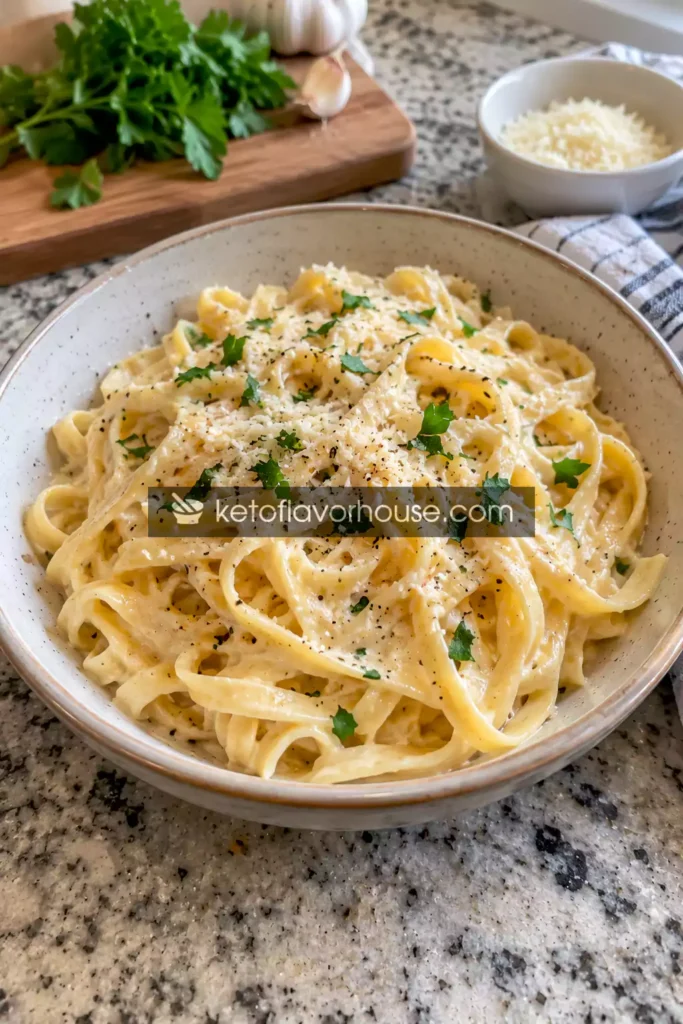
3-Ingredient Keto Egg Noodles are a simple way to enjoy a pasta-style meal without traditional wheat noodles. Made with eggs, cream cheese, and a small amount of xanthan gum, these homemade noodles have a tender, flexible texture and a mild flavor that works with creamy sauces, garlic butter, Parmesan, and low-carb meat sauces. They are especially useful when you want a satisfying base for a keto dinner but do not want to buy specialty pasta.
The method is different from making traditional flour-and-egg pasta. Instead of kneading and rolling dough, you blend the three ingredients into a smooth batter, cook it in thin sheets in a skillet, let the sheets cool slightly, and slice them into noodles. The eggs provide structure and protein, the cream cheese adds richness, and the xanthan gum helps the mixture hold together. No flour, pasta machine, or lengthy dough-resting process is needed.
These 3-Ingredient Keto Egg Noodles are best treated as a tender egg-based pasta alternative rather than an exact replica of wheat pasta. They are softer than conventional noodles and can break if handled roughly, but they work well when gently tossed with sauce. Because the ingredient list is short, the recipe is also easy to adjust once you understand how thick or thin you prefer your noodle sheets.
The recipe below uses four large eggs, two ounces of cream cheese, and half a teaspoon of xanthan gum to make two servings. The nutrition values are estimates based on typical ingredient data, so your exact results may vary with the products you use.
Tender egg noodles with just three ingredients
A simple skillet method creates thin, sliceable egg sheets that can be tossed with your favorite low-carb sauce.
Why You’ll Love These 3-Ingredient Keto Egg Noodles
A pasta alternative is most useful when it does not turn dinner into a complicated cooking project. This recipe keeps the process straightforward: blend, cook, cool briefly, slice, and serve. There is no need to knead dough, dust a counter with flour, or wait for a dough ball to rest.
- 🍳 Only three ingredients: Eggs, cream cheese, and xanthan gum make the noodle mixture.
- 🥣 Simple preparation: A blender or food processor creates a smoother mixture, and a nonstick skillet cooks it in thin sheets.
- 🧀 Mild, versatile flavor: The noodles have a gentle egg-and-cream-cheese taste that pairs well with savory sauces.
- 🍝 A low-carb pasta alternative: Unlike conventional wheat pasta, the noodle base contains no flour or starch-based pasta ingredients.
- 💪 Some protein from eggs: Eggs provide protein, while cream cheese contributes a smaller amount.
- ⏱️ Quick cooking: The thin sheets cook in minutes, making this a practical option for a meal when sauce is already prepared.
An alternative to traditional flour-based pasta
Traditional pasta gets much of its structure from wheat flour and its gluten network. This recipe does not contain wheat flour, so it behaves differently. Its structure comes mainly from the cooked eggs, while cream cheese softens the texture and xanthan gum helps the mixture remain cohesive.
That difference is important when choosing a sauce. Egg noodles are delicate, so a gentle cream sauce, melted butter, or light Parmesan coating is often more suitable than vigorous tossing in a very thick sauce. A heavy, dense sauce can still work, but fold it through carefully rather than stirring aggressively.
The benefit of a short ingredient list
Each ingredient has a specific job, and none is included simply to add flavor. Eggs form the noodle sheets, cream cheese contributes moisture and richness, and xanthan gum helps the mixture hold together after cooking. Using accurate measurements matters more here than it might in a traditional pasta recipe because the balance between the egg and cream cheese affects how easily the sheets cook and slice.
The three-ingredient formula also makes it easier to understand what changes when you experiment. More cream cheese generally makes the mixture richer and softer. Thicker sheets take longer to cook and may produce wider, more substantial noodles. Too much xanthan gum, on the other hand, can create an overly elastic or gummy texture.
What Do Keto Egg Noodles Taste Like?
These noodles have a mild, savory flavor rather than the neutral taste of ordinary wheat pasta. Eggs give them their characteristic taste, while cream cheese adds a gentle tang and a richer mouthfeel. Once mixed with garlic butter, Parmesan, pesto, or a creamy chicken sauce, the flavor of the noodle base becomes less pronounced.
Texture is where expectations matter most. Properly cooked sheets should be flexible enough to slice into strips, yet firm enough to handle gently. They are not identical to dried pasta cooked in boiling water. They are closer to thin, tender egg sheets that have been cut into noodles.
The thickness of the cooked sheets influences the finished result. Thin sheets produce softer, lighter noodles that work well in creamy sauces. Slightly thicker sheets are easier to lift and may feel more substantial, but they can also taste more like an egg wrap if cooked too thickly. Finding the balance is easier when each batch is spread to a similar thickness.
Cooling before slicing is another important detail. Hot sheets may still be soft and prone to tearing. A brief rest lets them firm up enough to roll or stack before cutting. Do not wait until they are completely cold and brittle; they should remain flexible.
A Practical Approach to Making Homemade Keto Noodles
When working with only three ingredients, the goal is consistency rather than complexity. Begin by blending the mixture until no cream cheese lumps are visible. Small lumps can create uneven patches in the cooked sheets, while a smooth batter spreads more predictably across the pan.
The next step is controlling the amount of batter in each portion. A thin, even layer cooks quickly and is easier to slice. If you pour too much batter into the skillet, the outside may firm up before the center has set. Spreading a smaller portion and allowing the sheet to cook gently gives you more control.
Heat also matters. A very hot pan can brown the eggs before the sheet has set evenly, making the noodles tougher around the edges. Medium-low to medium heat is usually more manageable, particularly with a thin nonstick skillet. Let the underside set before attempting to turn the sheet, and use a thin spatula to support it.
Finally, treat the cooked sheets gently. Let them rest briefly, stack them with care, and use a sharp knife to cut consistent strips. If a sheet tears, it can still be used; the broken pieces work well in a skillet dish or soup-style preparation. The aim is not perfection but a workable, tender noodle alternative.
Equipment You’ll Need
Blender or Food Processor
A blender or food processor is useful for combining the eggs, softened cream cheese, and xanthan gum into a smooth batter. It reduces the risk of cream cheese lumps and distributes the xanthan gum more evenly than adding it by hand. If you do not have either appliance, a hand whisk and fine attention to mixing can work, although you may need to press the cream cheese against the side of the bowl to remove lumps.
Avoid blending for an unnecessarily long time. The goal is a uniform mixture, not a thick foam. Excessive air can create bubbles in the cooked sheets and make their surface less even.
Nonstick Skillet
A nonstick skillet is the most important piece of cooking equipment for this recipe. A skillet around 8–10 inches wide is convenient because it creates sheets that are large enough to slice into manageable noodles without becoming difficult to flip.
The pan should heat evenly and release the cooked egg sheet without tearing it. Use medium-low to medium heat rather than high heat. If your skillet is not truly nonstick, lightly grease the surface with a small amount of cooking oil on a paper towel. The oil is only for the pan and is not part of the three-ingredient noodle mixture.
Thin Flexible Spatula
A thin spatula can slip under a set egg sheet more easily than a thick, rigid turner. It is useful when loosening the edges and supporting the sheet during flipping. If you prefer not to flip the sheet, you can cover the skillet briefly so the top finishes setting, provided the heat remains gentle enough to avoid browning the bottom too much.
Measuring Spoons
Xanthan gum is concentrated, so measuring it accurately matters. Too little may leave the noodle sheets more fragile; too much can make them unpleasantly elastic or gummy. Use a level measuring spoon rather than estimating the amount from the container.
Sharp Knife and Cutting Board
After the sheets have cooled slightly, stack them carefully and use a sharp knife to cut strips. A clean, straight cut helps create noodles of consistent width. If you prefer wider noodles, cut broader strips; for a finer pasta-style result, make narrower strips and handle them gently.
Ingredients for 3-Ingredient Keto Egg Noodles
This recipe makes two servings of pasta-style noodles using three ingredients. There is no flour, starch, or additional binder in the base formula.
Ingredients
- 4 large eggs
- 2 ounces (56 g) full-fat cream cheese, softened
- ½ teaspoon xanthan gum
You will also need a nonstick skillet. If the surface requires it, use a small amount of oil to grease the pan. That oil is not mixed into the noodle batter.
Understanding the role of each ingredient
Eggs: Eggs provide the primary structure of the noodle sheets. Their proteins set when heated, allowing the liquid mixture to become a flexible sheet that can be lifted and sliced. Eggs also contribute most of the recipe’s protein. Use large eggs for consistency, since changing egg size can alter the balance of liquid to cream cheese.
Cream cheese: Cream cheese softens the texture and makes the cooked sheets richer than plain cooked egg. Its fat contributes tenderness and a mild dairy flavor, while its moisture helps the batter spread. Full-fat cream cheese works well for this version, but the brand can affect the thickness of the mixture and its nutritional values.
Xanthan gum: Xanthan gum is a thickening and stabilizing ingredient used in small quantities. Here, it helps the batter hold together and supports the flexibility of the cooked sheets. It does not behave like wheat gluten, and it cannot make the noodles identical to traditional pasta. Measuring it carefully is important because excessive xanthan gum may create a sticky or gummy texture.
Why the ratio matters
The four eggs provide enough liquid and structure to form several thin sheets. The cream cheese adds richness while keeping the mixture from tasting like plain cooked eggs. Xanthan gum helps stabilize the mixture, but it is not meant to turn it into a thick dough.
The batter should be pourable and smooth rather than stiff. If it looks unusually thick, first check whether the cream cheese was properly softened and blended. Do not immediately add water or another ingredient, since this changes the formula and can make the finished sheets more fragile.
The guide below shows how each ingredient affects the result.
Ingredient substitutions and their effects
Because this is a three-ingredient recipe, substitutions can change its structure more noticeably than they would in a traditional flour-based pasta recipe.
Reduced-fat cream cheese: You may try reduced-fat cream cheese, but it can have a different moisture content and consistency. The flavor may be less rich, and the cooked sheets may feel firmer or softer depending on the product. Check the package label rather than assuming reduced-fat cream cheese contains fewer carbohydrates.
Neufchâtel cheese: This can sometimes be used in place of full-fat cream cheese. Its texture and fat content differ, so the batter may not behave exactly the same. Blend thoroughly and expect a slight change in richness and nutritional values.
Smaller or larger eggs: The recipe is formulated for four large eggs. Smaller eggs provide less liquid, while extra-large eggs increase the liquid proportion. If you change egg size, the batter’s thickness and cooking behavior may change. For a reliable result, use the specified size.
Replacing xanthan gum: Psyllium husk powder or another binder may behave differently, but it is not a direct one-for-one swap. Psyllium absorbs liquid and can make the mixture thicker or more bread-like, while other gums may have different thickening strengths. Changing the binder requires testing the proportion and recalculating the nutritional values.
Dairy-free cream cheese: Plant-based cream cheese products vary in water, oil, starch, and protein content. Some may blend well but cook differently, while others can make the sheet too soft. Check labels and expect a different result rather than assuming an identical texture.
For the first batch, I recommend keeping the three ingredients unchanged. Once you know how the sheets should look and feel, you can experiment with one substitution at a time.
How to Make 3-Ingredient Keto Egg Noodles
The process is simple, but thin sheets require a little patience. Cook them gently, wait until the surface is sufficiently set, and allow the cooked sheets to cool slightly before cutting.
Step 1: Soften the cream cheese
Remove the cream cheese from the refrigerator and allow it to soften until it is easy to press with a spoon. You do not want it melted or oily. Cutting it into smaller pieces helps it soften evenly.
Softened cream cheese blends more readily with eggs. Starting with a cold, firm block can leave small lumps in the mixture, and those lumps may cook into uneven patches. Avoid adding liquid to solve this problem; properly softening the cream cheese is more effective.
Step 2: Blend the three ingredients
Place the eggs, softened cream cheese, and xanthan gum in a blender or food processor. Blend until the mixture looks smooth and evenly colored, scraping down the sides if cream cheese sticks to the container.
The xanthan gum needs to be distributed evenly. If it clumps in one part of the batter, some areas can become thicker than others. Once the batter is smooth, let it stand for about 2–3 minutes so the xanthan gum can hydrate. It should remain pourable.
Avoid whipping air into the mixture unnecessarily. A few bubbles are harmless, but an overly foamy batter can produce sheets with tiny holes or irregular surfaces.
Step 3: Preheat the skillet
Place a nonstick skillet over medium-low to medium heat. Allow it to warm evenly, then lightly grease it if necessary. If a few drops of batter immediately sizzle and brown, the pan is likely too hot for thin egg sheets.
The correct temperature should allow the bottom to set gradually without turning dark brown before the top has begun to firm. A gentle cooking pace makes the sheets easier to flip and helps preserve a tender texture.
Step 4: Pour a thin layer of batter
Pour a small portion of the batter into the skillet, then tilt the pan to spread it into a thin, even circle. Begin with just enough mixture to cover the bottom in a delicate layer. The exact amount depends on the pan size, but avoid making the sheet thick like an omelet.
Let the mixture cook for approximately 1–2 minutes, watching for the edges to become set and the center to lose its wet, liquid appearance. Cooking time will vary with the pan, the heat, and the sheet thickness.
If the edges are set but the middle remains very wet, lower the heat slightly and give it more time. If the underside browns quickly, reduce the heat before cooking the next sheet.
Step 5: Turn the sheet carefully
When the sheet is mostly set and releases from the pan, gently slide a thin spatula underneath it. Support as much of the sheet as possible before turning it. Cook the second side briefly, often around 20–40 seconds, until it is set.
The sheet should remain flexible rather than crisp. If it tears during flipping, it may have been too thin, insufficiently set, or difficult to release from the pan. You can still use the pieces as noodles; adjust the timing or thickness for the next sheet.
An alternative is to cover the pan briefly over low heat so the top sets without flipping. This method may take a little longer, and condensation from the lid can add moisture, so uncover the pan once the surface is set.
Step 6: Repeat with the remaining batter
Transfer each finished sheet to a clean plate and continue cooking the remaining batter. If the pan becomes too hot, take it off the heat briefly before adding the next portion. Keep the sheets in a stack, but allow them a little room to cool instead of sealing them together while steaming hot.
The recipe should produce several thin sheets, depending on how much batter you use per round. Consistency matters more than the exact number of sheets. Try to make them similar in thickness so the final noodles have a uniform texture.
Step 7: Cool, stack, and slice
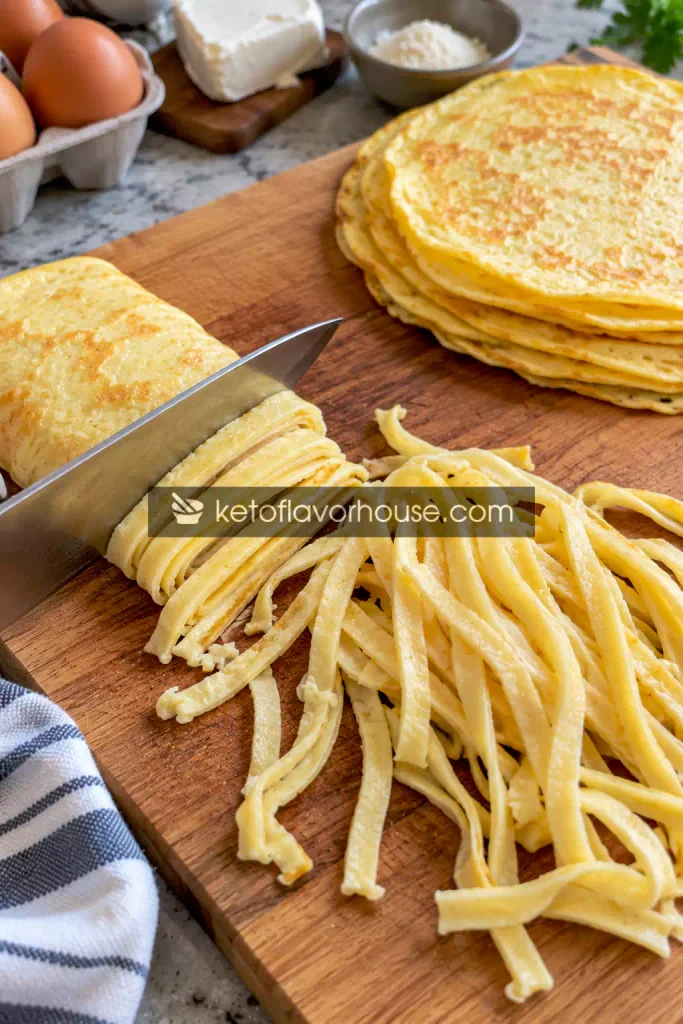
Let the sheets cool for a few minutes until they are warm but comfortable to handle. Stack them, then roll the stack loosely into a cylinder. Use a sharp knife to slice it into strips of your preferred width.
For a pasta-like appearance, narrow strips work well. Wider ribbons are easier to handle and may be useful with a thicker cream sauce. If the sheets stick together, separate them gently with your fingers or the tip of a knife.
Step 8: Warm gently with sauce
Transfer the sliced noodles to a skillet with a warm sauce. Use a spatula or tongs to fold the sauce through gently. They do not need to boil in water like traditional dried pasta. Prolonged cooking or vigorous stirring can break the noodles into smaller pieces.
Heat only until the noodles are warmed through and coated. Serve immediately for the best texture.
The process guide below summarizes the stages.
From three ingredients to sliced noodles
Soften
Bring cream cheese to a smooth, spreadable consistency.
Blend
Blend eggs, cream cheese, and xanthan gum until uniform.
Spread
Pour a small portion into a lightly greased, warm nonstick skillet.
Set
Cook gently until the center is no longer wet; turn carefully.
Cool
Let the cooked sheets rest briefly until easy to handle.
Slice
Stack, roll loosely, and cut into even noodle strips.
Common Mistakes to Avoid
Leaving lumps of cream cheese in the batter
Small cream cheese lumps may seem harmless, but they can leave uneven patches in the cooked sheets. Some parts may feel firmer or thicker than others, making the finished noodles harder to slice consistently.
How to fix it: Soften the cream cheese thoroughly and blend until the mixture is smooth. Scrape down the sides of the blender if needed. If you notice lumps after blending, whisk the mixture again before cooking.
Using too much xanthan gum
Xanthan gum is powerful even in small quantities. Adding extra in an attempt to make the noodles firmer may have the opposite effect, leaving them overly elastic, sticky, or gummy.
How to fix it: Measure the stated half teaspoon accurately. If you are trying the recipe for the first time, do not add more just because the batter looks thin; it should be pourable.
Cooking over high heat
A very hot pan can brown the underside before the middle is set. This may create a tougher sheet that breaks when flipped.
How to fix it: Use medium-low to medium heat. If the first sheet browns too quickly, lower the temperature and allow the skillet to settle before cooking the next one.
Making the sheets too thick
Thicker sheets take longer to cook and are more likely to develop a soft, omelet-like center. They can also be more difficult to slice into delicate noodles.
How to fix it: Pour a smaller portion into the pan and tilt it gently to spread. The aim is an even, thin sheet rather than a thick pancake.
Flipping before the sheet has set
The bottom may look cooked while the center remains too wet. A premature flip can tear the sheet or leave pieces stuck in the pan.
How to fix it: Wait until the edges are set and the center is no longer visibly liquid. Loosen the edges first, then slide the spatula well underneath before turning.
Slicing while the sheets are too hot
Hot sheets may stick together or tear when cut. They are also more difficult to handle consistently.
How to fix it: Allow the sheets to cool for a few minutes. They should remain warm and flexible but firm enough to stack and slice.
Stirring the noodles aggressively in sauce
These noodles are more delicate than conventional wheat pasta. Vigorous stirring can break the strips apart, especially if they were sliced very thinly.
How to fix it: Warm the sauce first, add the noodles, and fold them through gently until coated. Do not boil them in sauce for an extended time.
The troubleshooting guide below gives you a quick way to identify and correct common problems.
Keto egg noodle troubleshooting
Use the appearance of the batter and cooked sheets to guide your next adjustment.
Cause: cream cheese was too cold or poorly blended. Solution: soften it more thoroughly and blend again.
Cause: the center is still wet or the sheet is very thin. Solution: cook longer over gentler heat and support it with a thin spatula.
Cause: excessive xanthan gum or undercooked sheets. Solution: measure carefully and allow the sheets to set fully.
Cause: the skillet is too hot. Solution: lower the heat before cooking the next sheet.
Cause: rough handling or a long simmer. Solution: fold gently into warm sauce just before serving.
Pro Tips for the Best Keto Egg Noodles
Use large eggs consistently. Egg size affects the liquid ratio. Using a different size can change how easily the batter spreads and how firmly the sheets set.
Let the cream cheese soften naturally. Soft cream cheese blends more evenly and requires less mixing. Avoid melting it, since warm, oily cream cheese may behave differently in the batter.
Give the batter a short rest. A couple of minutes allows the xanthan gum to hydrate. The batter should still be pourable afterward. If it becomes unusually thick, make sure you measured the gum accurately rather than adding liquid immediately.
Start with a test sheet. Cook a small first portion to judge your skillet temperature and preferred thickness. Adjust the heat before cooking the rest of the batch. This can save the entire recipe if your pan runs hot.
Keep the pan temperature steady. If the first sheet is pale and flexible while the next one browns too quickly, the skillet may have become hotter. Let it cool slightly between sheets if necessary.
Use the right sauce consistency. A sauce that is too thick may cling heavily and weigh down the noodles, while a very watery sauce can make the strips feel loose. Warm the sauce separately and loosen it with a small amount of suitable liquid if necessary.
Slice with a clean knife. A sharp knife makes cleaner cuts, while a dull blade can drag and compress the sheet. Wipe the blade if cream cheese residue or egg mixture begins to build up.
How These Noodles Fit Into Keto Eating
The main reason these noodles can suit a ketogenic eating pattern is that their batter does not use wheat flour, conventional pasta, or starch as its main base. Eggs and cream cheese naturally contain some carbohydrates, but in the quantities used here, the total is relatively small.
That does not mean every sauce served with these noodles will be low-carb. Some jarred pasta sauces contain added sugar, and ingredients such as flour-based thickeners can increase the carbohydrate content of a meal. If you want the whole dish to remain keto-friendly, evaluate the sauce and other additions as well as the noodles.
Total carbohydrates and net carbohydrates
Total carbohydrates include fiber. Net carbohydrates are often estimated by subtracting dietary fiber from total carbohydrates:
Net carbohydrates = total carbohydrates − fiber
The noodles themselves contain little fiber because the recipe does not use fiber-rich flour or vegetables. Xanthan gum may contribute some dietary fiber depending on the product and how it is labeled, so its exact contribution should be checked on the packaging.
A reasonable estimate for this two-serving batch is around 2–3 grams of total carbohydrates per serving, with net carbohydrates depending on the xanthan gum label and the exact cream cheese used. The nutritional section below provides a single planning estimate; it should be recalculated from your actual ingredients for precise tracking.
Fat and protein
Eggs supply most of the protein in the recipe. Cream cheese contributes fat and a smaller amount of protein, creating a richer texture than egg whites alone would provide. Even so, this is not a high-protein pasta by itself: the estimated protein is around 14 grams per serving.
For a more substantial meal, add cooked chicken, shrimp, salmon, or ground beef and choose a sauce that fits your nutritional goals. That increases the protein of the finished dish, although calories, fat, and carbohydrates will also depend on the additions.
Portion size still matters
Ketogenic eating is based on the carbohydrate content of the overall diet, not simply on whether a food is labeled keto. The noodle base is low in carbohydrates compared with conventional wheat pasta, but your portion, sauce, cheese, and protein additions all contribute to the total meal.
If you are tracking closely, weigh the ingredients when possible, calculate the whole batch, and divide by the number of portions you actually serve. This approach is more reliable than using a generic value for every version of the recipe.
Variations You Can Try
The base recipe contains exactly three ingredients. The following ideas are serving variations or ingredient substitutions, so they are no longer the exact three-ingredient formula if you mix them directly into the batter.
Garlic Butter Egg Noodles
Toss the cooked noodles gently with melted butter, a little garlic, and chopped parsley. The butter makes the strips glossy and adds richness, while garlic gives them a savory finish. This is a simple option when you want the noodles as a side dish rather than the center of a heavily sauced meal.
Parmesan Egg Noodles
Add finely grated Parmesan after cooking, folding it into the warm noodles with a small amount of butter or cream. Parmesan contributes a salty, savory flavor and additional protein, although it also increases calories and fat. Add it gradually to avoid coating the delicate noodles in a thick clump.
Creamy Alfredo-Style Noodles
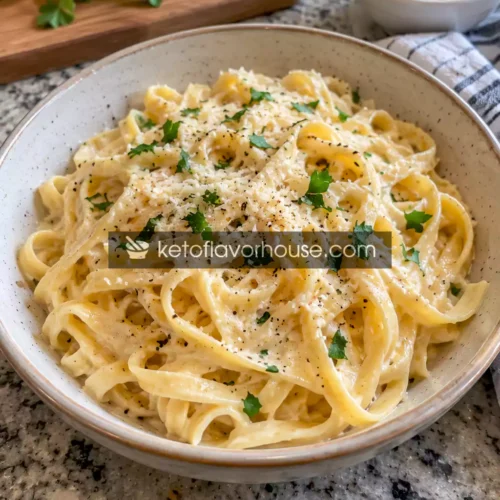
Warm a small portion of a low-carb cream sauce separately, then fold in the cooked noodles. A sauce with cream, Parmesan, and butter gives the dish a rich, smooth finish. Keep the sauce moderately loose so it coats the noodles instead of weighing them down.
Pesto Egg Noodles
A modest amount of pesto brings basil, garlic, and olive oil into the dish. Pesto products vary in cheese, oil, nuts, and added ingredients, so read the label if you are tracking carbohydrates. Fold the pesto through gently and serve immediately.
Spicy Egg Noodles
Add chili flakes or a little chili oil to the sauce rather than changing the noodle batter. This keeps the base formula unchanged while giving the dish more heat. Packaged chili sauces may contain added sugar, so check their nutrition.
Protein-Boosted Noodle Bowl
Serve the noodles with grilled chicken, shrimp, salmon, or cooked ground beef. This option adds a substantial protein source and makes the meal more filling for people who want a protein-rich dinner. Calculate the new macros using the amounts of meat, sauce, and noodles you actually use.
The options below summarize the flavor changes and what they mean for the finished dish.
Choose your keto noodle style
Keep the three-ingredient noodles as the base and change the sauce or toppings.
Garlic butter
Adds buttery richness and garlic flavor. Increases calories and fat.
Parmesan
Adds savory cheese flavor and some extra protein, fat, and sodium.
Pesto
Brings basil, garlic, and oil. Check packaged pesto for carbohydrate differences.
Alfredo-style
Creates a richer meal. Use a moderate amount so the noodles are not overwhelmed.
Chili sauce
Adds heat; the sauce may also add sugar, sodium, and calories.
Chicken or shrimp
Adds protein and makes the bowl more substantial; recalculate the whole meal.
Extra Tips for This Recipe
A few serving and handling choices can improve the final result without changing the three-ingredient batter.
- Keep the first batch simple. Cook the sheets without adding any extra ingredients to the batter so you can judge the original texture.
- Cut noodles to suit the sauce. Narrow strips work well with light butter sauces, while wider ribbons are easier to handle with a thicker cream sauce.
- Use gentle heat when warming leftovers. The noodles are delicate, so avoid boiling them or repeatedly stirring them in a hot pan.
- Prepare the sauce before slicing. Once the noodles are cut, they are ready to use. Having the sauce warmed ahead of time reduces the amount of time they sit and stick together.
- Separate the strips gently. If the noodles cling together after slicing, loosen them with clean fingers or a fork instead of pulling them apart forcefully.
- Taste the complete dish. The noodle base itself is lightly flavored. Sauce, cheese, herbs, and seasoning will determine much of the finished meal’s taste.
Optional Additions
The batter itself has exactly three ingredients, but you can personalize the finished noodles with toppings or sauces. Additions should be made after cooking if you want to retain the three-ingredient formula.
Parmesan cheese: Parmesan gives the noodles a stronger savory flavor and adds some protein, fat, and sodium. Sprinkle it over the warm noodles or fold it through a small amount of butter.
Fresh parsley or basil: Fresh herbs bring a brighter aroma. They add very little energy at typical garnish quantities and do not substantially alter the texture.
Garlic butter: Butter adds richness, while garlic supplies a savory flavor. The combination increases calories and fat, so portion it according to your meal plan.
Cooked chicken: Chicken adds a substantial amount of protein and makes the noodles more suitable as the base of a main meal. The final nutrition depends on the cut, cooking method, and portion size.
Cooked shrimp: Shrimp provides protein with relatively little carbohydrate when served plain. Add it after cooking and warm it gently with the noodles and sauce.
Cream sauce: A sauce based on cream and cheese makes the dish richer but can significantly increase calories, fat, and protein. Check packaged sauce labels if using a ready-made product.
Low-carb tomato sauce: A tomato-based sauce creates a pasta-style meal with a familiar flavor. Choose a product with a carbohydrate level that fits your needs, since sauces vary in added sugar and serving size.
These additions do not need to be complicated. In many cases, one or two ingredients are enough to turn the noodles into a satisfying meal.
Serving Ideas
With Garlic Butter and Parmesan
This is one of the simplest ways to serve the noodles. Melt a little butter with garlic, fold the warm noodles through gently, and finish with Parmesan. Because the base is mild, the cheese and garlic become the main flavors.
With Creamy Chicken Sauce
Add cooked chicken to a low-carb cream sauce, then fold in the noodles just before serving. This creates a more substantial meal and increases protein. Keep the sauce loose enough to coat the noodles rather than forming a heavy layer that weighs them down.
With Beef Marinara
A low-carb marinara sauce and cooked ground beef can give the noodles a familiar Italian-inspired character. Use a moderate amount of sauce and combine it with the noodles gently. The acidity of the tomato sauce contrasts with the cream cheese in the noodle base.
With Pesto and Shrimp
Toss the noodles lightly with pesto and cooked shrimp for a savory, herb-forward dish. Pesto can be rich, so start with a small amount and add more only if needed. Check the pesto label if carbohydrate tracking is important.
As a Side Dish
Serve a small portion beside grilled chicken, fish, or roasted vegetables. Since the noodles contain eggs and cream cheese, they already provide some protein and fat, but the overall balance will depend on what you add to the plate.
As a Meal-Prep Lunch
Prepare the noodles and sauce separately when possible. Keep the sauce in a separate container, refrigerate both promptly, and combine them when reheating. This may help prevent the noodles from absorbing too much moisture or breaking during storage.
Storage and Make-Ahead Instructions
These noodles are most delicate when freshly cooked, so storage works best when you plan how you will use them. If the goal is a meal-prep lunch, storing the noodles separately from the sauce gives you more control over their texture.
Refrigerating cooked noodles
Allow the cooked sheets to cool briefly, then transfer them to a clean, airtight container and refrigerate promptly. Do not leave egg-based food at room temperature for an extended period. For best quality, use the noodles within about 3 days when kept refrigerated at 40°F (4°C) or below.
The strips may stick together as they cool. You can separate them gently before storing or leave the sheets whole and slice them later. Storing the sheets whole may reduce handling, but always use clean utensils and a clean container.
Storing the noodles with sauce
If possible, keep the sauce in a separate container. A cream sauce, tomato sauce, or butter-based sauce can change the texture of the noodles during storage, especially when left in contact for many hours. When you are ready to eat, warm the sauce separately and fold in the noodles.
Reheating
Warm the noodles gently in a skillet over low heat with a little sauce or a small amount of suitable liquid. Use a spatula to turn them carefully. Avoid a vigorous boil, which can break the strips apart.
Microwave reheating is also possible. Use a microwave-safe container, cover loosely, and heat in short intervals. Stir carefully between intervals rather than mixing aggressively. The exact time depends on the quantity and the power of your microwave.
Can you freeze them?
Freezing is possible, but the texture may change after thawing. Egg-based sheets can release moisture or become more fragile, and the cream cheese may affect the consistency. For the best texture, refrigerating a small batch for short-term use is generally preferable.
If you do freeze them, separate portions so you do not need to handle the entire batch at once. Thaw in the refrigerator and warm gently. If the texture is no longer suitable for long noodles, broken pieces can still be added to a skillet dish or soup.
The storage guide below summarizes the practical approach.
Noodle storage and reheating guide
Cool briefly
Let the sheets stop steaming heavily, then transfer them to a clean container and refrigerate promptly.
About 3 days
Keep at 40°F (4°C) or below and use promptly for the best texture.
Store separately
Keep the noodles and sauce apart when possible to reduce softening and breakage.
Use low heat
Warm gently with sauce, folding carefully rather than boiling or stirring vigorously.
Frequently Asked Questions
Are 3-Ingredient Keto Egg Noodles suitable for keto?
They can fit into a ketogenic eating plan because the recipe uses eggs, cream cheese, and xanthan gum rather than wheat flour or starch-based pasta. The actual carbohydrate amount depends on the cream cheese and xanthan gum product labels, as well as the serving size. Sauces and toppings also need to be counted when calculating the whole meal.
Do these noodles taste like regular pasta?
Not exactly. The texture is tender and egg-based, with a mild cream-cheese flavor. They do not have the same chew or firm bite as wheat pasta. They work best as a low-carb alternative when served with a suitable sauce and handled gently.
Can I make the noodles without xanthan gum?
You can experiment, but the result may be more fragile and harder to handle. Xanthan gum helps stabilize the batter, so omitting it changes the recipe’s structure. If you try the two-ingredient version, cook a small test sheet first and expect the texture to differ.
Can I use these noodles in soup?
Yes, but add them near the end of cooking and warm them gently. Prolonged boiling or vigorous stirring may break the strips apart. They are best in soups where the noodles can remain relatively undisturbed rather than in a vigorously simmering pot.
Can I prepare the noodles ahead of time?
Yes. Cook the sheets, let them cool briefly, and refrigerate them in a covered container. You can slice them before storage or keep the sheets whole and slice them later. For best quality, use them within about three days and store the sauce separately if possible.
Can I freeze keto egg noodles?
You can, but freezing and thawing may make the sheets more fragile or change their texture. Separate them into portions, thaw in the refrigerator, and reheat gently. If the strips break, use them in a sauce-based skillet meal rather than trying to handle them like firm wheat pasta.
How can I increase the protein in a meal made with these noodles?
The noodle base provides an estimated 14 grams of protein per serving. Add cooked chicken, shrimp, salmon, or ground beef to increase the protein in the finished dish. Use the nutrition labels or a reliable nutrition database to calculate the new total rather than applying the noodle recipe’s protein value to the entire meal.
Nutritional Breakdown Per Serving
The following estimate assumes the full batch is divided into two servings, with each serving containing two large eggs, one ounce of cream cheese, and one-quarter teaspoon of xanthan gum.
| Nutrient | Estimated amount per serving |
|---|---|
| Calories | 242 kcal |
| Protein | 14.4 g |
| Total fat | 19.4 g |
| Total carbohydrates | 2.6 g |
| Dietary fiber | 0.4 g |
| Net carbohydrates | 2.2 g |
| Sugar | Approximately 1.5 g |
| Sodium | Approximately 250 mg |
These are planning estimates based on typical nutrition values, not laboratory-tested results. Cream cheese brands vary, and xanthan gum labels may report carbohydrates and fiber differently. For accurate tracking, calculate each ingredient from its package label and divide the batch totals by the number of servings.
Net carbohydrates are estimated by subtracting dietary fiber from total carbohydrates. Here, 2.6 grams of total carbohydrates minus 0.4 grams of fiber equals approximately 2.2 grams of net carbohydrates per serving.
The nutrition dashboard below summarizes the estimate.
Per serving · Half the batch
Based on four large eggs, two ounces of cream cheese, and half a teaspoon of xanthan gum in the full recipe.
Values are estimates; verify your ingredient labels for precise tracking.
Recipe Snapshot
- Recipe Name: 3-Ingredient Keto Egg Noodles – Easy, Low-Carb Pasta Alternative
- Prep Time: 10 minutes
- Cook Time: 10 minutes
- Total Time: Approximately 20 minutes
- Course: Main dish, side dish, or pasta alternative
- Cuisine: American-inspired
- Servings: 2
- Calories per serving: Approximately 242 kcal
- Protein per serving: Approximately 14.4 g
- Total carbohydrates per serving: Approximately 2.6 g
- Net carbohydrates per serving: Approximately 2.2 g
A Simple Way to Enjoy Pasta-Style Meals on Keto
Homemade 3-Ingredient Keto Egg Noodles offer a useful alternative when you want something pasta-like without traditional wheat flour. Eggs provide the structure, cream cheese adds richness, and xanthan gum helps the sheets hold together. The result is a tender noodle that works best when cooked gently, sliced after a brief rest, and folded carefully into a suitable sauce.
The main adjustment is learning to expect a different texture from conventional pasta. These noodles are softer and more delicate, but their simple ingredient list makes them practical for quick low-carb meals. Serve them with garlic butter, Parmesan, a creamy chicken sauce, or another low-carb accompaniment that suits your taste.
Compact Recipe Card
3-Ingredient Keto Egg Noodles – Easy, Low-Carb Pasta Alternative
Ingredients
- 4 large eggs
- 2 ounces (56 g) full-fat cream cheese, softened
- ½ teaspoon xanthan gum
Instructions
- Allow the cream cheese to soften until easy to mix.
- Add the eggs, softened cream cheese, and xanthan gum to a blender or food processor. Blend until smooth, scraping down the sides if needed.
- Let the batter rest for 2–3 minutes so the xanthan gum can hydrate. It should remain pourable.
- Heat a nonstick skillet over medium-low to medium heat. Lightly grease the surface if needed.
- Pour a small amount of batter into the skillet and tilt the pan to create a thin, even sheet.
- Cook for approximately 1–2 minutes, until the edges are set and the center is no longer visibly liquid. Gently flip with a thin spatula and cook the second side for about 20–40 seconds, or until set.
- Transfer the cooked sheet to a plate and repeat with the remaining batter.
- Let the sheets cool for a few minutes, then stack and roll them loosely. Slice with a sharp knife into noodles of your preferred width.
- Warm the noodles gently in your prepared sauce, folding carefully so the strips do not break. Serve immediately.
Recipe Details
- Prep Time: 10 minutes
- Cook Time: 10 minutes
- Total Time: Approximately 20 minutes
- Servings: 2
- Calories: Approximately 242 per serving
- Protein: Approximately 14.4 g
- Fat: Approximately 19.4 g
- Total Carbohydrates: Approximately 2.6 g
- Fiber: Approximately 0.4 g
- Net Carbohydrates: Approximately 2.2 g
Nutritional values are estimates and will vary with ingredient brands and measurements.
Short Summary
3-Ingredient Keto Egg Noodles are a simple pasta alternative made with eggs, cream cheese, and xanthan gum. They cook quickly in a skillet and can be served with garlic butter, Parmesan, pesto, or a creamy low-carb sauce. Their tender texture is softer than traditional wheat pasta, so gentle handling is important when slicing and serving. With an estimated 2.2 grams of net carbohydrates per serving, they can fit into many keto meal plans.
3-Ingredient Keto Egg Noodles Recipe

Ingredients
- 4 large eggs
- 2 ounces 56 g full-fat cream cheese, softened
- ½ teaspoon xanthan gum
Instructions
- Allow the cream cheese to soften until easy to mix.
- Add the eggs, softened cream cheese, and xanthan gum to a blender or food processor. Blend until smooth, scraping down the sides if needed.
- Let the batter rest for 2–3 minutes so the xanthan gum can hydrate. It should remain pourable.
- Heat a nonstick skillet over medium-low to medium heat. Lightly grease the surface if needed.
- Pour a small amount of batter into the skillet and tilt the pan to create a thin, even sheet.
- Cook for approximately 1–2 minutes, until the edges are set and the center is no longer visibly liquid. Gently flip with a thin spatula and cook the second side for about 20–40 seconds, or until set.
- Transfer the cooked sheet to a plate and repeat with the remaining batter.
- Let the sheets cool for a few minutes, then stack and roll them loosely. Slice with a sharp knife into noodles of your preferred width.
- Warm the noodles gently in your prepared sauce, folding carefully so the strips do not break. Serve immediately.