This post may contains Amazon affiliate and other affiliate links. If you make a purchase through these links, I may earn a small commission at no extra cost to you. Your support helps me continue to provide quality content. I only recommend products I personally trust and believe will add value to your experience. For more details, please visit my Privacy Policy.
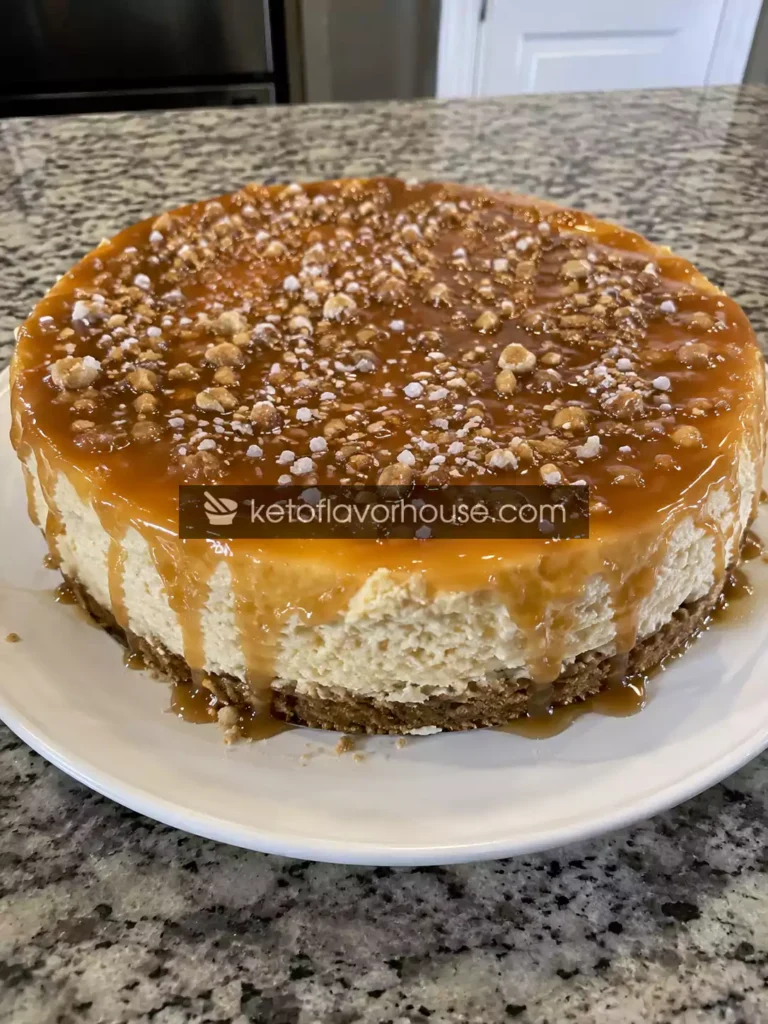
If there is one dessert flavor I can never seem to get tired of, it is salted caramel. That buttery caramel sweetness with just enough sea salt to keep it from becoming overly sweet is hard to beat. This High-Protein Sea Salted Caramel Cheesecake came from wanting that same indulgent cheesecake experience while making something that actually fits into a high-protein lifestyle. Instead of a tiny “diet dessert” that leaves you wanting the real thing, this cheesecake is creamy, rich, lightly tangy, and finished with a generous caramel swirl and a little flaky sea salt.
What I particularly love about this recipe is that the protein isn’t coming from one giant scoop of powder. The filling combines Greek yogurt, cottage cheese, eggs, egg whites, cream cheese, and a modest amount of whey protein to create a cheesecake that is genuinely satisfying. Depending on the brands you use and how you divide the cheesecake, each serving comes in at roughly 20 grams of protein.
That makes this a fun option for people who are working on muscle recovery, trying to increase daily protein, managing hunger while losing weight, or simply looking for a smarter dessert. And honestly, you don’t need to be counting macros to enjoy it. It tastes like cheesecake first and a high-protein recipe second.
Why You’ll Love This Recipe
- 🍮 Big salted caramel flavor – Sweet, buttery caramel meets a little hit of sea salt in every bite.
- 💪 Protein-packed – Greek yogurt, cottage cheese, eggs, egg whites, and whey help bring the protein up.
- 🥄 Creamy and smooth – Blended cottage cheese disappears into the filling and helps create a luxurious texture.
- 🧊 Meal-prep friendly – Cheesecake actually gets better after chilling, making it ideal for preparing ahead.
- ⏱️ Simple preparation – The filling comes together in one bowl and doesn’t require complicated techniques.
- 👨👩👧 Family-friendly – Nobody needs to know it’s a high-protein dessert unless you tell them.
- 🧂 Sweet-and-salty balance – The sea salt keeps the caramel flavor from becoming flat or excessively sweet.
My Personal Experience Making This Cheesecake
The first time I made a protein cheesecake, I made the mistake that I think almost everyone makes: I treated it like a regular cheesecake and then tried to force a lot of protein powder into it.
The result looked beautiful when it came out of the oven.
Then I cut into it.
Let’s just say the texture had more in common with a baked protein bar than cheesecake.
That experience taught me something important. With high-protein baking, you cannot simply keep adding protein powder and expect the recipe to behave like a traditional dessert. Protein changes the way a mixture absorbs moisture and sets, so you need to build the recipe around several protein sources rather than relying entirely on whey.
That’s what I did with this version.
The Greek yogurt adds moisture and tang. Cottage cheese adds protein and creaminess once blended. Eggs help the cheesecake set, while egg whites add additional protein without requiring lots of extra fat. Cream cheese gives us that unmistakable cheesecake richness, and a controlled amount of whey protein brings the protein content up without turning the filling rubbery.
And then comes the caramel.
The first spoonful of caramel mixed into the creamy filling was when I knew this recipe was going to work. The cheesecake itself is rich but slightly tangy, while the caramel adds that deep buttery sweetness. A pinch of flaky sea salt on top makes the entire thing taste more balanced.
I also discovered that this cheesecake is one of those recipes that rewards patience. It is tempting to slice it while it is still warm, but don’t. Let it cool completely and refrigerate it. Once properly chilled, the texture becomes firmer, silkier, and much easier to slice.
For anyone trying to eat more protein without giving up enjoyable foods, that’s really the goal: make the food you already love work better for your lifestyle.
Required Equipment
9-Inch Springform Pan
A springform pan makes cheesecake life considerably easier because you can release the sides without trying to flip a delicate cheesecake upside down.
I strongly prefer a 9-inch springform pan for this recipe because it gives you a cheesecake with a nice, substantial thickness while still producing reasonable serving sizes. If you only have a regular cake pan, you can use one, but lining it very carefully with parchment will make removal much easier.
Mixing Bowls
You’ll want at least one large mixing bowl for the cheesecake filling and another smaller bowl for the crust.
A large bowl gives you enough room to mix without splashing cheesecake batter all over your counter. I’ve learned that lesson the messy way.
High-Speed Blender or Food Processor
This is particularly useful for the cottage cheese.
Even if you normally like cottage cheese, you probably don’t want visible curds throughout your cheesecake. Blending it until completely smooth creates a much more traditional cheesecake texture.
A food processor works too. If your blender struggles with thick mixtures, blend the cottage cheese and Greek yogurt together first.
Electric Hand Mixer
An electric hand mixer is convenient, but you don’t absolutely need one.
The important thing is not to aggressively whip the cheesecake batter. You want everything combined and smooth rather than incorporating lots of air.
Measuring Cups and Kitchen Scale
For a recipe like cheesecake, accurate measurements make a noticeable difference.
A kitchen scale is especially useful for ingredients such as Greek yogurt, cottage cheese, almond flour, and caramel sauce.
Rubber Spatula
A flexible spatula is perfect for scraping the sides of the bowl and gently folding ingredients together.
It also helps you get every last bit of caramel into the cheesecake instead of leaving half of it stuck to the bowl.
Baking Sheet
Place the springform pan on a baking sheet before putting it in the oven.
This makes it easier to move the cheesecake in and out of the oven and catches any tiny amount of butter or moisture that may escape around the bottom of the springform pan.
Ingredients & Substitutions
For the Crust
100 grams almond flour
Almond flour creates a buttery, slightly nutty crust that works beautifully with caramel. It also contributes some protein and healthy fats while keeping the crust lower in carbohydrates than a traditional graham cracker crust.
You can substitute finely ground oat flour if you prefer. The texture will be softer and the carbohydrate content will be higher.
35 grams unsalted butter, melted
Butter provides the richness and helps bind the almond flour together.
For a slightly lighter crust, you can reduce the butter to 30 grams, although I find 35 grams gives the crust a better texture.
1 tablespoon granulated zero-calorie sweetener
Use your preferred baking-friendly sweetener. Allulose, erythritol blends, or monk fruit-based blends can work depending on the brand.
If your caramel sauce is particularly sweet, you can reduce this slightly.
1/2 teaspoon vanilla extract
Vanilla rounds out the nutty crust and works especially well with caramel.
For the Cheesecake Filling
450 grams softened cream cheese
Cream cheese is still important even though this is a high-protein cheesecake. It provides the classic cheesecake flavor and creamy mouthfeel.
Reduced-fat cream cheese can be used if you want to reduce calories. Full-fat cream cheese generally produces a richer texture.
500 grams plain Greek yogurt
This is one of the major protein contributors.
Use thick, strained Greek yogurt rather than a thin regular yogurt. Full-fat, low-fat, or nonfat Greek yogurt can all work, although the calories and texture will change.
If your yogurt is watery, strain it through cheesecloth or a fine sieve before using it.
200 grams low-fat cottage cheese
Don’t worry if you’re not a cottage cheese fan. Once blended completely smooth, it contributes creaminess and protein without leaving the characteristic curds behind.
Low-fat cottage cheese is particularly useful here because it increases protein without adding a large amount of fat.
Ricotta can be substituted, although it will usually provide a different protein-to-calorie ratio and slightly grainier texture.
3 large eggs
Eggs help bind and set the cheesecake while adding protein and richness.
Bring them close to room temperature before mixing. This helps them incorporate more evenly into the filling.
150 grams liquid egg whites
Egg whites provide a convenient protein boost without adding much fat.
They also help increase the protein content of the finished cheesecake without requiring an excessive amount of whey protein.
50 grams vanilla whey protein isolate
This is the concentrated protein boost.
I recommend whey isolate because it tends to mix smoothly and has a relatively clean flavor. A vanilla-flavored powder works particularly well with caramel.
Don’t add significantly more whey just because you’re trying to push the protein higher. Too much can make the cheesecake dense, dry, or slightly chewy.
80 grams sugar-free or reduced-sugar caramel sauce
This is where the main caramel flavor comes from.
You can use homemade caramel sauce if you prefer. If you’re using a very sweet commercial sauce, taste the filling before adding any additional sweetener.
2 teaspoons vanilla extract
Vanilla gives the cheesecake more depth and makes the caramel taste richer.
2 tablespoons cornstarch
A small amount helps stabilize the filling and contributes to a cleaner slice.
For a lower-carb version, you can use an appropriate amount of a starch alternative designed for baking, although the texture may vary.
1/4 teaspoon fine sea salt
Salt is essential here.
It doesn’t make the cheesecake taste salty. Instead, it intensifies the caramel and balances the sweetness.
For the Topping
60 grams caramel sauce
This creates the attractive caramel layer on top.
Flaky sea salt, to taste
Don’t skip this if you love that classic salted caramel flavor.
A few flakes across the top are enough.
Optional: 15 grams chopped toasted pecans
Pecans add crunch and a buttery nutty flavor.
Keep in mind that adding nuts will increase calories and fat, although they’ll also contribute a small amount of additional protein and fiber.
How to Make High-Protein Sea Salted Caramel Cheesecake
1. Prepare the Pan
Preheat your oven to 325°F (165°C).
Lightly grease a 9-inch springform pan and line the bottom with parchment paper.
You don’t need to completely cover every inch of the pan with butter. A light coating is enough.
For easier cleanup, place the springform pan on a baking sheet.
2. Make the Almond Flour Crust
Add the almond flour, sweetener, vanilla extract, and melted butter to a bowl.
Mix until the almond flour is evenly coated and the mixture resembles damp sand.
Press it firmly into the bottom of the springform pan.
Don’t make the crust excessively thick. A compact, even layer is what you’re looking for.
Bake the crust for approximately 8–10 minutes, just until it smells lightly toasted.
Remove it from the oven and let it cool for several minutes.
Mini-tip: Don’t overbake the crust. It will continue cooking slightly from the residual heat, and an overly dark crust can compete with the delicate caramel flavor.
3. Blend the Cottage Cheese
Add the cottage cheese and Greek yogurt to a blender or food processor.
Blend until completely smooth.
This step is worth taking seriously. If you only stir cottage cheese into the filling, you may end up with little curds throughout the cheesecake.
Blend until the mixture looks thick, smooth, and creamy.
4. Mix the Cream Cheese
In a large mixing bowl, beat the softened cream cheese until smooth.
Add the blended Greek yogurt and cottage cheese mixture.
Mix gently until combined.
Avoid whipping aggressively.
Too much air can cause the cheesecake to puff dramatically in the oven and then collapse as it cools.
5. Add the Eggs and Egg Whites
Add the eggs one at a time.
Mix briefly after each addition.
Then add the liquid egg whites and mix until just incorporated.
The batter should look smooth and relatively thick.
6. Add Whey Protein and Cornstarch
Add the vanilla whey protein isolate and cornstarch.
Mix gently until no dry pockets remain.
Scrape the sides and bottom of the bowl with a rubber spatula.
Don’t continue mixing once everything is incorporated.
This is one of those recipes where less mixing is better.
7. Add the Caramel
Add 80 grams of caramel sauce and the vanilla extract.
Add the fine sea salt.
Mix until the caramel is distributed throughout the batter.
Taste a tiny amount of the uncooked filling if you’re comfortable doing so, and adjust the sweetness or salt before baking.
Remember that the finished cheesecake will taste less sweet when thoroughly chilled.
8. Pour Into the Pan
Pour the filling over the cooled crust.
Gently tap the pan on the counter once or twice to release any large air bubbles.
Don’t bang it aggressively.
Smooth the top with your spatula.
9. Add the Caramel Swirl
Warm the 60 grams of topping caramel just enough to make it easy to drizzle.
Drop small spoonfuls over the surface of the cheesecake.
Use the tip of a knife or skewer to gently swirl the caramel through the top.
Don’t swirl too deeply.
You want visible caramel ribbons rather than mixing the entire topping into the cheesecake.
10. Bake
Bake at 325°F (165°C) for approximately 50–65 minutes.
The exact time will depend on your oven, pan, and ingredients.
The edges should look set while the center should still have a gentle wobble.
That wobble is important.
If the entire cheesecake looks completely firm and dry before you remove it, you’ve probably gone too far.
11. Cool Slowly
Turn off the oven and leave the cheesecake inside with the door slightly open for about 20–30 minutes.
Then remove it and allow it to cool at room temperature.
This gradual cooling helps reduce the chance of dramatic cracking.
12. Refrigerate
Once cooled, cover the cheesecake and refrigerate for at least 6 hours, preferably overnight.
I know waiting overnight is difficult.
But this is where the magic happens.
The cheesecake firms up, the caramel settles into the creamy filling, and the flavors become much more developed.
13. Finish and Serve
Before serving, drizzle with a little additional caramel if desired.
Finish with a small pinch of flaky sea salt.
Slice with a sharp knife.
For cleaner slices, wipe the knife between cuts.
Oven, Air Fryer, and Stovetop Variations
Oven Method
The oven method above is the recommended approach because it provides the most even heat and the best control over the cheesecake’s texture.
Keep the temperature moderate rather than trying to speed things up with high heat.
Air Fryer Method
I don’t recommend making the entire 9-inch cheesecake in a standard basket-style air fryer because the pan size and heating pattern can make the center and edges cook unevenly.
However, you can make mini cheesecakes using small oven-safe ramekins or mini springform pans.
Bake at approximately 300°F (150°C) and begin checking around 20–30 minutes, depending on the size of the individual portions.
Stovetop Method
A stovetop cheesecake is possible using a covered steaming setup, but it won’t develop quite the same baked texture or crust.
For this particular caramel cheesecake, I prefer the oven because the gentle dry heat produces a firmer crust and classic cheesecake consistency.
Common Mistakes to Avoid
Using Cold Cream Cheese
Cold cream cheese can remain lumpy.
Fix: Let the cream cheese soften at room temperature before mixing.
Adding Too Much Protein Powder
More protein powder doesn’t automatically mean a better high-protein cheesecake.
Too much can absorb moisture and make the cheesecake dry or rubbery.
Fix: Stick close to the specified amount and rely on several protein sources.
Not Blending the Cottage Cheese
This can leave noticeable curds throughout the cheesecake.
Fix: Blend cottage cheese with Greek yogurt until completely smooth.
Over-Mixing the Batter
Over-mixing incorporates air.
Those air bubbles expand during baking and can contribute to cracks and a sunken center.
Fix: Mix ingredients only until incorporated.
Overbaking
This is probably the biggest cheesecake mistake.
A cheesecake doesn’t need to look completely firm when you remove it.
Fix: Look for set edges and a gently jiggly center.
Cutting It Too Early
A warm cheesecake will be softer and more fragile.
Fix: Refrigerate for at least six hours.
Using Watery Greek Yogurt
Excess liquid can make the filling softer than intended.
Fix: Use thick Greek yogurt or strain it first.
Adding Too Much Salt
Salted caramel needs salt, but it is easy to overdo it.
Fix: Use fine sea salt inside the batter and flaky sea salt sparingly on top.
Pro Tips for the Best Results
The biggest trick is to think about texture before protein numbers.
It is easy to look at a nutrition target and keep adding protein powder. But a great high-protein recipe needs to taste good enough that you actually want to make it again.
Use thick Greek yogurt.
Blend the cottage cheese completely.
Use softened cream cheese.
And don’t overbake.
Another trick I love is letting the cheesecake chill overnight. The caramel flavor becomes much more pronounced after several hours in the refrigerator.
If you’re watching calories, don’t automatically remove every bit of fat. A small amount of fat from the cream cheese, almond flour, and butter helps create the rich mouthfeel that makes cheesecake satisfying.
Instead, focus on where your protein is coming from.
Greek yogurt, cottage cheese, egg whites, and whey isolate allow you to increase protein without relying entirely on high-fat ingredients.
Finally, measure the caramel. Caramel sauce is delicious, but it can quickly turn a relatively balanced dessert into a calorie-heavy one.
High-Protein Nutrition & Strategy
Protein plays several useful roles in a high-protein eating pattern. It contributes amino acids needed for maintaining and building body tissues, including muscle, while protein-containing foods can also be more satiating than many foods dominated primarily by refined carbohydrates.
That’s one reason I like using Greek yogurt, cottage cheese, eggs, and whey together in this recipe.
Each ingredient does something different.
Greek yogurt brings protein and tang.
Cottage cheese contributes protein and moisture.
Eggs help structure the cheesecake.
Egg whites increase protein with relatively little additional fat.
Whey isolate provides concentrated protein.
Meanwhile, cream cheese, almond flour, and butter give the recipe enough richness to still feel like dessert.
For someone who trains regularly, a slice can be incorporated into the day’s overall protein target. It doesn’t have to replace a traditional post-workout meal, but it can be a convenient protein-containing snack or dessert alongside an otherwise balanced diet.
For weight-management goals, portion size still matters. Calling something “high-protein” doesn’t make calories irrelevant. The advantage is that this recipe gives you considerably more protein than many conventional cheesecake desserts.
General sports-nutrition guidance, including recommendations from organizations such as the International Society of Sports Nutrition, emphasizes that total daily protein intake and distribution across meals matter more than finding one magical protein food.
So think of this cheesecake as one useful piece of the bigger picture.
How to Use It for Meal Prep
This recipe works particularly well for meal prep because cheesecake keeps nicely refrigerated.
After chilling, cut the cheesecake into 10 equal portions.
Place each slice in an individual airtight container.
That gives you an easy grab-and-go dessert or snack.
You can have one after dinner, alongside coffee, or as part of a planned higher-protein snack.
If you’re trying to increase your daily protein intake, having prepared options available can make the process considerably easier than trying to improvise every time you’re hungry.
Variations You Can Try
Chocolate Salted Caramel Cheesecake
Add 15–20 grams unsweetened cocoa powder to the filling.
You may need a little additional sweetener because cocoa adds bitterness.
The result is closer to a chocolate-caramel cheesecake and pairs especially well with the sea salt topping.
Peanut Butter Caramel Cheesecake
Add 30–40 grams natural peanut butter to the filling.
This increases calories and fat while contributing additional protein.
The flavor becomes richer and more reminiscent of a peanut butter caramel dessert.
Espresso Caramel Cheesecake
Add 1–2 teaspoons instant espresso powder.
The coffee flavor intensifies the caramel without making the cheesecake taste strongly like coffee.
Apple Caramel Cheesecake
Fold a small amount of finely diced, lightly cooked apple into the filling.
Add cinnamon and nutmeg.
This will increase the carbohydrate content, but it creates a wonderful autumn-inspired version.
Pecan Caramel Cheesecake
Add 20–30 grams chopped toasted pecans over the top.
The crunch is fantastic against the smooth filling.
It will increase calories and fat, so use this variation when you’re prioritizing flavor over keeping the macros as low as possible.
Cinnamon Vanilla Cheesecake
Add 1 teaspoon cinnamon and an additional 1/2 teaspoon vanilla.
This is a subtle variation that keeps the cheesecake close to the original while giving it a warmer flavor.
Tips for This Recipe
For the best presentation, don’t drown the cheesecake in caramel.
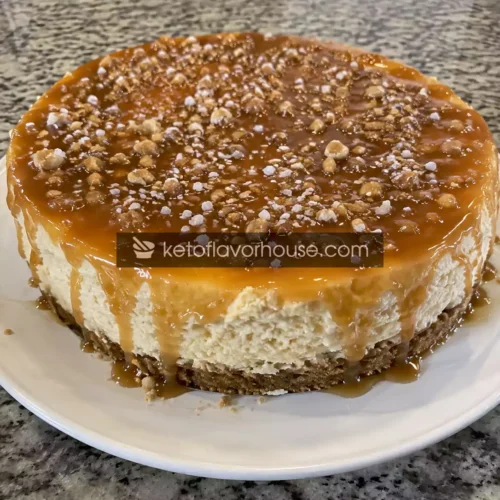
A few caramel ribbons look much more elegant and allow the sea salt to stand out.
I also like serving the cheesecake cold but letting the individual slice sit at room temperature for about 10 minutes before eating.
That tiny amount of time makes the texture noticeably creamier.
If you want even more protein, you can slightly increase the Greek yogurt or egg whites rather than dramatically increasing the whey powder.
If you’re reducing calories, use reduced-fat cream cheese, nonfat Greek yogurt, and sugar-free caramel.
If you’re following a lower-carbohydrate approach, pay close attention to the caramel sauce and sweetener you choose because those ingredients can vary considerably in carbohydrate content.
And if you’re serving this to guests, don’t introduce it as “protein cheesecake.”
Just call it salted caramel cheesecake.
Let them take the first bite.
Then tell them.
Optional Additions
Extra Whey Protein
You can add another 10–15 grams of whey isolate if you want a small additional protein boost.
However, you may need to add a tablespoon or two of Greek yogurt to maintain the texture.
Egg Whites
Adding another 25–50 grams of egg whites is another way to increase protein without substantially increasing fat.
Too much, however, can make the cheesecake more eggy or firm.
Chia Seeds
A tablespoon of chia seeds can add fiber, but I wouldn’t recommend adding many because they change the texture.
They are better suited to a topping or a separate caramel-chia layer.
Nuts
Pecans, walnuts, or almonds add crunch, healthy fats, and a small amount of protein.
Keep portions modest if you’re trying to control calories.
Sugar-Free Chocolate Chips
A small sprinkle of sugar-free chocolate chips turns this into more of a turtle-style caramel cheesecake.
Check the nutrition label because sugar-free products vary considerably between brands.
Serving Ideas
This cheesecake works beautifully as an after-dinner dessert.
I especially like it with a cup of unsweetened coffee because the slight bitterness of the coffee balances the caramel.
For a family gathering, cut it into thinner slices and add a few caramel ribbons and flakes of sea salt right before serving.
For meal prep, keep individual portions chilled in airtight containers.
You can also serve a slice alongside fresh berries. The acidity from strawberries or raspberries cuts through the richness of the cheesecake and adds freshness.
For a post-workout option, remember that the cheesecake alone isn’t necessarily a complete recovery meal. Depending on your overall nutrition needs, pair it with another nutrient-dense food if you need additional carbohydrates, protein, or micronutrients.
Storage Recommendations
Refrigerator
Store the cheesecake covered in the refrigerator for approximately 4–5 days.
Keep it chilled until you’re ready to serve it.
The flavor is often even better on the second day because the caramel and vanilla have had more time to develop.
Freezer
For longer storage, freeze individual slices for up to 2 months for best quality.
Wrap each slice tightly in plastic wrap, then place the wrapped slices into a freezer-safe container or bag.
This helps prevent freezer burn and protects the cheesecake from absorbing other freezer odors.
Thawing
Transfer a frozen slice to the refrigerator and allow it to thaw overnight.
Avoid thawing it aggressively at room temperature.
Slow thawing helps preserve the creamy texture.
Reheating
You generally shouldn’t reheat cheesecake.
It’s meant to be served chilled or slightly tempered at room temperature.
Heating can cause the filling to soften excessively and may negatively affect the texture.
Frequently Asked Questions
Can I add protein powder to cheesecake?
Yes. Whey protein isolate works particularly well in this recipe because it provides concentrated protein without requiring a large amount of powder.
The key is moderation. Adding too much protein powder can make cheesecake dry, dense, or rubbery. That’s why this recipe combines whey with Greek yogurt, cottage cheese, eggs, and egg whites.
Can I use plant-based protein powder?
Yes, but expect some differences.
Plant-based protein powders absorb liquid differently and can create a thicker or slightly grainier texture. A smooth vanilla plant protein blend generally works better than a coarse single-source powder.
You may need to adjust the Greek yogurt slightly depending on the powder.
Is this High-Protein Sea Salted Caramel Cheesecake good after a workout?
It can be incorporated into a post-workout meal or snack because it provides a substantial amount of protein per serving.
However, post-workout nutrition should be considered in the context of your entire day’s diet. If your workout was particularly demanding or you need carbohydrates for recovery, you may want to pair a slice with fruit or another carbohydrate source.
Can I make this cheesecake without whey protein?
Yes.
You can omit the whey, but the protein content per serving will decrease. To compensate somewhat, you can increase the Greek yogurt or cottage cheese.
Keep in mind that changing the proportions may alter the final texture.
Can I use cottage cheese in cheesecake?
Absolutely.
The trick is blending it completely smooth before adding it to the filling.
Cottage cheese is an excellent ingredient for high-protein cheesecake because it provides protein and moisture while helping create a creamy filling.
Is this cheesecake meal-prep friendly?
Yes.
It is actually one of the better desserts for meal prep because it stores well in the refrigerator and can be portioned in advance.
Cut it into individual servings and store each piece in a sealed container.
Can I make this cheesecake keto?
You can make a lower-carb version by using almond flour for the crust, a low-carbohydrate sweetener, and a low-carb caramel sauce.
However, the exact carbohydrate content depends heavily on the specific Greek yogurt, caramel sauce, whey protein, and sweetener you use.
Always check your ingredient labels if strict carbohydrate tracking is important to you.
Why did my cheesecake crack?
Cracking can happen because of overbaking, excessive mixing, sudden temperature changes, or simply because the cheesecake became too dry.
Don’t worry if yours develops a small crack. A drizzle of caramel and a sprinkle of sea salt will cover it beautifully.
For fewer cracks, avoid over-mixing and remove the cheesecake while the center still has a gentle wobble.
Nutritional Breakdown Per Serving
The following values are estimated for 1 of 10 servings and will vary depending on the exact brands of cream cheese, Greek yogurt, whey protein, caramel sauce, almond flour, and sweetener used.
- Calories: ~360 kcal
- Protein: ~20 g
- Fat: ~22 g
- Total Carbohydrates: ~18 g
- Fiber: ~2 g
- Net Carbohydrates: ~16 g
- Sugar: ~7 g
- Sodium: ~430 mg
For the most accurate nutrition information, calculate the recipe using the nutrition labels of the exact products you purchase.
Recipe Snapshot
Prep Time: 25 minutes
Cook Time: 50–65 minutes
Cooling & Chilling Time: 6–8 hours
Total Time: About 7 hours 30 minutes
Course: Dessert
Cuisine: American-inspired
Servings: 10
Calories: ~360 per serving
Protein: ~20g per serving
High-Protein Sea Salted Caramel Cheesecake Recipe

Ingredients
Crust
- 100 g almond flour
- 35 g unsalted butter melted
- 1 tbsp granulated zero-calorie sweetener
- 1/2 tsp vanilla extract
Filling
- 450 g softened cream cheese
- 500 g plain Greek yogurt
- 200 g low-fat cottage cheese
- 3 large eggs
- 150 g liquid egg whites
- 50 g vanilla whey protein isolate
- 80 g sugar-free or reduced-sugar caramel sauce
- 2 tsp vanilla extract
- 2 tbsp cornstarch
- 1/4 tsp fine sea salt
Topping
- 60 g caramel sauce
- Flaky sea salt to taste
- Optional: 15 g chopped toasted pecans
Instructions
- Preheat the oven to 325°F (165°C). Lightly grease a 9-inch springform pan, line the bottom with parchment paper, and place the pan on a baking sheet.
- In a medium bowl, combine the almond flour, granulated sweetener, 1/2 teaspoon vanilla extract, and melted butter. Stir until the mixture resembles damp sand and the almond flour is evenly coated.
- Firmly press the crust mixture into the bottom of the prepared springform pan, creating an even layer. Bake for 8–10 minutes, just until lightly golden and fragrant. Remove from the oven and allow it to cool while preparing the filling.
- Add the cottage cheese and Greek yogurt to a blender or food processor. Blend until completely smooth and creamy, scraping down the sides if necessary. There should be no obvious cottage cheese curds remaining.
- Add the softened cream cheese to a large mixing bowl and beat gently until smooth. Add the blended cottage cheese and Greek yogurt mixture and mix until just combined.
- Add the eggs one at a time, mixing briefly after each addition. Add the liquid egg whites and mix just until incorporated. Avoid whipping the mixture excessively because too much air can cause the cheesecake to puff and crack.
- Add the vanilla whey protein isolate and cornstarch. Mix gently until the dry ingredients are completely incorporated and there are no visible powder pockets.
- Add 80 grams of caramel sauce, 2 teaspoons vanilla extract, and 1/4 teaspoon fine sea salt. Mix gently until the caramel is evenly distributed throughout the cheesecake batter.
- Pour the cheesecake mixture over the cooled crust. Gently tap the pan once or twice against the counter to release large air bubbles, then smooth the surface with a spatula.
- Warm the remaining 60 grams of caramel sauce slightly if necessary so it becomes easy to drizzle. Spoon small amounts across the surface of the cheesecake and use a knife or skewer to create gentle caramel swirls.
- Bake for 50–65 minutes, checking toward the earlier end of the cooking range. The edges should appear set while the center should still have a slight, gentle wobble.
- Turn off the oven and leave the cheesecake inside with the door slightly open for 20–30 minutes. This gradual cooling helps reduce sudden temperature changes that can cause cracking.
- Remove the cheesecake from the oven and allow it to cool completely at room temperature. Once cooled, cover it and refrigerate for at least 6 hours, preferably overnight.
- Before serving, drizzle with a little additional caramel if desired and sprinkle lightly with flaky sea salt. Carefully release the springform pan and slice the cheesecake with a sharp knife, wiping the knife between slices for cleaner cuts.
- Serve chilled or allow individual slices to sit at room temperature for approximately 10 minutes before eating for a softer, creamier texture.