
This post may contains Amazon affiliate and other affiliate links. If you make a purchase through these links, I may earn a small commission at no extra cost to you. Your support helps me continue to provide quality content. I only recommend products I personally trust and believe will add value to your experience. For more details, please visit my Privacy Policy.
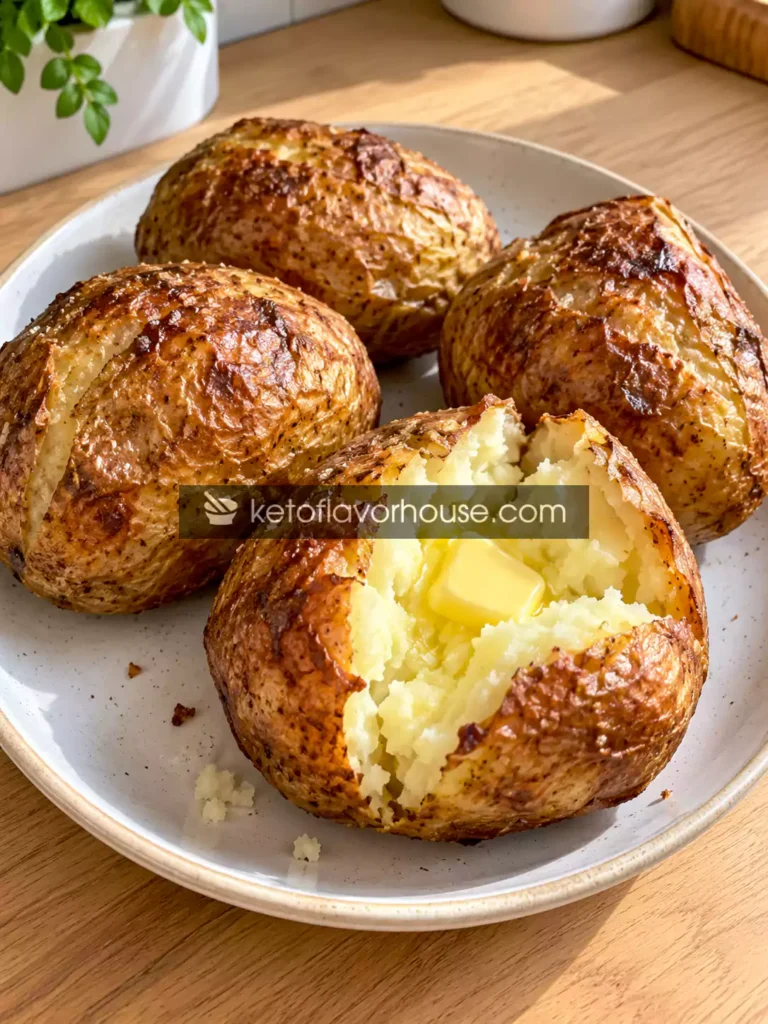
There are few things more comforting than a jacket potato with beautifully crisp skin and a soft, steaming center. It is the kind of simple food that works for lunch, dinner, or even a quick meal when you want something warm and satisfying without spending ages in the kitchen. And when I want that classic baked-potato texture without heating the entire oven, my Air Fryer Jacket Potatoes recipe is one of the methods I turn to.
The best part is that you do not need a complicated ingredient list or any special cooking skills. A few good potatoes, a little oil, and some salt are enough to create a delicious result. The air fryer circulates hot air around the potatoes, helping the skins become crisp while the insides cook until tender and fluffy.
I particularly like this method because it is easy to adjust for different appetites. Make one large potato for a satisfying lunch, or prepare several at once for a family dinner. You can keep the toppings simple with butter and black pepper or turn your potato into a more substantial meal with chicken, tuna, cottage cheese, or your favorite vegetables.
There is one small detail that makes a big difference: choosing potatoes of a similar size and giving them enough room in the air fryer basket. Once you get those two things right, the cooking process is wonderfully straightforward.
In this guide, I will walk you through the ingredients, air-fryer temperature, cooking times, common mistakes, topping ideas, and storage tips so you can make consistently delicious jacket potatoes at home.
Why You’ll Love This Recipe
- 🥔 Crispy skin, fluffy middle: The combination of hot circulating air and a lightly oiled skin creates the classic jacket-potato texture.
- ⏱️ Less oven fuss: You can prepare the potatoes in an air fryer without heating a full-size oven.
- 🧂 Simple ingredients: All you really need are potatoes, oil, and salt.
- 🍽️ Easy to customize: Serve them with butter, cheese, tuna, chicken, cottage cheese, or a flavorful dip.
- 🙌 Beginner-friendly: There is no complicated technique, and most of the cooking time is hands-off.
- 🥗 Easy to build into a balanced meal: Pair a potato with a protein-rich topping and vegetables for a more complete plate.
- 🌡️ Easy to check: A fork, skewer, or food thermometer helps you confirm when the center is properly cooked.
My Personal Experience
The thing I appreciate most about making jacket potatoes in an air fryer is how much control you have over the final texture. A conventional oven can produce excellent baked potatoes, but I often prefer the convenience of preparing a smaller batch in the air fryer.
The first thing I pay attention to is the potato itself. Two potatoes that look almost identical can cook at different speeds if one is denser or slightly larger. I try to choose potatoes of a similar size, especially when preparing dinner for more than one person.
I also avoid rushing the cooking process. It is tempting to turn up the heat and hope the potatoes cook faster, but the skin can become very dark before the center is properly tender. A steady temperature of 200°C (400°F) works well for medium-to-large potatoes, with the total time adjusted according to their size.
Another lesson is that the skin needs to be dry before adding oil. After washing, I dry each potato thoroughly with a clean kitchen towel. This helps the oil coat the surface evenly and gives the skin a better chance of becoming crisp.
Finally, I always check the center before serving. A potato can look perfectly cooked on the outside while remaining firm inside. A thin skewer should slide into the thickest part with very little resistance. When the center is tender and the potato has reached approximately 96–99°C (205–210°F), the texture is usually ideal for a fluffy jacket potato.
These small details make the recipe more reliable, whether you are cooking a single potato for lunch or preparing several for a family meal.
Required Equipment
Air Fryer
A basket-style or oven-style air fryer works well. The important thing is to leave enough space around the potatoes for hot air to circulate. A larger air fryer may accommodate several potatoes, while a compact model may require cooking them in batches.
Kitchen Scale
A scale is optional, but it helps you choose potatoes of a similar size and estimate portions more accurately.
Vegetable Brush
Use a clean vegetable brush to remove soil from the potato skins, especially if you plan to eat the skins.
Clean Kitchen Towel
Drying the potatoes thoroughly after washing is an easy but important step for better skin texture.
Pastry Brush or Oil Sprayer
A pastry brush or food-safe oil sprayer helps distribute a thin, even layer of oil. Avoid spraying nonstick aerosol products directly into an air fryer unless the manufacturer confirms they are suitable for its coating.
Tongs
Tongs make it easier to turn hot potatoes halfway through cooking without burning your fingers.
Fork or Metal Skewer
Use a fork or skewer to test whether the center is tender. Insert it into the thickest part of the potato.
Food Thermometer
A digital instant-read thermometer is optional but useful when you want a consistent result. For a fluffy baked potato, aim for approximately 96–99°C (205–210°F) in the center.
Ingredients & Substitutions
This recipe makes four medium-to-large jacket potatoes. The exact cooking time depends on their weight, thickness, and your air fryer.
4 medium-to-large baking potatoes (approximately 250–300 g each)
Why they matter: Baking potatoes with a floury, starchy texture generally produce a softer, fluffier interior. Russet potatoes are an excellent choice where available. In the UK, Maris Piper or King Edward potatoes can also work well.
Substitution: Use another starchy potato variety suitable for baking. Smaller potatoes cook faster, while extra-large potatoes need more time.
1 tablespoon olive oil (15 ml)
Why it matters: A thin coating of oil helps the skins brown and crisp while carrying the salt across the surface.
Substitution: Use avocado oil, sunflower oil, or another cooking oil suitable for high temperatures. You can use a little less oil if preferred, although the skin may be less evenly crisp.
½ teaspoon fine salt (approximately 3 g), or to taste
Why it matters: Salt seasons the skin and enhances the natural flavor of the potato.
Substitution: Use sea salt or kosher salt, adjusting the quantity according to the grain size. You can also season the potatoes after cooking.
Optional seasonings
- ¼ teaspoon freshly ground black pepper
- ¼ teaspoon garlic powder
- ¼ teaspoon smoked paprika
- A small pinch of dried rosemary or thyme
These are optional additions rather than essential ingredients. For the classic jacket-potato flavor, oil and salt are all you need.
How to Choose the Best Potatoes
Choose firm potatoes without green patches, extensive bruising, or soft spots. Potatoes with similar shapes and weights are easier to cook evenly.
A floury potato is generally the best option when your priority is a light, fluffy center. Waxy potatoes can still be cooked in an air fryer, but their texture tends to be creamier and less crumbly.
If your potatoes vary significantly in size, group similar-sized ones together and check each individually as the cooking time approaches its end.
Air-Fryer Notes
Before starting, keep these practical details in mind.
Preheat the air fryer. Preheat to 200°C (400°F) for approximately 3–5 minutes, unless your model’s instructions recommend a different approach. Starting with a hot cooking chamber helps make the cooking process more consistent.
Leave space between the potatoes. Arrange them in a single layer, with room around each one. Overcrowding restricts airflow and can leave patches of skin softer than others.
Dry before oiling. Water left on the surface can interfere with the crisp finish. Dry the potatoes thoroughly, then coat them lightly with oil.
Turn halfway through cooking. Rotate or flip the potatoes after approximately 20–25 minutes. Air fryers differ in how evenly they distribute heat, so turning helps promote more uniform browning.
Finish cooking based on texture, not just the clock. Medium-to-large potatoes generally take around 40–55 minutes at 200°C (400°F). Very large potatoes may need 55–65 minutes or longer. Check the thickest potato before removing the batch.
Do not rely on skin color alone. Deeply browned skin does not guarantee a tender center. Use a skewer or thermometer to check doneness.
How to Make Air Fryer Jacket Potatoes (Crispy Skin, Fluffy Inside)
Step 1: Wash and dry the potatoes
Scrub the potatoes under running water to remove any soil. Pay attention to the creases and eyes, then dry them completely with a clean kitchen towel.
There is no need to peel them. The skin is an important part of a jacket potato, and keeping it intact helps hold the fluffy interior together.
Step 2: Prepare the skins
Rub the potatoes with the olive oil, making sure each one receives a thin, even coating. Sprinkle with salt and add black pepper or other seasonings if desired.
Pricking each potato a few times with a fork is a common precaution that allows steam to escape. Keep the pricks shallow and use care when handling the potatoes.
Step 3: Preheat and arrange
Preheat your air fryer to 200°C (400°F) for 3–5 minutes. Place the prepared potatoes in the basket in a single layer.
Leave space between them rather than stacking them. If your air fryer is small, cook the potatoes in batches so that hot air can move freely around the skins.
Step 4: Air fry the potatoes
Cook at 200°C (400°F) for approximately 40–55 minutes for medium-to-large potatoes weighing around 250–300 g each.
At the halfway point, around 20–25 minutes, carefully turn the potatoes with tongs. Begin checking smaller potatoes earlier; very large potatoes may need 55–65 minutes or longer.
Step 5: Check for doneness
Insert a skewer into the thickest part of each potato. It should slide through easily without meeting a hard or chalky center.
For a reliably fluffy texture, aim for an internal temperature of approximately 96–99°C (205–210°F). If the potatoes are still firm, return them to the air fryer for another 5–10 minutes and check again.
Step 6: Rest, fluff, and serve
Let the potatoes rest for 2–3 minutes, then cut a cross into the top of each one. Gently squeeze the sides using a clean towel if needed, and fluff the inside with a fork.
Add your favorite toppings while the potato is hot. Butter melts beautifully into the fluffy center, while cottage cheese, chicken, or tuna can make the meal more filling.
How Long Do Jacket Potatoes Take in an Air Fryer?
These are practical starting estimates for potatoes cooked at 200°C (400°F), not guaranteed timings for every model.
| Potato size | Approximate weight per potato | Estimated cooking time |
|---|---|---|
| Small | 150–200 g | 30–40 minutes |
| Medium | 200–250 g | 35–45 minutes |
| Medium-large | 250–300 g | 40–55 minutes |
| Large | 350–450 g | 55–70 minutes |
Start checking before the upper end of the suggested range. The potato variety, shape, starting temperature, basket design, and number of potatoes can all affect the result.
Common Mistakes to Avoid
- Using wet potatoes: Moisture on the surface can make crisping less effective. Dry them thoroughly before adding oil.
- Overcrowding the basket: Too many potatoes restrict airflow. Cook in batches if necessary.
- Choosing very different sizes: Smaller potatoes may finish before larger ones. Select similar sizes or remove each potato as it becomes tender.
- Using too much oil: A heavy coating can make the skin greasy. A light, even layer is enough.
- Cooking at an excessively high temperature: Very high heat can darken the outside before the center becomes fluffy. Start at 200°C (400°F) and extend the cooking time when needed.
- Skipping the doneness test: Always check the center rather than assuming the potato is ready because the skin looks brown.
- Cutting too early: Allowing a short rest before splitting the potato helps you handle it safely and fluff the center easily.
- Expecting identical results from every air fryer: Appliance wattage, basket size, and airflow differ. Treat the suggested times as a guide and adjust to your equipment.
Pro Tips for Best Results
Choose floury potatoes. A starchy baking variety is your best starting point for a light, fluffy center.
Keep the skins intact. Avoid deep cuts before cooking. A few shallow fork pricks are enough if you prefer to vent the potatoes.
Use oil sparingly but evenly. Make sure the entire surface receives a light coating, including the ends.
Turn at the halfway point. This is especially helpful in air fryers that brown more strongly near the heating element.
Check each potato separately. Even potatoes of similar weights can finish at different times. Remove the tender ones and continue cooking the firmer ones.
Fluff the interior immediately before serving. A fork helps release steam and separates the soft potato flesh into a light, fluffy texture.
Add protein-rich toppings when you want a more substantial meal. Cottage cheese, plain Greek yogurt, tuna, or cooked chicken can increase the protein content without requiring a complicated recipe.
Remember that toppings affect the nutrition. Butter, cheese, sour cream, and oil add calories and fat. Beans and sweet sauces can increase carbohydrates. Choose portions according to your dietary goals.
Air-Fryer Benefits of Potatoes
Air frying is a convenient way to prepare potatoes because it uses circulating hot air rather than requiring the potatoes to be submerged in oil. For this recipe, a tablespoon of oil is enough to coat four potatoes lightly.
The method can therefore use less added oil than deep-frying, although the exact difference depends on the alternative cooking method and the quantity of oil used.
Potatoes also provide carbohydrates for energy, along with potassium, vitamin C, and some fiber. Keeping the skin on contributes to the fiber content, particularly when the potato is thoroughly cleaned and the skin is eaten.
It is important to distinguish between an air-fried potato and a low-carbohydrate food. Regular jacket potatoes are naturally high in carbohydrates and are not suitable for a strict ketogenic diet in typical serving sizes. Air frying changes the cooking method, not the potato’s basic carbohydrate content.
For KetoFlavorHouse readers following a keto eating plan, a smaller portion may not fit everyone’s carbohydrate target. A lower-carbohydrate alternative, such as a roasted cauliflower or celeriac preparation, may be a better choice.
Variations You Can Try
The classic oil-and-salt version is delicious on its own, but jacket potatoes are also an excellent base for different flavors.
Garlic and Herb Jacket Potatoes
Mix the olive oil with a small amount of garlic powder, dried rosemary, and black pepper before coating the potatoes. Avoid adding fresh minced garlic at the beginning because it can burn during the long cooking time.
Smoky Paprika Potatoes
Add a little smoked paprika and black pepper to the oil. This gives the skins a warm, smoky flavor without requiring a long ingredient list.
Cheesy Jacket Potatoes
After cooking, split the potato and add grated cheddar. Return it to the air fryer for 1–3 minutes, or just until the cheese melts. Watch carefully to prevent the cheese from burning.
Chicken and Cottage Cheese Potatoes
Fill the cooked potato with chopped, fully cooked chicken and cottage cheese. Season with black pepper, garlic powder, and fresh herbs if you enjoy them. This is a useful option when you want to add more protein to the meal.
Tuna Jacket Potatoes
Mix drained tuna with plain Greek yogurt, a little mustard, black pepper, and chopped spring onion. Spoon the mixture over the split potato just before serving.
Vegan Jacket Potatoes
Use olive oil and salt for the potato, then top with seasoned beans, sautéed mushrooms, or a dairy-free yogurt sauce. Check the carbohydrate content of the toppings if you are tracking macros.
Oven-Baked Version
If you do not have an air fryer, bake the prepared potatoes on a tray in a preheated oven at approximately 220°C (425°F) for 50–75 minutes, depending on their size. Turn them if needed and test the center for tenderness. Oven performance varies, so use the skewer test rather than relying only on the timer.
Tips for This Recipe
- For meal prep: Cook the potatoes ahead of time, cool them promptly, and refrigerate them in a covered container. Reheat until steaming hot.
- For serving a group: Cook potatoes of similar size together and keep toppings separate so everyone can customize their meal.
- For a faster meal: Choose smaller potatoes, recognizing that their centers may be less substantial than those of large baking potatoes.
- For a crispier finish: Avoid wrapping potatoes in foil during air frying. Foil traps moisture and works against the dry, crisp skin you want.
- For more even cooking: Do not put cold, wet potatoes directly into an overcrowded basket.
- For better portion control: Weigh the potato before cooking if you need a more accurate estimate of calories and carbohydrates.
- For a simple lunch: Prepare the potato while you assemble a protein-rich filling, then combine everything when the potato is ready.
Optional Additions
The following toppings work well with the recipe. Their nutritional values vary with the brand and portion size.
| Topping | Suggested amount per potato | Carbohydrate considerations |
|---|---|---|
| Butter | 1 teaspoon | Very low in carbohydrates |
| Grated cheddar | 15 g | Usually low in carbohydrates |
| Sour cream | 1 tablespoon | Typically low, but check the label |
| Plain Greek yogurt | 2 tablespoons | Contains some carbohydrates |
| Cottage cheese | ¼ cup | Contains some carbohydrates and adds protein |
| Tuna in water | 50–75 g | Virtually carbohydrate-free if unseasoned |
| Cooked chicken breast | 50–75 g | Very low in carbohydrates if unbreaded |
| Baked beans | 2 tablespoons | Adds a meaningful amount of carbohydrates |
| Sweet chili sauce | 1 teaspoon | May add sugar and carbohydrates |
| Chives or spring onion | 1 teaspoon | Adds a small amount of carbohydrate |
For the simplest serving, add a little butter, black pepper, and chives. For a protein-focused meal, try cottage cheese, tuna, or chicken. If you are following a strict keto plan, pay attention to the potato itself as well as the toppings.
Serving Ideas
Air fryer jacket potatoes can be served in several ways, depending on whether you want a light lunch, a filling dinner, or a side dish.
- Classic lunch: Serve with butter, salt, and black pepper, plus a simple salad.
- Protein-rich dinner: Add shredded chicken, cottage cheese, or tuna and serve with a side of vegetables.
- Family meal: Offer a selection of cheese, yogurt, cooked chicken, and herbs so everyone can choose their own toppings.
- Meal-prep lunch: Pair a reheated potato with a prepared protein filling and fresh vegetables.
- Comfort-food dinner: Serve alongside grilled chicken or fish with a simple vegetable side.
- Casual gathering: Make a jacket-potato topping station with separate bowls of cheese, herbs, cooked meat, and sauces.
For a balanced meal, combine the potato with a source of protein and vegetables. The potato provides the carbohydrate component, while the topping and side dishes help round out the plate.
Storage & Reheating
How to Store Leftover Jacket Potatoes
Let the potatoes cool briefly, then refrigerate them promptly in a covered container. Do not leave cooked potatoes at room temperature for more than two hours; refrigerate sooner in a very warm kitchen.
For best quality, use refrigerated leftovers within 3–4 days. Store toppings separately whenever possible, particularly dairy-based sauces and meat fillings.
Can You Freeze Jacket Potatoes?
Yes, although freezing may change the texture slightly. Let the potatoes cool, wrap them individually or place them in a freezer-safe container, and freeze for up to 2–3 months for best quality.
Thaw in the refrigerator before reheating for more even results. The skin may be less crisp after freezing, but the air fryer can help restore some of its texture.
How to Reheat Jacket Potatoes in an Air Fryer
- Preheat the air fryer to 180°C (350°F).
- Place the refrigerated potato in the basket without crowding.
- Heat for approximately 8–15 minutes, depending on the potato’s size and starting temperature.
- Turn it halfway through if needed.
- Check that the center is steaming hot. For leftovers, aim for 74°C (165°F) when checking the internal temperature.
A very large potato may need additional time. If the skin starts to darken too quickly, lower the temperature slightly and continue until the center is thoroughly hot.
Avoid repeatedly cooling and reheating the same potato. Reheat only the portion you plan to eat.
Frequently Asked Questions
1. Do I need to boil potatoes before air frying them?
No. Raw potatoes can go directly into the air fryer after washing, drying, and lightly oiling. Boiling is unnecessary for this jacket-potato method.
2. What is the best temperature for air fryer jacket potatoes?
A good starting point is 200°C (400°F). This temperature helps the skins crisp while giving the centers time to become tender. Adjust the time according to potato size and your air fryer.
3. Why are my jacket potatoes still hard inside?
They probably need more time, particularly if they are large or dense. Return them to the air fryer for another 5–10 minutes and test the center again. The skewer should slide in easily, and the center should be approximately 96–99°C (205–210°F) for a fluffy texture.
4. Should I wrap jacket potatoes in foil?
No, not for this recipe. Foil traps moisture around the potato and prevents the skin from drying and crisping as effectively. Cook them unwrapped in a single layer.
5. Do I have to use oil?
No, but a small amount helps the skin brown and crisp more evenly. You can cook the potatoes without oil if you prefer, though the skin may have a drier texture and less even browning.
6. Can I cook frozen jacket potatoes in an air fryer?
You can reheat previously cooked frozen potatoes in an air fryer, but the timing will depend on their size and whether they have been thawed. Cook or reheat until the center is thoroughly hot. This recipe’s timings are intended for raw, unfrozen potatoes, not frozen prepared potatoes.
7. Are air fryer jacket potatoes keto-friendly?
Regular potatoes are high in carbohydrates, so a typical whole jacket potato generally does not fit a strict ketogenic diet. The air fryer does not remove the carbohydrates. If you are following a keto plan, consider a lower-carbohydrate alternative or use a carefully measured portion that fits your personal carbohydrate target.
Nutritional Breakdown (Per Serving)
Serving size: 1 jacket potato with olive oil and salt
- Calories: 245 kcal
- Protein: 7 g
- Total Fat: 4 g
- Total Carbohydrates: 53 g
- Dietary Fiber: 6 g
- Net Carbs: 47 g
Nutrition is estimated and will vary with potato size, variety, and the amount of oil used. Toppings are not included.
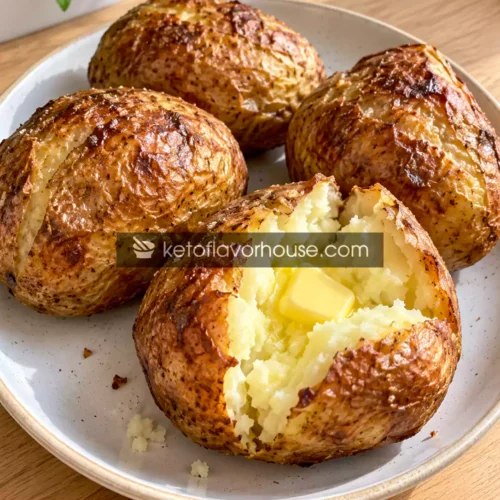
Air Fryer Jacket Potatoes

Ingredients
- 4 medium-to-large baking potatoes 250–300 g each
- 1 tablespoon olive oil 15 ml
- ½ teaspoon fine salt or to taste
- ¼ teaspoon black pepper optional
- ¼ teaspoon garlic powder optional
Instructions
- Wash and dry: Scrub the potatoes thoroughly under running water. Dry completely with a clean kitchen towel.
- Season: Rub the potatoes with olive oil until lightly coated. Sprinkle with salt and optional black pepper or garlic powder. Prick each potato a few times with a fork if desired.
- Preheat: Preheat the air fryer to 200°C (400°F) for 3–5 minutes, following your appliance’s instructions.
- Arrange: Place the potatoes in a single layer in the air fryer basket, leaving space between them for proper air circulation.
- Cook: Air fry at 200°C (400°F) for 40–55 minutes, depending on size. Turn the potatoes after 20–25 minutes for more even cooking.
- Check doneness: Insert a skewer into the thickest part of each potato. It should slide in easily. For a fluffy center, aim for an internal temperature of 96–99°C (205–210°F). If still firm, continue cooking in 5–10-minute increments.
- Fluff and serve: Rest for 2–3 minutes. Cut a cross into the top of each potato, gently open it, and fluff the inside with a fork. Add your preferred toppings and serve hot.


