This post may contains Amazon affiliate and other affiliate links. If you make a purchase through these links, I may earn a small commission at no extra cost to you. Your support helps me continue to provide quality content. I only recommend products I personally trust and believe will add value to your experience. For more details, please visit my Privacy Policy.
There are evenings when I want lasagna, but I don’t necessarily want the heavy, sleepy feeling that can come after a huge plate of traditional comfort food. That was exactly where this Anti-Inflammatory Seafood Lasagna with Shrimp & Crab came from. I wanted something warm, cheesy, saucy, and deeply satisfying, but built around seafood, vegetables, extra-virgin olive oil, garlic, herbs, and other ingredients that fit naturally into an anti-inflammatory eating pattern.
The first time I made this, I wasn’t expecting it to become such a regular dinner. I had shrimp in the refrigerator, some lump crabmeat, spinach that needed to be used, and a few lasagna sheets sitting in the pantry. It seemed like one of those “let’s see what happens” dinners.
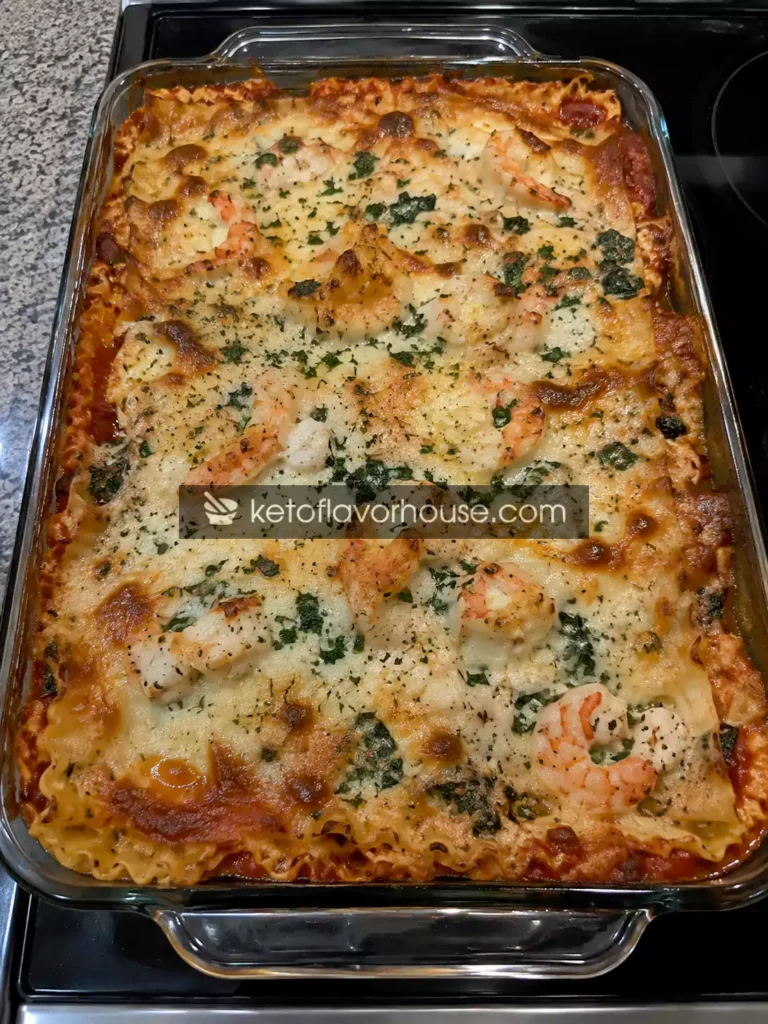
What happened was a bubbling baking dish of tender seafood, garlicky tomato sauce, creamy ricotta, wilted spinach, mozzarella, and herbs that smelled so good that everyone seemed to wander into the kitchen at exactly the wrong time—right when it came out of the oven.
I love this recipe because it gives you the emotional comfort of lasagna while bringing in plenty of seafood and vegetables. The combination is rich enough to feel special, yet the lemon, herbs, tomato, and olive oil keep the flavors bright instead of overwhelmingly heavy.
If you’ve been looking for an anti-inflammatory dinner that doesn’t feel like “health food,” this one deserves a place on your table.
Why You’ll Love This Recipe
- 🥬 Packed with anti-inflammatory-friendly ingredients: Spinach, tomatoes, garlic, extra-virgin olive oil, herbs, lemon, shrimp, and crab all fit beautifully into a whole-food-focused eating pattern.
- ⚡ Satisfying without being overly heavy: Seafood provides protein while vegetables and herbs keep the dish fresh and balanced.
- 🍽️ A real comfort-food dinner: You still get layers of sauce, creamy cheese, tender noodles, and bubbling mozzarella.
- 👩🍳 Straightforward preparation: There are several components, but none are complicated.
- 🧡 Big Mediterranean-inspired flavor: Garlic, oregano, basil, parsley, lemon, olive oil, and tomatoes make every bite flavorful.
- 🥣 Excellent for meal prep: The leftovers actually become easier to portion and serve after the lasagna has chilled.
- 🔥 Naturally flavorful: You don’t need a jar of heavy sauce or an excessive amount of seasoning.
- 💪 Protein-rich and nourishing: Shrimp, crab, ricotta, mozzarella, and Parmesan contribute substantial protein to each serving.
- 🌿 Easy to customize: You can make it gluten-free, dairy-free, lower-carb, or even vegetarian with a few thoughtful changes.
My Personal Experience
I’m always suspicious of recipes that promise to replace comfort food with something that is supposedly “just as good.”
Usually, it isn’t.
That’s why I didn’t want this seafood lasagna to taste like a compromise.
I wanted to take a forkful and get the things I actually love about lasagna: soft noodles, creamy filling, tomato sauce, browned cheese around the edges, and that little bit of resistance from the baked top.
The seafood simply changes the personality of the dish.
Shrimp gives you those juicy little bites throughout the layers, while crab adds a delicate sweetness that works surprisingly well with tomato, garlic, and Parmesan. The spinach disappears into the ricotta mixture, which is useful if you’re cooking for someone who normally pushes vegetables around their plate.
My favorite moment is probably the first serving.
I let the lasagna rest for about 15 minutes, then cut into it while it is still warm. The cheese is soft and stretchy, but the layers have had enough time to settle. A little chopped parsley and lemon zest over the top wakes everything up.
It feels indulgent.
But because the recipe is centered around seafood, vegetables, olive oil, herbs, and a homemade tomato sauce, it also fits much more comfortably into my usual approach to healthy eating.
That balance is what keeps me coming back to it.
Anti-Inflammatory Seafood Lasagna: What Makes It Different?
An anti-inflammatory eating pattern generally emphasizes foods such as vegetables, fruits, seafood, legumes, whole grains where appropriate, nuts, seeds, herbs, and minimally processed fats such as extra-virgin olive oil.
This lasagna takes that general philosophy and turns it into comfort food.
Instead of relying on a very heavy meat sauce, the main protein comes from shrimp and crab.
Instead of a jarred sauce, the tomato layer is made with crushed tomatoes, garlic, onion, olive oil, and herbs.
Spinach adds color, texture, and plant-based nutrients.
Extra-virgin olive oil provides a flavorful fat source, while lemon and fresh herbs keep the finished dish bright.
And importantly, the recipe doesn’t ask you to give up the things that make lasagna enjoyable.
There is still cheese.
There is still pasta.
There is still a beautifully browned top.
That’s why I think this recipe works particularly well for people who want to eat more whole foods without turning every meal into a bowl of plain vegetables and grilled protein.
Required Equipment
Large Skillet
You’ll use this for the seafood and spinach mixture as well as the tomato sauce. A wide skillet gives the ingredients enough room to cook evenly.
Large Pot
You’ll need a large pot for boiling the lasagna noodles. If your noodles are oven-ready, you can skip this step.
Cutting Board
A sturdy cutting board makes quick work of the onion, garlic, spinach, parsley, and other fresh ingredients.
Sharp Knife
A sharp knife is particularly helpful for finely chopping the onion and garlic. Smaller pieces distribute more evenly through the sauce.
Mixing Bowl
Use a medium-to-large bowl for combining the ricotta, spinach, Parmesan, herbs, and seasonings.
9 × 13-Inch Baking Dish
This size works well for creating generous layers without making the lasagna excessively tall.
Foil
Covering the lasagna during the first part of baking helps prevent the cheese from becoming too dark before the center is hot.
Ingredients & Substitutions
Lasagna Noodles — 12 sheets
Regular lasagna noodles provide the classic structure and satisfying texture.
For gluten-free lasagna, use your favorite gluten-free noodles. Some brands become softer than wheat noodles, so avoid overcooking them before layering.
For a lower-carb version, zucchini sheets or thinly sliced eggplant can replace some or all of the noodles. The finished lasagna will be lighter and more vegetable-forward.
Raw Shrimp — 1 pound, peeled and deveined
Shrimp is the main protein and cooks quickly, which makes it important not to overcook it.
I prefer medium or large shrimp because they remain noticeable after baking.
If using frozen shrimp, thaw completely and pat it dry before cooking.
Lump Crabmeat — 8 ounces
Crab adds a naturally sweet, delicate seafood flavor.
Lump crabmeat works beautifully because you don’t need to do much to it. Gently fold it into the filling rather than aggressively stirring it, so you preserve some of those larger pieces.
Extra-Virgin Olive Oil — 2 tablespoons
Extra-virgin olive oil is used for sautéing the aromatics and seafood.
Its fruity flavor works especially well with garlic, tomatoes, seafood, and Mediterranean-style herbs.
Yellow Onion — 1 medium, finely diced
Onion creates the savory foundation of the tomato sauce.
Cook it slowly enough to soften it without letting it burn. If you want a slightly sweeter sauce, give the onion another couple of minutes over medium-low heat.
Garlic — 5 cloves, minced
Garlic brings one of the most recognizable flavors to the entire dish.
Fresh garlic is worth using here. Jarred garlic can work in a pinch, but freshly minced cloves give the sauce considerably more aroma.
Crushed Tomatoes — 28 ounces
Tomatoes provide acidity and body.
Choose plain crushed tomatoes without unnecessary added sugar or heavily processed flavorings. The goal is a simple tomato base that you can season yourself.
Tomato Paste — 2 tablespoons
Tomato paste intensifies the tomato flavor and gives the sauce a deeper, richer texture.
Dried Oregano — 1 teaspoon
Oregano brings an earthy Mediterranean character to the tomato sauce.
Dried Basil — 1 teaspoon
Basil softens the sharper flavors of tomato and garlic.
Fresh basil can be used instead; add it toward the end of cooking.
Fresh Parsley — ¼ cup, chopped
Parsley adds freshness to an otherwise rich dish.
Save a little extra for garnishing the finished lasagna.
Lemon Zest — 1 teaspoon
Lemon zest may seem like a small addition, but it makes a noticeable difference with seafood.
It gives the filling a fresh citrus aroma without adding too much acidity.
Lemon Juice — 1 tablespoon
A small amount of lemon juice balances the richness of the cheese and seafood.
Don’t add too much, or the tomato sauce can become overly acidic.
Baby Spinach — 5 ounces
Spinach adds vegetables to the filling while providing a soft texture that blends naturally with ricotta.
Fresh spinach works best. Cook it only until wilted, then squeeze out excess moisture.
Ricotta Cheese — 15 ounces
Ricotta creates the creamy layer that makes this unmistakably lasagna.
For a lighter texture, you can use part-skim ricotta.
Mozzarella Cheese — 1½ cups shredded
Mozzarella gives you that classic bubbling, stretchy cheese layer.
Low-moisture mozzarella is preferable because it melts well without releasing excessive liquid.
Parmesan Cheese — ½ cup finely grated
Parmesan adds saltiness and savory depth.
Freshly grated Parmesan melts more smoothly and tends to have better flavor than pre-shredded varieties.
Red Pepper Flakes — ¼ teaspoon
These are optional but highly recommended if you enjoy a little warmth.
You can increase them to ½ teaspoon for a noticeably spicier lasagna.
Sea Salt — ¾ teaspoon, divided
Salt brings the individual flavors together.
Be careful because Parmesan, mozzarella, and crab can all contribute salt.
Black Pepper — ½ teaspoon
Freshly ground black pepper adds gentle heat and savory depth.
How to Make Anti-Inflammatory Seafood Lasagna with Shrimp & Crab
1. Prepare the Lasagna Noodles
Bring a large pot of salted water to a boil.
Cook the lasagna noodles according to the package directions, but aim for al dente rather than completely soft.
This is important.
The noodles will continue cooking in the oven, and overcooked noodles can become soft and difficult to layer.
Once cooked, drain them and lay them flat on a lightly oiled baking sheet or clean surface.
Don’t pile hot noodles directly on top of one another or they can stick together.
If you’re using oven-ready noodles, simply follow the package instructions and skip boiling.
2. Build the Tomato Sauce
Heat 1 tablespoon of extra-virgin olive oil in a large skillet over medium heat.
Add the diced onion and cook for about 4–5 minutes.
You want it soft and translucent rather than deeply browned.
Add the minced garlic and cook for another 30–45 seconds.
The moment the garlic becomes fragrant, add the crushed tomatoes and tomato paste.
Stir in the oregano, basil, ¼ teaspoon of the salt, black pepper, and red pepper flakes if using.
Let the sauce simmer gently for about 12–15 minutes.
You are looking for a sauce that has thickened slightly.
Don’t rush this part.
If the sauce is too watery, you’ll end up with a lasagna that struggles to hold its layers.
Taste it before moving on. If the tomatoes are particularly acidic, a tiny pinch of salt can help round out the flavor.
3. Cook the Spinach
While the sauce simmers, heat the remaining tablespoon of olive oil in another skillet.
Add the baby spinach.
Cook for 1–2 minutes, just until wilted.
Transfer the spinach to a bowl and allow it to cool enough to handle.
Now squeeze out as much excess moisture as you can.
This step is easy to skip, but it matters.
Spinach holds a surprising amount of water. If you put all that moisture into the ricotta mixture, the lasagna can become watery.
Roughly chop the squeezed spinach.
4. Prepare the Seafood
Pat the shrimp dry with paper towels.
Season lightly with the remaining salt and a little black pepper.
Using the same skillet you used for the spinach, cook the shrimp over medium heat for approximately 1–2 minutes per side.
You don’t want to cook them completely through.
They should just begin turning pink and opaque.
This is one of the most important techniques in the entire recipe.
The shrimp will cook again inside the lasagna, so partially cooking them now helps keep them tender instead of rubbery.
Remove them from the heat immediately.
Once cool enough to handle, cut larger shrimp into bite-sized pieces.
5. Make the Creamy Spinach Filling
In a large bowl, combine:
- Ricotta
- Cooked spinach
- ¼ cup Parmesan
- Lemon zest
- Lemon juice
- Half of the chopped parsley
- A small pinch of black pepper
Mix gently until everything is evenly combined.
The filling should be creamy but not runny.
If it seems excessively loose, give the spinach another squeeze before adding more ingredients. Don’t try to correct watery ricotta by adding extra cheese; the underlying issue is usually excess moisture.
6. Fold in the Seafood
Add the cooked shrimp and lump crabmeat to the ricotta mixture.
Fold gently.
You want to distribute the seafood without completely breaking apart the crab.
This is where the filling starts to smell incredible.
The garlic and lemon from the surrounding ingredients bring out the natural sweetness of the seafood, while the ricotta gives everything a soft, creamy texture.
7. Assemble the Lasagna
Preheat your oven to 375°F (190°C).
Spread a thin layer of tomato sauce over the bottom of a 9 × 13-inch baking dish.
Place 3–4 lasagna noodles over the sauce, depending on the size of your noodles.
Spread approximately one-third of the seafood-ricotta mixture over the noodles.
Spoon another layer of tomato sauce over the filling.
Sprinkle with some mozzarella.
Repeat the layers until you’ve used the ingredients.
Finish with tomato sauce, the remaining mozzarella, and the remaining Parmesan.
Try not to overload each layer.
A thinner, even layer of filling produces a more cohesive lasagna and makes cutting much easier.
8. Bake Until Bubbling
Cover the baking dish loosely with foil.
Bake for approximately 25 minutes.
Remove the foil and continue baking for another 10–15 minutes, until the cheese is melted and bubbling around the edges.
If you want more browning on top, switch to the broiler for 1–2 minutes at the very end.
Watch it closely.
Cheese can go from beautifully browned to burnt surprisingly quickly under a broiler.
9. Let It Rest
This is the part everyone wants to skip.
Don’t.
Let the lasagna rest for about 15 minutes before cutting.
The resting period gives the layers time to settle and allows the sauce to redistribute.
If you cut it immediately, the filling can slide outward and you’ll lose those beautiful layers.
Use a sharp knife to cut the lasagna, then lift each serving with a wide spatula.
Finish with fresh parsley and, if desired, a little lemon zest.
Common Mistakes to Avoid
Overcooking the Shrimp
Shrimp cooks extremely quickly.
Because it goes into the oven afterward, only partially cook it on the stovetop.
Fix: Remove shrimp from the skillet as soon as it becomes mostly opaque.
Making the Sauce Too Thin
Watery tomato sauce is one of the easiest ways to create soggy lasagna.
Fix: Simmer the sauce until it coats the back of a spoon.
Leaving Too Much Water in the Spinach
Spinach releases a lot of moisture.
Fix: Squeeze the cooked spinach thoroughly before adding it to the ricotta.
Overcooking the Noodles
Soft noodles can tear during assembly and become mushy after baking.
Fix: Cook them only to al dente.
Oversalting the Filling
Seafood and Parmesan already contribute natural saltiness.
Fix: Season lightly at each stage and taste the sauce before adding more salt.
Using Too Much Cheese
More cheese doesn’t necessarily mean better lasagna.
Excess cheese can overwhelm the delicate crab flavor.
Fix: Keep the seafood visible and use cheese to support the dish rather than dominate it.
Cutting It Too Soon
Fresh-from-the-oven lasagna is tempting, but it needs time to settle.
Fix: Rest for at least 15 minutes.
Pro Tips for the Best Results
Use Extra-Virgin Olive Oil
Olive oil fits naturally into the Mediterranean-inspired flavor profile and works beautifully with garlic, seafood, tomato, and herbs.
Add Garlic at the Right Moment
Garlic should become fragrant but not dark brown.
Burned garlic can make an entire sauce taste bitter.
Use Lemon at the End
A little lemon juice and zest can brighten rich seafood and cheese.
For even more freshness, squeeze a tiny amount of lemon over individual servings rather than adding lots to the whole lasagna.
Don’t Drown the Layers
You need enough sauce for moisture and flavor, but not so much that the noodles swim in it.
Let the Sauce Thicken
A few extra minutes of simmering can make a surprisingly large difference in the final texture.
Make It Ahead
You can assemble the lasagna several hours before baking.
Cover it and refrigerate until you’re ready to cook.
Because the dish will be cold, you may need to add approximately 10–15 minutes to the covered baking time.
Anti-Inflammatory Benefits of Shrimp & Crab
Shrimp and crab are both excellent sources of protein, making them useful ingredients when you’re building a satisfying meal around seafood.
They also provide a variety of micronutrients, while seafood in general can fit naturally into dietary patterns that emphasize fish and other minimally processed protein sources.
What I particularly like about using seafood here is that it changes the nutritional balance of traditional lasagna without sacrificing the comfort-food experience.
The rest of the recipe brings in additional whole-food ingredients:
Spinach contributes fiber, folate, vitamin K, carotenoids, and other plant compounds.
Tomatoes provide lycopene and vitamin C.
Garlic adds aromatic depth along with naturally occurring sulfur-containing compounds.
Extra-virgin olive oil provides monounsaturated fat and naturally occurring antioxidant compounds.
Parsley and herbs add flavor while allowing you to rely less heavily on excessive salt.
Lemon contributes freshness and vitamin C.
Taken together, these ingredients make the dish compatible with a whole-food, Mediterranean-inspired approach to eating.
That doesn’t mean one serving of lasagna has a medical effect. Rather, it’s about how the ingredients can fit into an overall eating pattern centered on vegetables, seafood, herbs, healthy fats, and minimally processed foods.
Variations You Can Try
Dairy-Free Seafood Lasagna
Use a dairy-free ricotta alternative and dairy-free mozzarella.
The texture will vary depending on the products used, but the seafood and tomato components will remain delicious.
Gluten-Free Seafood Lasagna
Choose certified gluten-free lasagna noodles.
Everything else in the base recipe can remain the same.
Higher-Protein Version
Increase the shrimp to 1¼ pounds and use a higher-protein ricotta or cottage cheese blended until smooth.
The extra seafood makes the lasagna especially filling.
Vegetarian Version
Replace the shrimp and crab with additional spinach, mushrooms, zucchini, and roasted bell peppers.
You’ll end up with a completely different lasagna, but the garlic-tomato-herb combination works beautifully with vegetables.
Lower-Carb Version
Replace the lasagna noodles with thin zucchini slices.
Salt the zucchini lightly and allow it to sit for 10 minutes, then pat it dry before assembling.
This helps remove some excess moisture.
Spicy Seafood Lasagna
Add ½–1 teaspoon crushed red pepper flakes to the tomato sauce.
You can also add finely chopped Calabrian-style peppers for a deeper, more complex heat.
Meal Prep Version
Prepare the entire lasagna, allow it to cool, then divide it into individual portions.
Store them in airtight containers.
This makes an especially convenient lunch or dinner when you’re trying to avoid ordering takeout during a busy week.
Tips for This Recipe
The biggest thing I would tell a first-time maker is to think about moisture management.
Every ingredient should bring flavor, but not unnecessary water.
Cook the spinach and squeeze it.
Thicken the tomato sauce.
Don’t overcook the shrimp.
Use low-moisture mozzarella.
Cook the noodles al dente.
Those little decisions are what turn a good seafood lasagna into one that slices beautifully.
For flavor, don’t underestimate the lemon.
Seafood and cheese can both be rich, and lemon acts almost like a spotlight—it doesn’t need to dominate the dish. It simply makes everything around it taste brighter.
And don’t forget the herbs.
Fresh parsley scattered over the top just before serving gives the finished dish a completely different appearance and aroma.
Optional Additions
If you want to personalize the lasagna, try one or two of these additions:
- 🌿 Fresh basil
- 🌶️ Crushed red pepper flakes
- 🧄 Extra roasted garlic
- 🫒 Chopped Kalamata olives
- 🍋 Extra lemon zest
- 🌱 Fresh oregano
- 🥜 Toasted pine nuts served on top
- 🌻 Pumpkin seeds for crunch
- 🥑 Avocado served alongside
- 🌾 Ground flaxseed incorporated into a side salad
- 🌱 Chia seeds sprinkled over a fresh salad
- 🥒 A cucumber-herb salad on the side
- 🥬 Arugula dressed with lemon and olive oil
- 🥣 A simple yogurt-herb sauce, if dairy is appropriate for your diet
I wouldn’t add everything at once.
The seafood has a delicate flavor, and too many toppings can make the dish lose its balance.
Serving Ideas
This lasagna is substantial enough to be the centerpiece of dinner.
For a lighter meal, serve it with a simple arugula salad dressed with lemon juice and extra-virgin olive oil.
A cucumber, tomato, and parsley salad is another excellent pairing.
If you’re serving it for a family dinner, I like putting the baking dish directly on the table after the resting period. Add a bowl of fresh greens and let everyone serve themselves.
For lunch, one square of lasagna with a crisp vegetable salad makes a satisfying combination.
If you’re building a week around anti-inflammatory meals, this can also be paired with roasted vegetables, a simple lentil salad, or another vegetable-forward side.
For a lower-carb meal, skip the additional bread or pasta-based sides and serve the lasagna with roasted broccoli, asparagus, zucchini, or a crunchy green salad.
And if you’re looking for more healthy dinner recipes, this is exactly the kind of main course that works well alongside simple vegetable sides rather than requiring an elaborate menu.
Storage Recommendations
Refrigerator
Allow leftover lasagna to cool before transferring it to airtight containers.
Refrigerate for up to 3 days.
Individual portions are particularly convenient because you can reheat only what you need.
Freezer
Seafood lasagna can be frozen, although the texture of the ricotta and vegetables may change slightly after thawing.
For best results, freeze individual portions in freezer-safe containers.
Allow them to cool completely before freezing.
Reheating in the Oven
For the best texture, reheat at 350°F (175°C) covered loosely with foil until warmed through.
Remove the foil during the final few minutes.
This method is slower but tends to preserve the texture better than aggressive microwave reheating.
Microwave
For convenience, microwave an individual portion in 60–90 second intervals.
Cover it loosely with a microwave-safe cover to prevent excessive moisture loss.
Let it stand for a minute before eating.
Frequently Asked Questions
Is Anti-Inflammatory Seafood Lasagna good for meal prep?
Yes. It stores well in individual portions for several days in the refrigerator. For the best texture, reheat portions gently in the oven or microwave rather than repeatedly reheating the entire baking dish.
What makes this seafood lasagna anti-inflammatory friendly?
The recipe emphasizes ingredients commonly included in whole-food, Mediterranean-style eating patterns, including seafood, spinach, tomatoes, garlic, extra-virgin olive oil, herbs, and lemon. The overall dietary pattern matters more than any single ingredient.
Can I make this seafood lasagna dairy-free?
Yes. Replace the ricotta, mozzarella, and Parmesan with suitable dairy-free alternatives. Choose products that melt well and aren’t excessively watery for the best texture.
Can I make this recipe gluten-free?
Absolutely. Use gluten-free lasagna noodles. If you’re buying packaged ingredients, check their labels to ensure they fit your dietary requirements.
Can I freeze seafood lasagna?
Yes, although the texture can change slightly after freezing and thawing. Individual portions generally freeze more conveniently than an entire baking dish.
How do I prevent seafood lasagna from becoming watery?
The most important steps are squeezing moisture from the spinach, simmering the tomato sauce until thickened, avoiding watery mozzarella, and not overcooking the shrimp.
Can I use frozen shrimp and crab?
Yes. Thaw the shrimp completely and pat it dry before cooking. For frozen crab, thaw according to the package instructions and drain it well before adding it to the filling.
Nutritional Breakdown Per Serving
Estimated nutrition per serving, based on 8 servings:
- Calories: 475
- Protein: 34g
- Fat: 24g
- Total Carbohydrates: 35g
- Fiber: 4g
- Net Carbohydrates: 31g
These numbers are estimates and can vary depending on the specific noodles, cheeses, seafood, and brands used.
Recipe Snapshot
Prep Time: 30 minutes
Cook Time: 40 minutes
Resting Time: 15 minutes
Total Time: 1 hour 25 minutes
Course: Dinner
Cuisine: Mediterranean-Inspired / Italian-Inspired
Servings: 8
Calories: Approximately 475 per serving
Anti-Inflammatory Seafood Lasagna with Shrimp & Crab

Ingredients
- 12 lasagna noodles
- 1 pound raw shrimp peeled and deveined
- 8 ounces lump crabmeat
- 2 tablespoons extra-virgin olive oil divided
- 1 medium yellow onion finely diced
- 5 garlic cloves minced
- 28 ounces crushed tomatoes
- 2 tablespoons tomato paste
- 1 teaspoon dried oregano
- 1 teaspoon dried basil
- ¼ cup fresh parsley chopped, plus more for serving
- 1 teaspoon lemon zest
- 1 tablespoon fresh lemon juice
- 5 ounces baby spinach
- 15 ounces ricotta cheese
- 1½ cups shredded low-moisture mozzarella
- ½ cup finely grated Parmesan cheese divided
- ¼ teaspoon red pepper flakes optional
- ¾ teaspoon sea salt divided
- ½ teaspoon freshly ground black pepper
Instructions
- Bring a large pot of salted water to a boil and cook the lasagna noodles until al dente. Drain and lay them flat so they do not stick together.
- Heat 1 tablespoon olive oil in a large skillet over medium heat. Add onion and cook for 4–5 minutes until softened. Add garlic and cook for 30–45 seconds.
- Add crushed tomatoes, tomato paste, oregano, basil, ¼ teaspoon salt, black pepper, and red pepper flakes. Simmer for 12–15 minutes until the sauce thickens slightly.
- Heat the remaining olive oil in another skillet. Add spinach and cook for 1–2 minutes until wilted. Squeeze out excess moisture and roughly chop.
- Pat the shrimp dry and season lightly with salt and pepper. Cook for 1–2 minutes per side, just until beginning to turn pink. Remove from heat and cut into bite-sized pieces.
- In a large bowl, combine ricotta, spinach, ¼ cup Parmesan, lemon zest, lemon juice, half the parsley, and black pepper.
- Gently fold the cooked shrimp and lump crabmeat into the ricotta mixture, taking care not to break apart the crab.
- Preheat oven to 375°F (190°C). Spread a thin layer of tomato sauce in a 9 × 13-inch baking dish.
- Add a layer of lasagna noodles, followed by one-third of the seafood-ricotta filling, tomato sauce, and mozzarella. Repeat the layers.
- Finish with tomato sauce, remaining mozzarella, and remaining Parmesan.
- Cover loosely with foil and bake for 25 minutes. Remove foil and bake another 10–15 minutes until bubbling and golden. Broil for 1–2 minutes if desired.
- Remove from the oven and rest for 15 minutes before slicing. Garnish with fresh parsley and additional lemon zest if desired.