This post may contains Amazon affiliate and other affiliate links. If you make a purchase through these links, I may earn a small commission at no extra cost to you. Your support helps me continue to provide quality content. I only recommend products I personally trust and believe will add value to your experience. For more details, please visit my Privacy Policy.
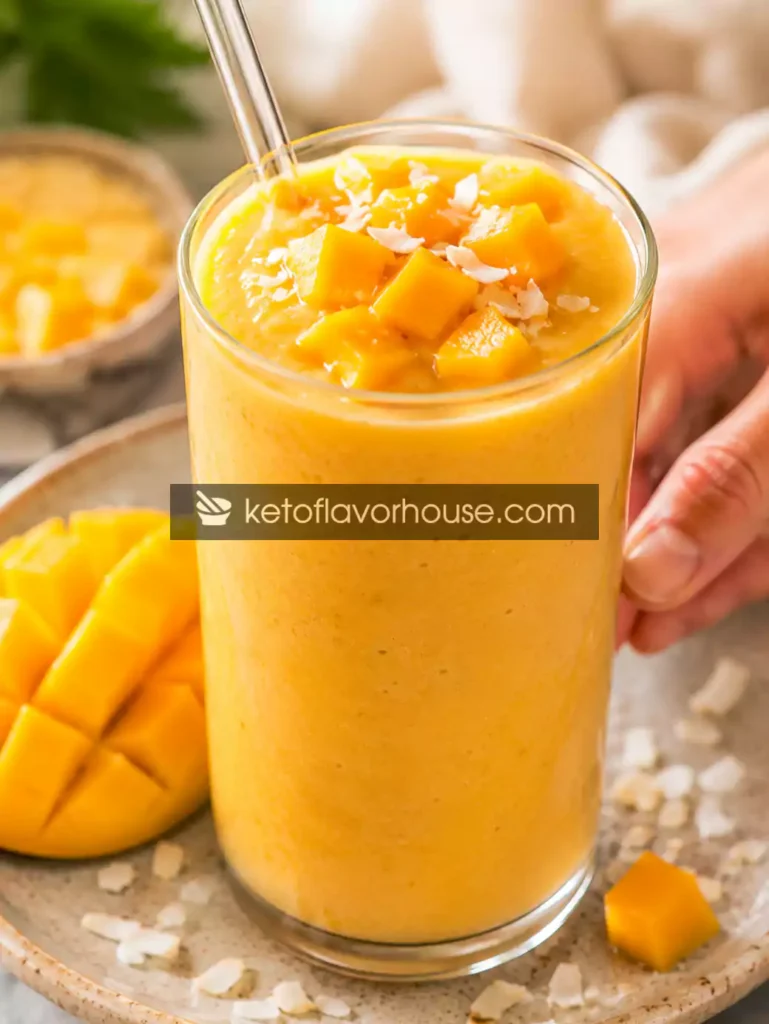
There are certain recipes that instantly feel like sunshine in a glass, and this High-Protein Mango Smoothie Recipe (Healthy Protein Shake) is exactly that kind of recipe for me. The first time I made it, I wasn’t even trying to create something special. I simply needed a quick breakfast before heading out for a long day, and I wanted something higher in protein that still tasted refreshing instead of overly heavy.
I grabbed frozen mango chunks from the freezer, added Greek yogurt, protein powder, almond milk, and ice, then blended everything together in less than five minutes. The moment I took the first sip, I knew this smoothie was going to become part of my regular routine.
It tasted creamy, tropical, naturally sweet, and incredibly refreshing — almost like a mango smoothie from a beachside café. But unlike the sugary versions from smoothie shops, this one was packed with protein that actually kept me full and energized for hours afterward.
That’s why this High-Protein Mango Smoothie Recipe (Healthy Protein Shake) has become one of my favorite healthy smoothie recipes for busy mornings, post-workout recovery, and even afternoon cravings. It feels indulgent without being heavy, refreshing without being watery, and satisfying enough to replace less healthy snacks or fast breakfasts.
What makes this smoothie especially special is the balance between nutrition and flavor. The mango gives it a naturally sweet tropical taste, while the protein powder and Greek yogurt transform it into a filling, muscle-friendly shake that works beautifully for anyone trying to eat more protein without sacrificing flavor.
Whether you’re focused on fitness goals, healthy weight management, meal prep, or simply finding better breakfast options, this smoothie is one of those recipes that makes healthy eating feel easy instead of restrictive.
Why You’ll Love This Recipe
- 🥭 Bright tropical mango flavor that tastes naturally sweet
- 💪 Packed with high-quality protein for fullness and recovery
- ⏱ Ready in less than 5 minutes
- 🥛 Thick, creamy smoothie-shop texture
- 🧊 Refreshing and perfect for warm mornings or post-workout fuel
- 🍽 Great for breakfast, snacks, or meal prep
- 👨👩👧 Family-friendly and kid-approved
- 🔥 Easy to customize for lower carbs or higher protein
- 🥤 Tastes like a tropical milkshake while supporting healthy goals
- 🌿 Made with simple ingredients you can easily find
My Personal Experience With This Smoothie
I’ve always loved mango desserts, but most store-bought mango smoothies are loaded with sugar and surprisingly low in protein. They taste refreshing at first, but an hour later, hunger comes rushing back.
That’s exactly why I started experimenting with homemade high-protein smoothies more seriously.
The first version of this smoothie happened almost by accident during one of those exhausting mornings where cooking simply wasn’t happening. I needed something fast, filling, and energizing before work, so I blended together frozen mango, vanilla protein powder, yogurt, and almond milk.
The result honestly surprised me.
The smoothie turned out incredibly creamy with a naturally tropical sweetness that didn’t taste artificial at all. The mango flavor was bright and refreshing, while the Greek yogurt created a rich texture that made the smoothie feel much more satisfying than a regular fruit smoothie.
What I love most now is how versatile it is.
Some mornings I drink it as breakfast before heading out the door. Other days it becomes my post-workout recovery shake because the protein content helps keep me energized and satisfied much longer. And sometimes I make it in the afternoon when I’m craving something cold and sweet but still want to stay on track with healthier eating habits.
That’s one of the biggest benefits of high-protein recipes like this: they help healthy eating feel realistic and sustainable instead of restrictive.
Why High-Protein Smoothies Are So Effective
High-protein smoothies are one of the easiest ways to increase protein intake while still keeping meals quick and convenient.
They’re especially useful for:
- busy mornings,
- workout recovery,
- appetite control,
- and healthy weight management.
Protein helps:
- support muscle recovery,
- maintain lean muscle mass,
- stabilize energy levels,
- and improve fullness after meals.
One reason this smoothie works especially well is because it combines:
- protein,
- healthy carbohydrates,
- and creamy texture.
That combination makes it far more satisfying than sugary smoothies that cause energy crashes later.
The healthy balance also helps reduce the urge to snack constantly throughout the day.
Required Equipment
High-Speed Blender
A strong blender is the most important tool for this recipe because it creates the creamy smoothie-shop texture that makes this drink taste so satisfying.
A high-powered blender crushes frozen mango and ice evenly without leaving chunks behind.
If your blender struggles with frozen fruit, let the mango sit at room temperature for a few minutes before blending.
Alternative:
A regular blender still works, though you may need extra liquid.
Measuring Cups & Spoons
Proper measurements help create the ideal balance of sweetness, creaminess, and thickness.
Too much liquid can make the smoothie watery, while too little may make blending difficult.
Rubber Spatula
A spatula helps scrape every bit of smoothie from the blender.
And honestly, when a smoothie tastes this good, you won’t want to waste any of it.
Smoothie Glasses or Cups
Serving this smoothie in chilled glasses makes it feel extra refreshing and café-style.
Clear glasses also showcase the beautiful golden mango color.
Ice Cube Tray
Fresh ice creates the thickest and coldest smoothie texture.
Smaller cubes blend more smoothly.
Ingredients & Substitutions
Vanilla Whey Protein Powder – 2 Scoops
Protein powder forms the high-protein foundation of this smoothie.
Vanilla flavor pairs beautifully with mango because it creates a creamy tropical dessert flavor.
Protein benefits:
- Supports muscle recovery
- Helps increase fullness
- Makes the smoothie more satisfying
Substitutions:
- Mango protein powder
- Plant-based vanilla protein
- Collagen peptides
Unsweetened Almond Milk – 1 1/2 Cups
Almond milk keeps the smoothie creamy without making it too heavy.
Substitutions:
- Fairlife milk for extra protein
- Coconut milk
- Oat milk
- Cashew milk
Plain Greek Yogurt – 1 Cup
Greek yogurt adds:
- creaminess,
- tanginess,
- and extra protein.
It also naturally thickens the smoothie beautifully.
Substitutions:
- Cottage cheese
- Skyr yogurt
- Dairy-free yogurt
Frozen Mango Chunks – 2 Cups
Frozen mango creates the tropical flavor and thick texture.
Nutrition benefits:
- Vitamin C
- Fiber
- Antioxidants
Substitutions:
- Frozen peaches
- Pineapple
- Papaya
Frozen Banana – 1 Medium
Banana naturally sweetens the smoothie while creating a thick creamy texture.
Substitutions:
- Avocado
- Frozen cauliflower
- Frozen zucchini
Ice – 1 Cup
Ice creates the cold, thick smoothie-shop consistency.
Vanilla Extract – 1 Teaspoon
Vanilla enhances the dessert-like flavor.
Sweetener – Optional
Depending on your protein powder, you may want:
- honey,
- maple syrup,
- monk fruit sweetener,
- or stevia.
How to Make High-Protein Mango Smoothie Recipe (Healthy Protein Shake)
Step 1: Add the Liquid First
Pour the almond milk into the blender first.
Starting with liquid helps the blades move more efficiently and prevents ingredients from sticking underneath.
Mini-tip:
This creates a smoother texture.
Step 2: Add Protein Powder and Greek Yogurt
Add the protein powder and Greek yogurt next.
These ingredients create the creamy, high-protein smoothie base.
Mini-tip:
Blend briefly before adding frozen fruit if your blender struggles.
Step 3: Add Frozen Mango and Banana
Add the frozen mango chunks and frozen banana.
The mango provides tropical sweetness while the banana creates creamy texture naturally.
Step 4: Add Ice
Add the ice gradually until the smoothie reaches your preferred thickness.
For an extra-thick smoothie, slightly reduce the almond milk.
Step 5: Blend Until Smooth
Blend on high speed for 45–60 seconds until completely smooth and creamy.
The smoothie should look thick, silky, and lightly frothy.
Mini-tip:
If the smoothie feels too thick, add a splash of almond milk.
Step 6: Taste and Adjust
Taste the smoothie before serving.
Add extra sweetener or vanilla if desired.
Step 7: Serve Immediately
Pour into chilled glasses and garnish with:
- diced mango,
- coconut flakes,
- or a sprinkle of chia seeds.
Serve immediately while cold and creamy.
Common Mistakes to Avoid
Using Too Much Liquid
Too much almond milk creates a watery smoothie.
Fix:
Start with less liquid and add more only if needed.
Not Using Frozen Fruit
Fresh mango alone won’t create the same thick texture.
Fix:
Use frozen mango for best results.
Overblending
Blending too long melts the ice and thins the smoothie.
Fix:
Blend only until smooth.
Using Low-Quality Protein Powder
Some protein powders taste artificial or chalky.
Fix:
Use one you already enjoy drinking.
Skipping Protein Sources
Without yogurt or protein powder, the smoothie becomes less filling.
Fix:
Keep at least one strong protein source.
Pro Tips for Best Results
- Freeze banana slices ahead of time.
- Chill serving glasses before pouring.
- Use frozen mango instead of fresh for thicker texture.
- Add extra Greek yogurt for more creaminess.
- Blend ice last for smoother consistency.
- Use Fairlife milk for additional protein.
- Add collagen peptides for more protein without changing flavor.
One of my favorite tricks is adding a tiny squeeze of lime juice. It brightens the mango flavor beautifully and makes the smoothie taste even fresher.
High-Protein Nutrition & Strategy
This smoothie fits beautifully into a high-protein lifestyle because it combines:
- fast-digesting protein,
- healthy carbohydrates,
- and creamy texture.
Protein helps:
- support recovery,
- maintain muscle,
- improve fullness,
- and stabilize energy levels.
Greek yogurt and whey protein both provide complete proteins containing essential amino acids needed for recovery and muscle maintenance.
The mango also provides vitamin C and antioxidants that support overall wellness and recovery.
This smoothie works especially well:
- after workouts,
- during busy mornings,
- or as a healthy replacement for sugary coffee-shop drinks.
Variations You Can Try
Tropical Mango Smoothie
Add:
- pineapple,
- coconut milk,
- or shredded coconut.
Keto Mango Smoothie
Replace banana with:
- avocado,
- frozen cauliflower,
- or extra ice.
Mango Cheesecake Smoothie
Add:
- cream cheese,
- cottage cheese,
- or cheesecake-flavored protein powder.
Mango Strawberry Smoothie
Blend in frozen strawberries for extra fruity flavor.
Extra Creamy Version
Use:
- cottage cheese,
- extra yogurt,
- or frozen avocado.
Tips for This Recipe
- Blend frozen fruit before adding extra ice if your blender struggles.
- Taste before adding sweetener because protein powders vary in sweetness.
- Serve immediately for best texture.
- Use ripe bananas for smoother sweetness.
- Add chia seeds for extra fiber and thickness.
Optional Additions
Chia Seeds
Adds:
- fiber,
- omega-3s,
- and extra thickness.
Collagen Peptides
Boosts protein without changing flavor much.
Spinach
Adds nutrients while remaining nearly invisible in flavor.
Hemp Seeds
Adds healthy fats and additional protein.
Nut Butter
Cashew butter or almond butter creates richer texture and flavor.
Serving Ideas
This smoothie works wonderfully for:
- breakfast,
- post-workout recovery,
- healthy snacks,
- or meal replacement shakes.
Serve with:
- boiled eggs,
- turkey bacon,
- protein muffins,
- or keto pancakes for an even more filling meal.
Storage Recommendations
Refrigerator
Store in an airtight jar for up to 24 hours.
Shake well before drinking.
Freezer
Freeze smoothie ingredient packs ahead of time for faster prep.
Reheating
This smoothie is best served cold and freshly blended.
Frequently Asked Questions
Can I make this smoothie without banana?
Yes. Use avocado or frozen cauliflower instead.
Is this smoothie good for post-workout recovery?
Absolutely. The protein content makes it excellent for recovery and muscle support.
Can I use plant-based protein powder?
Yes. Vanilla or tropical plant protein works well.
Can I make it lower carb?
Yes. Replace banana with avocado or frozen cauliflower.
Is this smoothie meal-prep friendly?
Yes. Prepare freezer smoothie packs ahead of time.
Can I add extra protein?
Definitely. Add collagen peptides, extra yogurt, or additional protein powder.
What makes this smoothie creamy without ice cream?
Greek yogurt, frozen banana, and frozen mango create the creamy texture naturally.
Nutritional Breakdown (Per Serving)
Approximate values:
- Calories: 450
- Protein: 51.6g
- Fat: 4g
- Total Carbs: 21g
- Fiber: 3g
- Net Carbs: 18g
- Sugar: 13g
- Sodium: 290mg
Recipe Snapshot
- Prep Time: 5 minutes
- Cook Time: 0 minutes
- Total Time: 5 minutes
- Course: Breakfast, Smoothie
- Cuisine: American
- Servings: 2
- Calories: 450 per serving
- Protein: 51.6g per serving
High-Protein Mango Smoothie Recipe

Ingredients
- 2 scoops vanilla whey protein powder
- 1 1/2 cups unsweetened almond milk
- 1 cup plain Greek yogurt
- 2 cups frozen mango chunks
- 1 frozen banana
- 1 cup ice
- 1 teaspoon vanilla extract
- Optional sweetener
Instructions
- Pour the unsweetened almond milk into a high-speed blender first. Starting with the liquid at the bottom helps the blender blades move more freely and prevents the protein powder or yogurt from sticking underneath. This small step makes the smoothie blend faster and creates a smoother, creamier consistency.
- Add the vanilla whey protein powder and plain Greek yogurt into the blender. Blend for about 10–15 seconds until the mixture looks smooth and creamy. This creates the rich, high-protein base of the smoothie and helps the protein powder fully combine before adding the frozen ingredients.
- Add the frozen mango chunks, frozen banana, vanilla extract, and optional sweetener if desired. The frozen mango gives the smoothie its naturally sweet tropical flavor and vibrant golden color, while the banana adds extra creaminess and helps create a thick, milkshake-like texture without needing ice cream.
- Begin adding the ice gradually while blending on medium speed. Adding the ice slowly helps control the thickness and prevents the blender from getting stuck on large frozen pieces. Use less ice if you prefer a thinner smoothie or add extra ice for a thick smoothie-shop consistency that feels extra cold and refreshing.
- Blend everything on high speed for about 45–60 seconds until the smoothie becomes completely smooth, creamy, and lightly frothy. There should be no visible mango chunks remaining, and the texture should look silky and thick. If needed, stop the blender once or twice to scrape down the sides for an even blend.
- Taste the smoothie before pouring it into glasses. If you prefer a sweeter flavor, add a little honey, maple syrup, monk fruit sweetener, or stevia and blend again briefly. If the smoothie feels too thick, add a splash of almond milk and blend for another few seconds until it reaches your preferred consistency.
- Pour the smoothie into chilled serving glasses for the best café-style presentation. Garnish the top with diced mango, shredded coconut, chia seeds, or a few extra frozen mango pieces if desired. These toppings add texture, freshness, and make the smoothie look more vibrant and premium.
- Serve immediately while the smoothie is cold, thick, and creamy. The texture is best right after blending, when it’s frosty, smooth, and perfectly refreshing.