This post may contains Amazon affiliate and other affiliate links. If you make a purchase through these links, I may earn a small commission at no extra cost to you. Your support helps me continue to provide quality content. I only recommend products I personally trust and believe will add value to your experience. For more details, please visit my Privacy Policy.
There’s something deeply comforting about the smell of fresh bread baking in the oven. Even before the loaf is fully done, the warm aroma starts filling the kitchen and suddenly everything feels calmer, cozier, and more homemade. When I first started keto, bread was honestly one of the hardest things to give up. Not cake. Not pasta. Bread.
I missed toast with butter in the morning. I missed sandwiches for quick lunches. I missed dipping warm bread into soup on cold evenings. Most of all, I missed the texture — that chewy, hearty bite that makes real bread feel satisfying.
A lot of keto bread recipes promise “just like real bread,” but many end up tasting overly eggy, dry, or crumbly. Some fall apart when sliced, while others feel more like cake than sandwich bread.
That’s exactly why this Keto Flaxseed Bread Recipe became such a game changer for me.
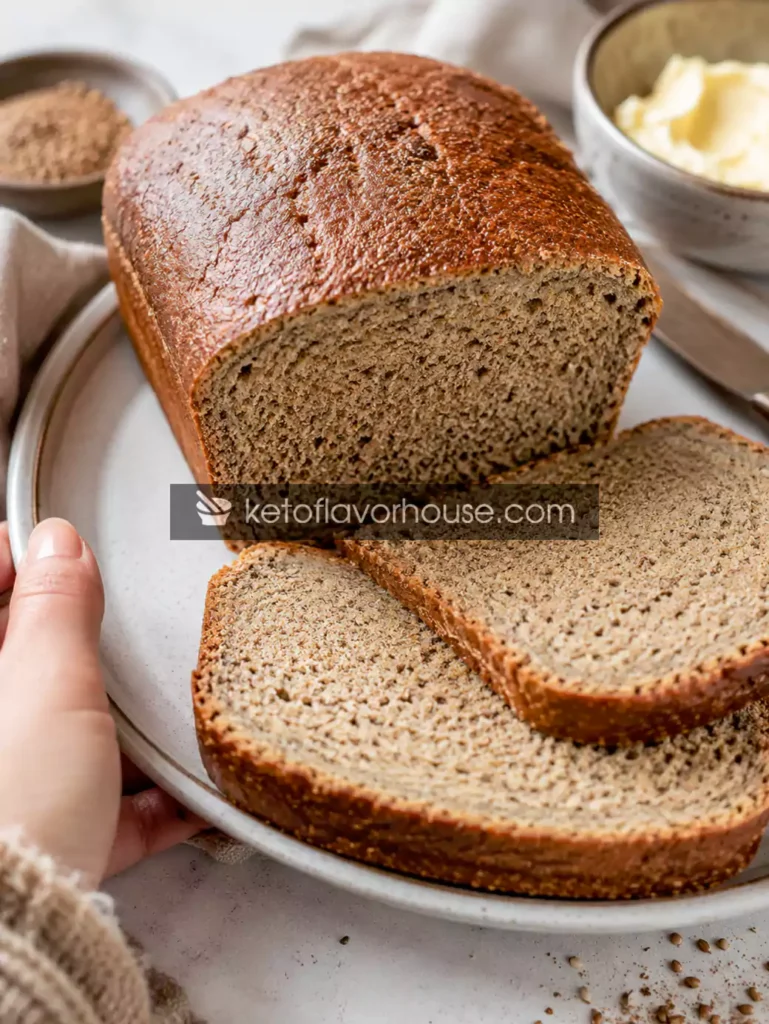
The combination of flaxseed meal, vital wheat gluten, and oat fiber creates a loaf that actually behaves like bread. It rises beautifully, slices cleanly, has a chewy bakery-style texture, and holds up perfectly for sandwiches, toast, grilled cheese, or even garlic bread.
The first time I pulled this loaf out of the oven, I remember tapping the crust and hearing that satisfying bakery-style crunch. After letting it cool (very important!), I sliced into it and immediately noticed something different. The inside looked like real sandwich bread — soft, structured, slightly chewy, and sturdy enough to hold toppings without crumbling apart.
And the flavor? Warm, nutty, comforting, and incredibly satisfying.
This isn’t just “good for keto bread.” It’s genuinely good bread.
One of the best things about this loaf is how practical it is for everyday keto life. Instead of constantly searching for expensive low-carb bread products at the store, you can make an entire loaf at home using pantry ingredients. It’s budget-friendly, freezer-friendly, meal-prep friendly, and endlessly versatile.
Whether you’re brand-new to keto or simply craving a bread replacement that actually satisfies, this Keto Flaxseed Bread Recipe makes low-carb eating feel far more sustainable and enjoyable.
Why You’ll Love This Recipe
This keto flaxseed bread has become one of my favorite homemade low-carb staples for so many reasons.
- 🍞 Soft, chewy texture that feels like real bread
- 🥪 Perfect for sandwiches and toast
- 🔥 Low-carb and keto-friendly
- 💪 High in protein and fiber
- 🧈 Delicious with butter, avocado, or cream cheese
- 🍳 Great for breakfast, lunch, or meal prep
- 🥄 Easy to slice without crumbling apart
- 🧊 Freezer-friendly for busy weeks
- 💛 Warm bakery-style flavor and aroma
- 🍞 Crispy crust with soft interior
- ⏱️ Simple pantry ingredients
- 🥪 Holds toppings beautifully
- 🌾 Naturally rich and hearty texture
- 👨👩👧 Family-friendly even for non-keto eaters
Unlike many keto breads that feel delicate or cake-like, this loaf has real structure and chewiness. That’s what makes it so satisfying.
It feels like actual bread again.
My Personal Experience
The very first time I attempted homemade keto bread, I completely failed.
The loaf barely rose, the middle stayed gummy, and the slices crumbled apart before I could even make toast. I remember standing in the kitchen thinking, “Maybe keto bread just isn’t supposed to taste good.”
But I kept experimenting.
After trying different ingredient combinations, I eventually discovered that flaxseed meal combined with vital wheat gluten creates something much closer to traditional bread texture than almond flour alone.
The first successful loaf honestly shocked me.
It rose beautifully in the pan, developed a golden crust, and sliced like bakery bread once cooled. I toasted a slice, spread butter on top, and finally had that comforting “real bread” experience again without leaving keto behind.
Now this bread is part of my weekly meal prep almost every month.
I use it for:
- breakfast toast
- grilled cheese
- turkey sandwiches
- keto French toast
- garlic bread
- avocado toast
- soup sides
And every time I bake it, the smell alone makes the kitchen feel cozy.
Required Equipment
Mixing Bowl
A large mixing bowl gives enough space to combine the dough thoroughly without making a mess. Keto bread dough tends to be thicker than traditional bread dough.
Measuring Scale
Using a kitchen scale helps create accurate keto baking results, especially with flaxseed meal and vital wheat gluten.
Stand Mixer or Strong Spoon
The dough becomes tight and dense during mixing, so a stand mixer helps tremendously. However, strong hand mixing also works.
9×5 Loaf Pan
This size creates the ideal loaf shape and helps the bread rise properly without becoming too flat.
Parchment Paper
Lining the pan with parchment paper makes removing the bread easier and prevents sticking.
Clean Kitchen Towel
Used to cover the dough during the rising process and protect it from drying out.
Oven
A properly preheated oven is essential for achieving good rise and crust texture.
Ingredients & Substitutions
Main Ingredients
125g Golden Flaxseed Meal
Flaxseed meal provides structure, fiber, healthy fats, and a hearty bread-like texture. Golden flaxseed has a milder flavor than dark flaxseed.
175g Vital Wheat Gluten
This ingredient creates the chewy elasticity that mimics traditional bread texture. It helps the loaf rise properly and slice beautifully.
100g Oat Fiber
Oat fiber keeps the bread light and prevents density while remaining extremely low in digestible carbs.
7g Salt
Salt balances flavor and strengthens the dough structure.
7g Instant or Traditional Yeast
Yeast creates rise, texture, and authentic bakery-style bread flavor.
350ml Warm Water
Warm water activates the yeast and hydrates the dough properly.
65–75g Erythritol (Optional)
Adds mild balance and improves flavor slightly without making the bread sweet.
Ingredient Substitutions
Don’t Have Golden Flaxseed?
Brown flaxseed meal works too, though the flavor becomes slightly earthier.
Need Less Sweetener?
You can reduce or completely skip the erythritol.
The bread still works beautifully.
Want Extra Flavor?
Add:
- garlic powder
- onion powder
- Italian seasoning
- sesame seeds
- everything bagel seasoning
Can You Replace Vital Wheat Gluten?
Unfortunately, not fully in this recipe.
It provides most of the chewy bread structure.
Want Softer Bread?
Add:
- 1 tablespoon olive oil
- 1 egg white
for slightly softer texture.
How to Make Keto Flaxseed Bread Recipe
Step 1: Activate the Yeast
Pour the warm water into a bowl and add the yeast.
Let it sit for several minutes until small bubbles begin forming on top.
This step confirms the yeast is active and alive.
If no bubbles appear, the yeast may be expired or the water temperature may be incorrect.
Step 2: Mix Dry Ingredients
In a large bowl, combine:
- flaxseed meal
- vital wheat gluten
- oat fiber
- salt
- erythritol
Whisk thoroughly to evenly distribute everything.
Proper mixing prevents dense spots in the bread later.
Step 3: Combine Wet and Dry Ingredients
Pour the activated yeast mixture into the dry ingredients.
Mix thoroughly using a spoon, hands, or stand mixer.
The dough should gradually become thick, stretchy, and firm.
Don’t worry if it feels tighter than regular bread dough — that’s completely normal for keto bread.
Step 4: Knead the Dough
Continue kneading for several minutes until the dough becomes smooth and fully combined.
The gluten develops during this step, which helps create chewy bread texture.
If using a stand mixer, medium speed works best.
Step 5: Transfer to Loaf Pan
Grease or line a 9×5 loaf pan with parchment paper.
Place the dough into the pan and smooth the top gently.
You can slightly wet your hands to prevent sticking.
Step 6: Let the Dough Rise
Cover the loaf pan loosely with a clean towel.
Place it somewhere warm for 60–90 minutes.
The dough should double or even triple in size.
A warm oven with the heat turned off works beautifully for proofing.
Step 7: Bake the Bread
Bake at 400°F uncovered for 15–20 minutes first.
This helps develop the crust.
Then loosely cover the loaf with foil and continue baking another 20–25 minutes.
The total bake time should be around 40–45 minutes.
Step 8: Cool Completely
This step is incredibly important.
Allow the bread to cool fully before slicing.
Fresh keto bread continues setting internally after baking, and slicing too early can create gummy texture.
Common Mistakes to Avoid
Slicing Too Early
Hot bread feels tempting, but keto bread needs cooling time.
Wait at least 45–60 minutes.
Using Dead Yeast
If bubbles don’t appear during activation, start over with fresh yeast.
Underbaking the Loaf
Keto bread often needs longer bake times than expected.
The center should feel firm, not wet.
Using Too Much Flour During Mixing
Avoid adding extra dry ingredients unless absolutely necessary.
The dough naturally firms up while kneading.
Not Covering the Bread Midway
Foil prevents the crust from becoming overly dark before the center finishes baking.
Pro Tips for Best Results
- Use a kitchen scale for accuracy.
- Let the dough rise in a warm environment.
- Cover loosely with foil, not tightly.
- Cool completely before slicing.
- Toast slices for best flavor.
- Store sliced bread for easier meal prep.
- Freeze individual slices for convenience.
- Use serrated knives for cleaner cuts.
- Add sesame seeds for bakery-style appearance.
Keto Benefits of Flaxseed
Flaxseed is one of the most valuable keto baking ingredients because it provides:
- fiber
- healthy fats
- texture
- structure
- nutrients
It’s naturally low in digestible carbs while helping create satisfying, hearty baked goods.
Flaxseed also helps:
- improve fullness
- support digestion
- create better keto bread texture
- add nutty flavor naturally
Unlike regular flour-based bread, flaxseed bread feels more nutrient-dense and satisfying.
Variations You Can Try
Garlic Herb Bread
Add:
- garlic powder
- parsley
- Italian seasoning
for savory flavor.
Everything Bagel Bread
Top with everything bagel seasoning before baking.
Cheesy Keto Bread
Add shredded cheddar or parmesan into the dough.
Spicy Jalapeño Bread
Mix in diced jalapeños and cheddar cheese.
Cinnamon Breakfast Bread
Add cinnamon and keto sweetener for toast-friendly flavor.
Roll Version
Shape the dough into rolls instead of a loaf.
Adjust baking time slightly shorter.
Tips for This Recipe
- Always cool before slicing.
- Use parchment for easier removal.
- Toast leftovers for best texture.
- Slice evenly for sandwiches.
- Store extra slices frozen.
- Use airtight storage to maintain softness.
- Don’t rush the proofing process.
Optional Additions
Want to customize the loaf further?
Try adding:
- sesame seeds
- sunflower seeds
- pumpkin seeds
- rosemary
- cheddar cheese
- garlic powder
- onion flakes
- black pepper
- Italian herbs
These additions create bakery-style flavor variations easily.
Serving Ideas
This keto flaxseed bread works beautifully in so many meals.
Serve it:
- toasted with butter
- for grilled cheese
- with avocado and eggs
- as sandwich bread
- with soup
- as garlic bread
- with keto jam
- alongside salads
- with cream cheese
- for breakfast meal prep
It’s especially delicious toasted until lightly crisp on the edges.
Storage Recommendations
Refrigerator
Store in an airtight container for up to 1 week.
Freezer
Freeze individual slices for up to 2 months.
Separate slices with parchment paper for easy grabbing.
Reheating
Toaster
Best method for restoring texture.
Oven
Warm slices at 350°F for several minutes.
Air Fryer
Air fry briefly for crisp edges.
Microwave
Works quickly, though slightly softer texture results.
Frequently Asked Questions
Is flaxseed bread keto-friendly?
Yes. Flaxseed is naturally low in net carbs and high in fiber, making it excellent for keto baking.
Why does keto bread need cooling time?
The texture continues setting internally after baking. Slicing early can create gumminess.
Can I freeze this bread?
Absolutely. It freezes extremely well.
Does this taste eggy?
No. Unlike many keto breads, this recipe has a more traditional bread flavor.
Can I make sandwiches with it?
Yes. The loaf is sturdy enough for sandwiches and toast.
Why didn’t my bread rise?
Usually due to inactive yeast or cold proofing temperature.
Can I use almond flour instead?
Not as a direct replacement in this recipe because the structure would change significantly.
Nutritional Breakdown (Per Serving)
Approximate values per slice (based on 16 slices):
- Calories: 145
- Protein: 13g
- Fat: 6g
- Total Carbs: 10g
- Fiber: 8g
- Net Carbs: 2g
Nutritional values may vary slightly depending on ingredient brands used.
Recipe Snapshot
| Detail | Information |
|---|---|
| Prep Time | 20 minutes |
| Rise Time | 60–90 minutes |
| Cook Time | 45 minutes |
| Total Time | About 2 hours |
| Course | Bread |
| Cuisine | American |
| Servings | 16 slices |
| Calories | 145 per slice |
Keto Flaxseed Bread Recipe

Equipment
- Mixing bowl
- Measuring cups and spoons
- Whisk or electric mixer
- Loaf pan
- Oven
Ingredients
- 125 g flaxseed meal
- 175 g vital wheat gluten
- 100 g oat fiber
- 7 g salt
- 7 g yeast
- 350 ml warm water
- 65 –75g erythritol
Instructions
- Pour the warm water into a medium bowl and sprinkle the yeast over the top. Stir gently for a few seconds to help dissolve the yeast evenly into the water. Let the mixture sit undisturbed for about 5–10 minutes until small bubbles and a light foam begin forming on the surface. This step confirms the yeast is active and ready to help the bread rise properly. If the mixture stays completely flat with no bubbling, the yeast may be expired or the water may have been too hot or too cold.
- In a large mixing bowl, add the flaxseed meal, vital wheat gluten, oat fiber, salt, and erythritol if using. Stir the dry ingredients thoroughly using a whisk or spoon so everything is evenly combined. This helps prevent uneven texture and ensures the bread rises consistently throughout the loaf.
- Once the yeast mixture looks foamy and activated, pour it directly into the bowl with the dry ingredients. Begin mixing immediately using a sturdy spoon, clean hands, or a stand mixer fitted with a dough hook attachment. The mixture will quickly begin forming into a thick dough.
- Continue kneading the dough for several minutes until it becomes fully combined, stretchy, and slightly elastic. Keto bread dough is naturally firmer and denser than regular bread dough, so don’t worry if it feels tighter than traditional bread dough. The final texture should feel smooth and firm rather than wet or sticky. If using a stand mixer, medium speed usually works best.
- Lightly grease a 9×5 loaf pan with oil or line it with parchment paper to prevent sticking and make removal easier after baking. Be sure to line the corners well if using parchment paper so the loaf lifts out cleanly later.
- Transfer the dough into the prepared loaf pan and gently press it into an even shape using slightly damp hands or a spatula. Smooth the top lightly so the loaf bakes evenly and develops a beautiful bakery-style appearance once baked.
- Cover the loaf pan loosely with a clean kitchen towel and place it in a warm draft-free area for approximately 60–90 minutes. A slightly warm oven that has been turned off works wonderfully for proofing. Allow the dough to rise until it has doubled or even tripled in size. Don’t rush this step because proper rising helps create softer texture and better bread structure.
- Once the dough has finished rising, preheat your oven to 400°F. Allow the oven to fully heat before baking so the bread develops good oven spring and a golden crust.
- Remove the towel carefully from the loaf pan and place the bread into the oven uncovered. Bake for 15–20 minutes during this first stage to help develop a rich golden-brown crust on top. You’ll begin noticing a warm bakery-style aroma filling the kitchen as the bread bakes.
- After the initial baking time, loosely cover the top of the loaf with aluminum foil. This helps prevent the crust from becoming too dark while the center finishes baking completely. Continue baking for another 20–25 minutes until the loaf feels firm, deeply golden, and fully cooked through.
- Carefully remove the bread from the oven and let it cool completely before slicing. This is one of the most important steps in keto bread baking because the internal texture continues setting as it cools. Slicing too early can make the bread seem gummy or dense inside.
- Once fully cooled, slice the bread using a serrated bread knife for clean even slices. Serve toasted with butter, cream cheese, avocado, or use it as sturdy sandwich bread for your favorite keto meals and meal prep recipes.
Subscribe to our newsletter!