
This post may contains Amazon affiliate and other affiliate links. If you make a purchase through these links, I may earn a small commission at no extra cost to you. Your support helps me continue to provide quality content. I only recommend products I personally trust and believe will add value to your experience. For more details, please visit my Privacy Policy.
There are afternoons when I want a slice of cake that feels cozy and familiar, but I also want it to taste bright and fresh rather than overly sweet. That is exactly where this Mediterranean-Inspired Carrot Pineapple Cake comes in. It has the tender crumb of a classic carrot cake, little bursts of juicy pineapple, warm cinnamon and cardamom, fragrant orange zest, toasted walnuts, and the gentle richness of extra-virgin olive oil.
I love recipes like this because they don’t need to be complicated to feel special. You mix a simple batter, fold in the carrots and pineapple, and let the oven do most of the work. As it bakes, the kitchen fills with the warm scent of cinnamon, citrus, toasted nuts, and sweet carrots.
This isn’t meant to be presented as a traditional Mediterranean cake. It is a Mediterranean-inspired dessert, bringing together ingredients and flavor combinations that fit beautifully with Mediterranean-style cooking: olive oil, nuts, citrus, yogurt, fruit, warm spices, and fresh produce.
The pineapple gives the cake a little tropical brightness, while the orange zest and cardamom pull everything in a warmer, more aromatic direction. And because the cake uses olive oil instead of butter, the crumb stays wonderfully soft for days.
It is the kind of cake I’d happily serve with coffee after lunch, bring to a family gathering, or make on a quiet weekend when I feel like baking something that makes the whole house smell good.
Why You’ll Love This Recipe
- 🍍 Juicy pineapple and sweet carrots create an incredibly moist, tender crumb.
- 🫒 Extra-virgin olive oil gives the cake richness while fitting naturally into a Mediterranean-inspired ingredient list.
- 🍊 Fresh orange zest adds brightness that keeps the cake from tasting overly heavy.
- 🌿 Cinnamon and cardamom give it a warm, fragrant flavor without relying on excessive sweetness.
- 🌰 Toasted walnuts add a lovely crunch and nutty Mediterranean character.
- 🥣 Greek yogurt helps keep the cake soft and adds a subtle tang.
- 🍰 Creamy Greek yogurt and cream cheese frosting makes every bite feel indulgent without being overwhelmingly sweet.
- ☕ Perfect with coffee or tea for an afternoon treat.
- 👩🍳 Straightforward preparation makes it approachable even if you’re not an experienced baker.
- ❤️ Beautiful enough for entertaining but easy enough for a casual weekend bake.
- 🌞 Bright, fresh flavors make it especially lovely for spring and summer gatherings.
- ✨ A fun twist on classic carrot cake without losing the comforting flavors people love.
My Personal Experience Making This Cake
I originally wanted to make a carrot cake that felt a little lighter and brighter.
I love traditional carrot cake, but sometimes the combination of a very sweet cake, heavy frosting, and lots of rich ingredients can feel like too much. I wanted something that still gave me that familiar carrot-cake comfort but had more freshness.
The first thing I changed was the fat.
Instead of reaching automatically for melted butter, I reached for olive oil.
It felt like an unusual choice at first, but once the cake came out of the oven, I understood why it worked. The olive oil didn’t make the cake taste savory. Instead, it gave the crumb a soft, almost velvety texture.
Then came the pineapple.
I knew pineapple and carrot worked together, but I wanted to make sure it didn’t turn the cake into something overly tropical. The trick was using enough pineapple for moisture and little pockets of fruity sweetness without letting it dominate.
Orange zest ended up being the ingredient that brought everything together.
When I grated the orange zest into the batter, the smell immediately changed. Suddenly there was this fresh citrus aroma sitting alongside the cinnamon and cardamom.
That was the moment I knew the cake was heading in the right direction.
I also learned a small but important lesson during that first batch: drain the pineapple properly.
The first time around, I left more liquid than I should have, and the center of the cake needed considerably longer to bake. It eventually worked, but the middle was much softer than I wanted.
Now I press the crushed pineapple gently through a fine sieve before adding it.
Not bone-dry.
Just drained enough that I’m removing excess juice.
The finished cake has become one of those recipes I like to make when I want something homemade without spending an entire afternoon in the kitchen.
And I especially love the leftovers.
The flavors seem to settle overnight, and the orange, cinnamon, pineapple, and olive oil become even more harmonious the next day.
🧰 Required Equipment
9-Inch Round Cake Pan
A 9-inch round cake pan gives the batter enough room to bake evenly while producing a cake with enough height for slicing.
Grease the pan well and line the bottom with parchment paper.
Parchment Paper
Parchment prevents the cake from sticking and makes transferring it to a serving plate much easier.
Trace the bottom of the pan and cut the parchment to fit.
Large Mixing Bowl
You’ll use this for the main cake batter.
Choose a bowl with enough room to fold in the carrots, pineapple, and walnuts without spilling ingredients over the sides.
Medium Mixing Bowl
A second bowl is useful for whisking the dry ingredients separately.
This helps distribute the baking powder, baking soda, salt, and spices evenly.
Fine-Mesh Sieve
A sieve is particularly useful for draining the crushed pineapple.
This small step helps prevent excess moisture from making the center of the cake too wet.
Box Grater
Use the fine-to-medium side to grate the carrots.
You want thin strands that soften naturally during baking.
Microplane or Fine Grater
This makes it easy to zest the orange without taking too much of the bitter white pith.
Whisk
A whisk works well for combining the eggs, olive oil, yogurt, honey, vanilla, and citrus.
Rubber Spatula
A spatula is ideal for gently folding the dry ingredients and then incorporating the carrots, pineapple, and walnuts.
Wire Cooling Rack
Letting the cake cool on a rack allows air to circulate underneath and helps prevent condensation from making the bottom damp.
Electric Mixer
An electric mixer is useful for the frosting, although you can also make it by hand with a sturdy whisk.
🥕 Ingredients & Substitutions
Carrots — 2 cups finely grated
Carrots are the heart of this cake.
They contribute natural sweetness, moisture, color, and that unmistakable carrot-cake flavor.
Grate them fresh rather than using pre-shredded carrots, which tend to be thicker and drier.
Substitution: Finely grated zucchini can replace up to half of the carrots, but squeeze excess moisture from the zucchini first. The cake will taste lighter and less traditionally carrot-like.
Crushed Pineapple — 1 cup, well drained
Pineapple brings juicy sweetness and moisture.
It also creates little fruity pockets throughout the cake.
Use canned crushed pineapple packed in juice or fresh pineapple that’s finely chopped.
Substitution: Finely chopped apple can replace pineapple, although you’ll lose the tropical note and the cake will become more apple-forward.
Extra-Virgin Olive Oil — ½ cup
Olive oil keeps the crumb moist and gives the cake a subtle richness.
Choose an olive oil with a mild, balanced flavor rather than one that’s extremely peppery or bitter.
Substitution: Avocado oil works well if you prefer a more neutral flavor. The cake will still be moist but lose some of its Mediterranean character.
Plain Greek Yogurt — ½ cup
Greek yogurt contributes moisture, tenderness, and a slight tang.
It also balances the sweetness of the pineapple and honey.
Substitution: Plain regular yogurt works, although the batter may be slightly looser.
Large Eggs — 3
Eggs provide structure and help bind the cake.
They also contribute richness and help the crumb set properly.
Bring them to room temperature if possible.
Honey — ⅓ cup
Honey provides sweetness while fitting naturally into the Mediterranean-inspired flavor profile.
Because pineapple and carrots already contribute sweetness, you don’t need a large amount.
Substitution: Maple syrup can be used, although it gives the cake a slightly different flavor.
Vanilla Extract — 2 teaspoons
Vanilla rounds out the citrus, spice, and carrot flavors.
It doesn’t make the cake taste strongly of vanilla; it simply makes the other flavors feel more complete.
Orange Zest — 1 tablespoon
Orange zest is one of my favorite ingredients in this cake.
It adds concentrated citrus aroma without adding much liquid.
Use only the bright orange outer layer of the peel.
Whole-Wheat Pastry Flour — 1½ cups
Whole-wheat pastry flour provides the main structure of the cake while giving it a slightly nutty flavor.
Pastry flour is preferable to standard whole-wheat flour because it creates a more tender crumb.
Substitution: All-purpose flour can be used for a lighter, softer cake.
Almond Flour — 1 cup
Almond flour adds richness, a delicate nutty flavor, and a softer texture.
It pairs especially well with the olive oil, walnuts, carrots, and orange.
Substitution: Finely ground hazelnut flour can be used for a more pronounced nutty flavor.
Baking Powder — 1½ teaspoons
Baking powder helps the cake rise and keeps it from becoming overly dense.
Baking Soda — ½ teaspoon
Baking soda works with the yogurt and helps create a tender crumb and good browning.
Ground Cinnamon — 1½ teaspoons
Cinnamon brings classic carrot-cake warmth.
It also complements the orange and pineapple beautifully.
Ground Cardamom — ½ teaspoon
Cardamom gives this cake a subtle aromatic quality that makes it feel different from ordinary carrot cake.
Don’t overdo it. Half a teaspoon is enough to notice without overpowering the other ingredients.
Fine Sea Salt — ½ teaspoon
Salt balances the sweetness and brings the spices into focus.
Walnuts — ¾ cup, chopped
Walnuts add texture and a pleasant earthy crunch.
Toast them before adding them to the batter if you have a few extra minutes.
Substitution: Pecans work well, although walnuts have a slightly more savory character.
Cream Cheese — 4 ounces, softened
Cream cheese forms the base of the frosting.
Its slight tang balances the sweet cake.
Greek Yogurt — ¼ cup
Greek yogurt lightens the frosting and adds freshness.
Powdered Sugar — ⅓ cup
A modest amount of powdered sugar sweetens the frosting.
You can adjust it slightly according to taste.
Orange Juice — 1 teaspoon
A little orange juice brightens the frosting.
You only need a small amount.
👩🍳 How to Make Mediterranean-Inspired Carrot Pineapple Cake
1. Prepare the Cake Pan
Preheat the oven to 350°F.
Grease a 9-inch round cake pan thoroughly.
Place a round piece of parchment paper in the bottom.
I like to lightly grease the parchment as well, especially when making a moist cake like this.
Set the pan aside.
2. Drain the Pineapple
Place the crushed pineapple in a fine-mesh sieve.
Press it gently with the back of a spoon to remove excess juice.
You don’t need to squeeze every drop out.
The pineapple should still feel moist.
This is one of those tiny preparation steps that makes a surprisingly big difference in the finished cake.
Too much pineapple liquid can make the center take longer to bake and leave you with a gummy texture.
3. Grate the Carrots
Peel the carrots and grate them using the fine-to-medium side of a box grater.
Measure 2 cups after grating.
Avoid using very thick carrot shreds.
Large pieces can remain slightly firm even after the cake is fully baked.
Don’t worry if the carrots aren’t perfectly uniform.
A few slightly thicker strands are completely fine.
4. Toast the Walnuts
Place the chopped walnuts in a dry skillet over medium-low heat.
Toast them for approximately 3–5 minutes, stirring frequently.
You’ll know they’re ready when they smell noticeably more fragrant.
Don’t walk away during this step.
Nuts can go from beautifully toasted to burned surprisingly quickly.
Transfer them to a plate to cool.
5. Combine the Dry Ingredients
In a medium mixing bowl, whisk together:
- Whole-wheat pastry flour
- Almond flour
- Baking powder
- Baking soda
- Cinnamon
- Cardamom
- Sea salt
Whisk for about 20 seconds.
You want the leavening agents and spices evenly distributed throughout the flour.
6. Mix the Wet Ingredients
In a large mixing bowl, whisk the eggs until smooth.
Add the olive oil, Greek yogurt, honey, vanilla, and orange zest.
Whisk until the mixture looks cohesive.
It doesn’t need to be whipped or frothy.
The olive oil may naturally sit slightly on the surface at first, so keep whisking until everything is evenly combined.
7. Add the Dry Ingredients
Add the dry mixture to the wet ingredients in two additions.
Use a rubber spatula to fold gently.
Stop as soon as you no longer see dry flour.
Don’t keep stirring just because you’re worried about small lumps.
Overmixing develops the flour structure and can make the finished cake heavier.
A few tiny lumps are much better than an overworked batter.
8. Fold in the Carrots, Pineapple, and Walnuts
Add the grated carrots, drained pineapple, and toasted walnuts.
Fold them gently through the batter.
The mixture should now look thick, colorful, and generously filled with carrots.
If your batter looks extremely watery, check that the pineapple was properly drained.
If it looks thick, that’s completely normal.
The carrots and pineapple release moisture as the cake bakes.
9. Transfer the Batter to the Pan
Spoon the batter into the prepared cake pan.
Use a spatula to gently spread it into an even layer.
Tap the pan lightly against the counter once or twice to remove any unusually large air pockets.
Don’t repeatedly bang the pan.
You don’t want to knock all the air out of the batter.
10. Bake the Cake
Place the cake in the center of the preheated oven.
Bake for approximately 38–48 minutes.
Start checking around 38 minutes.
The top should look golden and set.
A toothpick inserted into the center should come out with a few moist crumbs attached, but not wet batter.
Because carrots and pineapple vary in moisture, your cake may need a few extra minutes.
Try not to keep opening the oven repeatedly.
Each time you open the door, you lose heat.
11. Let the Cake Cool
Remove the cake from the oven and let it cool in the pan for approximately 15 minutes.
Then run a thin knife around the edge.
Place a cooling rack over the pan and carefully invert the cake.
Remove the parchment from the bottom.
Turn the cake right-side up and allow it to cool completely.
This part requires patience.
If you frost the cake while it’s still warm, the frosting will soften and slide.
🍊 Making the Greek Yogurt Cream Cheese Frosting
12. Beat the Cream Cheese
Place the softened cream cheese in a bowl.
Beat until smooth.
There shouldn’t be large lumps.
If the cream cheese is cold, the frosting will be much harder to make smooth.
13. Add the Greek Yogurt
Add the Greek yogurt and beat until combined.
The mixture should become creamy and slightly lighter.
14. Add Powdered Sugar and Orange Juice
Add the powdered sugar gradually.
Then add the orange juice.
Beat until smooth.
Taste the frosting.
If you prefer it sweeter, add another tablespoon of powdered sugar.
If you want more citrus flavor, add a little additional orange zest rather than lots of juice.
Too much liquid can make the frosting loose.
15. Frost the Cooled Cake
Once the cake is completely cool, spread the frosting over the top.
You don’t need a thick layer.
I actually prefer a relatively thin, rustic layer because it lets the carrot cake remain the star.
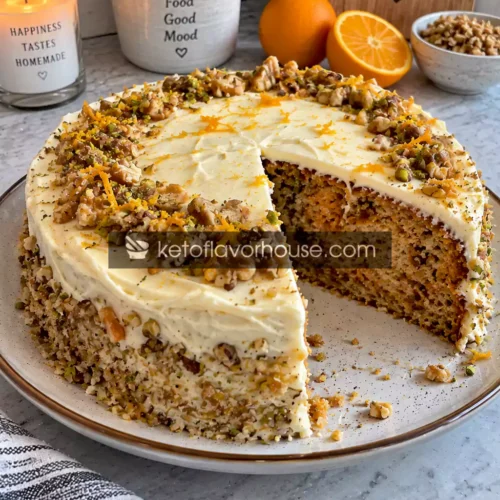
Finish with a sprinkle of chopped walnuts and a little orange zest if desired.
⚠️ Common Mistakes to Avoid
Using Undrained Pineapple
This is probably the most important mistake to avoid.
Too much pineapple juice can make the center overly wet.
Fix: Drain the pineapple thoroughly before measuring.
Grating the Carrots Too Thick
Large carrot pieces may remain firmer than you’d like.
Fix: Use the fine-to-medium side of your grater.
Overmixing the Batter
Too much stirring can create a heavier cake.
Fix: Fold only until the flour disappears.
Using Strong, Bitter Olive Oil
Some extra-virgin olive oils have a very intense flavor.
That can dominate a delicate cake.
Fix: Use a balanced, mild olive oil with a pleasant fruity character.
Burning the Walnuts
Toasted walnuts add wonderful flavor, but they burn quickly.
Fix: Keep the heat moderate and stir frequently.
Adding Too Much Cardamom
Cardamom is powerful.
Fix: Stick close to the ½ teaspoon measurement unless you already know you love a strong cardamom flavor.
Frosting a Warm Cake
Warm cake will soften the frosting dramatically.
Fix: Let the cake cool completely first.
Overbaking
The cake should be moist, not dry.
Fix: Begin checking around 38 minutes and remove it once a toothpick shows moist crumbs rather than wet batter.
Cutting Immediately
Freshly baked cake is still settling.
Fix: Let it cool completely before slicing.
🔥 Pro Tips for Best Results
Use Room-Temperature Ingredients
Room-temperature eggs, yogurt, and cream cheese blend more smoothly.
This is especially helpful for the frosting.
Toast the Walnuts
It takes only a few minutes, but the flavor difference is noticeable.
Toasted walnuts have a deeper, richer aroma and provide a better contrast against the soft cake.
Zest Before Juicing
If you’re using a fresh orange, zest it before cutting and juicing.
It’s much easier to zest a whole orange.
Don’t Measure Flour Directly From the Bag
For the most consistent result, spoon flour into your measuring cup and level it.
Packing too much flour into the cup can make the cake dense.
Let the Batter Rest Briefly
Once mixed, don’t leave the batter sitting around for a long time.
Get it into the prepared pan and into the oven.
Use the Center Rack
This encourages even baking and helps prevent the top from becoming too dark before the center is finished.
Don’t Over-Frost
This cake already has a lot of flavor.
A thin layer of frosting gives you the creamy finish without making every bite overwhelmingly sweet.
Finish With Citrus
A little fresh orange zest over the frosting makes the cake look beautiful and adds a burst of aroma.
Add Olive Oil at the End
For an especially Mediterranean-inspired presentation, you can add an extremely small drizzle of fruity olive oil over individual slices just before serving.
Use only a few drops.
The idea is to add fragrance, not make the cake oily.
🥕 Mediterranean Benefits of Carrots
Carrots are a natural fit for Mediterranean-style eating because they’re a simple, minimally processed vegetable that can be enjoyed in everything from salads and soups to roasted dishes and desserts.
In this cake, carrots do more than provide their beautiful orange color.
They contribute natural sweetness, moisture, and a delicate earthy flavor that becomes softer and sweeter during baking.
Carrots also provide fiber and carotenoids, including beta-carotene, along with other nutrients.
The important thing here is the overall food pattern.
This cake isn’t being presented as a health treatment or a medicinal dessert. It’s simply a dessert that incorporates wholesome ingredients commonly appreciated in Mediterranean-style cooking.
The combination of carrots, walnuts, olive oil, citrus, yogurt, and warm spices gives the cake a more ingredient-focused character than a dessert built primarily around refined sweetness.
And that’s exactly why I enjoy it.
It still tastes like cake.
It just has more going on.
🌿 Variations You Can Try
🌶️ Spiced Mediterranean Version
Add an extra ¼ teaspoon of cardamom and a small pinch of ground cloves.
This creates a warmer, more aromatic cake that’s particularly nice during cooler months.
🌿 Extra-Herby Citrus Version
Add a very small amount of finely chopped fresh rosemary to the batter.
Start with just 1 teaspoon.
Rosemary is strong, so you want it to sit quietly in the background.
🧄 Garlic-Lover’s Version
Skip this one!
Garlic is wonderful in Mediterranean savory cooking, but it does not belong in this carrot pineapple cake.
This is a good reminder that Mediterranean ingredients don’t all need to appear in every recipe.
🧀 Cheesy Cream Cheese Version
Increase the cream cheese in the frosting to 6 ounces and reduce the Greek yogurt slightly.
The frosting becomes richer and tangier.
🍋 Lemon-Herb Citrus Version
Replace half of the orange zest with lemon zest.
The result is brighter and slightly sharper.
🥗 Extra-Fruit Version
Add ¼ cup finely chopped dried apricots or dates to the batter.
The cake becomes sweeter and chewier.
If you add dried fruit, reduce the honey slightly if desired.
🌰 Almond and Pistachio Version
Replace half of the walnuts with chopped pistachios.
The green pistachios make the finished cake especially attractive.
🍍 Extra-Pineapple Version
Increase pineapple to 1¼ cups only if you drain it very thoroughly.
More pineapple makes the cake fruitier and moister, but too much liquid can interfere with baking.
🥥 Coconut Version
Add ¼ cup unsweetened shredded coconut.
This pushes the flavor in a more tropical direction while still pairing nicely with pineapple and carrot.
🍽️ Tips for This Recipe
The biggest preparation tip is to have everything measured before you start.
Carrots take a little time to grate, and pineapple needs to drain.
Doing those jobs first makes the actual batter come together very quickly.
Pay attention to the consistency of your batter.
It should be thick but spreadable.
If it looks like pancake batter, something has probably added too much liquid.
If it seems unusually stiff, check that you measured the flour correctly.
For the best flavor, don’t skip the orange zest.
It’s easy to think of zest as optional, but in this recipe it creates an important aromatic bridge between the pineapple, carrots, spices, and olive oil.
When serving, allow the cake to come close to room temperature.
Very cold cake can hide some of the delicate flavors.
And if you’re making it for guests, frost it shortly before serving or keep it refrigerated and allow it to sit out for a little while before slicing.
➕ Optional Additions
There are plenty of Mediterranean-inspired toppings that work beautifully here.
Try:
- Chopped pistachios
- Toasted walnuts
- Almonds
- Orange zest
- Lemon zest
- A tiny drizzle of extra-virgin olive oil
- Unsweetened coconut
- Finely chopped dried apricots
- A few pomegranate arils
- Greek yogurt
- A sprinkle of cinnamon
- A tiny pinch of cardamom
- Fresh orange segments on the side
For a beautiful dinner-party presentation, spread the frosting casually over the top rather than trying to make it perfectly smooth.
Scatter toasted walnuts and pistachios over the frosting and finish with a little orange zest.
It looks effortless.
🍴 Serving Ideas
With Coffee
This is probably my favorite way to serve it.
A slice of carrot pineapple cake with a cup of strong coffee makes an excellent afternoon break.
With Tea
Black tea, cinnamon tea, or a simple herbal tea pairs wonderfully with the orange and cardamom.
Mediterranean-Inspired Brunch
Serve small slices alongside:
- Fresh berries
- Orange segments
- Greek yogurt
- Toasted nuts
- Fresh fruit salad
Family Gathering
The cake is easy to slice into 10 generous portions or 12 smaller dessert portions.
It’s especially good when you’re serving several other dishes and don’t want enormous pieces.
Summer Gathering
The pineapple and orange make the cake feel bright enough for warm-weather entertaining.
Keep the frosted cake chilled until shortly before serving.
Holiday Table
The cinnamon, cardamom, walnuts, and citrus give this cake a warm seasonal quality.
It can easily sit alongside other desserts without feeling like a traditional holiday fruitcake.
Dinner Party
Serve a smaller slice with a spoonful of lightly sweetened Greek yogurt and a few pomegranate arils.
It feels elegant without requiring complicated plating.
🧊 Storage Recommendations
Refrigerator
Because the cake contains a Greek yogurt and cream cheese frosting, store it covered in the refrigerator.
It will keep well for approximately 4 days.
Use a cake container or cover the cake tightly so it doesn’t absorb refrigerator odors.
Room Temperature
An unfrosted slice can sit at room temperature for several hours.
Once frosted, keep it refrigerated.
Freezer
The unfrosted cake freezes better than the frosted cake.
Wrap individual slices tightly and place them in a freezer-safe container.
Freeze for up to 2 months for the best texture.
Thawing
Transfer frozen cake to the refrigerator and let it thaw gradually.
For the best flavor, allow the slice to sit at room temperature for about 20–30 minutes before eating.
Frosting
The frosting can be made a day ahead.
Keep it refrigerated in an airtight container and allow it to soften slightly before spreading.
Reheating
You don’t need to reheat this cake.
In fact, reheating the frosted cake can soften the frosting and change the texture.
Serve it cool or slightly below room temperature.
❓ Frequently Asked Questions
Is this an authentic Mediterranean carrot cake?
No. This is a Mediterranean-inspired carrot pineapple cake, not a traditional regional Mediterranean recipe. It combines Mediterranean-style ingredients such as olive oil, walnuts, citrus, yogurt, and warm spices with the familiar carrot-and-pineapple cake combination.
Can I use regular all-purpose flour?
Yes. Replace the 1½ cups of whole-wheat pastry flour with 1½ cups all-purpose flour. The cake will have a lighter color and softer, more traditional cake texture.
Can I use fresh pineapple instead of canned?
Absolutely. Finely chop fresh pineapple and drain away excess juice before measuring. Because fresh pineapple can vary in moisture, make sure the final quantity is well drained.
Can I make this cake without pineapple?
Yes. You can replace the pineapple with finely chopped apple or use additional grated carrot. The cake will be less fruity and slightly less moist.
Can I use pecans instead of walnuts?
Yes. Pecans are an excellent substitute and create a slightly sweeter, richer nut flavor. Toast them before adding them to the batter for the best result.
Can I make the cake ahead of time?
Yes. The unfrosted cake can be baked a day ahead and stored tightly covered. Make the frosting separately and refrigerate it, then frost the cake before serving.
Can I freeze Mediterranean-Inspired Carrot Pineapple Cake?
Yes. For the best texture, freeze the unfrosted cake in individual portions. Wrap each piece well and freeze for up to two months. Thaw in the refrigerator before serving.
How do I keep the cake from becoming soggy?
The most important step is draining the pineapple well. Also avoid adding extra pineapple juice to the batter and make sure you bake the cake until the center is fully set.
Can I reduce the sweetness?
Yes. You can reduce the honey slightly, although the cake will become less sweet. Since the pineapple and carrots provide natural sweetness, the recipe doesn’t need an extremely sweet batter.
What makes the cake Mediterranean-inspired?
The Mediterranean character comes primarily from the use of extra-virgin olive oil, walnuts, almonds, Greek yogurt, citrus zest, honey, and aromatic spices. These ingredients are combined with carrot and pineapple in a modern dessert rather than representing a traditional Mediterranean cake.
🧮 Nutritional Breakdown Per Serving
Estimated nutrition for 1 of 10 servings, including frosting:
- Calories: approximately 390
- Protein: approximately 9 g
- Fat: approximately 23 g
- Total Carbohydrates: approximately 42 g
- Fiber: approximately 5 g
- Net Carbohydrates: approximately 37 g
- Sugar: approximately 23 g
- Sodium: approximately 280 mg
These values are estimates and can vary depending on the exact ingredients and brands used, particularly the flour, Greek yogurt, cream cheese, honey, pineapple, and almond flour.
This is a naturally wholesome, Mediterranean-inspired dessert, but it is still a dessert and should be enjoyed as part of an overall balanced eating pattern.
📌 Recipe Snapshot
| Category | Details |
|---|---|
| Prep Time | 25 minutes |
| Cook Time | 38–48 minutes |
| Cooling Time | 45 minutes |
| Total Time | About 1 hour 55 minutes |
| Course | Dessert |
| Cuisine | Mediterranean-inspired |
| Servings | 10 |
| Calories | ~390 per serving |
Mediterranean-Inspired Carrot Pineapple Cake Recipe

Ingredients
Carrot Pineapple Cake
- 2 cups finely grated carrots
- 1 cup crushed pineapple well drained
- ½ cup extra-virgin olive oil
- ½ cup plain Greek yogurt
- 3 large eggs
- ⅓ cup honey
- 2 teaspoons vanilla extract
- 1 tablespoon orange zest
- 1½ cups whole-wheat pastry flour
- 1 cup finely ground almond flour
- 1½ teaspoons baking powder
- ½ teaspoon baking soda
- 1½ teaspoons ground cinnamon
- ½ teaspoon ground cardamom
- ½ teaspoon fine sea salt
- ¾ cup chopped walnuts
Greek Yogurt Cream Cheese Frosting
- 4 ounces cream cheese softened
- ¼ cup plain Greek yogurt
- ⅓ cup powdered sugar
- 1 teaspoon fresh orange juice
- ½ teaspoon orange zest optional
Optional Garnish
- 2 tablespoons chopped walnuts
- 1 tablespoon chopped pistachios
- Fresh orange zest
Instructions
- Preheat the oven to 350°F. Grease a 9-inch round cake pan and line the bottom with parchment paper.
- Place the crushed pineapple in a fine-mesh sieve and gently press out excess juice. Do not dry it completely; the pineapple should remain moist but not watery.
- Peel and finely grate the carrots until you have 2 cups. Set aside.
- Toast the chopped walnuts in a dry skillet over medium-low heat for 3–5 minutes, stirring frequently until fragrant. Transfer them to a plate and allow them to cool.
- In a medium bowl, whisk together the whole-wheat pastry flour, almond flour, baking powder, baking soda, cinnamon, cardamom, and sea salt.
- In a large bowl, whisk the eggs, olive oil, Greek yogurt, honey, vanilla extract, and orange zest until smooth and evenly combined.
- Add the dry ingredients to the wet mixture in two additions, gently folding with a spatula just until no dry flour remains. Do not overmix.
- Fold in the grated carrots, drained pineapple, and toasted walnuts until evenly distributed throughout the batter.
- Transfer the batter to the prepared cake pan and spread the top evenly with a spatula.
- Bake for 38–48 minutes, beginning to check around 38 minutes. The cake is ready when the top is golden and a toothpick inserted into the center comes out with a few moist crumbs but no wet batter.
- Remove the cake from the oven and cool in the pan for 15 minutes. Carefully loosen the edges, transfer the cake to a cooling rack, remove the parchment, and allow the cake to cool completely.
- To make the frosting, beat the softened cream cheese until smooth. Add the Greek yogurt and mix until creamy.
- Gradually beat in the powdered sugar, then add the orange juice and optional orange zest. Mix until smooth and spreadable.
- Spread the frosting evenly over the completely cooled cake. Garnish with chopped walnuts, pistachios, and fresh orange zest if desired.
- Slice into 10 portions and serve with coffee, tea, or fresh fruit. Store leftover frosted cake covered in the refrigerator for up to 4 days.