This post may contains Amazon affiliate and other affiliate links. If you make a purchase through these links, I may earn a small commission at no extra cost to you. Your support helps me continue to provide quality content. I only recommend products I personally trust and believe will add value to your experience. For more details, please visit my Privacy Policy.
Estimated SmartPoints: Approximately 4 per serving (provisional independent estimate; verify in your current WW app).
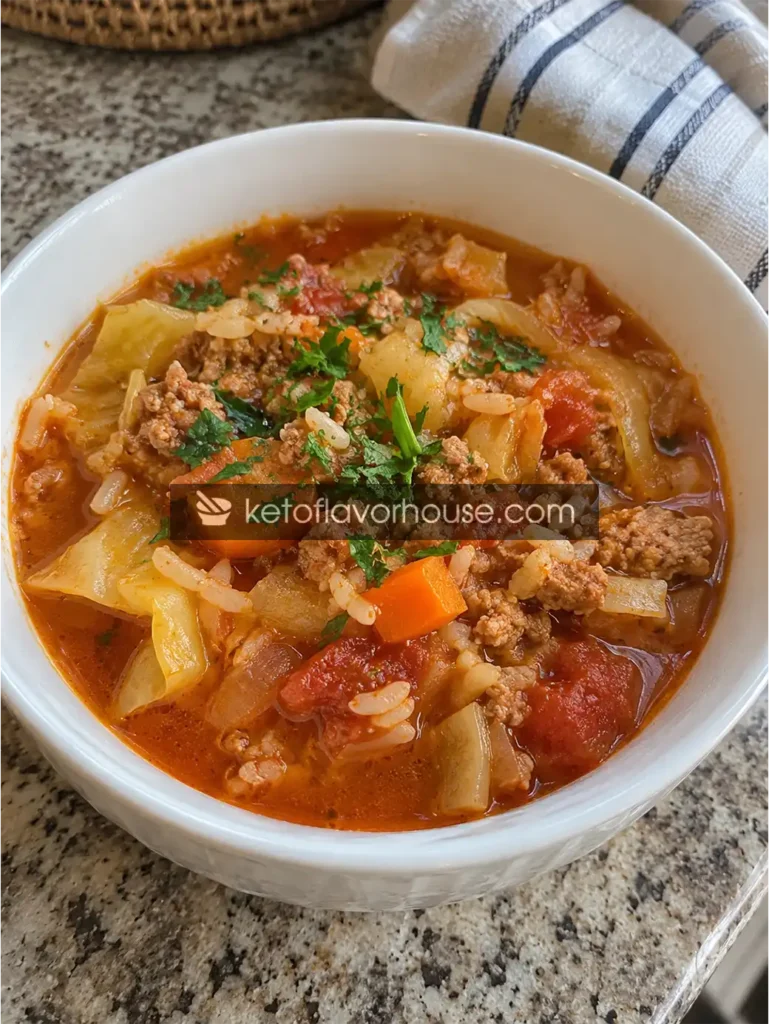
There are certain dinners that make the whole kitchen smell inviting, and this One-Pot Cabbage Roll Soup is one of them. It brings together everything people love about traditional stuffed cabbage rolls: tender cabbage, seasoned ground meat, tomato-rich sauce, vegetables, and rice, but without the time-consuming process of preparing and rolling individual cabbage leaves. Instead, all those familiar flavors simmer together in one pot, creating a hearty soup that is practical enough for an ordinary weeknight.
For this Weight Watchers-friendly version, I use lean ground turkey, plenty of green cabbage, a measured amount of white rice, and a flavorful tomato broth. Garlic, onion, smoked paprika, and Italian seasoning give the soup its savory character, while carrots add a gentle natural sweetness. The result is a satisfying meal that feels like traditional comfort food without relying on heavy ingredients or excessive added oil.
What makes this recipe particularly useful is its flexibility. You can prepare a full pot for family dinner, divide the leftovers into individual lunch portions, or make a batch ahead of a busy week. The ingredients are easy to find at an ordinary US grocery store, and the recipe does not require complicated cooking techniques.
The estimated Points are approximately 4 per serving using the provisional calculation described below. Your actual WW result may differ depending on your membership plan, personalized settings, and specific ingredient products.
Why You’ll Love This One-Pot Cabbage Roll Soup
Eight reasons this comforting soup deserves a place in your dinner rotation.
One-Pot Convenience
Brown the turkey, soften the vegetables, and simmer everything together. You get a complete dinner without juggling several pans.
Plenty of Vegetables
Green cabbage, carrots, tomatoes, and onion give each serving color, texture, and natural flavor.
Lean Protein
Lean ground turkey makes the soup substantial while avoiding the extra fat associated with many fattier ground-meat options.
Weeknight Friendly
With a little chopping and about 30 minutes of stovetop cooking, dinner can be ready in approximately 45 minutes.
Meal Prep Friendly
Divide the finished soup into measured containers for convenient lunches and dinners throughout the week.
Family Comfort Food
Tomatoes, tender cabbage, rice, and seasoned turkey recreate the familiar flavor of stuffed cabbage rolls in a spoonable meal.
The Flavor of Traditional Cabbage Rolls Without the Extra Work
Traditional cabbage rolls involve several separate steps. Cabbage leaves need to be softened, the filling prepared, individual rolls assembled, and everything arranged in a baking dish before cooking. Although the result can be wonderful, it is not always practical when you need dinner on the table quickly.
This soup takes the same basic flavor combination and makes it much easier. Chopped cabbage cooks directly in the tomato broth, while the seasoned turkey and rice provide the familiar filling.
The cabbage becomes tender and slightly sweet, the rice absorbs the tomato and herb flavors, and the broth develops a rich savory taste. You get the character of cabbage rolls without having to prepare individual portions.
A Filling Dinner With Everyday Ingredients
You do not need specialty ingredients for this recipe. Ground turkey, cabbage, carrots, tomatoes, onion, garlic, rice, and chicken broth are all easy to find.
The vegetables provide volume, while turkey contributes protein and rice adds carbohydrates and substance. Together, they create a balanced, comforting soup that can be served as a complete meal.
Another advantage is that you can adjust the recipe without completely changing its character. For example, cauliflower rice can replace regular rice, or lean ground beef can replace turkey. However, those changes should be reflected in your nutrition and Points calculations.
WW SmartPoints Information
Weight Watchers recipes are most useful when their ingredients and portions are clearly defined. Rather than relying on vague descriptions such as low-point or guilt-free, I recommend keeping the ingredient quantities consistent and calculating the finished recipe using the applicable WW system.
For this recipe, the working estimate is approximately 4 SmartPoints per serving, assuming six equal portions.
This is a provisional independent estimate, not an official WW calculation. WW’s proprietary calculation cannot be reliably reconstructed from calories and macronutrients alone, and the current plan and personalized food settings can change the result.
| WW planning detail | Recipe estimate |
|---|---|
| Number of servings | 6 |
| Estimated Points per serving | 4 |
| Estimated whole-recipe Points | 24 |
| Estimated calories per serving | 205–220 |
| Estimated protein per serving | 20–22 g |
| Main ingredients to check | Turkey, rice, olive oil |
The most important ingredients to enter accurately are the ground turkey, uncooked rice, and olive oil. Their Points contribution depends on the actual products and your current plan.
Do not assume that every vegetable, broth, or lean meat is automatically zero Points for every member. Check your own WW app before publishing a definitive Points claim.
WW Points Dashboard
- Measure the half-cup of uncooked rice.
- Use the exact ground turkey nutrition label.
- Measure the teaspoon of olive oil.
- Recalculate if using ground beef or additional rice.
Independent planning estimates only. Not an official WW calculator or personalized Points result.
How to Manage Your Portions
The easiest way to keep this recipe consistent is to divide the finished soup into six equal servings.
A kitchen scale can help if you want greater accuracy. Weigh the finished soup, divide its total weight by six, and use that amount for each container.
This is especially useful when the cabbage and rice absorb different amounts of liquid from one batch to another.
Remember that your daily Points budget is personal. One serving may fit comfortably into one member’s plan but require a different approach for another.
My Personal Experience With This Style of Soup
What I appreciate most about cabbage roll soup is how much flavor you can develop from such ordinary ingredients. Ground turkey by itself is fairly mild, but once it cooks with onion, garlic, paprika, tomatoes, and cabbage, it becomes part of a much richer combination.
The preparation also makes a difference. I prefer browning the turkey before adding the liquid ingredients rather than putting everything into the pot at once. That first cooking stage gives the meat a more savory flavor and helps build a better base for the broth. I also like adding the garlic after the onion has started softening so it does not burn.
One adjustment I would make depending on when the soup will be served is the rice. If I am making it for immediate dinner, I cook the rice directly in the broth. For meal preparation over several days, cooking the rice separately is worth considering. It prevents the rice from absorbing too much liquid while the soup sits in the refrigerator. Both methods work, but the separate-rice method gives you more control over the consistency of leftovers.
Required Equipment
Large Dutch Oven or Soup Pot
A 5–6-quart pot is ideal. The cabbage takes up considerable space before it wilts, so a smaller saucepan may be difficult to manage.
A heavy-bottomed pot also helps distribute heat evenly, reducing the chance of rice sticking or scorching.
Sharp Chef’s Knife
Use a sharp knife to quarter the cabbage, remove its core, and cut it into bite-sized pieces. Smaller, consistent pieces cook more evenly.
Cutting Board
A large, stable cutting board gives you enough space to prepare the vegetables without overcrowding your work surface.
Wooden Spoon or Heatproof Spatula
This is useful for breaking up the turkey, stirring the aromatics, and scraping the bottom of the pot when adding broth.
Measuring Cups and Spoons
Accurate measurements matter when calculating the recipe’s nutrition and estimated WW Points. Measure the rice, oil, and broth rather than estimating them.
Food Storage Containers
Choose airtight containers that hold individual portions. Shallow containers are useful because they help the soup cool more quickly and make reheating easier.
Ingredients and Substitutions
Here is the complete ingredient list for the recipe. The quantities below are also the quantities used in the compact recipe card at the end.
Main Ingredients
1. Lean ground turkey – 1 pound
Choose 99% lean ground turkey for the version described here. It provides protein and makes the soup hearty without requiring a large quantity of added fat.
If you prefer a richer flavor, 93% lean turkey or lean ground beef can be substituted. Both will change the calories and fat, and may increase Points. If using fattier meat, brown it thoroughly and drain excess fat before continuing.
2. Green cabbage – 5 cups chopped
Cabbage is the signature ingredient. It softens in the tomato broth, becomes slightly sweet, and gives the soup its characteristic stuffed-cabbage flavor.
Savoy cabbage is a suitable alternative. Napa cabbage can also work, but it softens more quickly and has a milder flavor.
3. Carrots – 2 medium, diced
Carrots add natural sweetness and color. Cut them into small pieces so they cook at approximately the same rate as the other vegetables.
4. Yellow onion – 1 medium, diced
Onion provides the aromatic foundation of the soup. Yellow onion is particularly suitable because its sweetness balances the acidity of the tomatoes.
5. Garlic – 3 cloves, minced
Fresh garlic adds savory depth. If you need to substitute garlic powder, start with approximately ¾ teaspoon.
6. Diced tomatoes – 1 can (14.5 ounces)
Use plain canned diced tomatoes. They contribute acidity, tomato flavor, and texture.
Avoid heavily seasoned canned varieties if you want greater control over sodium and seasoning.
7. Tomato sauce – 1 cup
Plain tomato sauce gives the broth a fuller consistency and the familiar flavor of traditional cabbage rolls.
Crushed tomatoes can be used for a slightly different texture. If the replacement is thicker, adjust the broth as needed.
8. Low-sodium chicken broth – 5 cups
Chicken broth creates the cooking liquid. Low-sodium broth gives you more control over the final seasoning.
Vegetable broth is another suitable option.
9. Uncooked long-grain white rice – ½ cup
Rice gives the soup the familiar filling associated with cabbage rolls. The measured quantity keeps the recipe from becoming excessively starchy.
Brown rice requires more liquid and a longer cooking time. Cauliflower rice is a lower-carbohydrate alternative, but it should be added near the end.
10. Olive oil – 1 teaspoon
This small quantity helps brown the turkey and cook the vegetables. Measure it carefully because added oils contribute calories and Points.
Seasonings and Garnish
- Italian seasoning – 1 teaspoon
- Smoked paprika – ½ teaspoon
- Salt – ½ teaspoon, or to taste
- Black pepper – ¼ teaspoon
- Bay leaf – 1
- Fresh parsley – 2 tablespoons, chopped
The herbs and spices bring the tomato broth together without needing a heavy sauce or high-calorie garnish.
Ingredient Anatomy and Smart Swap Guide
The following comparison shows which substitutions are most practical and what to consider before changing the recipe.
Choose Your Protein
Mild flavor, leaner profile, and a lighter broth.
Richer, more traditional beef flavor with potentially more fat and Points.
Choose Your Rice
Soft, familiar texture and shorter cooking time.
Lower carbohydrate option; add near the end to avoid a mushy texture.
Choose Your Cooking Liquid
Provides a savory base that complements ground turkey.
A suitable alternative with a slightly different flavor profile.
Substitutions change nutritional values. Recalculate the complete recipe rather than assuming a fixed Points reduction.
Which Substitutions Are Best for a WW-Friendly Version?
If you want to keep the original flavor and structure, I recommend retaining the lean turkey and using the measured amount of white rice.
If carbohydrate reduction is your priority, cauliflower rice is a reasonable alternative. It changes the texture because it does not absorb broth in the same way as regular rice. It also changes the nutritional profile, so the original nutrition information should not be reused.
For a more traditional flavor, lean ground beef is a good choice. However, it may increase the fat and calorie content. The amount of fat drained after browning will also affect the final recipe.
How to Make One-Pot Cabbage Roll Soup
Step 1: Prepare the Vegetables
Remove the outer cabbage leaves and cut the cabbage into quarters. Remove the firm core, then chop the leaves into bite-sized pieces.
Dice the carrots and onion, and mince the garlic.
Preparing everything before heating the pot makes the cooking process smoother. The cabbage does not need to be shredded finely. Pieces approximately 1 inch across work well because they retain some structure during simmering.
Step 2: Brown the Ground Turkey
Heat the olive oil in a large Dutch oven over medium heat.
Add the ground turkey and break it into small pieces with a wooden spoon. Cook for approximately 5–7 minutes, stirring occasionally, until browned and no longer pink.
Ground turkey must reach an internal temperature of 165°F (74°C).
If liquid collects in the pot, allow it to evaporate before adding the vegetables. This helps develop a more concentrated flavor.
Step 3: Cook the Aromatics
Add the diced onion and carrots to the turkey. Cook for 3–4 minutes until the onion starts to soften.
Stir in the minced garlic and cook for another 30 seconds.
Do not allow the garlic to brown heavily. Burnt garlic can make the entire broth taste bitter.
Step 4: Add the Tomatoes and Broth
Pour in the diced tomatoes, tomato sauce, and chicken broth.
Stir to combine and scrape the bottom of the pot to release any browned bits.
Add the Italian seasoning, paprika, salt, black pepper, and bay leaf.
Bring the liquid to a gentle boil.
Step 5: Add the Cabbage and Rice
Add the chopped cabbage and uncooked rice.
Stir thoroughly. The cabbage may initially sit above the liquid, but it will gradually soften and reduce in volume.
Reduce the heat to low, cover partially, and simmer for approximately 18–22 minutes.
Stir occasionally, particularly near the bottom of the pot, because rice can stick as it absorbs liquid.
Step 6: Check the Texture
Check that the rice is tender and the cabbage has softened.
If the rice is still firm, continue cooking for a few minutes. If the soup has become too thick, add a little more broth.
The finished soup should be spoonable, with enough broth to surround the cabbage and meat. It should not resemble a thick rice casserole.
Step 7: Finish With Fresh Parsley
Remove the bay leaf and stir in the chopped parsley.
Allow the soup to rest for about five minutes before serving. This gives the ingredients a little time to settle and makes portioning easier.
Divide into six equal servings.
Step-by-Step Visual Cooking Guide
The Cooking Process at a Glance
Cut cabbage, carrots, and onion into manageable pieces. Cue: evenly sized vegetables ready beside the stove.
Cook until no pink remains and the meat reaches 165°F. Cue: small browned turkey pieces.
Soften onion and carrots, then briefly cook the garlic. Cue: fragrant, softened aromatics.
Stir in tomatoes, broth, and seasonings. Cue: an evenly mixed red tomato base.
Cook gently until the cabbage and rice are tender. Cue: softened cabbage and plump rice grains.
Remove the bay leaf, add parsley, and divide into six equal bowls. Cue: a hearty, spoonable soup.
Common Mistakes to Avoid
Even a straightforward soup can turn out differently depending on how the ingredients are prepared and cooked.
Adding Too Much Rice
This is probably the easiest way to change the texture unintentionally. Rice expands and absorbs liquid, so adding more than the specified half cup can make the soup very thick.
Measure the rice before adding it. If you want more rice in your meal, prepare it separately and add it to individual bowls.
Cooking the Cabbage Too Long
Cabbage should become tender, but it does not need to completely disintegrate.
Overcooking can produce a mushy texture and reduce the fresh vegetable character. Start checking the cabbage near the end of the recommended simmering time.
Using Excessive Heat
Once the soup reaches a boil, reduce the temperature. A rapid boil can make the rice cook unevenly and cause ingredients to stick to the bottom.
A gentle simmer is much more suitable.
Not Browning the Turkey Properly
If the turkey is added to the liquid before it develops any browning, the soup may taste less savory.
Allow excess moisture to evaporate and give the meat time to brown.
Adding Too Much Salt
Broth, canned tomatoes, and tomato sauce can all contain sodium.
Use low-sodium broth and taste the finished soup before adding more salt.
Making Portions Uneven
If one serving contains considerably more rice or meat than another, the nutritional information and estimated Points will not be consistent.
Stir the soup before dividing it and use a scale if you want precise portions.
Pro Tips for the Best Results
- Cut the cabbage into similar-sized pieces so it cooks evenly.
- Brown the turkey rather than simply heating it through.
- Add garlic after the onion begins to soften.
- Use plain tomato products to control seasoning and sodium.
- Keep the simmer gentle once the rice is added.
- Stir periodically, scraping the bottom of the pot.
- Add fresh parsley after cooking rather than at the beginning.
- Keep extra low-sodium broth available for reheating.
- If preparing meals several days ahead, consider cooking the rice separately.
Troubleshooting Guide
WW-Specific Nutrition and Meal Planning Strategy
A useful WW-friendly meal is not simply a meal with a small Points number. It should also be satisfying, practical to portion, and made from ingredients that fit the person’s individual food preferences and budget.
This soup uses several ingredients that make meal planning straightforward.
Lean Turkey for Protein
Ground turkey supplies most of the protein in this recipe. Protein is an important nutrient for maintaining muscle and supporting normal body functions.
Using a lean product also helps control the amount of fat in the finished soup. However, the nutrition label should always be checked because ground turkey products vary considerably.
Cabbage and Vegetables for Volume
Cabbage contributes bulk and texture without making the soup dependent on large amounts of rice or other starches.
Carrots, onions, and tomatoes also add flavor and variety. Vegetables can make a meal feel more substantial, although their treatment in a WW Points calculation depends on the applicable plan.
Rice for Energy and Texture
Rice provides carbohydrates and gives this soup the familiar texture of cabbage rolls. It is not necessary to eliminate it to make the recipe suitable for a WW-oriented meal plan.
The important part is measuring the quantity. Half a cup of uncooked rice is distributed across six servings, rather than using a large quantity in each individual bowl.
Portion Awareness
The recipe makes six servings. This is useful because the entire batch can be divided before storage.
You can include one serving in your meal plan and adjust your remaining meals according to your own daily Points budget.
Lower-Points Meal Pairings
The soup is substantial enough to serve on its own. If you want additional food alongside it, consider:
- A simple green salad with a measured light dressing.
- Steamed green beans with lemon and black pepper.
- Roasted zucchini with garlic.
- A small slice of whole-grain bread, with its Points counted separately.
- Fresh fruit for a simple dessert.
Remember that meal pairings contribute their own calories and Points. Your daily budget should determine the final combination.
Variations You Can Try
The original recipe is a good starting point, but you can make several changes depending on your preferences.
1. Cabbage Roll Soup With Lean Ground Beef
Replace the ground turkey with one pound of lean ground beef.
The soup will have a deeper, beefier flavor that some people prefer because it resembles traditional stuffed cabbage rolls more closely.
The texture remains similar, but the amount of fat may increase. Drain excess fat after browning and recalculate calories and Points using the exact beef product.
2. Low-Carb Cabbage Roll Soup
Replace the half cup of white rice with approximately 2 cups of cauliflower rice.
Add the cauliflower rice during the final 5–7 minutes of cooking. It does not require the same simmering time as uncooked white rice.
This variation will have fewer carbohydrates than the original, but the broth may be less thick because cauliflower rice does not absorb liquid in the same way.
3. Spicy Cabbage Roll Soup
Add ¼ teaspoon of crushed red pepper flakes along with the paprika.
For more heat, increase gradually according to taste.
The additional spice changes the flavor without substantially changing the basic cooking method.
4. Brown Rice Cabbage Roll Soup
Replace white rice with an equivalent amount of brown rice.
Brown rice generally requires more cooking time and additional liquid. Follow the package’s cooking guidance and check the texture before adding the cabbage if necessary.
This change may increase fiber but can also alter cooking time and nutritional values.
5. Extra Vegetable Cabbage Roll Soup
Add 1 cup of diced celery or chopped zucchini.
Celery adds a more savory flavor, while zucchini gives the soup a softer texture. Both increase vegetable volume.
Add zucchini toward the end of cooking so it does not become overly soft.
6. Herb-Focused Cabbage Roll Soup
Add ½ teaspoon dried oregano and a little extra fresh parsley.
This gives the tomato broth a more pronounced herbal character without needing additional sauce or cheese.
7. Slow Cooker Cabbage Roll Soup
For a slow cooker version, brown the turkey and aromatics in a skillet first. Transfer them to the slow cooker with the cabbage, carrots, tomatoes, tomato sauce, broth, and seasonings.
Cook on LOW for approximately 5–6 hours or HIGH for approximately 3–4 hours, until the vegetables are tender and the turkey is fully cooked.
Add the uncooked rice near the end, allowing enough time for it to cook according to the rice’s package instructions. Keep the liquid level under observation and check that the finished soup reaches a safe temperature.
Tips for Preparing, Serving, and Portioning
If you are preparing this soup as part of a weekly meal plan, a little organization makes the process easier.
First, chop the vegetables in advance. Cabbage, carrots, and onion can be prepared and refrigerated in separate airtight containers before cooking.
Second, measure the rice and seasonings before starting. This avoids accidentally adding more than the recipe calls for.
Third, decide whether you want the rice cooked in the soup or separately. If you are serving everything immediately, cooking it directly in the broth is convenient. If you are preparing several days of meals, keeping the rice separate helps maintain a thinner broth.
For portioning, use a ladle and stir the pot regularly to distribute the meat and rice evenly. Avoid filling one container with mostly broth and another with mostly solid ingredients.
Optional Additions
The following additions can be useful when you want to change the finished bowl.
- Parmesan cheese: A small measured sprinkle adds a salty, savory finish. It also adds fat, calories, and Points.
- Reduced-fat shredded cheese: Provides a cheesy topping, but still needs to be measured and counted.
- Fresh parsley: Adds freshness with very little change to the overall nutritional profile.
- Crushed red pepper: Adds heat without meaningfully changing the macronutrient profile in typical seasoning quantities.
- Extra cabbage: Makes the soup more vegetable-heavy and changes the serving volume.
- Sour cream: Adds creaminess but also changes calories, fat, and Points. Measure the amount rather than adding it freely.
Serving Ideas
One of the best things about this soup is that it works for several occasions. It can be served as a quick family dinner, prepared in advance for lunches, or made in a large batch when you want a convenient meal ready in the refrigerator.
For an ordinary weeknight, serve it in warm bowls with chopped parsley. The soup already contains meat, vegetables, and rice, so there is no need to prepare a complicated side dish.
For a larger family meal, place a simple salad and a basket of bread on the table. Anyone who wants additional carbohydrates can serve themselves a measured portion.
For lunch, divide the soup into microwave-safe containers and keep the rice separate if you prefer a thinner consistency after reheating.
Serving Ideas Grid
Six Ways to Serve This Soup
Serve a warm bowl with fresh parsley for a simple complete meal.
Pair with a green salad and a measured dressing.
Pack individual portions for convenient lunches during the week.
Set out bread and optional toppings so everyone can customize their bowl.
Freeze suitable portions for convenient future dinners.
Transport in an insulated container and keep hot food hot during serving.
Storage Recommendations
This soup stores well, although the rice will continue absorbing broth as it sits. That is the main texture change to expect when preparing it in advance.
Refrigerator Storage
Allow the soup to cool slightly, then divide it into shallow airtight containers.
Refrigerate within two hours of cooking. If the surrounding temperature is above 90°F, refrigerate within one hour.
Store leftovers at 40°F (4°C) or below and use within 3–4 days.
For the best texture, store separately cooked rice in its own container if you plan to keep the soup for several days.
Freezing the Soup
This soup can be frozen, although the cabbage may become softer after thawing and the rice can become less distinct.
For better results, freeze the soup without the rice and cook fresh rice when reheating. If you freeze the complete recipe, divide it into individual portions and leave a little room at the top of each container for expansion.
Use freezer-safe containers or bags and label them with the preparation date. For best quality, use within approximately 2–3 months.
Thawing and Reheating
Thaw frozen portions overnight in the refrigerator or use the microwave’s defrost setting.
Reheat on the stovetop over medium-low heat, stirring occasionally, until the entire portion reaches 165°F (74°C).
You can also use a microwave-safe container, covering it loosely and stirring halfway through reheating. Check the temperature in several places.
Add a little broth or water if the soup has become too thick.
Reheating the same ingredients does not materially change their total recipe Points, although changes in portions, drained fat, or added ingredients can affect the calculation.
Storage Timeline
Storage and Food Safety Timeline
Frequently Asked Questions
1. Can I freeze One-Pot Cabbage Roll Soup?
Yes. This soup freezes well, although the cabbage and rice may soften slightly after thawing. For the best texture, freeze the soup without rice and prepare fresh rice when serving. If you freeze the complete recipe, cool it promptly, divide it into freezer-safe portions, and label each container with the date.
2. Can I make this soup without rice?
Absolutely. You can simply leave out the rice or replace it with cauliflower rice. If using cauliflower rice, add it during the last few minutes of cooking. The soup will have a thinner broth and fewer carbohydrates than the original version. Recalculate the nutrition and Points using your actual ingredients.
3. Can I use ground beef instead of turkey?
Yes. Lean ground beef works particularly well with the tomato, cabbage, and garlic flavors. It gives the soup a richer, more traditional stuffed-cabbage flavor. Choose a lean product, drain excess fat after browning, and recalculate the recipe because the fat and calorie content may increase.
4. How do I prevent the rice from becoming mushy?
Measure the uncooked rice carefully and avoid cooking the soup at a rapid boil. Stir occasionally and begin checking the rice toward the end of the recommended cooking time. If you are preparing the soup for several days, cooking the rice separately is the best way to maintain its texture.
5. How can I reduce the WW Points?
Start by checking the exact turkey product, measuring the olive oil, and using the specified rice quantity. You can also replace the rice with cauliflower rice. However, the final Points calculation depends on your applicable WW plan and ingredient details. Enter the revised recipe into your app rather than assuming a particular reduction.
6. Can I make this recipe in a slow cooker?
Yes. Brown the turkey and aromatics first, then transfer them to the slow cooker with the cabbage, tomatoes, broth, and seasonings. Cook until the vegetables are tender. Add the rice toward the end according to its cooking requirements. Always verify that the turkey reaches 165°F and that the rice is fully cooked.
7. Will my WW app show the same Points as this recipe?
Not necessarily. The approximately 4-Point estimate is an independent planning estimate, not an official WW value. Your app may produce a different result because of your membership plan, personalized settings, and the precise products used. Always use your current app for your personal Points calculation.
Nutritional Breakdown Per Serving
The following values are approximate estimates based on the recipe ingredients, divided into six equal portions.
| Nutrient | Estimated amount |
|---|---|
| Calories | 205–220 kcal |
| Protein | 20–22 g |
| Total Fat | 3–4 g |
| Total Carbohydrates | 23–25 g |
| Fiber | 4–5 g |
| Net Carbohydrates | 19–20 g |
| Sugar | 7–9 g |
| Sodium | 450–600 mg |
| Estimated SmartPoints | Approximately 4 |
These figures are estimates rather than laboratory-tested nutritional values. Actual results depend on the turkey brand, broth, canned tomatoes, tomato sauce, ingredient weights, and serving sizes.
Net carbohydrates are calculated by subtracting dietary fiber from total carbohydrates. Net carbohydrates are not the same as WW Points.
Nutrition Infographic
Nutrition figures are approximate and may vary by brand, preparation, and portion size. WW Points are not calculated from calories alone.
Recipe Snapshot
| Recipe detail | Information |
|---|---|
| Recipe Name | One-Pot Cabbage Roll Soup |
| Prep Time | 15 minutes |
| Cook Time | 30 minutes |
| Total Time | 45 minutes |
| Course | Main Course, Lunch, Dinner |
| Cuisine | American, Eastern European-inspired |
| Cooking Method | Stovetop |
| Servings | 6 |
| Calories | Approximately 210 per serving |
| Protein | Approximately 21 g |
| Estimated SmartPoints | Approximately 4 per serving |
A Final Note Before You Make It
This One-Pot Cabbage Roll Soup is a practical way to enjoy the familiar flavors of stuffed cabbage rolls without spending extra time preparing individual rolls. With lean ground turkey, cabbage, tomatoes, rice, and simple seasonings, it makes a hearty dinner that is easy to prepare, portion, and store.
If you are following Weight Watchers, remember to verify the recipe in your current app. The estimated Points are a planning guide rather than an official calculation.
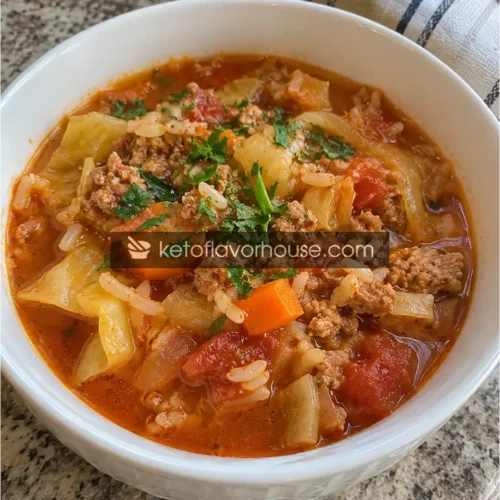
One-Pot Cabbage Roll Soup Recipe

Ingredients
- 1 pound 99% lean ground turkey
- 5 cups chopped green cabbage
- 2 medium carrots diced
- 1 medium yellow onion diced
- 3 garlic cloves minced
- 1 can 14.5 ounces diced tomatoes
- 1 cup plain tomato sauce
- 5 cups low-sodium chicken broth
- ½ cup uncooked long-grain white rice
- 1 teaspoon olive oil
- 1 teaspoon Italian seasoning
- ½ teaspoon smoked paprika
- ½ teaspoon salt or to taste
- ¼ teaspoon black pepper
- 1 bay leaf
- 2 tablespoons fresh parsley chopped
Instructions
- Heat olive oil in a large Dutch oven over medium heat. Add ground turkey and cook for 5–7 minutes, breaking it into small pieces, until browned and no longer pink. Verify an internal temperature of 165°F.
- Add diced onion and carrots. Cook for 3–4 minutes until the onion begins to soften.
- Stir in minced garlic and cook for another 30 seconds.
- Add diced tomatoes, tomato sauce, chicken broth, Italian seasoning, smoked paprika, salt, black pepper, and bay leaf. Stir well and bring to a gentle boil.
- Add chopped cabbage and uncooked rice. Stir to combine, then reduce the heat to low.
- Partially cover and simmer for 18–22 minutes, stirring occasionally, until the rice and cabbage are tender.
- Remove the bay leaf. Taste and adjust seasoning, then stir in fresh parsley.
- Allow the soup to rest for five minutes. Divide into six equal portions and serve warm.