This post may contains Amazon affiliate and other affiliate links. If you make a purchase through these links, I may earn a small commission at no extra cost to you. Your support helps me continue to provide quality content. I only recommend products I personally trust and believe will add value to your experience. For more details, please visit my Privacy Policy.
Estimated SmartPoints: approximately 4 per cookie, based on 1 cookie per serving and a batch of 24. This is an independent estimate, not an official WW calculation. The exact Points value will depend on your current WW plan, the brands of butter and chocolate chips, and the ingredients entered in your app.
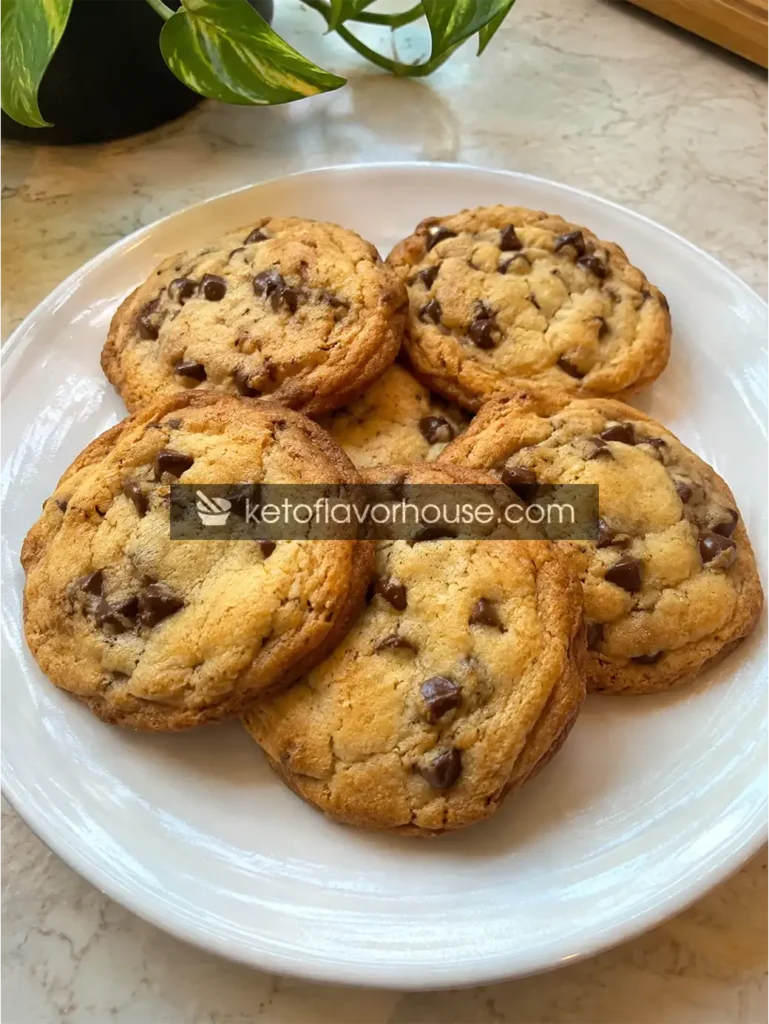
These Weight Watchers Thermomix Chocolate Chip Cookies are made for those moments when you want a proper homemade chocolate chip cookie without making a huge batch or losing track of portions. They have lightly crisp edges, soft centers, brown sugar flavor, and little pockets of melted chocolate. The Thermomix makes preparing the dough easier by creaming the butter and sugars, mixing in the wet ingredients, and bringing the flour mixture together in one bowl.
I like the idea of keeping these cookies familiar rather than trying to turn them into something that tastes completely different. A chocolate chip cookie should still taste like a chocolate chip cookie. The goal here is to use measured ingredients, make evenly sized portions, and enjoy one cookie at a time while keeping the full recipe easy to track in your WW app.
The recipe below makes 24 small-to-medium cookies. That portion size is intentional: it gives you a satisfying cookie while making it easier to keep the batch consistent. If you prefer larger bakery-style cookies, you can make fewer, but remember that each cookie will contain a larger share of the recipe and its estimated Points.
Why You’ll Love These Weight Watchers Thermomix Chocolate Chip Cookies
A little cookie worth making
Classic cookie texture
Soft centers, lightly golden edges, and chocolate in every bite make these taste like familiar homemade cookies.
Measured portions
The dough is divided into 24 portions so you can track one cookie instead of guessing the size.
Easy Thermomix mixing
The Thermomix handles the creaming and mixing in one bowl, which keeps the preparation straightforward.
Make-ahead dough
Chill the dough before baking, or freeze portioned dough so you can bake a few cookies later.
A familiar chocolate chip cookie flavor
These are not meant to taste like a dry diet biscuit or a crunchy protein snack. The combination of butter, brown sugar, vanilla, and chocolate chips gives the dough its traditional cookie flavor. Brown sugar also helps the centers stay softer, while the edges become lightly golden in the oven.
Less hands-on mixing
Making cookie dough by hand is not difficult, but creaming butter and sugar properly takes a little effort. The Thermomix makes that stage convenient. You can weigh ingredients directly into the bowl, mix them, and add the remaining ingredients without transferring the dough between several mixing bowls.
Easier portion control
The biggest practical advantage is making every cookie the same size. If one cookie is twice as large as another, the Points per cookie will not be the same. Dividing the dough into 24 equal portions makes the nutrition estimate and WW tracking more useful.
A recipe the whole household can enjoy
You do not need to make a completely separate dessert for everyone else. These cookies have the familiar taste and texture that chocolate chip cookie fans expect. You can serve them with coffee, milk, or as a small dessert after dinner.
WW SmartPoints Information
For this recipe, the working estimate is approximately 4 SmartPoints per cookie, assuming 24 equal cookies. The estimate is intended as a planning guide only. It is not an official WW result, and the current WW app may use a different Points system or member-specific settings.
| Recipe quantity | Estimated SmartPoints |
|---|---|
| 1 cookie | About 4 |
| 2 cookies | About 8 |
| 6 cookies | About 24 |
| Entire batch of 24 | About 96 |
The main Points-contributing ingredients are butter, sugar, flour, and chocolate chips. The egg and vanilla also contribute to the recipe’s nutrition, although the amounts used are relatively small across the full batch.
The estimate assumes the ingredient quantities listed below and does not assume that flour, butter, sugar, or chocolate chips are zero-point foods. For the most accurate result, enter the exact brands and quantities into your own WW app, set the recipe yield to 24, and use the actual number of cookies you make.
Recipe Points at a glance
Independent estimate • 24 equal cookies
Butter, granulated sugar, brown sugar, flour, and chocolate chips.
Divide the dough evenly. Larger cookies contain more of the batch’s total Points.
This is not an official WW calculator. Confirm the recipe in your current app using your exact ingredients and serving count.
My Notes on Making Thermomix Chocolate Chip Cookies
The important thing with Thermomix cookie dough is not to overmix it. The machine is powerful, and cookie dough does not need the long mixing time you might use for a cake batter. Once the flour is incorporated, the dough should look thick and slightly sticky, with the chocolate chips distributed throughout.
I also recommend chilling the dough. Butter softens during mixing, and warm dough can spread too quickly in the oven. A short rest in the refrigerator helps the cookies hold their shape and gives the flour time to absorb moisture. It is a small step, but it makes the baking process more predictable.
For a consistent batch, I would use a kitchen scale to divide the dough rather than relying on loosely filled spoons. You do not need to make the cookies perfectly identical, but keeping the portions close in weight makes a difference when you are tracking servings.
Required Equipment
You only need a few basic tools alongside your Thermomix. Having the baking equipment ready before mixing also helps prevent the dough from sitting too long at room temperature.
Thermomix
Use the mixing bowl, lid, and measuring equipment that belong to your machine. The Thermomix is used to cream the butter and sugars, incorporate the egg and vanilla, and mix the dry ingredients into a cookie dough. Use the reverse function at a low speed when adding chocolate chips so they are folded through rather than crushed.
Digital Kitchen Scale
A digital scale is especially useful for this recipe because flour can be packed differently in measuring cups. Weighing the ingredients gives you a more consistent dough and makes it easier to reproduce the same result. It is also useful when dividing the dough into 24 equal portions.
Baking Sheets
Use two standard baking sheets if possible. Cookies need room to spread, so avoid placing all 24 portions on one crowded tray. If you only have one sheet, bake in batches and let the sheet cool before adding the next round of dough.
Parchment Paper
Line the baking sheets with parchment paper to prevent sticking and make cleanup easier. It also helps the cookies release without needing extra butter or oil on the tray.
Cookie Scoop or Tablespoon
A small cookie scoop makes portioning quicker and more consistent. A tablespoon measure also works; just make sure each portion is similar in size. For the most accurate serving count, weigh the full dough and divide it into 24 equal portions.
Cooling Rack
Cookies continue to set as they cool. A wire rack allows air to circulate underneath, helping the bottoms cool without becoming damp from trapped steam. If you do not have a rack, leave them on the baking sheet for a few minutes before moving them to a plate.
Ingredients for Weight Watchers Thermomix Chocolate Chip Cookies
The ingredient list keeps the flavor profile close to a traditional chocolate chip cookie. The quantities are measured to make 24 cookies, and the Points estimate is based on this exact version.
What’s in the dough?
Creates tenderness, richness, and the classic buttery cookie flavor.
Adds caramel-like flavor and helps keep the centers soft.
Balances the brown sugar and supports lightly crisp edges.
Binds the dough and contributes structure and moisture.
Provides the structure needed for a soft, chewy cookie.
Bring chocolate flavor and small melted pockets throughout the cookies.
Also needed: 1 tsp vanilla extract, ½ tsp baking soda, and ¼ tsp fine salt.
Ingredient details and useful substitutions
Unsalted butter – 113 g (½ cup)
Butter is responsible for much of the familiar cookie aroma and flavor. It also affects spread, tenderness, and the texture around the edges. Unsalted butter gives you more control over the salt level, although salted butter can be used if you reduce or omit the added salt.
Butter contributes a meaningful amount of fat and energy, so it is one of the main ingredients affecting the recipe’s estimated Points. Replacing all of it with applesauce or yogurt would change the cookie substantially. The dough could become softer or cakier, and the cookies may not spread or brown in the same way.
Light brown sugar – 67 g (⅓ cup)
Brown sugar adds moisture and a gentle caramel note. It helps the centers stay tender and gives the cookies a deeper flavor than using only white sugar. You can use dark brown sugar for a slightly stronger molasses flavor, but its nutrition profile should still be entered accurately in your WW app.
A zero-calorie sweetener designed for baking may reduce calories compared with sugar, but it does not always behave like brown sugar. Some products do not provide the same moisture or browning. If you use one, follow its package conversion instructions and expect a possible texture change.
Granulated sugar – 50 g (¼ cup)
Granulated sugar supports browning and helps the cookie edges become lightly crisp. It also balances the richer flavor of brown sugar. Reducing it too much can affect spread, texture, and sweetness, so avoid removing it without testing the dough.
A granulated baking sweetener may be an option, but check whether it is intended to replace sugar cup for cup. Different products have different levels of sweetness and bulk.
Large egg – 1
The egg helps bind the ingredients and gives the dough structure. It also contributes a little moisture and protein. Use a large egg at room temperature if possible, since it incorporates more smoothly into the creamed butter and sugar.
A liquid egg substitute may work, but the amount and texture vary by brand. It can make the cookie less rich and may change how well the dough holds together. Recalculate the recipe with the actual product used.
Vanilla extract – 1 teaspoon
Vanilla rounds out the flavor and makes the chocolate and brown sugar taste more pronounced. Pure vanilla extract or a suitable imitation vanilla can be used. The small amount has a relatively modest effect on the nutrition of each cookie.
All-purpose flour – 180 g (about 1½ cups, spooned and leveled)
Flour gives the dough its structure. Weighing it is preferable to scooping directly from the bag, because packed flour can lead to dry, dense cookies. If you use a measuring cup, spoon the flour into the cup and level the top rather than pressing it down.
A 1:1 gluten-free baking flour blend may work if it is designed for cookies, although the dough may need a slightly different rest time. Almond flour is not a direct replacement: it contains more fat, has no gluten structure, and will produce a different cookie. Any flour swap changes the nutritional profile and should be recalculated.
Baking soda – ½ teaspoon
Baking soda helps the cookies spread and brown. Check that it is fresh; an old container may not perform as expected. Do not replace it with the same amount of baking powder, because they are different leavening ingredients.
Fine salt – ¼ teaspoon
Salt balances the sweetness and makes the chocolate flavor more noticeable. If using salted butter, reduce the added salt or leave it out depending on your taste.
Chocolate chips – 85 g (½ cup)
Semi-sweet chocolate chips provide the familiar chocolate chip cookie flavor. Mini chocolate chips can distribute more evenly, which may give you chocolate in more bites without changing the total amount used.
You can choose dark chocolate chips or milk chocolate chips, but their sugar, fat, and calorie values may differ. A reduced-sugar chocolate chip product may change the nutrition, but do not assume it is automatically lower in WW Points. Enter the package’s actual nutrition information into your app.
Smart swaps: what changes when you substitute?
| Original ingredient | Possible alternative | What to expect |
|---|---|---|
| Unsalted butter, 113 g | Salted butter, 113 g | Similar texture; adjust added salt. Points may be similar but verify the label. |
| Light brown sugar, 67 g | Dark brown sugar, 67 g | Deeper molasses flavor; nutrition is generally similar. |
| Granulated sugar, 50 g | Baking sweetener equivalent | May reduce sugar and calories, but browning and texture can change. |
| All-purpose flour, 180 g | 1:1 gluten-free flour blend, 180 g | May work, but texture depends on the blend. Recalculate. |
| Semi-sweet chips, 85 g | Dark or reduced-sugar chips, 85 g | Changes sweetness and potentially nutrition; use the package values. |
The most useful way to adjust this recipe is to make one substitution at a time. If you replace the butter, both the flavor and structure may change. If you replace the sugar, the sweetness, browning, and spread may change. Changing several ingredients together makes it difficult to know why a batch turned out differently.
How to Make Thermomix Chocolate Chip Cookies
Before starting, take the butter and egg out of the refrigerator. The butter should be softened but not melted. If it is greasy or partly liquid, the dough may spread too much during baking.
Step 1: Prepare the baking sheets and ingredients
Preheat the oven to 350°F (175°C). Line two baking sheets with parchment paper. Weigh the flour, sugars, chocolate chips, and remaining ingredients before you begin mixing.
Cut the softened butter into a few smaller pieces so it can cream evenly. Measure the chocolate chips separately; they will be added near the end. Having everything ready is especially helpful when working with a Thermomix because the dough comes together quickly.
Step 2: Cream the butter and sugars
Place the butter, light brown sugar, and granulated sugar into the Thermomix mixing bowl. Mix for 20 seconds on speed 3, then scrape down the sides of the bowl with a spatula.
The mixture should look creamy and evenly combined. It may not become as fluffy as butter and sugar beaten for several minutes with a stand mixer, and that is fine for this recipe. Avoid increasing the mixing time unnecessarily, especially if the butter is already very soft.
Step 3: Add the egg and vanilla
Add the large egg and vanilla extract. Mix for 10 seconds on speed 3. Stop and scrape the sides if a little butter mixture remains above the blade area.
The mixture should look smooth and slightly glossy. If it looks a little uneven, do not worry; the flour will bring the dough together. Avoid prolonged mixing at this stage.
Step 4: Add the dry ingredients
Add the flour, baking soda, and salt. Mix for 15 seconds on speed 4, or just until the flour is mostly incorporated.
Check the dough before mixing further. It should look thick and soft, with no large pockets of dry flour. If a small amount of flour remains on the sides, scrape it down and mix for only a few more seconds. Overmixing after adding flour can make cookies tougher.
Step 5: Fold in the chocolate chips
Add the chocolate chips. Use the reverse function on a low speed, around 10 seconds at speed 2, to distribute them through the dough. If your machine model does not offer the same reverse setting, fold the chips in by hand with a spatula.
The chips should remain mostly whole. Do not use a high speed here, because that can break them up and smear chocolate through the dough.
Step 6: Chill the dough
Transfer the dough to a covered bowl or container and refrigerate for 30 minutes. This gives the butter time to firm up and helps the cookies bake more consistently.
The dough should become easier to scoop after chilling. If it becomes very firm, let it stand at room temperature for a few minutes before portioning. Do not leave it out for a long period, particularly in a warm kitchen.
Step 7: Divide into 24 portions
Scoop the dough into 24 equal portions and arrange them on the prepared baking sheets, leaving approximately 2 inches between portions. If you have a kitchen scale, weigh the dough and divide the total weight by 24 to get a consistent portion size.
Do not flatten the dough balls heavily. They will spread during baking. If the dough feels sticky, lightly dampen your hands or use a cookie scoop rather than adding extra flour.
Step 8: Bake until the edges are lightly golden
Bake for 9–11 minutes, checking toward the end of the baking time. The edges should look set and lightly golden, while the centers may still appear slightly soft.
That softer center is desirable. Cookies continue to cook from residual heat after they leave the oven. If you wait until the centers look completely firm and dark, they may become dry once cooled.
Step 9: Cool before serving
Leave the cookies on the baking sheet for about 5 minutes, then transfer them to a wire rack. Allow them to cool further before stacking or storing.
The centers will become more structured as they cool. If you try to move them immediately, they may break because the butter and chocolate are still hot.
From Thermomix bowl to cookie plate
Common Mistakes to Avoid
Even a simple cookie recipe can turn out differently depending on butter temperature, flour measurement, and oven timing. These are the details I would pay attention to when making this Thermomix version.
Using melted butter instead of softened butter
Softened butter should give slightly when pressed but still hold its shape. Melted butter changes the dough’s consistency and can cause the cookies to spread more than expected. If you accidentally melt the butter, chill it until it is soft and opaque again before mixing.
Adding too much flour
This is one of the easiest ways to end up with dry, dense cookies. Scooping flour directly from the bag can pack extra flour into the measuring cup. Weighing the flour at 180 g is the most reliable option. If using cups, spoon the flour into the cup and level it gently.
Mixing the dough for too long
The Thermomix can bring the dough together quickly. Once the flour has disappeared into the mixture, stop. Excessive mixing can develop the flour’s gluten and make the cookies less tender. Use short bursts only if you can still see dry flour.
Skipping the chilling time
Warm dough is softer and may spread too quickly in the oven. Chilling for 30 minutes helps the butter firm up and makes the portions easier to handle. If your kitchen is warm or the dough still feels very soft, chill it for another 10–15 minutes.
Making the cookies different sizes
A large cookie and a small cookie do not represent the same serving. If you are tracking WW Points, this matters. Divide the dough into 24 equal portions, and use the same portion size whenever you bake another batch.
Overbaking the cookies
The centers may look a little soft when the cookies are ready to come out of the oven. That is normal. They will continue setting on the hot baking sheet. Leaving them in until the centers look completely firm can make them dry and hard after cooling.
Pro Tips for the Best Results
- Use room-temperature ingredients: Softened butter and a not-too-cold egg combine more evenly. Avoid warming the butter until it becomes oily or melted.
- Weigh the flour: This is the easiest way to keep the dough consistent from batch to batch.
- Chill before baking: A 30-minute rest helps control spread and makes portioning easier.
- Use two baking sheets: Give each cookie room to spread. Crowded cookies can bake unevenly and merge together.
- Rotate the tray if your oven has hot spots: If one side browns faster, rotate the baking sheet carefully near the end of baking.
- Take the cookies out while the centers are still soft: The edges should be set and lightly golden. Carryover heat will finish the centers.
- Measure the chocolate chips: It is easy to add an extra handful, but that changes the recipe’s total nutrition and estimated Points.
- Let the baking sheet cool between batches: Putting fresh dough onto a hot tray can make the butter soften before the cookies enter the oven.
Thermomix Cookie Dough Troubleshooting
A few small adjustments can usually solve common cookie problems. Use this guide before changing the ingredient quantities.
If the dough is too sticky to scoop, chill it before adding anything else. Adding extra flour may seem like a quick fix, but it changes the ingredient balance and can make the finished cookies dry. If the first tray spreads too much, chill the remaining dough and bake a test cookie before making further changes.
WW-Friendly Nutrition and Portion Strategy
Chocolate chip cookies are a treat, and this recipe should be approached as one. The benefit of making them at home is that you control the ingredients, the batch size, and the number of portions. You can enjoy a cookie without needing to estimate the size of a bakery cookie or guess what went into it.
The recipe uses butter, sugar, flour, and chocolate chips, so it is not a zero-point dessert. Those ingredients are responsible for much of the traditional cookie flavor and texture, and they also contribute to the Points estimate. Rather than claiming that the recipe is automatically low in Points, it is more useful to provide a consistent serving size and a transparent estimate.
Why portion size matters
The estimated Points per cookie assume the dough is divided into 24 equal portions. If you make 12 large cookies instead, each cookie contains approximately twice as much dough as one of the 24-cookie portions. The Points per cookie will therefore be higher.
For the most reliable tracking:
- Weigh the finished dough.
- Divide the total weight by 24.
- Portion each cookie to approximately that weight.
- Record the actual number of cookies baked.
- Enter the ingredients and serving count in your current WW app.
If a few cookies are larger or smaller, do not assume that every cookie has the same Points value. Use the actual portion size or divide the batch by its total weight.
Pairing a cookie with a snack
You can make a small dessert feel more complete by pairing it with something that suits your appetite and your daily Points budget. For example, a cookie with plain fruit or a suitable yogurt can be a more filling snack than eating several cookies on their own. Check the yogurt label and your WW plan rather than assuming every variety has the same Points value.
Keep the recipe in context
Your daily Points budget is individual. A cookie that fits comfortably into one person’s plan may require more planning for someone else. The estimated value in this article is a starting point, not a recommendation about how many cookies you should eat. Use your own app calculation and choose a portion that fits your preferences and budget.
Can you make the recipe lower in Points?
You can experiment with a baking sweetener or a different chocolate product, but every substitution should be assessed as a complete recipe. Reducing sugar may affect sweetness and browning. Replacing butter may affect spread and tenderness. Using fewer chocolate chips will reduce the amount of chocolate in each cookie, but the result may not feel as satisfying.
A practical first adjustment is to reduce the chocolate chips slightly, perhaps testing a batch with 70 g instead of 85 g. This will change the flavor distribution and may reduce the total nutrition values, but the revised Points must be recalculated using the new ingredient quantity. Do not simply subtract a fixed number of Points.
Variations You Can Try
The basic dough is easy to adapt, but keep in mind that additions and substitutions change the nutritional profile. If you make a variation, enter the new ingredient list and actual yield into your WW app.
Dark Chocolate Chip Cookies
Use 85 g of dark chocolate chips instead of semi-sweet chips. Dark chocolate gives a deeper, sometimes less sweet flavor. Depending on the brand, the sugar and fat content may differ, so the estimated Points may change. The cookie texture should remain similar if you keep the quantity the same.
Mini Chocolate Chip Cookies
Replace the regular chocolate chips with 85 g mini chocolate chips. The smaller pieces spread more evenly through the dough, giving you chocolate in more bites. The total amount remains the same, so the nutrition will depend mainly on the product label rather than the chip size.
Chocolate and Walnut Cookies
Add a small measured amount of chopped walnuts and reduce the chocolate chips to keep the dough balanced. Walnuts add crunch and a toasted, nutty flavor, but they also contribute fat and calories. Recalculate the entire recipe rather than assuming the original Points estimate still applies.
Cinnamon Chocolate Chip Cookies
Add ½ teaspoon ground cinnamon to the dry ingredients. Cinnamon adds warmth and works well with brown sugar and chocolate. Since the amount is small, it is unlikely to change the nutrition figures substantially, but the final estimate should still be based on the full ingredient list.
Sea Salt Chocolate Chip Cookies
Sprinkle a very small pinch of flaky sea salt over each cookie immediately after baking. The contrast between sweet chocolate and salt makes the flavor more pronounced. The additional sodium will depend on how much salt you use, while the effect on Points is generally small; enter the added amount if you want a more precise calculation.
Smaller Bite-Size Cookies
You can make 30 smaller cookies instead of 24. Reduce the baking time and begin checking them earlier, around 7–9 minutes. Each cookie will contain a smaller share of the total recipe, but the exact Points per cookie should be recalculated using 30 servings. Avoid using the original four-Point estimate without checking the new yield.
Serving Ideas for Thermomix Chocolate Chip Cookies
These cookies are easy to serve without elaborate toppings. Their flavor is already rich from the butter, brown sugar, vanilla, and chocolate. A simple plate and a warm drink are often all you need.
Simple ways to serve them
Serve one cookie with coffee or tea for a simple afternoon treat.
A classic pairing that works especially well with a warm cookie.
Add strawberries or apple slices for freshness alongside the sweet cookie.
Serve with a measured scoop of ice cream; calculate the extra Points separately.
Pack a fully cooled cookie in a small container to keep it from breaking.
Stack cooled cookies in a food-safe box with parchment between layers.
For a simple snack, serve one cookie with a piece of fresh fruit. If you are serving them as dessert for family or guests, arrange them on a plate once fully cooled. You can also warm a cookie briefly before serving, but avoid overheating it because the chocolate can become very hot.
For a party, make the smaller 30-cookie version so guests can take a bite-size cookie. If you do this, calculate the Points using the new yield rather than the estimate for 24 cookies.
Storage Recommendations
Once cooled, these cookies are easy to store. The most important step is allowing them to cool completely before putting them into a sealed container. Warm cookies release steam, and trapped moisture can make the edges lose their texture.
Room-temperature storage
Store fully cooled cookies in an airtight food-safe container at room temperature for about 3–4 days. Keep them away from direct sunlight, heat, or a warm appliance. If stacking them, place parchment paper between layers to help prevent sticking.
Refrigerator storage
Refrigeration is not usually necessary for these cookies because the baked recipe does not contain a perishable filling or frosting. However, you can refrigerate them in an airtight container if your kitchen is very warm. They may become firmer when cold; allow a cookie to come closer to room temperature before serving.
Freezing baked cookies
For longer storage, freeze fully cooled cookies in a freezer-safe container or bag. Separate layers with parchment paper and remove as much excess air as practical. For best quality, use within about 2–3 months.
Thaw at room temperature while still covered or sealed to help prevent condensation from forming directly on the cookies. Once thawed, they can be enjoyed as they are or warmed briefly.
Freezing unbaked dough
You can also freeze the dough in individual portions. Arrange the portions on a lined tray and freeze until firm, then transfer them to a freezer-safe bag or container. Label the container with the recipe name, date, and portion count.
Bake from frozen, adding a little extra baking time and checking the centers and edges as they cook. The final yield and ingredient quantities remain the same if you bake all the portions, so the overall recipe calculation does not change. The Points per cookie also remain based on the same ingredients and portion size.
Cookie storage guide
Rest on the tray, then transfer to a rack before storing.
Use an airtight container in a cool, dry place.
Freeze baked cookies or individually portioned dough.
Bring frozen baked cookies to room temperature before serving.
Storage times are quality recommendations. Keep cookies protected from moisture and discard them if you notice mold, an unusual smell, or other signs of spoilage.
Reheating does not normally change the Points of the same cookie ingredients. However, adding a topping, ice cream, or another ingredient changes the serving calculation. If you change the recipe itself, update the ingredient list in your WW app.
Frequently Asked Questions
1. Can I make these Weight Watchers Thermomix Chocolate Chip Cookies ahead of time?
Yes. You can prepare the dough, cover it, and refrigerate it before baking. A 30-minute chill is part of the recipe, but you can also prepare it several hours ahead. Keep the dough covered in the refrigerator and portion it just before baking. If it becomes very firm, let it sit briefly at room temperature so it is easier to scoop.
2. Can I freeze the cookie dough?
Yes. Divide the dough into equal portions, freeze them on a lined tray until firm, and then transfer them to a freezer-safe container. Bake the portions from frozen, allowing extra time in the oven and checking for lightly golden edges and set surfaces. Keep the original portion count in mind when calculating Points.
3. Can I use a different Thermomix model?
The method is suitable for Thermomix models with the usual mixing, speed, and reverse functions, but controls and bowl capacity can vary. Follow the speed and timing as a starting point, and check the dough visually rather than relying on the timer alone. The flour should be incorporated without prolonged mixing, and the chocolate chips should remain mostly whole.
4. Why did my cookies spread too much?
The most common reasons are butter that was too warm, dough that was not chilled, or an oven that was not fully preheated. Chill the remaining dough before baking another tray. Also check that you weighed the flour accurately and did not use melted butter.
5. Can I make these cookies without brown sugar?
You can use granulated sugar instead, but the result will be different. Brown sugar adds moisture and a mild caramel flavor, helping the centers stay soft. Using only white sugar may produce a crisper cookie with a slightly different spread. The nutrition and estimated Points should be recalculated using the revised quantities.
6. How can I reduce the Points in this recipe?
Start by testing a modest reduction in chocolate chips or a baking sweetener that is designed to replace sugar. Both changes can affect taste and texture, so make one adjustment at a time. Re-enter the full revised recipe and its actual yield in your WW app; do not apply a fixed Points reduction without recalculating.
7. Will my WW app show the same SmartPoints estimate?
Not necessarily. The estimate in this article is independent and is not an official WW calculation. Your app may use a different Points system, plan settings, or ingredient database. For the most reliable personal value, enter the exact products and quantities you used and set the serving count to the number of cookies you actually made.
Nutritional Breakdown Per Serving
The following figures are approximate estimates for one cookie when the recipe makes 24 cookies. Actual values can vary with the butter, flour, chocolate chip brand, egg size, and final cookie yield.
| Nutrition | Estimated amount per cookie |
|---|---|
| Calories | 100–105 kcal |
| Protein | 1–1.5 g |
| Fat | 5–5.5 g |
| Total carbohydrates | 12–14 g |
| Fiber | 0.3–0.5 g |
| Net carbohydrates | 11.5–13.5 g |
| Sugar | 6–7 g |
| Sodium | 45–60 mg |
| Estimated SmartPoints | About 4 |
Net carbohydrates are estimated by subtracting fiber from total carbohydrates. Net carbs are not the same thing as WW Points.
Nutrition per cookie
Approximate values • 1 of 24 cookies
Independent estimate only. Use your current WW app for a personal calculation; nutrition values do not determine Points by themselves.
Recipe Snapshot
- Prep Time: 15 minutes
- Chilling Time: 30 minutes
- Cook Time: 9–11 minutes per tray
- Total Time: Approximately 55–65 minutes, depending on baking batches
- Course: Dessert, Snack
- Cuisine: American
- Servings: 24 cookies
- Calories: Approximately 100–105 per cookie
- Estimated SmartPoints: About 4 per cookie
A Final Note
These Thermomix chocolate chip cookies are a practical homemade treat: familiar flavor, straightforward preparation, and portions that are easy to measure. The most important details are weighing the ingredients, chilling the dough, and dividing it evenly. Use the Points estimate as a starting point, then confirm the exact value in your WW app with the products you actually use.

Weight Watchers Thermomix Chocolate Chip Cookies

Ingredients
- 113 g ½ cup unsalted butter, softened
- 67 g ⅓ cup light brown sugar
- 50 g ¼ cup granulated sugar
- 1 large egg
- 1 teaspoon vanilla extract
- 180 g about 1½ cups all-purpose flour, spooned and leveled
- ½ teaspoon baking soda
- ¼ teaspoon fine salt
- 85 g ½ cup semi-sweet chocolate chips
Instructions
- Preheat the oven to 350°F (175°C). Line two baking sheets with parchment paper.
- Add softened butter, brown sugar, and granulated sugar to the Thermomix bowl. Mix for 20 seconds at speed 3. Scrape down the sides.
- Add the egg and vanilla extract. Mix for 10 seconds at speed 3.
- Add flour, baking soda, and salt. Mix for 15 seconds at speed 4, just until the flour is incorporated.
- Add chocolate chips and mix in reverse at speed 2 for approximately 10 seconds. Alternatively, fold them in by hand.
- Transfer the dough to a covered container and refrigerate for 30 minutes.
- Divide the dough into 24 equal portions and arrange them on the prepared baking sheets, leaving about 2 inches between cookies.
- Bake for 9–11 minutes, until the edges are lightly golden and the centers still look slightly soft.
- Cool on the baking sheet for 5 minutes before transferring to a wire rack.