This post may contains Amazon affiliate and other affiliate links. If you make a purchase through these links, I may earn a small commission at no extra cost to you. Your support helps me continue to provide quality content. I only recommend products I personally trust and believe will add value to your experience. For more details, please visit my Privacy Policy.
Estimated WW Points: Approximately 5–7 Points per serving (independent preliminary estimate; verify using your current WW app).
There is something incredibly comforting about the combination of slowly caramelized onions, savory beef broth, tender chicken, and melted cheese. These Weight Watchers French Onion Chicken Thighs bring the familiar flavors of French onion soup into a satisfying chicken dinner, with a lighter ingredient approach that makes portion planning easier.
Instead of using a heavy cream sauce or a generous amount of butter, this recipe builds its flavor with golden caramelized onions, low-sodium beef broth, fresh thyme, garlic, and a modest amount of reduced-fat Swiss cheese. The chicken thighs cook directly in the flavorful onion sauce, allowing them to absorb all those savory flavors while remaining tender and juicy.
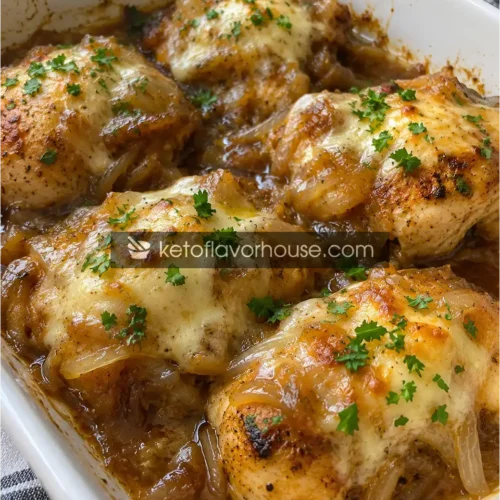
The best part is the cheesy onion topping. As the cheese melts over the chicken, it creates a delicious golden layer that pairs beautifully with the sweet, deeply browned onions underneath. You get the comforting experience of French onion chicken without needing a complicated ingredient list or restaurant-style preparation.
This recipe makes six servings and is designed around boneless, skinless chicken thighs, measured olive oil, reduced-fat cheese, and a broth-based sauce. The estimated Points value is a planning estimate, not an official WW calculation. Your actual result will depend on the exact chicken, cheese, broth, and your current WW plan.
Recipe at a glance
- Prep Time: 15 minutes
- Cook Time: 40–45 minutes
- Total Time: Approximately 60 minutes
- Servings: 6
- Estimated WW Points: Approximately 5–7 per serving
Why You’ll Love These Weight Watchers French Onion Chicken Thighs
French onion soup is known for its deeply caramelized onions, savory broth, and melted cheese. This chicken dinner captures those flavors in a more substantial meal.
It Tastes Like French Onion Soup, but Makes a Complete Dinner
The onions are the heart of this recipe. They become soft, golden, and sweet as they cook slowly in the skillet. Garlic, thyme, and Worcestershire sauce add layers of savory flavor, while beef broth gives the sauce its familiar French onion character.
Chicken thighs are particularly suitable because they have a little more natural richness than chicken breast. When cooked properly, they stay moist and tender instead of becoming dry.
The final layer of Swiss cheese adds a slightly nutty, savory flavor. You do not need a thick blanket of cheese to make this dish enjoyable. A carefully measured portion provides enough flavor to complement the onions and chicken.
A Practical Dinner for Busy Families
Although the onions need time to caramelize, most of that time involves gentle cooking rather than complicated preparation. You can slice the onions, season the chicken, measure the broth, and prepare the remaining ingredients while the skillet heats.
It is also easy to serve this recipe with vegetables, a small portion of mashed potatoes, or cauliflower mash. That flexibility makes it useful for family dinners, meal preparation, and different eating preferences.
WW SmartPoints Information
The estimated Points value for these French onion chicken thighs is approximately 5–7 Points per serving.
This is an independent planning estimate rather than an official WW SmartPoints calculation. Current WW programs and individual member accounts may calculate foods differently, particularly chicken thighs, cheese, and cooking fats.
The recipe uses six servings, with one chicken thigh and its proportional share of onion sauce and cheese per serving.
Which Ingredients Contribute to WW Points?
Several ingredients deserve particular attention when entering this recipe into your WW app.
Chicken thighs: Boneless, skinless chicken thighs are the main protein source. Their Points treatment depends on the current WW plan and the exact product. Do not automatically treat them as ZeroPoint chicken breast.
Olive oil: Even a small amount contributes to the nutritional calculation. Measuring it rather than pouring directly into the pan makes the recipe easier to track.
Reduced-fat Swiss cheese: It provides the melted French onion topping. Reduced-fat cheese can have fewer calories and fat than regular cheese, but it is not automatically a ZeroPoint food.
Beef broth: Low-sodium broth contributes relatively little energy in the amount used, although product labels should always be checked.
Onions and herbs: These provide the majority of the recipe’s flavor without requiring a large quantity of cheese or butter.
The estimated Points range should not be advertised as a verified official value. For publication, calculate the complete ingredient list using the current WW system and the exact brands selected.
My Personal Experience With French Onion Chicken
The appeal of this recipe is how much flavor you can develop from a handful of simple ingredients. French onion soup traditionally relies on slowly cooked onions, broth, and cheese, so using that combination with chicken makes a lot of sense.
The most important part of preparing this dish is giving the onions enough time. When onions first enter the skillet, they are firm, sharp, and full of moisture. As they cook, they gradually soften, release their natural sugars, and turn golden brown. That transformation is what gives the finished sauce its distinctive flavor.
I would also pay close attention to the chicken while it cooks. Chicken thighs are forgiving, but they still benefit from a gentle cooking temperature. The goal is tender meat with a flavorful sauce, not chicken that has been boiled in broth. Searing the chicken first helps develop a more appealing surface and gives the sauce additional savory flavor.
These are recipe-development observations and cooking expectations, rather than claims of a completed personal kitchen test.
Required Equipment
Large Oven-Safe Skillet
A large oven-safe skillet is ideal because you can caramelize the onions, sear the chicken, prepare the sauce, and finish the dish under the broiler without transferring everything between several pans.
A cast-iron or stainless-steel skillet works well. If you do not have an oven-safe skillet, use a regular skillet for the stovetop stages and transfer everything to a suitable baking dish before finishing.
Sharp Chef’s Knife
You will need a sharp knife to slice the onions evenly. Consistent slices are important because thin pieces cook faster than thick wedges.
Cutting Board
Use separate preparation areas or wash your board and knife thoroughly after handling raw chicken. This helps prevent cross-contamination.
Measuring Cups and Spoons
Measuring oil, broth, Worcestershire sauce, and cheese is particularly important when calculating nutritional values and WW Points.
Meat Thermometer
A food thermometer is the most reliable way to check whether the chicken is fully cooked. Chicken should reach an internal temperature of 165°F (74°C) in the thickest part.
Kitchen Tongs
Tongs make it easier to turn the chicken during searing without tearing the surface.
Ingredients and Substitutions
This recipe uses a combination of leaner cooking choices and traditional French onion ingredients. Each ingredient has a specific purpose, so substitutions should preserve both the flavor and texture.
For the Chicken
- 2 pounds boneless, skinless chicken thighs (approximately 6 medium thighs)
- ½ teaspoon salt
- ½ teaspoon black pepper
- ½ teaspoon garlic powder
- ½ teaspoon onion powder
- 1 teaspoon dried thyme
- 2 teaspoons olive oil
Chicken thighs: Boneless, skinless thighs provide the main protein. They have a richer flavor than chicken breast and work particularly well with caramelized onions.
Choose thighs of similar thickness so they cook at approximately the same rate. Trim visible excess fat, but avoid cutting away too much meat.
Olive oil: A small measured amount helps brown the chicken and start the onions. You can use a suitable cooking spray instead, although the final flavor and browning may differ.
Seasonings: Garlic powder, onion powder, black pepper, thyme, and salt create a savory base. Thyme is particularly important because it complements both the onions and beef broth.
For the French Onion Sauce
- 3 large yellow onions, thinly sliced (approximately 1½ pounds)
- 3 cloves garlic, minced
- 2 cups low-sodium beef broth
- 1 tablespoon Worcestershire sauce
- 1 teaspoon balsamic vinegar
- ½ teaspoon dried thyme
- 1 teaspoon Dijon mustard
- 1 tablespoon cornstarch
- 1 tablespoon cold water
Yellow onions: These are the foundation of the sauce. Their natural sweetness becomes more pronounced as they caramelize.
Yellow onions are preferable to red onions for this particular recipe because they develop a familiar French onion soup flavor.
Beef broth: This provides a deeper, more traditional French onion flavor than water or plain chicken broth. Choose a low-sodium variety so you can control the seasoning.
Worcestershire sauce: Adds umami and a slightly tangy background flavor. A small amount goes a long way.
Balsamic vinegar: Helps balance the sweetness of the onions with a little acidity. Do not use too much because it can overpower the sauce.
Dijon mustard: Adds subtle sharpness and helps round out the savory flavor.
Cornstarch: This is optional for thickening the sauce. It should be mixed with cold water before being added to prevent lumps. It contributes carbohydrates and should be included in the final Points calculation.
For the Cheese Topping
- 6 ounces reduced-fat Swiss cheese, shredded or thinly sliced
- 1 tablespoon chopped fresh parsley
Swiss cheese is a natural choice for French onion-inspired dishes because it melts smoothly and has a mild, nutty flavor.
Using a measured amount allows each serving to receive a consistent topping. You can use reduced-fat provolone instead, but the flavor and nutritional values will differ.
Ingredient Anatomy and Smart Swaps
Can You Use Chicken Breast Instead?
Yes. Chicken breast is an excellent alternative if you prefer a leaner cut.
However, it is important to adjust the cooking time. Chicken breast is generally less forgiving than thighs, particularly when cooked in a skillet. Sear it briefly, then finish it gently in the sauce until the thickest section reaches 165°F.
The sauce itself can remain unchanged. The Points and nutritional values must be recalculated because the meat is different.
Can You Use Regular Cheese?
Yes. Regular Swiss cheese or Gruyère can be used if you prefer a richer topping.
Gruyère is particularly delicious with caramelized onions, but it can contribute more fat and calories. Reduced-fat Swiss is a more practical starting point for this WW-focused version.
How to Make Weight Watchers French Onion Chicken Thighs
The cooking process has three main stages: caramelizing the onions, searing the chicken, and bringing everything together in the sauce.
Step 1: Prepare and Season the Chicken
Pat the chicken thighs dry using paper towels.
Removing excess surface moisture is important because wet chicken tends to steam instead of brown.
In a small bowl, combine the salt, black pepper, garlic powder, onion powder, and dried thyme.
Sprinkle the seasoning evenly over both sides of the chicken.
Allow the seasoned chicken to sit at room temperature briefly while you prepare the skillet, but do not leave raw poultry out for an extended period.
Step 2: Sear the Chicken
Heat an oven-safe skillet over medium-high heat.
Add one teaspoon of olive oil and spread it across the surface.
Place the chicken thighs in a single layer. Avoid overcrowding the skillet because this can prevent proper browning.
Sear for approximately 3–4 minutes on the first side and 2–3 minutes on the second side.
The chicken should develop a golden-brown exterior. It does not need to be completely cooked at this stage.
Transfer the chicken to a clean plate.
If your skillet is small, work in batches rather than crowding all six thighs into the pan.
Step 3: Caramelize the Onions
Reduce the heat to medium-low.
Add the remaining teaspoon of olive oil and the thinly sliced onions.
Stir to coat them evenly. Cook for approximately 20–25 minutes, stirring every few minutes.
Initially, the onions will soften and release moisture. Gradually, that moisture will evaporate, and the onions will begin to develop golden-brown color.
If the bottom of the skillet becomes too dark before the onions are tender, add a tablespoon of water and scrape the browned bits from the bottom.
Do not rush this stage by turning the heat too high. The goal is deeply golden onions, not burnt edges.
Step 4: Add Garlic and Build the Sauce
Add the minced garlic and cook for approximately 30 seconds.
Stir in the Worcestershire sauce, balsamic vinegar, Dijon mustard, dried thyme, and beef broth.
Use a wooden spoon to scrape the bottom of the skillet. Those browned bits contain concentrated flavor from the chicken and onions.
Bring the sauce to a gentle simmer.
Taste it before adding additional salt because the broth, Worcestershire sauce, and cheese already contribute sodium.
Step 5: Thicken the Sauce
If you prefer a slightly thicker onion sauce, combine one tablespoon of cornstarch with one tablespoon of cold water.
Stir until smooth, then gradually add the mixture to the simmering sauce.
Cook for approximately 1–2 minutes until the liquid thickens slightly.
The sauce should remain pourable rather than becoming a thick gravy. Remember that the onions themselves will also contribute body.
Step 6: Return the Chicken to the Skillet
Place the seared chicken thighs back into the skillet, arranging them among the caramelized onions.
Spoon some onion sauce over each piece.
Bring the sauce to a gentle simmer, then transfer the oven-safe skillet to an oven preheated to 375°F (190°C).
Bake for approximately 12–18 minutes, depending on the thickness of the thighs and how much they cooked during searing.
Check the thickest part of the chicken with a food thermometer. It must reach 165°F (74°C).
Step 7: Add the Swiss Cheese
Remove the skillet from the oven once the chicken is cooked.
Divide the reduced-fat Swiss cheese evenly across the six chicken thighs.
Place the skillet under the broiler for approximately 1–2 minutes, watching carefully until the cheese melts.
The cheese should become soft and bubbly. Do not leave it unattended because it can brown quickly.
Finish with chopped fresh parsley.
Allow the chicken to rest for approximately 5 minutes before serving.
Step-by-Step Visual Cooking Guide
Common Mistakes to Avoid
French onion chicken is relatively straightforward, but the quality of the finished dish depends on a few important cooking details.
1. Rushing the Caramelized Onions
This is probably the biggest mistake.
If you cook the onions over high heat, the outside can burn before the inside becomes soft. Burnt onions create bitterness, which can overpower the chicken and broth.
How to avoid it: Use medium-low heat and allow approximately 20–25 minutes. Stir periodically and add a small splash of water if the skillet becomes too dark.
2. Using Too Much Broth
The recipe should have a flavorful sauce, not a bowl of thin liquid.
Adding too much broth can dilute the onion flavor and make the finished dish watery.
How to avoid it: Start with the specified two cups. If the sauce needs thickening, use the measured cornstarch slurry rather than adding more cheese or butter.
3. Overcooking the Chicken
Chicken thighs are more forgiving than chicken breast, but excessive cooking can still make them dry.
How to avoid it: Use a thermometer and remove the chicken from the oven when it reaches 165°F. Cooking time is only a guide because individual thighs vary in thickness.
4. Adding Cheese Too Early
If you add cheese before the chicken has finished cooking, it may become overcooked or separate.
How to avoid it: Add the Swiss cheese at the end and broil briefly.
5. Adding Too Much Salt
Beef broth, Worcestershire sauce, and cheese can all contain sodium.
How to avoid it: Use low-sodium broth and taste the sauce before adding additional salt.
Troubleshooting Guide
WW-Specific Nutrition and Strategy
A satisfying meal does not have to depend on large quantities of butter, cream, or cheese. The key is to use ingredients strategically and pay attention to portions.
These French onion chicken thighs use protein-rich chicken, a flavorful onion base, and a measured cheese topping. That combination creates a substantial main dish without needing a heavy cream-based sauce.
Why Chicken Thighs Work in This Recipe
Chicken thighs provide protein and have a naturally richer texture than chicken breast. Their flavor also complements the caramelized onions particularly well.
The trade-off is that thighs generally contain more fat and calories than skinless chicken breast.
If you are trying to reduce the overall energy content, chicken breast is an option. However, do not substitute it without updating the nutrition and Points calculations.
Use Onions for Flavor
Caramelized onions provide sweetness and depth without requiring a sugary sauce.
They also create a generous amount of sauce around the chicken, helping the meal feel substantial.
The trick is to cook them slowly. Properly caramelized onions have a much deeper flavor than quickly sautéed onions, so you do not need to compensate with large quantities of cheese or butter.
Make the Cheese Count
Swiss cheese is a particularly useful ingredient because its distinctive flavor works well in this dish.
Rather than using a thick layer, distribute six ounces evenly across the six portions.
This gives each chicken thigh a measured amount of cheese while preserving the French onion character.
Build a Balanced Plate
Consider serving one chicken thigh with:
- A generous portion of steamed green beans.
- Roasted broccoli or cauliflower.
- A fresh cucumber and tomato salad.
- A modest portion of mashed potatoes.
- Cauliflower mash for a lower-carbohydrate alternative.
Vegetables add volume and fiber, while a measured portion of potatoes or another side can make the meal more substantial.
Remember that individual WW Points budgets and ZeroPoint food lists differ. A food that is ZeroPoint for one member may not be ZeroPoint for another.
Variations You Can Try
French Onion Chicken Breast
Replace the chicken thighs with six skinless chicken breasts of similar size.
The result will be leaner, with a slightly firmer texture. Reduce the cooking time as necessary and check the thickest part of each breast for 165°F.
The sauce and cheese can remain the same, but the complete recipe must be recalculated.
French Onion Chicken with Mushrooms
Add eight ounces of sliced cremini mushrooms to the skillet after the onions have softened.
Cook until the mushrooms release their moisture and begin to brown. Then continue with the garlic and broth.
Mushrooms add an earthy flavor that works particularly well with beef broth and thyme.
French Onion Chicken with Provolone
Replace reduced-fat Swiss cheese with reduced-fat provolone.
Provolone provides a softer, milder flavor and creates a lovely melted topping. The exact Points and nutritional differences depend on the product.
Garlic French Onion Chicken
Add an additional clove of garlic and a little fresh thyme.
This variation gives the sauce a stronger aromatic flavor without changing the overall cooking method.
Spicy French Onion Chicken
Add ¼ teaspoon crushed red pepper flakes to the onion sauce.
The mild heat contrasts with the sweetness of the caramelized onions. Avoid adding spicy sauces without checking their nutritional labels.
Creamier French Onion Chicken
For a creamier sauce, stir in two tablespoons of plain nonfat Greek yogurt after removing the skillet from the heat and allowing it to cool slightly.
Do not boil the sauce after adding yogurt because it may curdle.
This changes the texture and nutrition, so recalculate the Points using the exact yogurt product.
Tips for the Best Results
- Slice onions evenly so they cook at approximately the same rate.
- Use yellow onions for a traditional French onion flavor.
- Avoid rushing caramelization.
- Pat the chicken dry before searing.
- Sear in batches if your skillet is small.
- Use low-sodium beef broth.
- Measure the olive oil and cheese.
- Add cheese only after the chicken is cooked.
- Let the finished chicken rest briefly before serving.
- Spoon caramelized onions and sauce over the chicken when plating.
How to Get More Flavor Without Adding More Cheese
The most effective way to improve the flavor is to develop the onions properly.
You can also:
- Scrape the browned bits from the bottom of the skillet.
- Use fresh thyme instead of dried thyme.
- Add a small amount of Dijon mustard.
- Finish with fresh parsley.
- Balance the sauce with a little balsamic vinegar.
These techniques help create a richer-tasting sauce without relying on additional butter or heavy cream.
Optional Additions
Fresh mushrooms: Add sliced mushrooms for an earthier flavor and more texture. They also increase the volume of the onion sauce.
Fresh rosemary: Use a small amount alongside thyme for a more aromatic sauce. Rosemary is strong, so avoid adding too much.
Caramelized shallots: Replace a portion of the yellow onions with shallots for a slightly sweeter, more delicate flavor.
Gruyère cheese: This is a traditional French onion-style cheese choice. It produces a rich, nutty topping but can increase calories and fat.
Fresh chives: Sprinkle chopped chives over the finished chicken for a mild onion flavor and fresh color.
Any addition that changes the ingredient quantities should be included in the revised nutrition and Points calculation.
Serving Ideas
French onion chicken thighs are versatile enough for a regular weeknight dinner or a more comforting weekend meal.
The onion sauce makes them especially good with sides that can absorb some of the flavorful liquid.
How to Plate It
For an attractive presentation, place one chicken thigh in the center of a shallow plate.
Spoon a generous amount of caramelized onions and sauce over the top. Make sure the melted Swiss cheese remains visible rather than completely covering it with onions.
Finish with a little chopped parsley and freshly cracked black pepper.
Keep the side vegetables separate so the cheese and onion topping remain the main visual focus.
Storage Recommendations
Refrigerator Storage
Allow the chicken to cool slightly before transferring it to airtight containers.
Refrigerate leftovers within two hours of cooking. Store at 40°F (4°C) or below and use within 3–4 days.
It is best to store the chicken together with some of the onion sauce. This helps protect the meat from drying out during reheating.
Freezing
This recipe can be frozen, although the texture of the cheese topping may change slightly after thawing.
For better results, freeze the chicken and onion sauce in individual portions. If possible, add freshly melted cheese after reheating.
Use freezer-safe containers or bags and label them with the preparation date. For best quality, use within approximately 2–3 months.
Reheating
Reheat gently to avoid drying out the chicken.
Oven: Place the chicken and sauce in a covered baking dish. Reheat at 325°F until the center reaches 165°F.
Stovetop: Place the chicken and sauce in a covered skillet over low heat. Add a small splash of broth if the sauce has thickened too much.
Microwave: Place one serving in a microwave-safe dish, cover loosely, and heat in short intervals until thoroughly hot.
Always ensure leftovers reach 165°F (74°C) when reheating.
Storage Timeline
Refrigerating or reheating the same ingredients does not normally change the recipe’s Points. However, adding extra cheese, butter, or broth-based additions can change the calculation.
Frequently Asked Questions
1. Can I use chicken breast instead of chicken thighs?
Yes. Skinless chicken breast works well with French onion sauce. It has a leaner nutritional profile, but it can become dry if overcooked. Reduce the cooking time as needed and use a thermometer to check for 165°F in the thickest part.
2. Can I make French onion chicken in a slow cooker?
Yes, although the preparation method changes. Caramelize the onions separately in a skillet first because slow cookers do not develop the same browned onion flavor. Add the onions, seasoned chicken, and broth to the slow cooker and cook until the chicken reaches a safe internal temperature. Add the cheese near the end.
3. Can I make this recipe without cheese?
Absolutely. The chicken and caramelized onion sauce are flavorful enough to stand on their own. Omitting the cheese will change the nutrition and Points calculation, but it creates a lighter version with a more prominent onion and thyme flavor.
4. How do I prevent the chicken from drying out?
Choose thighs of similar thickness, avoid excessive searing, and check the internal temperature rather than relying entirely on the cooking time. Keeping some onion sauce over the chicken while it cooks and rests also helps preserve moisture.
5. Can I prepare the onions ahead of time?
Yes. Caramelized onions can be prepared ahead and refrigerated in an airtight container. This is an excellent time-saving option because onion caramelization is the longest hands-on stage of the recipe.
When you are ready to cook, sear the chicken, add the prepared onions, and continue with the broth and remaining sauce ingredients.
6. What cheese works best for French onion chicken?
Swiss cheese is a great choice because its nutty flavor complements caramelized onions. Reduced-fat provolone is another option if you prefer a milder, creamier topping. Gruyère provides a more traditional French onion flavor but is richer and should be measured carefully.
7. How many WW Points are in one serving?
The preliminary planning estimate is approximately 5–7 Points per serving. This is not an official WW value. Chicken thighs, cheese, oil, and other ingredients must be entered into your current WW app to establish the correct value for your plan.
Nutritional Breakdown Per Serving
The following are approximate nutrition estimates based on six servings, including one chicken thigh, its share of the onion sauce, and one ounce of reduced-fat Swiss cheese.
| Nutrient | Estimated amount |
|---|---|
| Calories | 340 kcal |
| Protein | 32–35 g |
| Total Fat | 17 g |
| Total Carbohydrates | 13 g |
| Fiber | 2 g |
| Net Carbohydrates | 11 g |
| Sugar | 6 g |
| Sodium | 550–700 mg |
| Estimated WW Points | 5–7 |
These figures are preliminary estimates, not database-verified nutrition values. Actual values will vary with chicken thigh size, trimming, cheese brand, broth, and the quantity of sauce consumed. Net carbohydrates are calculated as total carbohydrates minus fiber; they are not a substitute for WW Points.
Recipe Snapshot
- Prep Time: 15 minutes
- Cook Time: 40–45 minutes
- Total Time: Approximately 60 minutes
- Course: Dinner, Main Course
- Cuisine: American, French-inspired
- Servings: 6
- Calories per serving: Approximately 340
- Protein per serving: Approximately 32–35 g
- Estimated WW Points: Approximately 5–7

Ingredients
For the chicken:
- 2 pounds boneless skinless chicken thighs (approximately 6 medium thighs)
- ½ teaspoon salt
- ½ teaspoon black pepper
- ½ teaspoon garlic powder
- ½ teaspoon onion powder
- 1 teaspoon dried thyme
- 2 teaspoons olive oil
For the French onion sauce:
- 3 large yellow onions thinly sliced (approximately 1½ pounds)
- 3 cloves garlic minced
- 2 cups low-sodium beef broth
- 1 tablespoon Worcestershire sauce
- 1 teaspoon balsamic vinegar
- ½ teaspoon dried thyme
- 1 teaspoon Dijon mustard
- 1 tablespoon cornstarch
- 1 tablespoon cold water
For the topping:
- 6 ounces reduced-fat Swiss cheese
- 1 tablespoon chopped fresh parsley
Instructions
- Preheat the oven to 375°F (190°C). Pat the chicken thighs dry.
- Combine salt, pepper, garlic powder, onion powder, and dried thyme. Season both sides of the chicken.
- Heat one teaspoon of olive oil in an oven-safe skillet over medium-high heat. Sear the chicken for 3–4 minutes on the first side and 2–3 minutes on the second side. Remove and set aside.
- Add the remaining olive oil and sliced onions. Cook over medium-low heat for 20–25 minutes, stirring occasionally, until soft and golden brown.
- Add minced garlic and cook for 30 seconds.
- Stir in beef broth, Worcestershire sauce, balsamic vinegar, Dijon mustard, and dried thyme. Scrape the browned bits from the bottom of the skillet.
- Mix cornstarch with cold water and stir into the sauce. Simmer for 1–2 minutes until slightly thickened.
- Return the chicken to the skillet and spoon the onion sauce over each piece.
- Transfer to the oven and bake for approximately 12–18 minutes, or until the thickest part of each thigh reaches 165°F.
- Divide the reduced-fat Swiss cheese evenly over the chicken.
- Broil for approximately 1–2 minutes until the cheese melts. Watch carefully to prevent burning.
- Finish with fresh parsley and allow to rest for 5 minutes before serving.