This post may contains Amazon affiliate and other affiliate links. If you make a purchase through these links, I may earn a small commission at no extra cost to you. Your support helps me continue to provide quality content. I only recommend products I personally trust and believe will add value to your experience. For more details, please visit my Privacy Policy.
Introduction
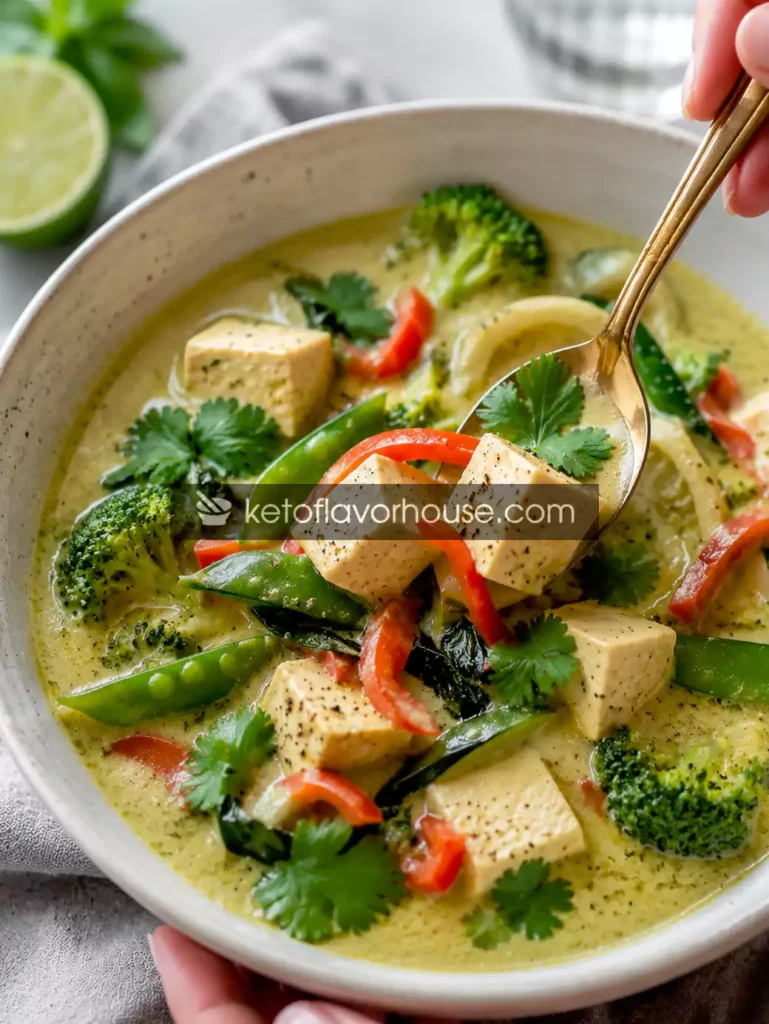
There are days when your body practically tells you it needs a reset. You wake up feeling bloated, sluggish, heavy, or completely drained after too many takeout meals, sugary snacks, or stressful weeks. On those days, I always crave something warm, deeply comforting, and nourishing without feeling overly rich or complicated. That’s exactly why this Anti-Inflammatory Green Curry Recipe for One has become one of my favorite healthy comfort meals.
The first time I made this healthy coconut curry bowl, I was exhausted after a long day and wanted something cozy that didn’t leave me feeling even more inflamed afterward. I needed a meal that felt satisfying but still light enough to support balanced eating. The creamy coconut broth, fresh vegetables, garlic, ginger, and herbs came together in a way that felt soothing, energizing, and incredibly flavorful all at once.
What I love most about this recipe is that it proves healthy eating doesn’t have to feel restrictive or boring. This curry is creamy, fragrant, colorful, and deeply comforting while naturally incorporating ingredients commonly used in anti-inflammatory cooking. Fresh garlic, ginger, herbs, vegetables, and coconut milk create a bowl that feels balanced and nourishing without sacrificing flavor.
This recipe is ideal for busy weeknights, solo dinners, light meal prep, or even those evenings when you simply want to eat something that helps you feel lighter and more refreshed afterward. Whether you’re trying to include more anti-inflammatory meals in your routine or just want a simple homemade curry that tastes restaurant-quality, this bowl delivers every single time.
💚 Why You’ll Love This Recipe
- 🥬 Made with anti-inflammatory ingredients like garlic, ginger, herbs, and vegetables
- ⚡ Feels light yet satisfying while supporting balanced energy
- 🍽️ Creamy, cozy, and comforting without feeling overly heavy
- 👩🍳 Simple enough for beginners and ready in under 30 minutes
- 🧡 Packed with fresh flavor, vibrant texture, and warming spices
- 🌿 Easy to customize with your favorite vegetables or protein
- 🥥 Coconut milk creates rich flavor without needing dairy
- 💪 Naturally nourishing and easy to make higher in protein
🧠 My Personal Experience
This recipe honestly became part of my routine during a time when I was constantly feeling tired and bloated after dinner. I noticed that heavier comfort foods left me sluggish, but plain salads never felt satisfying enough. I needed something in the middle — comforting, flavorful, warm, and filling without that uncomfortable “too full” feeling afterward.
The first bowl of this green curry completely surprised me. The garlic and ginger made the kitchen smell amazing, the coconut broth felt silky and rich, and the vegetables stayed fresh and vibrant instead of mushy. But the biggest difference was how I felt afterward. Instead of feeling sleepy or overly stuffed, I felt comfortably full, lighter, and more energized.
Now it’s one of my favorite solo dinners because it feels like self-care in a bowl. It’s calming, cozy, and satisfying while still fitting into a balanced anti-inflammatory lifestyle.
Required Equipment
Medium Saucepan or Deep Skillet
A medium saucepan or deep skillet helps the curry simmer evenly while keeping the broth creamy and smooth. A deeper pan also prevents splashing when stirring coconut milk.
Sharp Knife
Fresh vegetables and herbs cook more evenly when cut properly. A sharp knife helps maintain clean cuts and prevents bruising delicate herbs.
Cutting Board
Using a stable cutting board keeps prep organized and safe while chopping vegetables and aromatics.
Wooden Spoon or Silicone Spatula
A wooden spoon works beautifully for gently stirring curry without scratching cookware.
Measuring Cups & Spoons
Accurate measurements help maintain balance between the curry paste, coconut milk, broth, and spices.
Citrus Juicer (Optional)
Fresh lime or lemon juice brightens the curry beautifully, and a citrus juicer helps extract maximum juice easily.
🥬 Ingredients & Substitutions
Coconut Milk – ½ cup
Coconut milk creates the creamy, luxurious base of the curry while balancing the spice and herbs beautifully.
Anti-Inflammatory Benefit
Coconut milk contains healthy fats that help make the curry feel satisfying and rich.
Substitutions
- Light coconut milk for fewer calories
- Cashew cream for extra richness
- Unsweetened almond milk for a lighter texture
Keep in mind that lighter substitutes create a thinner broth.
Vegetable Broth – ½ cup
Broth helps balance the richness of coconut milk while adding depth.
Anti-Inflammatory Benefit
Low-sodium broth supports balanced flavor without excessive salt.
Substitutions
- Bone broth for extra protein
- Chicken broth
- Mushroom broth for earthy flavor
Green Curry Paste – 1–2 teaspoons
Green curry paste delivers the signature spicy-herby flavor.
Anti-Inflammatory Benefit
Many curry pastes contain garlic, chilies, lemongrass, and herbs commonly used in anti-inflammatory cooking.
Substitutions
- Homemade green curry paste
- Yellow curry paste for milder flavor
- Red curry paste for extra heat
Choose a curry paste with clean, simple ingredients whenever possible.
Tofu – ½ cup cubed
Tofu makes the curry satisfying while keeping it light and balanced.
Anti-Inflammatory Benefit
Tofu provides plant-based protein that works beautifully in clean eating meals.
Substitutions
- Shrimp
- Salmon
- Chicken breast
- Chickpeas
Each option changes the flavor slightly while increasing protein.
Mixed Vegetables – ½ cup
Broccoli, snap peas, zucchini, or bell peppers work beautifully here.
Anti-Inflammatory Benefit
Colorful vegetables provide antioxidants, fiber, and nutrients that support balanced eating.
Substitutions
- Spinach
- Kale
- Mushrooms
- Cauliflower
- Bok choy
Fresh Ginger – 1 teaspoon grated
Ginger adds warmth, brightness, and depth.
Anti-Inflammatory Benefit
Ginger is widely appreciated in anti-inflammatory recipes for its naturally warming compounds.
Substitutions
- Ground ginger
- Ginger paste
Fresh ginger provides the best flavor.
Garlic – 1 clove minced
Garlic creates a rich aromatic base.
Anti-Inflammatory Benefit
Garlic contains naturally occurring compounds commonly associated with immune-supportive cooking.
Substitutions
- Garlic powder
- Roasted garlic
Turmeric – Optional pinch
Turmeric adds earthy warmth and a gentle golden tone.
Anti-Inflammatory Benefit
Turmeric is commonly used in wellness-focused meals for its naturally vibrant compounds.
Fresh Herbs – Cilantro or Basil
Fresh herbs brighten the curry and add freshness.
Substitutions
- Mint
- Parsley
- Thai basil
Lime or Lemon Juice – 1 squeeze
Citrus balances the richness of the curry beautifully.
Benefit
Adds freshness and enhances all flavors naturally.
👩🍳 How to Make Anti-Inflammatory Green Curry Recipe for One (Healthy Coconut Curry Bowl)
Step 1: Prep All Ingredients First
Before turning on the stove, chop all vegetables, mince the garlic, grate the ginger, cube the tofu, and measure your liquids and spices.
Helpful Tip
Curry cooks quickly, so having everything ready prevents overcooking and helps maintain fresh texture.
Step 2: Sauté Garlic and Ginger
Heat a small drizzle of olive oil in a saucepan over medium heat.
Add:
- Garlic
- Ginger
Cook for about 1 minute until fragrant.
Helpful Tip
Avoid browning the garlic too much because burnt garlic can make the curry taste bitter.
Step 3: Bloom the Curry Paste
Add the green curry paste to the pan and stir continuously for about 30 seconds.
This helps release the oils and deepen the flavor.
Helpful Tip
Cooking the curry paste briefly creates a richer and more restaurant-style curry flavor.
Step 4: Pour in Coconut Milk and Broth
Slowly pour in the coconut milk and vegetable broth while stirring gently.
Mix until smooth and fully combined.
Helpful Tip
Keep the heat at medium-low to prevent the coconut milk from separating.
Step 5: Add Tofu and Vegetables
Add:
- Cubed tofu
- Broccoli
- Snap peas
- Zucchini or vegetables of choice
Simmer gently for 6–8 minutes until vegetables become tender but still vibrant.
Helpful Tip
Avoid overcooking vegetables so they maintain texture and nutrients.
Step 6: Add Turmeric and Seasoning
Stir in:
- Turmeric
- Black pepper
- Optional sea salt
Taste and adjust seasoning as needed.
Helpful Tip
Black pepper pairs beautifully with turmeric and enhances overall flavor.
Step 7: Finish with Fresh Herbs and Citrus
Turn off the heat and stir in fresh herbs and a squeeze of lime or lemon juice.
Helpful Tip
Adding herbs at the end preserves freshness and vibrant flavor.
Step 8: Serve Immediately
Pour the curry into a bowl and garnish with extra herbs or chili flakes if desired.
Serve warm while the broth is silky and aromatic.
⚠️ Common Mistakes to Avoid
Overcooking Vegetables
Vegetables can quickly become mushy in curry.
Fix
Simmer gently and stop cooking once vegetables are just tender.
Using Low-Quality Curry Paste
Highly processed curry paste can taste artificial.
Fix
Choose curry paste with clean ingredients and fewer additives.
Boiling Coconut Milk Aggressively
High heat may cause coconut milk to separate.
Fix
Keep curry at a gentle simmer.
Forgetting Acid Balance
Without citrus, curry can taste too rich.
Fix
Always finish with lime or lemon juice.
Underseasoning
Coconut milk softens spice intensity.
Fix
Taste before serving and adjust seasoning gradually.
🔥 Pro Tips for Best Results
- Use fresh ginger instead of powdered for brighter flavor
- Add spinach at the end for extra greens
- Include turmeric for anti-inflammatory support
- Use extra virgin olive oil instead of processed oils
- Roast vegetables beforehand for deeper flavor
- Add chili flakes for gentle heat
- Use full-fat coconut milk for the creamiest texture
- Let the curry rest for 2 minutes before serving so flavors settle
- Finish with fresh herbs for a fresher taste
- Add sesame seeds or crushed peanuts for texture
🧬 Anti-Inflammatory Benefits of Ginger
Ginger is one of the key ingredients that gives this curry its warming and comforting flavor. Beyond taste, it’s also commonly included in anti-inflammatory eating patterns because of its naturally occurring compounds and soothing qualities.
Fresh ginger adds brightness while helping the dish feel lighter and fresher overall. It pairs beautifully with garlic, herbs, and coconut milk, creating layers of flavor without needing heavy sauces or processed ingredients.
Because ginger works well in both savory and wellness-focused meals, it’s one of the easiest ingredients to include in balanced everyday cooking. In this curry, it helps transform a simple bowl into something that feels cozy, nourishing, and deeply satisfying.
🌿 Variations You Can Try
Dairy-Free Version
This recipe is naturally dairy-free thanks to the coconut milk base.
Higher-Protein Version
Add:
- Grilled chicken
- Shrimp
- Salmon
- Extra tofu
- Edamame
These additions make the meal more filling and protein-rich.
Spicier Version
Increase the green curry paste or add:
- Red chili flakes
- Sliced fresh chilies
- Chili oil drizzle
Low-Carb Version
Replace starchy vegetables with:
- Cauliflower
- Zucchini noodles
- Bok choy
- Mushrooms
Extra Greens Version
Stir in:
- Spinach
- Kale
- Swiss chard
during the final few minutes of cooking.
🍽️ Tips for This Recipe
- Prep everything before cooking because curry cooks quickly
- Fresh lime juice dramatically improves flavor
- Use quality coconut milk for better texture
- Don’t overcrowd the pan with vegetables
- Simmer gently instead of boiling
- Taste and adjust seasoning before serving
- Add herbs right before eating for freshness
- Pair with cauliflower rice for a lighter meal
➕ Optional Additions
- Chia seeds
- Ground flaxseed
- Fresh basil
- Cilantro
- Sesame seeds
- Crushed peanuts
- Sliced jalapeños
- Baby spinach
- Mushrooms
- Collagen peptides
- Chili crisp drizzle
🍴 Serving Ideas
This curry pairs beautifully with:
- Cauliflower rice
- Jasmine rice
- Quinoa
- Cucumber salad
- Roasted broccoli
- Fresh spring rolls
It works wonderfully for:
- Quick solo dinners
- Cozy rainy evenings
- Healthy lunch meal prep
- Light anti-inflammatory meals
- Comfort-food cravings without heaviness
🧊 Storage Recommendations
Refrigerator
Store leftovers in an airtight container for up to 3 days.
Freezer
You can freeze the curry for up to 1 month, although vegetables may soften slightly after reheating.
Reheating
Reheat gently on the stovetop over low heat or microwave in short intervals, stirring occasionally.
Add a splash of broth if the curry thickens too much.
❓ Frequently Asked Questions
Can I make this curry vegan?
Yes. The recipe is naturally vegan if using vegetable broth and tofu.
Is green curry spicy?
Green curry usually has mild-to-medium heat, but spice level depends on the curry paste used.
Can I use frozen vegetables?
Yes. Frozen vegetables work well for convenience, but fresh vegetables provide better texture.
What protein works best in this curry?
Tofu, shrimp, chicken, salmon, and chickpeas all work beautifully.
Can I meal prep this recipe?
Absolutely. It reheats very well for lunches or dinners.
How do I make it creamier?
Use full-fat coconut milk and simmer gently without over-thinning the broth.
Can I make it low carb?
Yes. Use low-carb vegetables and serve with cauliflower rice.
🧮 Nutritional Breakdown (Per Serving)
Approximate values:
- Calories: 320
- Protein: 15g
- Fat: 22g
- Total Carbs: 16g
- Net Carbs: 12g
📌 Recipe Snapshot
Calories: 320
Prep Time: 10 minutes
Cook Time: 15 minutes
Total Time: 25 minutes
Course: Dinner
Cuisine: Thai-Inspired
Servings: 1
Anti-Inflammatory Green Curry Recipe for One Recipe

Ingredients
- ½ cup coconut milk
- ½ cup vegetable broth
- 1 –2 tsp green curry paste
- ½ cup tofu cubed
- ½ cup mixed vegetables
- 1 tsp fresh ginger grated
- 1 garlic clove minced
- Pinch turmeric optional
- Fresh cilantro or basil
- Squeeze of lime or lemon juice
- 1 tsp olive oil
- Sea salt and black pepper to taste
Instructions
- Place a small saucepan or deep skillet over medium heat and add the olive oil. Allow the oil to warm for about 30 seconds until it looks slightly glossy. Swirl the pan gently so the oil coats the bottom evenly. Starting with properly heated oil helps the garlic and ginger release their flavor more effectively without burning.
- Add the minced garlic and freshly grated ginger to the warm oil. Stir continuously for about 30–60 seconds until fragrant. The kitchen should start smelling warm, fresh, and aromatic almost immediately. Be careful not to let the garlic brown too much, as burnt garlic can create a bitter flavor that affects the entire curry.
- Stir in the green curry paste and cook it for another 30 seconds while continuously stirring. This step helps “bloom” the curry paste, allowing the herbs, spices, and aromatics to release deeper flavor into the oil. If the paste starts sticking too quickly, slightly lower the heat to avoid scorching.
- Slowly pour in the coconut milk followed by the vegetable broth while stirring gently to combine everything smoothly. Continue stirring until the curry paste fully dissolves into the liquid and the broth becomes creamy and evenly colored. Keep the heat at medium-low rather than high, because boiling coconut milk too aggressively can cause it to separate.
- Add the cubed tofu and mixed vegetables to the saucepan. Stir gently so the tofu stays intact and evenly coated in the curry sauce. Let everything simmer gently for about 6–8 minutes, or until the vegetables become tender while still keeping some texture and vibrant color. Avoid overcooking, especially delicate vegetables like zucchini or snap peas, so they don’t turn mushy.
- Sprinkle in the turmeric, black pepper, and sea salt if desired. Stir everything together thoroughly so the seasonings distribute evenly throughout the curry. Taste the broth carefully and adjust the flavor as needed by adding a little more curry paste for spice, broth for balance, or salt for depth.
- Turn off the heat and finish the curry with freshly chopped cilantro or basil along with a generous squeeze of lime or lemon juice. The fresh herbs add brightness and freshness, while the citrus helps balance the creamy coconut milk and enhances the overall flavor of the dish beautifully.
- Pour the curry into a serving bowl while it’s still hot and creamy. Garnish with extra herbs, chili flakes, sesame seeds, or sliced green onions if desired. Serve immediately on its own or alongside cauliflower rice, jasmine rice, or quinoa for a warm, comforting, and nourishing anti-inflammatory meal.