This post may contains Amazon affiliate and other affiliate links. If you make a purchase through these links, I may earn a small commission at no extra cost to you. Your support helps me continue to provide quality content. I only recommend products I personally trust and believe will add value to your experience. For more details, please visit my Privacy Policy.
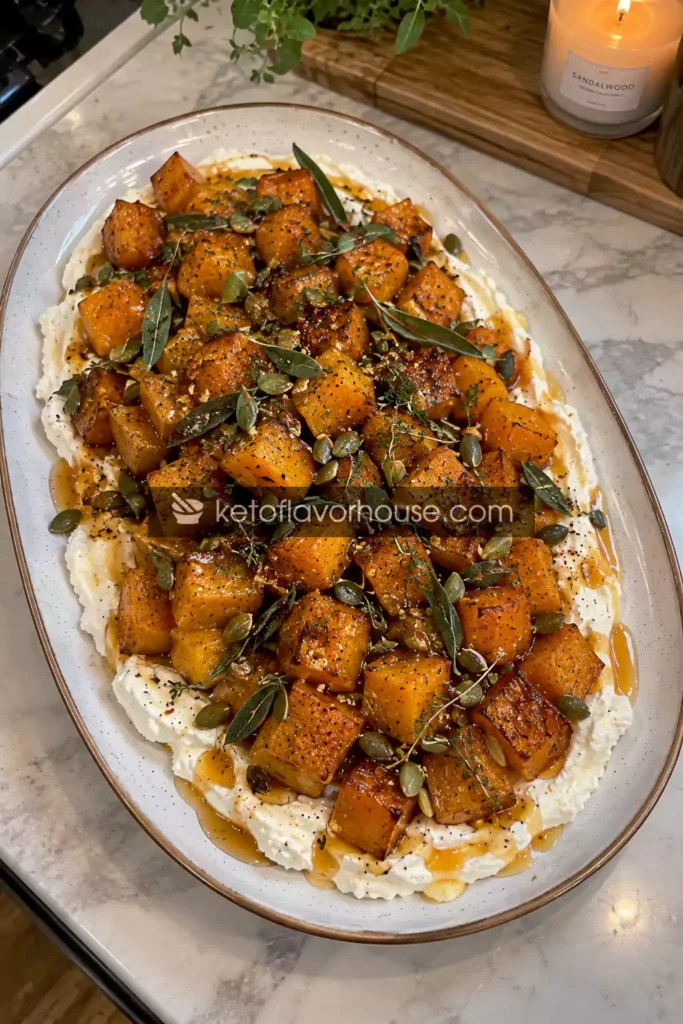
There are evenings when I want comfort food, but I don’t want the kind of meal that leaves me feeling overly full, sluggish, or like I need to lie down afterward. That’s exactly when I make this anti-inflammatory roasted butternut squash with whipped ricotta and hot honey. The squash becomes caramelized and tender in the oven, the whipped ricotta is cool and silky underneath, and a drizzle of spicy-sweet hot honey ties everything together. It feels cozy and indulgent, yet the ingredients are simple, colorful, and naturally suited to an anti-inflammatory eating pattern.
I originally started making roasted butternut squash when I was craving something warm and satisfying during cooler evenings. Plain roasted squash was delicious, but I wanted more contrast. I wanted something creamy, something tangy, something slightly spicy, and something that would make a humble vegetable feel worthy of putting in the center of the table. The whipped ricotta was the answer. Then came the hot honey, and honestly, that little drizzle changed everything.
The combination is surprisingly addictive. You get sweet caramelized squash first, followed by creamy ricotta, fresh lemon, earthy herbs, and then a tiny kick from the hot honey. Pumpkin seeds add a little crunch, so the finished dish never feels one-dimensional.
This recipe is especially appealing if you’ve been looking for healthy comfort food, easy vegetable-forward dinners, or cozy side dishes that fit naturally into a balanced lifestyle. It can be served alongside roasted chicken or salmon, spooned over greens for lunch, or enjoyed on its own when you want something warm and nourishing without making a complicated meal.
And although the phrase “anti-inflammatory” is used throughout wellness spaces, I prefer to keep the idea grounded: no single recipe magically fixes inflammation or replaces medical care. Instead, this dish brings together foods commonly associated with an overall anti-inflammatory eating pattern, including colorful vegetables, extra-virgin olive oil, herbs, seeds, and spices.
Why You’ll Love This Anti-Inflammatory Roasted Butternut Squash
- 🥬 Packed with colorful plant foods: Butternut squash brings beautiful orange color, fiber, and naturally occurring carotenoids to the plate.
- 🫒 Made with olive oil: Extra-virgin olive oil provides a flavorful source of unsaturated fat.
- 🧄 Naturally flavorful: Garlic, rosemary, cinnamon, and black pepper create layers of flavor without relying on a processed sauce.
- 🍯 Sweet and spicy finish: Hot honey adds just enough sweetness and heat to make the squash incredibly craveable.
- 🧡 Comforting without feeling heavy: The combination of roasted vegetables and airy whipped ricotta feels satisfying without being overly rich.
- 🥣 Creamy and crunchy: Soft squash, silky ricotta, and toasted pumpkin seeds create three distinct textures.
- 👩🍳 Easy enough for weeknights: Most of the work happens while the squash is roasting.
- 🍽️ Beautiful enough for entertaining: The colorful layers make this just as appropriate for a holiday table as a casual dinner.
- 💪 A little protein from ricotta and Greek yogurt: The whipped topping adds protein and makes the dish more substantial.
- 🧊 Meal-prep friendly: The squash and ricotta can be prepared ahead and assembled when you’re ready to eat.
- 🌿 Naturally customizable: Add herbs, greens, seeds, or a different protein depending on how you’re serving it.
- 🔥 No complicated sauce: The hot honey does the finishing work with almost no effort.
My Personal Experience With This Recipe
The first time I made this combination, I wasn’t planning to create anything particularly impressive.
I had a butternut squash sitting on the counter that needed to be used. It was one of those ingredients I had bought with good intentions and then watched patiently wait through several other dinners.
So I peeled it, cut it into cubes, tossed it with olive oil and spices, and put it in the oven.
As it roasted, the kitchen started to smell warm and earthy. The edges of the squash began to brown, and the pieces became soft enough to pierce easily with a fork.
I could have stopped there.
But I had some ricotta in the refrigerator.
I whipped it with a little Greek yogurt, lemon zest, lemon juice, and black pepper. Suddenly, the roasted squash had a creamy base.
Then I saw the jar of hot honey.
That was the moment.
I drizzled a little over the top, sprinkled on pumpkin seeds, and added some fresh herbs.
I remember taking the first bite and being genuinely surprised by how much was happening. The squash was naturally sweet, but roasting had intensified that sweetness. The ricotta was cool and creamy. Lemon kept the cheese from tasting too rich. The hot honey brought a gentle burn at the end.
It was exactly the kind of food I had been wanting.
Comforting, but fresh.
Sweet, but not dessert-like.
Creamy, but not overwhelmingly heavy.
And importantly, it didn’t require a complicated recipe.
Since then, I’ve made different versions depending on what’s in the kitchen. Sometimes I use sage instead of rosemary. Sometimes I add chili flakes directly to the squash. Other times, I’ll add a handful of arugula underneath everything and turn it into lunch.
That’s one of my favorite qualities in a recipe: flexibility.
A good recipe should give you a foundation, not make you feel like you’re doing something wrong because you don’t have one particular herb in the refrigerator.
What Makes This an Anti-Inflammatory Recipe?
When I describe this as an anti-inflammatory roasted butternut squash recipe, I’m referring to the overall ingredient pattern rather than suggesting that the dish has a medical effect.
The foundation is butternut squash, a naturally colorful winter squash that provides fiber and carotenoids. It’s roasted with extra-virgin olive oil, garlic, herbs, cinnamon, paprika, and black pepper.
The whipped ricotta contributes protein and creaminess, while Greek yogurt adds additional protein and tang.
Pumpkin seeds provide crunch along with unsaturated fats and minerals.
Finally, fresh lemon and herbs keep the dish bright.
This combination fits comfortably into a food-first approach to wellness that emphasizes vegetables, fruit, whole foods, herbs, spices, seeds, and unsaturated fats.
The important part is the overall eating pattern.
You don’t need one “perfect” anti-inflammatory meal. Instead, recipes like this can make it easier to build meals around a wider variety of colorful, minimally processed ingredients.
Ingredients & Substitutions
Butternut Squash — 2 pounds peeled and cubed
Butternut squash is the star of the recipe.
When roasted at a high temperature, its natural sugars concentrate and the edges become beautifully caramelized. The interior turns soft and creamy while the browned edges become slightly chewy and almost candy-like.
That’s the texture we’re looking for.
Nutritional role: Butternut squash provides fiber, carbohydrates for energy, and naturally occurring carotenoids.
Substitution: You can use acorn squash, delicata squash, or pumpkin.
Delicata squash is particularly easy because the skin is edible, which saves peeling time.
Acorn squash has a slightly nuttier flavor and may require a little longer roasting depending on how large you cut it.
Extra-Virgin Olive Oil — 2 tablespoons
Olive oil helps the squash brown and allows the spices to coat the surface.
It also contributes unsaturated fat and adds a subtle fruity flavor.
Substitution: Avocado oil works well because of its neutral flavor and high-heat versatility.
However, olive oil is my first choice for the flavor of this particular dish.
Garlic — 3 cloves, minced
Garlic adds savory depth and keeps the squash from tasting overly sweet.
As it roasts, garlic becomes fragrant and mellow.
Substitution: Use ½ teaspoon garlic powder if necessary, although fresh garlic provides better flavor.
Fresh Rosemary — 1 teaspoon finely chopped
Rosemary adds a woodsy, aromatic quality that works beautifully with roasted winter squash.
Substitution: Fresh thyme or sage can be used.
Sage gives the dish a slightly more autumnal, buttery flavor, while thyme is lighter and more delicate.
Smoked Paprika — 1 teaspoon
Smoked paprika gives the squash a subtle smoky warmth.
It doesn’t make the dish taste like barbecue. Instead, it adds depth to the natural sweetness.
Substitution: Sweet paprika can be used for a milder flavor.
Ground Cinnamon — ½ teaspoon
Cinnamon may sound like an unusual savory ingredient, but a small amount works beautifully with butternut squash.
It enhances the natural sweetness without making the dish taste like dessert.
Black Pepper — ½ teaspoon
Freshly ground black pepper provides gentle heat and balances the sweetness.
It’s especially useful in the whipped ricotta because the cheese itself is mild.
Sea Salt — ½ teaspoon, plus more to taste
Salt brings the flavors together.
Don’t skip it entirely. Squash can taste surprisingly flat without enough seasoning.
However, add gradually because ricotta, Parmesan if added, and hot honey can all contribute their own flavors.
Part-Skim Ricotta — 1½ cups
Ricotta creates the creamy foundation for the dish.
Whipping it transforms the texture from slightly grainy to light and silky.
Nutritional role: Ricotta provides protein and calcium while adding creaminess.
Substitution: Whole-milk ricotta will create a richer and creamier result but will increase calories and fat.
For a lighter version, use part-skim ricotta as written.
Plain Greek Yogurt — ½ cup
Greek yogurt is the secret to making the ricotta especially smooth and tangy.
It also increases the protein content of the creamy layer.
Substitution: Plain skyr can be used for an even tangier flavor and potentially higher protein content.
Fresh Lemon Juice — 1 tablespoon
Lemon juice prevents the ricotta from tasting too heavy.
Its acidity provides a lovely contrast against the sweet squash.
Lemon Zest — 1 teaspoon
The zest adds concentrated citrus aroma without adding much liquid.
This is a small ingredient that makes a noticeable difference.
Hot Honey — 2 tablespoons
Hot honey is the finishing ingredient that brings everything together.
Its sweetness complements the squash, while its chili heat prevents the dish from becoming too sweet.
Substitution: Regular honey plus a pinch of red pepper flakes works very well.
For a lower-sugar version, use less honey and add chili flakes separately.
Pumpkin Seeds — ¼ cup
Pumpkin seeds provide the crunch that the soft squash and ricotta need.
They also contribute plant-based protein, fiber, and unsaturated fats.
Substitution: Chopped walnuts, pecans, pistachios, or sunflower seeds can all work.
Fresh Parsley — 2 tablespoons chopped
Parsley adds freshness and color.
It isn’t essential to the structure of the dish, but I love the way it cuts through the richer elements.
How to Make Anti-Inflammatory Roasted Butternut Squash with Whipped Ricotta and Hot Honey
Step 1: Prepare the Squash
Preheat your oven to 425°F.
Line a large rimmed baking sheet with parchment paper if desired.
If you’re starting with a whole butternut squash, carefully peel it, remove the seeds, and cut it into roughly 1-inch cubes.
Try to keep the pieces relatively uniform.
This doesn’t need to be perfect. But if one piece is tiny and another is twice its size, they’ll finish cooking at different times.
And don’t worry if your cubes aren’t identical. I’ve made this recipe many times, and my squash pieces certainly don’t look machine-cut.
Step 2: Season Everything
Place the cubed squash in a large bowl.
Add olive oil, minced garlic, rosemary, smoked paprika, cinnamon, black pepper, and salt.
Toss thoroughly.
Every piece should have a light coating of oil and seasoning.
If the squash looks completely dry, add a tiny splash more oil, but don’t drench it.
Too much oil can prevent the edges from becoming beautifully caramelized.
Step 3: Spread the Squash Out
Transfer the seasoned squash to the baking sheet.
This step is more important than it seems.
Give each piece some breathing room.
If the cubes are packed tightly together, they will trap steam and soften rather than roast.
If necessary, use two baking sheets.
A little extra space can be the difference between pale, soft squash and deeply caramelized squash with golden edges.
Step 4: Roast Until Caramelized
Place the baking sheet in the oven.
Roast for approximately 25–35 minutes, turning the squash once around the halfway point.
You’re looking for soft centers and caramelized edges.
Start checking around 25 minutes.
The finished squash should be easy to pierce with a fork, but the outside should have some color.
Those browned edges are where so much of the flavor comes from.
Step 5: Prepare the Whipped Ricotta
While the squash is roasting, add the ricotta, Greek yogurt, lemon juice, lemon zest, and a small pinch of black pepper to a food processor or blender.
Blend until smooth and airy.
Taste.
If you want more brightness, add another squeeze of lemon.
If you prefer a slightly more savory flavor, add another pinch of salt.
The finished texture should be creamy enough to spread with the back of a spoon.
Step 6: Toast the Pumpkin Seeds
While the squash finishes roasting, place the pumpkin seeds in a dry skillet over medium-low heat.
Toast for approximately 3–5 minutes, stirring frequently.
You’ll know they’re ready when they become fragrant and lightly golden.
Don’t walk away.
Pumpkin seeds can go from toasted to burnt quickly.
Transfer them to a plate as soon as they’re done.
Step 7: Check the Squash
Remove the squash when the centers are tender and the edges are browned.
If your squash is tender but doesn’t have enough color, give it another 5 minutes.
If the edges are already deeply caramelized, take it out.
There is no prize for keeping it in the oven longer than necessary.
Step 8: Build the Platter
Spoon the whipped ricotta onto a large serving plate or shallow bowl.
Use the back of a spoon to spread it into a thick, swooping layer.
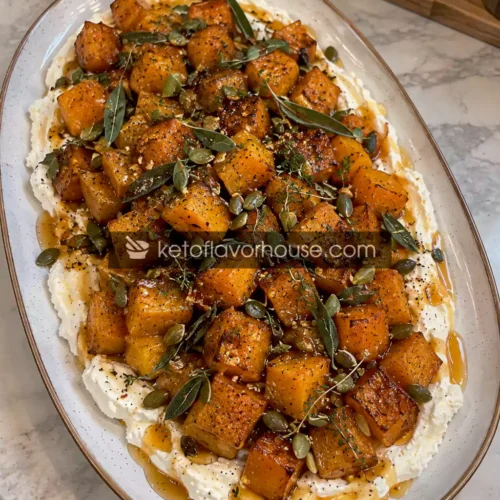
Then pile the warm roasted butternut squash over the ricotta.
Don’t worry about making it perfectly symmetrical.
I actually prefer when some of the ricotta remains visible around the edges.
Step 9: Add the Hot Honey
Drizzle the hot honey over the roasted squash.
Start with a little.
You can always add more at the table.
The goal isn’t to make the dish taste like candy. You want small bursts of sweetness and heat.
Step 10: Finish With Pumpkin Seeds and Herbs
Scatter the toasted pumpkin seeds over the top.
Finish with chopped parsley and, if you like, a little extra lemon zest.
Serve while the squash is still warm.
The contrast between warm squash and cool whipped ricotta is one of my favorite parts of the recipe.
Common Mistakes to Avoid
Cutting the Squash Too Large
Huge chunks take longer to cook and can remain firm inside while the outside browns.
Fix: Aim for approximately 1-inch cubes.
Crowding the Baking Sheet
This is probably the biggest texture mistake.
When the squash is crowded, steam gets trapped.
Fix: Spread the pieces into a single layer with space between them.
Use two pans if necessary.
Using Too Much Oil
It can be tempting to add more olive oil because you want beautiful browning.
However, too much oil can make the squash greasy.
Fix: Use the measured 2 tablespoons and toss thoroughly.
Underseasoning the Squash
Squash has natural sweetness, but without salt and savory seasoning, the dish can taste flat.
Fix: Season the squash before roasting and taste the finished dish before serving.
Over-Roasting the Squash
You want caramelized edges, not dried-out cubes.
Fix: Start checking around 25 minutes.
Making the Ricotta Too Thin
Adding too much lemon juice or yogurt can make the whipped ricotta loose.
Fix: Start with the specified amounts and adjust gradually.
Adding Hot Honey Too Early
If the honey goes into the oven with the squash, it can become overly dark or sticky.
Fix: Add it after roasting.
Forgetting the Crunch
The dish is delicious without pumpkin seeds, but the texture is much better with something crunchy.
Fix: Keep pumpkin seeds, walnuts, or another topping nearby.
Pro Tips for the Best Results
Don’t Skip the Preheating
A fully heated oven helps the squash begin roasting immediately.
A lukewarm oven encourages steaming.
Dry the Squash
If you’ve washed peeled squash or are using pre-cut squash, pat it dry before adding the oil.
Extra moisture can interfere with browning.
Use Fresh Garlic
Fresh garlic creates a much more aromatic result than garlic powder.
If you’re preparing this for a special dinner, fresh garlic is worth the few extra seconds of chopping.
Add Lemon at the End
A little lemon juice in the ricotta is excellent, but you can also add a few drops over the completed platter.
Acidity is one of the easiest ways to make rich flavors feel brighter.
Toast the Seeds
Raw pumpkin seeds work, but toasted seeds taste significantly better.
That warm, nutty aroma makes the dish feel more finished.
Balance the Hot Honey
Hot honey can vary dramatically in heat.
Taste yours before pouring it over the squash.
If it’s extremely spicy, use less.
If it’s mostly sweet, you can add a pinch of chili flakes to the finished platter.
Don’t Overwork the Ricotta
Blend just until smooth.
You don’t need to process it for several minutes.
Once it becomes creamy, stop.
Anti-Inflammatory Benefits of Butternut Squash
Butternut squash is one of my favorite vegetables for building colorful meals because it brings so much to the plate without requiring complicated preparation.
Its vibrant orange color comes from naturally occurring carotenoids, and it also provides fiber and carbohydrates that can fit comfortably into a balanced diet.
That makes it particularly useful in recipes where you want something satisfying but still vegetable-forward.
The roasting process also changes the eating experience.
Raw or steamed squash can be mild and somewhat watery, while roasted squash develops concentrated sweetness and browned edges.
That caramelization makes it easier to build a satisfying dish without relying on a heavy sauce.
The rest of the ingredients complement that foundation.
Olive oil provides unsaturated fat.
Garlic and herbs add aromatic compounds and flavor.
Pumpkin seeds contribute crunch and additional nutrients.
Lemon adds brightness.
And the ricotta and Greek yogurt provide protein and creaminess.
This is what I mean when I describe the dish as fitting an anti-inflammatory eating pattern.
It isn’t about one magical ingredient.
It’s about creating meals around a variety of minimally processed foods, colorful vegetables, herbs, spices, seeds, and nourishing fats.
Why Roasting Butternut Squash Works So Well
Roasting is one of the simplest ways to make butternut squash taste dramatically better.
The oven removes some of the vegetable’s moisture while the natural sugars concentrate.
At the same time, the exposed surfaces brown.
That’s why the edges become deeper in color and more flavorful than the centers.
The key is high heat and enough space.
If you roast the squash at too low a temperature or pile it into a crowded dish, you’ll get softer, steamed squash.
That’s not necessarily bad, but it isn’t what we’re looking for here.
We want the outside caramelized and the inside tender.
If you have convection mode, you can use it, but start checking the squash a little earlier because convection ovens can brown food faster.
Variations You Can Try
Dairy-Free Version
Replace the ricotta and Greek yogurt with a dairy-free whipped cashew cream or a thick unsweetened dairy-free yogurt.
The texture will change slightly, but you’ll still have the creamy component.
For a completely dairy-free version, check that your chosen yogurt and other ingredients are free from dairy.
Gluten-Free Version
The core recipe is naturally gluten-free when using gluten-free ingredients.
There is no need for breading or flour.
If serving with additional sauces or toppings, check their labels if gluten avoidance is important to you.
Higher-Protein Version
For a more substantial protein-rich meal, increase the Greek yogurt in the whipped ricotta slightly or serve the squash alongside grilled chicken, salmon, turkey, or another lean protein.
You can also add extra pumpkin seeds.
I prefer increasing protein through the meal rather than dramatically changing the texture of the whipped ricotta.
Lower-Carb Version
Butternut squash naturally contains carbohydrates, so it isn’t a very low-carb vegetable in the same way leafy greens are.
If you want a lower-carbohydrate version, replace part or all of the squash with roasted cauliflower.
You’ll get less natural sweetness, but the whipped ricotta and hot honey still create a delicious contrast.
Spicy Version
Add ¼–½ teaspoon red pepper flakes to the squash before roasting.
You can also use extra-hot honey.
For serious heat lovers, finish with thinly sliced fresh chili.
Sage and Brown Butter-Inspired Version
Use fresh sage instead of rosemary.
For a richer variation, add a small amount of browned butter to the squash.
Keep in mind that this increases the fat and calorie content.
Mediterranean Version
Replace the hot honey with a drizzle of balsamic glaze and add chopped parsley, toasted pistachios, and lemon zest.
This creates a completely different flavor profile while keeping the same creamy-roasted foundation.
Tips for This Recipe
If you’re preparing the squash from scratch, don’t feel pressured to make every cube perfectly identical.
What matters most is keeping them reasonably similar in size.
For the whipped ricotta, use ricotta that isn’t excessively watery.
If your ricotta has a lot of liquid sitting in the container, drain it briefly before blending.
This gives you a thicker, more spreadable topping.
I also recommend tasting every component separately.
Taste the roasted squash.
Taste the whipped ricotta.
Taste the hot honey.
Then taste them together.
That makes it much easier to understand where you need more salt, acidity, heat, or sweetness.
If the finished dish tastes too sweet, add lemon juice.
If it tastes flat, add salt.
If it tastes too rich, add lemon zest.
If it needs heat, add chili flakes.
Small adjustments can make a huge difference.
Optional Additions
Fresh Mint
Mint gives the dish a surprisingly refreshing finish.
Use just a little so it doesn’t overpower the squash.
Pomegranate Seeds
These add beautiful color, acidity, and juicy pops of texture.
They work particularly well for holiday entertaining.
Chia Seeds
A small sprinkle can add fiber and texture.
However, use them sparingly because too many can distract from the creamy texture.
Ground Flaxseed
A teaspoon sprinkled over the finished dish adds a subtle nutty quality.
Hemp Hearts
These provide a soft, nutty texture and additional plant-based protein.
Walnuts
Toasted walnuts are one of my favorite alternatives to pumpkin seeds.
They add a deeper, buttery crunch.
Pistachios
Pistachios make the dish particularly colorful and pair beautifully with hot honey.
Avocado
For a lunch bowl variation, add sliced avocado.
The creamy avocado works nicely with the ricotta and roasted squash.
Chili Flakes
An easy way to increase the heat without changing the recipe significantly.
Fermented Vegetable Topping
A small amount of fermented vegetables can add a tangy contrast.
Use sparingly because their stronger flavors can compete with the squash.
Serving Ideas
This recipe can play several different roles depending on how you serve it.
As a Cozy Side Dish
Serve it alongside roasted chicken, grilled salmon, turkey, or another favorite protein.
The creamy ricotta acts almost like a sauce, so you don’t need to prepare a separate gravy or dressing.
As a Light Lunch
Spoon the squash and whipped ricotta over a bed of arugula or mixed greens.
Add pumpkin seeds and a squeeze of lemon.
The greens bring a peppery contrast to the sweet squash.
As a Grain Bowl
Add a small serving of quinoa or farro beneath the squash.
Top with fresh herbs and pumpkin seeds.
This turns the recipe into a more substantial bowl.
With Roasted Chicken
The sweet and savory squash works beautifully with simply seasoned chicken.
If you’re building a high-protein, anti-inflammatory-inspired dinner, this is an especially easy combination.
With Salmon
The richness of salmon pairs surprisingly well with the sweet squash and tangy ricotta.
Add lemon and fresh herbs to the salmon to tie everything together.
Holiday Table
This recipe looks beautiful served family-style on a large platter.
The orange squash, white ricotta, green herbs, and golden honey make it naturally colorful.
You don’t need complicated decoration.
Cozy Weekend Dinner
Serve the squash with a simple protein, a green salad, and sparkling water with lemon.
It’s the kind of meal that feels slow and special even when the actual cooking isn’t difficult.
Meal Prep Tips
The roasted squash can be prepared up to 3 days ahead.
Store it separately in an airtight container.
The whipped ricotta can also be prepared ahead and refrigerated.
I recommend keeping the hot honey and pumpkin seeds separate until serving.
Why?
Texture.
The squash reheats beautifully, but the pumpkin seeds will lose their crunch if they sit in moisture.
The whipped ricotta is best served cold or slightly cool.
When you’re ready to assemble, reheat the squash gently, spread the ricotta onto a plate, add the warm squash, and finish with hot honey and toasted seeds.
It takes only a few minutes.
Storage Recommendations
Store leftover roasted squash in an airtight container in the refrigerator for up to 3–4 days.
Store the whipped ricotta separately for up to 3 days.
Keep pumpkin seeds in a sealed container at room temperature if you’ll use them within a few days.
Hot honey can remain sealed according to the storage instructions for the product you’re using.
Best Reheating Method
The oven or toaster oven gives the best texture.
Place the squash on a baking sheet and warm it at approximately 350°F for 8–12 minutes.
This helps the edges regain some of their roasted texture.
A skillet also works.
Heat the squash over medium-low heat and stir gently until warmed through.
Microwave Method
Microwaving is the fastest option.
Heat the squash in short intervals, stirring between them.
The squash will be softer than oven-reheated squash, but it will still taste delicious.
Don’t microwave the whipped ricotta.
Add it after the squash has been warmed.
Can You Freeze It?
The roasted butternut squash itself can be frozen.
Freeze it in a freezer-safe container for approximately 2–3 months for best quality.
However, I don’t recommend freezing the completed dish with the whipped ricotta.
Ricotta and Greek yogurt can change texture after freezing and thawing, becoming slightly grainy or watery.
Freeze the squash separately and make fresh whipped ricotta when you’re ready to serve.
Frequently Asked Questions
What makes this recipe anti-inflammatory?
This recipe is designed around ingredients commonly included in an anti-inflammatory-style eating pattern, including butternut squash, extra-virgin olive oil, garlic, herbs, spices, pumpkin seeds, and lemon.
The important distinction is that the recipe itself shouldn’t be viewed as a treatment for inflammation. Instead, it’s one colorful, whole-food-focused meal that can fit into a broader balanced eating pattern.
Can I make this recipe dairy-free?
Yes.
Replace the ricotta and Greek yogurt with a dairy-free whipped alternative such as blended unsweetened cashew cream or a thick dairy-free yogurt.
The flavor will be slightly different, but the creamy contrast remains.
Can I use frozen butternut squash?
Yes.
Frozen cubed squash is convenient, especially when you’re short on prep time.
You may need to roast it slightly longer because frozen squash contains more moisture.
Spread it out well and avoid overcrowding the pan.
Can I prepare this recipe ahead of time?
Yes.
Roast the squash and prepare the whipped ricotta separately.
Store both in the refrigerator and assemble shortly before serving.
For the best texture, add pumpkin seeds and hot honey immediately before eating.
Can I use regular honey instead of hot honey?
Absolutely.
If you don’t have hot honey, drizzle regular honey over the finished squash and add a pinch of red pepper flakes.
You can adjust the heat much more precisely this way.
What protein can I serve with this?
Grilled chicken, roasted chicken, salmon, turkey, or another lean protein all work well.
For a vegetarian option, serve it alongside lentils, chickpeas, quinoa, or another plant-based protein.
Can I make this recipe lower in carbohydrates?
Yes, although butternut squash naturally contains carbohydrates.
For a lower-carb variation, replace some of the squash with roasted cauliflower or zucchini.
You can also reduce the hot honey.
The result will be less sweet but still flavorful.
How do I keep roasted butternut squash from getting soggy?
Use a hot oven, dry the squash before seasoning, avoid excessive oil, and leave plenty of space between the pieces.
Crowding is one of the biggest causes of soft, steamed squash.
Can I use another winter squash?
Definitely.
Acorn squash, delicata squash, kabocha squash, or pumpkin can all work.
Cooking times may vary, so use tenderness and browning as your main guides.
Can I make this a complete meal?
Yes.
The recipe is excellent as a component of a balanced meal.
Add a protein such as chicken or salmon, a leafy green salad, and optionally a whole grain or another carbohydrate source depending on your needs.
Nutritional Breakdown Per Serving
The following values are estimated based on the recipe as written and divided into 6 servings. Exact nutrition will vary depending on the specific ricotta, Greek yogurt, hot honey, and other ingredients used.
| Nutrient | Per Serving |
|---|---|
| Calories | Approximately 275 kcal |
| Protein | Approximately 11 g |
| Fat | Approximately 12 g |
| Total Carbohydrates | Approximately 34 g |
| Fiber | Approximately 5 g |
| Net Carbohydrates | Approximately 29 g |
| Sugar | Approximately 13 g |
| Sodium | Approximately 350 mg |
These values do not include optional additions or a separate protein served alongside the recipe.
Because ricotta and Greek yogurt vary substantially between brands and varieties, use the nutrition labels from your specific ingredients if you need precise tracking.
Recipe Snapshot
Prep Time: 15 minutes
Cook Time: 30 minutes
Total Time: 45 minutes
Course: Side Dish, Lunch, Light Dinner
Cuisine: American-inspired
Servings: 6
Calories: Approximately 275 per serving
Protein: Approximately 11 g per serving
Anti-Inflammatory Roasted Butternut Squash with Whipped Ricotta and Hot Honey

Ingredients
- 2 pounds butternut squash peeled, seeded, and cut into 1-inch cubes
- 2 tablespoons extra-virgin olive oil
- 3 cloves garlic minced
- 1 teaspoon finely chopped fresh rosemary
- 1 teaspoon smoked paprika
- ½ teaspoon ground cinnamon
- ½ teaspoon freshly ground black pepper
- ½ teaspoon sea salt plus more to taste
- 1½ cups part-skim ricotta
- ½ cup plain Greek yogurt
- 1 tablespoon fresh lemon juice
- 1 teaspoon lemon zest
- 2 tablespoons hot honey
- ¼ cup pumpkin seeds
- 2 tablespoons chopped fresh parsley
Instructions
- Preheat the oven to 425°F and line a large rimmed baking sheet with parchment paper if desired. Peel and seed the butternut squash, then cut it into approximately 1-inch cubes, keeping the pieces as similar in size as possible so they cook evenly.
- Add the cubed squash to a large mixing bowl. Pour in the olive oil and add the minced garlic, chopped rosemary, smoked paprika, cinnamon, black pepper, and salt. Toss thoroughly until the squash is evenly coated with the oil and seasonings.
- Spread the seasoned squash across the prepared baking sheet in a single layer. Leave space between the pieces rather than piling them together. If the squash looks crowded, use two baking sheets because adequate space helps the squash roast and caramelize instead of steaming.
- Roast the squash for approximately 25–35 minutes, turning the pieces once halfway through cooking. Begin checking around 25 minutes. The squash should be tender enough to pierce easily with a fork and should have browned, caramelized edges.
- While the squash is roasting, add the ricotta, Greek yogurt, lemon juice, lemon zest, and a small pinch of black pepper to a food processor or blender. Blend until smooth, creamy, and light. Taste and add a little more lemon juice or salt if needed.
- Place the pumpkin seeds in a dry skillet over medium-low heat. Toast for approximately 3–5 minutes, stirring frequently, until they smell nutty and are lightly golden. Immediately transfer them to a plate so they do not continue cooking in the hot skillet.
- Check the squash and remove it from the oven when the centers are tender and the edges are nicely caramelized. If the squash is tender but needs more browning, roast it for another few minutes, watching carefully so it does not dry out.
- Spoon the whipped ricotta onto a large serving platter or shallow bowl. Use the back of a spoon to spread it into an even but slightly rustic layer, leaving some attractive swirls across the surface.
- Arrange the warm roasted butternut squash over the whipped ricotta. Distribute the pieces evenly so each serving gets a good combination of creamy ricotta and caramelized squash.
- Drizzle the hot honey over the warm squash, starting with a small amount and adding more if desired. The honey should provide small bursts of sweetness and heat rather than completely cover the flavor of the squash.
- Finish the dish with the toasted pumpkin seeds and chopped fresh parsley. Add a little extra lemon zest or a squeeze of lemon juice if you want additional brightness.
- Serve immediately while the squash is warm and the whipped ricotta is cool and creamy. For meal prep, store the squash, ricotta, pumpkin seeds, and hot honey separately and assemble just before serving for the best texture.