This post may contains Amazon affiliate and other affiliate links. If you make a purchase through these links, I may earn a small commission at no extra cost to you. Your support helps me continue to provide quality content. I only recommend products I personally trust and believe will add value to your experience. For more details, please visit my Privacy Policy.
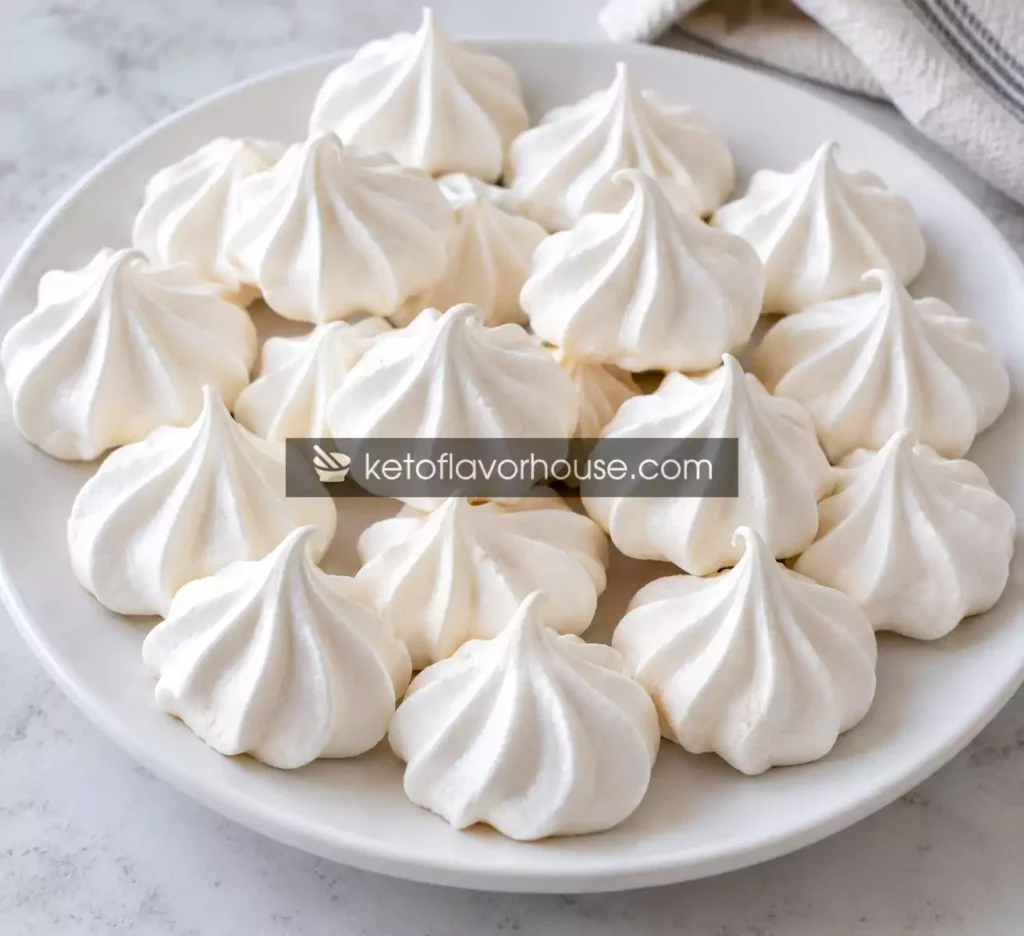
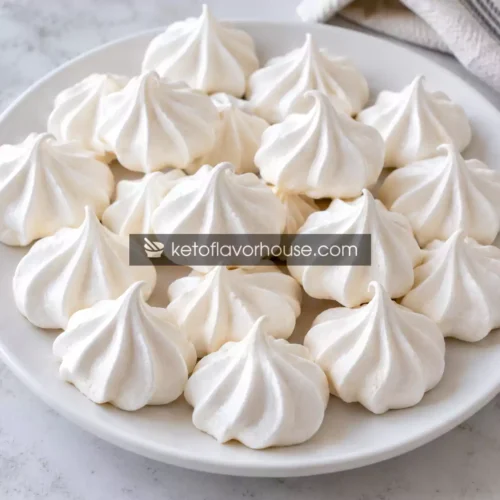
Meringue cookies are one of those little treats that look elegant and delicate but are made with surprisingly simple ingredients. Their crisp shells, airy texture, and melt-in-your-mouth sweetness make them lovely for afternoon tea, holiday dessert platters, or whenever you want something light after a meal. This Air Fryer Easy Meringue Cookies recipe offers a convenient way to make these delicate treats in smaller batches without heating up a full-size oven.
Traditional meringue cookies are made by whipping egg whites with sugar until the mixture becomes glossy and holds stiff peaks. The whipped mixture is then shaped into little cookies and baked at a low temperature until dry and crisp. The technique is simple, but meringues can be sensitive to moisture, grease, and temperature changes. That is why a few small details matter so much when preparing them in an air fryer.
The air fryer can be useful for small batches because it heats a compact cooking space quickly. However, meringues are not like ordinary air fryer cookies. They need gentle, consistent heat to dry rather than brown, and the powerful airflow in some air fryers can affect their delicate shapes. For the best results, use a model with a low-temperature setting, check the manufacturer’s instructions, and test a small batch before making a full tray.
This recipe uses egg whites, superfine sugar, a little cream of tartar, and vanilla extract. The cream of tartar helps stabilize the whipped egg whites, while superfine sugar dissolves more easily than large sugar crystals. The result is a sweet, crisp cookie with a light texture and a delicate vanilla flavor.
I also appreciate how customizable meringues are. You can keep them plain and white, add a little almond extract, or create pastel-colored cookies with a small amount of food coloring. They look beautiful on a dessert platter and make a thoughtful homemade gift when packed carefully.
One important note for KetoFlavorHouse readers: traditional meringue cookies contain sugar, so this version is not keto-friendly. Sugar substitutes behave differently from regular sugar, particularly in whipped egg-white recipes. If you want a low-carb version, it is best to use a sweetener specifically suited to meringue and test the recipe separately rather than assuming a direct substitution will work.
Why You’ll Love This Recipe
- ☁️ Light and airy: Properly whipped egg whites create a delicate texture that feels light and crisp.
- 🍪 Small-batch friendly: An air fryer can be convenient when you want to make a modest quantity without heating a large oven.
- 🥚 Simple ingredients: Egg whites, sugar, vanilla, and cream of tartar form the basic recipe.
- ✨ Beautiful presentation: Small piped meringues look elegant on dessert platters and cookie trays.
- 🍦 Easy to customize: Try vanilla, almond, lemon, or peppermint extract for different flavors.
- 🎨 Fun to decorate: A little food coloring can create pastel meringues for celebrations.
- 🧁 Naturally gluten-free: The basic ingredients contain no wheat flour.
- 🎁 Great for gifting: Once fully dried and cooled, the cookies can be packed in a dry, airtight container.
- 🧑🍳 A useful baking skill: Learning to whip egg whites properly helps with other desserts, too.
- ☕ Perfect with a warm drink: Their delicate sweetness pairs nicely with tea or coffee.
My Personal Experience
Meringues are a good reminder that simple recipes can still require attention to detail. There are only a few ingredients, but the way they are handled determines whether the finished cookies become crisp and airy or turn sticky, grainy, and flat.
The first thing I pay attention to is the mixing bowl. Even a small amount of grease can interfere with egg whites as they whip. I prefer a thoroughly clean glass or metal bowl and clean beaters, with no trace of butter or oil left behind.
I also separate the eggs carefully. Egg whites whip best when they are free from yolk, so I separate each egg into a small cup before adding the white to the main bowl. This way, if a yolk breaks, I do not contaminate the entire batch.
Sugar is another important detail. Adding it all at once can make the mixture harder to stabilize, so I add it gradually after the egg whites become foamy. I continue beating until the mixture is glossy and forms stiff peaks. If the sugar has not dissolved, the finished meringues may have a grainy texture.
Cooking meringues in an air fryer requires extra patience. A conventional oven often provides more space and predictable low-temperature airflow, while some air fryers cannot maintain the gentle heat meringues need. The heating element may brown the tops before the centers have dried, and a strong fan can disturb piped shapes.
For that reason, I recommend checking your air fryer’s lowest temperature setting before starting. If it cannot maintain a sufficiently low temperature, a conventional oven is the more reliable option for this recipe. When using a suitable air fryer, make a small test batch and watch the cookies closely.
The final lesson is to let the meringues cool completely before storing them. They may feel crisp when warm but become sticky if exposed to humid air. Once cooled and packed in an airtight container, they are much easier to keep crisp.
Required Equipment
Air Fryer
Use an air fryer that can maintain a low temperature suitable for drying meringues. A model that only operates at high temperatures may brown the cookies too quickly. Check the manufacturer’s temperature range and basket instructions before beginning.
Electric Hand Mixer or Stand Mixer
Whipping egg whites by hand takes considerable time. An electric mixer makes it much easier to build stable foam and reach stiff peaks.
Clean Glass or Metal Mixing Bowl
A clean bowl free from grease is essential. Glass and metal are good choices because they are easy to clean thoroughly.
Digital Kitchen Scale
A kitchen scale helps you measure sugar and egg whites consistently. This matters because egg sizes vary, and meringue ratios affect stability.
Measuring Spoons
Use measuring spoons for the cream of tartar and vanilla extract. Small ingredient quantities can make a noticeable difference in a delicate recipe.
Rubber Spatula
A spatula helps scrape the sides of the bowl and fold in optional coloring or flavorings without unnecessarily deflating the mixture.
Piping Bag and Tip
A piping bag creates uniform cookies that are easier to cook evenly. A large star tip produces classic ridged meringues, but a plain round tip works well too.
Parchment Paper or Suitable Liner
Use parchment only if your air fryer manufacturer permits it, and ensure it is securely held down by the food. Never preheat an air fryer with loose parchment inside, because the fan can lift it toward the heating element.
Instant-Read Thermometer, Optional
A thermometer can help you monitor the cooking environment, although the air fryer’s display and thermometer readings may differ. The texture and dryness of the finished cookies remain important indicators.
Ingredients & Substitutions
This recipe makes approximately 20–24 small meringue cookies, depending on how large you pipe them. The ingredient quantities are designed for a small batch.
Egg Whites — 2 large (about 60 g total)
Egg whites provide the structure of meringue. When whipped, their proteins form a network that traps air and creates the characteristic light texture.
Substitution: Carton egg whites may work if the product is suitable for whipping, but some packaged egg whites do not form stable peaks as reliably as fresh egg whites. Check the product label.
Superfine Sugar — 100 g (½ cup, approximately)
Sugar sweetens the meringues and helps stabilize the whipped foam. Superfine sugar dissolves more quickly than regular granulated sugar.
Substitution: Regular granulated sugar can be used if it dissolves fully, but the texture may be less smooth. Do not substitute powdered sugar without adjusting the method, because some products contain starch.
Cream of Tartar — ¼ teaspoon
Cream of tartar is an acid that helps stabilize egg-white foam, making it easier to achieve a glossy mixture that holds its shape.
Substitution: A small amount of lemon juice can be used instead, although the result may differ slightly. Add only a little to avoid introducing too much liquid.
Vanilla Extract — ½ teaspoon
Vanilla adds a familiar, gentle sweetness and complements the egg whites.
Substitution: Use a small amount of almond, lemon, or peppermint extract. These flavors can be stronger than vanilla, so start with less.
Fine Salt — A Tiny Pinch, Optional
A small pinch of salt can balance the sweetness, although it is not essential.
Substitution: Omit it if you prefer.
Gel Food Coloring — Optional
A tiny amount of gel coloring can create pastel pink, blue, yellow, or green meringues. Gel coloring is generally preferable to adding a large amount of liquid coloring.
Substitution: Leave the meringues white or use a very small amount of another concentrated food coloring.
Air-Fryer Notes
Meringues require a different approach from chicken wings, roasted vegetables, or ordinary cookies. Their goal is to dry gently, not brown quickly.
Check the minimum temperature first. A low-temperature setting around 200°F (95°C) is a starting point only if your air fryer can maintain gentle, even heat. Many conventional meringue recipes use lower oven temperatures, so an air fryer that cannot run gently may not be suitable.
Preheat briefly. If your manufacturer recommends preheating, preheat at the selected low setting for approximately 2–3 minutes. Avoid excessive preheating, which can create a hot environment that browns the cookies too quickly.
Keep the cookies small. Smaller meringues are more practical for air frying because they dry more evenly than large piped shapes.
Use a single layer. Leave space between the cookies and avoid stacking them. The fan needs room to circulate air, but very strong airflow can also disturb light meringues.
Secure the liner properly. Parchment must not be loose or exposed to the fan before the meringues weigh it down. Follow the appliance manufacturer’s instructions for safe liner use.
Avoid flipping the cookies. Meringues are fragile, so flipping is unnecessary and can break them. Instead, arrange them in a single layer and rotate the tray only if your appliance design allows it safely.
Do not use a high-heat finish. Unlike chicken wings, meringues do not benefit from a hotter final blast. High heat can cause browning, cracking, or a sticky interior.
Allow for drying and cooling. Depending on the appliance, small meringues may need approximately 60–90 minutes at low heat, followed by additional cooling time. Air fryer models vary significantly, so the time is an estimate rather than a guarantee.
How to Make Easy Air Fryer Meringue Cookies
Step 1: Prepare the Equipment
Wash the mixing bowl, beaters, spatula, and piping equipment thoroughly. Dry everything completely before use.
Even a small amount of grease or moisture can interfere with whipping egg whites. If your air fryer basket requires a liner, prepare it according to the manufacturer’s instructions.
Step 2: Separate the Egg Whites
Separate the eggs one at a time, placing each white in a small clean cup before adding it to the mixing bowl.
Make sure no yolk enters the whites. Egg yolk contains fat, which can prevent the egg whites from whipping properly.
Allow the egg whites to lose some of their refrigerator chill while you prepare the other ingredients. Avoid leaving raw eggs at room temperature for an extended period.
Step 3: Begin Whipping
Place the egg whites in the clean mixing bowl. Beat at medium speed until they become foamy and the large bubbles begin to look finer.
Add the cream of tartar and continue beating. The mixture should gradually become whiter and increase in volume.
Do not add the sugar immediately. Wait until the egg whites have developed a soft foam.
Step 4: Add the Sugar Gradually
With the mixer running, add the superfine sugar a little at a time. Allow each addition to begin incorporating before adding the next.
Continue beating until the mixture becomes thick and glossy. Rub a small amount between clean fingers; it should feel mostly smooth rather than gritty. Avoid tasting raw egg-white mixture.
Step 5: Beat to Stiff Peaks
Continue whipping until the mixture holds stiff peaks when you lift the beaters. The peak should stand upright rather than immediately folding over.
Stop once the correct texture is reached. Excessive beating can make the foam dry, clumpy, and harder to pipe smoothly.
Step 6: Add Vanilla
Add the vanilla extract and mix briefly until evenly incorporated.
If you are using food coloring, add a tiny amount and fold it in gently with a spatula. Avoid adding excessive liquid, which can affect the mixture’s stability.
Step 7: Pipe the Cookies
Transfer the meringue mixture to a piping bag fitted with a star or round tip.
Pipe small cookies approximately 1–1½ inches (2.5–4 cm) wide onto suitable parchment or an approved liner. Leave space between them so the air can circulate.
Try to make the cookies similar in size. Uniform cookies are easier to dry consistently.
Step 8: Preheat the Air Fryer
If your air fryer supports low-temperature cooking and its instructions permit meringues, set it to 200°F (95°C) and preheat for approximately 2–3 minutes, or follow the manufacturer’s guidance.
This temperature is a practical starting point for testing, not a universal guarantee. If your appliance’s minimum setting is significantly higher, use a conventional oven with a low-temperature setting instead.
Step 9: Air Fry the Meringues
Carefully arrange the cookies in a single layer, leaving space between each one.
Cook at 200°F (95°C) for approximately 60–90 minutes, checking periodically for browning and dryness. The time depends on cookie size, humidity, airflow, and appliance performance.
If the tops begin browning noticeably, the air fryer is too hot for the batch. Stop and adjust the temperature or use a more suitable appliance.
Do not flip the meringues. They are delicate, and turning them can damage their shape.
Step 10: Check for Doneness
The meringues should feel dry on the outside and release from the parchment without sticking excessively. A small cookie should be crisp rather than soft or tacky.
If the centers still feel sticky, continue drying at the lowest suitable setting in 10–15-minute increments. Avoid increasing the temperature to speed up the process.
Meringues do not have a meat-style internal temperature target. Their readiness is assessed by dryness, texture, and the absence of a sticky center.
Step 11: Cool Completely
Turn off the air fryer and remove the basket or tray carefully. Allow the cookies to cool completely in a dry place.
If your appliance retains heat for a long time, remove the cookies once they are sufficiently dry so they do not continue browning. Do not leave them in a humid environment.
Step 12: Store and Serve
Once fully cool, transfer the meringues to an airtight container. Serve them with tea, coffee, fresh berries, or a small dessert platter.
For the best texture, avoid refrigerating the finished cookies because moisture can make them sticky.
Common Mistakes to Avoid
- Greasy equipment: Fat prevents egg whites from whipping properly. Wash and dry the bowl and beaters thoroughly.
- Egg yolk in the whites: Even a small amount can interfere with foam formation. Separate eggs individually.
- Adding sugar too early: Whip the whites to a foamy stage before gradually incorporating the sugar.
- Using coarse sugar without dissolving it: Undissolved sugar can leave the cookies grainy. Use superfine sugar and beat until smooth.
- Overbeating: Very dry, clumpy foam can be difficult to pipe. Stop when stiff peaks form.
- Using an air fryer that runs too hot: Excessive heat can brown the cookies before they dry. Check the minimum setting first.
- Making the cookies too large: Large meringues take longer to dry and may remain sticky inside.
- Opening the basket too frequently: Repeated temperature changes can disrupt the drying process. Check periodically rather than constantly.
- Storing warm cookies: Trapped moisture can make the meringues sticky. Cool them completely before sealing.
- Using a low-carb sweetener without testing: Many sugar substitutes do not provide the same structure as regular sugar. A direct swap may produce poor results.
Pro Tips for Best Results
Use a scale when possible. Measuring egg whites by weight makes the recipe more consistent because egg sizes vary.
Use superfine sugar. Smaller sugar crystals dissolve more readily, helping create a smooth meringue.
Check your peaks. Stiff peaks should hold their shape without looking dry or clumpy. This is one of the most useful visual indicators during preparation.
Pipe small, consistent cookies. Uniform sizes help the batch dry more evenly and reduce the chance of sticky centers.
Keep humidity in mind. Meringues absorb moisture from the air, so they are easiest to make and store on a relatively dry day.
Do not rush the drying stage. A hotter temperature can brown the exterior without properly drying the inside. Low, gentle heat is more important than speed.
Test your air fryer with a small batch. The first batch helps you understand how much airflow and heat your appliance produces.
Avoid adding too much liquid flavoring. Concentrated extracts are preferable to large amounts of liquid because extra moisture can affect the foam.
Air-Fryer Benefits of Egg Whites
Egg whites provide the structure that makes meringue cookies light and airy. When whipped, proteins unfold and form a network that traps air bubbles. Sugar helps stabilize the foam and contributes to the smooth, crisp texture after drying.
Egg whites are also a source of protein and contain very little fat compared with whole eggs. However, the nutritional profile of traditional meringue cookies is dominated by the added sugar, so they should be treated as a sweet dessert rather than a high-protein snack.
An air fryer may be convenient for small batches because it heats a compact space and can reduce the need to operate a full-size oven. The trade-off is that some models circulate air too aggressively or cannot maintain a low enough temperature for delicate meringues.
For this recipe, the appliance’s low-temperature performance matters more than its maximum heat. If your air fryer cannot maintain gentle, even heat, a conventional oven is the more reliable choice.
Variations You Can Try
Vanilla Bean Meringues
Replace the vanilla extract with a small amount of vanilla bean paste. The tiny specks of vanilla add a pretty appearance and a deeper vanilla flavor.
Lemon Meringues
Add a small amount of lemon extract and a little finely grated lemon zest. Use the zest sparingly to avoid adding excess moisture.
Peppermint Meringues
Use a tiny amount of peppermint extract for a refreshing flavor. Peppermint is strong, so start with a few drops rather than a full teaspoon.
Almond Meringues
Replace the vanilla with a small amount of almond extract. These cookies pair well with berries and chocolate desserts.
Pastel Meringues
Fold a small amount of gel food coloring into the finished meringue. Pale pink, blue, yellow, and green are attractive choices for parties.
Chocolate-Dipped Meringues
Once the cookies are completely cool, dip the bottoms into melted chocolate and allow the coating to set. This adds richness but also increases the calories and carbohydrates.
Sugar-Free Meringues
You can experiment with a powdered sweetener formulated for meringue, but do not assume that any zero-calorie sweetener will work. Erythritol-based products may recrystallize, while other sweeteners may not stabilize the foam in the same way as sugar. Test a separate batch and calculate the nutrition from the exact product used.
Conventional Oven Version
For a more reliable method, preheat a conventional oven to 200°F (95°C). Pipe the cookies onto a parchment-lined baking sheet and bake for approximately 60–90 minutes, depending on size. Turn off the oven and allow the cookies to cool in the dry oven with the door slightly ajar if the appliance instructions permit. Check that they are crisp and dry before storing.
Tips for This Recipe
Prepare your equipment before separating the eggs. Having the sugar measured and the piping bag ready makes the process smoother once the whites have been whipped.
If you are making meringues for a celebration, pipe them in similar sizes so they dry at approximately the same rate. Very small and very large cookies on the same tray may finish at different times.
Avoid making the mixture too far ahead of cooking. Whipped egg whites are most stable when shaped and dried soon after whipping.
If the air fryer basket is small, cook in batches rather than crowding the cookies. Keep any remaining mixture in the bowl briefly while the first batch cooks, but be aware that it may lose some volume over time.
Once cooked, handle the meringues gently. Their crisp shells can break easily, especially when they are warm.
Finally, store them away from steam, humid kitchens, and uncovered liquids. Meringues are naturally hygroscopic, meaning they absorb moisture from their surroundings, which can quickly soften the crisp texture.
Optional Additions
These additions can help you customize the flavor and presentation of your meringue cookies.
| Addition | Suggested amount | Approximate carbohydrate impact |
|---|---|---|
| Vanilla extract | ½ tsp | Usually negligible per cookie |
| Lemon zest | ¼ tsp | Negligible |
| Almond extract | A few drops | Usually negligible |
| Gel food coloring | A tiny amount | Usually negligible |
| Unsweetened cocoa powder | 1 tsp | Adds a small amount |
| Melted dark chocolate | 10 g | Varies by brand |
| Crushed freeze-dried berries | 1 tsp | Adds a small amount |
| Powdered sugar-free sweetener | Product-dependent | Varies by formulation |
These are approximate ingredient-level comparisons, not complete nutrition calculations. Traditional meringues already contain sugar, so optional ingredients should be counted alongside the main recipe.
For a festive appearance, drizzle the cooled cookies with a little melted dark chocolate. For a fruit-inspired version, add a small amount of finely crushed freeze-dried raspberry after cooking.
Serving Ideas
Meringue cookies are light, delicate, and easy to serve in a variety of ways.
- Afternoon tea: Serve two or three cookies with a cup of tea.
- Coffee break: Pair the crisp sweetness with black coffee or espresso.
- Dessert platter: Arrange the meringues with fresh berries and small pieces of dark chocolate.
- Holiday treats: Make pastel or white meringues for festive dessert tables.
- Gift boxes: Pack fully cooled cookies in a rigid airtight container with protective layers.
- Ice cream topping: Break a cookie into small pieces and sprinkle it over a scoop of ice cream.
- Fruit dessert: Serve alongside strawberries, raspberries, or other fresh fruit.
- Celebration table: Pipe different sizes and shapes for a more decorative presentation.
Because traditional meringues are sweet, they work especially well as a small dessert alongside fruit or an unsweetened drink.
Storage & Reheating
Room-Temperature Storage
Once the meringues have cooled completely, store them in an airtight container in a cool, dry place.
They generally keep their best texture for approximately 1–2 weeks, provided they are fully dried and protected from humidity. If they become sticky, moisture has likely entered the container or the cookies were not completely dry before storage.
Avoid storing meringues near a kettle, dishwasher, or other source of steam.
Refrigerator
Refrigeration is generally not recommended for finished meringue cookies because the humid environment can make them sticky and soft.
If you have a filling that requires refrigeration, store the filled dessert according to the filling’s food-safety requirements and expect the meringue texture to change.
Freezer
Plain meringue cookies can be frozen in a rigid airtight container with parchment between layers. Protect them from crushing and moisture.
For best quality, use within approximately 1–2 months. Thaw them in their sealed container at room temperature so condensation forms on the outside of the container rather than directly on the cookies. Once thawed, keep them in a dry place and check that they remain crisp.
Reheating in the Air Fryer
Meringues do not need reheating in the same way as cooked meat or savory leftovers. If they have become slightly soft, you may be able to restore some crispness by drying them briefly at a low temperature.
- Set the air fryer to approximately 175–180°F (80–82°C), if your appliance supports that range.
- Place the cookies in a single layer.
- Dry for approximately 5–10 minutes, checking frequently.
- Turn off the air fryer and let the cookies cool completely in a dry place before storing again.
This is a recovery method rather than a guaranteed fix. If your air fryer cannot maintain a low temperature, avoid using it for this purpose because the cookies may brown or crack.
Frequently Asked Questions
1. Can you really make meringue cookies in an air fryer?
Yes, if your air fryer can maintain a sufficiently low, even temperature. Meringues need gentle heat to dry without browning. Some air fryers run too hot or have strong airflow, so a conventional oven may be more reliable for certain models.
2. What temperature should I use for air fryer meringue cookies?
A reasonable starting point is 200°F (95°C) for approximately 60–90 minutes for small cookies, provided your appliance supports low-temperature cooking. Check the cookies periodically and adjust the time based on their size and dryness. If the air fryer cannot maintain gentle heat, use a conventional oven.
3. How do I know when meringues are done?
The cookies should feel dry on the outside and release from the parchment without excessive sticking. Once cooled, they should be crisp rather than chewy or tacky. A sticky center usually means they need more drying time.
4. Why are my meringue cookies sticky?
Humidity, incomplete drying, undissolved sugar, or improper storage can all cause stickiness. Allow the cookies to dry fully, cool completely, and store them in an airtight container in a dry place.
5. Can I make these meringues sugar-free?
You can experiment with a sweetener designed for meringues, but not every sugar substitute provides the same stability or crisp texture as regular sugar. Test the exact product before making a large batch, and calculate nutrition based on the ingredients you use.
6. Why did my egg whites fail to form stiff peaks?
Common reasons include traces of egg yolk, grease on the bowl or beaters, or adding sugar before the foam has developed. Use clean equipment, separate the eggs carefully, and beat the whites to a foamy stage before adding the sugar gradually.
7. Can I make meringues ahead of time?
Yes. Plain meringue cookies can be made ahead and stored in an airtight container in a cool, dry place for approximately 1–2 weeks, provided they are completely dry. Avoid refrigeration for plain cookies because moisture can soften them.
Nutritional Breakdown (Per Serving)
The estimates below assume approximately 24 small cookies made with two large egg whites, 100 g of sugar, vanilla extract, and cream of tartar. The exact number of cookies and their size will change the nutrition per serving.
| Nutrient | Approximate amount per serving |
|---|---|
| Calories | 35–45 kcal |
| Protein | 0.3–0.5 g |
| Total fat | 0 g |
| Total carbohydrates | 8–10 g |
| Fiber | 0 g |
| Net carbohydrates | 8–10 g |
These estimates assume a serving of two small cookies. Traditional meringues are mostly sugar, so they are not keto-friendly as written. A sugar-free variation would need its own calculation based on the exact sweetener and recipe proportions.
Recipe Snapshot
Recipe Name: Easy Air Fryer Meringue Cookies
Prep Time: 15 minutes
Cook Time: 60–90 minutes
Cooling Time: 20–30 minutes
Total Time: Approximately 1 hour 35 minutes to 2 hours 15 minutes
Course: Dessert, Cookies
Cuisine: French-inspired
Servings: Approximately 12 servings (2 cookies per serving)
Calories: Approximately 35–45 per serving
Air Fryer Temperature: 200°F (95°C), if supported by the appliance
Internal Temperature: No specific internal temperature target; the cookies should be completely dry and crisp.
Dietary Notes: Gluten-free when all ingredients are gluten-free; not keto-friendly as written because of the sugar.
Easy Air Fryer Meringue Cookies Recipe

Ingredients
- 2 large egg whites about 60 g
- 100 g superfine sugar approximately ½ cup
- ¼ teaspoon cream of tartar
- ½ teaspoon vanilla extract
- A tiny pinch of salt optional
- Gel food coloring optional
Instructions
- Thoroughly clean and dry the mixing bowl, beaters, and spatula. Separate the eggs carefully, ensuring no yolk enters the whites.
- Place the egg whites in the bowl and beat at medium speed until foamy.
- Add the cream of tartar and continue beating until the foam becomes finer and whiter.
- Add the superfine sugar gradually while beating. Continue until the mixture is glossy, smooth, and forms stiff peaks.
- Mix in the vanilla extract briefly. If using gel food coloring, fold in a tiny amount gently.
- Transfer the meringue to a piping bag and pipe 20–24 small cookies onto suitable parchment or an approved liner.
- If your air fryer supports low-temperature cooking, preheat it to 200°F (95°C) for 2–3 minutes, following the appliance instructions.
- Arrange the cookies in a single layer with space between them. Air fry at 200°F (95°C) for approximately 60–90 minutes, checking periodically for dryness and browning.
- If the cookies are still sticky, continue drying in 10–15-minute increments at the lowest suitable temperature. Do not use a high-heat finish.
- Remove the cookies carefully and let them cool completely. Once crisp and cool, store them in an airtight container in a dry place.