This post may contains Amazon affiliate and other affiliate links. If you make a purchase through these links, I may earn a small commission at no extra cost to you. Your support helps me continue to provide quality content. I only recommend products I personally trust and believe will add value to your experience. For more details, please visit my Privacy Policy.
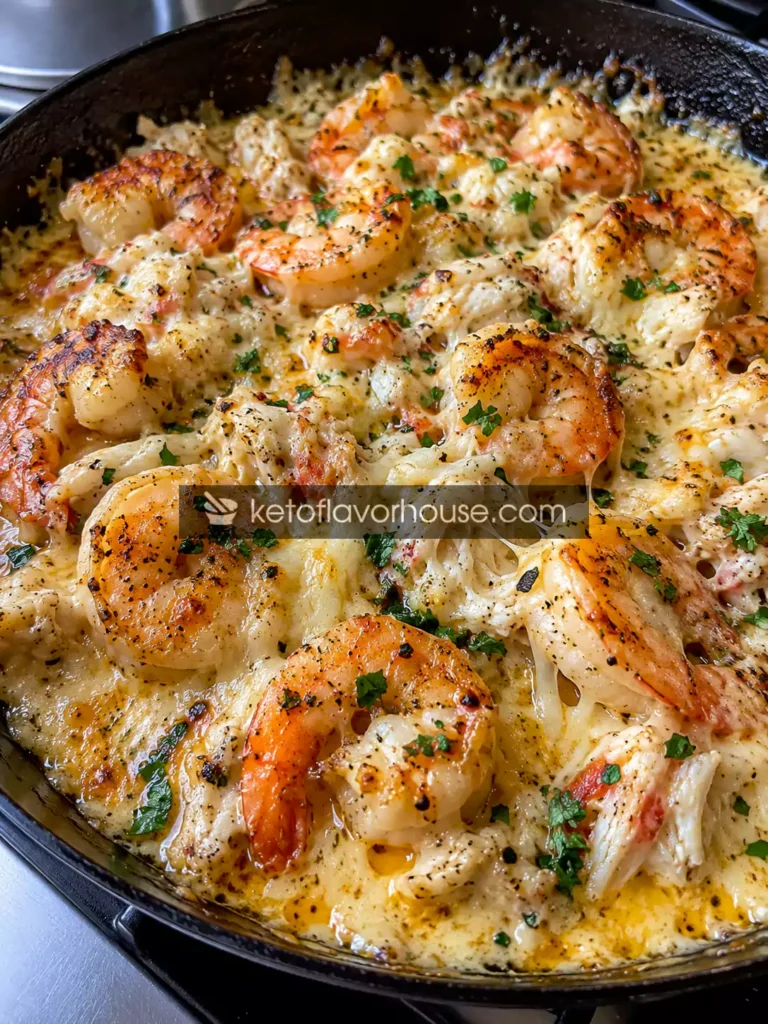
Keto Cheesy Garlic Butter Shrimp & Crab Skillet brings together two seafood favorites in one bubbling, cheese-covered dish. Succulent shrimp and delicate crab meat are coated in a creamy garlic butter sauce, finished with mozzarella and Parmesan, and balanced with a little lemon juice, paprika, and fresh parsley. It is the kind of dinner that feels indulgent while still fitting into a carefully planned low-carb eating pattern.
The idea behind this recipe is simple: create the richness of a cheesy seafood casserole without turning dinner into a complicated baking project. Everything comes together in a skillet on the stovetop. You get the buttery aroma of garlic, the natural sweetness of the seafood, and a creamy sauce that clings to each bite. The melted cheese adds body, while Parmesan brings a salty, savory finish.
For keto households, this recipe offers a practical way to enjoy a substantial seafood dinner without relying on breading, flour-thickened sauces, or sugary seasonings. Shrimp and crab provide protein, and the cream, butter, and cheese contribute the richness that makes the dish satisfying. Serve it on its own, spoon it over cauliflower rice, or pair it with sautéed zucchini for a complete low-carb meal.
The recipe is especially useful for seafood lovers who want something more special than plain grilled shrimp but do not want to spend an hour preparing dinner. It works for an ordinary weeknight, a relaxed weekend meal, or a small dinner gathering when you want a skillet that looks as inviting as it tastes.
Before you start cooking, here is a quick overview of what to expect from the recipe.
Garlicky, creamy and ready in about 35 minutes
Nutrition is estimated from the ingredient quantities below. Actual values vary with seafood type, cheese brands and portion size.
Why You’ll Love This Keto Cheesy Garlic Butter Shrimp & Crab Skillet
This recipe combines the convenience of a one-pan meal with the flavor of a creamy seafood entrée. Each ingredient has a specific job, so the finished dish tastes balanced rather than simply rich.
- Rich garlic butter flavor: Fresh garlic, butter, paprika, and black pepper give the seafood a savory foundation.
- Two seafood proteins: Shrimp and crab contribute different textures and complementary flavors.
- Creamy without a flour-based roux: Cream cheese, heavy cream, and melted cheese create body without traditional wheat flour.
- Low in carbohydrates: The recipe avoids breading, pasta, and conventional flour-based thickeners.
- Flexible serving options: Pair it with cauliflower rice, zucchini, asparagus, or a crisp green salad.
- Suitable for special occasions: The combination of crab, shrimp, and melted cheese feels more substantial than a basic skillet dinner.
One of the biggest advantages is the balance between the seafood and the sauce. Shrimp have a firm, springy texture, while crab meat is more delicate and flaky. The creamy sauce brings them together, but the seafood should remain the star of the dish.
The recipe is also relatively forgiving once you understand the cooking sequence. The shrimp cook quickly, the sauce needs only gentle heat, and the crab should be folded in carefully. You do not need to use a separate baking dish or make a complicated cheese sauce.
What Makes the Recipe Work?
Four elements, one balanced skillet
Shrimp provide a firm bite; crab adds sweet, delicate flakes and additional protein.
Butter carries the garlic aroma and coats the seafood with savory flavor.
Cream cheese and heavy cream provide a smooth base without a flour roux.
Mozzarella creates stretch, while Parmesan contributes a deeper, salty finish.
A Few Things to Know Before Cooking
This is a creamy, cheese-forward recipe, so ingredient quality and temperature control matter. Fresh or properly thawed seafood, freshly minced garlic, and cheese that melts smoothly will give you the best starting point.
The sauce should be thick enough to coat the shrimp and crab without becoming stiff. If it reduces too much, it can turn heavy and cling to the spoon instead of flowing around the seafood. If it is too thin, a short period of gentle simmering may help, provided the seafood is not left cooking for too long.
There is also an important distinction between low-carb and automatically healthy. This dish can fit a ketogenic eating plan because its main ingredients are naturally low in carbohydrates. However, the butter, cream, and cheese make it energy-dense and relatively high in saturated fat. Portion size and the rest of your day’s meals still matter.
The recipe below uses four main-course servings. If you are serving it as an appetizer, you can divide it into smaller portions and adjust the nutrition per portion accordingly.
Ingredients and Substitutions
The following quantities make four servings. Weighing the seafood and measuring the dairy ingredients will make your results more consistent.
Main ingredients
- 1 pound (454 g) raw shrimp, peeled and deveined: Use medium-large or large shrimp with the tails removed for easier eating. Pat them dry before cooking to reduce excess water in the skillet.
- 8 ounces (227 g) cooked crab meat, picked over for shell fragments: Lump crab meat gives the dish attractive flakes and a delicate sweetness. Pasteurized refrigerated crab meat is convenient, provided it is properly stored.
- 4 tablespoons unsalted butter: Butter creates the garlic base. Unsalted butter allows you to control the final seasoning more accurately.
- 4 garlic cloves, finely minced: Fresh garlic gives the sauce a more pronounced aroma than garlic powder alone.
- 4 ounces (113 g) full-fat cream cheese, softened and cut into cubes: This helps create a thick, creamy sauce. Let it soften briefly before cooking so it incorporates more easily.
- 1/2 cup (120 ml) heavy whipping cream: Heavy cream loosens the cream cheese and makes the sauce smoother.
- 1 cup (about 112 g) shredded low-moisture mozzarella: Mozzarella provides the familiar melted-cheese texture. Shred it yourself if possible for a smoother melt.
- 1/2 cup (about 50 g) finely grated Parmesan cheese: Parmesan brings a concentrated savory flavor. Its weight varies with how finely it is grated and packed.
- 1 tablespoon lemon juice: Lemon adds acidity to balance the butter and cream.
- 1/2 teaspoon paprika: This adds mild warmth and color.
- 1/2 teaspoon Italian seasoning: A modest amount adds herbal notes without overpowering the seafood.
- 1/4 teaspoon red pepper flakes, optional: Use this if you enjoy a little heat.
- 1/4 teaspoon black pepper: Adjust to taste.
- Salt, to taste: Start modestly because crab meat and Parmesan may already contribute considerable sodium.
- 2 tablespoons chopped fresh parsley: Stir some into the finished dish or scatter it over the top for freshness and color.
Ingredient substitutions
Crab meat: Canned or refrigerated pasteurized crab can work if it is suitable for eating and handled according to the package instructions. Drain it well when necessary. Imitation crab is a less suitable substitute for strict keto because it commonly contains starches and added carbohydrates.
Mozzarella: Monterey Jack can provide a creamy melt, while a mild cheddar creates a sharper, more pronounced cheese flavor. Different cheeses will change the fat, sodium, protein, and carbohydrate totals.
Heavy cream: A smaller quantity of cream diluted with a little unsweetened almond milk may reduce calories, but the sauce will be thinner and less rich. Check the almond milk label for added sugars and carbohydrates.
Cream cheese: A plain, full-fat cream cheese is the most reliable choice for thickness. Reduced-fat versions may behave differently and change the nutritional profile.
Butter: You can reduce the butter to 2 tablespoons if you want a less rich sauce. The finished dish will have less buttery flavor and less fat, and you may need to pay closer attention to the garlic so it does not stick or burn.
Seasonings: Cajun seasoning can replace the paprika and Italian seasoning for a bolder, spicier variation. Check the label for added sugar and account for its sodium content before adding extra salt.
Ingredient amounts at a glance
| Ingredient | Amount | Main purpose |
|---|---|---|
| Shrimp | 1 lb | Protein and firm texture |
| Crab meat | 8 oz | Delicate seafood flavor |
| Butter | 4 tbsp | Richness and garlic base |
| Cream cheese | 4 oz | Sauce thickness |
| Heavy cream | 1/2 cup | Smooth consistency |
| Mozzarella | 1 cup | Melting and stretch |
| Parmesan | 1/2 cup | Savory depth |
| Garlic | 4 cloves | Main aromatic flavor |
| Lemon juice | 1 tbsp | Acidity and balance |
The key is to avoid treating the dairy ingredients as interchangeable. Cream cheese contributes thickness, heavy cream contributes fluidity, mozzarella provides stretch, and Parmesan provides concentrated flavor. Replacing all four with a single cheese may produce a sauce that is greasy, stringy, or too thick.
How to Make Keto Cheesy Garlic Butter Shrimp & Crab Skillet
The most important technique is to cook the shrimp separately at first, prepare the sauce over gentle heat, and then return the seafood to the skillet near the end. This helps prevent rubbery shrimp and keeps the crab meat from breaking into tiny pieces.
Step 1: Prepare the seafood
Pat the shrimp dry with paper towels and check that they are peeled and deveined. If using frozen shrimp, thaw them safely in the refrigerator or in cold water in a leakproof bag, then drain and dry them thoroughly.
Check the crab meat carefully for small shell fragments. If it contains excess liquid, drain it gently without squeezing the delicate pieces apart.
Season the shrimp with the paprika, black pepper, and a small pinch of salt. You can reserve some of the seasonings for the sauce if you prefer to adjust the flavor gradually.
What to look for: The shrimp should be dry on the surface, and the crab should be well drained. Excess moisture can dilute the sauce and make it harder to achieve a creamy consistency.
Step 2: Sauté the shrimp
Place a large skillet over medium heat and add 1 tablespoon of the measured butter. Once melted, arrange the shrimp in a single layer. If your skillet is small, cook them in two batches rather than overcrowding the pan.
Cook for approximately 1–2 minutes per side, depending on their size. The shrimp should begin turning pink and opaque, with a gentle curve. Transfer them to a clean plate before they are overcooked.
The exact time varies with shrimp size and starting temperature. For food safety, cook shrimp until the flesh is pearly or white and opaque, reaching 145°F (63°C) internally when checked with a food thermometer.
Important: The shrimp will return to the sauce later. Do not leave them in the skillet while making the cream sauce, as prolonged cooking can make them tough.
Step 3: Make the garlic butter base
Reduce the heat to medium-low and add the remaining 3 tablespoons of butter. Once melted, add the minced garlic and stir for approximately 30–60 seconds, just until fragrant.
Garlic can burn quickly, especially in a hot skillet. If it begins turning dark brown or smells bitter, the heat is too high. Move the pan off the burner briefly if necessary.
Add the Italian seasoning and red pepper flakes, if using. Stir to distribute the seasonings through the butter.
At this stage, the kitchen should smell strongly of fresh garlic and butter. That aroma forms the foundation of the finished dish.
Step 4: Build the creamy sauce
Add the softened cream cheese in small cubes, stirring gently as it begins to soften. Pour in the heavy cream gradually while stirring to help the mixture become smooth.
Keep the heat low. Cream cheese may look slightly lumpy at first, but steady stirring should help it incorporate. Avoid allowing the sauce to boil vigorously.
Add the mozzarella and Parmesan in small handfuls, stirring between additions. Once the cheeses melt, the sauce should look glossy and thick enough to coat the back of a spoon.
If it becomes too thick before the seafood is added, stir in a tablespoon of warm water at a time until it reaches the consistency you want. Add the lemon juice and taste before adding more salt.
Step 5: Fold in the crab meat
Add the cooked crab meat to the sauce. Use a silicone spatula or large spoon to fold it in gently, preserving the larger pieces where possible.
Warm the crab in the sauce for approximately 1–2 minutes, or according to its package instructions. Since the recipe uses cooked crab meat, the goal is to heat it through rather than cook it aggressively.
If you are using raw crab meat instead, it must be cooked thoroughly before serving. Cooking times depend on the form and size of the crab, so do not rely on the timing for pre-cooked meat.
Step 6: Return the shrimp and finish
Return the shrimp to the skillet, gently turning them in the sauce so they are coated on both sides. Warm everything together for another 1–2 minutes, or just long enough for the shrimp to finish cooking and the seafood to become hot.
Check the shrimp for an internal temperature of 145°F (63°C). If they have already reached that temperature during the initial sauté, use gentle heat to warm the completed dish without overcooking them.
Turn off the heat and stir in half the chopped parsley. Sprinkle the remaining parsley over the skillet, along with a small amount of extra Parmesan if desired.
Serve immediately while the cheese sauce is creamy and the seafood is tender.
The cooking process at a glance
Your skillet, step by step
Keep the seafood tender by adding it at the right time.
Prepare the shrimp and pick through the crab meat.
Sauté briefly, then transfer to a clean plate.
Cook garlic gently, then incorporate cream and cheese.
Warm cooked crab gently without breaking it apart.
Heat through, check doneness, and finish with parsley.
Common Mistakes to Avoid
Even a simple skillet can go wrong if the heat is too high or the seafood releases too much moisture. These are the problems worth watching for.
Overcooking the shrimp
Shrimp cook quickly, and their texture can change from tender to rubbery in a short time. Remove them from the pan after the initial sauté and return them only near the end. Use a food thermometer to verify safe doneness rather than relying solely on color.
Letting the garlic burn
Garlic develops a bitter taste when it becomes too dark. Lower the heat before adding it to the butter, stir continuously, and move to the next step as soon as it becomes fragrant.
Adding cheese over high heat
A rapidly boiling cheese sauce may become oily, grainy, or separated. Keep the sauce at a gentle heat and add the cheese gradually. If the mixture starts bubbling aggressively, reduce the heat immediately.
Making the sauce too thick
Cream cheese, mozzarella, and Parmesan all contribute thickness. If the sauce becomes too stiff, add warm water a tablespoon at a time and stir gently. Adding more cheese is usually not the right solution.
Using wet seafood
Water from thawed shrimp or poorly drained crab can thin the sauce. Dry the shrimp well and drain the crab before cooking. Avoid adding all the seafood liquid to the pan unless the recipe specifically calls for it.
Overmixing the crab
Crab meat is delicate. Vigorous stirring can break the larger pieces apart and make the finished skillet look more like a seafood dip than a main course. Fold it in with a light hand.
Quick troubleshooting guide
If something goes wrong
Pro Tips for the Best Results
A few small choices can make a noticeable difference in the finished skillet.
Choose shrimp that are similar in size. Uniform shrimp cook more evenly, so you are less likely to end up with a mixture of overcooked small pieces and undercooked large ones.
Use freshly shredded mozzarella. Pre-shredded cheese often contains anti-caking agents that can affect how smoothly it melts. Freshly shredded cheese is a useful option when you want a more cohesive sauce, although results vary by product.
Soften the cream cheese first. Cold cream cheese takes longer to incorporate and can leave small lumps in the sauce. Cutting it into cubes helps it melt more evenly.
Keep the heat gentle after adding the dairy. The sauce should be hot enough to melt the cheese but should not boil rapidly. Gentle heat helps preserve a smooth texture.
Taste before adding salt. Crab meat, Parmesan, and some packaged seafood products contain substantial sodium. It is easier to add a little more salt than to correct an overly salty sauce.
Finish with lemon and parsley. A little acidity cuts through the richness, while parsley adds a fresh herbal note. Neither needs to dominate the dish.
Serve it promptly. The sauce is at its creamiest when freshly made. As it cools, the cheese and dairy thicken, so keep your side dishes ready before you finish cooking.
Keto Benefits of Shrimp, Crab, and Other Ingredients
The primary keto advantage of this recipe is that shrimp and crab contain very little carbohydrate naturally. Unlike breaded seafood, pasta-based seafood casseroles, or dishes thickened with wheat flour, this version uses cream cheese and melted cheese to build its sauce.
Shrimp and crab: protein with minimal carbohydrates
Shrimp provides protein and nutrients such as selenium and vitamin B12. Crab meat also contributes protein and nutrients, including vitamin B12 and minerals. Exact values depend on the species and whether the seafood is raw, cooked, fresh, canned, or pasteurized.
Neither shrimp nor crab automatically makes a complete recipe keto-friendly. Added starches, sweetened sauces, imitation crab products, and carbohydrate-rich sides can substantially change the final numbers.
Butter, cream, and cheese: richness and energy
Butter, heavy cream, cream cheese, mozzarella, and Parmesan contribute most of the recipe’s fat. These ingredients also help create the rich texture that makes a low-carb seafood dish feel substantial.
However, fat is calorie-dense, and the dairy ingredients can contribute significant saturated fat. A ketogenic eating pattern does not require unlimited butter or cheese. If you are watching total calories or saturated fat, consider reducing the butter and cheese, using a smaller portion of the sauce, and pairing the seafood with vegetables.
Understanding total carbs and net carbs
Total carbohydrates include all carbohydrates counted on the nutrition label, including fiber. For this recipe, estimated net carbohydrates are calculated as:
\[ \text{Net carbs}=\text{Total carbs}-\text{Fiber} \]
The recipe contains little fiber because it is primarily seafood and dairy. That means total and net carbohydrates are relatively close. The exact result depends on the ingredient brands and quantities used.
Keto macro overview
A protein-rich seafood skillet
Per serving · Recipe divided into 4 portions
These are preliminary estimates based on generic ingredient values, not laboratory-tested results. Calculate the finished recipe using the actual package labels before publishing definitive macro claims.
Variations You Can Try
The basic combination of shrimp, crab, garlic butter, and cheese is flexible. The most successful variations preserve the seafood’s delicate flavor rather than burying it under too many competing ingredients.
1. Spicy Cajun Seafood Skillet
Replace the Italian seasoning with approximately 1 teaspoon of Cajun seasoning, adjusting to taste. Keep the paprika if you enjoy its mild sweetness, and add a little cayenne for extra heat.
Cajun blends vary considerably in salt content, so taste the sauce before adding more salt. This variation has a bolder, more peppery flavor. Its carbohydrate content depends on the seasoning blend.
2. Lemon Parmesan Shrimp and Crab
Increase the lemon juice slightly and finish with a little extra Parmesan. The added acidity helps balance the cream and butter, making this version taste brighter.
Avoid adding too much lemon at once. Excess acidity can change the texture of a dairy sauce, particularly if it is very hot.
3. Spinach and Seafood Skillet
Stir in a handful of fresh spinach after the cream cheese has melted. Let the spinach wilt before adding the seafood.
Spinach adds color, texture, and some fiber. It also releases moisture, so cook it briefly before adding the cream and cheese, or allow the extra liquid to evaporate.
4. Extra-Garlic Version
Add one or two additional garlic cloves, provided you enjoy a stronger garlic flavor. Cook them gently in butter and avoid browning them deeply.
More garlic adds flavor, but it also adds a small amount of carbohydrate. The nutritional difference depends on the actual quantity used.
5. Cheddar Seafood Skillet
Replace some or all of the mozzarella with shredded cheddar. The result will have a sharper flavor and may produce a thicker, less stretchy sauce.
Cheddar’s nutrition differs from mozzarella, so update the protein, fat, sodium, and carbohydrate calculations when making this substitution.
6. Lighter Creamy Seafood Skillet
Reduce the butter to 2 tablespoons and use a smaller amount of cheese. You can add a little unsweetened almond milk to adjust the consistency, although the sauce will be less rich.
This variation may reduce calories and saturated fat, but the amount depends on the products used and how much cheese you remove. It remains important to calculate the revised nutrition rather than assuming a particular reduction.
Optional Additions
These ingredients can complement the original recipe without requiring a complete change to the cooking method.
- Chopped chives: Add a mild onion-like flavor and a fresh finish with very little effect on the overall carbohydrate content in a small garnish portion.
- Extra Parmesan: Intensifies the savory flavor and increases the dish’s protein, fat, calories, and sodium.
- Red pepper flakes: Add heat without needing a sugary sauce.
- Sautéed mushrooms: Provide a savory, earthy note and extra texture, along with additional carbohydrates and moisture.
- Baby spinach: Adds color and fiber while slightly changing the sauce’s consistency.
- A small amount of lemon zest: Provides a bright citrus aroma without adding much liquid.
Avoid adding all these ingredients at once. Two or three complementary additions are usually enough to maintain the balance between the sweet seafood, creamy sauce, and garlic butter.
Serving Ideas for a Keto Dinner
The skillet is rich, so it works best with sides that add freshness, mild flavor, or a contrasting texture.
Cauliflower rice
Its mild flavor lets the garlic butter sauce shine. Spoon a moderate portion of seafood and sauce over the rice for a satisfying low-carb meal.
Roasted asparagus
Slightly crisp asparagus contrasts with the creamy seafood and adds color without introducing a heavy side dish.
Sautéed zucchini
Lightly browned zucchini provides a tender vegetable side. Cook it separately so its released moisture does not thin the seafood sauce.
Fresh green salad
Lettuce, cucumber, and a simple lemon dressing bring freshness and acidity to balance the buttery richness.
Keto bread
A suitable low-carb bread can help scoop up the sauce. Check the product label because carbohydrate content varies considerably.
For a lighter dinner, pair the skillet with one vegetable side. If you are serving guests, add a salad and cauliflower rice so people can choose their preferred combination.
Storage and Reheating
Seafood requires careful handling, particularly when combined with dairy. Refrigerate leftovers promptly rather than leaving the skillet at room temperature while everyone finishes eating.
Refrigerating leftovers
Transfer the leftovers into a clean, shallow, airtight container and refrigerate within two hours of cooking, or within one hour if the surrounding temperature exceeds 90°F (32°C). Store at 40°F (4°C) or below and consume within 3–4 days.
For the best texture, keep the seafood and sauce together, but avoid repeatedly reheating the entire batch. Portioning leftovers before refrigeration makes it easier to warm only what you intend to eat.
Reheating on the stovetop
Place the desired portion in a skillet over low heat. Add a small splash of water if the sauce has thickened considerably. Stir gently and heat until the food reaches 165°F (74°C).
Avoid boiling the sauce. High heat can cause the dairy to separate, and prolonged heating can make the shrimp tough.
Can you freeze it?
Freezing is possible, but it is not the best option for maintaining the original texture. Cream-based cheese sauces may separate after thawing, and shrimp can become firmer or softer depending on how they were previously cooked and frozen.
If you choose to freeze leftovers, use a freezer-safe airtight container and freeze promptly. Thaw in the refrigerator and reheat gently to 165°F (74°C). Discard food that has been left at unsafe temperatures rather than trying to make it safe by reheating.
Storage timeline
From skillet to leftovers
Serve while the cheese sauce is smooth and the seafood is tender.
Use a shallow container and refrigerate within 2 hours.
Keep at 40°F (4°C) or below and follow safe handling practices.
Warm to 165°F (74°C), stirring gently to protect the sauce.
Frequently Asked Questions
Is Keto Cheesy Garlic Butter Shrimp & Crab Skillet keto-friendly?
It can fit a ketogenic eating plan because shrimp and crab are naturally low in carbohydrates, and the sauce uses dairy rather than a flour-based thickener. The estimated recipe contains approximately 4.7 grams of net carbohydrates per serving, based on four servings and the ingredient quantities listed. Check the labels on your actual ingredients, especially if using imitation crab or packaged seasonings.
Is this a high-protein seafood recipe?
Yes. Shrimp and crab are both protein-rich seafood choices. Based on the quantities used, one serving is estimated to provide around 47 grams of protein. This is a calculated estimate, not a laboratory-tested result, and the exact amount will depend on the seafood species, product labels, and final serving size.
Can I use frozen shrimp?
Yes. Thaw the shrimp safely before cooking, drain them, and pat them dry. Frozen shrimp are convenient, but excess thawing liquid can dilute the sauce. Do not put a large quantity of icy shrimp directly into the skillet because the temperature drop and released moisture can interfere with cooking.
Can I make this recipe without cream cheese?
You can experiment with additional heavy cream and a little extra shredded cheese, but the sauce will have a different consistency. Cream cheese contributes body and helps create a thicker coating. Without it, the sauce may be thinner and may require more careful reduction over gentle heat.
Can I use imitation crab meat?
You can, but imitation crab is often made with fish paste and may contain starch, sugar, and other added ingredients. Its carbohydrate content varies by brand. It also has a different texture and flavor from real crab meat. If you are tracking keto macros closely, use the product’s nutrition label and recalculate the recipe.
Can I prepare the skillet ahead of time?
For the best texture, prepare the ingredients in advance but cook the seafood shortly before serving. You can mince the garlic, measure the seasonings, shred the cheese, and clean the shrimp ahead of time, keeping perishable ingredients refrigerated. Fully cooking the dish in advance is possible, but reheated shrimp may be less tender and the cheese sauce may not remain as smooth.
What should I serve with this seafood skillet?
Cauliflower rice, sautéed zucchini, roasted asparagus, and a fresh green salad are practical low-carb options. They provide different textures without competing with the garlic butter sauce. If you use packaged keto bread or a prepared side dish, check its carbohydrate content and include it in your meal’s nutritional calculation.
Nutritional Breakdown Per Serving
The estimates below are based on the listed ingredients divided into four portions. Actual values may differ according to the seafood, cheese brands, quantities used, and how much sauce remains in the skillet.
| Nutrient | Estimated amount |
|---|---|
| Calories | 585 kcal |
| Protein | 47 g |
| Fat | 42 g |
| Total carbohydrates | 5.2 g |
| Fiber | 0.5 g |
| Net carbohydrates | 4.7 g |
Net carbohydrates are calculated by subtracting fiber from total carbohydrates. These figures are provisional estimates based on generic ingredient values; use actual package labels and a nutrition calculator to verify the final numbers before publishing or using them for dietary tracking.
The recipe is protein-rich, but it is also energy-dense because of the butter, cream, and cheese. A lower-calorie variation can use less butter and cheese, although the nutritional values and sauce texture will change.
Recipe Snapshot
- Prep Time: 15 minutes
- Cook Time: 20 minutes
- Total Time: 35 minutes
- Course: Main course
- Cuisine: American-inspired seafood
- Servings: 4
- Calories per serving: Approximately 585 kcal
- Total carbohydrates per serving: Approximately 5.2 g
- Net carbohydrates per serving: Approximately 4.7 g
A Final Note
Keto Cheesy Garlic Butter Shrimp & Crab Skillet is a practical example of how low-carb cooking can still feel indulgent. The combination of tender seafood, garlic butter, and a creamy cheese sauce delivers plenty of flavor without relying on flour, breadcrumbs, or pasta.
For an everyday dinner, keep the sides simple and let the seafood take center stage. For a special meal, add roasted vegetables and a fresh salad. You can also adjust the seasoning to suit your household, making the skillet milder or spicier without changing its basic preparation.
As with any rich recipe, enjoy a portion that suits your appetite and nutritional goals. The best keto meals are not simply low in carbohydrates; they should also be enjoyable, practical, and easy to incorporate into your regular routine.
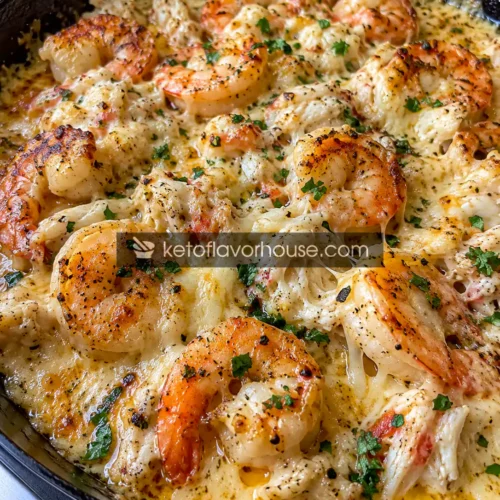
Keto Cheesy Garlic Butter Shrimp & Crab Skillet Recipe

Ingredients
- 1 pound raw shrimp peeled and deveined
- 8 ounces cooked crab meat checked for shell fragments
- 4 tablespoons unsalted butter divided
- 4 garlic cloves minced
- 4 ounces full-fat cream cheese softened and cubed
- 1/2 cup heavy whipping cream
- 1 cup shredded low-moisture mozzarella
- 1/2 cup finely grated Parmesan cheese
- 1 tablespoon lemon juice
- 1/2 teaspoon paprika
- 1/2 teaspoon Italian seasoning
- 1/4 teaspoon red pepper flakes optional
- 1/4 teaspoon black pepper
- Salt to taste
- 2 tablespoons chopped fresh parsley
Instructions
- Pat the shrimp dry and season with paprika, black pepper, and a small pinch of salt. Drain the cooked crab meat and check for shell fragments.
- Heat 1 tablespoon of butter in a large skillet over medium heat. Add the shrimp in a single layer and sauté for approximately 1–2 minutes per side, depending on size. Transfer to a clean plate and ensure the shrimp reach 145°F (63°C) before serving.
- Reduce the heat to medium-low. Add the remaining 3 tablespoons of butter and minced garlic. Cook for 30–60 seconds, stirring continuously until fragrant.
- Add the Italian seasoning and optional red pepper flakes. Stir briefly to distribute the seasonings.
- Add the softened cream cheese and heavy cream. Stir over low heat until the cream cheese incorporates and the sauce begins to smooth out.
- Gradually stir in the mozzarella and Parmesan. Continue stirring until the cheeses melt and the sauce becomes creamy. Avoid boiling the mixture.
- Stir in the lemon juice and taste before adding more salt.
- Gently fold in the cooked crab meat and warm for approximately 1–2 minutes without breaking up the larger pieces.
- Return the shrimp to the skillet and gently coat with the sauce. Warm for another 1–2 minutes as needed, ensuring the seafood is thoroughly cooked and hot.
- Turn off the heat, stir in half the parsley, and garnish with the remainder. Serve immediately with cauliflower rice, sautéed zucchini, or another low-carb side.