This post may contains Amazon affiliate and other affiliate links. If you make a purchase through these links, I may earn a small commission at no extra cost to you. Your support helps me continue to provide quality content. I only recommend products I personally trust and believe will add value to your experience. For more details, please visit my Privacy Policy.
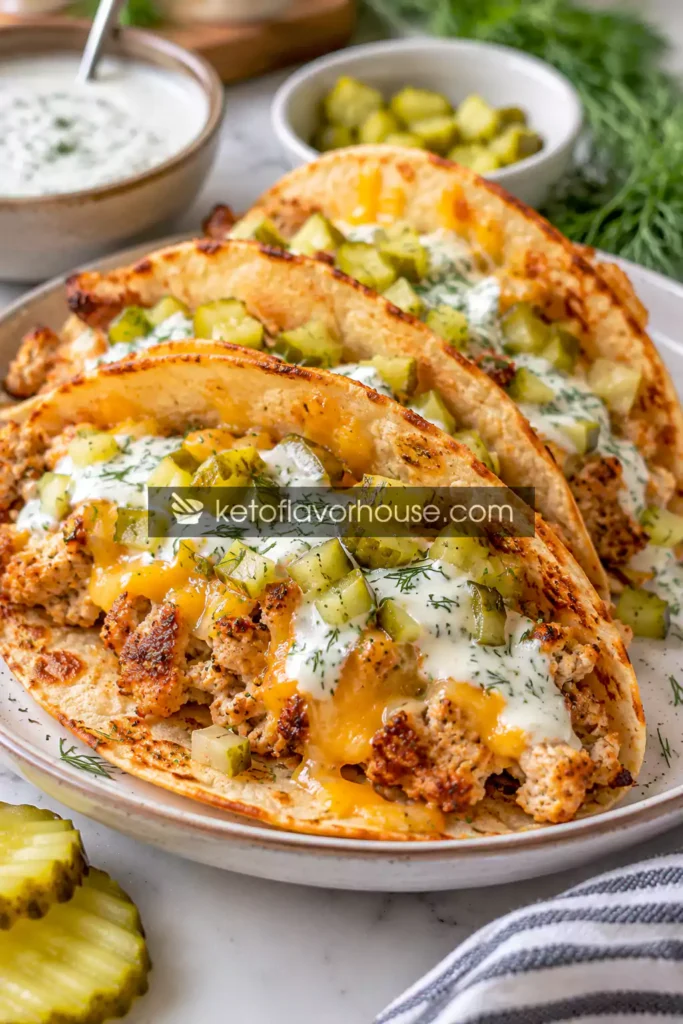
There is something wonderfully satisfying about biting into a taco with a golden, crispy edge, juicy seasoned chicken, melted cheddar, and a cool, tangy sauce. These Keto Dill Pickle Ranch Smash Chicken Tacos bring all those textures and flavors together in a low-carb dinner that feels fun enough for taco night but simple enough for a busy weekday. The dill pickles add a sharp, refreshing crunch, while ranch seasoning gives the chicken a savory, herby flavor that pairs naturally with the creamy sauce.
The idea behind smash tacos is simple: press a thin layer of seasoned ground chicken directly onto a small tortilla, cook it chicken-side down in a hot skillet, then flip it so the tortilla warms and develops a little color. Instead of cooking the meat separately and assembling the tacos afterward, the chicken cooks directly against the pan, creating a browned surface while the tortilla stays attached. Finish with melted cheddar, chopped dill pickles, and a quick ranch sauce, and you have a taco that delivers plenty of flavor without needing a long ingredient list.
This keto version uses small, verified low-carb tortillas, ground chicken, ranch seasoning, cheddar, dill pickles, and a creamy pickle-ranch sauce. The result is savory, cheesy, tangy, and easy to customize. It is particularly useful for readers who want a low-carb taco night without giving up the crisp edges and handheld convenience of a traditional taco. The finished tacos are best served straight from the skillet, when the chicken is juicy, the cheese is soft, and the pickle topping still has its fresh crunch.
A quick note about the keto label: low-carb tortillas vary substantially in their carbohydrate and fiber content. Choose a product that fits your personal carbohydrate target and calculate the nutrition using its package label. The recipe’s estimated macros below assume a low-carb tortilla with about 8 grams of total carbohydrates and 6 grams of fiber per tortilla.
Keto Dill Pickle Ranch Smash Chicken Tacos
Golden skillet-cooked chicken tacos with cheddar, crunchy dill pickles, and a creamy ranch-pickle sauce.
Why You’ll Love These Keto Dill Pickle Ranch Smash Chicken Tacos
These tacos bring together familiar flavors in a slightly different format. Instead of filling a tortilla with a mound of cooked meat, you press the chicken onto the tortilla and cook the two together. That technique gives the chicken a browned surface and helps the taco hold together, while the cool toppings add contrast.
- 🌮 A fun twist on taco night: The smash technique creates a thin, browned layer of chicken attached to each tortilla.
- 🥒 Bold dill pickle flavor: Chopped pickles add acidity, crunch, and a tangy bite that cuts through the cheese and creamy sauce.
- 🧀 Cheesy and satisfying: Cheddar melts over the hot chicken, adding richness and a familiar savory flavor.
- 🌿 Ranch-seasoned chicken: Ranch seasoning adds herbs and spices without requiring several separate seasonings.
- 🍗 A protein-rich main dish: Ground chicken supplies most of the protein, while the cheddar contributes additional protein and fat.
- ⏱️ Quick skillet cooking: The chicken is thinly spread, so individual tacos cook relatively quickly when the skillet temperature is right.
- 🥣 Easy homemade sauce: Mayonnaise, sour cream, ranch seasoning, and pickle brine create a creamy topping with very little preparation.
- 🥑 Easy to customize: Add avocado, shredded lettuce, jalapeño, or fresh dill to adjust the flavor and texture.
- 🧊 Simple meal planning: The chicken mixture and sauce can be prepared ahead, then cooked and assembled just before serving.
- 👨👩👧 Flexible for different eaters: You can serve the filling and toppings separately, making it easy to adjust the spice level or leave off pickles for anyone who prefers a milder taco.
The contrast that makes these tacos work
Ground chicken has a relatively mild flavor, which makes it an excellent match for strong additions like dill pickles and ranch seasoning. The chicken provides the savory base, cheddar brings a creamy, salty layer, and pickle brine gives the sauce a bright edge. Each ingredient has a job, so you don’t need a long list of toppings to make the taco interesting.
Texture is just as important. The chicken should develop a browned surface rather than steam in its own moisture. The tortilla needs enough contact with the skillet to warm and toast lightly, while the pickle topping should be added after cooking to preserve its crunch. If everything is cooked together for too long, the refreshing contrast that makes these tacos distinctive can disappear.
A keto-friendly taco without traditional flour tortillas
The low-carb tortilla is what makes this version suitable for many keto meal plans. Regular flour tortillas can contribute considerably more digestible carbohydrates, whereas some low-carb varieties use added fiber to reduce their net-carb count. However, these products are not interchangeable nutritionally, and the front-of-package claim isn’t enough to establish the exact carb count.
Check the label for serving size, total carbohydrates, and fiber. Also review the ranch seasoning and sauce ingredients, because some packaged blends and condiments contain added sugar or starch. The base recipe can be low in net carbohydrates, but the actual result depends on the products and portions you use.
A Practical Approach to Smash Chicken Tacos
The most important part of this recipe is how the chicken is spread over the tortilla. Ground chicken is softer and often wetter than ground beef, so it needs to be handled carefully. The mixture should cling to the tortilla in a thin, even layer rather than sit in a thick mound. A thin layer cooks more quickly and gives you a better chance of browning the chicken before the tortilla becomes too crisp.
Start with ground chicken that is cold but not frozen. Combine it with ranch seasoning, garlic powder, black pepper, and a modest amount of salt. If the ranch seasoning is already salty, you may not need much additional salt at all. Mix gently until the seasonings are distributed, then portion the chicken onto the tortillas.
When pressing the chicken onto each tortilla, spread it close to the edge while keeping the layer even. The meat will shrink slightly as it cooks, so a little coverage near the edges helps prevent a bare tortilla rim. Pressing the mixture firmly enough to adhere is useful, but avoid tearing the tortilla with your fingertips.
Once the skillet is hot, place a tortilla chicken-side down. Allow the chicken to make full contact with the pan and leave it undisturbed long enough to brown and cook through. Trying to move it too early can cause the chicken layer to separate from the tortilla. When the chicken is cooked, flip the taco and add the cheddar so it can melt over the hot surface.
These are best cooked in manageable batches. Crowding a skillet lowers its temperature and makes it harder to achieve a browned surface. If you’re cooking for four people, keep the cooked tacos warm on a baking sheet in a low oven while finishing the remaining batch, then add the pickle topping and sauce just before serving.
My Kitchen Notes: Balancing Tang, Creaminess, and Crunch
With a recipe like this, the sauce and topping need just as much attention as the chicken. The creamy sauce should be rich enough to complement the browned meat, but the pickle brine keeps it from tasting too heavy. Start with a measured amount, then adjust the tang in small increments rather than pouring in extra brine all at once.
Chopped dill pickles are better than large slices for this taco style. Smaller pieces spread more evenly across the filling and are less likely to slide off when you take a bite. If the pickles are particularly wet, drain them before chopping; excess pickle liquid can soften the tortilla and dilute the sauce.
The same principle applies to the cheese. Finely shredded cheddar melts quickly and distributes evenly across the thin chicken layer. A thick blanket of cheese may taste good, but it can cover the browned chicken and make the tacos harder to fold. A measured amount gives you a balance of melted cheese, crisp tortilla, chicken, and pickle topping.
The recipe is adaptable without requiring a complete redesign. More fresh dill creates a brighter herbal flavor, jalapeño adds heat, and avocado makes the filling creamier. I would begin with the base version and only add extras after deciding which flavor or texture you want to emphasize.
Equipment You’ll Need
Large Mixing Bowl
Use a bowl large enough to combine the ground chicken and seasonings without spilling. A medium or large bowl gives you room to fold the seasoning into the meat with a fork or clean hands.
Keep the chicken refrigerated until you’re ready to season it. Ground poultry is perishable, so don’t leave it sitting on the counter while you prepare the sauce and toppings. If you prefer to season the mixture ahead of time, cover it and refrigerate it promptly.
Measuring Spoons
Ranch seasoning blends vary in saltiness and flavor intensity. Measuring the seasoning helps keep the chicken consistent and reduces the chance of over-salting the filling. A measured teaspoon of pickle brine also makes it easier to reproduce the sauce from batch to batch.
Large Nonstick or Well-Seasoned Skillet
A skillet is central to the smash method because the chicken needs direct contact with the hot surface. A wide skillet allows you to cook more than one taco at a time without crowding them. Nonstick cookware can make the first flip easier, particularly if the chicken is moist.
Preheat the pan before adding the first taco, but avoid heating it until it smokes. Medium to medium-high heat usually offers a useful starting point. If the tortilla browns too quickly before the chicken is cooked, reduce the heat and allow more time for the meat to reach a safe temperature.
Thin, Sturdy Spatula
A thin spatula helps release the tortilla and support the chicken layer during flipping. Slide it underneath the taco rather than trying to lift one edge with your fingers. If the meat is still sticking firmly, give it more time to cook before trying again.
Small Mixing Bowl for the Sauce
Mix the mayonnaise, sour cream, ranch seasoning, and pickle brine in a separate bowl. This gives you control over the consistency and makes it easy to taste the sauce before serving.
A small whisk or spoon is enough to combine the ingredients. If the sauce is too thick, add a few drops of brine; if it becomes too thin, mix in a little more mayonnaise or sour cream, knowing that this changes the nutritional values.
Cutting Board and Sharp Knife
Use a clean cutting board to chop the dill pickles and any optional garnishes. Small, even pieces are easier to distribute across the tacos than large chunks. Keep raw chicken and ready-to-eat toppings separate; wash hands, utensils, and surfaces that have contacted raw poultry before handling the cooked food.
Instant-Read Thermometer
Ground chicken must be cooked to an internal temperature of 165°F (74°C). An instant-read thermometer provides a more reliable check than judging by browning alone. Insert it into the thickest part of the chicken layer, avoiding direct contact with the hot skillet.
Ingredients for Keto Dill Pickle Ranch Smash Chicken Tacos
This recipe makes eight small tacos, serving four people with two tacos per person. Choose street-taco-size low-carb tortillas that are flexible enough to press and flip without splitting.
Ingredients
For the chicken tacos
- 1 pound (454 g) ground chicken
- 8 small low-carb tortillas, approximately 4–5 inches wide
- 1 tablespoon ranch seasoning mix, divided if desired between the chicken and sauce
- ½ teaspoon garlic powder
- ¼ teaspoon black pepper
- Salt to taste, depending on the ranch seasoning
- 1 cup (about 113 g) finely shredded cheddar cheese
- ½ cup (about 75 g) dill pickles, finely chopped and drained
For the creamy pickle-ranch sauce
- ⅓ cup (about 75 g) mayonnaise
- 2 tablespoons (30 g) sour cream
- 1 tablespoon (15 ml) dill pickle brine
- 1 teaspoon ranch seasoning
- 1 tablespoon finely chopped fresh dill, optional
For the skillet
– A small amount of neutral cooking oil, only if needed to prevent sticking
The oil is used to lightly grease the skillet, not to fry the tacos in a pool of fat. The sauce and topping quantities are designed to distribute across eight tacos, but you can reserve a little sauce for dipping.
What each ingredient contributes
Ground chicken: This is the main protein source. Its mild flavor lets the ranch seasoning and pickles come through clearly. Ground chicken can contain different amounts of fat depending on the cut and product, so use the package nutrition information when calculating macros.
Low-carb tortillas: The tortillas form the base and supply much of the recipe’s carbohydrates and fiber. Products differ substantially, including the size of the tortilla, fiber content, calories, and flexibility. Choose small tortillas with a label that fits your carbohydrate target, and make sure they can handle the pressure of the smash method.
Ranch seasoning: This adds dried herbs, garlic, onion, and savory seasoning in one measured ingredient. Some mixes contain starches, sugar, or considerable sodium, so check the label. If the seasoning already tastes salty, omit or reduce the additional salt.
Garlic powder and black pepper: These support the ranch flavor without adding moisture to the chicken. Fresh garlic can be used in a small amount, but it may burn more readily against a hot skillet and can create a different texture. Ground spices are convenient for even distribution.
Cheddar cheese: Cheddar adds a salty, savory flavor and helps the tacos feel rich and satisfying. Finely shredded cheese melts quickly over the cooked chicken. The fat and protein content depend on whether you use sharp, mild, full-fat, or reduced-fat cheddar.
Dill pickles: Pickles create the signature tangy flavor and provide a crisp contrast to the chicken and cheese. Their carbohydrate content depends on the product; sweet pickles and some flavored pickles may contain added sugar. Choose dill pickles with no added sugar where possible and drain them well.
Mayonnaise: Mayonnaise gives the sauce its creamy body and contributes most of the sauce’s fat. Brands vary in oil, sodium, and added ingredients. Use an unsweetened mayonnaise and measure it rather than pouring directly into the bowl.
Sour cream: Sour cream lightens the mayonnaise with a pleasant tang and makes the sauce easier to spoon over the tacos. Greek yogurt can replace it, but that changes the flavor, fat, protein, and carbohydrate values.
Pickle brine: A tablespoon adds acidity and dill-pickle flavor without needing more chopped pickles. Start with the measured quantity; too much brine can make the sauce thin and overly salty.
Fresh dill: This is optional, but it reinforces the dill pickle flavor and adds a fresh herbal note. Finely chop it so it distributes through the sauce rather than forming clumps.
The ingredient guide below summarizes the recipe’s core flavor and texture components.
Ingredient Substitutions and Their Effects
The recipe is flexible, but not every substitution produces the same flavor or nutritional profile. The most important changes to check are the tortilla, the ranch seasoning, and the creamy sauce.
Ground turkey instead of ground chicken: Ground turkey works well in the same amount. Its flavor and fat content depend on the specific cut and product. Very lean turkey may cook more quickly and become dry if overcooked, while a higher-fat blend may produce a juicier filling. Recalculate calories, protein, and fat using the package label.
Ground beef instead of chicken: Beef creates a richer, more traditional smash-taco flavor. It may render more fat in the skillet, so you may need to drain excess grease before adding the cheese. The protein, saturated fat, calories, and flavor can differ substantially from ground chicken.
Monterey Jack instead of cheddar: Monterey Jack melts smoothly and has a milder flavor. It can work if you prefer the dill pickle and ranch to stand out more than the cheese. Calories and macros depend on the particular cheese.
Greek yogurt instead of sour cream: Plain, unsweetened Greek yogurt makes the sauce tangier and can increase its protein content while reducing fat, depending on the products used. It may taste sharper and have a slightly different consistency. Avoid sweetened or flavored yogurt.
Avocado oil instead of neutral cooking oil: Either can be used to lightly grease the skillet. The quantity should be small enough that the tortillas are not sitting in excess oil. The total fat and calories depend on how much oil is absorbed.
Different low-carb tortillas: A smaller tortilla can be easier to flip and portion, while a larger one gives you more space for the chicken. Different brands may have very different amounts of total carbohydrates and fiber. Always recalculate the macros when changing brands or serving sizes.
Homemade ranch seasoning: You can mix dried dill, parsley, garlic powder, onion powder, and black pepper to make your own blend. This gives you more control over salt and packaged ingredients, but the flavor will differ from a commercial ranch mix. Calculate the carbohydrate contribution of any additions you include.
The substitution guide below shows the main trade-offs to keep in mind.
Choose your taco ingredients
Substitutions work best when you account for both flavor and texture.
How to Make Keto Dill Pickle Ranch Smash Chicken Tacos
The process is easier when everything is prepared before the chicken goes into the skillet. Mix the sauce, chop the pickles, shred the cheese, and season the chicken first. The tacos cook relatively quickly, so having everything within reach helps prevent overcooking.
Step 1: Prepare the creamy pickle-ranch sauce
In a small bowl, combine the mayonnaise, sour cream, one teaspoon of ranch seasoning, and one tablespoon of dill pickle brine. Stir until the sauce is smooth and evenly blended. Add the optional chopped fresh dill and mix again.
The sauce should be thick enough to drizzle but loose enough to spread in a thin line over the tacos. If it feels too thick, add a few drops of additional pickle brine. If it becomes too thin, add a little more mayonnaise or sour cream. Make small adjustments because excess brine can make the sauce salty and watery.
Cover the bowl and refrigerate it while you prepare the chicken. Keeping the sauce cold gives the finished tacos a pleasing contrast with the hot chicken and melted cheese.
Step 2: Chop and drain the dill pickles
Finely chop the dill pickles into small pieces, roughly ¼ inch or smaller. Transfer them to a small bowl and drain off any excess liquid.
Small pickle pieces distribute better across the tacos, making it easier to get tangy flavor in every bite. Larger slices can slide off the meat or make the taco difficult to fold. If the pickles are very wet, pat them lightly with a paper towel.
Keep the chopped pickles refrigerated until you are ready to serve. They should be added after cooking so their crunchy texture remains noticeable.
Step 3: Season the ground chicken
Place the ground chicken in a mixing bowl. Add the ranch seasoning, garlic powder, black pepper, and salt only if needed. Mix gently until the seasoning is distributed throughout the meat.
Avoid compressing the chicken into a dense paste. The mixture should be cohesive enough to spread, but it does not need to be kneaded. If it is very sticky, lightly dampen your fingertips before portioning rather than adding flour or breadcrumbs, which would change the carbohydrate content and texture.
Divide the mixture into eight equal portions. Keeping the portions similar helps each taco cook at approximately the same rate and makes the nutrition estimate per serving more reliable.
Step 4: Press the chicken onto the tortillas
Place a low-carb tortilla on a clean board with the side you want against the meat facing upward. Take one portion of seasoned chicken and spread it thinly over the surface, pressing gently so it adheres to the tortilla. Aim for an even layer that reaches close to the edge without spilling over excessively.
Repeat with the remaining tortillas and chicken. Keep the prepared tacos refrigerated if you aren’t cooking them immediately, and avoid leaving raw poultry at room temperature while the skillet heats.
The chicken layer should be thin enough to cook through without requiring a long time in the pan. Thick mounds are more difficult to cook evenly and can leave the center undercooked while the tortilla becomes too dark.
Step 5: Preheat the skillet
Set a large nonstick skillet over medium to medium-high heat. Give it time to warm evenly, then lightly grease the surface if needed. You want a hot pan that browns the chicken, not one so hot that the tortilla darkens before the meat cooks through.
If you are unsure about the temperature, start at medium heat and cook one taco as a test. You should hear a gentle sizzle when the chicken meets the skillet. If the surface burns quickly or the tortilla begins to smoke, lower the heat.
Cook in batches so the pan is not crowded. Too many tacos at once can lower the skillet temperature and encourage steaming rather than browning.
Step 6: Cook the tacos chicken-side down
Place a prepared tortilla in the skillet with the chicken facing down. Press gently with a spatula for a few seconds to maximize contact between the chicken and the pan. Leave it undisturbed while the meat begins to brown.
Cook for roughly 3–4 minutes as a starting point, adjusting for the thickness of the chicken layer and the heat of your skillet. The meat should release more easily when the surface has browned. If it sticks firmly, give it a little more time rather than pulling it up too early.
Because ground chicken thickness and cookware vary, time alone isn’t enough to determine doneness. The chicken must reach 165°F (74°C) internally.
Step 7: Flip and add the cheddar
Once the chicken is browned and cooked through, slide a thin spatula underneath the tortilla and turn it over so the tortilla side meets the skillet. Sprinkle a portion of shredded cheddar over the chicken, allowing the heat to soften and melt the cheese.
Cook the tortilla side for about 30–60 seconds, watching for light browning rather than a hard, brittle texture. If the cheese needs more time to melt, reduce the heat slightly or cover the skillet briefly. Avoid leaving the taco on the pan for too long, as the tortilla can become too crisp to fold comfortably.
Transfer the finished taco to a clean plate or a baking sheet in a low oven while you cook the next batch.
Step 8: Finish with pickles and sauce
Spread or drizzle the creamy pickle-ranch sauce over each taco. Add the chopped dill pickles and optional fresh dill. If you enjoy extra tang, a few drops of pickle brine can be added to the sauce, but use a light hand because it may increase the saltiness.
Serve immediately while the chicken is hot, the cheddar is soft, and the pickles are still crunchy. These tacos are best eaten shortly after assembly, rather than sitting under a heavy layer of sauce for an extended period.
The visual guide below summarizes the main stages.
Eight stages to crispy-edged chicken tacos
Mix sauce
Stir mayo, sour cream, ranch seasoning, and pickle brine.
Chop pickles
Dice finely and drain excess liquid to preserve crunch.
Season chicken
Mix ranch seasoning and spices into ground chicken gently.
Smash
Press an even, thin layer of chicken onto each tortilla.
Sear
Cook chicken-side down until browned and fully cooked.
Flip & melt
Turn tortilla-side down and add cheddar until melted.
Sauce
Drizzle the creamy pickle-ranch sauce over each taco.
Finish
Top with drained chopped pickles and serve promptly.
Common Mistakes to Avoid
Spreading the chicken too thickly
A thick layer may brown on the outside before the middle reaches a safe temperature. It can also make the tortilla difficult to fold.
How to fix it: Spread the ground chicken into an even, thin layer. If your tortillas are especially small, use slightly less chicken on each one rather than piling it into the middle.
Trying to flip the taco too early
The chicken needs time to brown and release from the skillet. If you pull it up prematurely, the meat may stick to the pan or separate from the tortilla.
How to fix it: Let the chicken cook undisturbed until the surface is browned and releases more readily. Slide a thin spatula underneath before flipping.
Using a skillet that is too hot
High heat can burn the tortilla before the ground chicken has cooked safely. This is particularly problematic when the meat layer is thicker than intended.
How to fix it: Start at medium to medium-high heat and adjust as needed. If the tortilla browns too quickly, lower the temperature and give the chicken more time to reach 165°F (74°C).
Adding wet pickles before cooking
Pickles release moisture, which can interfere with browning and make the tortilla soggy.
How to fix it: Cook the chicken and tortilla first. Drain and chop the pickles separately, then add them after the taco comes off the heat.
Making the sauce too thin
Too much pickle brine can make the sauce watery and salty. The sauce may run off the tacos instead of staying where you put it.
How to fix it: Measure the brine and stir it in gradually. If the sauce is already too thin, add a little more mayonnaise or sour cream and taste again.
Over-salting the chicken
Ranch seasoning, cheddar, and pickles all contribute sodium. Adding the full amount of salt without tasting the seasoning blend can make the finished tacos overly salty.
How to fix it: Begin with a small pinch or omit the additional salt. Taste the cooked chicken and sauce before deciding whether you need more.
Crowding the pan
When too many tacos are placed in the skillet at once, the pan loses heat and the chicken can steam instead of brown.
How to fix it: Cook in batches and leave space around each taco. Keep finished tacos warm while you cook the rest.
The troubleshooting guide below gives a quick overview of the most common issues.
Smash taco troubleshooting
Use the appearance of the chicken and tortilla to guide your adjustments.
Cause: it hasn’t browned enough or the pan isn’t releasing it. Let the chicken sear longer and loosen the edges with a thin spatula.
Cause: heat is too high or the meat layer is too thick. Reduce heat and spread the chicken more thinly next time.
Cause: wet toppings or too much sauce. Drain the pickles and add sauce after cooking.
Cause: too much pickle brine or salty ranch seasoning. Add brine gradually and balance with a little more sour cream or mayonnaise.
Cause: overcooking or very lean ground chicken. Use a thermometer and remove the taco from the heat when the chicken reaches 165°F (74°C).
Pro Tips for the Best Results
Drain the pickles before chopping. This keeps excess liquid from running onto the finished tacos. If you like a stronger pickle flavor, use the measured brine in the sauce rather than leaving the chopped pickles wet.
Use finely shredded cheddar. Fine shreds melt faster and more evenly over the chicken layer. Coarser pieces may take longer to melt and can fall off when the taco is flipped.
Prepare the sauce first. Making the sauce before you cook means you can finish each taco quickly. It also gives the seasoning time to blend with the mayonnaise and sour cream while the chicken cooks.
Use a flexible tortilla. Some high-fiber low-carb tortillas crack more easily than others. If your tortillas are stiff, warm them briefly according to their package directions before pressing on the chicken. Make sure they’re cool enough to handle safely before adding the raw poultry.
Test one taco first. The first taco helps you determine whether your skillet is hot enough and whether the chicken layer is too thick. Adjust the heat before cooking the remaining batch.
Don’t press excessively during cooking. A gentle initial press helps establish contact, but continuous pressing can squeeze moisture out of the chicken. Let it brown naturally rather than repeatedly flattening it.
Add the sauce after cooking. This preserves the fresh pickle-ranch flavor and helps the tortilla retain its texture. A little sauce goes a long way because the cheese already adds richness.
Serve in batches. These tacos are at their best straight from the skillet. If you have to cook multiple rounds, hold the cooked tacos briefly in a low oven and add the cold toppings just before serving.
How the Recipe Fits Into Keto Eating
The main low-carb choice is the tortilla. Ground chicken, cheddar, mayonnaise, sour cream, and dill pickles can all fit into a ketogenic eating pattern when their quantities and product labels suit your carbohydrate target.
That doesn’t mean every tortilla or ranch product labeled keto has the same nutritional value. Some low-carb tortillas contain a substantial amount of fiber, while others have more digestible carbohydrates. The difference can meaningfully change the net-carb count for two tacos.
Protein from ground chicken
Ground chicken supplies most of the protein in the recipe. The amount depends on the fat content and the product you buy. Cheddar contributes additional protein, so these tacos can make a substantial contribution to a protein-rich meal.
Protein needs vary according to a person’s size, activity, and goals. If you want to increase the protein further, you can adjust the chicken-to-tortilla ratio or serve a suitable protein-rich side without assuming that every person needs the same amount.
Fat from cheese and sauce
Cheddar and mayonnaise make the tacos rich and satisfying. Sour cream contributes a smaller amount of fat and brings tanginess to the sauce. The finished recipe is not necessarily low-calorie simply because it is low in net carbohydrates; the cheese, mayonnaise, and cooking oil still contribute energy.
Measure the sauce and cheese if you track calories closely. Small changes in mayonnaise quantity can affect the total fat and calories of the recipe because mayonnaise is energy-dense.
Dill pickles and carbohydrate tracking
Dill pickles usually contribute a modest amount of carbohydrates in the quantity used here, but sweet pickles and some flavored varieties can contain added sugar. Choose unsweetened dill pickles and check their labels.
Pickle brine also contributes sodium. That helps create the distinctive flavor, but you may not need much extra salt in the chicken mixture. People who have been advised to limit sodium should select suitable products and adjust the recipe accordingly.
Total carbs versus net carbs
Total carbohydrates include fiber. Net carbohydrates are commonly estimated by subtracting dietary fiber from total carbohydrates:
Net carbohydrates = total carbohydrates − dietary fiber
For this recipe, the net-carb estimate depends heavily on the tortillas. The estimate below assumes that each tortilla contains approximately 8 grams of total carbohydrates and 6 grams of fiber. If your tortillas have different numbers, recalculate the entire batch rather than copying the estimate.
These tacos can fit many low-carb meal plans, but keto suitability depends on the full meal, the serving size, the specific products used, and the reader’s overall carbohydrate intake.
Variations You Can Try
You can change the flavor without changing the basic smash-taco technique. Keep the tortilla and chicken proportions consistent if you want the tacos to cook predictably.
Spicy Dill Pickle Ranch Tacos
Add a small amount of crushed red pepper flakes or finely chopped jalapeño to the chicken mixture. This gives the filling a more noticeable heat without changing the cooking method. If you use hot sauce, check its label because some varieties contain added sugar.
Extra-Cheesy Chicken Tacos
Use a little more cheddar or combine cheddar with Monterey Jack. The result will be richer, with a softer cheese layer. More cheese changes the calories, fat, protein, and sodium, so adjust the nutrition calculation to match.
Fresh Herb Ranch Tacos
Add chopped fresh dill or parsley to the sauce. Dill reinforces the pickle flavor, while parsley gives the sauce a fresher herbal note. Fresh herbs add moisture in small amounts, so chop them finely and keep the sauce refrigerated until serving.
Avocado Pickle Ranch Tacos
Add a few small avocado slices or a spoonful of mashed avocado after cooking. Avocado adds a creamy texture and predominantly unsaturated fat. It also increases calories and contributes some fiber and carbohydrates, so include it in the final calculation.
Turkey Smash Tacos
Replace the ground chicken with ground turkey. The flavor will be similar, although the texture depends on how lean the turkey is. Cook to a safe internal temperature and recalculate the nutrition using the chosen product.
Lettuce-Wrapped Version
For fewer tortilla carbohydrates, serve the cooked chicken and cheese inside large lettuce leaves instead of low-carb tortillas. This changes the texture substantially because lettuce will not produce the same browned, crisp base as a skillet tortilla. The meal’s carbohydrate total may decrease, but the exact value depends on the lettuce and other ingredients.
Greek Yogurt Ranch Sauce
Replace the sour cream with plain, unsweetened Greek yogurt. The sauce becomes tangier and may provide more protein with less fat. Its consistency can be thinner or thicker depending on the product, so add pickle brine gradually.
The variation grid below summarizes the flavor and nutrition trade-offs.
Choose your pickle-ranch taco style
Keep the chicken cooked to a safe temperature and change one topping at a time.
Spicy pickle ranch
Add pepper flakes or jalapeño. Hot sauce can change carbs and sodium.
Fresh dill
Reinforces pickle flavor with minimal change to the overall texture.
Avocado
Adds a soft texture, unsaturated fat, fiber, and extra calories.
Greek yogurt
Usually adds protein and reduces fat compared with sour cream, depending on brand.
Ground turkey
Keeps the smash method; nutrition and juiciness depend on fat content.
Lettuce wrap
Changes the crisp taco base for a fresh, soft wrap; recalculate serving macros.
Additional Tips for This Recipe
A few small habits make this recipe easier to repeat and help the tacos stay crisp rather than soggy.
- Measure the tortilla size consistently. Smaller tortillas cook quickly and produce a higher ratio of filling to bread. Larger tortillas need more chicken and can take longer to brown.
- Keep sauce and toppings separate until serving. If you assemble the tacos well before eating, the tortilla can absorb moisture and lose its crispness.
- Let excess pickle brine drain away. Brine belongs in the sauce in a measured amount; wet chopped pickles can dilute the topping.
- Season carefully. Ranch seasoning, pickles, and cheese can contribute plenty of salt. Taste the cooked chicken before adding more.
- Use a thin, even layer of chicken. This helps with browning, cooking time, and safe internal temperature.
- Make a small test taco if you’re using a new tortilla. Some low-carb tortillas are more fragile than others. A test helps you find a workable heat level before cooking the full batch.
- Serve hot. The taco base is at its best when the tortilla is still lightly crisp and the cheddar is freshly melted.
Optional Additions
These extras are not required for the recipe, but they can change the flavor and texture in useful ways.
Shredded lettuce: Adds a fresh crunch that contrasts with the warm chicken and cheese. It contributes a small amount of carbohydrate and fiber, depending on the quantity.
Sliced avocado: Makes each taco creamier and adds unsaturated fat, fiber, and calories. Add it just before serving so it keeps its fresh texture.
Fresh dill: Intensifies the pickle-ranch flavor and adds a clean herbal note. A little goes a long way when combined with ranch seasoning.
Jalapeño: Adds heat and a sharper green-pepper flavor. Fresh jalapeño contributes a modest amount of carbohydrates, while pickled versions may contain added sugar or extra sodium.
Extra cheddar: Increases richness and adds some protein, but also increases calories, fat, and sodium. Use a measured amount if you track macros.
Crumbled turkey bacon: This is an optional addition for a smoky, savory crunch without pork. Cook it separately and check the product label, as fat, sodium, and carbohydrates differ among turkey bacon products.
A squeeze of lime: Adds brightness that complements the pickles and creamy sauce. A small amount contributes little carbohydrate, but use it to taste so the sauce doesn’t become too sharp.
Hot sauce: Adds heat without needing extra oil or cheese. Choose a product with a label that suits your carbohydrate target.
These optional ingredients should be counted if you need precise nutrition information. The estimated macros later in the article refer to the base recipe, not every possible topping.
Serving Ideas
With a Simple Green Salad
Serve the tacos with lettuce, cucumber, and a light vinaigrette. The fresh vegetables provide a crisp contrast to the warm chicken and melted cheddar, while a modest dressing keeps the meal from becoming overly rich.
With Cauliflower Rice
Cauliflower rice makes a useful low-carb side. Its mild flavor complements the ranch and pickle notes without competing with them. Season it with garlic, pepper, and a little lime, and keep the portion in line with your meal plan.
With Roasted Broccoli
Roasted broccoli adds a savory vegetable side with browned edges and a firm bite. A little olive oil, garlic, and black pepper is enough seasoning because the tacos already contain strong ranch and pickle flavors.
With Avocado and Lettuce
A side of sliced avocado and shredded lettuce adds freshness and creamy texture. It also gives guests the option to add extra vegetables directly to their tacos.
As a Taco Bar
Arrange the cooked smash tacos beside bowls of sauce, chopped dill pickles, lettuce, avocado, jalapeños, and extra cheese. This approach works well when people prefer different levels of heat or creaminess. Keep hot tacos and cold toppings separate until serving.
For Meal Prep
Cook the chicken-tortilla tacos and store the sauce and pickles separately. Pack the toppings in small containers and assemble after reheating. This won’t make the tortillas exactly as crisp as they are fresh from the skillet, but it helps preserve their texture better than storing fully dressed tacos.
For related KetoFlavorHouse content, link naturally to existing articles on keto chicken dinners, low-carb side dishes, high-protein lunches, and other low-carb taco recipes. Use only published pages with confirmed URLs.
Storage and Reheating Recommendations
These tacos are best eaten immediately after cooking, but leftovers can be stored safely when handled promptly.
Refrigerator Storage
Let the cooked tacos stop steaming heavily, then refrigerate them in a shallow, airtight container within two hours of cooking. Keep the sauce and chopped pickles in separate containers. Properly refrigerated cooked chicken leftovers generally keep for 3–4 days at 40°F (4°C) or below, although the tortilla texture will be best much sooner.
Avoid leaving the tacos on the counter while everyone finishes eating. If you are serving a group, put away extras promptly rather than allowing the entire batch to remain at room temperature.
Reheating in a Skillet
A skillet is often the best choice for restoring some crispness. Warm the taco over medium-low heat, turning it as needed until hot throughout. Avoid high heat, which may burn the tortilla before the chicken is warmed through.
If the taco has been refrigerated with toppings, remove the sauce and pickles first. Add them back after reheating.
Reheating in an Air Fryer
An air fryer can help crisp the tortilla, although the edges may become dry if the taco is heated too long. Begin at around 325°F (163°C) for a few minutes, checking frequently and adjusting for the size of the taco and the appliance. The center must be hot before serving.
Reheating in the Microwave
The microwave is convenient but tends to soften the tortilla. Place the taco on a microwave-safe plate and heat in short intervals until hot. Avoid overheating, and add the sauce and pickles after warming.
Freezing
Freezing is possible for the cooked chicken-tortilla base, but texture may deteriorate. Low-carb tortillas can become more fragile after thawing, and their crisp edges won’t be preserved. If you plan to freeze portions, leave off the sauce, pickles, and fresh toppings.
Wrap the cooled tacos individually and use a suitable freezer-safe container. For best quality, use within about 2 months. Thaw in the refrigerator and reheat until hot throughout. The safest, best-textured option is to prepare the chicken mixture ahead and cook the tacos fresh when needed.
Make-ahead and storage timeline
Keep toppings apart
Store sauce and chopped pickles separately until serving.
3–4 days
Keep cooked chicken leftovers at 40°F (4°C) or below in a covered container.
Skillet or air fryer
Warm gently until hot throughout; add cold toppings afterward.
Best within 2 months
Freeze cooked bases without sauce or pickles; expect some tortilla texture change.
Frequently Asked Questions
Are Keto Dill Pickle Ranch Smash Chicken Tacos keto-friendly?
They can fit into a keto eating plan when you use low-carb tortillas and check the carbohydrates in the ranch seasoning, pickles, and sauce. The estimated net carbohydrates are around 6 grams per serving of two tacos, but the exact amount depends heavily on the tortilla brand and portion sizes.
How many net carbs are in two smash chicken tacos?
For the version described here, a serving of two tacos is estimated to contain approximately 6 grams of net carbohydrates. This assumes each tortilla contains about 8 grams of total carbohydrates and 6 grams of fiber. If your tortillas differ, recalculate the total rather than relying on the estimate.
Can I make these tacos with ground turkey?
Yes. Ground turkey works with the same seasoning and smash method. The flavor may be slightly different, and the amount of fat depends on the product. Cook until the ground turkey reaches a safe internal temperature and use its package label to update the nutrition.
What if my chicken sticks to the tortilla or skillet?
Let the chicken cook until its surface has browned and releases more readily. Make sure the skillet is preheated and lightly greased if necessary. Slide a thin spatula underneath before flipping. If the chicken mixture is especially wet, check that you used the correct ground chicken product and avoid adding liquid seasonings beyond the measured amounts.
Can I make the pickle-ranch sauce ahead of time?
Yes. Prepare the sauce, cover it, and refrigerate it until needed. Give it a quick stir before serving. If it becomes thicker in the refrigerator, adjust with a few drops of pickle brine, but add the liquid gradually so the sauce doesn’t become watery.
Can I use regular tortillas?
Yes, but regular flour tortillas will generally increase the total carbohydrate and net carbohydrate count. The chicken and topping method stays the same. Recalculate the macros using the exact tortilla and other products you use, and don’t label the conventional-tortilla version keto without verifying its carbohydrate content.
Can I make these tacos without mayonnaise?
You can substitute additional sour cream or plain Greek yogurt, but the sauce will taste tangier and may have a different consistency. Greek yogurt can increase protein and reduce fat compared with mayonnaise, depending on the products used. Recalculate the calories and macros for the sauce substitution.
Can I prepare the tacos in advance?
You can prepare the chicken mixture, chop the pickles, and mix the sauce ahead of time. Store the raw chicken mixture safely in the refrigerator and keep the sauce and pickles in separate covered containers. For the best texture, cook the tacos shortly before serving rather than assembling and storing them fully dressed.
Nutritional Breakdown Per Serving
The following values are estimates for two tacos, assuming the recipe makes eight tacos and is divided into four servings. The calculation assumes low-carb tortillas with approximately 8 grams of total carbohydrates and 6 grams of fiber each.
| Nutrient | Estimated amount per serving |
|---|---|
| Calories | 500 kcal |
| Protein | 36 g |
| Total fat | 34 g |
| Total carbohydrates | 18 g |
| Dietary fiber | 12 g |
| Net carbohydrates | 6 g |
| Sodium | Approximately 1,000–1,300 mg |
These values are illustrative estimates based on typical ingredient data. Tortilla brands, ground chicken fat content, ranch seasoning, cheddar, mayonnaise, and pickle labels can change the results. Sodium is especially variable because ranch seasoning, pickles, and cheese may all contribute substantial amounts.
Net carbohydrates are estimated by subtracting fiber from total carbohydrates: 18 grams total carbohydrates − 12 grams fiber = 6 grams net carbohydrates per serving. This calculation assumes the stated tortilla label values; if your product contains different amounts of fiber, adjust the result. Do not automatically subtract sugar alcohols from total carbohydrates without checking their labeling and how the value is calculated.
For the most accurate nutrition panel, add the actual label values for all ingredients in the full recipe and divide the totals by four. Include any additional oil used in the skillet and any extra toppings you serve.
Per serving · 2 tacos
Assumes low-carb tortillas with 8 g total carbs and 6 g fiber per tortilla.
Estimates only. Recalculate from your actual tortilla, chicken, cheese, sauce, ranch seasoning, and pickle labels.
Recipe Snapshot
- Recipe Name: Keto Dill Pickle Ranch Smash Chicken Tacos – Easy Low-Carb Dinner
- Prep Time: 15 minutes
- Cook Time: 15 minutes
- Total Time: Approximately 30 minutes
- Course: Dinner / Main Dish
- Cuisine: American-inspired
- Servings: 4
- Yield: 8 small tacos
- Calories per serving: Approximately 500 kcal
- Protein per serving: Approximately 36 g
- Total carbohydrates per serving: Approximately 18 g
- Net carbohydrates per serving: Approximately 6 g
A Tangy, Cheesy Addition to Your Keto Dinner Rotation
These Keto Dill Pickle Ranch Smash Chicken Tacos bring together browned chicken, melted cheddar, tangy pickles, and a creamy ranch sauce in a format that’s quick to cook and easy to personalize. The thin smash-style layer helps the chicken cook efficiently, while the cold pickle topping adds a refreshing contrast to the warm, savory filling. Use low-carb tortillas that fit your carbohydrate target, measure the sauce, and add the toppings immediately before serving for the best texture.
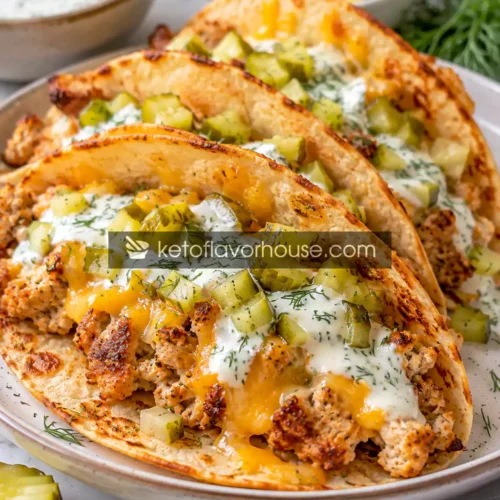
Keto Dill Pickle Ranch Smash Chicken Tacos Recipe

Ingredients
For the chicken tacos:
- 1 pound 454 g ground chicken
- 8 small low-carb tortillas approximately 4–5 inches wide
- 1 tablespoon ranch seasoning mix
- ½ teaspoon garlic powder
- ¼ teaspoon black pepper
- Salt to taste depending on the ranch seasoning
- 1 cup 113 g finely shredded cheddar cheese
- ½ cup 75 g dill pickles, finely chopped and drained
- A small amount of neutral cooking oil if needed for the skillet
For the creamy pickle-ranch sauce:
- ⅓ cup 75 g mayonnaise
- 2 tablespoons 30 g sour cream
- 1 tablespoon 15 ml dill pickle brine
- 1 teaspoon ranch seasoning
- 1 tablespoon finely chopped fresh dill optional
Instructions
- In a small bowl, mix the mayonnaise, sour cream, one teaspoon of ranch seasoning, and pickle brine. Stir in the optional fresh dill, cover, and refrigerate.
- Finely chop the dill pickles and drain off excess liquid.
- Combine the ground chicken, one tablespoon of ranch seasoning, garlic powder, black pepper, and salt if needed. Mix gently until evenly seasoned.
- Divide the chicken into eight equal portions. Spread each portion in a thin, even layer over one low-carb tortilla, pressing gently so the chicken adheres.
- Heat a large nonstick skillet over medium to medium-high heat. Lightly grease it if needed.
- Place a prepared tortilla in the skillet with the chicken facing down. Cook for approximately 3–4 minutes as a starting point, allowing the chicken to brown and release from the pan. Adjust the time for thickness and heat.
- Check that the chicken reaches an internal temperature of 165°F (74°C). Carefully flip the taco so the tortilla side touches the skillet.
- Sprinkle with cheddar cheese and cook for another 30–60 seconds, until the tortilla is lightly toasted and the cheese melts. Reduce the heat or cover briefly if needed.
- Transfer the taco to a plate and repeat with the remaining portions, cooking in batches to avoid crowding the skillet.
- Drizzle with the creamy pickle-ranch sauce, top with chopped dill pickles, and serve immediately.