This post may contains Amazon affiliate and other affiliate links. If you make a purchase through these links, I may earn a small commission at no extra cost to you. Your support helps me continue to provide quality content. I only recommend products I personally trust and believe will add value to your experience. For more details, please visit my Privacy Policy.
Estimated SmartPoints: approximately 7–9 per slice, based on 12 servings. This is an independent estimate, not an official WW calculation. Your result may differ depending on your current Weight Watchers plan, ingredient brands, and portion size. The optional glaze is not included in this estimate.
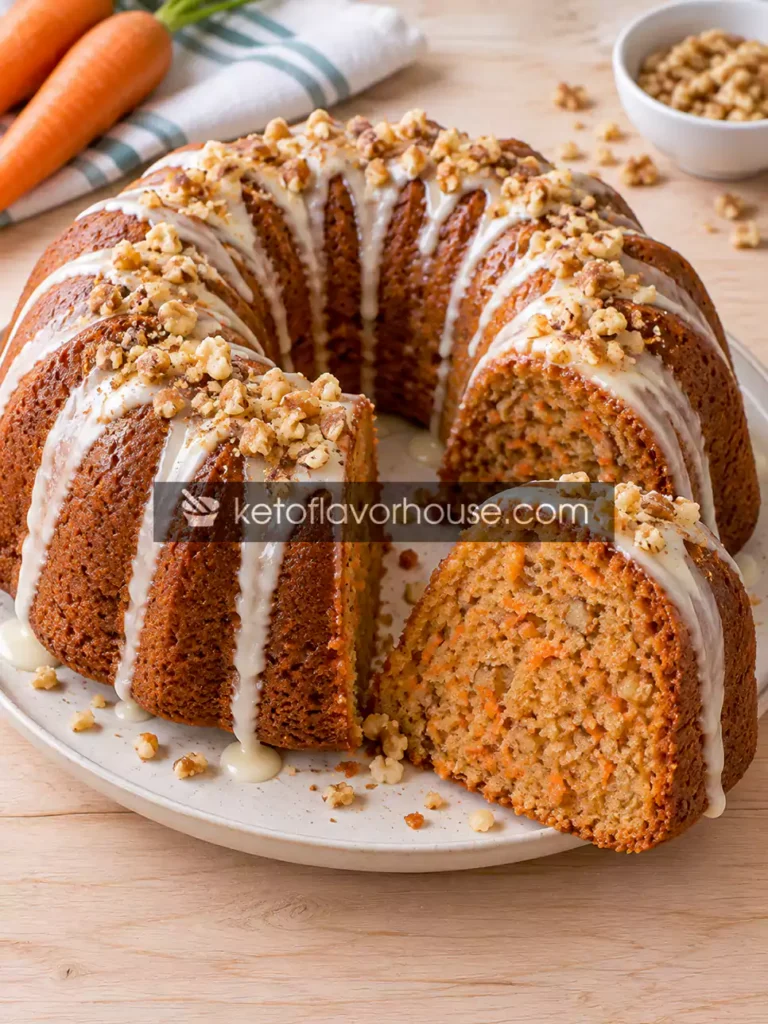
Carrot cake has a special place among classic homemade desserts. It combines warm cinnamon, sweet carrots, and a soft, tender crumb that feels comforting without needing elaborate decorations. Baking it in a Bundt pan gives it a beautiful shape straight from the oven, making it suitable for everything from a weekend family dessert to a holiday gathering.
This Weight Watchers Carrot Bundt Cake is designed to deliver that familiar carrot-cake flavor while using measured amounts of sugar and oil, plus unsweetened applesauce for additional moisture. Finely grated carrots bring natural sweetness and texture, while cinnamon and vanilla make the kitchen smell wonderful as the cake bakes.
The goal is not to pretend that cake has no Points or that a lighter recipe tastes exactly like every traditional bakery version. Instead, this recipe offers a practical way to enjoy a homemade dessert with a clearly defined serving size, straightforward ingredients, and room to fit a slice into your personal WW budget.
Why You’ll Love This Weight Watchers Carrot Bundt Cake
A homemade dessert worth sharing
Four reasons to bake it
Real carrot flavor
Freshly grated carrots add moisture, gentle sweetness, and the familiar flavor that makes carrot cake a classic.
Warm spices
Cinnamon and vanilla create a cozy aroma without relying on heavy frosting for flavor.
Easy portions
A Bundt cake can be sliced into 12 portions, making it easier to estimate each serving’s contribution to your Points budget.
Make-ahead friendly
Bake it ahead, cool it completely, and slice when needed for a family dessert or a planned treat.
The biggest advantage is how much flavor comes from the carrots and spices themselves. You do not need a thick layer of cream cheese frosting to make every bite taste like carrot cake. A light dusting of powdered sugar or a modest drizzle of glaze can be enough when you want a prettier presentation.
The Bundt shape also does some of the decorating work for you. Even without frosting, the ridges create an attractive finish, and the cake can be served on a simple platter with very little preparation.
A few practical benefits make this recipe especially useful for home cooks:
- 🥕 Familiar ingredients: Carrots, flour, eggs, cinnamon, applesauce, and vanilla are easy to find in most US grocery stores.
- 🍽️ Portion awareness: Dividing the cooled cake into 12 similar slices gives you a consistent serving size.
- 📅 Flexible planning: You can bake it the day before a gathering and serve it when you are ready.
- ✨ Easy customization: Raisins, nuts, pineapple, and frosting are optional changes, but they will affect nutrition and estimated Points.
Remember that a recipe’s Points value is only one part of your overall eating pattern. Your personal budget, portion size, and the rest of your day’s meals matter too.
WW SmartPoints Information
For this version, plan on approximately 7–9 estimated SmartPoints per slice, assuming the cake is divided into 12 equal servings and served without optional frosting or glaze. For planning purposes, the midpoint is about 8 estimated Points per slice, or approximately 96 estimated Points for the full cake.
These figures are not verified by the official Weight Watchers calculator. SmartPoints is also a legacy WW term; the current program may use a different Points calculation. The app associated with your own plan is the best way to confirm the value.
The estimate reflects a cake made with all-purpose flour, granulated sugar, a measured amount of oil, eggs, unsweetened applesauce, carrots, and spices. Flour, sugar, and oil are particularly important contributors. Carrots add natural sweetness and moisture, but their presence does not make the entire dessert zero-Points.
Recipe planning dashboard
Know your slice before serving
Independent planning estimate only. Not an official WW calculator or a guarantee of the value shown in an individual member’s account.
How to calculate your personal Points
For the most reliable result, enter the complete ingredient list into the recipe builder in your WW app. Choose the specific products you actually use, including the applesauce and any sweetener or oil substitute, then set the recipe to 12 servings.
If you replace sugar with a calorie-free sweetener, use a different flour, or add cream cheese frosting, recalculate the entire recipe rather than subtracting an assumed number of Points. Different products can behave differently in baking, and their nutrition profiles are not always interchangeable.
Also, do not assume that every ingredient qualifies as zero Points for every member. Eligibility depends on the applicable WW plan and personal settings.
My Personal Experience With Carrot Bundt Cake
The appeal of a carrot Bundt cake is that it feels special without requiring complicated decorating. The most important part of the preparation is getting the texture right. A cake with enough moisture should slice cleanly but still feel soft when you take a bite. Too much flour or too little moisture can make it dense, while excessive liquid can leave the center gummy.
For a recipe like this, I would pay particular attention to the carrots. Finely grated carrots blend into the batter more evenly than thick shreds, helping distribute their moisture throughout the cake. I would also mix the batter only until the flour disappears. Once flour is hydrated, prolonged mixing can develop gluten and make the crumb tougher than intended.
The other detail that matters is patience after baking. A Bundt cake needs time to settle before it is removed from the pan. Turning it out too early can break the delicate ridges; leaving it in the pan for too long can also make it harder to release cleanly. A short cooling period followed by careful unmolding gives the cake the best chance of keeping its shape.
For serving, I would start with a plain slice to appreciate the cinnamon and carrot flavor. If you want a more dessert-like finish, add a small drizzle of glaze or a measured spoonful of cream cheese topping. Keep any extras separate from the base recipe when calculating Points so that each serving remains easy to track.
Required Equipment
Bundt Pan
Use a standard 10- to 12-cup Bundt pan for this recipe. The center tube helps heat reach the middle of the cake, while the decorative sides create the ridged shape that makes Bundt cakes so attractive.
Grease every groove carefully, including the center tube. A pastry brush is useful for reaching narrow ridges. A light, even coating is better than leaving thick pools of oil in the bottom of the pan.
Mixing Bowls
Use one medium bowl for the dry ingredients and a larger bowl for the wet ingredients. Keeping them separate until the last moment helps distribute the baking powder, baking soda, salt, and cinnamon evenly before they meet the liquid ingredients.
If you have only one large bowl, mix the dry ingredients first, transfer them to another container, and then prepare the wet mixture.
Box Grater
A box grater makes quick work of the carrots. Use the fine or medium-fine side for tender pieces that blend smoothly into the batter. Avoid very thick shreds, which can remain firm in the finished cake.
Measuring Cups and Spoons
Accurate measurements are particularly important in a lighter cake recipe. Too much flour can produce a dry crumb, while too much applesauce can make the middle heavy. Measure flour by spooning it into the cup and leveling the top instead of packing it down.
A kitchen scale is even more consistent, especially if you bake regularly.
Whisk and Flexible Spatula
A whisk helps combine the dry ingredients and blend the wet ingredients without leaving pockets of egg or sugar. A flexible spatula lets you fold the mixtures together gently and scrape the sides of the bowl so no dry flour remains hidden.
Cooling Rack
A cooling rack allows air to circulate around the cake after it is removed from the pan. This helps prevent trapped steam from softening the outer surface and makes the cake easier to slice once it has cooled.
Ingredients and Substitutions
This recipe uses familiar ingredients and measured amounts of oil and sugar to balance flavor, structure, and moisture. The quantities below make one Bundt cake divided into 12 servings.
- 2 cups all-purpose flour: Provides the structure that holds the cake together. Spoon and level the flour for a tender crumb. A cup-for-cup gluten-free baking blend may work, but results vary by brand and may be denser.
- 2 cups finely grated carrots: Add the signature flavor, color, moisture, and natural sweetness. Measure after grating. Fresh carrots are preferable to canned carrots, which may introduce excess water.
- ¾ cup granulated sugar: Sweetens the cake and contributes to browning and tenderness. Reducing it substantially may change the texture as well as the flavor.
- ½ cup unsweetened applesauce: Helps keep the cake moist while allowing the recipe to use less oil than many traditional cakes. Sweetened applesauce adds sugar and may change the nutrition estimate.
- ⅓ cup neutral oil: Adds tenderness and helps the cake remain moist after cooling. Canola or another mild-flavored oil works well. Replacing all the oil with applesauce may make the crumb heavier or more rubbery.
- 2 large eggs: Bind the ingredients and help the cake rise. Use large eggs for consistent results. Egg substitutes may work, but their effect on structure and Points depends on the product.
- 1 teaspoon vanilla extract: Adds warmth and rounds out the carrot and cinnamon flavors.
- 2 teaspoons ground cinnamon: Provides the familiar warm spice flavor. You can add a small amount of ground ginger or nutmeg if you enjoy a more complex spice profile.
- 1 teaspoon baking powder: Helps the cake rise and develop a lighter crumb.
- ½ teaspoon baking soda: Supports leavening and browning. Measure carefully rather than adding extra.
- ¼ teaspoon salt: Balances the sweetness and makes the cinnamon and carrot flavors more noticeable.
Optional ingredients such as chopped walnuts, raisins, crushed pineapple, or cream cheese glaze are not included in the base recipe or the Points estimate. They can be delicious, but each addition changes the nutrition profile.
Which Ingredient Swaps Make the Most Sense?
Smart swap guide
Choose substitutions for a clear reason. A lighter ingredient is only useful if the cake still tastes and bakes well.
No exact Points reduction is assigned to these swaps. Use the nutrition label and your WW recipe builder to calculate the version you actually bake.
Can You Reduce the Sugar?
You can experiment with a modest reduction, but sugar is not only a sweetener. It also affects moisture, tenderness, and browning. Removing a large amount can make the cake less tender and reduce the familiar sweet carrot-cake flavor.
A baking sweetener formulated to replace granulated sugar may be another option. Check whether it is intended for a one-to-one substitution, and follow its packaging instructions. Some sweeteners do not provide the same bulk or texture as sugar, and their Points treatment depends on the product and your WW plan.
What About Whole-Wheat Flour?
Replacing all the flour with whole-wheat flour can produce a denser cake with a nuttier taste. If you want to experiment, begin by replacing a portion rather than all of the all-purpose flour. You may need to adjust the liquid slightly, but make changes gradually so the batter does not become overly wet.
Whole-wheat flour is not automatically lower in Points. Compare the nutrition information and recalculate the complete recipe.
Should You Add Nuts or Raisins?
Walnuts add crunch and a rich, earthy flavor, while raisins add chewy sweetness. Both are traditional additions, but neither is necessary for a flavorful cake. If you add them, measure the quantity, distribute it evenly, and include it in the Points calculation.
For a first attempt, I recommend baking the base recipe as written. Once you know how it behaves in your pan, you can experiment with small changes without losing track of which version worked best.
How to Make Weight Watchers Carrot Bundt Cake
Step 1: Prepare the Oven and Pan
Preheat the oven to 350°F (175°C). Position a rack in the center of the oven so the cake receives even heat.
Grease the entire inside of a standard 10- to 12-cup Bundt pan, including the center tube and all the decorative grooves. Use a light coating of baking spray or a thin layer of oil. If your pan tends to stick, take extra care around the narrow ridges.
Do not leave this preparation until after mixing the batter. Once the wet and dry ingredients are combined, the leavening agents begin working, so you want the pan ready before the batter is made.
Step 2: Grate the Carrots
Wash, peel, and finely grate enough carrots to measure 2 cups. Use the fine or medium-fine side of a box grater.
The carrots should look like delicate shreds rather than thick matchsticks. Smaller pieces distribute more evenly, soften during baking, and help keep each slice tender.
Avoid squeezing the carrots completely dry. Their natural moisture is part of what makes the cake soft. However, if the grated carrots are visibly dripping wet, let excess water drain briefly so you do not introduce unnecessary liquid.
Step 3: Combine the Dry Ingredients
In a medium bowl, whisk together the flour, cinnamon, baking powder, baking soda, and salt. Spend about 30–45 seconds mixing so the leavening agents and spices are evenly dispersed.
This step matters because unevenly distributed baking soda or baking powder can create inconsistent rising. A pocket of baking soda may also leave an unpleasant taste.
If the flour looks lumpy, sift it or break up the lumps with the whisk. There is no need to beat the dry ingredients aggressively; the aim is even distribution.
Step 4: Mix the Wet Ingredients
In a large bowl, whisk the eggs and sugar until blended. Add the applesauce, oil, and vanilla, then whisk again until the mixture looks smooth.
It may not become completely uniform because applesauce has a different consistency from oil, but there should be no large streaks of egg white or separate pools of oil.
Add the grated carrots and stir to distribute them. The mixture should look orange-flecked and thick rather than watery. If you are adding optional ingredients, keep in mind that the batter’s texture and the final nutrition calculation will change.
Step 5: Combine the Batter Gently
Add the dry ingredients to the wet mixture in two additions. Fold with a flexible spatula until the flour is just incorporated. Scrape the bottom and sides of the bowl to check for hidden dry patches.
Stop mixing as soon as no obvious flour remains. The batter should be thick but scoopable, with the grated carrots visible throughout.
Overmixing can develop excess gluten, making the cake tougher. If the batter looks a little uneven, use a few more gentle folds rather than switching to a high-speed mixer.
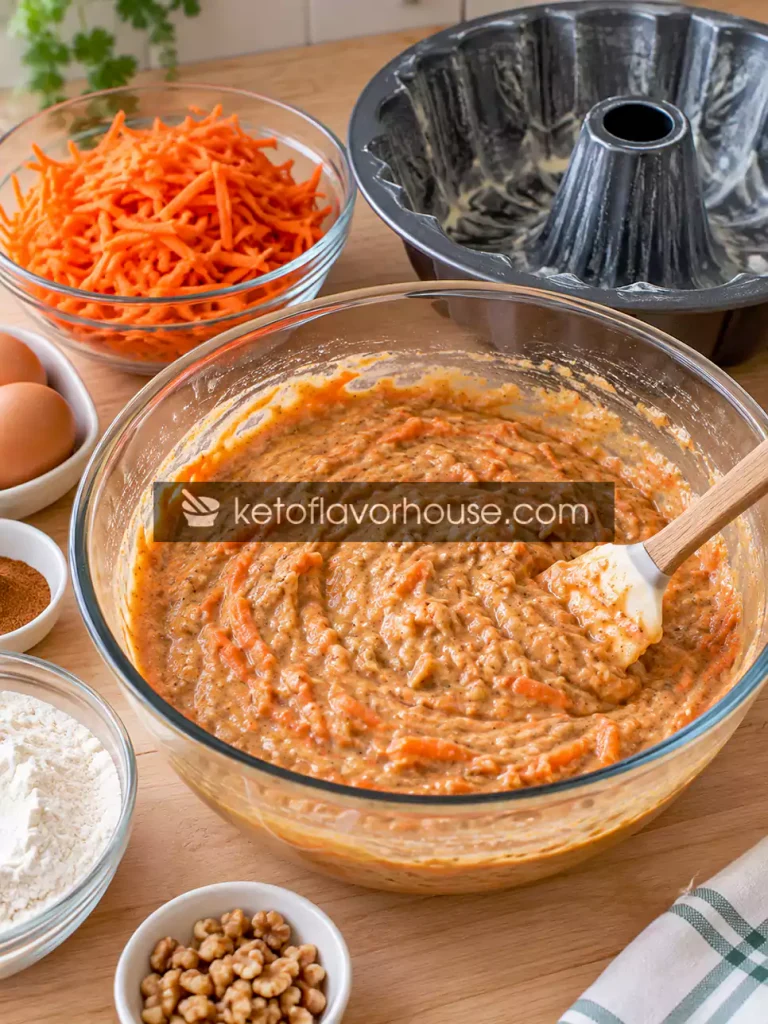
Step 6: Fill the Bundt Pan
Transfer the batter into the prepared pan. Spread it evenly around the ring and gently tap the pan against a folded kitchen towel on the counter to release large air pockets.
The batter should sit in a reasonably even layer. Avoid filling the pan beyond its capacity; the cake needs room to rise without spilling over.
Run a spatula around the top to level the batter. If it has collected more heavily on one side, smooth it out before baking.
Step 7: Bake Until Set
Bake at 350°F (175°C) for approximately 35–45 minutes, beginning to check around the 35-minute mark. Exact timing depends on the pan’s size, material, and the oven.
The cake should be golden, and the top should spring back gently when touched. A toothpick inserted into the thickest section should come out clean or with a few moist crumbs, not wet batter.
If the outside is browning too quickly while the center remains underdone, continue baking and check again after a few minutes. Avoid opening the oven repeatedly during the early part of baking because sudden temperature changes can interfere with rising.
Step 8: Cool Before Unmolding
Place the pan on a heat-safe surface and let the cake rest for about 10–15 minutes. This short cooling period helps the structure settle so the cake is less likely to break.
Carefully loosen any edges that appear stuck, using a thin, non-damaging utensil if necessary. Place a cooling rack or serving plate over the pan and invert it in one controlled movement.
If the cake does not release, do not force it immediately. Let it rest for a few more minutes and gently tap the pan. Once released, allow it to cool completely before slicing or adding a glaze.
Step 9: Slice and Serve
When the cake is fully cool, divide it into 12 similar portions. Use a sharp knife and wipe the blade between cuts if you want cleaner slices.
For easier WW tracking, make the slices as consistent as possible. A decorative Bundt cake can have narrow and wide sections, so simply cutting it into 12 pieces by eye may produce uneven servings.
Serve it plain, with a light dusting of powdered sugar, or with a small measured amount of glaze. Add any topping to your Points calculation rather than treating it as part of the original estimate.
Step-by-Step Visual Guide
From carrots to cake
Grease every groove and preheat to 350°F. Look for: an evenly coated pan with no heavy pools of oil.
Combine the wet ingredients, carrots, and dry mixture. Look for: a thick batter with carrot shreds distributed throughout.
Bake for about 35–45 minutes. Look for: a golden surface, a springy top, and a toothpick without wet batter.
Rest in the pan, unmold carefully, then cool completely. Look for: intact ridges and slices that hold their shape.
Common Mistakes to Avoid
1. Packing Too Much Flour Into the Measuring Cup
Too much flour is one of the easiest ways to make a homemade cake dry. Scooping directly from the flour bag can compact the flour and give you more than the recipe needs.
The fix: Spoon flour into the measuring cup and level it with a straight edge. If possible, weigh it according to the measurement standard you use consistently.
2. Using Coarsely Grated Carrots
Thick carrot shreds can remain more noticeable in the finished cake and may distribute unevenly through the batter.
The fix: Grate the carrots finely enough to blend into the crumb. Do not puree them, though, because pureed carrots can release a different amount of moisture and change the batter’s consistency.
3. Overmixing After Adding Flour
Mixing for too long can develop gluten and make the cake chewy rather than tender.
The fix: Fold gently and stop once the flour is incorporated. A few small lumps are less concerning than a batter that has been beaten excessively.
4. Opening the Oven Too Often
Repeatedly opening the oven releases heat and can interfere with the cake’s rise.
The fix: Leave the cake undisturbed during the early baking period. Start checking near the lower end of the suggested baking time, then check at short intervals if needed.
5. Removing the Cake Too Soon
A hot Bundt cake is delicate. Turning it out immediately can cause sections to break, especially around the center tube and decorative ridges.
The fix: Allow approximately 10–15 minutes of cooling in the pan before unmolding. If the cake sticks, pause and loosen it gently rather than pulling hard.
6. Cutting Uneven Portions
A large slice may contain substantially more flour, sugar, and oil than a small one. That means its Points contribution can be higher, too.
The fix: Divide the cooled cake into 12 similar slices. If portion accuracy is particularly important, weigh the whole cooled cake and divide the weight by 12 to establish a consistent serving weight.
Pro Tips for the Best Results
- Use fresh carrots. They provide the flavor and moisture this recipe needs. Old, dry carrots may contribute less moisture and a less vibrant flavor.
- Measure the oil rather than pouring freely. Oil contributes tenderness, but adding extra changes the nutrition calculation and can make the cake greasy.
- Bring the eggs to room temperature if convenient. They blend more easily into the other ingredients, helping create a uniform batter.
- Do not skip the pan preparation. A beautifully baked cake is disappointing if half of its ridges remain stuck to the pan.
- Wait until the cake is completely cool before glazing. Warm cake melts the topping, which can run off the sides instead of creating a neat finish.
- Keep the base recipe simple on your first bake. Once you know your oven’s timing and how your Bundt pan performs, experiment with nuts, raisins, or different spices.
- Measure optional toppings separately. A modest amount of glaze may be all you need, and keeping it separate makes portion calculations easier.
Why Moisture Matters in a Lighter Cake
Reducing oil can help lower the fat content, but oil also contributes tenderness and a soft mouthfeel. Applesauce helps replace some of the moisture, yet it does not behave exactly like oil. If you remove too much fat, the cake can become rubbery or dry after refrigeration.
That is why this recipe uses a measured amount of oil rather than eliminating it entirely. The balance between applesauce, eggs, carrots, and oil helps create a cake that is still enjoyable as a dessert.
Troubleshooting: What Went Wrong?
Carrot cake troubleshooting
If your first cake is slightly imperfect, it can still be enjoyable. A slice that breaks during unmolding can be served in a bowl with a small spoonful of yogurt or a measured topping. The important lesson is to identify whether the issue came from the pan, the batter, or the baking time before changing multiple ingredients at once.
WW-Specific Nutrition and Strategy
A homemade dessert can fit into a Weight Watchers routine when you plan the serving size and account for the ingredients accurately. This carrot cake is not a zero-Points food, and the carrots do not cancel out the flour, sugar, or oil. Its advantage is that you can decide what goes into it and how it is portioned.
Think About the Whole Serving
The estimated Points range assumes 12 servings. If you cut the cake into eight large slices instead, each slice will contain more of the recipe’s ingredients. Cutting it into smaller pieces can help with portion management, although the actual Points still need to be calculated using the applicable WW system.
Pair Dessert With a Balanced Meal
You do not need to skip meals or compensate for dessert by following an extreme eating pattern. Instead, build your usual meals around foods that help you feel satisfied, such as lean protein, vegetables, fruit, and other foods that suit your plan.
If you want a small dessert after dinner, a consistent slice of cake can be planned alongside your regular meals. A piece of fresh fruit may be a suitable additional option when you want more volume, but it does not change the Points value of the cake itself.
Avoid Assuming That Lower Calories Automatically Mean Lower Points
Calories, macronutrients, and WW Points are related but are not interchangeable measures. A substitution that reduces calories may not change Points in the same way, depending on your plan’s calculation. Likewise, a product marketed as sugar-free or reduced-fat is not automatically zero Points.
For reliable tracking, calculate the exact recipe you make and use the result shown for your account. Daily Points budgets vary, so there is no single serving size that is appropriate for every WW member.
Variations You Can Try
Cinnamon-Ginger Carrot Cake
Add approximately ½ teaspoon of ground ginger to the dry ingredients. Ginger gives the cake a warmer, slightly sharper spice profile that works well with the carrots and cinnamon.
The extra spice has little effect on the overall nutrition in such a small amount, but calculate any other ingredient changes separately.
Carrot Cake With Walnuts
Fold in a measured amount of chopped walnuts if you enjoy a little crunch. Walnuts add richness and texture, but they also contribute fat, calories, and potentially additional Points. Recalculate the complete recipe with the amount you use.
Raisin Carrot Bundt Cake
Add a small, measured quantity of raisins for chewy sweetness. Raisins are concentrated dried fruit, so their carbohydrates and sugars can add up quickly. The cake may taste sweeter, and you may decide you do not need as much added sugar, but any sugar reduction should be tested rather than assumed to work perfectly.
Pineapple Carrot Cake
A small amount of well-drained crushed pineapple can add fruity sweetness and moisture. However, pineapple introduces additional liquid. Drain it thoroughly, use a measured quantity, and check the cake for doneness because excess moisture may affect the center.
Light Cream Cheese Finish
For a more traditional carrot-cake appearance, prepare a thin glaze with softened cream cheese, a little powdered sugar, and a small amount of milk or lemon juice. Use a modest drizzle rather than a thick blanket of frosting.
Cream cheese and powdered sugar both affect the nutrition and estimated Points. Calculate the topping separately and divide it evenly among the slices if you want consistent servings.
Mini Carrot Cakes
You can bake the batter in a muffin pan instead of a Bundt pan, but the baking time will be shorter and depends on the size of the cavities. Begin checking well before the Bundt cake’s usual baking time.
Mini cakes can make portioning easier, but their individual Points should be calculated using the number of portions produced and the exact ingredients. Do not simply copy the estimate for a full Bundt-cake slice.
Tips for Serving and Presentation
A Bundt cake already has a decorative shape, so it does not need elaborate styling. Let the ridges and warm golden color do most of the work.
For a simple presentation, place the fully cooled cake on a plain serving plate and dust it lightly with powdered sugar just before serving. If you prefer a glaze, use a spoon to drizzle narrow lines across the top and allow them to settle before slicing.
When photographing the cake for your website, show the entire Bundt cake with its center opening visible. A separate slice can reveal the tender interior and flecks of carrot. Use natural window light and a simple wooden or neutral surface to make the cake look homemade rather than overly staged.
For portion control, cut the cake into 12 reasonably even slices before serving it at a gathering. If you are serving guests who prefer smaller desserts, you can cut smaller pieces and calculate the Points according to the amount eaten. Avoid assuming that a small-looking slice always contains the same amount as another slice from the opposite side of the cake.
Optional Additions
Optional toppings can make this cake feel more festive, but they should be treated as additions rather than included automatically in the base recipe.
- Powdered sugar: A light dusting adds a classic finish with very little additional preparation. Measure it if you are tracking closely.
- Cream cheese glaze: Provides tang and richness. Its contribution depends on the cream cheese, sugar, and milk used.
- Chopped walnuts or pecans: Add crunch and a buttery flavor, along with additional fat and calories.
- Raisins: Add chewy sweetness and concentrated fruit flavor.
- Orange zest: A little finely grated zest can brighten the cinnamon and carrot flavors with minimal change to the overall recipe.
- Extra cinnamon: A small pinch on top adds aroma without requiring a high-Points topping.
The most practical approach is to choose one finishing touch rather than layering several toppings together. That keeps the carrot flavor prominent and makes the final serving easier to estimate.
Serving Ideas
Carrot Bundt cake is versatile enough for a casual family dessert or a more formal gathering. Its warm spices suit cool-weather meals, but the flavor is familiar enough to serve year-round.
Ways to serve a slice
For a potluck, bring the cake without glaze and offer a small amount of topping separately. That makes it easier to accommodate different preferences and avoids applying a topping that some guests may not want.
For a family dessert, the cake can be served plain with fruit alongside it. For a more festive occasion, a thin cream cheese glaze and a little orange zest can make it look special without covering the entire surface.
Storage Recommendations
At Room Temperature
If the cake is plain and contains no perishable frosting, store it covered in a cool, dry place for a short period. For best quality and a cautious food-safety approach, refrigerate leftovers within two hours of baking or serving, especially in warm conditions. If you add a cream cheese topping, refrigeration is necessary.
In the Refrigerator
Store cooled cake in an airtight container or wrap it well to prevent it from drying out or absorbing odors. Plain cake is generally best enjoyed within 3–4 days in the refrigerator for quality. Keep cream-cheese-topped cake refrigerated and follow safe handling guidance for perishable ingredients.
The cold can make the crumb feel firmer because the oil and moisture behave differently at lower temperatures. Let a portion sit out briefly before serving if you prefer a softer texture, but do not leave perishable toppings at room temperature for extended periods.
Freezing the Cake
Carrot Bundt cake can be frozen. For the best result, freeze it without glaze. Once completely cool, wrap individual slices tightly and place them in a freezer-safe container or bag. Label the package with the date.
For best quality, use frozen slices within about 2–3 months. They may remain safe longer if continuously frozen, but flavor and texture can decline over time. Thaw slices in the refrigerator or in a covered container in the refrigerator overnight, then bring them closer to room temperature before serving.
Reheating and Serving Again
This cake is usually best served at room temperature rather than reheated. If you prefer a slightly warm slice, heat it briefly and gently, checking frequently so the edges do not dry out. Do not heat it in packaging that is not microwave-safe.
Refrigerating, freezing, or gently reheating the same ingredients does not materially change the recipe’s original Points calculation. However, any added topping or change in the amount served should be included in your tracking.
Storage Timeline
Keep every slice fresh
Cool completely
Let the cake cool before wrapping so trapped steam does not create a damp surface.
Refrigerate
Keep covered at 40°F (4°C) or below. Aim to enjoy plain leftovers within 3–4 days.
Serve or thaw
Bring a refrigerated slice toward room temperature briefly, or thaw a frozen slice in the refrigerator.
Freeze extras
Wrap individual portions and freeze for best quality within about 2–3 months.
Keep cream cheese-topped cake refrigerated. Discard cake that has been handled unsafely or shows signs of spoilage.
Frequently Asked Questions
1. Is this Weight Watchers Carrot Bundt Cake officially low in Points?
The recipe is designed with measured amounts of oil and sugar, but it is not an officially verified WW recipe. The estimated 7–9 SmartPoints per slice is an independent planning range based on 12 servings. Your current WW app may show a different result because the program and individual member settings affect the calculation.
2. How can I reduce the Points per slice?
Start by measuring the oil and sugar accurately, avoiding unmeasured additions, and serving consistent portions. You can test a suitable baking sweetener or replace part of the oil with applesauce, but both changes affect the cake’s texture and must be recalculated in the app. Do not assume that a substitution will reduce Points by a particular amount without checking the complete revised recipe.
3. Can I make the cake without applesauce?
You can experiment with another suitable moisture source, such as plain yogurt, but the texture will change. Yogurt may make the crumb slightly tangier, while a different moisture level can affect baking time. Recalculate nutrition and Points using the exact replacement and quantity.
4. Can I add cream cheese frosting?
Yes. Cream cheese frosting is a natural pairing with carrot cake, especially if you enjoy a tangy contrast to the sweet, spiced crumb. However, frosting adds ingredients that are not included in the base recipe estimate. Measure the topping and calculate the revised serving rather than using the plain cake’s Points value.
5. Why did my Bundt cake stick to the pan?
The decorative grooves can trap batter if the pan is not greased thoroughly. Grease the center tube and all the ridges, then allow the cake to cool for about 10–15 minutes before turning it out. A pan with a damaged nonstick surface may also release cake less reliably.
6. Can I freeze individual slices?
Yes. Allow the cake to cool completely, cut it into portions, wrap each slice well, and place the portions in a freezer-safe container. For best quality, use them within approximately 2–3 months. Thaw in the refrigerator and serve once the texture has softened.
7. Why does my WW app show a different Points value?
WW’s calculation can depend on the program available to you, the ingredients entered, product nutrition labels, and serving count. The estimate in this article is not an official calculator result. Enter the exact ingredients and quantities into your current app, select the correct number of servings, and use your account’s result for tracking.
Nutritional Breakdown Per Serving
The following values are rough estimates for one of 12 slices, without optional glaze, nuts, or raisins. They are planning figures, not laboratory results or a verified nutrition-label calculation.
| Nutrient | Estimated amount per slice |
|---|---|
| Calories | 220–250 kcal |
| Protein | 3–5 g |
| Total fat | 8–10 g |
| Total carbohydrates | 34–39 g |
| Fiber | 1–2 g |
| Net carbohydrates | 32–38 g |
| Sugar | 16–20 g |
| Sodium | 150–230 mg |
| Estimated SmartPoints | 7–9 |
Actual values will vary with the size and moisture content of the carrots, the flour measurement, product brands, and the exact size of each slice. The net carbohydrate estimate is total carbohydrates minus fiber; net carbs are not the same as WW Points.
Recipe Snapshot
- Prep Time: 20 minutes
- Cook Time: 35–45 minutes
- Cooling Time: 10–15 minutes in the pan, plus additional time to cool completely
- Total Time: Approximately 1 hour 5 minutes to 1 hour 20 minutes, excluding full cooling
- Course: Dessert
- Cuisine: American-inspired
- Servings: 12
- Calories per Serving: Approximately 220–250
- Estimated SmartPoints per Serving: Approximately 7–9, unverified
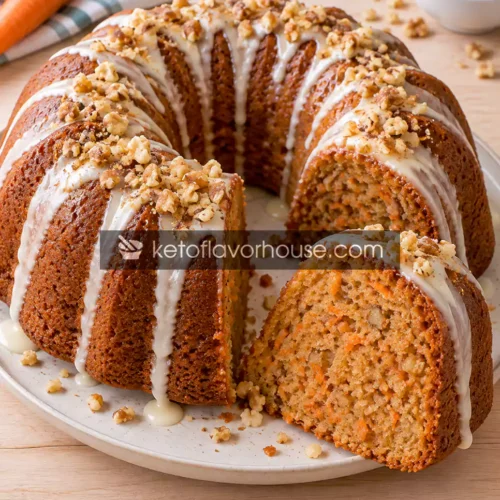
Weight Watchers Carrot Bundt Cake

Ingredients
- 2 cups all-purpose flour
- 2 cups finely grated carrots
- ¾ cup granulated sugar
- ½ cup unsweetened applesauce
- ⅓ cup neutral oil
- 2 large eggs
- 1 teaspoon vanilla extract
- 2 teaspoons ground cinnamon
- 1 teaspoon baking powder
- ½ teaspoon baking soda
- ¼ teaspoon salt
- Baking spray or a little oil for greasing the Bundt pan
Instructions
- Preheat the oven to 350°F (175°C). Thoroughly grease a standard 10- to 12-cup Bundt pan, including the center tube and grooves.
- Wash, peel, and finely grate the carrots. Measure 2 cups after grating.
- In a medium bowl, whisk together the flour, cinnamon, baking powder, baking soda, and salt.
- In a large bowl, whisk the eggs and sugar. Add the applesauce, oil, and vanilla, and mix until combined.
- Stir the grated carrots into the wet mixture.
- Add the dry ingredients in two additions. Fold gently until no visible dry flour remains; avoid overmixing.
- Transfer the batter to the prepared Bundt pan and spread it evenly.
- Bake for 35–45 minutes, checking from about 35 minutes onward. The cake is ready when the top springs back gently and a toothpick inserted into the thickest section comes out clean or with a few moist crumbs.
- Let the cake cool in the pan for 10–15 minutes. Carefully invert it onto a cooling rack or serving plate.
- Cool completely before slicing into 12 portions. Serve plain or with a measured optional topping.