This post may contains Amazon affiliate and other affiliate links. If you make a purchase through these links, I may earn a small commission at no extra cost to you. Your support helps me continue to provide quality content. I only recommend products I personally trust and believe will add value to your experience. For more details, please visit my Privacy Policy.
Introduction
There are certain days when I crave the comfort of a warm, crispy sandwich but don’t want the heaviness that often comes with traditional comfort foods. Maybe it’s after a weekend of indulgent meals, when my energy feels a little off and I’m longing for something that feels nourishing without sacrificing flavor. Those are the moments when this Anti-Inflammatory Mediterranean Grilled Vegetable Sandwich becomes exactly what I need.
I first started making this sandwich during busy workweeks when I wanted lunches that felt satisfying but still aligned with my goal of incorporating more anti-inflammatory meals into my routine. There is something incredibly comforting about biting into toasted bread filled with creamy hummus, sweet roasted red peppers, tender grilled vegetables, fresh greens, and just enough melty cheese to bring everything together. It feels indulgent in the best possible way while still being packed with wholesome Mediterranean ingredients.
This Anti-Inflammatory Mediterranean Grilled Vegetable Sandwich beautifully balances comfort and nourishment. Rich extra virgin olive oil, vibrant vegetables, leafy greens, herbs, and optional omega-3-rich salmon create a meal that feels substantial without leaving you sluggish afterward. The combination of textures is part of its charm too. You get the crunch of toasted bread, the silkiness of hummus or pesto, the slight smokiness from grilled vegetables, and the freshness of spinach or arugula in every bite.
One of the reasons I return to this recipe so often is how realistic it is for everyday life. Whether you’re working from home, packing lunches for busy weekdays, or simply looking for a quick healthy dinner, this sandwich fits seamlessly into your routine. Most of the ingredients are pantry staples or easy-to-find produce items, and the recipe is highly customizable depending on what you have available.
This sandwich is ideal for:
- Anyone looking for anti-inflammatory lunch ideas
- Busy individuals who need easy healthy meals
- Those who enjoy Mediterranean-inspired recipes
- Families wanting vegetable-forward comfort food
- People seeking healthy comfort food without complicated preparation
- Anyone interested in adding more wholesome ingredients to their diet
What I love most is that this recipe doesn’t feel like you’re “trying to eat healthy.” It simply tastes delicious. The Mediterranean flavors naturally complement one another, creating a sandwich that’s cozy, satisfying, and something you’ll genuinely look forward to making again.
💚 Why You’ll Love This Recipe
- 🥬 Loaded with anti-inflammatory ingredients like olive oil, leafy greens, tomatoes, garlic, and Mediterranean herbs.
- ⚡ Supports balanced energy levels thanks to fiber-rich vegetables and wholesome ingredients.
- 🍽️ Satisfying and balanced, offering comfort without feeling overly heavy.
- 👩🍳 Simple to prepare with everyday ingredients and minimal cooking skills required.
- 🧡 Features comforting flavors and textures, from crispy toasted bread to creamy hummus and melty cheese.
- 🥣 Perfect for meal prep, especially when vegetables are roasted ahead of time.
- 🔥 Naturally flavorful thanks to oregano, basil, garlic, roasted vegetables, and quality olive oil.
- 💪 Easy to boost with extra protein by adding grilled chicken or salmon.
- 🥪 Versatile enough for lunch or dinner, making it a practical addition to your weekly rotation.
- 🌿 Inspired by Mediterranean eating patterns, emphasizing whole foods and fresh ingredients.
🧠 My Personal Experience
I still remember the first time I made a version of this sandwich after returning from a vacation filled with restaurant meals and very little routine. I wasn’t looking for a strict reset or trying to follow a complicated meal plan. I simply wanted food that tasted good and made me feel good afterward.
I had roasted vegetables left over from dinner the night before, some fresh arugula in the refrigerator, and a container of hummus waiting to be used. I layered everything between slices of sourdough bread, grilled it until the outside turned beautifully crisp, and took the first bite standing right in my kitchen.
It was exactly what I had been craving.
The roasted red peppers added sweetness, the zucchini brought a smoky tenderness, and the hummus tied everything together with creamy richness. It felt indulgent yet incredibly fresh at the same time.
Since then, this sandwich has become one of my favorite healthy comfort food recipes. I often make extra grilled vegetables specifically so I can enjoy it for lunch the next day. It reminds me that nourishing meals don’t have to be complicated or restrictive. Sometimes, simple Mediterranean ingredients prepared thoughtfully create the most satisfying dishes.
What keeps me coming back to this recipe is how I feel after eating it. It’s filling enough to keep me satisfied, but light enough that I don’t experience that heavy, sluggish feeling that sometimes follows more processed comfort foods.
It’s become one of those recipes I genuinely look forward to making, especially during busy seasons when I need meals that are both practical and comforting.
🧰 Required Equipment
Large Skillet or Grill Pan
A large skillet or grill pan is essential for achieving beautifully toasted bread and perfectly grilled vegetables.
Why It Matters:
- Creates crispy, golden bread.
- Helps vegetables develop slight caramelization.
- Provides even heat distribution.
Helpful Tip: A cast-iron grill pan creates attractive grill marks and adds subtle smoky flavor.
Alternative: A nonstick skillet or panini press works wonderfully as well.
Sharp Chef’s Knife
A sharp knife makes slicing vegetables safer and more efficient.
Why It Matters:
- Creates even slices for consistent cooking.
- Prevents squashing softer vegetables like roasted peppers.
Helpful Tip: Keep zucchini and eggplant slices similar in thickness for even grilling.
Cutting Board
A sturdy cutting board provides a stable surface for vegetable prep and sandwich assembly.
Why It Matters:
- Improves kitchen safety.
- Helps organize ingredients during preparation.
Alternative: Use separate boards for vegetables and proteins if adding chicken or salmon.
Small Mixing Bowl
Useful for combining olive oil with herbs and seasonings before brushing vegetables.
Why It Matters:
- Helps distribute flavors evenly.
- Keeps prep organized.
Measuring Spoons
Measuring spoons ensure balanced seasoning without overpowering the delicate Mediterranean flavors.
Helpful Tip: Level herbs and spices for consistency.
Spatula
A sturdy spatula makes flipping sandwiches easier without losing fillings.
Why It Matters:
- Prevents ingredients from spilling out.
- Helps maintain sandwich structure.
Alternative: A panini press eliminates the need for flipping entirely.
Pastry Brush
Ideal for lightly brushing bread with olive oil.
Why It Matters:
- Prevents overly greasy sandwiches.
- Encourages even browning.
Alternative: Use the back of a spoon if you don’t have a pastry brush.
🥬 Ingredients & Substitutions
Whole Grain or Sourdough Bread (2 slices)
The bread forms the foundation of the sandwich and provides satisfying texture.
Role in the Recipe:
- Creates crispy exterior layers.
- Holds the flavorful fillings together.
- Adds substance to the meal.
Nutritional Benefits:
Whole grain bread contributes fiber, while sourdough offers a tangy flavor many people enjoy.
Substitutions:
- Gluten-free bread
- Sprouted grain bread
- Low-carb sandwich bread
- Ciabatta rolls
Effects on the Recipe:
- Gluten-free bread may require gentler handling.
- Ciabatta creates a heartier sandwich.
- Low-carb breads produce a lighter result.
Extra Virgin Olive Oil (1–2 tablespoons)
Olive oil provides richness and helps the bread toast beautifully.
Role in the Recipe:
- Encourages crisp golden bread.
- Enhances Mediterranean flavors.
- Helps grill vegetables evenly.
Nutritional Benefits:
Olive oil contains monounsaturated fats commonly featured in anti-inflammatory eating patterns.
Substitutions:
- Avocado oil
- Light olive oil
Flavor Impact:
Extra virgin olive oil provides the most robust Mediterranean flavor.
Fresh Spinach or Arugula (1 cup)
Leafy greens add freshness, color, and texture.
Role in the Recipe:
- Balances richer ingredients.
- Provides slight crunch.
- Enhances nutritional variety.
Substitutions:
- Mixed greens
- Baby kale
- Romaine lettuce
Flavor Differences:
- Arugula offers peppery notes.
- Spinach provides a milder taste.
Roasted Red Peppers (¼ cup)
These peppers add natural sweetness and vibrant color.
Role in the Recipe:
- Creates moisture and tenderness.
- Balances savory components.
Substitutions:
- Fresh bell peppers
- Sun-dried tomatoes
- Roasted cherry tomatoes
Flavor Impact:
Sun-dried tomatoes offer a more concentrated flavor profile.
Tomato Slices (2–3 slices)
Tomatoes contribute freshness and juiciness.
Role in the Recipe:
- Adds acidity.
- Enhances Mediterranean character.
Substitutions:
- Heirloom tomatoes
- Roma tomatoes
- Cherry tomatoes, sliced
Tip: Pat tomato slices dry to prevent sogginess.
Grilled Zucchini or Eggplant (½ cup)
These vegetables provide hearty texture and smoky depth.
Role in the Recipe:
- Adds substance.
- Creates comforting grilled flavors.
Substitutions:
- Portobello mushrooms
- Grilled asparagus
- Artichoke hearts
Flavor Differences:
Eggplant offers richer texture, while zucchini remains lighter.
Fresh Mozzarella (1–2 slices) or Feta Cheese (2 tablespoons)
Cheese provides creaminess and satisfying richness.
Role in the Recipe:
- Helps bind ingredients together.
- Adds comforting texture.
Substitutions:
- Goat cheese
- Dairy-free cheese alternatives
- Ricotta spread
Flavor Differences:
Feta adds saltiness, while mozzarella offers mild creaminess.
Hummus or Olive Oil-Based Pesto (1–2 tablespoons)
This layer creates flavor and moisture.
Role in the Recipe:
- Prevents dryness.
- Adds richness and complexity.
Substitutions:
- White bean spread
- Avocado mash
- Tzatziki
Texture Impact:
Hummus creates creaminess, while pesto provides herbaceous richness.
Garlic (1 small clove, minced)
Garlic contributes aromatic depth.
Role in the Recipe:
- Enhances Mediterranean flavors.
- Complements roasted vegetables.
Substitutions:
- Garlic powder (¼ teaspoon)
- Roasted garlic spread
Dried Oregano (¼ teaspoon)
Oregano adds earthy Mediterranean character.
Substitutions:
- Italian seasoning
- Fresh oregano
Fresh Basil Leaves (4–5 leaves)
Basil brings brightness and freshness.
Substitutions:
- Fresh parsley
- Baby spinach
- Fresh mint
Black Pepper (¼ teaspoon)
Adds subtle warmth and balances flavors.
Optional Protein Additions
Grilled Chicken (3–4 ounces)
Provides additional protein for a more substantial meal.
Salmon (3–4 ounces)
Offers omega-3 fats while pairing beautifully with Mediterranean ingredients.
Chickpeas (¼ cup)
A vegetarian protein option that complements the sandwich perfectly.
👩🍳 How to Make Anti-Inflammatory Mediterranean Grilled Vegetable Sandwich
Step 1: Prepare the Vegetables
Begin by washing and drying all of your fresh vegetables thoroughly. Slice the zucchini or eggplant into thin rounds or lengthwise strips, aiming for pieces about ¼-inch thick. Uniform slices help the vegetables cook evenly and make the sandwich easier to assemble later.
Slice the tomatoes into medium-thick rounds and gently pat them dry with paper towels. This small step helps prevent excess moisture from making the sandwich soggy.
If using jarred roasted red peppers, drain them well and blot away any excess liquid. If you’re roasting your own peppers, allow them to cool slightly before peeling and slicing.
Wash and dry the spinach or arugula, setting it aside until assembly.
Helpful Tip: Preparing all your ingredients before cooking makes the process much smoother and helps you avoid overcooking any components.
Step 2: Season and Grill the Vegetables
Heat a grill pan or large skillet over medium heat.
Lightly brush both sides of the zucchini or eggplant slices with a small amount of extra virgin olive oil. Sprinkle them with:
- Minced garlic (or garlic powder)
- Dried oregano
- Fresh basil (if using chopped basil)
- A pinch of black pepper
- A small amount of sea salt
Place the vegetables in the hot skillet in a single layer.
Cook for approximately 3–4 minutes per side, or until they develop light golden grill marks and become tender while still maintaining their structure.
The vegetables should be soft enough to bite through comfortably but not so soft that they become mushy.
Once cooked, transfer them to a plate and set aside.
Kitchen Tip: Avoid overcrowding the pan. Cooking in batches allows the vegetables to caramelize properly rather than steam.
Step 3: Prepare the Bread
Lay the slices of whole grain or sourdough bread on a clean work surface.
Using a pastry brush or the back of a spoon, lightly brush the outer sides of each slice with extra virgin olive oil. You only need a thin layer to encourage crisp, golden browning.
Avoid saturating the bread with too much oil, as excessive oil can make the sandwich feel greasy.
Helpful Tip: If you enjoy extra flavor, lightly rub a cut garlic clove over the inside of the bread before assembling.
Step 4: Spread the Hummus or Pesto
Turn the bread slices over so the un-oiled sides are facing up.
Spread 1–2 tablespoons of hummus or olive oil-based pesto evenly across the inside surfaces of the bread.
This layer serves several purposes:
- Adds creaminess and moisture
- Enhances Mediterranean flavor
- Helps hold the vegetables in place
- Prevents the sandwich from becoming dry
If using pesto, spread it evenly so every bite receives its herbaceous flavor.
Beginner-Friendly Tip: Hummus creates a milder, creamier sandwich, while pesto offers a bolder, more aromatic profile.
Step 5: Layer the Sandwich Fillings
Now comes the fun part—building the sandwich.
On one slice of bread, begin layering the ingredients in this order:
- Fresh spinach or arugula
- Grilled zucchini or eggplant
- Roasted red peppers
- Tomato slices
- Fresh mozzarella or crumbled feta
- Additional basil leaves, if desired
If using grilled chicken or salmon, add it at this stage.
Try to distribute the fillings evenly across the surface of the bread. Overfilling may cause the sandwich to fall apart during grilling.
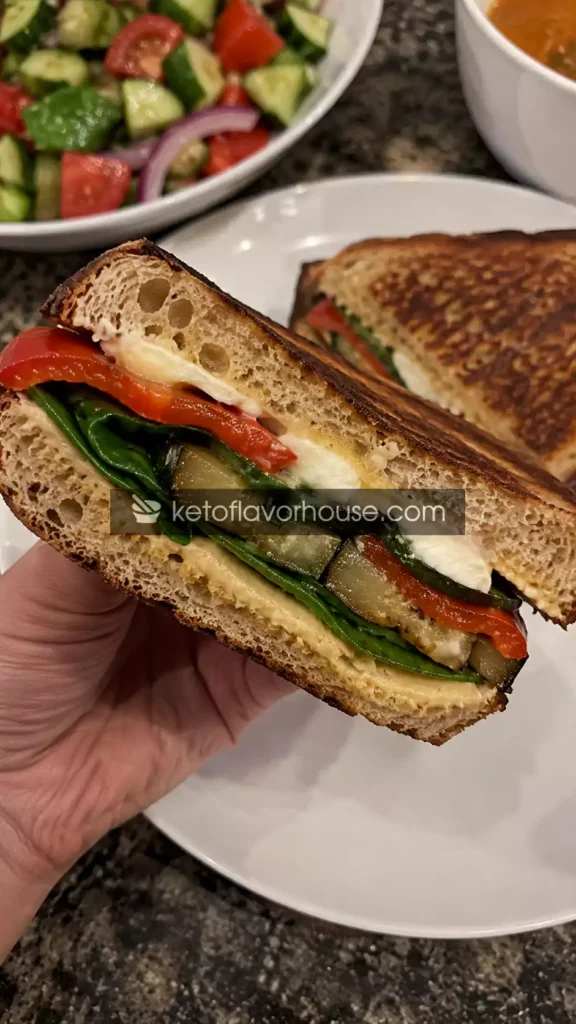
The combination should look colorful and inviting, with vibrant greens, deep red peppers, creamy cheese, and golden grilled vegetables peeking through the layers.
Top with the second slice of bread, keeping the olive oil-coated side facing outward.
Step 6: Grill the Sandwich Until Golden and Crispy
Return the skillet or grill pan to medium-low heat.
Carefully place the assembled sandwich into the pan.
Cook for approximately 3–4 minutes on the first side, gently pressing down occasionally with a spatula to encourage even browning.
Flip the sandwich carefully and cook for another 3–4 minutes on the opposite side.
The sandwich is ready when:
- The bread is golden brown and crispy
- The cheese has softened or melted
- The fillings are warmed through
If the bread is browning too quickly before the cheese softens, reduce the heat slightly.
Helpful Tip: Using medium-low heat ensures the interior warms properly without burning the bread.
Step 7: Rest Briefly Before Slicing
Transfer the grilled sandwich to a cutting board and allow it to rest for 1–2 minutes before slicing.
This brief resting period allows the cheese and fillings to settle slightly, making the sandwich easier to cut and eat.
Using a sharp knife, slice the sandwich diagonally for the classic café-style presentation.
The melted cheese, roasted vegetables, and vibrant greens should create beautiful layers inside.
Step 8: Serve and Enjoy
Serve the sandwich immediately while the bread is still crisp and the fillings are warm.
For a complete Mediterranean-inspired meal, pair it with:
- Cucumber salad
- Lentil soup
- Mixed greens
- Fresh fruit
- Roasted vegetable soup
Enjoy every bite slowly. The combination of creamy hummus, savory vegetables, fresh herbs, and crisp bread creates a comforting yet nourishing eating experience.
⚠️ Common Mistakes to Avoid
Overfilling the Sandwich
It’s tempting to add extra vegetables and toppings, but too much filling can make the sandwich difficult to flip and eat.
How to Avoid It:
- Use moderate portions.
- Build even layers.
Using Too Much Oil
Excess oil can lead to greasy bread instead of crisp, golden toast.
How to Avoid It:
- Apply only a thin coating with a pastry brush.
Skipping Moisture Control
Tomatoes and roasted peppers can release excess liquid.
How to Avoid It:
- Pat vegetables dry before assembling.
Overcooking the Vegetables
Vegetables that are cooked too long lose their structure and become mushy.
How to Avoid It:
- Grill just until tender with slight firmness remaining.
Cooking Over High Heat
High temperatures can burn the bread before the interior warms through.
How to Avoid It:
- Use medium-low heat for even cooking.
Using Processed Spreads
Highly processed spreads can overpower the fresh Mediterranean flavors.
How to Avoid It:
- Choose quality hummus or olive oil-based pesto.
Oversalting the Sandwich
Ingredients like feta and pesto already contribute saltiness.
How to Avoid It:
- Taste ingredients individually before adding extra salt.
🔥 Pro Tips for Best Results
- Use fresh basil for brighter Mediterranean flavor.
- Brush bread lightly with extra virgin olive oil instead of butter.
- Grill vegetables ahead of time for faster assembly during busy weekdays.
- Add a squeeze of fresh lemon juice before serving for extra brightness.
- Use fresh garlic instead of garlic powder whenever possible.
- If adding chicken or salmon, season them simply with oregano, garlic, olive oil, and black pepper.
- Reheat leftover sandwiches in a skillet rather than a microwave to maintain crispness.
- Layer leafy greens away from the hottest surfaces to preserve freshness.
- Use sourdough bread for additional texture and flavor complexity.
- Allow grilled vegetables to cool slightly before assembly to prevent steam buildup.
🧬 Anti-Inflammatory Benefits of Mediterranean Vegetables
The Mediterranean ingredients in this sandwich naturally support a balanced, whole-food approach to eating.
Leafy Greens Provide Nutritional Variety
Spinach and arugula contribute:
- Fiber
- Folate
- Vitamin K
- Naturally occurring antioxidants
These greens add freshness and nutritional diversity to the meal.
Olive Oil Offers Healthy Fats
Extra virgin olive oil is a cornerstone of Mediterranean eating patterns.
It provides:
- Monounsaturated fats
- Rich flavor
- Enhanced satisfaction during meals
Using olive oil also helps make vegetable-forward meals feel more indulgent and comforting.
Tomatoes Add Brightness and Color
Tomatoes contribute:
- Vitamin C
- Potassium
- Lycopene, a naturally occurring plant compound
Their acidity balances the richness of cheese and spreads beautifully.
Garlic and Herbs Build Flavor Naturally
Garlic, oregano, and basil transform simple ingredients into something deeply flavorful.
They allow you to rely less on processed sauces while enhancing the Mediterranean character of the sandwich.
Whole Grains Support Balanced Eating
Whole grain bread contributes fiber and substance, helping create a satisfying meal that supports lasting fullness.
Optional Salmon Adds Omega-3 Fats
If you choose to include salmon, it provides additional protein and omega-3 fatty acids commonly featured in wellness-focused eating patterns.
Overall, this sandwich demonstrates that anti-inflammatory meals can be comforting, flavorful, and deeply satisfying without feeling restrictive.
🌿 Variations You Can Try
Dairy-Free Version
Replace mozzarella or feta with:
- Dairy-free cheese alternatives
- Additional hummus
- Avocado slices
Result: Creamy texture without dairy.
Gluten-Free Option
Use your favorite gluten-free bread.
Choose varieties sturdy enough to withstand grilling.
Higher-Protein Variation
Add:
- Grilled chicken breast
- Salmon fillets
- Turkey breast
- Chickpeas
Result: More filling and suitable for larger appetites.
Vegan Version
Use:
- Hummus
- Dairy-free cheese
- Extra grilled vegetables
Skip all animal-based ingredients.
Lower-Carb Variation
Replace bread with:
- Low-carb sandwich bread
- Lettuce wraps
- Grilled portobello mushroom “buns”
Spicy Mediterranean Sandwich
Add:
- Crushed red pepper flakes
- Sliced banana peppers
- Harissa spread
For a gentle kick of heat.
Meal Prep Variation
Prepare:
- Grilled vegetables
- Cooked proteins
- Spread components
Store separately and assemble fresh throughout the week.
Different Cooking Methods
Panini Press
Creates beautifully compressed sandwiches with even crispness.
Air Fryer
Cook assembled sandwiches at 375°F for 5–7 minutes, flipping halfway through if necessary.
Oven Method
Bake at 400°F for 8–10 minutes, flipping once for even browning.
🍽️ Tips for This Recipe
- Slice vegetables evenly for consistent cooking.
- Prepare roasted vegetables in advance to save time.
- Use fresh herbs whenever possible.
- Add leafy greens just before grilling.
- Avoid excessive fillings to maintain sandwich structure.
- Store components separately for meal prep.
- Use quality olive oil for the best flavor.
- Reheat in a skillet to preserve texture.
- Pair with lighter sides for balanced meals.
- Experiment with different Mediterranean vegetables based on seasonal availability.
➕ Optional Additions
One of the things I love most about this Anti-Inflammatory Mediterranean Grilled Vegetable Sandwich is how easy it is to customize based on your cravings, nutritional needs, or whatever ingredients you happen to have on hand. These additions can elevate the sandwich while keeping its Mediterranean-inspired, anti-inflammatory focus.
Fresh Herbs
Adding fresh herbs right before serving instantly brightens the sandwich.
Try:
- Fresh basil leaves
- Chopped parsley
- Fresh dill
- Fresh oregano
- Mint for a refreshing twist
These herbs add vibrant flavor without relying on heavy sauces.
Avocado Slices
Creamy avocado makes this sandwich even more satisfying.
Recommended Amount:
- ¼–½ avocado per sandwich
Avocado pairs beautifully with roasted vegetables and hummus while contributing healthy fats.
Chili Flakes
For a subtle kick, sprinkle on:
- Red pepper flakes
- Aleppo pepper
- Crushed chili flakes
This works especially well with feta and roasted red peppers.
Seeds for Extra Texture
Add a sprinkle of:
- Hemp seeds
- Pumpkin seeds
- Sunflower seeds
These provide a pleasant crunch and additional nutritional variety.
Ground Flaxseed or Chia Seeds
For an easy fiber boost:
- 1 teaspoon ground flaxseed
- 1 teaspoon chia seeds
Mix them into hummus or sprinkle directly onto the sandwich fillings.
Functional Add-Ins
If you enjoy incorporating wellness-focused ingredients into your routine, consider:
- Unflavored collagen peptides stirred into lentil soup served alongside the sandwich
- Additional leafy greens layered inside
Fermented Toppings
A small amount of fermented vegetables can add tangy complexity.
Options include:
- Pickled onions
- Fermented cabbage
- Quick-pickled cucumbers
Additional Sauces and Spreads
Switch up the flavor profile with:
- Lemon tahini sauce
- Tzatziki
- Olive tapenade
- White bean spread
- Extra pesto
🍴 Serving Ideas
This sandwich is hearty enough to stand on its own but pairs beautifully with several wholesome side dishes.
Cozy Lunch Combination
Serve with:
- Cucumber and tomato salad
- Fresh fruit
- Sparkling water with lemon
This creates a light yet satisfying midday meal.
Mediterranean-Inspired Dinner
Pair your sandwich with:
- Lentil soup
- Roasted vegetable soup
- Tomato basil soup
The warm soup complements the crispy sandwich perfectly.
Family-Style Lunch Board
Create a Mediterranean spread with:
- Hummus
- Olives
- Fresh vegetables
- Extra grilled vegetables
- Fruit platters
Allow everyone to customize their own sandwiches.
Meal Prep Lunch Boxes
Pack alongside:
- Cucumber slices
- Bell pepper strips
- Mixed berries
- Small containers of hummus
Store components separately whenever possible.
High-Protein Anti-Inflammatory Meal
Add grilled chicken or salmon and serve with:
- Mixed greens
- Quinoa salad
- Roasted cauliflower
This creates a more substantial dinner option.
Internal Linking Opportunities for KetoFlavorHouse
This recipe naturally complements:
- Other anti-inflammatory meals
- Healthy dinner recipes
- Mediterranean-inspired recipes
- High-protein meals
- Healthy comfort food recipes
- Low-carb side dishes
🧊 Storage Recommendations
Because sandwiches are best enjoyed fresh, proper storage can make a significant difference in maintaining texture and flavor.
Refrigerator Storage
If fully assembled:
- Store in an airtight container.
- Best consumed within 24 hours.
For meal prep, store ingredients separately.
Individual Component Storage
- Grilled vegetables: 3–4 days
- Hummus or pesto: 4–5 days
- Washed greens: 3–4 days
- Cooked chicken or salmon: 3–4 days
Freezer Storage
Fully assembled sandwiches are not recommended for freezing, as the vegetables and greens may become watery upon thawing.
However:
- Grilled vegetables freeze well for up to 2 months.
- Cooked proteins freeze for 2–3 months.
Best Containers
For optimal freshness, use:
- Glass airtight containers
- BPA-free meal prep containers
- Reusable silicone storage bags
Store moist ingredients separately whenever possible.
Reheating Methods
Skillet Method (Best Option)
Heat the sandwich over medium-low heat for 2–3 minutes per side.
This restores crispness while warming the fillings.
Panini Press
Heat for 2–4 minutes until golden and heated through.
Oven Method
Bake at 350°F for 8–10 minutes.
Flip halfway through if desired.
Avoid Microwaving When Possible
Microwaves tend to soften the bread and compromise texture.
Tips for Maintaining Freshness
- Add greens immediately before serving.
- Store tomatoes separately if meal prepping.
- Reheat only what you plan to eat.
- Refresh leftovers with a squeeze of lemon juice.
❓ Frequently Asked Questions
Is this sandwich good for meal prep?
Yes. The best approach is to prepare the grilled vegetables and protein ahead of time while storing bread and greens separately. Assemble and grill the sandwich just before eating.
What makes this sandwich anti-inflammatory?
This recipe features ingredients commonly associated with anti-inflammatory eating patterns, including olive oil, leafy greens, tomatoes, garlic, herbs, whole grains, and optional omega-3-rich salmon.
Can I make this sandwich dairy-free?
Absolutely. Simply replace mozzarella or feta with dairy-free cheese alternatives, avocado slices, or additional hummus.
Can I freeze this sandwich?
The assembled sandwich isn’t ideal for freezing due to changes in vegetable texture. However, individual components such as grilled vegetables and proteins freeze well.
What protein works best with this recipe?
Grilled chicken and salmon both work beautifully. Chickpeas also provide an excellent vegetarian protein option.
How do I keep the sandwich from getting soggy?
Pat tomatoes and roasted peppers dry before assembling. Store moist ingredients separately if preparing ahead.
Can I make this gluten-free?
Yes. Use your favorite gluten-free bread that holds up well during grilling.
🧮 Nutritional Breakdown (Per Serving)
Without Optional Protein
Approximate nutrition per sandwich:
- Calories: 380
- Protein: 14g
- Fat: 20g
- Total Carbohydrates: 36g
- Fiber: 7g
- Net Carbs: 29g
With Grilled Chicken Added
- Calories: 500
- Protein: 40g
- Fat: 24g
- Total Carbohydrates: 36g
- Fiber: 7g
- Net Carbs: 29g
Values are estimates and may vary depending on ingredients used.
📌 Recipe Snapshot
- Prep Time: 15 minutes
- Cook Time: 10 minutes
- Total Time: 25 minutes
- Course: Lunch, Main Course
- Cuisine: Mediterranean
- Servings: 1 sandwich
- Calories: Approximately 380 calories

Anti-Inflammatory Mediterranean Grilled Vegetable Sandwich Recipe

Ingredients
- 2 slices whole grain or sourdough bread
- 1 –2 tablespoons extra virgin olive oil
- 1 cup fresh spinach or arugula
- ¼ cup roasted red peppers
- 2 –3 tomato slices
- ½ cup grilled zucchini or eggplant
- 1 –2 slices fresh mozzarella or 2 tablespoons crumbled feta cheese
- 1 –2 tablespoons hummus or olive oil-based pesto
- 1 small garlic clove minced (or ¼ teaspoon garlic powder)
- ¼ teaspoon dried oregano
- 4 –5 fresh basil leaves
- ¼ teaspoon black pepper
Optional Protein
- 3 –4 ounces grilled chicken
- OR 3–4 ounces cooked salmon
Instructions
- Place a grill pan or large skillet over medium heat and allow it to warm for 2–3 minutes. A properly heated pan helps the vegetables develop beautiful caramelization and prevents them from becoming soggy. If you’re using a cast-iron grill pan, give it a little extra time to heat evenly. Avoid turning the heat too high, as this can burn the vegetables before they become tender.
- While the pan heats, lightly brush both sides of the zucchini or eggplant slices with extra virgin olive oil. Sprinkle them evenly with minced garlic (or garlic powder), dried oregano, chopped fresh basil (if using), and freshly ground black pepper. The olive oil helps the seasonings adhere to the vegetables while promoting a rich, golden color during cooking.
- Arrange the seasoned vegetable slices in a single layer in the hot grill pan. Cook them for 3–4 minutes on the first side without moving them too much, allowing light grill marks and caramelization to develop. Flip the vegetables carefully and cook for another 3–4 minutes, or until they are tender but still hold their shape. The vegetables should be soft enough to bite through easily while maintaining some texture rather than becoming mushy. Transfer them to a plate and set aside.
- Lay the bread slices on a clean work surface. Using a pastry brush or the back of a spoon, lightly coat the outer sides of each slice with olive oil. You only need a thin layer to help the bread become golden and crisp during grilling. Too much oil can make the sandwich greasy instead of pleasantly crunchy.
- Turn the bread slices over so the uncoated sides are facing up. Spread 1–2 tablespoons of hummus or olive oil-based pesto evenly across the inside of each slice. This creamy layer adds moisture, flavor, and helps hold the sandwich fillings together. Make sure to spread it all the way to the edges so every bite is flavorful.
- Begin assembling the sandwich by layering the ingredients onto one slice of bread. Start with a handful of fresh spinach or arugula, followed by the grilled zucchini or eggplant. Add the roasted red peppers, tomato slices, and mozzarella or feta cheese. If you’re using optional grilled chicken or salmon for extra protein, place it on top of the vegetables. Try to distribute the ingredients evenly so the sandwich stays balanced and easy to eat.
- Place the second slice of bread on top of the fillings, making sure the olive oil-coated side faces outward. Gently press down on the sandwich with your hands to help hold everything together. Avoid pressing too firmly, as this can cause the fillings to spill out during cooking.
- Reduce the heat slightly to medium-low and carefully transfer the assembled sandwich to the skillet or grill pan. Cook for 3–4 minutes on the first side, pressing gently with a spatula occasionally to encourage even browning and help the cheese soften. Flip the sandwich carefully and cook for another 3–4 minutes on the opposite side until the bread is crisp and golden brown and the cheese is warm and slightly melted. If the bread is browning too quickly, lower the heat to allow the inside to heat through properly.
- Remove the sandwich from the skillet and place it on a cutting board or plate. Allow it to rest for 1–2 minutes before slicing. This brief resting period helps the cheese settle slightly and makes the sandwich easier to cut without the fillings sliding out.
- Using a sharp knife, slice the sandwich in half diagonally for a classic café-style presentation. Serve it immediately while the bread is still warm and crispy and the vegetables are tender and flavorful. Pair it with a refreshing cucumber salad, a bowl of hearty lentil soup, or any Mediterranean-inspired side dish you enjoy for a complete and satisfying meal.