This post may contains Amazon affiliate and other affiliate links. If you make a purchase through these links, I may earn a small commission at no extra cost to you. Your support helps me continue to provide quality content. I only recommend products I personally trust and believe will add value to your experience. For more details, please visit my Privacy Policy.
A cool, tangy Keto & Low-Carb Creamy Green Olive Dip is an easy way to turn a handful of simple ingredients into a flavorful appetizer, snack, or spread. Green olives bring their distinctive salty, briny flavor, while cream cheese and sour cream create a rich, velvety base. A little mayonnaise adds body, fresh lemon juice brightens everything, and garlic gives the dip a savory finish without overpowering the olives.
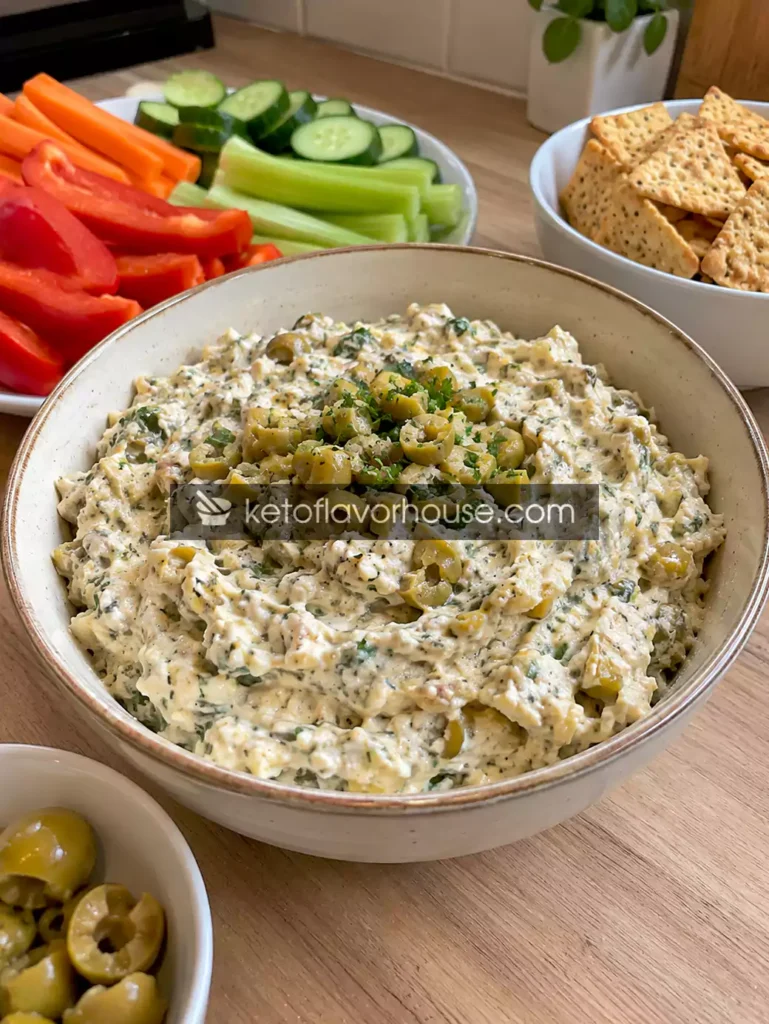
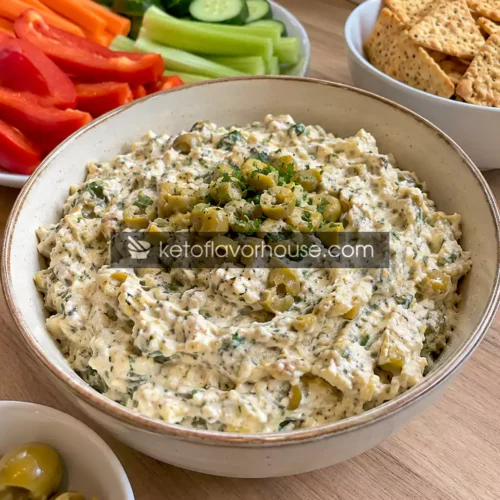
This is the kind of dip that fits naturally into a low-carb snack board when you want something more interesting than plain cheese or a bowl of nuts. Serve it with crunchy cucumber slices, celery sticks, bell pepper strips, or your favorite low-carb crackers. It also works as a creamy spread for lettuce wraps and sandwiches made with low-carb bread.
The best part is that there is no cooking involved. You simply blend the creamy ingredients, fold in the chopped olives, and give the dip a little time in the refrigerator for the flavors to come together. The result is rich and creamy with little bursts of olive flavor in every bite. Because olives and dairy products can vary in their carbohydrate content, the nutrition estimates below are based on the specific ingredient quantities in this version.
The quick guide below gives you the essential recipe details before you get started.
Creamy, briny & ready without cooking
A savory green olive dip made with a creamy dairy base, a squeeze of lemon, and simple seasonings.
Why You’ll Love This Keto & Low-Carb Creamy Green Olive Dip
There are plenty of reasons to keep a simple olive dip in your appetizer rotation. It requires very little hands-on work, uses familiar grocery-store ingredients, and offers a bold flavor that stands up well to fresh vegetables and other snacks.
- 🫒 Distinctive savory flavor: Green olives contribute saltiness and a slightly tangy, briny taste that makes the dip more interesting than a plain cream cheese spread.
- 🥣 A creamy, spoonable texture: Softened cream cheese, sour cream, and mayonnaise combine to create a thick dip without needing flour or a starch-based thickener.
- ⏱️ No cooking required: There is no baking, frying, or simmering. The most important preparation steps are softening the cream cheese, chopping the olives, and mixing everything evenly.
- 🥒 Easy to serve with low-carb foods: Cucumber, celery, and bell pepper strips provide fresh, crunchy contrasts to the creamy dip.
- 🧊 Convenient for make-ahead entertaining: You can prepare it before guests arrive and let it chill in the refrigerator until serving time.
- 🌿 Easy to customize: Fresh herbs, lemon zest, or a little extra garlic can change its flavor without requiring a completely different recipe.
A good balance of richness and tang
The cream cheese gives this dip its body, while sour cream makes it softer and easier to scoop. Mayonnaise adds richness, but it is used in a modest amount so that the olive flavor remains noticeable. Lemon juice helps cut through the richness and brings the different ingredients together.
The olives are the star. Their flavor can vary depending on the variety, brine, and any seasonings added during packaging. Some green olives taste buttery and mild; others are sharper, saltier, or more pronounced. That is why it is worth tasting the mixture before adding any salt.
Helpful for a low-carb snack board
A dip can make a snack board feel more complete because it gives fresh vegetables and other low-carb accompaniments a creamy, flavorful partner. Rather than relying on bread or chips, arrange the dip beside sliced cucumber, celery, radishes, and a selection of cheeses. Keep any crackers or packaged dippers in line with your own carbohydrate target.
This is not a high-protein recipe by itself. Cream cheese and sour cream contribute some protein, but the primary nutritional characteristics of this dip are its fat content and relatively small estimated carbohydrate amount per serving. If you want to make the snack more protein-rich, serve it alongside suitable protein foods such as hard-boiled eggs or grilled chicken pieces.
The Flavor and Texture to Expect
This dip should be thick enough to hold its shape on a spoon but soft enough to spread without tearing a cracker. The cream cheese creates a smooth, rich base, while the chopped olives add small, pleasantly firm pieces throughout the mixture.
The flavor starts with a creamy, slightly tangy taste. The green olives follow with a salty, briny note, while garlic adds depth and lemon juice provides a fresh finish. Parsley, when used, brings a subtle herbal quality and a little color.
For a chunky dip, chop the olives by hand and stir them into the cream cheese mixture. For a smoother result, pulse some of the olives in a food processor with the creamy base, then fold in a few separately chopped olives at the end. Avoid blending everything continuously unless a very smooth spread is your goal.
Chilling also makes a difference. Right after mixing, the dip may taste a little sharp or seem slightly loose. After about 20 minutes in the refrigerator, the texture should become more cohesive, and the olive, garlic, and lemon flavors should taste more integrated.
A Practical Blogger’s Approach
For a dip like this, I would focus on two things from the beginning: keeping the creamy base smooth and controlling the saltiness. Green olives are already seasoned, so there is no need to start with a generous amount of salt. It is easier to add a small pinch after tasting than to correct an overly salty dip.
The temperature of the cream cheese is important, too. Cold cream cheese tends to break into small lumps instead of blending evenly with sour cream and mayonnaise. Letting it soften at room temperature makes the mixing process much easier. It should be soft enough to press with a spoon but should not sit out for an extended period.
I would also keep some texture in the olives rather than turning them all into a paste. Small pieces make the dip feel more substantial and allow the olive flavor to come through in distinct bites. If you prefer a smoother consistency, that is easy to adjust with a few short pulses in a food processor.
For serving, a shallow bowl gives the dip a larger surface area, making it easier to scoop. Finish with a little finely chopped parsley or a few reserved pieces of chopped green olive if you would like a simple garnish. These additions are optional; the dip does not need elaborate decoration to taste good.
Equipment You’ll Need
Medium Mixing Bowl
A medium mixing bowl gives you enough room to blend the cream cheese, sour cream, and mayonnaise before adding the olives. Choose a bowl with enough space to stir without pushing ingredients over the sides. A wide bowl is especially helpful if you are mixing by hand.
Hand Mixer or Sturdy Spoon
A hand mixer makes the creamy base smoother and quicker to prepare, but it is not essential. A sturdy spoon or silicone spatula can work if the cream cheese is thoroughly softened. When mixing by hand, press any small cream cheese lumps against the side of the bowl before adding the chopped olives.
Sharp Knife and Cutting Board
These are useful for chopping the olives and optional parsley. A sharp knife lets you control the size of the olive pieces. Small, even pieces distribute more consistently through the dip and make it easier to scoop.
Measuring Cups and Spoons
Consistent measurements help keep the dip’s texture and nutrition estimates close to the stated recipe. Measuring the drained olives matters because excess brine can loosen the mixture and make the finished dip saltier.
Food Processor (Optional)
Use a food processor if you want a smoother dip or would rather not chop the olives by hand. Short pulses provide better control than running the machine continuously. Stop to scrape down the sides as needed, and reserve some chopped olives to stir in afterward if you enjoy a little texture.
Airtight Storage Container
A shallow airtight container is useful for chilling the dip and storing leftovers. It protects the dip from absorbing other refrigerator odors and makes it easy to portion out what you need.
Ingredients for Keto & Low-Carb Creamy Green Olive Dip
This recipe makes approximately 12 small servings of about 2 tablespoons each. The ingredients are straightforward, but their proportions matter: too much liquid can make the dip loose, while too little acidity can leave the creamy base tasting heavy.
Ingredient list
- 8 ounces (226 g) full-fat cream cheese, softened
- ½ cup (120 g) full-fat sour cream
- 1 cup (135 g) pitted green olives, drained and roughly chopped
- 2 tablespoons (28 g) mayonnaise
- 1 tablespoon (15 ml) fresh lemon juice
- 1 small garlic clove, finely minced (about 3 g)
- ¼ teaspoon ground black pepper
- 1 tablespoon (about 4 g) finely chopped fresh parsley, optional
- A small pinch of salt, only if needed after tasting
Choose plain cream cheese, sour cream, and mayonnaise without added ingredients that significantly increase the carbohydrate content. Check product labels because brands differ. The olives should be pitted, and the measured quantity should be taken after draining.
Understanding what each ingredient does
Cream cheese: This is the structural foundation of the dip. Its fat content gives the mixture richness, while its thick consistency helps it remain scoopable. Full-fat cream cheese generally produces a firmer, richer result than a reduced-fat version. Softening it first makes it much easier to mix evenly.
Sour cream: Sour cream loosens the cream cheese and adds a clean, tangy flavor. It helps create a dip rather than a dense block of seasoned cream cheese. Adding more than the stated amount may make the dip softer, so increase it gradually only if needed.
Green olives: The olives bring the defining flavor. They contribute saltiness, brininess, fat, and small amounts of carbohydrates, with the nutritional profile varying by variety and product. Draining them prevents unnecessary liquid from thinning the dip. Chopping them by hand produces a more textured result than blending them completely.
Mayonnaise: Mayonnaise contributes fat and a silky mouthfeel. It also helps the creamy ingredients combine into a cohesive mixture. Use plain mayonnaise and check its label for added sugar or other ingredients that may affect the carbohydrate total.
Lemon juice: Fresh lemon juice adds acidity, balancing the rich dairy ingredients and salty olives. It should brighten the flavor rather than make the dip taste sharply sour. Measure it instead of pouring directly from the lemon.
Garlic: A small clove provides a savory background note. Finely mincing it helps distribute the flavor throughout the dip. Raw garlic can become more noticeable as the dip rests, so start with one small clove rather than adding several at once.
Black pepper: Pepper contributes gentle warmth without competing with the olives. A quarter teaspoon provides a noticeable but restrained seasoning level.
Fresh parsley: Parsley is optional and mainly adds an herbal note and fresh color. It is useful when serving the dip to guests, but leaving it out will not materially change the recipe’s texture.
Salt: Add salt only after tasting the completed mixture. Green olives and several creamy ingredients already contain sodium. Depending on the olives, additional salt may not be necessary at all.
The visual guide below summarizes the role of the main ingredients and how a few realistic substitutions may affect the result.
Ingredient anatomy
Each ingredient contributes a specific part of the flavor or consistency.
Cream cheese
Creates a thick, rich base and helps the dip hold its shape.
Sour cream + lemon
Softens the texture and balances the richer ingredients.
Green olives
Provide briny flavor, saltiness, and the characteristic olive pieces.
Mayonnaise + garlic
Add richness and savory flavor without needing a cooked sauce.
Ingredient substitutions and their effects
Sour cream versus plain Greek yogurt: You can replace the sour cream with the same amount of plain, unsweetened Greek yogurt. The dip will generally taste tangier and may be less rich. Greek yogurt often contributes more protein and less fat than full-fat sour cream, but the exact difference depends on the product. Its carbohydrate content can also vary, so recalculate the nutrition using the label.
Full-fat versus reduced-fat cream cheese: Reduced-fat cream cheese may work, but it can produce a softer or less rich result. Check that the product is intended for spreading and mixing. Do not assume it has fewer carbohydrates; compare the nutrition labels and use the new values in your calculation.
Mayonnaise alternatives: You may omit the mayonnaise, although the dip will lose some richness. Alternatively, replace it with an equal amount of sour cream or Greek yogurt. Expect a slight change in tanginess and consistency, and recalculate the nutrition because the fat and protein levels will differ.
Fresh garlic versus garlic powder: If you do not have fresh garlic, start with a small pinch of garlic powder. Powder distributes evenly, while minced fresh garlic gives a sharper, more direct flavor. The amount should be adjusted to taste rather than substituted gram for gram.
Fresh lemon juice versus bottled lemon juice: Bottled lemon juice can work, but flavor intensity varies. Start with a little less than the full tablespoon and add more only after tasting. The effect on carbohydrates is small in these quantities, although the exact amount depends on the product.
Green olives versus black olives: Black olives can be used, but they often have a milder, less assertively briny flavor than the green olives selected for this recipe. Color, ripeness, brining method, and brand all affect taste and nutrition. Use pitted olives and drain them well.
Parsley versus other herbs: Chives or a small amount of fresh dill can replace the parsley. Chives contribute a gentle onion-like note; dill makes the dip more herbal. Add these gradually because strongly flavored herbs can easily take over.
How substitutions affect keto suitability
The word keto on a recipe does not guarantee that every version has the same carbohydrate profile. This recipe is designed to provide approximately 1.5 grams of net carbohydrates per small serving, but the estimate depends on the exact products and quantities used.
Substitutions can affect fat, calories, and protein even when the carbohydrate difference is modest. For example, replacing sour cream with Greek yogurt may increase protein while reducing fat, but it will not necessarily make the dip lower in total carbohydrates. Removing mayonnaise generally decreases calories and fat, while leaving the remaining ingredients to determine most of the carbohydrate content.
For reliable tracking, weigh the ingredients when practical, note their package-label values, calculate the full batch, and divide the result by the actual number of servings. This is more dependable than assuming that all cream cheese, olives, or mayonnaise products have identical nutrition information.
How to Make Creamy Green Olive Dip
The preparation is simple, but following the order below will help you get a smooth base and evenly distributed olive pieces.
Step 1: Soften the cream cheese
Remove the cream cheese from the refrigerator long enough for it to become soft and easy to press with a spoon. Cut it into smaller cubes to help it soften evenly. Do not leave dairy products at room temperature for an extended period.
Place the softened cream cheese in a medium mixing bowl. Beat it with a hand mixer on low speed or mash it thoroughly with a sturdy spoon until the texture is mostly smooth. Scrape the sides of the bowl so that no firm pieces remain around the edges.
What to look for: The cream cheese should be spreadable, without large cold lumps. If it still feels firm, keep working it gently rather than adding liquid to compensate.
Step 2: Mix in the sour cream and mayonnaise
Add the sour cream and mayonnaise to the softened cream cheese. Mix until the base looks uniform and creamy. Start slowly to keep the ingredients in the bowl, then scrape around the bottom and sides to incorporate everything.
Do not worry if the mixture appears a little softer than you expected. It will firm up somewhat when chilled. Avoid adding extra sour cream at this stage unless you already know you want a thinner dip.
What to look for: The base should be smooth and thick enough to cling to a spoon. Small air bubbles are fine, but visible lumps of cream cheese should be worked out before you continue.
Step 3: Drain and chop the olives
Drain the pitted green olives thoroughly. If they are particularly wet, gently pat them dry with a clean paper towel. Chop them into small pieces, roughly ⅛ to ¼ inch across, depending on whether you prefer a fine or chunky dip.
Keep a spoonful of chopped olives aside if you would like to use them as a garnish. Add the rest to the creamy mixture.
What to avoid: Do not pour olive brine into the bowl. It may seem like a quick way to intensify the flavor, but too much liquid can make the dip loose and increase the saltiness unpredictably.
Step 4: Add the seasonings
Stir in the lemon juice, minced garlic, and black pepper. Add the chopped parsley if using it. Mix until the seasonings are distributed throughout the dip.
Taste a small amount. The flavor should be creamy first, followed by the salty, briny taste of the olives, with a bright finish from the lemon. If the dip tastes flat, a little additional lemon juice or freshly ground black pepper may help. If it is already salty enough, leave out the salt.
Raw garlic may become more pronounced as the mixture rests, so avoid adding more immediately just because its flavor seems mild at first.
Step 5: Chill before serving
Transfer the dip to a covered container and refrigerate for about 20 minutes. This resting time is included in the 30-minute total time for the recipe. You can serve it immediately if necessary, but a short chill generally improves the texture and brings the flavors together.
Before serving, stir the dip and check its consistency. If it has become firmer than you prefer, let it stand in the refrigerator door area for a short period or gently stir it until it is easier to scoop. Do not leave it sitting out for a long time just to soften.
Step 6: Garnish and serve
Spoon the dip into a clean serving bowl. Add the reserved chopped olives or a little parsley, if desired. Serve it chilled with fresh vegetables, suitable low-carb crackers, or other dippers that fit your meal.
For a party, place the dip in a smaller serving bowl and keep the remaining batch refrigerated. Refill the serving bowl as needed rather than leaving the entire batch at room temperature for the duration of the event.
The process infographic below provides a quick recap of the most important stages.
From ingredients to chilled dip
Soften
Bring cream cheese to a mixable consistency.
Blend
Mix cream cheese, sour cream, and mayonnaise until smooth.
Chop
Drain olives and cut them into small, even pieces.
Season
Fold in olives, lemon, garlic, pepper, and optional herbs.
Chill
Cover and refrigerate for about 20 minutes.
Serve
Taste again, garnish if desired, and serve cold.
Common Mistakes to Avoid
Even a no-cook dip can turn out differently depending on how the ingredients are prepared. Most problems are easy to prevent.
Using cold cream cheese
Cold cream cheese is difficult to blend smoothly, especially when mixed by hand. It may form small lumps that remain visible throughout the finished dip.
How to fix it: Soften the cream cheese before mixing. If you notice lumps, press them against the side of the bowl with a spatula or briefly use a hand mixer before incorporating the olives.
Leaving too much brine on the olives
Wet olives can introduce excess liquid into the dip. This may leave it thinner than intended and make the flavor uneven.
How to fix it: Drain the olives thoroughly and pat them dry if necessary. Do not use the leftover brine as a substitute for lemon juice; the two ingredients contribute different flavors and have different effects on consistency.
Adding too much sour cream
Sour cream creates a pleasant, scoopable texture, but too much can make the mixture loose. Adding more dairy to correct a dip that tastes too salty or strong may also dilute the intended flavor.
How to fix it: Start with the measured amount. If the finished dip is too thick, stir in additional sour cream a teaspoon at a time, checking the texture after each addition.
Adding salt before tasting
Green olives may contain substantial sodium, and the amount varies among products. Adding salt automatically can make the dip unpleasantly salty.
How to fix it: Mix everything first, allow the dip to rest briefly, and then taste. Add only a small pinch if it truly needs it.
Overprocessing the olives
Continuous blending can turn the olives into a paste and create a more uniform, spread-like consistency. That is not necessarily wrong, but it will reduce the texture contrast in a chunky dip.
How to fix it: Chop by hand or use only a few short food-processor pulses. If making a smooth dip, reserve some finely chopped olives to fold in at the end.
Serving it immediately without checking the consistency
Freshly mixed dip can seem softer than it will after chilling. Adjusting it with extra cream cheese too soon can make the final result unnecessarily dense.
How to fix it: Chill the dip for about 20 minutes before making final texture adjustments. Stir it, taste it, and adjust the seasoning only after it has rested.
The troubleshooting guide below summarizes these fixes in one place.
Troubleshooting guide
Match the problem to its likely cause before adjusting the recipe.
Pro Tips for the Best Results
A few small choices can make this recipe more dependable, particularly when you are preparing it for a gathering.
Drain before you measure. The recipe calls for one cup of drained, pitted olives. Measuring before draining can introduce too much brine and make your measurements less consistent.
Keep the olive pieces relatively small. Very large pieces can make the dip harder to scoop and distribute unevenly. Finely chopped olives mix more evenly, while moderately sized pieces give a chunkier texture.
Use room-temperature cream cheese, not warm cream cheese. Softened cream cheese is easy to mix. Cream cheese that has become warm or oily may produce a less pleasant texture. Let it soften only until spreadable.
Add garlic conservatively. Raw garlic becomes more noticeable as the flavors sit together. One small clove is a useful starting point, especially if you plan to refrigerate the dip before serving.
Taste twice. Season once after mixing and again after chilling. Resting can change how strongly you notice the salt, lemon, and garlic, so final adjustments are best made before serving.
Make the texture suit the occasion. A chunky version is excellent with sturdy vegetable sticks, while a smoother version works better as a spread for lettuce wraps. Choose the texture before processing all the olives.
Keep the garnish simple. A sprinkle of parsley and a few small olive pieces are enough. Extra oil or large amounts of garnish are not necessary and may obscure the clean, creamy appearance.
Keto Benefits of Green Olives and the Creamy Base
Green olives can fit into a ketogenic eating pattern when the portion size and complete recipe align with an individual’s carbohydrate target. They are not literally carbohydrate-free, and their sodium levels can be significant, particularly when they have been preserved in brine.
In this recipe, the olives are combined with cream cheese, sour cream, and mayonnaise. These ingredients contribute substantial fat, which gives the dip a rich mouthfeel. The measured quantities also keep the estimated net carbohydrate content relatively low per small serving, though the calculation should be checked against the actual products used.
What net carbohydrates mean here
Net carbohydrates are commonly estimated by subtracting dietary fiber from total carbohydrates:
Net carbohydrates = total carbohydrates − fiber
For this dip, the estimated values are approximately 1.9 grams of total carbohydrates and 0.4 grams of fiber per serving, resulting in around 1.5 grams of net carbohydrates. These numbers are estimates rather than laboratory-tested results.
Net-carb calculations can vary depending on food databases, nutrition-label rounding, and the specific brand of each ingredient. For tracking purposes, use the nutrition information for the products you actually purchase and apply a consistent calculation method.
Fat and satiety
Cream cheese, sour cream, and mayonnaise contribute most of the dip’s fat. Fat provides energy and helps create the rich texture many people enjoy in a dip. However, a high-fat food is not automatically more filling for every person, and adding fat does not guarantee weight loss.
Because this recipe is relatively low in protein, it works best as an accompaniment rather than a complete meal when you need a more balanced snack or lunch. You can pair it with a protein source and fresh vegetables to create a more substantial plate.
Sodium is worth considering
Olives can be salty, and cream cheese may also contribute sodium. Anyone tracking sodium intake should compare labels, taste before adding salt, and consider rinsing the olives if their flavor and texture remain suitable for the recipe. Rinsing may reduce some surface brine but does not make all olives equally low in sodium.
The keto label describes the recipe’s intended low-carbohydrate profile, not a medical benefit. Whether the dip fits an individual’s eating plan depends on serving size, ingredient choices, overall carbohydrate intake, and personal dietary needs.
Variations You Can Try
Once you have the basic recipe right, you can adapt the flavor without changing the overall preparation method.
1. Garlic and Herb Olive Dip
Add a little extra parsley and a small amount of finely chopped chives. This creates a fresher, more herb-forward flavor. Keep the additional herbs modest so they do not overpower the olives. Their carbohydrate effect is generally small at typical garnish amounts, but exact values still depend on quantity.
2. Lemon Pepper Olive Dip
Add a small amount of finely grated lemon zest and a little extra black pepper. The zest gives the dip a brighter citrus aroma without adding as much liquid as extra lemon juice. Too much zest can create bitterness, so start with a pinch.
3. Spicy Green Olive Dip
Stir in a pinch of crushed red pepper flakes or a small amount of finely chopped fresh chili. This adds heat that contrasts with the creamy base. Start with very little, especially if serving guests with different spice preferences. Check any packaged chili seasoning for added sugar or other ingredients if strict carbohydrate tracking matters.
4. Green Olive and Feta Dip
Fold in a small quantity of crumbled feta cheese. Feta adds a salty, tangy flavor and makes the dip more intensely savory. Because both feta and green olives can be salty, taste before adding any additional salt. Feta also changes the nutrition, so the macro values for the base recipe no longer apply exactly.
5. Greek Yogurt Olive Dip
Replace the sour cream with plain, unsweetened Greek yogurt. This usually creates a tangier dip and can increase protein, depending on the products used. The fat and carbohydrate values may shift as well. Choose a thick yogurt to reduce the chance of a loose mixture.
6. Smooth Olive Spread
Instead of keeping the olives chunky, blend most of them with the creamy base in a food processor. Use short pulses and scrape down the sides as needed. You may need to stop earlier than expected because the olives can break down quickly. This version is convenient for spreading on low-carb wraps or lettuce leaves.
The comparison below highlights the likely changes from each variation without implying that the nutritional differences are identical across brands.
Choose your flavor variation
Start with the base recipe, then make one change at a time.
Additional Tips for Making the Dip Your Own
The base recipe is deliberately straightforward, so you can adjust it to suit your tastes without adding a long list of ingredients.
For a sharper olive flavor, choose a variety of green olives you already enjoy eating on their own. If your olives are stuffed with pimentos, those can add a mild sweetness and color, but check the packaging and drain them thoroughly. For an especially salty olive variety, use less or no added salt.
For a milder taste, reduce the garlic slightly and keep the lemon juice at the stated amount. You can always add another small squeeze later. If you enjoy a more pronounced citrus flavor, lemon zest can contribute aroma without introducing much extra liquid.
For a thicker spread, refrigerate the prepared dip longer before deciding to change the ingredient ratios. For a looser dip, add a teaspoon of sour cream at a time and mix thoroughly. Avoid pouring in olive brine, water, or oil to change consistency; these additions can affect the texture and seasoning balance.
If you’re planning to make the recipe regularly, write down the brand of cream cheese, olives, sour cream, and mayonnaise you prefer. Consistent products make the flavor more predictable and help you calculate nutrition more accurately from one batch to the next.
Optional Additions
The following ingredients are optional. They are not included in the base recipe’s nutrition estimates, so add them according to your preference.
- Lemon zest: Adds a fresh citrus aroma with very little additional liquid. It can make the dip smell brighter without making it runnier.
- Chopped chives: Give the dip a gentle onion-like note. A small amount is usually enough.
- Fresh dill: Adds a distinct herbal flavor that pairs well with tangy dairy ingredients. Use it sparingly if you want the green olives to remain the dominant flavor.
- Crumbled feta: Makes the dip saltier, tangier, and more textured. It also adds calories, fat, protein, and carbohydrates in amounts that depend on the feta and quantity used.
- Crushed red pepper: Adds heat with only a small change in texture when used in modest quantities. Check packaged blends if you are closely tracking carbohydrates.
- A few finely chopped pimento-stuffed olives: Introduce color and a slightly different flavor. The impact on nutrition depends on the type and amount used.
Add only one or two optional ingredients at first. Changing too many things simultaneously makes it harder to identify what you like, and multiple salty ingredients can overwhelm the creamy base.
Serving Ideas for Keto & Low-Carb Creamy Green Olive Dip
This dip works best with accompaniments that offer a little crunch or a clean flavor contrast. Here are several ways to serve it.
Cucumber rounds and celery sticks
Cucumber has a refreshing crunch, while celery brings a firmer texture. Both are convenient dippers that allow the olive flavor to remain at the center of each bite. Pat the vegetables dry after washing so that excess water doesn’t collect in the serving bowl.
Bell pepper strips and radishes
Bell peppers provide sweetness and color, while radishes contribute a peppery crunch. Choose the portion sizes that fit your carbohydrate goals, and consider serving a mixture of vegetables rather than relying on a single type.
Low-carb crackers
A crisp cracker contrasts nicely with a creamy dip. Choose a product with a nutrition label that suits your dietary needs, since carbohydrate amounts can differ substantially between products marketed as low-carb.
Lettuce wraps
Spread a small amount of the dip inside a sturdy lettuce leaf and add sliced chicken, hard-boiled egg, or another suitable protein. The dip contributes moisture and savory flavor, while the other ingredients turn it into a more substantial snack or light lunch.
A cheese and vegetable platter
Place a bowl of dip in the center of a platter and surround it with selected cheeses, cucumber, celery, radishes, and other suitable low-carb accompaniments. Offer a small serving spoon so guests can control their portions and avoid repeatedly dipping shared vegetables.
Grilled chicken or hard-boiled eggs
Serve a spoonful of dip beside grilled chicken or sliced hard-boiled eggs. These choices add protein to a snack or lunch that would otherwise be predominantly fat. Keep the dip chilled and add it immediately before serving.
The serving guide below provides a visual reminder of useful pairings. Adjust the portions and nutrition for any additional foods separately.
Six ways to serve olive dip
Mix crunchy vegetables with a few more substantial pairings for an easy low-carb snack board.
Cucumber & celery
Cool, crisp vegetables contrast with the rich, creamy dip.
Pepper strips
Add sweetness, color, and a satisfying crunch.
Cheese platter
Creates a savory appetizer board for guests.
Lettuce wraps
Works as a creamy spread with chicken or egg.
Low-carb crackers
Offer a crisp base; verify the package’s net-carb estimate.
Chicken or eggs
Add protein when you want a more filling snack.
Storage and Make-Ahead Instructions
Because this dip contains cream cheese and sour cream, it should be handled like other perishable dairy-based dips. Keep it refrigerated when you are not using it, and use a clean serving spoon rather than dipping directly into the storage container.
Refrigeration
Transfer the dip to an airtight container and refrigerate it promptly after mixing. For best quality, aim to use it within 3–4 days. If it has been held at room temperature for an extended period, smell alone cannot confirm that it is safe to eat.
For food safety, perishable foods should generally not remain at room temperature for more than two hours, or one hour when the temperature is above 90°F (32°C). If the dip has exceeded those limits, discard it rather than returning it to the refrigerator for later use.
Making it ahead
You can prepare the dip a day ahead and keep it covered in the refrigerator. In fact, a few hours of chilling can help the garlic, lemon, and olive flavors blend together. Stir before serving, and check the consistency because refrigeration may make the mixture firmer.
If you are preparing a larger quantity for a gathering, keep the main batch refrigerated and serve a smaller amount at a time. Refill the bowl with fresh chilled dip rather than leaving the entire batch out for guests.
Can you freeze it?
Freezing is not recommended for the best texture. Cream cheese and sour cream mixtures may separate or become grainy after freezing and thawing. You might be able to remix a separated batch, but the result will not necessarily regain its original smooth consistency.
For this reason, making a smaller batch and refrigerating it is preferable to freezing leftovers. The recipe already takes little hands-on time, so preparing it fresh is usually the easiest option.
Reheating
This is a cold dip, so reheating is not necessary. Serve it chilled or briefly stir it after removing it from the refrigerator. Avoid leaving it out to warm for a prolonged period.
The storage timeline below summarizes the recommended approach.
Storage timeline
Transfer to a clean, airtight container and refrigerate promptly.
Mix gently, taste, and garnish with clean utensils if desired.
Use as a quality guideline when stored properly at 40°F (4°C) or below.
Thawing may cause separation or a grainy texture.
Frequently Asked Questions
Is this Creamy Green Olive Dip keto-friendly?
Yes, this version is designed for keto and low-carb eating, with an estimated 1.5 grams of net carbohydrates per small serving. The exact value depends on the cream cheese, sour cream, mayonnaise, and olives you use. Check the labels and recalculate the recipe if you make substitutions.
How many net carbs are in one serving?
One serving is approximately 2 tablespoons and provides about 1.5 grams of net carbohydrates, based on the ingredient quantities in this recipe. This is an estimate rather than a laboratory-tested result. The serving size and products used will affect the actual number.
Can I make the dip without mayonnaise?
Yes. You can leave out the mayonnaise, although the dip will be a little less rich. For a creamier consistency, add a small amount of sour cream or plain Greek yogurt instead. Since the replacement changes the nutrition profile, recalculate the calories, fat, protein, and carbohydrates.
Can I make this dip with Greek yogurt?
Yes. Replace the sour cream with an equal quantity of plain, unsweetened Greek yogurt. The result will usually be tangier, and the protein content may increase depending on the yogurt brand. Choose a thick yogurt and check its carbohydrate content before using it.
Can I use black olives instead of green olives?
Yes, but expect a different flavor. Black olives often have a milder taste, so the finished dip may be less briny and slightly different in color. Drain them well, use the same measured quantity to start, and taste the mixture before adding any extra seasoning.
Can I prepare it the night before?
Yes. Transfer the finished dip to an airtight container and refrigerate it. Making it a day ahead allows the flavors to mingle, although garlic may become more pronounced as the dip sits. Stir it before serving and keep it chilled until needed.
Can I freeze leftover green olive dip?
Freezing is not recommended if you want to preserve the original creamy texture. Cream cheese and sour cream mixtures can separate and become grainy after thawing. Refrigerating the dip and using it within 3–4 days is a better approach for this recipe.
Nutritional Breakdown Per Serving
The estimated nutrition below assumes the full recipe is divided into 12 equal servings. Each serving is approximately 2 tablespoons, or around 44 grams depending on how much moisture remains on the drained olives.
| Nutrient | Estimated amount per serving |
|---|---|
| Calories | 117 kcal |
| Protein | 1.5 g |
| Total fat | 11.9 g |
| Total carbohydrates | 1.9 g |
| Dietary fiber | 0.4 g |
| Net carbohydrates | 1.5 g |
These figures are estimates calculated from typical nutritional values for the listed quantities. Specific product labels may produce different totals, especially for the olives and dairy ingredients. If your package labels provide values per serving rather than per 100 grams, calculate each ingredient using the actual quantity used in the batch.
Net carbohydrates are calculated by subtracting dietary fiber from total carbohydrates. For this recipe, the estimate is 1.9 grams of total carbohydrates minus 0.4 grams of fiber, giving approximately 1.5 grams of net carbohydrates per serving. Do not subtract fiber twice, and do not assume that all products have the same carbohydrate or fiber values.
The following dashboard summarizes the estimated macros at a glance.
Creamy Green Olive Dip
Per serving · Approximately 2 tablespoons · Recipe divided into 12 servings
Calculation: total carbohydrates minus dietary fiber equals estimated net carbohydrates.
Values are estimates based on typical ingredient data. Product labels, measurements, and serving sizes can change the results.
Recipe Snapshot
- Recipe Name: Keto & Low-Carb Creamy Green Olive Dip
- Prep Time: 10 minutes
- Cook Time: 0 minutes
- Chill Time: 20 minutes
- Total Time: 30 minutes
- Course: Appetizer, snack, or spread
- Cuisine: American-inspired
- Servings: 12
- Calories per serving: Approximately 117 kcal
- Total carbohydrates per serving: Approximately 1.9 g
- Net carbohydrates per serving: Approximately 1.5 g
A Simple Dip for Everyday Low-Carb Eating
A useful low-carb recipe does not need a complicated ingredient list or a lengthy preparation process. This green olive dip combines a handful of familiar ingredients to create a creamy, savory accompaniment for vegetables, crackers, wraps, and snack boards. Keep the olive pieces chunky for texture, blend them for a smoother spread, or adjust the herbs and seasonings to suit your taste. With a short preparation time and no cooking required, it is an easy option to keep in the refrigerator for planned snacks or casual entertaining.
Keto & Low-Carb Creamy Green Olive Dip

Ingredients
- 8 ounces 226 g full-fat cream cheese, softened
- ½ cup 120 g full-fat sour cream
- 1 cup 135 g pitted green olives, drained and roughly chopped
- 2 tablespoons 28 g mayonnaise
- 1 tablespoon 15 ml fresh lemon juice
- 1 small garlic clove finely minced (about 3 g)
- ¼ teaspoon ground black pepper
- 1 tablespoon about 4 g finely chopped fresh parsley, optional
- A small pinch of salt only if needed after tasting
Instructions
- Let the cream cheese soften until it is easy to mix, then place it in a medium bowl and beat or mash until mostly smooth.
- Add the sour cream and mayonnaise. Mix until the creamy base is evenly combined, scraping the sides of the bowl as needed.
- Drain the pitted green olives thoroughly, pat dry if necessary, and chop into small pieces.
- Stir the olives into the creamy base along with the lemon juice, minced garlic, black pepper, and optional parsley.
- Taste the mixture before adding salt because the olives may already provide enough. Adjust the lemon or pepper in small amounts if needed.
- Cover and refrigerate for 20 minutes to let the flavors combine and the texture firm up slightly.
- Stir gently, garnish with reserved chopped olives or parsley if desired, and serve chilled with low-carb vegetables or suitable crackers.