This post may contains Amazon affiliate and other affiliate links. If you make a purchase through these links, I may earn a small commission at no extra cost to you. Your support helps me continue to provide quality content. I only recommend products I personally trust and believe will add value to your experience. For more details, please visit my Privacy Policy.
Estimated SmartPoints: approximately 7–10 per serving, based on the ingredient quantities below and a six-serving yield. This is an independent planning estimate, not an official WW calculation; your personal result may differ.
Creamy pasta can still have a place in a Weight Watchers meal plan. The key is to build flavor with sautéed mushrooms, garlic, tender chicken, fresh asparagus, and a carefully portioned creamy sauce instead of relying on large amounts of heavy cream and cheese.
Introduction
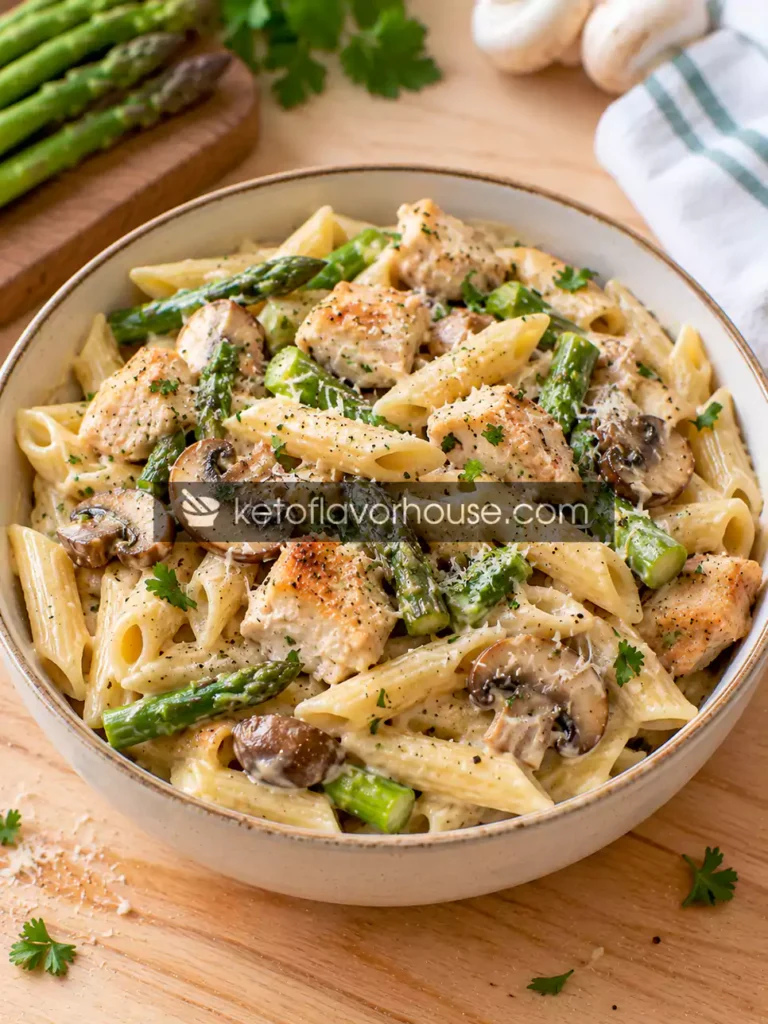
There are evenings when a simple bowl of pasta sounds exactly right: something warm, savory, and comforting, with a silky sauce that clings to every piece of penne. This Weight Watchers Creamy Mushroom and Asparagus Chicken Penne brings together juicy chicken, earthy mushrooms, crisp-tender asparagus, and a lightened creamy garlic-Parmesan sauce for a satisfying dinner that feels special without requiring restaurant-style ingredients.
The combination works because each ingredient brings something different to the plate. Mushrooms add a deep, savory flavor; asparagus contributes a fresh, slightly grassy note; and chicken makes the dish hearty. Penne catches the sauce in its ridges and hollow centers, so every forkful delivers pasta, vegetables, chicken, and creaminess together.
For WW readers, the goal isn’t to make pasta disappear from the menu. It’s to create a balanced portion with enough protein and vegetables to make dinner feel complete, while measuring ingredients that can quickly increase the Points value. This version uses a modest amount of olive oil, light cream cheese, fat-free plain Greek yogurt, and Parmesan for flavor. The yogurt is stirred in off the heat to help preserve its smooth texture.
This recipe is ideal for a family dinner, a relaxed weekend meal, or a make-ahead lunch when you want something more satisfying than a plain chicken-and-vegetable bowl. The ingredients are available at most US supermarkets, and the entire meal comes together on the stovetop.
Why You’ll Love This Recipe
A comforting weeknight dinner
Creamy pasta, thoughtfully balanced
Chicken, vegetables, and a measured creamy sauce make this penne a practical option when you’re craving a cozy pasta dinner.
Chicken provides substantial protein in every serving.
Golden mushrooms and garlic build flavor without needing a heavy sauce.
Asparagus adds color, freshness, and a pleasant tender-crisp bite.
Prepare the sauce while the pasta cooks to keep the process efficient.
A creamy sauce without a heavy pour of cream
The sauce is the heart of this dish. Light cream cheese gives it body, while fat-free Greek yogurt adds tang and a smooth finish. A little Parmesan supplies the nutty, salty flavor people expect from creamy pasta.
These ingredients don’t make the sauce identical to one made with heavy cream, but they create a satisfying alternative. The trick is to loosen the cream cheese with warm broth and avoid boiling the sauce after adding the yogurt.
Vegetables that belong in the pasta
Mushrooms and asparagus are especially good partners because their textures contrast with the soft pasta. The mushrooms should have time to brown and release their moisture before the sauce is added. The asparagus needs less time: cook it until it turns bright green and is just tender, not limp.
A practical meal for busy households
You can chop the vegetables while the water heats, cook the pasta as the chicken browns, and bring everything together in one large skillet. If you’re feeding people with different preferences, reserve a little plain pasta or keep extra Parmesan at the table rather than adding large amounts to the entire pan.
WW SmartPoints Information
For planning purposes, this recipe is estimated at 7–10 SmartPoints per serving, with six servings from the complete recipe. That corresponds to a rough whole-recipe range of 42–60 estimated SmartPoints. The range is intentionally broad because the exact value depends on the WW plan, product labels, and how your account treats particular ingredients.
The largest contributors are likely to be the dry pasta, olive oil, light cream cheese, and Parmesan. Chicken, mushrooms, asparagus, broth, and plain fat-free Greek yogurt may be treated differently depending on the current plan and member settings. Don’t assume that any ingredient is automatically zero Points for every reader.
This estimate is not generated by an official WW calculator. To obtain your own result, enter the exact ingredient brands and quantities into your current WW app, then divide the finished recipe into six equal portions. If you change the pasta amount, use a different cheese, or add extra oil, recalculate the recipe rather than carrying over the estimate.
My Personal Cooking Notes
For a dish like this, the biggest difference comes from how the mushrooms are cooked. They contain a lot of water, so crowding them into a pan with chicken and immediately adding broth can leave them pale and soft. I prefer to brown the chicken first, set it aside, and give the mushrooms their own time in the skillet. When their moisture evaporates and their edges turn golden, they bring much more flavor to the sauce.
I also like to keep the asparagus pieces fairly large—around 1½ inches—so they remain recognizable after tossing with the penne. Thin asparagus cooks quickly, while thicker stalks may need an extra minute or two. Adding it too early is an easy way to end up with vegetables that lose their fresh color and become mushy.
The final sauce should look glossy and coat the pasta, not sit as a thick puddle at the bottom of the pan. I use warm pasta water or broth to loosen it gradually. The Greek yogurt goes in after the pan is removed from the heat; that small detail helps reduce the risk of a grainy or split sauce. Before serving, I taste for salt, pepper, and a little acidity. A small squeeze of lemon can brighten the mushrooms and cheese without needing extra butter.
Required Equipment
Large pot
Use a large pot to boil the penne in plenty of water. Pasta needs room to move, and a crowded pot can cook it unevenly. Salt the water lightly, especially if you are monitoring sodium, and follow the package timing while checking the pasta a minute before the suggested finish.
Large skillet or sauté pan
A wide skillet is essential for browning the chicken and mushrooms. A larger cooking surface helps moisture evaporate instead of trapping steam around the ingredients. If your skillet is small, brown the chicken in batches and avoid piling the mushrooms on top of one another.
Colander
Drain the pasta thoroughly, but reserve about ½ cup of pasta water before draining. The starchy water is useful if the sauce becomes too thick. You probably won’t need all of it, so add it gradually.
Sharp knife and cutting board
Cut the chicken into similar-sized pieces so they cook at roughly the same rate. Slice the mushrooms evenly and cut the asparagus into bite-sized lengths. Keep raw chicken separate from the vegetables and wash the board, knife, and hands after handling it.
Measuring cups and spoons
Measuring the oil, cheese, broth, and pasta is particularly useful when tracking Points. A tablespoon of oil can be easy to underestimate when poured straight from a bottle. Measuring also helps you reproduce the same sauce texture the next time you make the recipe.
Ingredients and Substitutions
The recipe below makes six servings. Use the same quantities when comparing the estimated nutrition and SmartPoints; changing an ingredient changes the calculation.
- 8 ounces dry penne pasta: The pasta forms the base of the meal and catches the creamy sauce. Regular wheat penne works well; whole-wheat penne adds a nuttier flavor and may provide more fiber, depending on the brand. Gluten-free penne can also work, but check it early because its texture and cooking time may differ.
- 1 pound boneless, skinless chicken breast, cut into bite-sized pieces: Chicken contributes lean protein and makes the dish more filling. Chicken tenderloins can replace breast meat. Thigh meat is also possible, but it generally changes the fat, calorie, and Points estimates.
- 8 ounces cremini or white mushrooms, sliced: Mushrooms supply earthy, savory flavor and moisture. Cremini mushrooms taste slightly deeper, while white mushrooms are mild. Both are suitable.
- 1 pound asparagus, woody ends removed and stalks cut into 1½-inch pieces: Asparagus brings freshness, color, and a tender-crisp texture. If it is out of season, use broccoli florets or green beans, adjusting the cooking time.
- 1 tablespoon olive oil: A measured amount helps brown the chicken and soften the vegetables. Cooking spray may reduce the amount of oil used, but the amount actually sprayed and the product label still matter for the calculation.
- 1 small yellow onion, finely diced: Onion creates a savory base. Shallot can substitute, although its flavor is a little sweeter and more delicate.
- 3 garlic cloves, minced: Garlic provides the characteristic aroma of the sauce. Fresh garlic is preferable, but a small amount of jarred minced garlic can work.
- 1 cup low-sodium chicken broth: Broth loosens the sauce and helps the cream cheese melt smoothly. Vegetable broth works if you prefer it, though the flavor will change slightly.
- 4 ounces light cream cheese, softened and cubed: Cream cheese supplies body and tang. Use a light version whose nutrition label suits your needs; regular cream cheese will usually increase calories and fat.
- ½ cup plain fat-free Greek yogurt: Yogurt contributes creaminess and a mild tang while adding protein. Avoid sweetened or flavored yogurt. If you use full-fat yogurt instead, the calories, fat, and Points may rise.
- ¼ cup finely grated Parmesan cheese: Parmesan gives the sauce a concentrated savory, nutty flavor. Because it is flavorful, a measured amount can go a long way. Reduced-fat Parmesan may behave differently and should be calculated using its own label.
- 1 teaspoon Italian seasoning: This gives the sauce a gentle herbal background. A mixture of dried oregano, basil, and thyme can replace it.
- ½ teaspoon onion powder: Onion powder reinforces the savory base without adding extra chopping.
- ¼ teaspoon black pepper, plus more to taste: Pepper balances the creamy sauce. Add more at the table if you prefer a stronger bite.
- ½ teaspoon salt, or to taste: Start modestly because Parmesan and broth already contain sodium. Adjust only after the sauce is assembled.
- 1–2 teaspoons lemon juice, optional: Lemon brightens the finished sauce and helps balance its richness. Add it gradually so the flavor remains fresh rather than sharply sour.
- 2 tablespoons chopped fresh parsley, optional: Parsley adds color and a fresh finish. It is a garnish rather than an essential part of the sauce.
Smart swaps: what changes when you substitute?
Ingredient swap guide
Use these comparisons to choose a version that fits your preferences. The effects below are directional, not calculated Points reductions.
| Original | Alternative | What to expect |
|---|---|---|
| Regular penne | Whole-wheat penne | A nuttier flavor and potentially more fiber; recalculate from the label. |
| 1 tbsp olive oil | A measured amount of cooking spray | May reduce added fat, depending on how much product is used; browning may be less rich. |
| Light cream cheese | A different reduced-fat cream cheese | Compare labels; thickness, tang, calories, and Points can vary by brand. |
| Chicken breast | Chicken tenderloins | Similar lean-protein role; cook to a safe internal temperature and avoid drying out. |
| Asparagus | Broccoli florets | A heartier texture; add early enough to become tender without falling apart. |
WW reminder: No substitution has a guaranteed Points reduction. Enter the replacement ingredient and its exact quantity into your current app.
How to Make Weight Watchers Creamy Mushroom and Asparagus Chicken Penne
Step 1: Prepare the ingredients
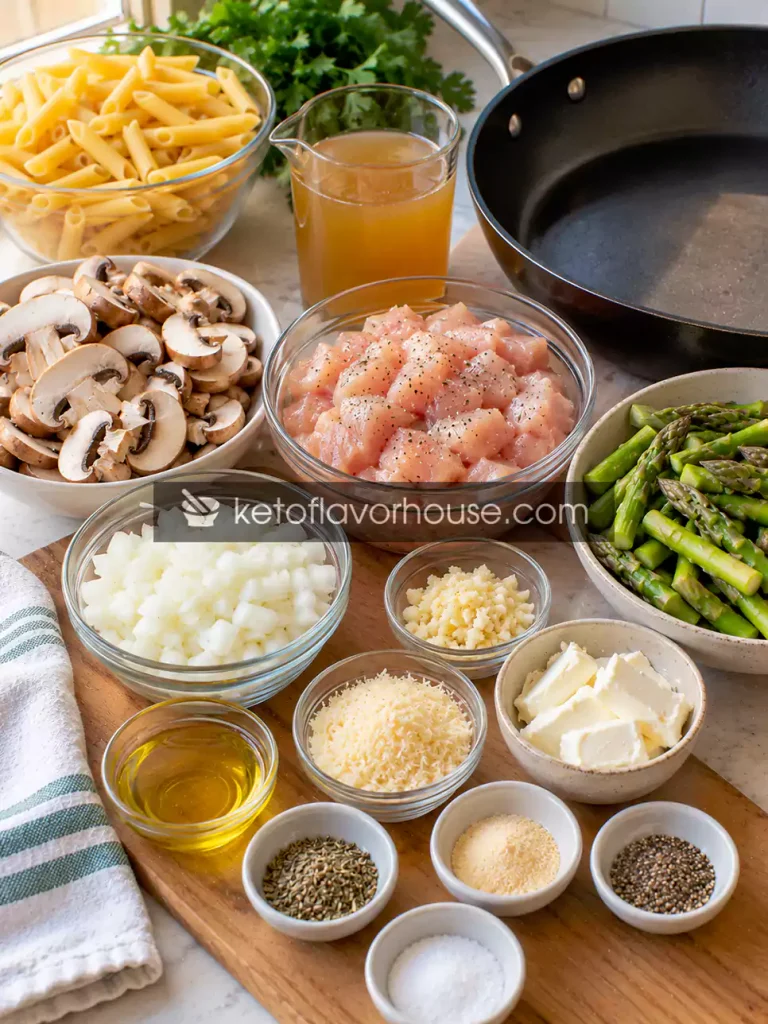
Bring a large pot of water to a boil. While it heats, cut the chicken into evenly sized bite-sized pieces, slice the mushrooms, dice the onion, mince the garlic, and trim the asparagus.
Soften the cream cheese briefly at room temperature if it is very firm. Measure the broth, yogurt, Parmesan, and seasonings before you begin cooking. This is especially helpful because the sauce comes together quickly once the chicken and vegetables are ready.
Step 2: Cook the penne
Cook the pasta in lightly salted boiling water according to the package directions, stopping when it is just al dente. The pasta will be tossed with warm sauce afterward, so it should retain a slight firmness in the center.
Before draining, reserve about ½ cup of pasta water. Drain the penne and set it aside. Avoid rinsing it; the starch on the surface helps the sauce cling. If the pasta finishes well before the sauce, toss it with a spoonful of reserved cooking water to prevent it from sticking together.
Step 3: Brown the chicken
Heat the olive oil in a large skillet over medium-high heat. Add the chicken in a single layer, seasoning lightly with some of the salt and black pepper. Let it cook undisturbed for a couple of minutes so the underside can brown, then turn the pieces and continue cooking until the chicken is cooked through.
Depending on the size of the pieces and the pan, this generally takes around 5–7 minutes. Use a food thermometer to confirm the thickest pieces reach 165°F (74°C). Transfer the cooked chicken to a clean plate while you prepare the vegetables. Do not put cooked chicken back onto a plate that held raw chicken unless it has been washed.
Step 4: Cook the mushrooms and onion
Add the mushrooms and diced onion to the same skillet. If the pan looks dry, use a small splash of broth rather than automatically adding more oil. Cook for about 5–7 minutes, stirring occasionally.
At first, the mushrooms will release moisture and may look glossy and crowded. Continue cooking until most of that moisture has evaporated and some mushroom edges turn golden. Add the garlic during the final 30 seconds, stirring so it becomes fragrant without burning.
Step 5: Add the asparagus
Stir the asparagus into the skillet and cook for about 3–5 minutes, depending on the thickness of the stalks. The pieces should turn bright green and become just tender when pierced with a fork.
If the asparagus is especially thick, add a tablespoon or two of broth and cover the skillet for a minute to help it soften. Avoid cooking it until it collapses; it will spend a little more time in the sauce later.
Step 6: Build the creamy sauce
Reduce the heat to medium-low. Pour in the chicken broth, then add the cubed light cream cheese, Italian seasoning, onion powder, and remaining pepper. Stir steadily as the cream cheese softens and blends into the broth.
Keep the sauce at a gentle simmer rather than a vigorous boil. Break up any large cream cheese pieces with the back of a spoon. Once the sauce looks mostly smooth, stir in the Parmesan until it melts. If it seems too thick, add a little reserved pasta water or broth.
Step 7: Return the chicken and pasta
Add the cooked chicken and drained penne to the skillet. Toss gently for 1–2 minutes, allowing the pasta to absorb some of the sauce. Check that the chicken is evenly distributed and the asparagus stays intact.
Remove the pan from the heat. Let it stand for about 30 seconds, then stir in the Greek yogurt until the sauce is creamy. Adding yogurt off the heat helps keep it smooth. If the sauce tightens as it stands, loosen it with a tablespoon of warm pasta water at a time.
Step 8: Taste and serve
Taste the pasta before adding more salt, because broth and Parmesan can make the finished dish saltier than expected. Add lemon juice if you want a brighter finish, then sprinkle with parsley if using.
Divide the penne into six portions. For the most consistent WW tracking, use a kitchen scale to divide the cooked recipe evenly rather than estimating serving sizes by eye. Serve while warm and creamy.
The cooking sequence
Use these visual cues to keep the pasta and sauce in balance.
The penne should hold its shape and still have a slight bite before draining.
Cook to 165°F (74°C); let the chicken rest on a clean plate while the vegetables cook.
Let the mushrooms release moisture and develop golden edges before adding the sauce.
Melt the cream cheese over low heat, toss with pasta, then fold in yogurt off the heat.
Common Mistakes to Avoid
The most common problems with creamy pasta are preventable. Give the mushrooms time to brown, use moderate heat for the sauce, and keep the pasta slightly firm before it is tossed with the other ingredients.
- Adding all the ingredients at once: The mushrooms steam instead of browning, and the chicken may cook unevenly. Brown the chicken first, then cook the vegetables in the same pan.
- Boiling the sauce hard: High heat can cause the dairy ingredients to separate or turn grainy. Keep the cream cheese sauce at a gentle simmer and stir regularly.
- Adding Greek yogurt while the pan is very hot: Yogurt can become grainy when heated aggressively. Remove the skillet from the heat before stirring it in.
- Overcooking the asparagus: Very soft asparagus can break apart when the pasta is tossed. Add it later than the mushrooms and stop when it is just tender.
- Using too little liquid: Cream cheese thickens as it cools and pasta absorbs sauce. Reserve pasta water and add it gradually until the sauce coats the penne.
- Guessing the portions: A large serving can contain much more pasta and sauce than intended. Divide the finished recipe into six portions and use the same serving size when tracking.
Pro Tips for the Best Results
Dry the mushrooms if they are wet. If you rinse them, dry them before slicing. Excess surface water delays browning, especially in a smaller skillet.
Don’t crowd the chicken. If the pieces overlap, cook them in two batches. A little golden color adds flavor to the final sauce.
Use freshly grated Parmesan if convenient. Finely grated cheese melts more readily than large shreds. Pre-grated cheese can work, but its texture may vary depending on the product.
Soften the cream cheese first. Cold cubes take longer to blend and may leave small lumps. Cutting the cream cheese into cubes helps it melt evenly.
Reserve the pasta water. Its starch helps the sauce cling to the penne. Add it one tablespoon at a time rather than pouring it all in.
Measure before serving. Pasta is easy to over-portion because it looks less substantial in the pan than on a plate. Six equal portions make your nutrition estimate more meaningful.
Finish with acidity, not extra richness. A little lemon juice can balance the creamy sauce. Taste before adding more Parmesan or oil.
Troubleshooting: How to Fix the Sauce
Pasta rescue guide
It looks pasty or clings in heavy clumps.
Add warm broth or reserved pasta water one tablespoon at a time, tossing between additions.
The dairy appears separated.
Take the pan off the heat. Whisk in a splash of warm broth; avoid boiling, and add yogurt only after the sauce cools slightly.
Liquid pools in the skillet.
Keep the pan uncovered and cook until the liquid evaporates before adding the broth and cream cheese.
The sauce disappears after tossing.
Stir in warm pasta water or broth a little at a time. Add liquid before adding extra cheese or oil.
The sauce tastes creamy but bland.
Taste for salt and pepper, then add a small amount of lemon juice or Italian seasoning before adjusting the cheese.
WW-Specific Nutrition and Meal-Planning Strategy
Weight Watchers is designed around a Points budget that varies by member and plan. This recipe can be worked into many different meal plans, but its suitability depends on your individual budget, portion size, and how your current plan counts the ingredients.
The chicken provides protein, while asparagus and mushrooms add vegetables, flavor, and texture. The pasta supplies carbohydrates and energy, and the creamy sauce makes the meal feel satisfying. No single ingredient guarantees weight loss, and a low Points number alone does not guarantee a calorie deficit. What matters is how the meal fits into your overall eating pattern.
Build a satisfying plate
Start with one of the six measured portions. If you want a larger-looking plate, serve it with a side salad of leafy greens, cucumber, tomatoes, and a light dressing. This adds freshness and crunch without requiring a large extra serving of pasta.
You could also serve a portion with steamed green beans or roasted broccoli. Both work well with the savory mushroom sauce. If your daily budget is tight, avoid automatically adding garlic bread, extra Parmesan, or a creamy side dish; these can add Points quickly. You don’t need to eliminate those foods entirely, but it helps to decide on additions deliberately.
Keep protein in perspective
Chicken is the primary protein source in this dish. Greek yogurt and Parmesan contribute additional protein, although the exact amount depends on the products used. Protein can support fullness as part of a balanced meal, but individual needs vary. If you are planning meals around a protein target, check the nutrition labels and calculate the whole recipe rather than relying on a generic estimate.
Understand the role of fiber
Asparagus and mushrooms contribute some fiber, and whole-wheat penne may provide more fiber than regular pasta. Fiber intake varies with the ingredients and portions, so use the nutrition information on your specific pasta package if fiber is an important consideration.
Make Points decisions with the full recipe
The most practical places to focus are the amounts of pasta, oil, cream cheese, and Parmesan. These ingredients affect the nutritional totals and may have a significant effect on Points. Reducing them can change the sauce texture, so make measured changes rather than removing everything at once.
For instance, you can begin with the recipe as written, calculate it in your app, and then test a version with slightly less Parmesan. If you change the amount of pasta or replace cream cheese with another product, recalculate the entire recipe. A substitution’s Points effect depends on the precise product and amount used.
Variations You Can Try
1. Spinach and mushroom chicken penne
Replace half the asparagus with a few handfuls of fresh baby spinach. Add the spinach toward the end and stir until wilted. It gives the dish a softer texture and a mild earthy flavor. Because the replacement quantities and brands may differ, recalculate the nutrition and Points for your final version.
2. Broccoli and chicken penne
Use bite-sized broccoli florets instead of asparagus. Add them to the skillet with a splash of broth and cover briefly so they steam until nearly tender. Broccoli has a firmer bite and a stronger vegetable flavor, making the dish feel heartier. Cooking time depends on the size of the florets.
3. Whole-wheat creamy penne
Use the same weight of whole-wheat penne. It has a nuttier taste and a slightly firmer texture, so it pairs well with the mushrooms. Check the package instructions and nutrition label; whole-wheat pasta does not automatically have fewer Points.
4. Lemon-herb chicken penne
Increase the lemon juice slightly and add fresh parsley or basil at the end. This version tastes brighter and less rich, especially if you enjoy a fresh finish to creamy dishes. Add lemon gradually so the sauce remains balanced rather than sour.
5. Garlic-forward mushroom penne
Add one extra minced garlic clove, cooking it briefly with the mushrooms before adding the broth. This gives the sauce a stronger savory aroma without requiring more cheese. Watch the garlic carefully, as browned garlic can taste bitter.
6. Extra-vegetable penne
Add sliced zucchini along with the asparagus, or increase the mushrooms. More vegetables change the volume and texture of the dish, and may reduce the proportion of pasta in each serving if the finished recipe is divided evenly. They do not make the recipe automatically zero-Points, so recalculate according to your plan.
7. A slightly richer version
If you prefer a more pronounced Parmesan flavor, add a little extra cheese at the table rather than stirring an unmeasured amount into the full skillet. This gives everyone control over their portion, but remember to account for the additional cheese in your own serving’s Points.
Additional Tips for Serving and Portioning
The best presentation is simple. Use a shallow bowl so the penne, mushrooms, chicken, and green asparagus are visible instead of buried under sauce. A little chopped parsley and a light dusting of measured Parmesan are enough; a heavy layer of cheese can overwhelm the fresh vegetables.
If you are serving a family, place the skillet in the center of the table and portion the pasta before anyone goes back for seconds. That makes it easier to track your own serving without asking everyone else to follow the same plan. Keep additional toppings separate so you can measure what you choose.
For meal prep, divide the recipe into six containers after cooking. Try to distribute the chicken and vegetables evenly instead of placing most of them in the first few containers. If you want a different balance, you can intentionally add extra vegetables to your own serving, but update the nutrition estimate if the portions are no longer equal.
Serving Ideas
This creamy chicken penne is substantial enough to be the main dish, so side dishes can be light and fresh. The goal is to complement the savory sauce rather than add another rich component.
What to serve with creamy chicken penne
Choose the combination that suits your evening and your own Points budget.
Leafy greens, cucumber, and tomatoes add crunch and freshness to the creamy sauce.
A simple vegetable side works well if you want more greens without another rich sauce.
Juicy tomatoes and crisp cucumber offer a cool contrast to warm pasta.
A refreshing drink keeps the meal simple without adding another rich component.
Pack one measured serving with extra vegetables for an easy next-day lunch.
Serve from a large skillet and keep optional cheese at the table so additions can be measured.
For a weeknight dinner
Serve a portion with a green salad and a simple vinaigrette. The salad’s acidity complements the creamy sauce, while its crisp texture balances the soft penne.
For meal prep
Divide the pasta into individual containers once it has cooled slightly. Include a small side of vegetables if desired. Keep in mind that the sauce may thicken overnight, so you may need a splash of broth when reheating.
For a family meal
Put extra parsley, black pepper, and a measured bowl of Parmesan on the table. This lets family members customize their servings without changing the base recipe or requiring a separate sauce.
For a casual gathering
Serve the pasta in a wide, warm dish and garnish lightly. Since the sauce thickens as it cools, aim to serve soon after preparation and keep it warm rather than leaving it at room temperature for an extended period.
Storage Recommendations
Store leftovers in shallow, airtight containers and refrigerate promptly. Cooked chicken and pasta dishes should generally be refrigerated within two hours of cooking, or within one hour if the surrounding temperature is above 90°F (32°C). For best food safety, keep the refrigerator at 40°F (4°C) or below.
Use refrigerated leftovers within 3–4 days. The pasta will absorb some sauce as it sits, so the dish may look less creamy the next day. That is normal and can be corrected during reheating.
For reheating, place one portion in a microwave-safe dish, add a tablespoon of broth or water, cover loosely, and heat until steaming hot throughout, stirring partway through. On the stovetop, warm it gently in a skillet with a small splash of broth. Avoid prolonged high heat, which can dry out the chicken and cause the dairy sauce to separate.
Freezing is possible, but the texture may change. Cooked pasta can soften, asparagus may become less crisp, and the yogurt-based sauce can separate slightly after thawing. If you freeze it, use an airtight freezer-safe container and thaw it in the refrigerator before reheating. For the best texture, this recipe is generally more enjoyable refrigerated for a few days than frozen for an extended period.
Reheating the same ingredients does not materially change the recipe’s original Points calculation. However, added broth, cheese, oil, or a different serving size can change the nutrition of the portion you eat. If you divide the leftovers unevenly, track the amount actually served.
Storage timeline
Divide into shallow containers and refrigerate within two hours; don’t leave the skillet on the counter to cool for hours.
Keep covered at 40°F (4°C) or below. Label containers with the date so you can use older portions first.
Add a splash of broth or water and heat until steaming hot throughout. Stir midway for even heating.
Freeze in airtight portions if you accept a softer pasta and possible sauce separation. Thaw in the refrigerator and reheat gently.
Frequently Asked Questions
Can I make Weight Watchers Creamy Mushroom and Asparagus Chicken Penne ahead of time?
Yes. You can cook it in advance and refrigerate individual portions for up to 3–4 days. The pasta will absorb some of the sauce overnight, so add a splash of broth when reheating. For the freshest asparagus texture, you can also prepare the chicken and mushroom mixture ahead, then cook the pasta and finish the sauce shortly before serving.
Can I use a different type of pasta?
Absolutely. Rigatoni, rotini, fusilli, and other short pasta shapes can hold the creamy sauce well. Whole-wheat and gluten-free varieties are also options. Use the same dry weight as the recipe for a fair comparison, follow the package timing, and recalculate nutrition and Points using the actual product label. Different pasta types do not necessarily have the same calories or Points.
How can I reduce the SmartPoints?
Start by entering the recipe as written into your current WW app to establish a baseline. Then test one change at a time, such as reducing the Parmesan slightly or using a measured amount of cooking spray instead of the full tablespoon of oil. These changes can affect flavor and texture, so avoid removing every source of fat at once. Recalculate the complete recipe after making substitutions; there is no universal Points reduction that applies to every plan.
Can I use frozen asparagus?
Fresh asparagus gives the dish a particularly pleasant tender-crisp texture, but frozen asparagus can work. Thaw and drain it first if the package instructions allow, then add it near the end of cooking. Frozen asparagus can be softer and release extra moisture, so cook off excess liquid before adding the creamy sauce. The nutrition difference depends on the product and quantity.
How do I keep the chicken tender?
Cut the chicken into similarly sized pieces, avoid overcrowding the pan, and remove it once it reaches 165°F (74°C) internally. Return it to the skillet near the end so it warms through without simmering for a long time. Small pieces can overcook quickly, so start checking them early.
Can I freeze this creamy pasta?
You can, although the texture may be less appealing after thawing. The pasta can soften and the sauce may separate because it contains cream cheese and Greek yogurt. Freeze individual portions in airtight containers, thaw them in the refrigerator, and reheat gently with a splash of broth. If texture is your priority, refrigerated portions are usually the better choice.
Will my WW app show the same Points as this article?
Not necessarily. The estimate here is independent and has not been verified by an official WW calculator. The result in your app can depend on your plan, ingredient brands, serving count, and account-specific settings. Enter the exact ingredients and divide the finished recipe into six equal portions for the most useful comparison.
Nutritional Breakdown Per Serving
The estimates below assume six equal servings made with the ingredients listed in the recipe card. They are approximate, not laboratory-tested values; exact numbers vary by pasta, chicken, dairy product, broth, and ingredient brand.
- Calories: approximately 360–420
- Protein: approximately 30–35 g
- Fat: approximately 9–13 g
- Total carbohydrates: approximately 35–43 g
- Fiber: approximately 4–6 g
- Net carbohydrates: approximately 30–38 g
- Sugar: approximately 4–7 g
- Sodium: approximately 450–750 mg
- Estimated SmartPoints: approximately 7–10 per serving
Net carbohydrates here mean total carbohydrates minus fiber. They are a separate nutrition calculation and are not the same as WW Points. Sodium can vary considerably depending on the broth, Parmesan, cream cheese, and how much salt is added.
Recipe Snapshot
- Prep Time: 15 minutes
- Cook Time: 25 minutes
- Total Time: 40 minutes
- Course: Main course, dinner
- Cuisine: American-inspired
- Servings: 6
- Calories per serving: Approximately 360–420
- Estimated SmartPoints per serving: Approximately 7–10, unverified
A Final Note
The best version of this dish is creamy enough to coat the penne, with mushrooms that taste deeply savory and asparagus that still has a little bite. Measuring the richer ingredients and dividing the finished recipe evenly makes the meal easier to track without giving up the comfort of a homemade pasta dinner.
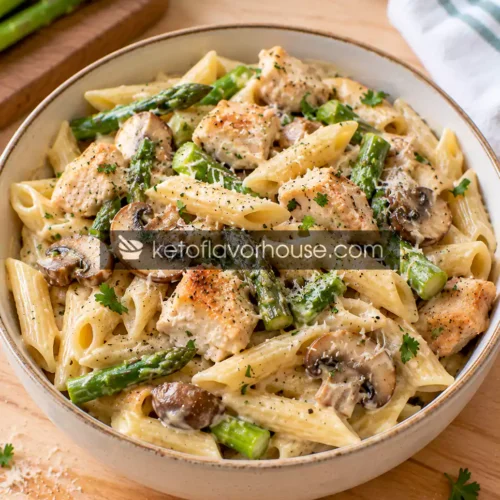
Weight Watchers Creamy Mushroom and Asparagus Chicken Penne

Ingredients
- 8 ounces dry penne pasta
- 1 pound boneless skinless chicken breast, cut into bite-sized pieces
- 8 ounces cremini or white mushrooms sliced
- 1 pound asparagus trimmed and cut into 1½-inch pieces
- 1 tablespoon olive oil
- 1 small yellow onion finely diced
- 3 garlic cloves minced
- 1 cup low-sodium chicken broth
- 4 ounces light cream cheese softened and cubed
- ½ cup plain fat-free Greek yogurt
- ¼ cup finely grated Parmesan cheese
- 1 teaspoon Italian seasoning
- ½ teaspoon onion powder
- ¼ teaspoon black pepper plus more to taste
- ½ teaspoon salt or to taste
- 1 –2 teaspoons lemon juice optional
- 2 tablespoons chopped fresh parsley optional
Instructions
- Bring a large pot of water to a boil. Cook the penne according to the package instructions until al dente. Reserve ½ cup of pasta water, drain the pasta, and set aside.
- Heat the olive oil in a large skillet over medium-high heat. Add the chicken, season lightly, and cook for approximately 5–7 minutes, turning as needed, until the thickest pieces reach 165°F (74°C). Transfer to a clean plate.
- Add the mushrooms and onion to the skillet. Cook for 5–7 minutes, stirring occasionally, until the mushroom moisture evaporates and the edges begin to brown.
- Add the garlic and cook for 30 seconds, stirring constantly.
- Add the asparagus and cook for 3–5 minutes until bright green and just tender.
- Reduce the heat to medium-low. Pour in the chicken broth and add the cream cheese, Italian seasoning, onion powder, and remaining black pepper. Stir until the cream cheese melts into a smooth sauce.
- Stir in the Parmesan until melted. If the sauce is too thick, add reserved pasta water or extra broth a tablespoon at a time.
- Return the chicken and cooked penne to the skillet. Toss gently for 1–2 minutes until everything is coated in sauce.
- Remove the skillet from the heat. Let it stand for about 30 seconds, then stir in the Greek yogurt. Add lemon juice if desired and adjust the seasoning.
- Divide into six equal portions and garnish with parsley if using. Serve warm.