This post may contains Amazon affiliate and other affiliate links. If you make a purchase through these links, I may earn a small commission at no extra cost to you. Your support helps me continue to provide quality content. I only recommend products I personally trust and believe will add value to your experience. For more details, please visit my Privacy Policy.
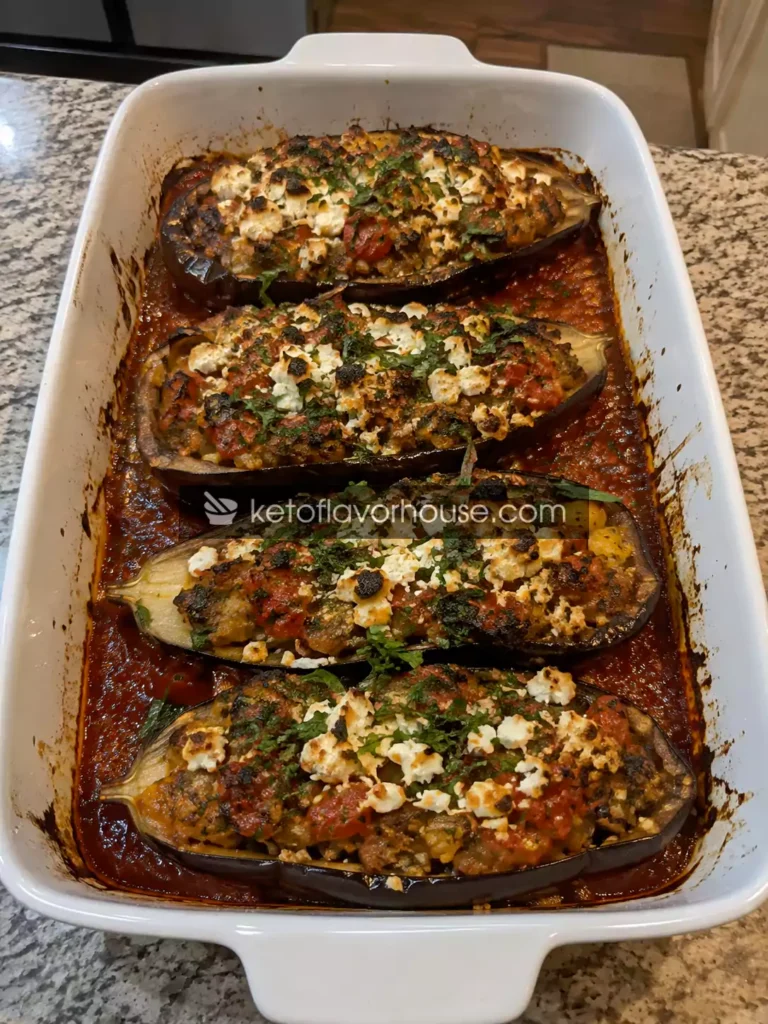
There are certain recipes that make the kitchen smell wonderful before they are even finished, and this Mediterranean Calabrian Stuffed Eggplant is one of them. Tender roasted eggplant is filled with a savory mixture of its own roasted flesh, garlic, tomatoes, herbs, breadcrumbs, and tangy feta, then baked until the edges are golden and the filling is beautifully set. It is the kind of Mediterranean-inspired dinner that feels rustic, generous, and comforting without requiring complicated cooking techniques.
I love recipes that make vegetables the main event rather than treating them as something that has to sit quietly beside the rest of the meal. Eggplant is especially good at that. Once roasted, it becomes silky and almost creamy inside, while the exterior develops a lovely roasted flavor. Add garlic, oregano, basil, tomato, olive oil, and feta, and suddenly a humble eggplant becomes something worthy of putting right in the center of the table.
This recipe takes inspiration from the flavors and spirit of Calabrian stuffed eggplant, but it is best described as Mediterranean-inspired rather than an attempt to reproduce one specific traditional preparation. The filling combines the soft roasted eggplant flesh with tomatoes, aromatic herbs, breadcrumbs, feta, and a little red pepper for warmth. Everything is baked in a simple tomato base, allowing the flavors to mingle while the tops become lightly golden.
It’s a particularly lovely recipe for a relaxed family dinner, a vegetarian lunch, a Mediterranean dinner night, or a weekend meal when you have a little extra time to let the oven do its work. It also makes a beautiful presentation because each eggplant half becomes its own little edible serving dish.
And don’t worry if your eggplants aren’t perfectly shaped or your filling isn’t packed into them with absolute precision. This is a rustic recipe. A little unevenness is part of its charm.
Why You’ll Love This Recipe
- 🍆 Eggplant takes center stage: Roasted eggplant becomes tender, silky, and wonderfully savory.
- 🍅 Rich Mediterranean-inspired flavor: Tomato, garlic, oregano, basil, olive oil, and feta create a vibrant combination.
- 🌿 Fresh herbs make a difference: Parsley and basil bring freshness to the rich roasted filling.
- 🧄 Garlic-forward and aromatic: Fresh garlic gives the filling a savory depth that pairs beautifully with eggplant.
- 🫒 Simple Mediterranean ingredients: The recipe relies on vegetables, olive oil, herbs, cheese, and a few pantry staples.
- 🧀 Tangy feta topping: Feta adds salty, creamy little bites throughout the filling.
- 🌶️ A gentle Calabrian-inspired kick: Red pepper flakes add warmth without overpowering the other ingredients.
- 🥗 Great for lunch or dinner: It can be served as a vegetarian main course or alongside other Mediterranean dishes.
- 🔥 Mostly hands-off cooking: Once the eggplants are prepared, the oven handles most of the work.
- ✨ Beautiful rustic presentation: Stuffed eggplant halves look naturally inviting when served directly from the baking dish.
- ❤️ Comforting without being complicated: It’s hearty, flavorful food made from ingredients that work beautifully together.
My Personal Experience
The first time I made stuffed eggplant, I was convinced I was going to need a complicated filling.
I had this picture in my head of a filling that needed several different cheeses, lots of vegetables, and some elaborate sauce. Instead, I ended up standing in the kitchen with a few eggplants, some tomatoes, garlic, herbs, breadcrumbs, and feta.
So I decided to keep it simple.
The first thing I learned was that the eggplant itself shouldn’t be wasted. After roasting the halves, I scooped out the soft interior and chopped it before folding it back into the filling. That one step gives the finished dish so much more eggplant flavor.
I also learned not to be shy about roasting the eggplant.
You don’t want it burnt, of course, but you do want the flesh completely tender. If the eggplant is still firm in the middle, the finished stuffed halves don’t have that wonderfully soft texture that makes this recipe special.
The other discovery was feta.
I initially used only a small amount because I didn’t want it to dominate the filling. But once I tasted the mixture, I added more. The tangy feta works so well with sweet tomato and earthy eggplant. It also means you don’t need a complicated cheese sauce.
These days, this is the kind of meal I like making when I want dinner to feel a little more special without turning the kitchen into a restaurant.
I’ll roast the eggplants while preparing the filling, spoon everything back into the shells, and let the final bake do its thing. When the dish comes out, I scatter fresh parsley and basil over the top and add a little extra olive oil.
It always looks rustic and inviting.
And there is something particularly satisfying about serving an entire stuffed eggplant half rather than simply spooning a vegetable mixture onto a plate. Everyone gets their own little portion, and the roasted edges around the filling are always the first thing people notice.
Required Equipment
Large Baking Dish
A large baking dish is needed for the final bake. Choose one that can comfortably hold all eight eggplant halves without forcing them tightly together.
Rimmed Baking Sheet
You’ll use a baking sheet for the first roasting stage. A rimmed sheet helps contain olive oil and any juices released by the eggplant.
Chef’s Knife
A sharp knife makes it easier to halve the eggplants, score the flesh, and finely chop the onion, garlic, and herbs.
Cutting Board
Use a sturdy cutting board for preparing the eggplants and vegetables. If you are also preparing other foods, keep raw ingredients separate from ready-to-eat ingredients.
Large Mixing Bowl
The mixing bowl gives you enough space to combine the roasted eggplant flesh, tomato, breadcrumbs, feta, egg, herbs, and seasonings without making a mess.
Large Spoon
A sturdy spoon is useful for scooping the roasted eggplant flesh from the skins without piercing through the shells.
Ingredients & Substitutions
Eggplant
Use 4 medium eggplants, approximately 10–12 ounces each.
Choose eggplants that feel firm and heavy for their size, with smooth, shiny skin.
Medium eggplants are ideal because they have enough flesh for a generous filling while still fitting comfortably in a baking dish.
Large eggplants can be used, but they may need a little more roasting time.
Olive Oil
Use 4 tablespoons extra-virgin olive oil, divided.
Olive oil is used both for roasting the eggplant and cooking the filling.
It helps carry the flavors of garlic, oregano, basil, and red pepper throughout the dish.
You can use another neutral cooking oil if necessary, but olive oil gives this recipe much of its Mediterranean character.
Onion
Use 1 medium yellow onion, finely diced.
The onion adds sweetness and savory depth to the filling.
A red onion can be substituted if you prefer a slightly sharper flavor.
Garlic
Use 4 cloves garlic, finely minced.
Fresh garlic is ideal here. It becomes mellow and aromatic as it cooks with the onion and tomato.
Tomato
Use 1½ cups finely diced ripe tomatoes.
Fresh tomatoes give the filling moisture and natural sweetness.
You can substitute 1½ cups canned diced tomatoes, thoroughly drained, if fresh tomatoes aren’t available.
Breadcrumbs
Use ¾ cup plain breadcrumbs.
Breadcrumbs help bind the filling and absorb some of the moisture released by the eggplant and tomatoes.
For a more rustic texture, use coarse breadcrumbs.
Whole-wheat breadcrumbs can also be used, although they will give the filling a slightly heartier texture.
Feta Cheese
Use 4 ounces crumbled feta cheese.
Feta adds saltiness, tang, and a creamy texture.
Goat cheese can replace the feta if desired, although the filling will become softer and creamier.
Egg
Use 1 large egg.
The egg helps bind the filling so it holds together inside the eggplant shells.
Fresh Parsley
Use ¼ cup finely chopped fresh parsley, plus extra for garnish.
Parsley adds freshness and balances the richer roasted flavors.
Fresh Basil
Use ¼ cup chopped fresh basil, plus a little extra for serving.
Basil works beautifully with tomato and eggplant.
If fresh basil isn’t available, use 2 teaspoons dried basil in the filling.
Dried Oregano
Use 1 teaspoon dried oregano.
Oregano gives the filling a warm, aromatic Mediterranean character.
Red Pepper Flakes
Use ½ teaspoon red pepper flakes.
This provides a gentle amount of heat.
For a milder version, reduce it to ¼ teaspoon or leave it out.
For a spicier Calabrian-inspired version, increase it to 1 teaspoon.
Salt
Use ¾ teaspoon kosher salt, divided.
Be conservative because feta can be quite salty.
Black Pepper
Use ½ teaspoon freshly ground black pepper.
Add a little more at the end if needed.
Tomato Sauce
Use 1 cup plain tomato sauce for the bottom of the baking dish.
This keeps the eggplant moist during the final bake and creates a simple sauce that can be spooned over the finished dish.
Choose a plain tomato sauce without excessive added seasoning.
Lemon
Use 1 tablespoon fresh lemon juice for finishing.
The lemon isn’t meant to make the dish taste strongly lemony. It simply adds acidity that balances the roasted eggplant, feta, and tomato.
How to Make Mediterranean Calabrian Stuffed Eggplant with Feta
Prepare the Eggplants
Start by preheating your oven to 425°F (220°C).
Cut each eggplant in half lengthwise.
Place the halves cut-side up on a rimmed baking sheet.
Using a sharp knife, carefully score the flesh in a crosshatch pattern without cutting through the skin.
The cuts don’t need to be perfect.
The goal is simply to help the heat penetrate the thick eggplant flesh and make the inside easier to scoop later.
Drizzle the cut sides with 2 tablespoons olive oil and season lightly with ¼ teaspoon salt and ¼ teaspoon black pepper.
Rub the oil gently across the surface.
Don’t worry if some areas have more oil than others. Eggplant absorbs oil quickly, so you don’t need to drown it.
Roast the Eggplant
Place the baking sheet in the oven and roast the eggplant for approximately 30–35 minutes.
The exact time will depend on the size and variety of your eggplants.
You want the flesh to be completely tender.
A knife should slide easily into the thickest part without significant resistance.
The edges may become lightly browned, which is exactly what you want.
If the tops become dark before the centers are tender, loosely cover them with foil and continue roasting.
Don’t rush this step.
The soft texture of the roasted eggplant becomes part of the filling, and properly roasted eggplant makes the final stuffed shells much more tender and flavorful.
Scoop Out the Eggplant Flesh
Remove the eggplants from the oven and let them cool enough to handle.
Using a large spoon, carefully scoop out the flesh while leaving approximately ¼-inch of flesh attached to the skin.
You want the skins to remain sturdy enough to hold the filling.
Transfer the roasted flesh to a cutting board and roughly chop it.
Don’t puree it.
A little texture is important. Small pieces of eggplant give the filling a much more interesting bite.
Place the empty eggplant shells into a large baking dish.
Prepare the Tomato Base
Spread 1 cup tomato sauce evenly across the bottom of the baking dish.
Arrange the eggplant shells cut-side up over the sauce.
The sauce shouldn’t completely cover the shells.
It simply creates a moist, flavorful base for the final bake.
Cook the Onion and Garlic
Heat 1 tablespoon olive oil in a large skillet over medium heat.
Add the diced onion and cook for approximately 4–5 minutes, stirring occasionally, until softened and translucent.
Add the minced garlic and cook for another 30–60 seconds.
Be careful not to brown the garlic too aggressively.
You want it fragrant and softened rather than dark and bitter.
This is one of those moments when the kitchen starts smelling like dinner is already halfway finished.
Add the Tomatoes and Seasonings
Add the diced tomatoes to the skillet.
Stir in the chopped roasted eggplant flesh, dried oregano, red pepper flakes, remaining ½ teaspoon salt, and remaining ¼ teaspoon black pepper.
Cook for approximately 5–7 minutes, stirring occasionally.
The mixture should become cohesive but shouldn’t turn into a wet sauce.
If it looks very watery, continue cooking for another minute or two.
The goal is to remove some excess moisture before the breadcrumbs and cheese go in.
Build the Stuffed Eggplant Filling
Remove the skillet from the heat.
Let the mixture cool for about 5 minutes.
This short cooling period matters because you don’t want to add a raw egg to a piping-hot mixture.
Transfer the mixture to a large mixing bowl.
Add the ¾ cup breadcrumbs, 4 ounces crumbled feta, 1 large egg, ¼ cup chopped parsley, and ¼ cup chopped basil.
Mix gently until everything is evenly combined.
Taste a small amount and adjust the pepper or salt if necessary.
Remember that the feta will add additional saltiness as the filling bakes.
The mixture should be moist enough to hold together when pressed with a spoon but not wet enough to look runny.
If it seems excessively loose, add another tablespoon or two of breadcrumbs.
Fill the Eggplant Shells
Spoon the filling evenly into the roasted eggplant shells.
Don’t press it down too firmly.
A loose, slightly rounded filling gives you better texture and allows the top to brown.
If you have a little extra filling, don’t worry.
You can mound it slightly above the eggplant shell rather than trying to force everything inside.
The important thing here is that each half gets a generous, even portion.
Bake Until Golden
Reduce the oven temperature to 400°F (205°C).
Place the baking dish in the oven and bake for approximately 20–25 minutes.
The filling should be heated through and the tops should look lightly golden.
The tomato sauce around the eggplant should be bubbling gently.
If you want more color on top, switch the oven to broil for 1–2 minutes at the end.
Watch closely during broiling because breadcrumbs and feta can go from golden to burnt surprisingly quickly.
Finish with Lemon and Fresh Herbs
Remove the baking dish from the oven and let the stuffed eggplants rest for about 5 minutes.
Drizzle the tops lightly with the fresh lemon juice.
Scatter additional parsley and basil over the eggplant.
If you like, add a small drizzle of extra-virgin olive oil.
Taste before adding any additional salt.
The combination of warm eggplant, tomato sauce, feta, garlic, herbs, and lemon should be savory, aromatic, tangy, and just slightly spicy.
Common Mistakes to Avoid
Not Roasting the Eggplant Long Enough
Firm eggplant flesh makes a less tender filling and can leave the shells difficult to eat.
Fix: Roast until a knife slides easily into the thickest part.
Scooping Out Too Much Flesh
If you scrape all the way down to the skin, the shells can become fragile and collapse.
Fix: Leave about ¼ inch of flesh attached to the skin.
Making the Filling Too Wet
Eggplant and tomatoes both contain plenty of moisture.
Fix: Cook the tomato and eggplant mixture long enough for excess moisture to evaporate before adding the breadcrumbs.
Burning the Garlic
Garlic cooks quickly.
Fix: Add it after the onion has softened and cook only until fragrant.
Adding the Egg to a Very Hot Filling
A piping-hot mixture can partially cook the egg before you mix everything together.
Fix: Allow the filling to cool for about five minutes first.
Over-Salting the Filling
Feta contributes significant saltiness.
Fix: Season moderately and taste before adding extra salt.
Packing the Filling Too Tightly
Firmly compressed filling can become dense.
Fix: Spoon it into the shells and gently mound it rather than pressing it down.
Skipping the Resting Time
Fresh from the oven, the filling is very hot and soft.
Fix: Let the stuffed eggplant rest for about five minutes before serving.
Pro Tips for Best Results
Choose medium eggplants. They are easier to roast evenly and create manageable individual portions.
Dry the eggplant surface before oiling. If you’ve washed the eggplants, pat them dry first.
Don’t overdo the olive oil. Eggplant absorbs oil readily. A light coating is enough to encourage roasting.
Let the roasted flesh retain some texture. Chopping is better than pureeing because small pieces make the filling more interesting.
Cook off excess tomato moisture. This is particularly important if your tomatoes are very juicy.
Use coarse breadcrumbs when possible. They provide a more rustic texture.
Don’t overwhelm the filling with cheese. Feta should complement the eggplant rather than completely cover its flavor.
Add herbs in two stages. Some basil and parsley go into the filling, while fresh herbs are reserved for finishing.
Use lemon at the end. Fresh acidity brightens the finished dish much more effectively than adding lots of lemon juice before baking.
Give the eggplant enough room. The shells should sit comfortably in the baking dish without being crushed against each other.
Air Fryer Option
The entire recipe can be adapted for an air fryer, although you’ll need to work in batches depending on basket size.
Roast the eggplant halves at 380°F (193°C) for approximately 18–25 minutes, checking frequently toward the end.
Prepare the filling separately on the stovetop.
Once filled, air fry the stuffed eggplant halves at 375°F (190°C) for approximately 6–10 minutes, until the filling is hot and the tops are golden.
The tomato sauce is best served separately when using the air fryer.
Mediterranean Benefits of Eggplant
Eggplant is one of those vegetables that can completely change character depending on how it is cooked.
Raw or lightly cooked eggplant can be firm and somewhat spongy, but roasting transforms it. The flesh becomes soft and creamy while the outer surface develops deeper roasted flavors.
That makes eggplant particularly useful in Mediterranean-inspired cooking, where vegetables are often paired with olive oil, garlic, herbs, tomatoes, and bold seasonings.
Eggplant also contributes fiber and naturally occurring nutrients while keeping the recipe firmly vegetable-forward.
In this recipe, its culinary role is even more important than its nutritional profile. The roasted flesh forms the foundation of the filling, while the eggplant skin acts almost like a natural serving dish.
It also absorbs the flavors around it incredibly well.
The olive oil carries the oregano and garlic, the tomato brings sweetness and acidity, and feta adds a salty contrast. Eggplant ties all of those flavors together.
Variations You Can Try
🌶️ Spicy Mediterranean
Increase the red pepper flakes to 1 teaspoon.
You can also add a finely chopped fresh chili pepper to the onion while preparing the filling.
The result has noticeably more warmth without changing the basic structure of the dish.
🌿 Extra Herby
Increase the parsley to ½ cup and add an additional 2 tablespoons fresh basil.
Fresh mint can also be added in a small amount for a cooler herbal note.
🧄 Garlic-Lover’s Version
Increase the garlic to 6 cloves.
For an especially mellow garlic flavor, roast two whole garlic cloves alongside the eggplant, then mash them into the filling.
🧀 Cheesy Version
Increase the feta to 6 ounces.
You can also add ¼ cup grated Parmesan to the breadcrumb mixture for a more savory, nutty flavor.
🍋 Lemon-Herb Version
Add an additional ½ teaspoon finely grated lemon zest to the filling.
Finish with fresh lemon juice, parsley, basil, and a small drizzle of olive oil.
🥗 Extra Vegetable Version
Add ½ cup finely diced bell pepper and ½ cup finely chopped mushrooms to the onion mixture.
Cook them until softened before adding the tomato and eggplant.
Because the extra vegetables release moisture, cook the filling a little longer before adding the breadcrumbs.
🔥 Grilled Version
For a summer variation, grill the eggplant halves cut-side down until lightly charred and tender.
Prepare the filling separately and spoon it into the grilled shells.
Finish with feta, parsley, basil, lemon, and olive oil.
💨 Air Fryer Version
Roast the eggplant in the air fryer, prepare the filling on the stovetop, and finish the stuffed halves in the air fryer until the tops are golden.
This method is particularly useful when you don’t want to heat the entire oven.
Tips for This Recipe
Start with the eggplant because it needs the longest cooking time.
While it roasts, prepare the onion, garlic, tomatoes, and herbs. This makes the overall process feel much faster.
When scooping the eggplant, don’t worry about making perfectly clean shells. A little remaining flesh is actually helpful.
If your tomato mixture seems wet, cook it longer before adding the breadcrumbs.
For meal prep, you can prepare the filling and eggplant shells ahead of time and refrigerate them separately.
When ready to bake, fill the shells and continue with the final baking stage.
If you’re serving this for guests, prepare the entire dish earlier in the day and refrigerate it. Allow it to sit out briefly while the oven preheats, then bake until thoroughly heated.
For the best texture, add the fresh herbs and lemon after cooking rather than before.
If the finished eggplant tastes rich, add more lemon.
If it tastes too sharp, a small drizzle of olive oil can soften the overall impression.
Optional Additions
A few simple toppings can take the stuffed eggplant in different directions.
Try:
- Extra crumbled feta
- Fresh parsley
- Fresh basil
- Fresh mint
- Kalamata olives
- Lemon zest
- Red pepper flakes
- Toasted pine nuts
- Toasted almonds
- A drizzle of extra-virgin olive oil
- Plain Greek yogurt
- Tzatziki
- Tahini sauce
- Hummus
- Fresh diced tomatoes
Kalamata olives are particularly good if you enjoy a salty, briny flavor.
Toasted pine nuts add a pleasant crunch against the soft eggplant.
A spoonful of Greek yogurt or tzatziki can provide a cool contrast to the warm, spiced filling.
Serving Ideas
This stuffed eggplant can easily become the centerpiece of a Mediterranean-inspired dinner.
For a simple vegetarian meal, serve two eggplant halves per person with a crisp cucumber and tomato salad.
Warm pita bread makes an excellent accompaniment because it can be used to scoop up the tomato sauce from the bottom of the dish.
You can also serve the eggplant alongside a small bowl of hummus, olives, and a simple herb salad.
For a more substantial dinner, pair it with lemony rice, couscous, bulgur, or quinoa.
If you’re serving this as part of a larger spread, it works beautifully alongside grilled vegetables, roasted potatoes, a Greek-style salad, and tzatziki.
For casual entertaining, place the baking dish directly in the center of the table and garnish generously with parsley and basil.
It’s also a lovely option for a Mediterranean dinner night because the dish feels rustic and generous rather than overly formal.
For lunch, one stuffed eggplant half can be served with a fresh salad and yogurt sauce.
Storage Recommendations
Store leftover stuffed eggplant in an airtight container in the refrigerator for up to 4 days.
You can also cover the baking dish tightly and refrigerate the leftovers directly if you prefer.
For meal prep, individual portions work particularly well.
The texture will soften slightly after refrigeration, but the flavor often becomes even more developed.
For reheating, place the stuffed eggplant in a 350°F (175°C) oven for approximately 15–20 minutes, or until heated through.
Cover loosely with foil for the first part of reheating if the tops are already well browned, then uncover for the final few minutes.
An air fryer also works well for individual portions. Reheat at 350°F (175°C) for approximately 6–10 minutes.
Microwaving is possible, but it produces a softer texture and won’t restore the crispness of the breadcrumb topping.
The stuffed eggplant can be frozen, although the eggplant itself will become softer after thawing.
If freezing, cool the cooked eggplant completely, place individual portions in freezer-safe containers, and use within approximately 2–3 months for best quality.
Thaw overnight in the refrigerator before reheating.
Frequently Asked Questions
Can I make Mediterranean Calabrian Stuffed Eggplant ahead of time?
Yes. You can roast the eggplants and prepare the filling earlier in the day.
For the best texture, store the roasted shells and filling separately in the refrigerator, then assemble and bake when you’re ready.
You can also assemble the entire dish ahead of time and refrigerate it before the final bake.
Can I use a different type of eggplant?
Yes. Globe eggplants, Italian eggplants, and other medium-sized varieties can work.
The main consideration is size. Very large eggplants may require additional roasting time, while smaller varieties will cook more quickly.
Can I use canned tomatoes?
Absolutely. Use 1½ cups drained diced tomatoes in place of fresh tomatoes.
Drain them well because excess liquid can make the filling too loose.
Can I use dried basil instead of fresh?
Yes. Use approximately 2 teaspoons dried basil in the filling.
Fresh basil is particularly nice as a finishing herb, though, so if you have it available, reserve some for the final garnish.
Can I make this recipe without feta?
Yes. You can omit the feta, although the filling will lose some of its tangy, salty character.
Goat cheese is the closest simple alternative if you want a similar creamy and tangy element.
How do I prevent stuffed eggplant from becoming watery?
The two most important steps are roasting the eggplant thoroughly and cooking the tomato-eggplant filling long enough to evaporate excess moisture.
Also make sure canned tomatoes are well drained if you’re using them.
Can I make this in an air fryer?
Yes. Roast the eggplant halves at approximately 380°F (193°C) until tender, prepare the filling separately, then air fry the filled halves at approximately 375°F (190°C) for 6–10 minutes.
Work in batches if your air fryer basket is small.
Can I freeze stuffed eggplant?
Yes, although the texture will be softer after thawing.
The flavor remains good, but freshly baked eggplant will always have a firmer roasted texture.
Can I make this recipe vegetarian?
Yes. This recipe is already designed as a vegetarian main dish.
The combination of eggplant, breadcrumbs, feta, tomato, and herbs gives the filling plenty of savory character.
Can I make it spicier?
Definitely.
Increase the red pepper flakes or add finely chopped fresh chili to the onion mixture.
You can also finish the dish with additional chili flakes immediately before serving.
What sauce goes best with stuffed eggplant?
The tomato sauce baked underneath the eggplant is already a natural pairing.
For something cooler, serve it with tzatziki or plain Greek yogurt.
Tahini sauce is another option if you want a nuttier Mediterranean-inspired flavor.
What can I serve with this recipe?
A cucumber-tomato salad, hummus, warm pita, olives, couscous, rice, quinoa, or roasted vegetables all pair nicely.
For a lighter meal, simply serve the stuffed eggplant with a fresh green salad.
Nutritional Breakdown (Per Serving)
The recipe makes 4 servings, with each serving consisting of two stuffed eggplant halves.
Estimated nutrition per serving:
- Calories: 425
- Protein: 15 g
- Fat: 20 g
- Total Carbohydrates: 52 g
- Fiber: 12 g
- Net Carbohydrates: 40 g
- Sugar: 14 g
- Sodium: 780 mg
Nutritional values are estimates and can vary depending on the exact size of the eggplants, type of breadcrumbs, feta, tomato sauce, olive oil, and other ingredients used.
Recipe Snapshot
Prep Time: 25 minutes
Cook Time: 55 minutes
Total Time: 1 hour 20 minutes
Course: Main Course
Cuisine: Mediterranean-Inspired
Servings: 4
Calories: Approximately 425 per serving
Mediterranean Calabrian Stuffed Eggplant with Feta Recipe

Ingredients
- 4 medium eggplants approximately 10–12 ounces each
- 4 tablespoons extra-virgin olive oil divided
- 1 medium yellow onion finely diced
- 4 garlic cloves finely minced
- 1½ cups finely diced fresh tomatoes
- ¾ cup plain breadcrumbs
- 4 ounces crumbled feta cheese
- 1 large egg
- ¼ cup chopped fresh parsley plus extra for garnish
- ¼ cup chopped fresh basil plus extra for garnish
- 1 teaspoon dried oregano
- ½ teaspoon red pepper flakes
- ¾ teaspoon kosher salt divided
- ½ teaspoon freshly ground black pepper
- 1 cup plain tomato sauce
- 1 tablespoon fresh lemon juice
Instructions
- Preheat the oven to 425°F (220°C). Cut the eggplants in half lengthwise, score the flesh in a crosshatch pattern without cutting through the skin, and place them cut-side up on a rimmed baking sheet.
- Drizzle the eggplant halves with 2 tablespoons olive oil and season with ¼ teaspoon salt and ¼ teaspoon black pepper. Roast for 30–35 minutes, until the flesh is completely tender.
- Remove the eggplants from the oven and cool until easy to handle. Scoop out the flesh, leaving about ¼ inch attached to the skins, then roughly chop the roasted flesh.
- Spread 1 cup tomato sauce over the bottom of a large baking dish and arrange the empty eggplant shells cut-side up over the sauce.
- Heat 1 tablespoon olive oil in a skillet over medium heat. Add the diced onion and cook for 4–5 minutes until softened. Add the minced garlic and cook for 30–60 seconds until fragrant.
- Add the diced tomatoes, chopped roasted eggplant flesh, oregano, red pepper flakes, remaining ½ teaspoon salt, and remaining ¼ teaspoon black pepper. Cook for 5–7 minutes, stirring occasionally, until the mixture is cohesive and excess moisture has cooked away.
- Remove the skillet from the heat and cool the mixture for about 5 minutes. Transfer it to a mixing bowl and stir in the breadcrumbs, feta, egg, parsley, and basil until evenly combined.
- Reduce the oven temperature to 400°F (205°C). Spoon the filling evenly into the eggplant shells, gently mounding the filling without packing it down.
- Bake the stuffed eggplant for 20–25 minutes, until heated through and lightly golden on top. Broil for 1–2 minutes at the end if a more browned topping is desired, watching carefully.
- Rest the stuffed eggplant for 5 minutes, then drizzle with fresh lemon juice and garnish with additional parsley and basil before serving.