This post may contains Amazon affiliate and other affiliate links. If you make a purchase through these links, I may earn a small commission at no extra cost to you. Your support helps me continue to provide quality content. I only recommend products I personally trust and believe will add value to your experience. For more details, please visit my Privacy Policy.
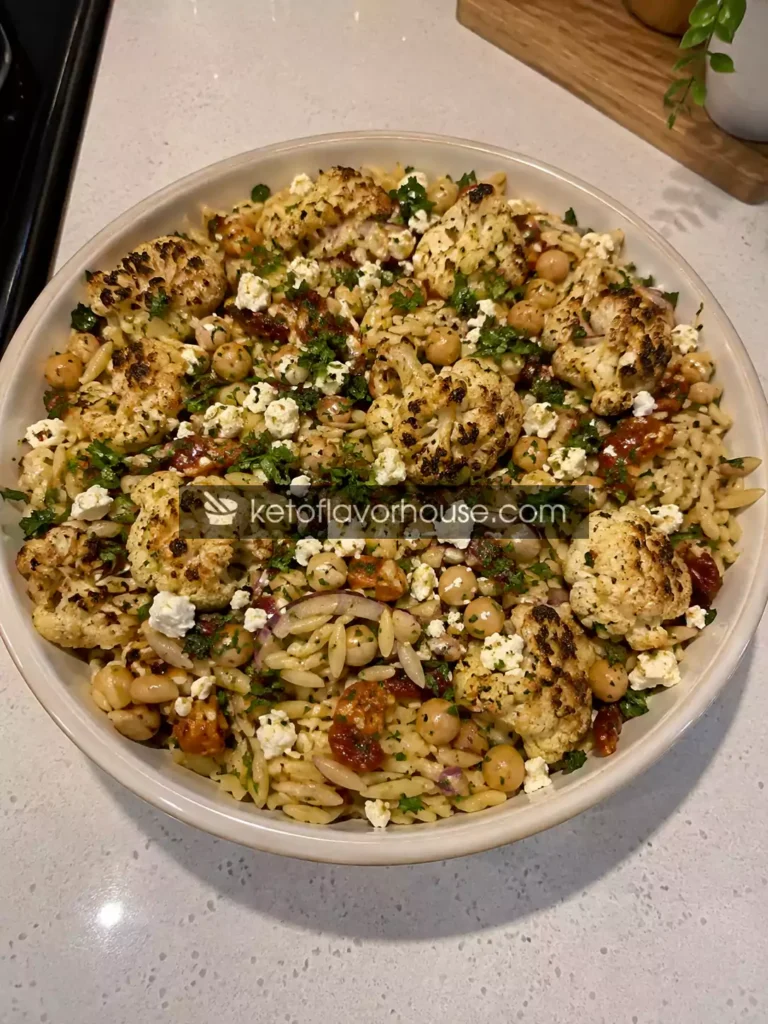
There are evenings when I want something that feels cozy and substantial but still has that fresh, colorful Mediterranean character, and this Mediterranean Roasted Cauliflower Orzo is exactly what I reach for. Tender orzo is tossed with deeply roasted cauliflower, garlic, lemon, herbs, creamy feta, and a handful of chickpeas, creating a dish that is comforting without feeling heavy. The roasted cauliflower brings a lovely caramelized flavor, while the lemon and fresh herbs keep every bite bright.
This is a Mediterranean-inspired recipe rather than a claim of one traditional regional preparation. It brings together ingredients and techniques I love in Mediterranean-style cooking: olive oil, garlic, lemon, herbs, vegetables, legumes, and feta. The magic comes from roasting the cauliflower until the edges are golden before folding it into the orzo. That extra step takes a little time, but it gives the finished dish so much more character than simply simmering the cauliflower.
I especially love making this when cauliflower is looking particularly good at the market, but honestly, it has become an all-season recipe in my kitchen. It’s warm enough for a chilly evening and bright enough for a spring or summer lunch.
The combination of textures is what really makes it special. You get soft, chewy orzo, roasted cauliflower with browned edges, tender chickpeas, salty feta, fresh parsley, and little bursts of lemon. It works beautifully as a vegetarian main dish, but it can also sit alongside grilled chicken or fish when you’re feeding a larger table.
And the best part? Most of the ingredients are everyday staples.
Why You’ll Love This Recipe
- 🍋 Bright Mediterranean-inspired flavor: Fresh lemon, garlic, oregano, parsley, and feta keep the orzo lively and flavorful.
- 🫒 Simple wholesome ingredients: Cauliflower, chickpeas, olive oil, herbs, and orzo create a satisfying combination without requiring complicated ingredients.
- 🌿 Fresh herbs make it pop: Parsley and optional dill add freshness that balances the roasted vegetables and feta.
- 🥦 Roasted cauliflower adds depth: High-heat roasting creates caramelized edges and a nutty flavor.
- 🍝 Comforting orzo texture: Orzo has the coziness of pasta while working beautifully with vegetables and Mediterranean seasonings.
- 🧀 Creamy, salty feta: Crumbled feta adds tang and richness without needing a heavy sauce.
- 🥗 Great for lunch or dinner: Serve it warm as a main course or at room temperature as part of a Mediterranean-style spread.
- ⏱️ Straightforward preparation: The cauliflower roasts while the orzo cooks, so the components come together efficiently.
- ❤️ Vegetarian-friendly: Chickpeas provide substance while the cauliflower keeps the dish vegetable-forward.
- ✨ Beautiful on the table: Golden cauliflower, green herbs, creamy feta, and lemon make this naturally colorful.
My Personal Experience
I have always liked cauliflower, but I’ll admit that I used to think of it mostly as a supporting ingredient.
Then I started roasting it properly.
There’s a huge difference between cauliflower that has simply been steamed until tender and cauliflower that has spent time in a hot oven with olive oil and seasoning. Those browned little edges become almost nutty, and suddenly cauliflower doesn’t feel like an afterthought anymore.
That’s what inspired this orzo.
I had made roasted cauliflower for dinner one evening and had some cooked orzo sitting in the refrigerator. Rather than making another separate side dish, I tossed the two together with garlic, lemon, parsley, chickpeas, and feta.
It was one of those meals where I kept going back for “just one more bite.”
The first version actually had too much lemon. I love lemon, so I got carried away. The dish tasted fresh, but the acidity overwhelmed the roasted cauliflower. The next time, I used lemon zest during cooking and saved most of the juice for the end.
That small change made a huge difference.
Now I finish the dish gradually. I add a little lemon juice, taste it, and decide whether it needs more. With feta already bringing saltiness and acidity, you don’t need to drown the orzo in lemon.
This has also become one of those recipes I make when I’m having people over casually. I can roast the cauliflower, cook the orzo, and bring everything together just before serving. A big platter of golden cauliflower orzo with feta, parsley, and lemon wedges looks much more impressive than the amount of work involved.
And leftovers are arguably even better the next day.
The flavors have time to mingle, the herbs settle into the orzo, and the roasted cauliflower still gives you those delicious browned pieces throughout.
Required Equipment
Large Rimmed Baking Sheet
A large baking sheet gives the cauliflower enough room to roast rather than steam. A rimmed sheet also helps contain the olive oil and seasoning.
Parchment Paper
Parchment makes cleanup easier and helps prevent the roasted cauliflower from sticking. You can skip it if your baking sheet is well seasoned or nonstick.
Large Pot
Use a large pot to cook the orzo in plenty of water. A larger pot makes it easier to stir the pasta and prevents excessive sticking.
Large Mixing Bowl
A large bowl gives you enough space to combine the cooked orzo, roasted cauliflower, chickpeas, feta, herbs, and dressing without crushing the vegetables.
Colander
You’ll need a colander to drain the orzo once it reaches al dente.
Chef’s Knife
A sharp knife makes it easier to cut the cauliflower into evenly sized florets.
Cutting Board
Use a sturdy cutting board for preparing the cauliflower, garlic, lemon, and herbs.
Ingredients & Substitutions
Cauliflower
Use 1 large head cauliflower, about 2 pounds before trimming, cut into medium-sized florets.
Cauliflower is the star of the roasted portion of this recipe. Medium florets work best because they develop browned edges while retaining enough texture to hold their shape when mixed into the orzo.
Don’t cut the florets extremely small. Tiny pieces can become over-browned before the larger pieces are tender.
You can substitute broccoli, although broccoli will roast more quickly and has a slightly stronger flavor.
Orzo
Use 10 ounces dry orzo.
Orzo is technically a small pasta rather than a grain, but its rice-like shape makes it particularly good for dishes like this.
Whole-wheat orzo can be substituted, although it may have a firmer texture and slightly longer cooking time depending on the brand.
Chickpeas
Use 1 (15-ounce) can chickpeas, drained and thoroughly rinsed.
Chickpeas give the dish additional texture and make it feel more substantial.
You can substitute cannellini beans or butter beans. Cannellini beans will create a softer, creamier bite, while chickpeas hold their shape better.
Extra-Virgin Olive Oil
Use 4 tablespoons extra-virgin olive oil, divided.
Three tablespoons are used for roasting the cauliflower and one tablespoon is used for finishing the orzo.
Olive oil carries the garlic, oregano, and lemon flavors throughout the dish.
Garlic
Use 4 garlic cloves, finely minced.
Garlic is especially important here because it provides the savory aromatic base that ties the roasted cauliflower and orzo together.
Fresh garlic is preferable, but 1½ teaspoons garlic powder can work if necessary. Add garlic powder to the seasoning rather than attempting to roast it by itself.
Lemon
Use 1 large lemon, zested and juiced.
The zest adds fragrance without introducing too much acidity during cooking. Fresh juice finishes the dish and brightens the roasted flavors.
If you don’t have lemon, a small amount of red wine vinegar can provide acidity, although the flavor will be different.
Dried Oregano
Use 2 teaspoons dried oregano.
Oregano gives the dish its Mediterranean-inspired character and pairs naturally with cauliflower, chickpeas, lemon, and feta.
Smoked Paprika
Use 1 teaspoon smoked paprika.
Smoked paprika adds warmth and a subtle roasted note.
Sweet paprika can be substituted for a milder, less smoky flavor.
Salt
Use 1 teaspoon kosher salt, divided between the cauliflower and finishing the dish.
Feta and chickpeas can both contribute saltiness, so taste before adding more at the end.
Black Pepper
Use ½ teaspoon freshly ground black pepper.
Add more at the table if you enjoy a stronger pepper flavor.
Feta
Use 4 ounces crumbled feta cheese.
Feta adds a salty, tangy, creamy contrast to the sweet roasted cauliflower and mild orzo.
Goat cheese can be substituted, although it will be creamier and softer.
Fresh Parsley
Use ½ cup chopped fresh parsley.
Parsley provides a clean, fresh finish and helps balance the richness of the olive oil and feta.
Fresh Dill
Use 2 tablespoons chopped fresh dill, optional.
Dill isn’t essential, but it adds another layer of fresh herbal flavor that works beautifully with lemon and feta.
How to Make Mediterranean Roasted Cauliflower Orzo with Feta
Roast the Cauliflower Until Golden
Start by preheating your oven to 425°F (220°C).
Line a large rimmed baking sheet with parchment paper if desired.
Place the cauliflower florets on the baking sheet.
Drizzle with 3 tablespoons olive oil and sprinkle with 1 teaspoon dried oregano, 1 teaspoon smoked paprika, ½ teaspoon kosher salt, and ¼ teaspoon black pepper.
Toss everything thoroughly with your hands or a spatula.
You want every piece lightly coated, but you don’t want pools of oil sitting on the baking sheet.
Spread the cauliflower into a single layer.
This is important.
Don’t pile the florets into a mound in the center of the pan. Cauliflower contains quite a bit of moisture, and if the pieces are crowded, that moisture turns into steam. You’ll end up with soft cauliflower instead of beautifully browned edges.
Roast for 25–30 minutes, turning the florets once around the halfway point.
You’re looking for tender centers and browned, caramelized edges.
Don’t worry if some smaller pieces become darker than others. Those deeply roasted bits are often the most flavorful pieces in the whole dish.
Cook the Orzo
While the cauliflower is roasting, bring a large pot of salted water to a boil.
Add the 10 ounces dry orzo and cook according to the package directions until al dente.
Stir occasionally, especially during the first few minutes.
Orzo is small enough that it can stick together if you leave it completely unattended.
You want the pasta cooked through but still slightly firm in the center. It will continue absorbing flavor when combined with the other ingredients, so avoid cooking it until very soft.
Once cooked, drain the orzo thoroughly.
Don’t rinse it unless you have a specific reason to do so. The light coating of starch on the pasta helps the olive oil, lemon, herbs, and other ingredients cling to it.
Build the Lemon-Garlic Dressing
While the orzo is still warm, place it in a large mixing bowl.
Add the remaining 1 tablespoon olive oil, minced garlic, 1 teaspoon lemon zest, remaining 1 teaspoon dried oregano, and the remaining ½ teaspoon kosher salt.
Toss gently.
The warmth of the orzo helps release the aroma from the garlic and oregano.
If you prefer a milder raw garlic flavor, you can add the minced garlic to the hot orzo and allow it to sit for a minute or two before tossing. The residual heat will soften some of its sharpness.
Add the Chickpeas
Add the drained and rinsed chickpeas to the warm orzo.
Fold them through gently.
Make sure the chickpeas have been drained well. Excess water can make the finished orzo watery.
If you’re using canned chickpeas, rinsing them thoroughly also removes some of the liquid from the can and gives them a cleaner flavor.
Fold in the Roasted Cauliflower
Once the cauliflower is finished roasting, remove it from the oven.
Let it cool for just a minute or two.
Then add the roasted cauliflower to the orzo.
Fold gently.
This is where the dish starts to look like something special. The golden cauliflower gets distributed throughout the orzo, and any little roasted bits left on the baking sheet can be scraped into the bowl.
Those browned pieces are full of flavor.
Don’t stir too aggressively. You want to keep the cauliflower florets intact rather than turning them into crumbs.
Add Fresh Herbs and Feta
Add the chopped parsley, optional dill, and crumbled feta.
Fold everything together carefully.
At this point, the dish should have several different textures: soft orzo, tender chickpeas, roasted cauliflower with browned edges, creamy feta, and fresh herbs.
That’s exactly what you want.
If the feta is particularly salty, don’t add additional salt until after tasting.
Finish with Fresh Lemon Juice
Squeeze the juice from the lemon over the orzo, starting with about 2 tablespoons.
Toss and taste.
If it needs more brightness, add the remaining juice gradually.
This is one of the most important finishing steps.
The roasted cauliflower has sweetness and depth, the chickpeas bring earthiness, and feta provides salty richness. Lemon cuts through all of that and keeps the dish from tasting flat.
Taste for balance rather than simply adding more seasoning automatically.
You want the final bite to taste savory, fresh, lightly tangy, herbaceous, and roasted.
Rest Before Serving
Let the finished Mediterranean-inspired orzo sit for about 5 minutes before serving.
This short resting period allows the flavors to settle.
The orzo will absorb some of the olive oil and lemon while the feta softens slightly from the residual heat.
Give it one final gentle toss before transferring it to a serving bowl or platter.
Finish with a little extra parsley, a few lemon wedges, and an optional drizzle of olive oil.
Common Mistakes to Avoid
Crowding the Cauliflower
The biggest mistake is putting too much cauliflower on a small baking sheet.
When the florets are touching heavily, they steam instead of roast.
Fix: Use a large baking sheet and keep the cauliflower in a single layer.
Cutting the Florets Too Small
Small florets can burn before the larger pieces are tender.
Fix: Aim for medium-sized, roughly uniform florets.
Under-Seasoning the Cauliflower
Cauliflower has a relatively mild flavor, so it benefits from seasoning before roasting.
Fix: Coat it evenly with olive oil, oregano, paprika, salt, and pepper.
Overcooking the Orzo
Soft orzo can turn the dish into something closer to a thick pasta salad or porridge.
Fix: Cook it until al dente and drain it promptly.
Adding Too Much Lemon
It’s easy to assume more lemon automatically means more Mediterranean flavor.
It doesn’t.
Too much lemon can overwhelm the roasted cauliflower and feta.
Fix: Add lemon juice gradually at the end.
Using Wet Chickpeas
Excess water can loosen the finished dish.
Fix: Drain and rinse the chickpeas, then shake them well in the colander before adding them.
Adding Herbs Too Early
Fresh parsley and dill lose some of their fresh character when cooked for too long.
Fix: Add them near the end.
Over-Salting
Feta contributes saltiness, so the final seasoning needs to account for it.
Fix: Taste after adding the feta before adding extra salt.
Skipping the Roasting Step
Simply boiling or steaming cauliflower won’t give you the same flavor.
Fix: Roast it until the edges are genuinely browned. That caramelization is a major part of the dish.
Pro Tips for Best Results
Use a hot oven. The 425°F temperature encourages browning without requiring an excessively long cooking time.
Dry your cauliflower if it looks damp. Moisture is the enemy of browning. If you wash the cauliflower shortly before cooking, pat it dry thoroughly.
Don’t drown the vegetables in oil. You want enough olive oil to coat the florets, not enough to fry them in a puddle.
Season the cauliflower before roasting. This gives the seasoning time to adhere to the florets and develop flavor in the oven.
Cook the orzo separately. For this particular preparation, boiling the orzo independently gives you much better control over its texture.
Keep some cauliflower pieces large. Different sizes create a pleasant mixture of textures.
Use lemon zest before juice. Zest gives you concentrated lemon aroma without excessive acidity.
Finish with fresh herbs. Parsley and dill taste much brighter when added after cooking.
Don’t skip the feta. It provides a salty, creamy contrast that makes the roasted cauliflower taste even sweeter.
Taste at the end. Mediterranean-style cooking often depends on balance rather than a single dominant seasoning. Adjust lemon, pepper, salt, and olive oil after everything is combined.
Air Fryer Option for the Cauliflower
If you want especially browned cauliflower, you can use an air fryer for the vegetable component.
Toss the cauliflower with the same olive oil and seasonings, then cook at 400°F (205°C) for approximately 12–16 minutes, shaking the basket several times.
Work in batches if necessary.
Prepare the orzo on the stovetop as directed, then combine it with the air-fried cauliflower, chickpeas, feta, herbs, and lemon.
Mediterranean Benefits of Cauliflower
Cauliflower is a wonderful ingredient for Mediterranean-inspired cooking because it can take on bold seasoning while still allowing herbs, lemon, olive oil, and other ingredients to shine.
Its mild flavor makes it a natural canvas for garlic and oregano, while roasting transforms its texture and flavor. The florets become tender inside with browned edges outside, creating a satisfying contrast with soft orzo.
Cauliflower also contributes fiber and a variety of naturally occurring vitamins and minerals to the dish. It is relatively light compared with many starchier ingredients, which makes it useful when building a meal around a combination of vegetables, grains or pasta, legumes, herbs, and cheese.
But for me, the best reason to use it is culinary.
Roasting turns cauliflower into something deeply savory and slightly sweet. When those browned florets are folded into lemony orzo with chickpeas and feta, the result is far more interesting than a simple pasta side dish.
Variations You Can Try
🌶️ Spicy Mediterranean
Add ½–1 teaspoon crushed red pepper flakes to the cauliflower before roasting.
You can also finish the dish with a pinch of chili flakes and extra black pepper.
The heat pairs beautifully with creamy feta and lemon.
🌿 Extra Herby
Increase the parsley to ¾ cup and use the full 2 tablespoons dill.
You can also add a little fresh mint just before serving.
The result is lighter, greener, and particularly refreshing when served at room temperature.
🧄 Garlic-Lover’s Version
Increase the garlic from 4 cloves to 6 cloves.
For a sweeter garlic flavor, roast a few whole garlic cloves alongside the cauliflower and squeeze them into the finished orzo.
🧀 Extra Cheesy Version
Increase the feta from 4 ounces to 6 ounces.
For the best texture, keep some feta in larger crumbles rather than mixing everything until completely creamy.
🍋 Lemon-Herb Version
Add additional lemon zest and finish with fresh lemon juice.
Increase the parsley and dill while keeping the feta amount unchanged.
This version is particularly good served slightly warm or at room temperature.
🥗 Extra Vegetable Version
Add 1 cup chopped roasted red bell pepper or 1 cup halved cherry tomatoes.
You can roast them alongside the cauliflower, adding the tomatoes during the final 15–20 minutes so they don’t become overly soft.
🔥 Grilled Version
For a summer variation, grill the cauliflower florets in a grill basket instead of roasting them.
Cook until tender and lightly charred, then fold them into the prepared orzo.
The grilled cauliflower gives the dish a smokier character.
💨 Air Fryer Version
Air-fry the seasoned cauliflower at 400°F (205°C) for approximately 12–16 minutes.
Prepare the orzo normally and combine the components after cooking.
Tips for This Recipe
For the best results, prepare the cauliflower first because it takes the longest.
While it roasts, cook the orzo and prepare the herbs, lemon, chickpeas, and feta.
If you’re preparing this for meal prep, slightly undercook the orzo by about 30 seconds to 1 minute. This gives it a little more resilience when reheated.
Store the feta and fresh herbs separately if you’re preparing several portions ahead of time and want the freshest possible finish.
If the orzo seems dry after refrigeration, don’t immediately add a large amount of liquid. Start with a teaspoon or two of olive oil and a small squeeze of lemon juice.
For serving, allow refrigerated leftovers to sit out briefly before reheating if practical, then warm gently.
If you’re serving the dish at room temperature, taste it again before serving. Cold foods often need a little extra lemon, olive oil, or seasoning to taste as vibrant as they did when warm.
Optional Additions
This recipe is easy to customize with Mediterranean-inspired toppings.
Try adding:
- Kalamata olives
- Fresh parsley
- Fresh dill
- Fresh mint
- Lemon zest
- Toasted pine nuts
- Toasted almonds
- Crushed walnuts
- Red pepper flakes
- Extra crumbled feta
- A drizzle of extra-virgin olive oil
- Tzatziki
- Hummus
- Tahini sauce
- Thinly sliced cucumber
- Roasted red peppers
Kalamata olives are especially good if you enjoy a stronger salty, briny flavor.
For crunch, toasted pine nuts or almonds are excellent.
If you want a creamy element beyond the feta, a spoonful of tzatziki on the side works beautifully.
Serving Ideas
This Mediterranean Roasted Cauliflower Orzo with Feta can be served in several different ways.
For a simple vegetarian dinner, serve it on its own with lemon wedges and a crisp cucumber-tomato salad.
For a larger Mediterranean-inspired dinner, arrange the orzo on a large serving platter and surround it with hummus, olives, cucumber, warm pita, and tzatziki.
You can also serve smaller portions as a side dish alongside grilled chicken, roasted fish, or another Mediterranean-style protein.
For lunch, spoon the orzo into individual bowls and add fresh cucumber, parsley, and a little extra feta.
It also works well for casual entertaining because it doesn’t need to be piping hot. In fact, allowing it to cool slightly gives the lemon, herbs, and feta a chance to stand out.
For a summer gathering, serve it at room temperature with grilled vegetables and a simple green salad.
For a holiday or dinner-party table, garnish the platter with fresh herbs, lemon wedges, feta, and toasted nuts for a colorful presentation.
Storage Recommendations
Store leftover orzo in an airtight container in the refrigerator for up to 4 days.
Because the recipe contains cooked pasta, chickpeas, vegetables, and feta, refrigerate leftovers promptly rather than leaving them at room temperature for an extended period.
For meal prep, divide the orzo into individual containers.
If possible, keep fresh herbs, lemon wedges, and creamy sauces such as tzatziki separate until serving.
The dish can technically be frozen, but I don’t recommend freezing it if you want the cauliflower to retain its original roasted texture. The orzo and chickpeas freeze reasonably well, but the cauliflower and feta can become softer after thawing.
If you do freeze it, use freezer-safe containers and consume within approximately 2–3 months for best quality.
To reheat refrigerated leftovers, add them to a skillet over medium-low heat with 1–2 teaspoons olive oil and a small splash of water. Cover loosely and heat until warmed through, stirring occasionally.
You can also use a microwave. Heat in short intervals, stirring between each one, and add a small amount of olive oil or water if the orzo seems dry.
For the best texture, finish reheated portions with fresh lemon juice and parsley rather than reheating the herbs and lemon for a long time.
Frequently Asked Questions
Can I make Mediterranean Roasted Cauliflower Orzo ahead of time?
Yes. You can prepare the entire dish several hours before serving.
For the best texture, slightly undercook the orzo and keep some of the fresh herbs and feta aside for finishing.
If you’re preparing it the day before, refrigerate it in an airtight container and refresh it with a little olive oil and lemon juice before serving.
Can I use frozen cauliflower?
Yes, although fresh cauliflower generally gives you better roasted edges.
If using frozen cauliflower, don’t thaw it first. Roast it from frozen at high heat and make sure the florets have plenty of space.
You may need several additional minutes of roasting time because frozen cauliflower contains more surface moisture.
Can I use a different pasta instead of orzo?
Absolutely.
Small pasta shapes such as ditalini, small shells, or another rice-shaped pasta can work.
The texture and cooking time will vary, so cook the pasta according to its package directions and drain it when al dente.
Can I make this recipe vegetarian?
The recipe as written is vegetarian-friendly as long as the feta and other packaged ingredients you use fit your dietary preferences.
Chickpeas provide substance alongside the roasted cauliflower and orzo, making the dish hearty enough to serve as a main meal.
Can I make this gluten-free?
Yes. Use a certified gluten-free orzo or substitute a gluten-free small pasta.
Cooking times can vary considerably between gluten-free pasta products, so follow the package directions closely and avoid overcooking.
Can I use dried herbs instead of fresh?
Yes. Dried oregano is already used in the recipe because it works particularly well during roasting.
For parsley and dill, fresh herbs provide the best flavor, but you can use dried herbs if needed. Use smaller quantities because dried herbs are more concentrated.
Can I make this in an air fryer?
You can air-fry the cauliflower while cooking the orzo separately on the stove.
Cook the seasoned cauliflower at approximately 400°F (205°C) for 12–16 minutes, shaking several times until the edges are browned and the centers are tender.
Can I freeze this orzo?
You can freeze the finished dish, but the texture won’t be quite the same after thawing.
The orzo and chickpeas freeze reasonably well, while roasted cauliflower can become softer. For the best result, refrigerate leftovers instead.
What cheese can I use instead of feta?
Goat cheese is an excellent alternative.
You can also use a small amount of crumbled queso-style cheese if you want a different salty element, although the flavor will move away from the Mediterranean-inspired profile.
How do I keep the roasted cauliflower from becoming soggy?
Use a high oven temperature, dry the cauliflower well, don’t overcrowd the baking sheet, and avoid adding too much olive oil.
A single layer with plenty of space around the florets is the most important factor.
Can I add other vegetables?
Yes. Roasted bell peppers, cherry tomatoes, eggplant, zucchini, or red onion can work beautifully.
Remember that different vegetables have different cooking times. Add delicate vegetables later if they roast significantly faster than the cauliflower.
Can I serve this cold?
Yes. It can be served warm, slightly cooled, or at room temperature.
If serving it cold, taste before serving and consider adding a little fresh lemon juice, olive oil, parsley, or black pepper to refresh the flavors.
Nutritional Breakdown (Per Serving)
Based on 6 servings, the estimated nutritional values are:
- Calories: 375
- Protein: 13 g
- Fat: 16 g
- Total Carbohydrates: 48 g
- Fiber: 8 g
- Net Carbohydrates: 40 g
- Sugar: 7 g
- Sodium: 620 mg
Nutritional values are estimates and can vary depending on the exact ingredients, portion sizes, feta, canned chickpeas, pasta, olive oil, and brands used.
Recipe Snapshot
Prep Time: 15 minutes
Cook Time: 30 minutes
Total Time: 45 minutes
Course: Main Course, Side Dish
Cuisine: Mediterranean-Inspired
Servings: 6
Calories: Approximately 375 per serving
Mediterranean Roasted Cauliflower Orzo with Feta Recipe

Ingredients
- 1 large head cauliflower about 2 pounds before trimming, cut into medium florets
- 10 ounces dry orzo
- 1 15-ounce can chickpeas, drained and rinsed
- 4 tablespoons extra-virgin olive oil divided
- 4 garlic cloves finely minced
- 1 large lemon zested and juiced
- 2 teaspoons dried oregano
- 1 teaspoon smoked paprika
- 1 teaspoon kosher salt divided
- ½ teaspoon freshly ground black pepper
- 4 ounces crumbled feta cheese
- ½ cup chopped fresh parsley
- 2 tablespoons chopped fresh dill optional
Instructions
- Preheat the oven to 425°F (220°C) and line a large rimmed baking sheet with parchment paper if desired.
- Place the cauliflower florets on the baking sheet and toss with 3 tablespoons olive oil, 1 teaspoon dried oregano, 1 teaspoon smoked paprika, ½ teaspoon kosher salt, and ¼ teaspoon black pepper. Spread into a single layer.
- Roast the cauliflower for 25–30 minutes, turning the florets halfway through, until tender and browned around the edges.
- Meanwhile, bring a large pot of salted water to a boil. Cook the 10 ounces orzo according to the package directions until al dente, then drain thoroughly.
- Transfer the warm orzo to a large mixing bowl. Add the remaining 1 tablespoon olive oil, minced garlic, 1 teaspoon lemon zest, remaining 1 teaspoon oregano, and remaining ½ teaspoon salt, then toss gently.
- Add the drained chickpeas and fold them into the orzo.
- Add the roasted cauliflower, chopped parsley, optional dill, and crumbled feta, then gently toss until evenly distributed.
- Add about 2 tablespoons fresh lemon juice, toss, and taste. Add more lemon juice if desired, adjusting the seasoning with additional black pepper or salt only if needed.
- Let the orzo rest for about 5 minutes, then serve warm or at room temperature with additional parsley and lemon wedges if desired.