This post may contains Amazon affiliate and other affiliate links. If you make a purchase through these links, I may earn a small commission at no extra cost to you. Your support helps me continue to provide quality content. I only recommend products I personally trust and believe will add value to your experience. For more details, please visit my Privacy Policy.
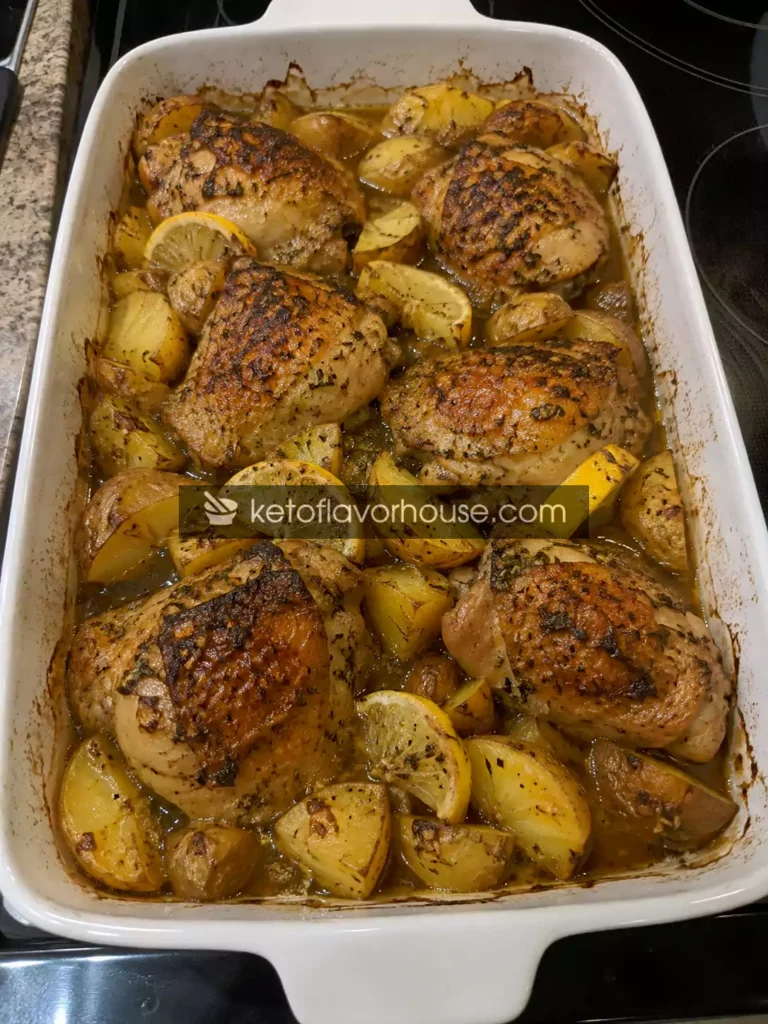
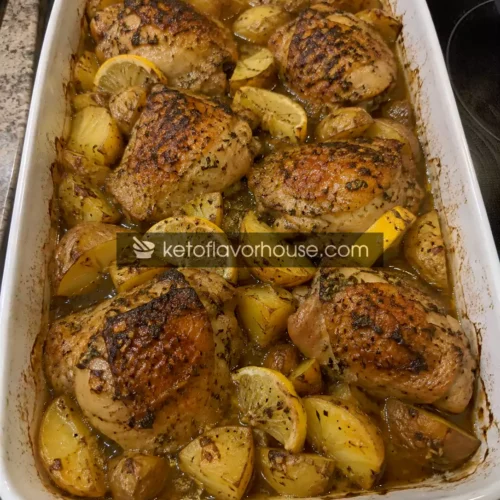
There are some dinners that become favorites simply because they make sense: a few good ingredients, one pan, a bright lemony marinade, and enough time in the oven for everything to become tender and golden. This Mediterranean Greek Lemon Chicken and Potatoes is exactly that kind of meal. Juicy chicken thighs roast alongside golden potatoes in olive oil, fresh lemon juice, garlic, oregano, and a little paprika, creating a deeply savory pan sauce that makes every bite worth going back for.
This recipe is Mediterranean-inspired, drawing on the familiar combination of lemon, garlic, oregano, olive oil, and roasted chicken that makes Greek-style cooking so appealing. I love how the lemon doesn’t simply make the chicken taste sour. Combined with garlic and oregano, it creates a bright, aromatic flavor that cuts through the richness of the chicken and olive oil.
The potatoes are arguably just as exciting as the chicken. They roast underneath and around everything else, soaking up the lemony juices as they cook. Their edges become golden and lightly crisp while the centers stay fluffy and tender.
This is the kind of dinner I like making when I want something comforting without spending the whole evening at the stove. You mix a quick marinade, cut the potatoes, arrange everything in a baking dish, and let the oven do the heavy lifting.
It is perfect for a family Sunday dinner, an easy weeknight meal, casual entertaining, or a Mediterranean-inspired dinner night. Add a simple cucumber salad, warm pita, or a spoonful of tzatziki, and you have a meal that feels much more elaborate than it actually is.
Why You’ll Love This Recipe
- 🍋 Bright lemon flavor: Fresh lemon juice and zest give the chicken and potatoes a wonderfully fresh finish.
- 🫒 Classic Mediterranean-inspired ingredients: Olive oil, garlic, oregano, lemon, chicken, and potatoes create a simple but flavorful combination.
- 🌿 Fragrant herbs: Dried oregano infuses the chicken and potatoes while fresh parsley adds freshness at the end.
- 🥔 Golden roasted potatoes: The potatoes absorb the flavorful pan juices while developing beautifully browned edges.
- 🍗 Tender, juicy chicken: Bone-in, skin-on chicken thighs stay moist while the skin becomes golden and crisp.
- 🔥 Mostly hands-off cooking: Once everything is arranged in the pan, the oven does almost all the work.
- ❤️ Family-friendly: The flavors are savory, bright, and familiar without relying on complicated spices.
- ⏱️ Easy preparation: The marinade takes just minutes to mix together.
- 🥗 Perfect for a complete dinner: Serve it with a salad, vegetables, pita, or a creamy yogurt sauce.
- ✨ Beautiful presentation: Golden chicken, roasted potatoes, fresh parsley, and lemon wedges look gorgeous served straight from the pan.
My Personal Experience
I have a weakness for recipes where the potatoes are almost as important as the main protein.
I’ll happily eat chicken for dinner, but give me potatoes that have been sitting underneath lemony chicken juices, soaking up garlic and olive oil while their edges turn golden, and suddenly I’m much more interested.
That’s really how this recipe became a regular in my kitchen.
I wanted a dinner that had the fresh, bright feeling of Mediterranean food but still felt like comfort food. I had chicken thighs, potatoes, lemons, and a few herbs on hand, so I started experimenting with a simple marinade.
The first time, I made the mistake of cutting the potatoes too large.
The chicken was beautifully browned and cooked through, but the potatoes needed more time. I ended up removing the chicken temporarily and giving the potatoes extra time in the oven.
It worked, but it wasn’t exactly the effortless one-pan dinner I wanted.
The next time, I cut the potatoes into smaller wedges and gave them a head start in the oven. That little change completely fixed the problem.
Now the potatoes and chicken finish at nearly the same time.
I also discovered that adding some lemon zest to the marinade makes a noticeable difference. Lemon juice gives you acidity, but the zest brings that fragrant citrus aroma that makes the whole kitchen smell wonderful while everything roasts.
My favorite moment comes near the end of cooking.
The chicken skin is golden, the potatoes have browned around the edges, and there’s a little pool of lemony olive oil and chicken juices underneath everything. I scatter parsley over the top, add lemon wedges, and bring the whole pan to the table.
It’s not fussy.
It’s not overly decorated.
It’s just really good food.
And those potatoes always disappear first.
Required Equipment
Large Baking Dish
Use a large, shallow baking dish that comfortably fits the chicken and potatoes in a mostly single layer. Giving the ingredients enough space helps the potatoes roast rather than steam.
Large Mixing Bowl
A large bowl gives you room to toss the chicken with the lemon, olive oil, garlic, and seasonings without making a mess.
Small Bowl
Use a small bowl to mix the lemon-garlic marinade before adding it to the chicken.
Chef’s Knife
A sharp knife makes cutting the potatoes and preparing the garlic and lemon much easier.
Cutting Board
Use a sturdy cutting board for preparing the potatoes, lemon, garlic, and fresh herbs.
Tongs
Tongs are useful for turning the chicken and potatoes during cooking without piercing the chicken unnecessarily.
Ingredients & Substitutions
Chicken Thighs
Use 2½ pounds bone-in, skin-on chicken thighs, approximately 6–8 thighs depending on size.
Chicken thighs are particularly well suited to this recipe because they remain juicy during roasting and the skin develops a beautiful golden color.
You can use boneless, skinless chicken thighs, but reduce the cooking time and begin checking for doneness earlier.
Chicken breasts can also be used, although they are leaner and more likely to dry out if overcooked.
Potatoes
Use 2 pounds Yukon Gold or baby potatoes, cut into approximately 1½-inch wedges or chunks.
Yukon Gold potatoes are especially nice because they become creamy inside while their edges brown beautifully.
Baby potatoes can simply be halved or quartered depending on their size.
Russet potatoes work too, but their texture will be fluffier and slightly less creamy.
Extra-Virgin Olive Oil
Use ¼ cup extra-virgin olive oil.
Olive oil is an important part of the flavor profile, carrying the garlic, oregano, lemon, and paprika throughout the dish.
You can substitute another cooking oil, but olive oil gives the recipe its Mediterranean-inspired character.
Fresh Lemon
Use 2 large lemons.
You’ll need approximately ¼ cup fresh lemon juice, plus the zest of one lemon.
Reserve the second lemon for wedges and additional juice at the table.
Fresh lemon makes a noticeable difference here, so bottled lemon juice isn’t my first choice.
Garlic
Use 6 garlic cloves, finely minced.
Garlic becomes mellow and aromatic as it roasts alongside the chicken and potatoes.
If you need to substitute garlic powder, use approximately 2 teaspoons, although fresh garlic gives the best result.
Dried Oregano
Use 2 teaspoons dried oregano.
Oregano is one of the defining flavors in this Mediterranean-inspired preparation.
Dried oregano holds up well during roasting and infuses the olive oil and chicken juices.
Paprika
Use 1 teaspoon sweet paprika.
Paprika adds gentle warmth and helps the chicken develop a beautiful color.
Smoked paprika can be used if you enjoy a slightly smokier flavor.
Dijon Mustard
Use 1 tablespoon Dijon mustard.
Dijon isn’t intended to make the dish taste like mustard. Instead, it adds savory depth and helps emulsify the lemon and olive oil.
You can omit it if preferred.
Honey
Use 1 teaspoon honey.
A tiny amount balances the acidity of the lemon and encourages browning.
You won’t end up with sweet chicken. The amount is small enough that it simply rounds out the flavor.
Kosher Salt
Use 1½ teaspoons kosher salt, divided.
Salt brings out the flavor of the chicken, potatoes, garlic, and lemon.
Because salt levels vary between brands and types, taste the pan juices before adding additional salt at the end.
Black Pepper
Use ½ teaspoon freshly ground black pepper.
Add more at the table if you prefer a stronger pepper flavor.
Fresh Parsley
Use ¼ cup chopped fresh parsley, plus extra for garnish.
Parsley adds a fresh, green contrast to the roasted chicken and potatoes.
Chicken Broth
Use ½ cup low-sodium chicken broth.
The broth helps create the flavorful pan juices that coat the potatoes as they roast.
Low-sodium broth gives you better control over the final seasoning.
Lemon Zest
Use the finely grated zest of 1 lemon.
The zest adds concentrated citrus aroma without introducing additional acidity.
How to Make Mediterranean Greek Lemon Chicken and Potatoes
Prepare the Lemon-Garlic Marinade
Preheat the oven to 425°F (220°C).
In a small bowl, combine:
- ¼ cup extra-virgin olive oil
- ¼ cup fresh lemon juice
- Zest of 1 lemon
- 6 minced garlic cloves
- 2 teaspoons dried oregano
- 1 teaspoon sweet paprika
- 1 tablespoon Dijon mustard
- 1 teaspoon honey
- 1 teaspoon kosher salt
- ½ teaspoon black pepper
Whisk everything together until the mixture looks well combined.
Don’t worry if the marinade separates slightly while sitting. The ingredients will come together again when tossed with the chicken.
The lemon, garlic, oregano, and olive oil are doing most of the flavor work here, so there is no need to add a long list of spices.
Prepare the Chicken
Pat the chicken thighs dry with paper towels.
This small step is worth doing because excess moisture on the skin can interfere with browning.
Place the chicken in a large mixing bowl and pour about two-thirds of the marinade over it.
Toss thoroughly, making sure the marinade gets underneath the edges of the chicken skin as much as possible.
Let the chicken sit for 15–20 minutes while you prepare the potatoes.
You don’t need to marinate it for hours.
In fact, because the marinade contains fresh lemon juice, a relatively short marinating period works beautifully.
Prepare the Potatoes
Wash the potatoes thoroughly.
If using baby potatoes, leave the skins on.
Cut them into approximately 1½-inch wedges or chunks.
Try to keep the pieces relatively similar in size. They don’t need to be perfect.
The goal is simply to make sure they finish cooking around the same time.
Place the potatoes in the baking dish.
Add the remaining marinade and toss until the potatoes are evenly coated.
Give the Potatoes a Head Start
Pour the ½ cup chicken broth into the baking dish around the potatoes.
Don’t pour the broth directly over the potatoes because you want their surfaces to remain coated with olive oil and seasoning.
Place the baking dish in the oven and roast the potatoes for 15 minutes before adding the chicken.
This little head start is the trick that helps everything finish together.
The potatoes begin softening while the oven gets them started on their journey toward golden edges.
Add the Chicken
After the potatoes have roasted for 15 minutes, carefully remove the baking dish from the oven.
Arrange the marinated chicken thighs over and among the potatoes.
Place the chicken skin-side up.
Try not to completely cover the potatoes with chicken. Leaving some exposed gives the potatoes better access to the heat.
Pour any remaining marinade from the bowl over the chicken.
If there is a lot of marinade left behind, don’t worry about scraping every last drop into the dish. The chicken and potatoes already have plenty of flavor.
Roast Until Golden and Tender
Return the baking dish to the oven.
Roast for approximately 35–45 minutes, depending on the size of the chicken thighs and potatoes.
Around the 20-minute mark, carefully check the potatoes.
If some pieces are browning too quickly, turn them gently with tongs.
Try not to disturb the chicken skin unnecessarily because you want it to remain exposed and crisp.
The chicken is ready when the thickest part reaches an internal temperature of 165°F (74°C).
The potatoes should be completely tender when pierced with a fork.
The chicken skin should be golden brown and the edges of the potatoes should have developed some caramelized color.
If the chicken is cooked but the skin isn’t quite as golden as you’d like, you can broil the dish for 1–2 minutes at the end.
Watch it closely during broiling.
The difference between beautifully crisp chicken skin and burnt garlic can happen quickly.
Finish with Fresh Lemon and Parsley
Remove the baking dish from the oven.
Let everything rest for approximately 5–10 minutes.
This gives the chicken juices time to settle and allows the pan juices to thicken slightly.
Scatter the chopped fresh parsley over the chicken and potatoes.
Add fresh lemon wedges around the dish.
If you like a particularly bright lemon flavor, squeeze an additional small amount of lemon juice over the potatoes just before serving.
Taste the pan juices.
If they seem slightly too sharp, a drizzle of olive oil can soften the acidity.
If they taste rich or heavy, another squeeze of lemon will bring them back into balance.
Common Mistakes to Avoid
Cutting the Potatoes Too Large
Large potato chunks take longer to become tender.
Fix: Cut them into approximately 1½-inch pieces and give them a 15-minute head start.
Crowding the Baking Dish
When potatoes are piled tightly together, they steam instead of roast.
Fix: Use a large, shallow baking dish and arrange the potatoes in as close to a single layer as possible.
Putting Chicken Skin-Side Down
This prevents the skin from becoming properly browned and crisp.
Fix: Always finish with the chicken skin-side up.
Using Too Much Lemon Juice
Lemon is important, but excessive acidity can overwhelm the dish.
Fix: Follow the measured amount and reserve additional lemon for finishing.
Not Drying the Chicken
Wet chicken skin won’t brown as efficiently.
Fix: Pat the chicken thoroughly dry before adding the marinade.
Adding All the Broth at the End
The broth is there to create flavorful pan juices and help the potatoes cook.
Fix: Add the measured broth before roasting the potatoes.
Burning the Garlic
Minced garlic can darken quickly at high temperatures.
Fix: Make sure the garlic is mixed thoroughly into the olive oil and lemon marinade rather than sitting in exposed piles on the baking dish.
Overcooking Chicken Breast
If substituting chicken breast, remember that it cooks faster than bone-in thighs.
Fix: Start checking the internal temperature earlier and remove the chicken as soon as it reaches 165°F (74°C).
Skipping the Resting Period
Cutting into the chicken immediately can cause some juices to escape.
Fix: Give the chicken 5–10 minutes to rest before serving.
Pro Tips for Best Results
Pat the chicken dry. This is one of the easiest ways to encourage better browning.
Use fresh lemon. The difference between fresh lemon juice and bottled lemon juice is noticeable in a recipe where citrus is one of the main flavors.
Zest before juicing. It’s much easier to zest a firm whole lemon than one that has already been squeezed.
Give potatoes a head start. This is particularly important if your chicken thighs are large.
Don’t drown the potatoes. The broth belongs in the bottom of the dish, while the potatoes should remain coated with the olive oil-based marinade.
Keep chicken skin exposed. The exposed skin gets direct oven heat, which helps it become golden.
Don’t constantly flip the chicken. Once it is arranged skin-side up, leave it alone unless there is a specific reason to move it.
Taste the pan juices. They’re part of the final dish, so use them to determine whether you need more lemon, pepper, or salt.
Finish with fresh herbs. Parsley gives the dish a fresh contrast that dried herbs alone can’t provide.
Serve with lemon wedges. Everyone can adjust the acidity to their own preference.
Air Fryer Option
You can make the chicken and potatoes in an air fryer, although you’ll likely need to cook them in batches.
Cut the potatoes into smaller pieces, approximately 1-inch chunks, and toss them with the marinade.
Air fry the potatoes at 400°F (205°C) for approximately 12–15 minutes, shaking the basket halfway through.
Add the marinated chicken thighs and continue cooking for approximately 18–25 minutes, depending on their size.
The chicken must reach 165°F (74°C) internally.
Because air fryers vary significantly, use the internal temperature and tenderness of the potatoes rather than the clock alone.
You won’t get the same lemony pan juices as with the oven method, so serve the finished chicken and potatoes with fresh lemon wedges and a drizzle of olive oil.
Mediterranean Benefits of Chicken
Chicken is a versatile protein that fits naturally into Mediterranean-inspired cooking because it works so well with olive oil, citrus, garlic, herbs, vegetables, and potatoes.
Its relatively mild flavor allows the lemon and oregano to become part of the dish without being overwhelmed by the meat itself.
Chicken thighs are especially useful for roasting because they have more natural richness than very lean cuts, which helps them remain juicy during the longer cooking process.
In this recipe, the chicken also contributes flavorful juices to the potatoes as everything roasts together.
That interaction is one of the reasons this dish tastes so much better than simply cooking the chicken and potatoes separately.
The chicken provides protein, while the potatoes provide carbohydrates and a fluffy, satisfying texture. Olive oil, garlic, lemon, oregano, and parsley round out the dish with aromatic and fresh elements.
Variations You Can Try
🌶️ Spicy Mediterranean
Add ½ teaspoon crushed red pepper flakes to the marinade.
For more heat, increase it to 1 teaspoon.
The pepper flakes add warmth without changing the fundamental lemon-garlic flavor.
🌿 Extra Herby
Add 1 tablespoon chopped fresh oregano along with the parsley.
You can also finish with fresh dill or a small amount of mint.
This gives the dish a greener, more aromatic finish.
🧄 Garlic-Lover’s Version
Increase the garlic from 6 cloves to 8 cloves.
You can also add a few whole garlic cloves directly to the baking dish.
The whole cloves become soft and sweet as they roast.
🧀 Cheesy Version
Scatter 3 ounces crumbled feta over the chicken and potatoes during the final 5 minutes of cooking.
Don’t add the feta too early because it can dry out and become overly browned.
🍋 Lemon-Herb Version
Add an additional teaspoon of lemon zest and finish with extra fresh parsley and dill.
Serve with plenty of lemon wedges.
This variation is especially refreshing during warmer months.
🥗 Extra Vegetable Version
Add 1 sliced bell pepper, 1 small zucchini, or 1 cup cherry tomatoes.
Add softer vegetables such as zucchini and tomatoes during the final 20 minutes so they don’t become overly soft.
🔥 Grilled Version
For a summer variation, marinate the chicken as directed and grill it separately.
Roast or grill the potatoes until tender and golden, then serve everything together with lemon, parsley, and a spoonful of tzatziki.
💨 Air Fryer Version
Use the air fryer method above for a smaller batch.
This version won’t have as much pan juice, but the chicken skin and potato edges can become especially crisp.
Tips for This Recipe
Prepare the marinade first so the flavors are ready before you start cutting the potatoes.
When preparing the potatoes, don’t obsess over perfect shapes. What matters is keeping them relatively similar in size.
If you are cooking for a larger group, use two baking dishes rather than crowding one.
For meal prep, allow the chicken and potatoes to cool before dividing them into airtight containers.
Keep fresh parsley and lemon wedges separate until serving.
If you’re making the dish ahead, you can mix the marinade several hours in advance and refrigerate it.
You can also cut the potatoes ahead of time. Keep them submerged in cold water in the refrigerator if you’re preparing them significantly ahead, then drain and dry them thoroughly before cooking.
For the best texture, don’t leave the potatoes wet before roasting.
If the chicken is finished before the potatoes, transfer the chicken to a plate and loosely cover it with foil while the potatoes continue roasting.
If the potatoes are finished first, simply leave them in the oven while the chicken completes cooking.
Always use the chicken’s internal temperature as the final indicator of doneness.
Optional Additions
There are plenty of Mediterranean-inspired additions that work beautifully with this recipe.
Try serving it with:
- Fresh parsley
- Fresh dill
- Fresh oregano
- Lemon zest
- Lemon wedges
- Kalamata olives
- Crumbled feta
- Tzatziki
- Plain Greek yogurt
- Hummus
- Tahini sauce
- Red pepper flakes
- Roasted red peppers
- Thinly sliced cucumber
- Chopped fresh tomatoes
- A drizzle of extra-virgin olive oil
A small bowl of tzatziki is particularly good with the warm chicken and potatoes.
For extra freshness, serve a simple cucumber, tomato, and parsley salad alongside the dish.
Serving Ideas
This Mediterranean Greek Lemon Chicken and Potatoes is substantial enough to serve as a complete dinner.
For a simple weeknight meal, serve it with a cucumber and tomato salad.
If you’re putting together a Mediterranean-inspired table, add warm pita, hummus, tzatziki, olives, and a simple green salad.
The lemony chicken also pairs beautifully with roasted vegetables such as zucchini, bell peppers, or green beans.
For entertaining, bring the entire baking dish to the table and scatter fresh parsley over everything just before serving.
It has a wonderfully rustic presentation.
For a summer gathering, serve the chicken and potatoes with a large chopped salad and cool yogurt sauce.
For a family Sunday dinner, add warm bread and a simple vegetable side.
The recipe also works nicely as part of a Mediterranean dinner night where several smaller dishes are placed in the center of the table.
Storage Recommendations
Store leftovers in an airtight container in the refrigerator for up to 3–4 days.
Keep the chicken and potatoes together or separate them into individual meal-prep containers.
For the best texture, store fresh herbs and lemon wedges separately.
The dish can be frozen, although the potatoes may become somewhat softer after thawing.
The chicken freezes better than the potatoes.
If freezing, cool the food completely before placing it in freezer-safe containers.
Use within approximately 2–3 months for best quality.
Thaw frozen portions overnight in the refrigerator.
For reheating, the oven or air fryer gives the best texture.
Reheat in a 350°F (175°C) oven for approximately 15–20 minutes, or until the chicken is heated through.
For an air fryer, reheat at 350°F (175°C) for approximately 6–10 minutes.
If the chicken skin has softened during refrigeration, the air fryer is particularly useful for bringing back some crispness.
Avoid adding extra lemon juice before reheating. Finish with fresh lemon after the food is hot.
Frequently Asked Questions
Can I make Mediterranean Greek Lemon Chicken and Potatoes ahead of time?
Yes. You can prepare the marinade, cut the potatoes, and season the chicken several hours ahead.
For the best result, cook the dish relatively close to serving time. Roasted potatoes are at their best shortly after cooking.
If you need to make the entire dish ahead, refrigerate it properly and reheat it in the oven rather than relying entirely on the microwave.
Can I use boneless chicken thighs?
Yes. Boneless chicken thighs work very well, but they cook faster than bone-in thighs.
Start checking them earlier and use an instant-read thermometer to make sure they reach 165°F (74°C).
Can I use chicken breast?
You can, but chicken breast is leaner and more susceptible to drying.
If using breast meat, cut it into large pieces or leave the breasts whole, and begin checking the temperature earlier than you would with bone-in thighs.
What potatoes work best?
Yukon Gold and baby potatoes are excellent choices.
Yukon Gold potatoes become creamy inside with nicely browned edges, while baby potatoes are convenient because they require minimal preparation.
Russet potatoes can also be used, although their texture will be fluffier.
How do I keep the potatoes from becoming soggy?
Don’t overcrowd the baking dish, don’t submerge the potatoes in broth, and make sure they are coated with the olive oil marinade.
Giving them a 15-minute head start before adding the chicken also helps them develop better texture.
Can I use dried herbs instead of fresh parsley?
Yes. The recipe already uses dried oregano because it performs well during roasting.
Fresh parsley is used as a finishing ingredient, but if necessary, you can substitute a smaller amount of dried parsley.
Fresh herbs will always provide a brighter final flavor.
Can I make this in an air fryer?
Yes. The chicken and potatoes can be air-fried, preferably in batches so the basket isn’t crowded.
Cook the potatoes first at 400°F (205°C), then add the chicken and continue until the chicken reaches 165°F (74°C).
Can I make this recipe spicy?
Absolutely.
Add crushed red pepper flakes to the marinade or sprinkle them over the finished dish.
Start with ½ teaspoon and increase according to your preferred heat level.
Can I add feta?
Yes. Feta is a natural Mediterranean-inspired addition.
Scatter approximately 3 ounces over the dish during the final 5 minutes of roasting so it warms without becoming overly dry.
Can I add other vegetables?
Yes. Bell peppers, zucchini, cherry tomatoes, red onion, and green beans can all work well.
Pay attention to their cooking times. Add softer vegetables later so they retain some texture.
Can I freeze Greek lemon chicken and potatoes?
Yes, although the potatoes will soften somewhat after freezing and thawing.
The chicken freezes better than the potatoes.
For the best texture, refrigerate leftovers and reheat them in the oven or air fryer.
What sauce goes best with this recipe?
Tzatziki is an excellent choice.
Its cool, creamy texture contrasts nicely with the hot roasted chicken and potatoes.
Hummus or tahini sauce also works well if you want something richer and nuttier.
How much lemon should I use?
The recipe uses ¼ cup fresh lemon juice in the marinade plus the zest of one lemon.
You can finish with additional lemon juice according to taste, but add it gradually so the dish doesn’t become overly acidic.
Nutritional Breakdown (Per Serving)
The recipe makes 6 servings.
Estimated nutritional values per serving:
- Calories: 575
- Protein: 37 g
- Fat: 31 g
- Total Carbohydrates: 40 g
- Fiber: 5 g
- Net Carbohydrates: 35 g
- Sugar: 4 g
- Sodium: 760 mg
These nutritional values are estimates and can vary depending on the exact chicken pieces, potato variety, olive oil, chicken broth, marinade ingredients, and brands used.
Recipe Snapshot
Prep Time: 20 minutes
Cook Time: 55 minutes
Total Time: 1 hour 15 minutes
Course: Dinner, Main Course
Cuisine: Mediterranean-Inspired
Servings: 6
Calories: Approximately 575 per serving
Mediterranean Greek Lemon Chicken and Potatoes Recipe

Ingredients
- 2½ pounds bone-in skin-on chicken thighs
- 2 pounds Yukon Gold or baby potatoes cut into 1½-inch wedges
- ¼ cup extra-virgin olive oil
- ¼ cup fresh lemon juice
- Zest of 1 lemon
- 6 garlic cloves minced
- 2 teaspoons dried oregano
- 1 teaspoon sweet paprika
- 1 tablespoon Dijon mustard
- 1 teaspoon honey
- 1½ teaspoons kosher salt divided
- ½ teaspoon freshly ground black pepper
- ¼ cup chopped fresh parsley
- ½ cup low-sodium chicken broth
- Lemon wedges for serving
Instructions
- Preheat the oven to 425°F (220°C). In a small bowl, whisk together the olive oil, lemon juice, lemon zest, garlic, oregano, paprika, Dijon mustard, honey, 1 teaspoon salt, and black pepper.
- Pat the chicken thighs dry and place them in a large bowl. Pour about two-thirds of the marinade over the chicken, toss thoroughly, and let it sit for 15–20 minutes.
- Cut the potatoes into approximately 1½-inch wedges or chunks and place them in a large baking dish. Toss with the remaining marinade and sprinkle with the remaining ½ teaspoon salt.
- Pour the ½ cup chicken broth around the potatoes without covering their surfaces. Roast the potatoes for 15 minutes.
- Carefully remove the baking dish from the oven and arrange the marinated chicken thighs among the potatoes, keeping the chicken skin-side up.
- Return the dish to the oven and roast for 35–45 minutes, until the chicken reaches 165°F (74°C) internally and the potatoes are tender and golden around the edges.
- If desired, broil for 1–2 minutes at the end to further brown the chicken skin, watching carefully to prevent burning.
- Remove the dish from the oven and let it rest for 5–10 minutes. Scatter fresh parsley over the chicken and potatoes and serve with lemon wedges.