This post may contains Amazon affiliate and other affiliate links. If you make a purchase through these links, I may earn a small commission at no extra cost to you. Your support helps me continue to provide quality content. I only recommend products I personally trust and believe will add value to your experience. For more details, please visit my Privacy Policy.
There are nights when I want a burger—something juicy, savory, smoky, and loaded with all those familiar burger flavors—but I don’t necessarily want the heavy bun, fries, and food-coma feeling that can come with it. That’s exactly how this High-Protein Anti-Inflammatory Burger Salad Bowl became a regular in my kitchen. It has the satisfaction of a really good burger, but everything gets piled into a crisp, colorful salad bowl with a creamy Greek yogurt sauce instead.
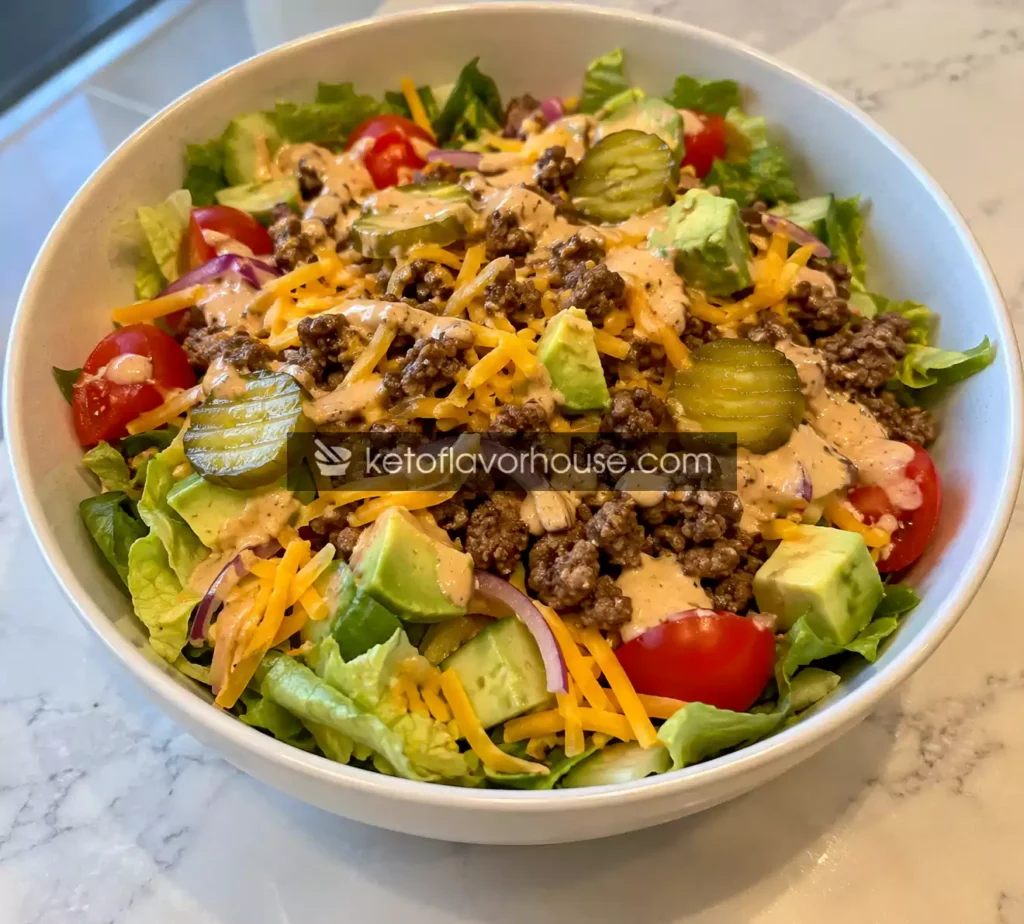
The first time I made it, I honestly expected it to feel like a compromise. It didn’t. The seasoned beef gets browned until the edges are beautifully caramelized, the lettuce stays cold and crunchy, and the tomatoes, red onion, pickles, and avocado add just enough freshness and contrast. Then comes the creamy burger-style dressing, which ties everything together without needing a heavy sauce.
I also love this bowl because it makes getting a substantial amount of protein into lunch or dinner remarkably easy. Lean ground beef provides the main protein, while Greek yogurt in the dressing adds another useful boost. Depending on the exact ingredients and portions you use, one serving can provide around 40 grams of protein.
The phrase “anti-inflammatory” deserves a little context, too. This isn’t a medicinal recipe, and no single food or meal can treat inflammation or prevent disease. Instead, this bowl emphasizes ingredients that fit comfortably into an overall eating pattern rich in vegetables, unsaturated fats, herbs, and minimally processed foods. That makes it a practical choice when you’re trying to build more nutrient-dense meals without giving up the foods you actually enjoy.
Recipe at a glance: juicy burger-seasoned beef + crunchy greens + colorful vegetables + avocado + creamy Greek yogurt burger sauce = a filling, high-protein meal that works for lunch, dinner, or meal prep.
~40g per serving
15 minutes
10 minutes
4 bowls
Why You’ll Love This Recipe
- 🍔 All the burger flavor without needing a bun.
- 💪 Protein-packed thanks to lean ground beef and Greek yogurt.
- 🥬 Crunchy and fresh rather than heavy or greasy.
- 🥑 Packed with colorful ingredients including leafy greens, tomato, onion, and avocado.
- 🥣 Creamy homemade dressing that tastes like a burger sauce but uses Greek yogurt as its base.
- ⏱️ Quick enough for a weeknight, with the whole meal coming together in about 25 minutes.
- 🍱 Meal-prep friendly when you keep the dressing and warm beef separate from the greens.
- 🌶️ Easy to customize if you like spicy, cheesy, smoky, or extra-pickly flavors.
- 👨👩👧 Family-friendly, because everyone can build their own bowl with the toppings they enjoy.
What makes it especially useful for a high-protein lifestyle is that you aren’t relying on one enormous portion of meat to make the meal substantial. The beef does most of the work, while Greek yogurt contributes additional protein. The vegetables then add volume, crunch, and variety without making the bowl feel like you’re simply eating a plate of meat.
My Personal Experience With This Burger Salad Bowl
I originally made this because I wanted something that tasted like a burger but fit better into the kind of meals I was trying to eat more often. My first attempt was very simple: seasoned beef, lettuce, tomato, onion, and a quick sauce.
It was good, but it was missing something.
The beef had plenty of flavor, yet the whole bowl felt a little one-dimensional. That’s when I started playing with the toppings. Pickles immediately made a difference because that sharp, salty acidity cut through the richness of the beef. Avocado added creaminess. A little red onion gave it bite. Suddenly, the bowl had the same kind of contrast that makes a great burger so satisfying.
The dressing took a couple of attempts, too.
At first, I used too much mustard. The sauce tasted more like mustard dressing than burger sauce. Then I added too much lemon juice, which made the yogurt taste surprisingly sharp. The version I use now has a much better balance: Greek yogurt for creaminess, Dijon mustard for savory depth, a small amount of ketchup for classic burger flavor, pickle juice for acidity, and garlic powder and paprika for seasoning.
The biggest lesson was not to overcook the beef.
Ground beef can go from juicy to dry surprisingly quickly, especially when you’re using leaner meat. I now cook it over medium-high heat until it’s browned and cooked through, breaking it into small pieces but leaving some slightly larger crumbles. Those little browned bits are where a lot of the flavor lives.
And that’s what I like about this recipe. It doesn’t feel like “diet food.” It feels like something I would genuinely choose to eat.
Required Equipment
Large Mixing Bowl
You’ll need a large bowl for assembling the salad. A wide bowl is particularly useful because it gives you enough room to toss the greens and vegetables without everything flying over the edge.
If you don’t have a large bowl, a clean pot works in a pinch. Just make sure it’s wide enough to mix comfortably.
Large Skillet
A large skillet is where the burger beef gets its flavor. I prefer a heavy-bottomed skillet because it holds heat well and encourages better browning.
You can use stainless steel, cast iron, or a good nonstick skillet. The important thing is not overcrowding it.
Small Mixing Bowl
This is for the Greek yogurt burger sauce. A small bowl makes it easy to whisk everything together and taste the dressing before serving.
Sharp Chef’s Knife
You’ll use this for the tomato, onion, avocado, pickles, and lettuce. A sharp knife also makes meal prep much faster and safer than trying to force a dull blade through vegetables.
Cutting Board
Use a roomy cutting board so you can prep all your vegetables without constantly moving ingredients around.
Measuring Spoons
The dressing depends on relatively small amounts of mustard, pickle juice, and seasonings, so measuring spoons help you keep the flavor balanced.
Ingredients & Substitutions
Here’s everything I use for four generous salad bowls.
For the Burger Beef
1 pound (454 g) lean ground beef, preferably 90–93% lean
This is the main protein source. I like beef in the 90–93% lean range because it still has enough fat for flavor while keeping the bowl reasonably lean.
You can use 95% lean beef if you want to reduce fat further. Just watch it carefully while cooking because very lean beef can dry out more easily.
1 teaspoon smoked paprika
Smoked paprika gives the beef a subtle grilled quality. It makes the meat taste as though it spent more time over a barbecue than it actually did.
1 teaspoon garlic powder
Garlic powder distributes evenly throughout the beef and adds savory depth without introducing moisture.
1 teaspoon onion powder
This reinforces the classic burger flavor.
½ teaspoon kosher salt
Adjust according to the saltiness of your pickles and dressing.
½ teaspoon black pepper
Freshly ground black pepper works particularly well here.
½ teaspoon dried oregano
Oregano adds a subtle herbal note that works nicely with the vegetables.
¼ teaspoon chili flakes, optional
Use this if you like a little heat.
1 teaspoon olive oil
You may need less depending on your skillet and the fat content of the beef.
For the Salad
8 cups chopped romaine lettuce
Romaine is my favorite because it stays crunchy and gives you a sturdy base for the warm beef.
You can substitute mixed greens, iceberg lettuce, baby spinach, or chopped kale. Keep in mind that spinach and mixed greens are softer and won’t provide quite the same crunch.
1 cup cherry tomatoes, halved
Tomatoes bring sweetness, acidity, and juiciness to the bowl.
½ medium red onion, thinly sliced
Red onion adds sharpness. If raw onion is too strong for you, soak the slices in cold water for 5–10 minutes before draining.
½ cup sliced dill pickles
Don’t skip these if you enjoy classic burger flavor. The acidity makes a huge difference.
1 medium avocado, diced
Avocado provides creamy texture and mostly unsaturated fat. It also helps make the salad feel satisfying rather than skimpy.
¼ cup chopped fresh parsley
Parsley adds freshness and a little color. Cilantro can be used instead if that’s your preference.
For the Greek Yogurt Burger Sauce
½ cup plain Greek yogurt
Use a thick Greek yogurt for the creamiest result. Nonfat Greek yogurt works well if you’re trying to keep calories lower, while 2% or full-fat yogurt produces a richer sauce.
1 tablespoon Dijon mustard
This adds tang and savory flavor.
1 tablespoon ketchup
A small amount gives the sauce a familiar burger-sauce character. You can use a no-added-sugar ketchup if you prefer.
1 tablespoon pickle juice
This is one of my favorite little tricks. Instead of adding lots of vinegar, pickle juice gives you acidity plus a subtle dill and saltiness.
½ teaspoon garlic powder
½ teaspoon smoked paprika
¼ teaspoon black pepper
Mix everything together and taste before adding additional salt.
Keeps the sauce creamy while contributing protein. Nonfat lowers calories; 2% gives a richer texture.
Main protein source. Turkey or chicken can replace it, but the flavor becomes lighter.
Adds acidity and burger-style flavor without needing a large amount of dressing.
Adds creaminess and unsaturated fat. Leave it out for a lower-calorie bowl.
How to Make High-Protein Anti-Inflammatory Burger Salad Bowl
1. Prepare the vegetables
Start by washing and thoroughly drying the lettuce. Chop it into bite-sized pieces and place it in a large bowl.
Halve the cherry tomatoes, thinly slice the red onion, slice the pickles, dice the avocado, and chop the parsley.
I recommend doing all of this before cooking the beef. Once the meat is finished, you’ll want to assemble the bowl while it’s still warm.
2. Mix the burger sauce
Add the Greek yogurt, Dijon mustard, ketchup, pickle juice, garlic powder, smoked paprika, and black pepper to a small bowl.
Stir until smooth.
Taste it.
This is important. If it tastes too creamy or flat, add another small splash of pickle juice. If it’s too sharp, add a tiny amount of ketchup. If you want more savory flavor, add a pinch of garlic powder.
The finished sauce should be creamy, tangy, lightly smoky, and unmistakably burger-inspired.
3. Season the beef
Place the ground beef in a bowl and add smoked paprika, garlic powder, onion powder, salt, black pepper, oregano, and chili flakes if using.
Mix gently until the seasoning is distributed.
Don’t aggressively knead the meat. You aren’t making meatballs, so there’s no need to compact it into a dense mixture.
4. Brown the beef
Heat a large skillet over medium-high heat.
Add the olive oil if needed, then add the seasoned beef.
Let it cook for a minute or two before breaking it apart. This gives the meat an opportunity to start developing those browned edges.
Break the beef into small-to-medium crumbles and continue cooking until browned and cooked through.
For food safety, ground beef should reach a safe internal temperature of 160°F (71°C).
Don’t keep cooking it simply because you want more browning. Once it’s safely cooked and nicely browned, take it off the heat.
5. Build the salad base
Add the romaine, tomatoes, red onion, pickles, avocado, and parsley to your serving bowls.
Don’t dress everything yet if you’re planning to save portions for later.
6. Add the warm burger beef
Divide the cooked beef between the four bowls.
I like adding the beef while it’s still warm because the contrast between warm savory meat and cold crisp lettuce makes the bowl much more satisfying.
7. Drizzle with sauce
Add the Greek yogurt burger sauce.
You can drizzle it over the top or serve it on the side. For meal prep, definitely keep the sauce separate.
8. Finish and serve
Give each bowl a final sprinkle of black pepper and parsley.
Serve immediately.
Stovetop, Oven, and Air Fryer Variations
The skillet is my preferred method because it gives you the best control over browning, but there are other options.
Stovetop Method
This is the recommended method. Cook the seasoned ground beef in a large skillet over medium-high heat, breaking it into crumbles as it browns.
Oven Method
Spread the seasoned beef on a lined baking sheet and bake at approximately 400°F (200°C), breaking it apart halfway through. Cook until browned and the internal temperature reaches 160°F (71°C).
The oven method is useful when you’re preparing several batches at once, although the beef may not develop quite as much skillet-style browning.
Air Fryer Method
Ground beef can be cooked in an air fryer using an appropriate heat-safe pan or accessory. Because air fryer models vary considerably, monitor it closely and verify the internal temperature with a food thermometer.
Common Mistakes to Avoid
Overcooking the beef
This is probably the biggest one.
Lean beef doesn’t have much room for error. Once it is fully cooked and browned, remove it from the heat.
Overmixing the meat
Aggressively mixing ground beef can produce a dense texture. Gently combine the seasoning instead.
Using wet lettuce
If your lettuce is still wet after washing, the dressing can become diluted and the salad can turn soggy.
A salad spinner is extremely useful here.
Adding the dressing too early
If you’re making the recipe for meal prep, don’t combine the dressing with the lettuce in advance.
Keep the sauce in a separate container.
Using too much sauce
The Greek yogurt sauce is flavorful, so you don’t need to drown the bowl. Start with a modest amount and add more at the table.
Forgetting the pickles
I know this sounds oddly specific, but pickles are one of the ingredients that makes this taste like a burger rather than just beef on lettuce.
Beef is dry? It was probably cooked too long. Use 90–93% lean beef and remove it as soon as it reaches a safe temperature.
Sauce is too tangy? Add a little more Greek yogurt or a small amount of ketchup.
Salad tastes flat? Add pickles, a splash of pickle juice, or a little more black pepper.
Salad is soggy? Dry the greens thoroughly and keep the dressing separate until serving.
Pro Tips for the Best Results
One of my favorite tricks is to prepare the sauce before cooking the beef. This gives the flavors a few minutes to mingle and means you can concentrate entirely on getting the meat properly browned.
Another tip is to keep your lettuce cold. If you have time, put the washed and dried lettuce in the refrigerator while you cook the beef. That warm-beef/cold-lettuce contrast is fantastic.
For extra flavor, don’t be afraid of seasoning the beef properly. A salad can handle more seasoning than you might expect because the lettuce and vegetables dilute the flavor.
If you’re watching calories, the easiest place to make an adjustment isn’t necessarily the beef. Start by controlling the dressing and avocado portions. You can still have plenty of flavor without turning the bowl into a heavy meal.
For a higher-protein version, increase the beef slightly or use a little extra Greek yogurt sauce. Increasing protein through the main ingredients is generally more practical than trying to add protein powder to everything.
- Dry the lettuce thoroughly.
- Preheat the skillet before adding beef.
- Don’t overcrowd the pan.
- Cook the beef only until safely done and browned.
- Taste the sauce before serving and adjust the acidity.
- Keep dressing separate for meal prep.
High-Protein Nutrition & Strategy
One of the reasons I keep coming back to this recipe is that protein is built into the meal rather than treated as an afterthought.
The beef provides a concentrated protein source, while Greek yogurt contributes additional protein through the dressing. This makes the bowl much more substantial than a typical leafy salad.
For people who strength train, protein is particularly relevant because resistance training and adequate dietary protein work together to support muscle maintenance and development. Organizations such as the International Society of Sports Nutrition have published guidance emphasizing the importance of sufficient protein intake for physically active individuals.
That doesn’t mean every meal needs to contain an enormous amount of protein.
A more practical approach is to distribute protein across meals and snacks throughout the day. This bowl can simply be one of those protein-rich meals.
For example, if you’re aiming for a high-protein eating pattern, you could have eggs or Greek yogurt at breakfast, this burger salad bowl at lunch, and chicken, fish, tofu, or another protein source at dinner.
The vegetables also matter. They add volume, texture, micronutrients, and fiber, which can make a protein-focused meal much more enjoyable and satisfying.
And because this recipe is relatively quick, it solves one of the biggest problems with high-protein eating: convenience.
It’s easy to say you’ll eat more protein when you have plenty of time to cook. The real test is what happens on a busy Tuesday when you’re hungry.
That’s where a recipe like this earns its place.
Post-Workout Option
If you’re eating this after a workout, the bowl provides protein alongside carbohydrates from ingredients such as tomatoes, ketchup, and vegetables.
You can also add a modest serving of rice, quinoa, roasted potatoes, or another carbohydrate source if that fits your overall nutrition needs and training routine.
There is no requirement to turn the meal into a giant post-workout feast. Think of it as a balanced meal that happens to be rich in protein.
The majority comes from the lean ground beef, with Greek yogurt contributing additional protein through the sauce.
Variations You Can Try
Spicy Burger Bowl
Add extra chili flakes, diced jalapeño, or your favorite hot sauce to the beef.
For the dressing, add a small amount of hot sauce. The result is smoky, spicy, tangy, and excellent with avocado.
Cheesy Burger Bowl
Add a small sprinkle of shredded cheddar over the hot beef.
Because cheese increases calories and fat quickly, keep the portion modest if you’re trying to maintain a calorie-controlled meal.
Turkey Burger Salad Bowl
Replace the beef with lean ground turkey.
You’ll get a lighter flavor and potentially a leaner overall meal depending on the turkey you purchase. Turkey can dry out more easily, so avoid overcooking it.
Chicken Burger Bowl
Ground chicken works too. Season it generously because chicken has a milder flavor than beef.
Mediterranean-Inspired Bowl
Swap the ketchup-based burger sauce for a Greek-yogurt herb dressing and add cucumber, parsley, and a small amount of feta.
It will no longer taste like a classic burger, but the same basic bowl structure works beautifully.
Extra-Pickly Burger Bowl
If you’re a pickle person, increase the pickles and add another splash of pickle juice to the dressing.
This is especially good with a little fresh dill.
Beef + pickles + burger yogurt sauce
Chili + jalapeño + hot sauce
Add a modest cheddar topping
Lean turkey for a lighter flavor
More dill pickles + pickle juice
Tips for This Recipe
If you’re serving this to a group, I recommend setting everything out separately rather than assembling the bowls in advance. Put the warm beef in one serving dish, lettuce in another, and the toppings in small bowls.
That way everyone can build exactly what they want.
For a prettier presentation, start with a bed of chopped romaine, then place the beef slightly off-center. Arrange the tomato, onion, avocado, and pickles around it rather than immediately tossing everything together.
The colors make a huge difference.
I also like finishing the bowl with fresh parsley and freshly cracked black pepper. You don’t need an enormous amount of garnish. The ingredients themselves should be the star.
Optional Additions
Cottage Cheese
A spoonful of whipped cottage cheese can increase the protein content while adding creaminess.
However, it will change the flavor and make the bowl feel more like a creamy protein salad.
Hard-Boiled Egg
One sliced egg makes this even more substantial and adds additional protein and fat.
Edamame
Shelled edamame is an excellent plant-based addition if you like its flavor. It contributes protein and fiber while adding a pleasant texture.
Pumpkin Seeds
A small sprinkle provides crunch, but remember that nuts and seeds are energy-dense. Use them as a topping rather than adding a large handful.
Chia Seeds
I wouldn’t add chia seeds directly to the burger beef. They can noticeably change the texture.
If you really want to use them, a small amount can be incorporated into a separate yogurt-based dressing, but this recipe doesn’t need them.
Protein Powder
I don’t recommend adding protein powder to the burger sauce. Even unflavored protein powders can alter the texture and leave a noticeable aftertaste.
There are much better ways to increase the protein in this particular recipe—more lean beef, Greek yogurt, cottage cheese, egg, or edamame.
Serving Ideas
This burger salad bowl can stand completely on its own as lunch or dinner.
For a more substantial meal, serve it with a small portion of roasted potatoes or rice.
For a lower-carbohydrate option, simply keep the bowl as written.
For family dinner, put the ingredients on the table and let everyone assemble their own bowl.
For meal prep, prepare four individual containers with lettuce and vegetables in the bottom, then store the cooked beef separately or in a compartment. Keep the dressing in small containers and add it immediately before eating.
If you’re taking it to work, pack the avocado separately when possible. It will stay fresher and retain its texture better.
Container 2: cooked burger beef
Small cup: Greek yogurt burger sauce
Separate: avocado and any extra crunchy toppings
Assemble everything just before eating for the best texture.
Storage Recommendations
Store cooked beef in an airtight container in the refrigerator and use it within 3–4 days for best quality and food safety.
The prepared salad vegetables are best kept separately from the beef and dressing. Lettuce can become limp when exposed to moisture, so keeping the components separate is worth the small amount of extra effort.
The Greek yogurt sauce can also be refrigerated in a sealed container. Give it a quick stir before serving.
Reheating the Beef
Reheat only the portion you plan to eat.
A microwave works well for convenience. Heat in short intervals, stirring between intervals, until warmed through.
You can also reheat the beef gently in a skillet over medium-low heat. Add a tiny splash of water if it seems dry.
Avoid reheating the lettuce, avocado, tomatoes, pickles, or sauce.
Can You Freeze It?
The cooked seasoned beef can be frozen, although I prefer making it fresh for this salad.
Freeze the cooked beef in an airtight freezer-safe container for up to about 2–3 months for best quality. Thaw it safely in the refrigerator before reheating.
Do not freeze the assembled salad. Lettuce, tomatoes, avocado, and yogurt sauce will not retain their original texture after freezing and thawing.
Refrigerate 3–4 days.
Refrigerate in a sealed container.
Best eaten immediately; keep components separate for meal prep.
Best quality within 2–3 months.
Frequently Asked Questions
Can I add protein powder to this recipe?
I wouldn’t recommend adding protein powder to this recipe. The Greek yogurt sauce already provides some protein, and protein powder can make a savory dressing chalky or unusually thick.
If you want more protein, increase the lean beef portion, add Greek yogurt, or include an egg or edamame instead. Those ingredients complement the flavors and textures of the bowl much better.
Can I use plant-based protein?
Yes. You can replace the beef with a plant-based ground meat alternative, lentil-based mixture, crumbled tofu, or seasoned tempeh.
However, the nutritional profile will vary substantially between products. Check the package for protein, calories, sodium, and fat because plant-based alternatives can differ considerably.
The texture will also change. A plant-based ground product will give you the closest burger-like experience, while tofu or tempeh will create a different kind of bowl.
Is this good for a post-workout meal?
It can be. The combination of a substantial protein source, vegetables, and optional carbohydrates makes it a practical post-workout meal.
If your training session is particularly demanding or you’re intentionally including carbohydrates around training, add rice, potatoes, quinoa, or another carbohydrate source that fits your overall eating plan.
The important thing is your total daily nutrition rather than treating one specific meal as responsible for your results.
Is this meal-prep friendly?
Absolutely. In fact, I think it becomes even more useful when meal-prepped correctly.
Cook the beef ahead of time, wash and dry the lettuce, chop the vegetables, and prepare the sauce. Store the components separately and assemble when you’re ready to eat.
The one thing I would avoid is dressing all four salads on Sunday and expecting them to be equally crisp several days later.
How can I increase the protein?
The simplest option is increasing the amount of lean beef.
You can also add more Greek yogurt-based sauce, a boiled egg, cottage cheese, or edamame. If you’re increasing the protein significantly, remember that the total calories will also change depending on which ingredient you choose.
Can I make this ahead?
Yes. The beef and sauce can be made ahead, and the vegetables can be prepared in advance.
For the best texture, keep the lettuce, dressing, and warm beef separate until you’re ready to eat.
Avocado is best cut shortly before serving because it can brown and soften over time.
How should I store the leftovers?
Keep the cooked beef, salad vegetables, and dressing in separate airtight containers in the refrigerator.
The cooked beef should be used within 3–4 days. Reheat the beef separately and add it to the cold salad immediately before eating.
What can I substitute for Greek yogurt?
Plain skyr is an excellent substitute and will provide a similarly thick, high-protein dressing.
Sour cream can also work, but it generally changes the nutritional profile and usually provides less protein. You can use a mixture of Greek yogurt and sour cream if you want a richer burger sauce.
Can I use ground turkey instead of beef?
Yes. Ground turkey works very well and gives the bowl a lighter flavor.
Because turkey can be quite lean, don’t overcook it. Season it generously and use the same safe internal temperature of 165°F (74°C) for ground poultry.
Can I make this low carb?
The bowl is already relatively low in carbohydrates compared with a traditional burger meal because there is no bun.
For a lower-carb version, choose a low-sugar ketchup, keep the vegetables as written, and skip higher-carbohydrate side dishes such as rice or potatoes.
Remember that “low carb” depends on the total ingredients and portions you use.
Nutritional Breakdown Per Serving
The following is an approximate calculation based on four servings made with 1 pound of 90–93% lean ground beef, plain Greek yogurt, avocado, vegetables, pickles, and the listed dressing ingredients.
Actual numbers will vary depending on the specific beef, Greek yogurt, ketchup, pickles, and other brands you use.
- Calories: approximately 480
- Protein: approximately 40 g
- Fat: approximately 27 g
- Total Carbohydrates: approximately 17 g
- Fiber: approximately 6 g
- Net Carbohydrates: approximately 11 g
- Sugar: approximately 6 g
- Sodium: approximately 800–950 mg
Sodium can vary significantly depending on the beef seasoning, pickles, ketchup, mustard, and the amount of salt used. If sodium is important for your individual dietary needs, choose lower-sodium versions and adjust the added salt.
The protein figure is intentionally conservative rather than inflated. Exact protein will depend on the lean percentage of your beef and the nutritional information on your Greek yogurt.
≈ 480
≈ 40g
≈ 27g
≈ 11g
≈ 6g
≈ 6g
Recipe Snapshot
Recipe Name: High-Protein Anti-Inflammatory Burger Salad Bowl
Prep Time: 15 minutes
Cook Time: 10 minutes
Total Time: 25 minutes
Course: Lunch, Dinner, Main Course
Cuisine: American-inspired
Servings: 4
Calories: Approximately 480 per serving
Protein: Approximately 40 g per serving
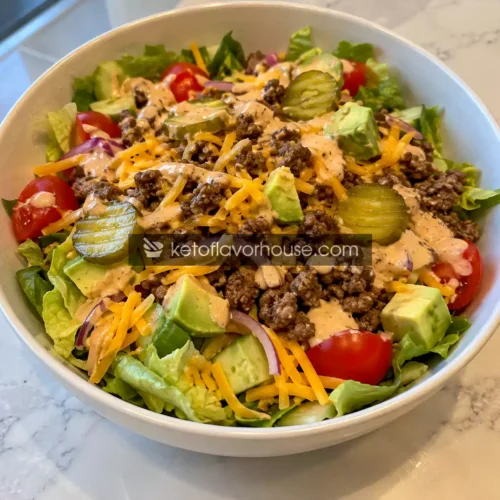
High-Protein Anti-Inflammatory Burger Salad Bowl

Ingredients
Burger Beef
- 1 lb 454 g 90–93% lean ground beef
- 1 tsp smoked paprika
- 1 tsp garlic powder
- 1 tsp onion powder
- ½ tsp kosher salt
- ½ tsp black pepper
- ½ tsp dried oregano
- ¼ tsp chili flakes optional
- 1 tsp olive oil as needed
Salad
- 8 cups chopped romaine lettuce
- 1 cup cherry tomatoes halved
- ½ medium red onion sliced
- ½ cup dill pickles sliced
- 1 medium avocado diced
- ¼ cup fresh parsley chopped
Greek Yogurt Burger Sauce
- ½ cup plain Greek yogurt
- 1 tbsp Dijon mustard
- 1 tbsp ketchup
- 1 tbsp pickle juice
- ½ tsp garlic powder
- ½ tsp smoked paprika
- ¼ tsp black pepper
Instructions
- Wash and thoroughly dry the romaine lettuce, then chop it into bite-sized pieces. Prepare the tomatoes, red onion, pickles, avocado, and parsley and set aside.
- Make the sauce by stirring Greek yogurt, Dijon mustard, ketchup, pickle juice, garlic powder, smoked paprika, and black pepper together in a small bowl until smooth. Taste and adjust the seasoning if needed.
- Add the ground beef to a bowl and gently combine it with smoked paprika, garlic powder, onion powder, salt, black pepper, oregano, and chili flakes.
- Heat a large skillet over medium-high heat. Add the olive oil if needed, then add the seasoned beef.
- Let the beef cook briefly before breaking it into crumbles. Continue cooking, stirring occasionally, until the beef is browned and reaches an internal temperature of 160°F (71°C).
- Divide the chopped romaine between four serving bowls.
- Arrange the tomatoes, red onion, pickles, avocado, and parsley over the lettuce.
- Divide the warm cooked beef between the four bowls.
- Drizzle each bowl with the Greek yogurt burger sauce or serve the sauce on the side.
- Finish with additional black pepper or parsley if desired and serve immediately.