This post may contains Amazon affiliate and other affiliate links. If you make a purchase through these links, I may earn a small commission at no extra cost to you. Your support helps me continue to provide quality content. I only recommend products I personally trust and believe will add value to your experience. For more details, please visit my Privacy Policy.
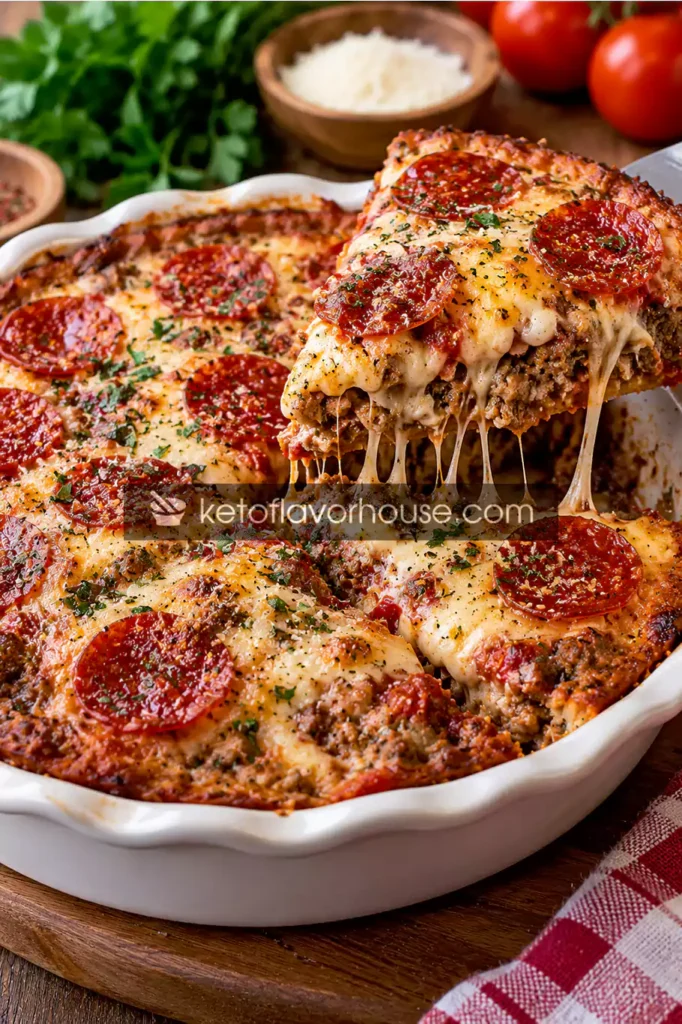
Keto Deep-Dish Hamburger, Sausage & Pepperoni Pie brings together the flavors of a loaded meat-lover’s pizza in a satisfying, oven-baked dish without a conventional flour crust. Ground beef forms the savory foundation, Italian-seasoned beef sausage adds richness, and pepperoni brings its familiar spicy, cured-meat flavor. A layer of mozzarella and Parmesan ties everything together, while a measured amount of low-sugar marinara provides the tomato flavor that makes the pie feel unmistakably pizza-inspired.
One of the challenges of low-carb cooking is finding alternatives to familiar comfort foods that still feel like a complete meal. A traditional deep-dish pizza has a substantial dough base, but this version uses seasoned ground beef and eggs to help create a firm, sliceable structure. It is rich, filling, and easy to customize with your favorite pizza-inspired seasonings. Because the recipe relies on meat, cheese, and a modest amount of sauce, it can fit into many ketogenic meal plans when portioned appropriately.
The finished pie should have browned edges, a firm bottom, melted cheese, and a flavorful center packed with beef, sausage, and pepperoni. Allowing it to rest after baking is especially important: the meat releases moisture during cooking, and a short resting period helps the juices settle so the slices hold together better. Serve it with a crisp green salad or roasted low-carb vegetables for a dinner that feels substantial without relying on a bread-based crust.
Keto Deep-Dish Hamburger, Sausage & Pepperoni Pie: Quick Facts
Here is a quick overview of the recipe before you begin. The nutrition figures are preliminary estimates and should be verified using the specific brands and quantities you use.
Why You’ll Love This Recipe
- 🍕 Pizza-inspired flavor: Beef, sausage, pepperoni, Italian herbs, tomato sauce, and mozzarella bring familiar pizza flavors to a deep-dish format.
- 🥩 A hearty protein base: Ground beef and beef sausage make the pie substantial, while eggs and cheese help hold the mixture together.
- 🥣 No conventional pastry: The recipe skips wheat flour and a traditional dough crust.
- 🍽️ Easy to portion: Resting the pie makes it easier to cut into wedges or squares for dinner and leftovers.
- 🧀 Customizable toppings: You can adjust the cheese, herbs, spice level, and vegetables to suit your preferences.
- 📦 Useful for meal prep: Individual portions can be refrigerated and reheated for convenient lunches or dinners.
The meat-based structure is what distinguishes this pie from a conventional deep-dish pizza. Rather than trying to recreate the chew of wheat dough, the recipe embraces a savory, firm base with a tender interior. The eggs help bind the ingredients, while the cheese contributes flavor and structure.
Another advantage is that the tomato sauce is measured rather than poured in generously. Marinara can contain added sugar and contributes carbohydrates, so choosing an unsweetened or low-sugar variety and checking its nutrition label helps keep the carbohydrate total predictable.
This is also a flexible recipe for households with different preferences. You can serve the pie with a low-carb vegetable side, offer extra marinara separately, or add a little more cheese to individual portions. Just remember that additions such as extra sauce, cheese, and cured meat will change the nutritional values.
A Food-Blogger’s Perspective
A loaded pizza-inspired pie works best when every layer has a purpose. The ground beef provides the main structure, the sausage contributes seasoning and richness, and the pepperoni adds a concentrated, savory flavor. Mozzarella gives the top its familiar melted-cheese finish, while Parmesan adds a more pronounced, salty note.
The main challenge is managing moisture. Ground beef releases liquid and fat as it cooks, and tomato sauce adds more moisture to the filling. If these liquids collect at the bottom, the pie can become difficult to slice. Browning and draining the meat before assembling the dish is therefore an important step, not an optional shortcut.
For serving, I would let the pie rest for about 10 minutes after baking, then use a sharp knife to cut it into wedges. If the first slice is a little delicate, allow another few minutes of resting time. Serve it with a simple salad or roasted vegetables rather than another rich side, since the pie itself already contains a substantial amount of meat and cheese.
Required Equipment
9-Inch Deep-Dish Pie Plate or Similar Baking Dish
A deep pie plate gives the meat mixture enough room to form a substantial layer without overflowing. A similarly sized oven-safe baking dish can also work, although the thickness of the pie will change the baking time. A wider dish creates a thinner pie that may cook more quickly.
Large Skillet
Use a large skillet to brown the ground beef and beef sausage. A wide cooking surface allows moisture to evaporate more effectively than a crowded pan. If your skillet is too small, cook the meat in batches.
Mixing Bowl
A large bowl makes it easier to combine the cooked meat, eggs, seasonings, and part of the cheese evenly. Allow the browned meat to cool slightly before adding the eggs so they do not begin to set prematurely.
Wooden Spoon or Heat-Resistant Spatula
A sturdy spoon helps break the meat into small crumbles while browning. It is also useful for mixing the filling and pressing it evenly into the baking dish.
Colander or Slotted Spoon
Draining excess liquid and fat helps prevent a greasy, watery pie. If you drain the meat in a colander, do so carefully and dispose of the fat appropriately rather than pouring it down the sink.
Instant-Read Food Thermometer
A thermometer helps verify that the center of the meat mixture reaches a safe temperature. For a mixture containing ground beef, aim for 160°F (71°C) in the center. If you use a raw sausage product, follow its safe internal temperature requirements as well; this recipe browns the sausage fully before assembly.
Ingredients and Substitutions
The quantities below are designed for one 9-inch deep-dish pie serving eight people. Check the labels on the sausage, pepperoni, cheese, and marinara because their carbohydrate and calorie content can vary considerably.
The Meat Base
1 pound (454 g) ground beef, preferably 85–90% lean
Ground beef supplies the main structure and savory flavor. An 85–90% lean option offers a balance between richness and manageable rendered fat. Higher-fat beef can be flavorful but may release more grease, so drain it thoroughly. Leaner beef may produce a slightly firmer, less rich result.
8 ounces (227 g) ground beef Italian sausage
Choose raw beef sausage seasoned with Italian herbs, fennel, garlic, and pepper, or use plain ground beef with Italian seasoning if a suitable sausage is unavailable. Read the package carefully to confirm that it is beef-based and does not contain pork or added sugars. Sausage adds seasoning and fat, so replacing it with plain beef will change the flavor and nutrition.
3 ounces (85 g) beef pepperoni
Beef pepperoni contributes the spicy, cured-meat flavor associated with pepperoni pizza. Choose a beef-only product and check the ingredient list, since some pepperoni contains pork or a pork-and-beef mixture. Turkey pepperoni is another option, but it is often leaner and may have a different texture, salt level, and calorie content.
The Binding Ingredients
2 large eggs
Eggs help bind the cooked meat and cheese into a sliceable mixture. They contribute protein and fat, with a small amount of carbohydrate. Beat them before mixing so they distribute evenly. Do not add them to very hot meat, or they may begin to scramble before the pie reaches the oven.
1 cup (112 g) shredded mozzarella cheese, divided
Mozzarella melts smoothly and helps hold the filling together. Use part of it in the mixture and reserve the rest for the top. Pre-shredded cheese is convenient, while freshly shredded mozzarella may melt more smoothly depending on the product.
½ cup (50 g) finely grated Parmesan cheese
Parmesan adds a stronger savory flavor and helps firm the mixture. Its concentrated taste means a moderate amount goes a long way. It contributes protein, fat, sodium, and some carbohydrates, so it should be included in the nutrition calculation.
Tomato Sauce and Seasonings
½ cup (120 g) low-sugar marinara sauce
Marinara supplies the tomato flavor that makes the pie pizza-inspired. Choose a product with no added sugar or a low amount of added sugar, but do not assume that every product labeled “keto” is low in carbohydrates. Measure the sauce rather than adding it freely.
1 teaspoon Italian seasoning
This dried herb blend provides familiar Italian-style flavor. If your beef sausage is already strongly seasoned, you may want to use a little less.
½ teaspoon garlic powder
Garlic powder gives the meat mixture an even, savory garlic flavor. Fresh minced garlic can be used instead, but it introduces moisture and may create a slightly different distribution of flavor.
¼ teaspoon black pepper
Black pepper adds a gentle warmth that balances the meat and cheese. Adjust it to taste, keeping in mind that pepperoni and sausage may already contain black pepper and other spices.
¼ teaspoon red pepper flakes, optional
Use these if you prefer a spicier pie. The quantity contributes little to the overall recipe’s macros, but the heat level can be noticeable.
½ teaspoon dried oregano, optional
Oregano reinforces the Italian-style flavor and works particularly well with the tomato sauce. It is optional if your sausage and Italian seasoning already contain plenty of herbs.
Ingredient Anatomy: How the Pie Holds Together
The recipe relies on a few ingredients doing most of the structural work. This visual guide shows how they contribute to the final result.
What Builds a Sliceable Meat Pie?
Ground Beef
Creates the savory base. Browning and draining it first reduces excess moisture and grease.
Beef Sausage + Pepperoni
Add seasoning, richness and a concentrated cured-meat flavor.
Eggs + Cheese
Help the cooked mixture set and hold together after baking and resting.
Marinara + Mozzarella
Supply tomato flavor and a melted, cheesy finish without a flour crust.
Ingredient Substitutions
You can adjust the meat and cheese to suit your taste, but the changes will affect both the texture and nutritional profile.
| Original ingredient | Substitute | Expected effect |
|---|---|---|
| Ground beef | Ground turkey | Usually leaner and milder; may produce a less rich pie. Calories and fat may decrease, depending on the product. |
| Beef Italian sausage | Plain ground beef plus Italian seasoning | Less concentrated sausage flavor; nutrition depends on the fat content and seasoning used. |
| Beef pepperoni | Turkey pepperoni | Typically a different fat, calorie, and sodium profile; flavor may be milder. |
| Mozzarella | Provolone | A stronger, buttery flavor and a different melt; nutrition varies by brand. |
| Parmesan | Pecorino Romano | A sharper, saltier taste; adjust added salt and check the label. |
| Low-sugar marinara | Plain tomato sauce with Italian herbs | Flavor may be less complex; carbohydrate content depends on the tomato product and serving size. |
| Eggs | No direct equal substitute recommended | Removing the eggs can make the pie more fragile. A tested binder alternative would be needed to maintain the same sliceability. |
For the closest result, keep the eggs and the main cheese quantities unchanged. These ingredients contribute to the structure as well as the flavor. If you use a leaner meat, watch the texture because the finished pie may be firmer and less moist. If you use a fattier meat, drain it carefully before mixing.
How to Keep the Pie Low-Carb
The most important ingredient checks are the marinara, sausage, and pepperoni. Some prepared sauces contain added sugar, while some sausages include sweeteners or fillers. Even when the product is suitable for a low-carb meal plan, it may not be carbohydrate-free.
The recipe does not use almond flour, coconut flour, or a conventional pastry crust. If you decide to add a separate low-carb crust, the texture and nutrition will change. Treat that as a different version and recalculate the full recipe rather than applying the estimates below unchanged.
How to Make Keto Deep-Dish Hamburger, Sausage & Pepperoni Pie
The key to a good meat pie is to cook off excess moisture before assembling it. The oven will melt the cheese and set the eggs, but it cannot remove an unlimited amount of liquid from an already crowded dish. Follow these steps for a more cohesive result.
Step 1: Preheat the Oven and Prepare the Dish
Preheat your oven to 375°F (190°C). Lightly grease a 9-inch deep-dish pie plate or an appropriately sized oven-safe baking dish.
Set out the ingredients and measure the marinara, cheeses, and seasonings. Shred the mozzarella if necessary and beat the eggs in a small bowl.
Preparing everything before browning the meat makes assembly easier. The cooked meat should cool slightly before it is mixed with the eggs.
Step 2: Brown the Ground Beef and Beef Sausage
Place the ground beef and beef Italian sausage in a large skillet over medium-high heat. Break the meat into small crumbles with a spatula and cook until browned and no raw portions remain, usually about 8–12 minutes depending on the skillet and the meat’s starting temperature.
Stir periodically so the meat cooks evenly. If liquid accumulates in the skillet, continue cooking until most of it evaporates. Drain excess fat carefully.
This step develops a deeper savory flavor and reduces the amount of liquid that could collect in the pie. Do not skip browning and assume the oven will correct everything later.
Step 3: Season and Combine the Filling
Transfer the cooked meat to a large mixing bowl and allow it to cool for a few minutes. Add the Italian seasoning, garlic powder, black pepper, and optional red pepper flakes and oregano.
Stir in the beaten eggs, half of the mozzarella, and the Parmesan. Mix until the ingredients are evenly distributed.
The mixture should be moist enough to hold together when pressed but should not be swimming in liquid. If the meat is still very hot, give it additional time to cool before adding the eggs.
Step 4: Build the Deep-Dish Pie
Press the meat mixture evenly into the prepared pie plate. Use the back of a spoon to create a compact, level surface, paying attention to the center and edges.
Spread the measured marinara over the meat mixture in a thin layer. Do not pour in extra sauce simply to cover every surface; too much liquid can make the pie difficult to slice.
Arrange the beef pepperoni evenly over the top, then sprinkle on the remaining mozzarella. Distribute the toppings so each wedge will contain some cheese and pepperoni.
Step 5: Bake Until the Center Is Set
Place the pie plate on a baking sheet to make it easier to handle and catch any overflow. Bake at 375°F (190°C) for approximately 25–35 minutes.
The cheese should be melted, the edges should be bubbling, and the center should be set rather than loose. Check the thickest part of the meat mixture with an instant-read thermometer; it should reach 160°F (71°C).
If the cheese browns too quickly before the center is ready, cover the top loosely with foil and continue baking. If excess liquid is visible around the edges, allow the pie to rest after baking and carefully drain or spoon away any pooled liquid before cutting.
Step 6: Rest and Slice
Remove the pie from the oven and let it rest for about 10 minutes. This pause allows the eggs and melted cheese to settle, making the pie easier to portion.
Cut it into eight wedges using a sharp knife. If the first slice does not hold its shape, wait a few more minutes before cutting the remaining portions.
Serve warm, with extra marinara on the side if desired. Keep in mind that additional sauce will add carbohydrates and calories.
Cooking Process at a Glance
The visual guide below summarizes the stages that make the biggest difference to the pie’s texture.
Four Stages to a Better Meat Pie
Timing depends on the depth of the dish, the amount of moisture in the meat and sauce, and oven performance. Confirm doneness with a food thermometer.
Common Mistakes to Avoid
Leaving Too Much Fat in the Meat
Ground beef and sausage release fat during browning. If most of that fat remains in the mixture, it can pool around the edges of the finished pie and make the slices greasy.
Drain the meat after browning. You do not need to remove every trace of fat, since some contributes flavor and moisture, but visible pools should be removed before assembly.
Adding Eggs to Very Hot Meat
Eggs begin to set when exposed to high heat. If you mix them into meat straight from a hot skillet, small cooked egg pieces may form before the pie reaches the oven.
Allow the meat to cool for several minutes, then stir in the beaten eggs. The goal is an evenly combined mixture that will set during baking.
Using Too Much Marinara
Extra sauce may seem like a good way to create a pizza-like filling, but it introduces additional water. That moisture can collect beneath the cheese and weaken the structure.
Measure the sauce and spread it in a thin layer. If you want more tomato flavor at the table, offer additional sauce separately.
Cutting the Pie Immediately
A freshly baked meat pie is hot and still settling. Cutting it immediately can cause the wedges to break apart or slide out of shape.
Rest the pie for approximately 10 minutes. If the center still appears loose, give it a little longer to settle before cutting.
Crowding the Baking Dish
A dish that is too small or filled too close to the rim can overflow as the cheese melts and the meat releases moisture. Use a deep 9-inch pie plate or a suitably sized baking dish, leaving some room at the top.
If you use a wider dish, the pie will be thinner and may finish sooner. Start checking early rather than relying on the original timing.
Overbaking the Cheese
Mozzarella can become excessively browned or release oil if exposed to heat for too long. Bake only until the center is set and the top is melted and lightly golden.
If the top is browning too quickly, loosely cover it with foil while the center finishes cooking.
Troubleshooting Guide
If the pie does not turn out as expected, use the following guide to identify the likely cause and make a practical adjustment.
Meat Pie Troubleshooting
Pro Tips for the Best Results
- Use a measured meat blend. The combination of ground beef and beef sausage provides both structure and seasoning. Changing the ratio will change the flavor and fat content.
- Break the meat into small crumbles. Smaller pieces distribute more evenly through the pie and make each wedge easier to cut.
- Drain excess fat before mixing. This is one of the most effective ways to avoid an oily finish.
- Let the meat cool slightly before adding eggs. This helps prevent premature egg setting.
- Use freshly shredded mozzarella if convenient. It often melts smoothly, although results depend on the cheese.
- Keep the sauce layer thin. The meat mixture should remain the main structure of the pie.
- Reserve some cheese for the top. A final layer creates the familiar melted-cheese finish.
- Rest before slicing. This improves portioning and helps the filling hold together.
- Use a thermometer. Ground beef should reach 160°F (71°C) in the center of the mixture.
- Portion consistently. Eight equal servings make it easier to estimate nutrition and plan leftovers.
Keto Benefits of the Main Ingredients
The pie’s low-carb approach comes primarily from using meat, eggs, and cheese instead of a conventional flour crust. Ground beef and beef sausage provide protein and fat, while eggs and cheese help the filling set. These ingredients generally contribute very little carbohydrate compared with a wheat-based pastry, although the exact totals depend on the products used.
Pepperoni and sausage deserve particular attention because they are processed meat products. Their sodium, fat, carbohydrate, and calorie contents can vary significantly. Check the labels rather than assuming that all varieties have the same nutritional profile.
The marinara is another important ingredient. Tomato sauce contributes carbohydrates even when it contains no added sugar. Choosing a lower-sugar product and measuring the amount helps keep the recipe’s carbohydrate contribution manageable.
This pie can fit into some ketogenic eating patterns, but low carbohydrate does not automatically mean low calorie. The meat and cheese can make it energy-dense, so portion size and the rest of the meal still matter. The recipe should be considered one option within an overall eating pattern rather than a food that independently causes weight loss or ketosis.
Total Carbohydrates and Net Carbohydrates
Total carbohydrates include the carbohydrates reported for the ingredients, including dietary fiber. Net carbohydrates are commonly estimated by subtracting dietary fiber from total carbohydrates:
Net carbohydrates = Total carbohydrates − Fiber
For this recipe, use the nutrition labels for the specific beef sausage, pepperoni, marinara, and cheeses. If you change the ingredient brands or add vegetables, the carbohydrate total may change. Do not describe the pie as zero-carb; the tomato sauce and other ingredients contribute some carbohydrates.
Variations You Can Try
Spicy Meat Lover’s Pie
Add extra red pepper flakes or a small amount of cayenne pepper to the meat mixture. The flavor becomes hotter without changing the basic structure. The carbohydrate contribution of a small amount of dry seasoning is usually modest, but use the actual quantity in your calculation.
Extra-Cheesy Version
Increase the mozzarella on top by ¼ cup (28 g). This creates a thicker, more prominent cheese layer and may increase calories, fat, protein, and sodium. The top may take slightly longer to brown, so watch the cheese during baking.
Mushroom and Pepperoni Pie
Add ½ cup of finely chopped mushrooms, cooked first to release excess moisture. Mushrooms add an earthy flavor and a softer texture, but they also introduce additional water and carbohydrates. Cook them until most of their liquid has evaporated before mixing them into the filling.
Bell Pepper Version
Add ¼ cup of finely diced bell pepper. Red pepper contributes sweetness, color, and texture. Cook it briefly with the meat or sauté it separately to reduce excess moisture. The additional vegetable changes the carbohydrate and fiber totals.
Turkey Pepperoni Version
Replace the beef pepperoni with turkey pepperoni if you prefer a different meat option. The flavor and texture may be milder, and the fat, calorie, sodium, and protein values can differ. Compare the product labels before using the original nutrition estimate.
Herb-Forward Italian Pie
Add a little extra oregano or Italian seasoning, or finish the pie with chopped fresh basil after baking. Fresh herbs add aroma and a brighter finish. They have little effect on the overall nutrition when used in small amounts, but avoid adding a large amount of watery fresh vegetables without adjusting the preparation.
Can You Make It Dairy-Free?
A dairy-free version is possible to experiment with, but the structure will change. Replacing mozzarella and Parmesan with plant-based alternatives may affect melting, browning, protein, fat, sodium, and carbohydrate totals. The eggs still provide some binding, but the finished pie may be softer or less cohesive.
Use products intended for cooking, check their nutrition labels, and test the texture before serving it to guests. The dairy-free version should be treated as a separate recipe variation rather than nutritionally identical to the original.
Tips for This Recipe
The pie is straightforward, but a few practical choices can make preparation and serving easier.
For even portions: Cut the pie into eight wedges after resting. If you are tracking your intake, weigh the finished pie and divide the total weight by eight to get a more consistent portion size.
For a less greasy result: Use moderately lean ground beef and drain the meat thoroughly. If you choose a fattier sausage, expect more rendered fat and adjust your preparation accordingly.
For a stronger pizza flavor: Add a little extra oregano or garlic powder rather than a large quantity of sauce. This gives you more aroma without adding much moisture.
For easier cleanup: Grease the baking dish lightly and place it on a baking sheet before putting it in the oven. This makes it easier to move and helps catch any bubbling sauce or fat.
For a firmer slice: Allow the pie to rest for the full 10 minutes, then use a sharp knife. A thin spatula can help lift the first wedge without breaking it.
Optional Additions
These additions are optional and should be included only if they suit your taste.
- Fresh basil: Adds a bright, herbal aroma when scattered over the pie after baking. It contributes very little to the nutrition in a small garnish quantity.
- Extra Parmesan: Gives the pie a saltier, more savory flavor. It increases calories, protein, fat, and sodium, with a small carbohydrate contribution.
- Sliced mushrooms: Add earthy flavor and a softer texture. Cook them first to remove excess moisture; they also increase the recipe’s total carbohydrates and fiber.
- Diced bell pepper: Adds sweetness and a little crunch if cooked briefly. It increases the carbohydrate content, although the effect depends on the amount used.
- Red pepper flakes: Increase heat without significantly changing the overall texture. The exact nutrition change depends on the quantity.
- Extra marinara on the side: Provides more tomato flavor, but it adds carbohydrates and calories according to the serving size and product label.
Avoid adding all these ingredients at once without reassessing the recipe. Extra toppings can alter the moisture level, the total yield, and the nutrition per serving.
Serving Ideas
This pie is substantial enough to serve as the centerpiece of dinner. A vegetable side adds freshness and texture without competing with the meat and cheese.
What to Serve with Deep-Dish Meat Pie
Crisp Green Salad
Leafy greens, cucumber and a simple vinaigrette provide a refreshing contrast to the rich pie.
Roasted Broccoli
Roasted edges and a firmer texture balance the soft, cheesy meat filling.
Tomato Cucumber Salad
A fresh salad brings acidity and crunch. Count its vegetables toward your meal’s carbohydrates.
Sautéed Zucchini
Lightly sautéed zucchini adds a mild vegetable side without overwhelming the meat flavors.
Roasted Bell Peppers
Their sweetness complements the pepperoni and Italian seasonings.
Simple Dinner Plate
Serve one wedge with a vegetable side and water for a straightforward, filling meal.
If you are serving people who do not follow a low-carb eating plan, conventional garlic bread or pasta can be offered separately. For keto diners, keep the portion of pie consistent and choose a side that fits their individual carbohydrate target.
Storage and Reheating
Because this pie contains cooked ground meat, eggs, and cheese, handle the leftovers as you would other cooked meat dishes.
Refrigerating Leftovers
Let the pie stop steaming heavily, then divide it into portions and place them in shallow, airtight containers. Refrigerate within two hours of cooking, or within one hour if the surrounding temperature is above 90°F (32°C).
Keep the refrigerator at 40°F (4°C) or below. Cooked meat leftovers are generally suitable for refrigeration for three to four days. For the best texture, store portions without stacking them while they are still hot.
Freezing
This pie can be frozen in individual portions. Wrap each cooled portion securely or place it in an airtight, freezer-safe container. For best quality, use frozen portions within about two to three months.
Freezing is generally practical for the meat filling, although the cheese may change texture slightly after thawing. The pie may become a little softer or release some moisture when reheated. This is primarily a quality issue, provided it has been handled and stored safely.
Thawing
Thaw frozen portions in the refrigerator rather than on the counter. If you need to reheat a portion from frozen, use an appropriate covered oven-safe dish and allow extra time, checking that the center reaches 165°F (74°C).
Reheating in the Oven
Preheat the oven to 325°F (163°C). Place a portion in an oven-safe dish, cover loosely with foil, and heat until the center reaches 165°F (74°C). The time will depend on the portion’s thickness and whether it is refrigerated or frozen.
For a slightly firmer, browned top, remove the foil near the end of heating. Watch closely to prevent the cheese from becoming excessively dark.
Reheating in the Microwave
Place an individual portion in a microwave-safe dish and cover loosely. Heat in short intervals, rotating or repositioning the portion as needed. Allow a brief standing period, then check the center for cold spots and confirm that it has reached 165°F (74°C).
The microwave is convenient for lunches, although it may produce a softer crustless base than oven reheating.
Storage Timeline
Plan Ahead: Cool, Store and Reheat
Rest for about 10 minutes before slicing. Portion leftovers and refrigerate within 2 hours, or 1 hour above 90°F (32°C).
Store in shallow, airtight containers at 40°F (4°C) or below.
Freeze individual portions in airtight packaging. Thaw in the refrigerator when practical.
Heat leftovers to 165°F (74°C), checking the center rather than relying on appearance alone.
Storage times assume prompt cooling and correct refrigeration. Discard food left at unsafe temperatures for too long.
Reheating does not normally change the total amount of carbohydrates in the entire pie. However, moisture loss or gain can change the calculated values per 100 grams, and different portion sizes can change the nutrition per serving.
Frequently Asked Questions
Is this pie suitable for a keto diet?
It can fit into many ketogenic eating plans because the main ingredients are meat, eggs, and cheese rather than a flour-based crust. However, the marinara, sausage, and pepperoni contribute varying amounts of carbohydrates. Check the labels, calculate the finished recipe, and choose a serving size that fits your own carbohydrate target.
How many net carbs are in one serving?
The exact amount cannot be established reliably without calculating the specific brands and quantities used. The marinara, processed meats, and cheeses all affect the result. Divide the total net carbohydrates in the completed recipe by eight only if the pie is divided into eight equal servings.
Can I use turkey instead of ground beef?
Yes. Ground turkey can replace the beef, but the result may be leaner and milder. The amount of rendered fat will depend on the turkey’s fat percentage, and the texture may be firmer. Recalculate the calories, protein, fat, and carbohydrates using the product you select.
Can I use regular pork sausage or pepperoni?
This version is written to avoid pork and pork-derived sausage or pepperoni. Use beef sausage and beef pepperoni, checking the ingredient labels carefully. Turkey pepperoni is another possible substitute. These products are not nutritionally identical, so the nutrition estimate must be adjusted when you change them.
Why does my pie release liquid?
The most common reasons are excess rendered fat, moisture from the meat, or too much tomato sauce. Brown the meat thoroughly, drain the excess fat, and measure the marinara. Rest the pie before slicing so the filling has time to settle.
Can I make this pie ahead of time?
Yes. You can brown the meat and assemble the filling in advance, then refrigerate it promptly in a covered dish before baking. For food safety, keep the mixture refrigerated and do not leave raw egg and meat mixtures at room temperature. Because a chilled dish may take longer to heat through, check the center temperature and allow for additional baking time.
Can I freeze the finished pie?
Yes. Cool and portion the baked pie, then freeze it in airtight containers. The cheese and meat mixture may release a little moisture after thawing, but the pie should remain suitable for reheating when handled correctly. Thaw in the refrigerator and reheat to 165°F (74°C).
How do I make the slices hold together better?
Drain the browned meat, measure the sauce, distribute the eggs evenly, and avoid cutting the pie immediately after baking. The eggs help bind the mixture, while the resting period allows the filling to settle. If the pie remains too soft, check whether excess moisture was present or whether the center was fully cooked.
Nutritional Breakdown Per Serving
The nutrition for this recipe depends on the exact ground beef, beef sausage, pepperoni, mozzarella, Parmesan, eggs, and marinara used. Because processed meat products and sauces vary by brand, the figures should be calculated from the actual product labels before publication.
For now, use the following dashboard as a nutrition-calculation template rather than presenting unverified numbers as final results.
To calculate the final values, total the calories, protein, fat, total carbohydrates, and fiber from every ingredient. Divide each total by eight, then calculate net carbohydrates by subtracting fiber from total carbohydrates. If you drain a substantial amount of rendered fat, the actual fat and calorie totals may be lower than a calculation that assumes all the fat remains in the dish.
Recipe Snapshot
- Prep Time: Approximately 20 minutes
- Cook Time: Approximately 25–35 minutes, after browning the meat
- Total Time: Approximately 55–70 minutes, including resting time
- Course: Main Course, Dinner
- Cuisine: American, Italian-American Inspired
- Servings: 8
- Calories per serving: Calculate from the actual ingredients
- Total carbohydrates per serving: Calculate from the actual ingredients
- Net carbohydrates per serving: Total carbohydrates minus fiber
Closing Note
Keto Deep-Dish Hamburger, Sausage & Pepperoni Pie offers a practical way to enjoy familiar pizza-inspired flavors without a conventional flour crust. Browning the meat, measuring the sauce, and allowing the finished pie to rest are the small details that help make it easier to slice and serve. Pair a wedge with a fresh vegetable side, refrigerate the leftovers promptly, and adjust the seasonings to suit your household. It is a flexible starting point for a hearty low-carb dinner, with the final nutrition depending on the ingredients and portions you choose.

Keto Deep-Dish Hamburger, Sausage & Pepperoni Pie Recipe

Ingredients
- 1 pound 454 g ground beef, preferably 85–90% lean
- 8 ounces 227 g ground beef Italian sausage
- 3 ounces 85 g beef pepperoni
- 2 large eggs
- 1 cup 112 g shredded mozzarella cheese, divided
- ½ cup 50 g finely grated Parmesan cheese
- ½ cup 120 g low-sugar marinara sauce
- 1 teaspoon Italian seasoning
- ½ teaspoon garlic powder
- ¼ teaspoon black pepper
- ¼ teaspoon red pepper flakes optional
- ½ teaspoon dried oregano optional
- Cooking spray or a little oil for greasing the baking dish
Instructions
- Preheat the oven to 375°F (190°C). Lightly grease a 9-inch deep-dish pie plate or similarly sized baking dish.
- Brown the ground beef and beef sausage in a large skillet over medium-high heat for approximately 8–12 minutes, breaking the meat into small crumbles until fully cooked. Drain excess fat.
- Allow the meat to cool slightly. Mix it with the Italian seasoning, garlic powder, black pepper, and optional red pepper flakes and oregano.
- Beat the eggs in a bowl, then combine them with the meat, half the mozzarella, and the Parmesan.
- Press the mixture evenly into the prepared baking dish. Spread the measured marinara over the top, arrange the beef pepperoni evenly, and sprinkle with the remaining mozzarella.
- Place the dish on a baking sheet and bake for approximately 25–35 minutes, until the cheese is melted and the center reaches 160°F (71°C).
- If the top browns too quickly, cover it loosely with foil while the center finishes cooking. Remove the pie from the oven and let it rest for approximately 10 minutes.
- Cut into eight portions and serve warm. Add extra marinara at the table if desired, accounting for its additional carbohydrates and calories.