This post may contains Amazon affiliate and other affiliate links. If you make a purchase through these links, I may earn a small commission at no extra cost to you. Your support helps me continue to provide quality content. I only recommend products I personally trust and believe will add value to your experience. For more details, please visit my Privacy Policy.
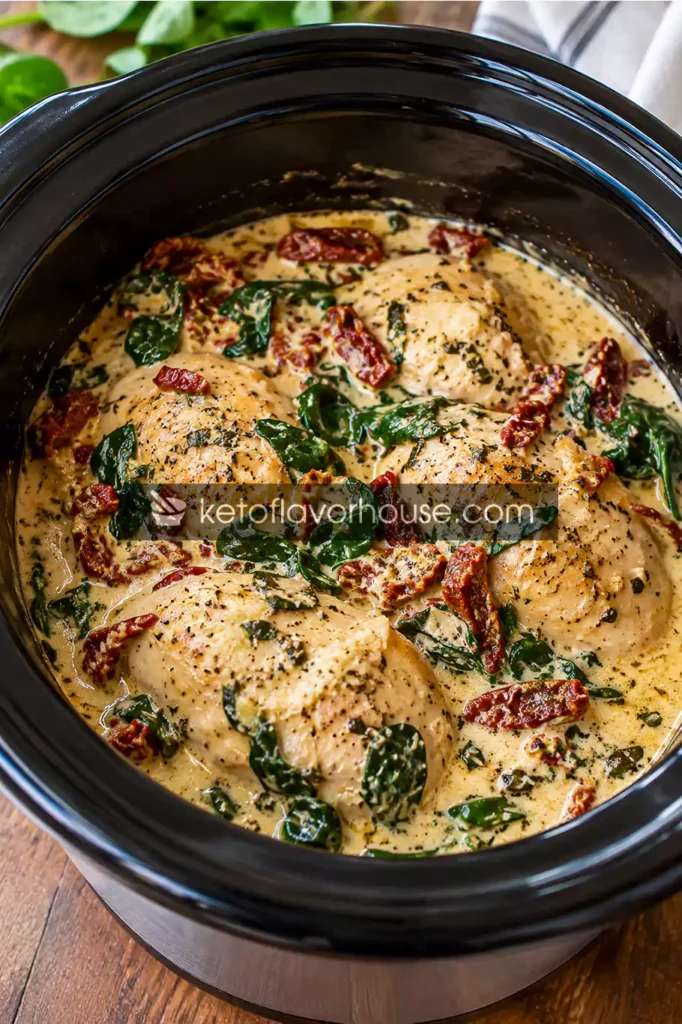
Keto Crockpot Tuscan Chicken is the kind of comforting dinner that makes low-carb cooking feel simple without sacrificing the creamy, savory flavors everyone wants at the end of a busy day. Tender chicken, garlic, Italian herbs, sun-dried tomatoes, Parmesan, and a rich cream sauce come together in the slow cooker for a meal that feels special enough for a weekend dinner but practical enough for a regular weeknight.
What makes this version particularly appealing is the combination of convenience and flavor. You can let the chicken cook gently while you handle the rest of your day, then finish the sauce with cream cheese, heavy cream, Parmesan, and fresh spinach. The result is a velvety Tuscan-inspired sauce with tangy tomato pieces, tender greens, and plenty of garlicky flavor. There is no need for flour or cornstarch to thicken the sauce, and you can serve it with cauliflower rice, zucchini noodles, or another low-carb side.
If you enjoy creamy chicken dinners but want to keep carbohydrates manageable, this Keto Crockpot Tuscan Chicken is worth adding to your meal rotation. The recipe uses familiar supermarket ingredients, requires relatively little hands-on preparation, and makes several portions for family dinners or leftovers. It is not literally zero-carb, because ingredients such as tomatoes, cream, spinach, and garlic contribute carbohydrates. However, with sensible portions, it can fit comfortably into many ketogenic meal plans.
Before getting started, here is a quick overview of what to expect from the recipe, including preparation time, cooking time, serving size, and estimated nutritional values.
Keto Crockpot Tuscan Chicken: Quick Recipe Facts
Creamy Tuscan Chicken
Tender chicken, sun-dried tomatoes, Parmesan, garlic and spinach in a rich, low-carb cream sauce.
Nutrition figures in this article are estimates based on the ingredient quantities and six servings. The actual values will depend on the brands you use and how much sauce ends up in each portion.
Why You’ll Love This Keto Crockpot Tuscan Chicken
A slow-cooker chicken recipe should do more than save time. It should produce tender meat, a flavorful sauce, and a meal that is easy to serve in several different ways. This recipe checks those boxes without relying on flour-based thickeners or sugary sauces.
- Creamy and savory: Heavy cream, cream cheese, and Parmesan create a rich sauce with garlic and Italian herbs.
- Convenient preparation: Most of the work involves measuring ingredients, seasoning the chicken, and adding the finishing ingredients at the right time.
- Low in carbohydrates: The recipe avoids pasta, flour, and cornstarch, while keeping higher-carbohydrate additions in measured quantities.
- Family-friendly: Serve the chicken over regular pasta for other family members and with cauliflower rice or zucchini noodles for a low-carb plate.
- Useful for meal prep: The chicken and sauce can be divided into portions for lunches or dinners later in the week.
- Easy to customize: Adjust the herbs, add a little heat, or change the greens to suit your preferences.
The sauce is the main attraction here. Parmesan gives it a savory, slightly nutty flavor, while cream cheese contributes body and a smooth consistency. Sun-dried tomatoes add concentrated sweetness and acidity, which help balance the richness of the dairy. Spinach brings color and a mild earthy taste without requiring a separate side dish.
Another advantage is that you can control the portion size and carbohydrate contribution of the sauce. Rather than adding flour to make it thicker, this recipe uses full-fat dairy and finely grated cheese. That approach works well for a keto-inspired meal, although dairy products still contribute calories, protein, fat, and varying amounts of carbohydrates.
A Note on the Slow-Cooker Method
The slow cooker makes this meal convenient, but timing still matters. Chicken breasts are lean and can become dry if cooked longer than necessary. The exact cooking time depends on their thickness, your appliance, and whether the chicken begins cold or partially frozen. Use a food thermometer rather than relying on the clock alone.
It is also important to add the cream, cream cheese, and Parmesan toward the end. Prolonged cooking can cause dairy sauces to separate or become grainy. Finishing the sauce later gives the ingredients less time to overheat and makes it easier to control the final consistency.
A Food-Blogger’s Perspective on This Recipe
Creamy chicken dishes are appealing because they can deliver a lot of flavor without requiring complicated cooking techniques. Tuscan-inspired combinations of garlic, tomatoes, leafy greens, herbs, and Parmesan are especially versatile. They work with chicken because the mild meat allows the stronger flavors in the sauce to stand out.
For a slow-cooker version, the key is balancing convenience with the way each ingredient behaves. Chicken needs time to become tender, but cream and cheese do not need several hours of cooking. Separating those stages helps preserve the sauce’s texture and prevents the greens from becoming excessively soft.
When serving this dish, I would focus on keeping the plate balanced. A spoonful of the creamy sauce over the chicken is usually enough when paired with cauliflower rice or roasted vegetables. If you prefer a more generous amount of sauce, you can serve extra in a small bowl so everyone can add the amount they want. A little freshly grated Parmesan and chopped parsley can finish the dish without overwhelming its main flavors.
The most useful part of a recipe like this is its flexibility. You can make it for a family dinner, portion it into containers for the next few days, or adapt the seasonings to suit your household. The important thing is to cook the chicken safely, avoid overcooking it, and finish the sauce gently.
Required Equipment
You do not need specialized equipment to prepare this recipe. A standard slow cooker, a cutting board, and a few basic kitchen tools are sufficient.
Slow Cooker
A slow cooker with a capacity of approximately 4 to 6 quarts is suitable for six servings. It should hold the chicken in a relatively even layer without being packed too tightly. If your appliance is much smaller, reduce the recipe rather than overfilling it.
Slow cookers vary in temperature and heating patterns. Follow the manufacturer’s guidance for filling levels, and avoid lifting the lid repeatedly because doing so releases heat and can extend the cooking time.
Instant-Read Food Thermometer
A thermometer is the most reliable way to confirm that chicken has reached a safe internal temperature of 165°F (74°C). Insert it into the thickest part of each breast without touching the slow cooker’s surface.
Cutting Board and Sharp Knife
Use a cutting board to trim the chicken if needed and slice the sun-dried tomatoes. A sharp knife makes it easier to create evenly sized tomato pieces, which distribute more consistently through the sauce.
Keep raw chicken separate from ready-to-eat ingredients such as spinach and fresh parsley. Wash your hands, knife, and cutting board thoroughly after handling raw poultry.
Measuring Cups and Spoons
Accurate measurements help keep the flavor and nutrition estimates consistent. This is particularly useful for ingredients such as sun-dried tomatoes, Parmesan, and cream, which can meaningfully affect the recipe’s carbohydrate and calorie totals.
Silicone Spatula or Wooden Spoon
Use a spoon or spatula to stir the sauce gently after adding the dairy ingredients. A flexible spatula also helps scrape the sides of the slow cooker so the cream cheese incorporates evenly.
Ingredients for Keto Crockpot Tuscan Chicken
The ingredient list is intentionally straightforward. Each component has a specific purpose, from keeping the chicken moist to balancing the richness of the cream sauce.
Chicken and Seasonings
2 pounds (907 g) boneless, skinless chicken breasts
Chicken breast is a lean source of protein and works well when paired with a rich sauce. Choose breasts of similar thickness when possible so they cook at a similar rate. Very large breasts can be cut into two portions, but avoid cutting them into small cubes, which may cook too quickly and become dry.
3 cloves garlic, minced
Garlic supplies the savory base of the dish. Freshly minced garlic generally gives a stronger aroma than dried garlic, although 1 teaspoon of garlic powder can be used if fresh garlic is unavailable. Garlic powder may have a different flavor intensity, so adjust cautiously.
1 teaspoon Italian seasoning
A typical Italian seasoning blend combines dried herbs such as oregano, basil, thyme, and rosemary. It adds herbal depth without requiring several separate seasonings. Check the label if you are managing sodium or avoiding any particular ingredient.
½ teaspoon paprika
Paprika adds mild warmth and color. Regular sweet paprika is a good choice; smoked paprika creates a more pronounced smoky flavor. Neither is necessary for the sauce to thicken.
½ teaspoon fine salt
Salt enhances the chicken and balances the cream. Parmesan and some chicken broths already contain sodium, so you can begin with less and adjust after the sauce is finished.
¼ teaspoon black pepper
Black pepper provides gentle heat and helps round out the garlic and herbs. Add more at the table if you prefer a pepperier sauce.
The Tuscan-Inspired Cream Sauce
¾ cup (180 ml) low-sodium chicken broth
Broth provides moisture during the initial cooking stage and helps distribute the seasonings. Low-sodium broth gives you more control over the finished flavor. Check the nutrition label because carbohydrate amounts can vary between brands.
1 cup (240 ml) heavy whipping cream
Heavy cream supplies richness and helps create the familiar creamy texture. In the United States, choose unsweetened heavy whipping cream rather than a sweetened coffee creamer. Although heavy cream is often used in keto cooking, it is not carbohydrate-free.
4 ounces (113 g) full-fat cream cheese, softened and cut into cubes
Cream cheese adds body and a gentle tang. Softening it first makes it easier to incorporate without leaving small lumps. Regular full-fat cream cheese is suitable, but flavored varieties may contain added ingredients and different carbohydrate amounts.
½ cup (about 50 g) finely grated Parmesan cheese
Parmesan contributes a salty, savory, umami-rich flavor. Finely grated cheese melts more evenly than large shreds. Freshly grated Parmesan can produce a different texture from pre-grated cheese, which may contain anti-caking agents.
½ cup (approximately 75 g) drained, sliced sun-dried tomatoes packed in oil
Sun-dried tomatoes deliver concentrated tomato flavor and a little acidity that contrasts with the rich dairy sauce. Drain them before measuring and slice them into small pieces. They contain carbohydrates, so keep the measured quantity consistent if you want the nutrition estimate to remain close to the one provided.
2 cups (about 60 g) fresh baby spinach
Spinach adds color and softens into the sauce during the final cooking stage. Two cups may look like a large amount before cooking, but the leaves shrink considerably. Baby spinach is convenient because it usually requires little preparation.
Ingredient Anatomy: What Each Component Does
The recipe works because the ingredients perform different jobs. The chicken supplies protein, the broth provides cooking liquid, and the dairy ingredients create the creamy finish. The tomatoes and herbs bring contrast, while spinach adds a fresh element.
Inside the Tuscan Chicken Sauce
Chicken + Broth
Chicken supplies protein. Broth provides moisture and helps carry the garlic and herbs during slow cooking.
Cream + Cream Cheese
These ingredients create a rich sauce. Adding them near the end helps reduce the risk of separation.
Parmesan
Finely grated Parmesan contributes salty, savory flavor and helps give the sauce more body.
Tomatoes + Spinach
Tomatoes bring concentrated sweetness and acidity. Spinach contributes color and a mild earthy note.
Carbohydrates come from several ingredients, including tomatoes, spinach, garlic and dairy. Measure portions rather than assuming the complete recipe is carb-free.
Ingredient Substitutions
You can adjust this recipe to accommodate what is available in your kitchen, but substitutions may change the sauce, flavor, and nutrition.
| Original ingredient | Possible substitute | What changes |
|---|---|---|
| Chicken breasts | Boneless, skinless chicken thighs | Thighs are generally richer and more forgiving if cooked a little longer. Fat and calorie totals may increase. |
| Heavy cream | A smaller amount of heavy cream plus broth | The sauce becomes less rich and thinner. The total calories and fat may decrease. |
| Cream cheese | Mascarpone | The sauce may taste richer and less tangy. Nutrition values will differ by brand. |
| Parmesan | Finely grated Romano cheese | The flavor becomes sharper and saltier. Check the label and adjust added salt. |
| Sun-dried tomatoes | A measured amount of fresh cherry tomatoes | The sauce will be less concentrated and may contain more water. Carbohydrates depend on the quantity used. |
| Baby spinach | Chopped kale | Kale has a firmer texture and may require more time to soften. |
| Chicken broth | Water with suitable seasoning | The sauce loses some savory depth. Adjust seasoning carefully. |
For the closest result, keep the chicken, cream, cream cheese, and Parmesan combination intact. These ingredients establish the texture and richness of the dish. Changes to the tomatoes or greens are usually easier to accommodate.
Can You Make It Dairy-Free?
You can experiment with unsweetened dairy-free cooking cream and a dairy-free cream-cheese alternative, but the result will not be identical. Plant-based products vary widely in fat, protein, starch, and carbohydrate content. Some separate when heated for a long time, and some contain added sugars or thickeners.
If you try a dairy-free version, choose products specifically intended for cooking, check their nutrition labels, and add them near the end. You may need to reduce the broth or adjust the seasoning to achieve a suitable consistency. Do not assume the modified recipe will have the same macros as the dairy-based version.
How to Make Keto Crockpot Tuscan Chicken
The cooking process has two main stages: gently cooking the chicken with broth and seasonings, then finishing the sauce with the dairy ingredients and spinach. Keeping these stages separate is the easiest way to improve the consistency of the finished dish.
Step 1: Prepare the Chicken and Seasonings
Allow about 5 minutes for this step.
Pat the chicken breasts dry with paper towels. Trim away any unwanted fat or connective tissue, and check that the pieces are reasonably similar in thickness. There is no need to pound them thin, but very thick breasts may take longer to cook than smaller pieces.
In a small bowl, combine the Italian seasoning, paprika, salt, and black pepper. Sprinkle the mixture over both sides of the chicken, pressing gently so the seasonings adhere.
Add the chicken broth and minced garlic to the slow cooker. Arrange the seasoned chicken in the cooking vessel, ideally in a single layer. Add the drained, sliced sun-dried tomatoes around the chicken.
Avoid adding the cream, cream cheese, and Parmesan at this stage. These ingredients are better suited to the finishing stage, when they can be incorporated without spending several hours exposed to heat.
Step 2: Slow-Cook the Chicken
Allow approximately 3–4 hours on LOW or 2–3 hours on HIGH, using these times as starting estimates rather than guarantees.
Cover the slow cooker and cook until the thickest part of each chicken breast reaches an internal temperature of 165°F (74°C). Check more than one piece if their thicknesses vary.
The chicken should be cooked through and tender, with no raw center. Do not rely solely on whether the meat looks white; a thermometer is the more dependable way to check doneness.
Resist the temptation to lift the lid repeatedly. Each time you open it, heat escapes and the cooking process slows. Start checking toward the earlier end of the expected cooking window, especially if your slow cooker runs hot or the chicken breasts are relatively small.
If the chicken reaches 165°F before the estimated time is up, proceed to the finishing stage. Keeping lean chicken breasts cooking for longer than necessary can make them dry and stringy.
Step 3: Prepare the Creamy Tuscan Sauce
Allow about 5–10 minutes for preparation.
While the chicken finishes cooking, soften the cream cheese if you have not already done so. Cut it into small cubes so it blends more easily.
Once the chicken is cooked through, carefully remove the breasts to a clean plate. Leave the broth, garlic, and tomatoes in the slow cooker.
Add the heavy cream and softened cream cheese to the cooking liquid. Stir gently until the cream cheese begins to blend into the liquid. Then add the finely grated Parmesan and stir again.
The sauce may look a little loose at first. Give the ingredients time to combine, and avoid turning the mixture up to a vigorous boil. Excessive heat can encourage dairy sauces to separate or become grainy.
Return the chicken to the slow cooker, turning each piece gently so it is coated in the sauce.
Step 4: Finish with Spinach
Allow another 15–30 minutes on LOW, or until the sauce is smooth and the spinach has wilted. The exact time depends on how hot the sauce is when the dairy ingredients are added and how quickly the cream cheese incorporates.
Stir in the baby spinach during this finishing stage. If you prefer the leaves to retain a little more texture, add them closer to serving time. If you prefer softer spinach, give it longer to wilt.
Check the sauce before serving. If it seems too thick, add a small splash of warm chicken broth. If it seems too thin, leave the lid slightly ajar for a short period while monitoring it, or remove the chicken and allow the sauce to reduce gently using a suitable stovetop pan. Do not leave the chicken in the slow cooker indefinitely just to thicken the sauce.
Taste and adjust the salt and black pepper. Parmesan can contribute considerable saltiness, so add more salt only if needed.
Step 5: Serve the Chicken
Transfer the chicken to plates or a serving dish and spoon the sauce, tomatoes, and spinach over the top. If the breasts are particularly thick, you can slice them across the grain before serving.
For a simple keto dinner, pair the chicken with cauliflower rice, zucchini noodles, or steamed green beans. These sides allow the creamy sauce to remain the main flavor of the meal without adding a large amount of starch.
Let the finished dish settle for a few minutes before serving. This brief pause makes portioning easier and gives the sauce time to coat the chicken evenly.
The Cooking Process at a Glance
From Prep to Plate
Timing varies by appliance and chicken thickness. The safe internal temperature, not the estimated cooking time, determines when the chicken is done.
Common Mistakes to Avoid
Even an uncomplicated slow-cooker recipe can turn out differently depending on the ingredients and cooking conditions. These are the main issues to watch for.
Overcooking the Chicken
Chicken breasts contain relatively little fat, so they can become dry if left cooking for too long. Start checking the temperature early and remove the chicken from prolonged heat once it reaches 165°F (74°C).
If you prefer a more forgiving cut, boneless, skinless chicken thighs are a practical alternative. They are richer and generally tolerate longer cooking better, although the nutritional values will change.
Adding the Cream Too Early
Cream and cream cheese can separate during extended cooking. A sauce that looks smooth at the beginning may develop a grainy or oily appearance after several hours of heat.
Add the dairy ingredients during the finishing stage, stir gently, and avoid allowing the sauce to boil vigorously.
Using Cold, Firm Cream Cheese
Large, cold pieces of cream cheese can leave lumps in the sauce. Soften the cheese first and cut it into cubes. Stir gradually rather than adding the entire quantity and expecting it to dissolve immediately.
If a few small lumps remain, continue stirring gently over low heat. Avoid using high heat to force the sauce together.
Making the Sauce Too Thin
The broth is there to help cook the chicken, not to create a thick soup. Too much additional liquid can dilute the sauce and weaken its flavor.
Measure the broth carefully. If the sauce is thinner than you prefer, remove the chicken and reduce the sauce gently in a pan, or allow a little moisture to evaporate while monitoring the slow cooker. Do not add flour or cornstarch automatically; both increase the carbohydrate content.
Making the Sauce Too Thick
A sauce that thickens excessively can be difficult to spoon over the chicken. Stir in a tablespoon of warm broth at a time until it reaches the consistency you prefer.
Remember that the sauce may thicken further as it cools. Aim for a slightly looser consistency than your final serving preference if the dish will sit for a few minutes before dinner.
Adding Too Much Salt
Sun-dried tomatoes, chicken broth, and Parmesan may all contribute sodium. Season the chicken at the beginning, then taste the sauce before adding more salt at the end.
Using low-sodium broth gives you more control. If the finished sauce tastes too salty, adding a little unsalted cream or broth may soften the flavor, although it will also change the sauce’s consistency and nutrition.
Letting the Spinach Cook for Hours
Spinach cooks quickly. Adding it at the beginning can leave it very soft and dull in color by the time the chicken is ready.
Stir it in near the end instead. This keeps the leaves fresher and makes the final sauce more appealing.
Troubleshooting Guide
Use this guide if the sauce or chicken does not turn out as expected.
Fix the Most Common Problems
Pro Tips for the Best Results
A few small decisions can make the finished dish noticeably better.
- Choose similarly sized chicken breasts. This makes it easier for the pieces to finish cooking at approximately the same time.
- Measure the sun-dried tomatoes. They have a concentrated flavor, so the measured amount is enough to add contrast without dominating the cream sauce.
- Use finely grated Parmesan. Smaller pieces incorporate more easily than large shreds and help avoid a grainy finish.
- Soften the cream cheese. This reduces lumps and makes the sauce easier to combine.
- Keep the lid closed during the initial cooking stage. Frequent opening slows cooking and makes the timing less predictable.
- Check the temperature with a thermometer. Chicken should reach 165°F (74°C) at its thickest point.
- Adjust the consistency gradually. Add broth a tablespoon at a time if the sauce is too thick. Reduce it separately if it is too thin.
- Taste before adding extra salt. Parmesan and broth may already provide enough.
- Add spinach late. This helps preserve its color and avoids an overly soft texture.
- Portion the sauce as well as the chicken. If you are tracking macros, dividing the whole batch evenly helps keep serving estimates more consistent.
Can You Brown the Chicken First?
Yes. Browning the chicken briefly in a hot skillet before slow cooking can add extra roasted flavor through the Maillard reaction. It also creates a little more cleanup and adds hands-on preparation time.
Browning is optional rather than essential. It will not make the chicken safer by itself, and you must still cook it to 165°F (74°C). If you brown the meat, use a separate clean plate for the cooked pieces and handle raw poultry safely.
Keto Benefits of This Recipe
The main reason this recipe can work for a ketogenic eating pattern is its ingredient balance. Chicken provides protein, while cream, cream cheese, and Parmesan contribute fat and richness. The recipe avoids common starch-based thickeners and does not rely on a flour-based sauce.
That does not mean every ingredient is carbohydrate-free. Sun-dried tomatoes, spinach, garlic, dairy products, and even some prepared broths contribute carbohydrates in varying amounts. Your serving size and the products you choose therefore matter.
Total Carbohydrates Versus Net Carbohydrates
Total carbohydrates include the carbohydrates reported on the nutrition label. Net carbohydrates are commonly estimated by subtracting dietary fiber from total carbohydrates:
Net carbohydrates = Total carbohydrates − Fiber
This calculation is useful for many low-carb meal plans, but it should be applied consistently with the labeling conventions used in your country and the products you buy. The estimate in this recipe does not subtract sugar alcohols.
Creamy sauces can also be calorie-dense. Heavy cream, cream cheese, and Parmesan add fat and calories quickly, so a meal can fit a low-carbohydrate target without necessarily being low in calories. If weight management is your goal, portion size and your overall eating pattern remain important.
Chicken provides protein that supports normal muscle maintenance and repair. However, no individual recipe automatically causes ketosis or weight loss. Those outcomes depend on the broader dietary pattern, total carbohydrate intake, energy intake, and individual circumstances.
What Makes the Ingredient Combination Useful?
Chicken provides a substantial protein base without requiring a breaded coating. Spinach contributes fiber and micronutrients, while tomatoes supply flavor and some carbohydrate. Dairy ingredients create a satisfying sauce that can help make a low-carb dinner feel complete.
The most practical benefit is flexibility. You can adjust the amount of sauce on your plate, choose a vegetable-based side, and divide the batch into consistent portions. These choices make it easier to fit the recipe into different carbohydrate and calorie targets.
Variations You Can Try
The basic recipe is adaptable, but changes to the dairy, protein, and tomato quantities can affect its flavor and nutritional profile.
Spicy Tuscan Chicken
Add ¼ teaspoon of red pepper flakes with the initial seasonings, then taste the finished sauce before adding more. The flakes create a gentle heat that contrasts with the creamy dairy. This small addition should have little effect on the overall carbohydrate total, although the exact value depends on the quantity used.
Extra-Garlicky Chicken
Add one additional minced garlic clove if you enjoy a stronger garlic flavor. Garlic contributes a small amount of carbohydrate, so the nutrition estimate will change slightly. For a milder result, use the original amount and add a pinch of garlic powder only if needed.
Tuscan Chicken with Mushrooms
Add approximately 8 ounces (227 g) of sliced mushrooms during the initial cooking stage. Mushrooms release moisture as they cook and bring an earthy, savory flavor that pairs well with Parmesan.
Because the mushrooms release liquid, the sauce may be thinner. Reduce it gently if necessary. The additional vegetables also change the batch’s total carbohydrates, calories, and portion weights.
Chicken Thigh Version
Replace the chicken breasts with 2 pounds (907 g) of boneless, skinless chicken thighs. Thighs usually have more fat and a richer texture, making them a good choice if you prefer darker meat.
Cooking time may differ according to the size of the thighs and your slow cooker. Check the internal temperature and avoid assuming that the original breast-cooking time will be exact. Recalculate the nutrition using the specific cut you use.
Extra-Parmesan Version
For a stronger cheese flavor, add another 2 tablespoons of finely grated Parmesan at the end. Stir until it melts into the sauce, then taste before adding salt.
The sauce will become more savory and may thicken slightly. The extra cheese also increases calories, protein, fat, sodium, and potentially carbohydrates. The exact change depends on the Parmesan product and quantity.
Dairy-Lighter Version
You can reduce the heavy cream to ½ cup and replace the missing volume with additional broth. The sauce will be less rich and thinner, and the fat and calorie totals should decrease. However, the exact nutrition depends on the ingredients and the amount of sauce retained in each serving.
This is a change to the recipe rather than an identical substitute. If you want a similar thickness, you may need to reduce the sauce gently after removing the chicken.
Tips for Serving and Meal Prep
This chicken is versatile enough for a family dinner, a low-carb lunch, or a few prepared meals for the week. The best serving approach depends on whether you want to keep the meal particularly low in carbohydrates or simply offer a creamy chicken dish alongside different sides.
If you are preparing the recipe for several people, serve the chicken in a shallow dish with the sauce spooned over it. Keep extra sauce nearby for anyone who prefers a little more. This also makes it easier to portion the chicken and sauce separately when tracking nutrition.
For meal prep, divide the chicken into six reasonably even portions and distribute the sauce, tomatoes, and spinach between the containers. Avoid putting the entire batch into one large container if you intend to reheat individual meals throughout the week. Smaller portions cool more quickly and are easier to reheat evenly.
A few practical details help:
- Let the dish stop steaming heavily before transferring it into shallow storage containers, but do not leave it sitting at room temperature for an extended period.
- Refrigerate perishable leftovers within two hours of cooking, or within one hour if the surrounding temperature is above 90°F (32°C).
- Store the sauce with the chicken to help keep the meat moist.
- If the sauce thickens in the refrigerator, loosen it with a small splash of broth when reheating.
- Keep your portion sizes consistent if you are comparing carbohydrate and calorie intake across several meals.
Serving Ideas for Keto Crockpot Tuscan Chicken
The creamy sauce pairs particularly well with mild vegetables and low-carb alternatives that can absorb some of its flavor.
Six Ways to Serve Tuscan Chicken
Cauliflower Rice
A mild base that catches the creamy sauce without adding the starch of conventional rice.
Zucchini Noodles
A fresh, vegetable-based alternative to pasta. Cook briefly to avoid releasing too much water.
Green Beans
Their firm texture gives the plate contrast against the soft chicken and creamy sauce.
Roasted Vegetables
Roasted broccoli or cauliflower adds browned edges and a deeper savory flavor.
Simple Green Salad
A crisp salad with a light dressing provides a refreshing contrast to the rich sauce.
Keto Bread
A suitable low-carb bread can help scoop up the sauce. Check its label and portion size.
If you are serving a mixed-diet household, you can also offer conventional pasta, rice, or bread separately. The chicken itself does not need to change, but anyone following a strict keto plan should choose a suitable side and account for the carbohydrate contribution of the sauce.
Storage and Reheating
Creamy chicken is convenient for leftovers, but proper cooling and reheating matter for both food safety and texture.
Refrigerating Leftovers
Transfer leftovers to shallow, airtight containers and refrigerate them within two hours of cooking. Keep the refrigerator at 40°F (4°C) or below. Cooked chicken leftovers are generally suitable for refrigeration for three to four days.
The sauce may thicken as it cools, and some of the fat may firm up. This is normal. Stirring during reheating usually helps the sauce become smoother again.
Freezing the Recipe
You can freeze portions, but creamy sauces may separate or become grainy after thawing. The texture change is more likely with sauces containing cream cheese and other dairy ingredients.
For the best texture, freeze the chicken with the sauce in airtight, freezer-safe containers and use it within about two to three months for quality. This is a quality recommendation rather than a guarantee of safety; food kept continuously frozen at 0°F (-18°C) remains safe for longer, although quality may deteriorate.
Thaw frozen portions in the refrigerator rather than on the counter. If the sauce separates, stir it gently while reheating and add a small splash of broth if necessary.
Reheating on the Stovetop
Place the chicken and sauce in a covered skillet or saucepan over low to medium-low heat. Add a little broth if the sauce is very thick. Stir gently and turn the chicken as needed so it heats evenly.
Avoid a vigorous boil, which can cause the dairy sauce to separate. Reheat leftovers to 165°F (74°C), checking the center of the chicken.
Reheating in the Microwave
Place one portion in a microwave-safe container and cover it loosely to reduce splattering. Heat in short intervals, stirring the sauce and turning the chicken between intervals where practical. Continue until the food reaches 165°F (74°C) throughout.
Microwave wattage and portion size affect heating time, so a fixed time is less reliable than checking the temperature. Allow a brief standing period and check for cold spots before eating.
Storage Timeline
Leftover Storage Timeline
Cool Promptly
Transfer into shallow containers. Refrigerate within 2 hours, or within 1 hour above 90°F (32°C).
Refrigerate
Keep at 40°F (4°C) or below and use within 3–4 days.
Freeze if Needed
Freeze in airtight portions for better quality, ideally using within 2–3 months.
Reheat Safely
Thaw in the refrigerator and reheat leftovers to 165°F (74°C).
Do not use smell or appearance alone to decide whether leftovers are safe. Discard food that has been held outside safe temperature limits for too long.
Reheating does not normally change the total amount of carbohydrate in the whole batch. However, evaporation, added liquid, or differences in the portion served can change the calculated carbohydrate value per 100 grams or per serving.
Frequently Asked Questions
Is Keto Crockpot Tuscan Chicken suitable for a keto diet?
It can fit into many ketogenic meal plans because it uses chicken, dairy, and measured quantities of vegetables rather than a flour-thickened sauce or a large portion of pasta. However, suitability depends on your carbohydrate target, serving size, and the nutrition labels of the ingredients you use.
How many net carbs are in one serving?
A reasonable preliminary estimate is about 5 grams of net carbohydrates per serving when the recipe is divided into six portions. The exact figure depends on the heavy cream, cream cheese, Parmesan, broth, and sun-dried tomatoes you buy. For the most accurate result, calculate the nutrition using your actual products and the finished recipe yield.
Can I use chicken thighs instead of chicken breasts?
Yes. Boneless, skinless chicken thighs are a suitable alternative and usually produce a richer result because they contain more fat. They may tolerate longer cooking better than lean breasts, but you should still check the internal temperature. Recalculate calories, fat, and protein using the cut you choose.
Can I make this recipe without cream cheese?
You can omit the cream cheese, but the sauce will generally be thinner and less tangy. You may be able to use a suitable amount of mascarpone instead, although its flavor and nutrition will differ. If you leave out the cream cheese entirely, assess the consistency before serving rather than assuming the original sauce texture will remain unchanged.
Can I make Keto Crockpot Tuscan Chicken ahead of time?
Yes. You can cook the chicken, portion it with the sauce, and refrigerate the leftovers for three to four days. For the best texture, reheat gently and avoid boiling the sauce. If you are preparing it for a future event, refrigerate it promptly and reheat it thoroughly before serving.
Can I freeze creamy Tuscan chicken?
Yes, but the sauce may separate or become grainy after freezing and thawing. Freeze it in airtight portions, thaw it in the refrigerator, and reheat slowly while stirring. A small amount of broth can help loosen the sauce if it thickens too much.
Why did my sauce turn grainy?
The most common reasons are overheating the dairy ingredients, adding the cream cheese while it is too cold, or using cheese that does not incorporate smoothly. Add the dairy ingredients near the end of cooking, soften the cream cheese, and stir gently. If the sauce begins to separate, lower the heat and whisk carefully rather than allowing it to boil.
What can I serve with this chicken to keep the meal low-carb?
Cauliflower rice, zucchini noodles, steamed green beans, roasted broccoli, and a simple green salad are all suitable options. Keep in mind that vegetables still contribute carbohydrates, and portion sizes matter. A low-carb side can complement the meal without making the entire plate carbohydrate-free.
Nutritional Breakdown Per Serving
The following values are preliminary estimates for one serving when the complete recipe is divided into six portions. They are not laboratory-tested values, and the final numbers may differ according to the exact brands, ingredient quantities, and amount of sauce served.
Recipe Snapshot
- Prep Time: 15 minutes
- Cook Time: Approximately 3 hours 15 minutes to 4 hours 30 minutes on LOW, including the finishing stage
- Total Time: Approximately 3 hours 30 minutes to 4 hours 45 minutes
- Course: Dinner, Main Course
- Cuisine: American, Tuscan-Inspired Italian
- Servings: 6
- Calories per serving: Approximately 470 kcal
- Total carbohydrates per serving: Approximately 6 g
- Fiber per serving: Approximately 1 g
- Net carbohydrates per serving: Approximately 5 g
These are working estimates, not verified nutrition calculations. Actual values should be checked against the precise ingredient labels before publication.
A Simple, Satisfying Low-Carb Dinner
Keto Crockpot Tuscan Chicken brings together the convenience of slow cooking and the comfort of a creamy chicken dinner. The combination of garlic, herbs, sun-dried tomatoes, Parmesan, and spinach creates a flavorful sauce without relying on flour or cornstarch. With a little attention to cooking time and the finishing stage, you can prepare a practical meal that works for family dinners and leftovers alike.
Serve it with your favorite low-carb vegetables, adjust the sauce to your preferred consistency, and keep the portions consistent if you are monitoring your carbohydrates. It is a useful recipe to keep in your regular dinner rotation when you want something creamy, savory, and relatively easy to prepare.
Keto Crockpot Tuscan Chicken Recipe

Ingredients
- 2 pounds 907 g boneless, skinless chicken breasts
- 3 cloves garlic minced
- 1 teaspoon Italian seasoning
- ½ teaspoon paprika
- ½ teaspoon fine salt
- ¼ teaspoon black pepper
- ¾ cup 180 ml low-sodium chicken broth
- 1 cup 240 ml heavy whipping cream
- 4 ounces 113 g full-fat cream cheese, softened and cubed
- ½ cup about 50 g finely grated Parmesan cheese
- ½ cup approximately 75 g drained, sliced sun-dried tomatoes packed in oil
- 2 cups about 60 g fresh baby spinach
Instructions
- Combine the Italian seasoning, paprika, salt, and black pepper in a small bowl. Pat the chicken breasts dry and season both sides.
- Pour the chicken broth into the slow cooker and add the minced garlic. Arrange the seasoned chicken in the slow cooker and add the drained sun-dried tomatoes.
- Cover and cook on LOW for approximately 3–4 hours or HIGH for 2–3 hours, checking the thickest part of the chicken with a food thermometer. The chicken must reach 165°F (74°C).
- Carefully remove the cooked chicken to a clean plate. Leave the broth, garlic, and tomatoes in the slow cooker.
- Add the heavy cream and softened cream cheese to the cooking liquid. Stir gently until the cream cheese begins to blend, then add the grated Parmesan.
- Return the chicken to the slow cooker and coat it with the sauce. Cook on LOW for another 15–30 minutes, or until the sauce is smooth and heated through.
- Stir in the baby spinach and allow it to wilt. Taste the sauce and adjust the seasoning if necessary. If it is too thick, add a little warm broth; if it is too thin, reduce the sauce separately.
- Serve the chicken with the creamy sauce, tomatoes, and spinach. Pair with cauliflower rice, zucchini noodles, or another suitable low-carb side.