This post may contains Amazon affiliate and other affiliate links. If you make a purchase through these links, I may earn a small commission at no extra cost to you. Your support helps me continue to provide quality content. I only recommend products I personally trust and believe will add value to your experience. For more details, please visit my Privacy Policy.
Estimated SmartPoints: approximately 4–6 per slice (independent estimate; verify in your current WW app)
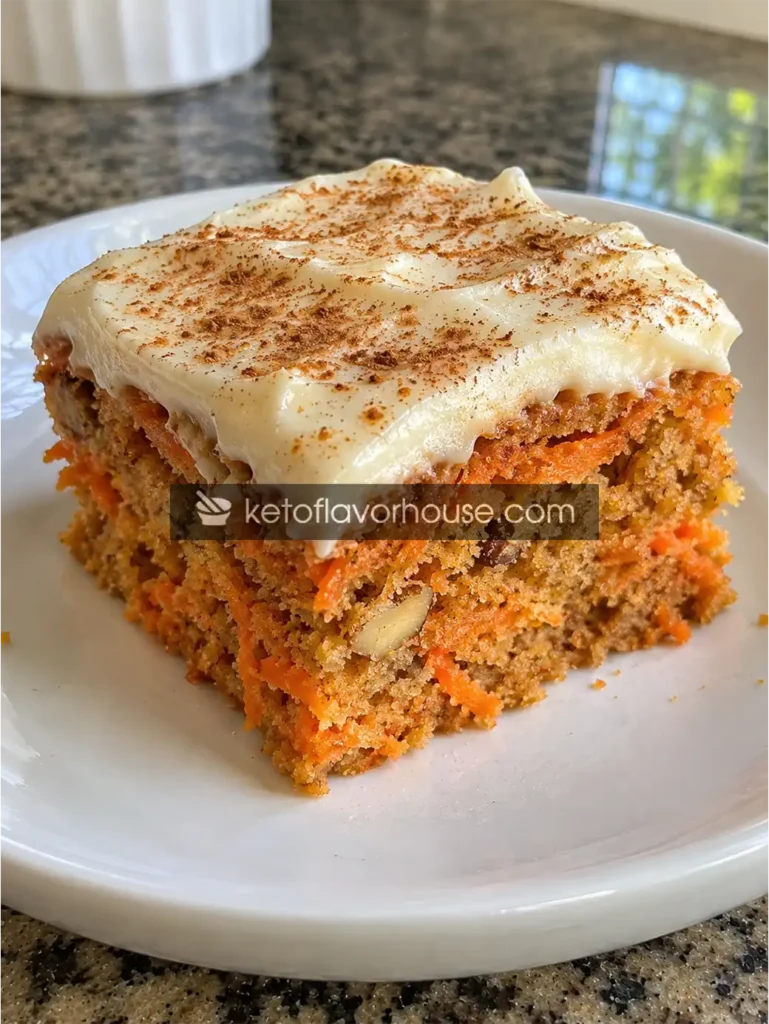
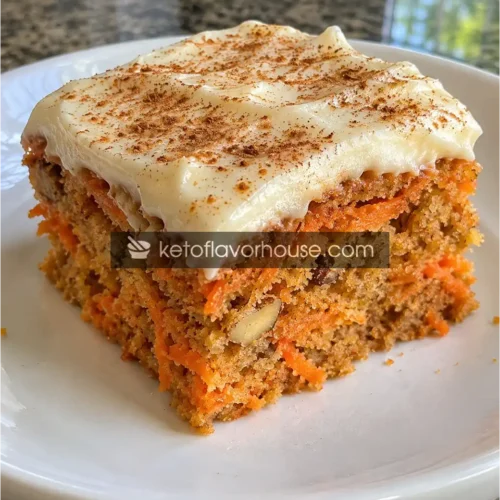
This Weight Watchers No Sugar No Flour Carrot Cake brings together everything I love about classic carrot cake: naturally sweet shredded carrots, warm cinnamon, a tender, moist crumb, and a creamy topping. The difference is that this version skips refined sugar and conventional wheat flour, using rolled oats, unsweetened applesauce, and Greek yogurt to create a lighter cake that still feels like a proper dessert.
Carrot cake is one of those treats that can be difficult to resist, especially when it has a thick layer of cream cheese frosting. But traditional recipes often combine generous amounts of oil, butter, white sugar, and flour. This version takes a more measured approach. It uses carrots for moisture, applesauce to reduce the need for added fat, and a modest amount of walnuts for that familiar nutty flavor.
The recipe makes nine portions, so you can enjoy a satisfying slice without having to guess how much you are eating. The estimated Points range is not an official WW calculation: your app may produce a different result depending on your plan, ingredient brands, and personal settings.
Why You’ll Love This Recipe
A lighter take on a familiar bakery-style dessert
Naturally sweet carrots
Freshly grated carrots add moisture, color, and their own gentle sweetness to every slice.
No wheat flour
Rolled oats are blended into the batter, providing structure without conventional all-purpose flour.
A satisfying dessert
Greek yogurt and eggs help create a tender, filling cake with a useful amount of protein.
Portion-friendly
Bake in one pan and cut into nine equal squares to make portions easier to manage.
There are several reasons this recipe works well for a lighter dessert routine.
- It still tastes like carrot cake. Cinnamon, vanilla, carrots, and walnuts give it the familiar flavor profile rather than making it taste like plain oatmeal.
- It has a moist texture. Applesauce, Greek yogurt, and grated carrots help prevent the cake from becoming dry.
- It uses accessible ingredients. Most of the ingredients are everyday grocery-store staples.
- It is easy to portion. A square baking pan makes it simple to divide the cake into nine consistent servings.
- The frosting is measured. Instead of a thick layer of traditional buttercream, the topping uses reduced-fat cream cheese and Greek yogurt.
What makes this different from traditional carrot cake?
Traditional carrot cake often relies on oil for moisture and sugar for sweetness and structure. Here, unsweetened applesauce and yogurt help supply moisture, while a granulated zero-calorie sweetener provides sweetness without adding conventional sugar.
There is one important distinction: no sugar in this recipe means no added conventional sugar. Carrots and applesauce still contain naturally occurring sugars. Likewise, no flour means no conventional wheat flour; the rolled oats are blended into the batter and act as the cake’s grain-based structure. Oats contain carbohydrates and are not automatically zero-point foods.
WW SmartPoints Information
For this recipe, I would use an estimated range of 4–6 SmartPoints per serving, with nine servings in the full cake. This is an independent planning estimate, not a value generated or verified by Weight Watchers.
The ingredients that deserve the most attention when calculating Points are:
- Rolled oats, because they provide most of the cake’s grain-based energy.
- Walnuts, because even a small amount contributes concentrated fat and calories.
- Reduced-fat cream cheese, because the frosting contributes additional Points.
- Any sweetener or dairy product that contains added sugar or other calorie-containing ingredients.
Eggs, carrots, plain nonfat Greek yogurt, and unsweetened applesauce may be treated differently depending on the member’s current WW plan and personal settings. Do not assume that they are zero-point foods for every reader.
The range is deliberately broad because WW Points are not interchangeable with calories. A lower-calorie ingredient does not necessarily have the same Points treatment for every member. If you use a different type of cream cheese, add extra walnuts, or cut the cake into six rather than nine portions, recalculate the recipe.
My Personal Experience With This Style of Carrot Cake
When developing a lighter carrot cake, the biggest challenge is preserving the texture. A traditional cake gets much of its softness from oil and sugar. Simply removing both can leave you with something dense, rubbery, or dry. That is why this recipe uses several moisture sources rather than relying on one substitute.
The carrots should be finely grated, not chopped into large pieces. Fine shreds soften as the cake bakes and distribute throughout the crumb. The applesauce adds moisture without requiring a large quantity of oil, while Greek yogurt contributes a creamy consistency and a little extra protein.
Another important detail is allowing the batter to rest before baking. Ground oats absorb moisture more slowly than conventional flour, so a short resting period helps the batter thicken and gives the cake a more even texture. If the batter looks slightly thicker after resting, that is expected.
For the topping, I prefer a thin, tangy cream cheese layer rather than a heavy frosting. The combination of reduced-fat cream cheese and Greek yogurt gives you a creamy finish that complements the cinnamon and carrots without overwhelming the cake.
Required Equipment
8-inch square baking pan
An 8-inch square pan gives the batter enough depth to bake into a soft, sliceable cake. A metal pan generally heats more quickly than a glass pan, so begin checking for doneness at the lower end of the suggested baking time if you use metal.
Food processor or high-speed blender
The rolled oats need to be blended into a fine, flour-like consistency before they are mixed with the wet ingredients. This is how the recipe avoids conventional wheat flour while still creating a cake structure. Stop and scrape the sides if larger oat pieces remain.
Mixing bowls
Use one bowl for the dry ingredients and another for the wet ingredients. Keeping them separate initially makes it easier to distribute the baking powder, baking soda, cinnamon, and salt evenly.
Box grater
A fine or medium-fine grater is best for the carrots. Avoid using very thick carrot shreds because they may remain firm in the finished cake and can make the crumb uneven.
Whisk and silicone spatula
A whisk helps combine the wet ingredients smoothly. A spatula is useful when folding in the carrots and walnuts and scraping the bottom of the bowl so no dry oat mixture remains.
Measuring cups and kitchen scale
A kitchen scale is especially useful for oats, walnuts, carrots, and cream cheese. Ingredient weights make the recipe more repeatable and improve the accuracy of nutrition and Points estimates.
Cooling rack
The cake needs to cool before frosting. A rack allows air to circulate around the pan and helps prevent condensation from making the bottom damp.
Ingredients and Substitutions
This recipe uses simple ingredients, but each one has a specific job. Because there is no conventional wheat flour or added refined sugar, the balance between moisture, structure, and sweetness matters. I would avoid changing several ingredients at once until you have made the original version successfully.
For the carrot cake
- 2 cups (160 g) old-fashioned rolled oats: These are blended into a fine powder and provide the main structure. Use plain, unflavored oats. Instant oats can work, but their finer texture may absorb moisture differently.
- 2 cups (about 220 g) finely grated carrots: Fresh carrots provide moisture, color, and natural sweetness. Measure after grating and lightly pack them into the cup.
- 2 large eggs: Eggs bind the ingredients and help the cake set. They also contribute protein and fat.
- 1 cup (245 g) plain nonfat Greek yogurt: This adds moisture, a slight tang, and protein. Choose unsweetened yogurt rather than flavored varieties.
- ½ cup (122 g) unsweetened applesauce: Applesauce helps keep the crumb moist while reducing the need for oil or butter.
- ⅓ cup granulated zero-calorie sweetener: Use a baking sweetener that measures similarly to sugar. Check the label because some products contain bulking ingredients that contribute calories or carbohydrates.
- 1 teaspoon baking powder: Helps the cake rise.
- ½ teaspoon baking soda: Works with the acidity in the yogurt to support leavening and browning.
- 2 teaspoons ground cinnamon: Gives the cake its familiar warm spice flavor.
- 1 teaspoon vanilla extract: Adds depth and rounds out the sweetness.
- ¼ teaspoon fine salt: Balances the sweetener and brings out the flavor of the carrots and cinnamon.
- ¼ cup (30 g) chopped walnuts: Adds a little crunch and a classic carrot-cake flavor. Measure carefully because nuts are calorie-dense and can contribute meaningfully to Points.
For the yogurt cream cheese frosting
- 4 ounces (113 g) reduced-fat cream cheese, softened: This provides the familiar tangy cream cheese flavor. Use a block-style product if possible; some spreadable varieties contain more moisture.
- ½ cup (120 g) plain nonfat Greek yogurt: Lightens the frosting and makes it easier to spread.
- 2 tablespoons powdered zero-calorie sweetener: Powdered sweetener dissolves more smoothly than granulated sweetener and helps prevent a grainy frosting.
- ½ teaspoon vanilla extract: Adds a gentle vanilla aroma.
Ingredient notes that make a difference
Rolled oats: Blend the oats until they look like a fine powder. If large flakes remain, the cake may have a coarse texture. Oats are not the same as wheat flour, but once blended they function as the recipe’s flour-like base. If you need the cake to be certified gluten-free, choose oats specifically labeled gluten-free because cross-contact can occur during processing.
Carrots: Freshly grated carrots are preferable to packaged shredded carrots, which are often thicker and drier. Do not squeeze out the moisture. That natural moisture is part of what keeps the cake tender.
Greek yogurt: Plain nonfat Greek yogurt is useful here because it is thick and provides protein. Regular plain yogurt is thinner, so using it may make the batter looser. If that is all you have, drain it briefly through a fine sieve or use a little less and assess the batter consistency.
Applesauce: Make sure it is unsweetened. Sweetened applesauce can add sugar and change the nutrition estimate. The applesauce is not intended to make the cake taste strongly of apple; it mainly contributes moisture.
Sweetener: Choose a product designed for baking. Some granulated sweeteners are much sweeter than sugar, while others are intended to be used cup-for-cup. Follow the product’s conversion instructions. Erythritol-based sweeteners can sometimes create a cooling sensation, especially when used in larger quantities.
Walnuts: The walnuts are optional, but they add a pleasant contrast to the soft cake. Leaving them out reduces calories and fat, although the exact WW Points difference depends on your plan and calculation.
Smart swaps and their trade-offs
A few swaps need extra care. Replacing the oats with almond flour, for example, would change the recipe’s identity and its calorie, fat, and Points profile. It would also require testing because almond flour does not absorb liquid in the same way as blended oats. Similarly, replacing all the eggs with egg whites may reduce fat but can make the cake less tender. I would not recommend making either change without recalculating and testing the recipe.
How to Make Weight Watchers No Sugar No Flour Carrot Cake
Step 1: Prepare the pan and oven
Preheat your oven to 350°F (175°C). Lightly coat an 8-inch square baking pan with cooking spray, then line the bottom with parchment paper, leaving a little overhang on two opposite sides. The overhang makes it easier to lift the cooled cake out for slicing.
Preparing the pan first matters because the batter contains oats, carrots, and yogurt. Once the wet and dry ingredients are combined, you do not want it sitting around while you search for parchment paper or prepare the pan.
Step 2: Blend the oats
Place the rolled oats in a food processor or high-speed blender. Process until they resemble a fine, soft powder. Pause once or twice to scrape the sides and check for larger flakes.
The finished texture should be similar to a coarse whole-grain flour. It does not have to be perfectly as fine as commercial wheat flour, but you should not see many intact oat flakes. If the oats are still visibly chunky, continue blending.
Measure the oats before blending, not afterward. The recipe calls for 2 cups of rolled oats, which is approximately 160 grams. Weighing them is the more reliable approach because the amount that fits into a cup can vary depending on how the oats settle.
Step 3: Combine the dry ingredients
Transfer the blended oats to a large bowl. Add the baking powder, baking soda, cinnamon, and salt. Whisk thoroughly for about 20–30 seconds.
This small step helps distribute the leavening agents evenly. If baking soda or baking powder stays concentrated in one area, you may notice uneven rising or a slightly unpleasant taste in parts of the cake.
Step 4: Mix the wet ingredients
In a separate bowl, whisk the eggs until the yolks and whites are combined. Add the Greek yogurt, applesauce, granulated sweetener, and vanilla extract. Whisk until the mixture looks smooth.
The yogurt may initially appear slightly lumpy, especially if it is very cold. Continue whisking until it is evenly incorporated. There is no need to whip air into the mixture as you would when making a traditional sponge cake. The goal is a uniform batter, not a foamy one.
Step 5: Fold the batter together
Add the wet mixture to the bowl of dry ingredients. Use a spatula to fold everything together until no dry oat mixture remains at the bottom.
Stir in the finely grated carrots and chopped walnuts. Mix gently until they are distributed throughout the batter.
The batter will be thicker than a conventional cake batter, but it should still be spoonable and spreadable. Let it rest for 5 minutes so the ground oats can absorb some of the liquid. If it becomes extremely stiff, stir in 1 tablespoon of water or unsweetened almond milk at a time. Avoid adding a large amount of liquid immediately.
Step 6: Transfer the batter to the pan
Scrape the batter into the prepared baking pan. Spread it into an even layer, paying attention to the corners. A level surface helps the cake bake evenly.
Tap the pan gently against the counter once or twice to settle the batter. Do not bang it repeatedly, because this is not an airy sponge cake that needs aggressive handling.
Step 7: Bake until set
Place the pan on the center rack and bake for approximately 28–35 minutes. Start checking around 28 minutes because ovens and pan materials vary.
Look for these signs:
- The edges should look set and slightly darker than the center.
- The surface should feel firm rather than wet.
- A toothpick inserted into the center should come out without wet batter. A few moist crumbs are fine.
- The center should not wobble when you gently move the pan.
If the center is still wet but the edges are browning quickly, loosely cover the pan with foil and continue baking in short intervals. Avoid extending the baking time unnecessarily. Oat-based cakes can become dry if overbaked.
Step 8: Cool completely
Remove the pan from the oven and place it on a cooling rack. Allow the cake to cool in the pan for about 15–20 minutes. Use the parchment overhang to lift it out carefully, then let it cool completely before frosting.
This is important. Warm cake will soften the cream cheese frosting, causing it to slide or become runny. If you are preparing the cake ahead, you can cool it completely, cover it, and refrigerate it before adding the frosting.
Step 9: Make the frosting
Place the softened reduced-fat cream cheese in a bowl. Beat or whisk it until smooth. Add the Greek yogurt, powdered sweetener, and vanilla extract. Mix until creamy and spreadable.
If the frosting seems too loose, refrigerate it for 15–20 minutes before spreading. If it is too thick, stir in a teaspoon of Greek yogurt at a time. Avoid adding a large amount of liquid because the frosting needs to hold its shape on the cake.
Step 10: Frost, slice, and serve
Spread a thin, even layer of frosting over the completely cooled cake. Refrigerate for approximately 20–30 minutes to help the topping firm up before slicing.
Use a sharp knife and wipe the blade between cuts for neater squares. Divide the cake into 9 equal servings. If you cut smaller portions or larger portions, the nutrition and estimated Points per serving will change accordingly.
The complete process at a glance
Carrot cake: 6 key stages
Heat the oven to 350°F and line the 8-inch pan.
Look for: a ready, lightly greased pan.
Blend rolled oats until fine, then whisk with the leavening and spices.
Look for: a fine, even oat mixture.
Whisk eggs, yogurt, applesauce, sweetener, and vanilla.
Look for: a smooth, creamy mixture.
Fold the wet and dry mixtures together, then rest for 5 minutes.
Look for: thick, spoonable batter.
Bake 28–35 minutes and test the center with a toothpick.
Look for: set edges and moist crumbs.
Cool completely, spread the frosting, chill, and cut into 9 portions.
Look for: clean slices and firm frosting.
Common Mistakes to Avoid
Using large carrot shreds
Thick carrot pieces may remain firm after baking and can make the cake difficult to slice cleanly. Use a fine or medium-fine grater, and measure the carrots after grating.
Skipping the oat-blending step
Whole rolled oats create a much coarser texture than the fine oat base this recipe needs. Blend thoroughly before mixing. If you do not have a food processor, use ready-made plain oat flour, measuring approximately 160 grams, but remember that the recipe then uses oat flour rather than whole rolled oats.
Adding too much liquid
The batter should be thick and spoonable. Adding extra yogurt, applesauce, or milk without checking the consistency can leave the center gummy. Rest the batter for 5 minutes first because the oats need time to absorb moisture.
Overbaking the cake
A dry cake is often the result of leaving it in the oven after the center has already set. Begin checking at 28 minutes. Remember that a toothpick with a few moist crumbs is acceptable; it does not need to come out completely dry.
Frosting the cake while warm
Warm cake will melt the yogurt cream cheese topping. Let it cool completely, and chill the frosting briefly if it is too soft to spread.
Cutting uneven portions
If one slice is much larger than another, its calories and Points will also be higher. Use a ruler or lightly score the cake into a three-by-three grid before cutting.
Pro Tips for the Best Results
- Grate the carrots just before mixing. Freshly grated carrots retain their moisture and are easier to distribute evenly.
- Use room-temperature eggs and yogurt. They combine more smoothly and help create a uniform batter.
- Measure walnuts with a scale. A handful can easily become more than the listed 30 grams.
- Let the oat batter rest. Five minutes gives the blended oats time to hydrate.
- Do not expect a bakery-style sponge. This cake has a slightly heartier, moist crumb because it uses oats and carrots rather than refined flour and oil.
- Use powdered sweetener for frosting. It creates a smoother finish than granulated sweetener.
- Chill before cutting. A short refrigeration period makes the frosting easier to slice through cleanly.
Troubleshooting Guide
WW-Friendly Nutrition and Portion Strategy
A dessert can fit into a Weight Watchers routine without needing to be treated as an everyday free food. The practical goal is to enjoy a measured serving while being aware of the ingredients that contribute most to its nutritional profile.
Oats provide the cake’s structure
Rolled oats contribute carbohydrates, fiber, and some protein. They are more substantial than many refined flour alternatives, but they still contribute energy and may have a meaningful Points value. That is why this recipe uses a measured amount rather than adding oats until the batter looks right.
Carrots contribute moisture and fiber
Carrots add natural sweetness and a little fiber. They also help the cake retain moisture, which is particularly useful when reducing oil. They do not make the cake sugar-free in the strict sense, because carrots contain naturally occurring sugars.
Greek yogurt adds protein
Plain nonfat Greek yogurt contributes protein and a creamy texture. It is used in both the cake and the frosting, helping reduce the amount of richer dairy ingredients needed. Its Points treatment depends on the WW plan and product details.
Walnuts add flavor, but measure them
Walnuts contribute unsaturated fats and a pleasant crunch. They are nutritious, but calorie-dense, so a measured ¼ cup is enough to give the cake a recognizable carrot-cake character. If you prefer to reduce the recipe’s calories, omit them rather than estimating an unmeasured handful.
Make the serving work with your daily budget
Cut the cake into nine equal squares and enter the entire recipe into your current WW app. If you prefer smaller desserts, you can cut it into twelve pieces, but each portion will contain less cake and less frosting. The total Points for the whole recipe do not change; the per-serving value changes with the number of portions.
A few practical habits can make the recipe easier to manage:
- Decide on your portion before serving rather than cutting a second piece by eye.
- Keep the frosting layer thin and consistent.
- Measure optional toppings such as extra walnuts.
- If you change the cream cheese or sweetener, update the recipe calculation.
- Enjoy the cake as a planned dessert rather than assuming that no added sugar means unlimited portions.
Your daily Points budget is personal. The cake is one option to fit into that budget, not a guarantee of weight loss or a substitute for considering your overall eating pattern.
Variations You Can Try
Pineapple carrot cake
Add ¼ cup (about 55 g) of well-drained crushed pineapple and reduce the applesauce slightly, using about ⅓ cup instead of ½ cup. Pineapple gives the cake a brighter, fruitier flavor and additional moisture. Drain it thoroughly; excess liquid can make the center gummy. Its natural sugars and calories will change the nutrition estimate, so recalculate the recipe.
Raisin carrot cake
Fold 2 tablespoons of raisins into the batter. Raisins provide little bursts of sweetness and a familiar carrot-cake flavor. They also add concentrated carbohydrates and natural sugars, so keep the amount measured and update your Points calculation.
Extra-spiced carrot cake
Add ¼ teaspoon ground nutmeg and a small pinch of ground ginger alongside the cinnamon. This makes the flavor warmer and more aromatic without substantially changing the cake’s structure. The nutrition difference from these small spice quantities is generally minimal.
Walnut-free carrot cake
Leave out the walnuts if you prefer a softer texture or need to avoid tree nuts. The cake will lose some crunch, but it will still have the flavor of cinnamon, vanilla, and carrots. Calories and fat will decrease, and the Points estimate may decrease depending on your plan.
Orange-vanilla carrot cake
Add 1 teaspoon finely grated orange zest to the wet ingredients. Orange brightens the flavor and works especially well with the tangy frosting. Zest adds a noticeable aroma without requiring an extra sugary topping.
Cupcake-style portions
Divide the batter among 9–12 lined muffin wells, filling each approximately two-thirds full. Begin checking around 18 minutes, then continue baking as needed until the centers are set. The final time depends on the size of the wells and your oven. The ingredient totals stay the same, but the Points per cupcake depend on the number of portions and how much frosting you use on each.
Tips for Serving and Optional Additions
The cake is best served chilled or slightly cool, when the frosting is firm and the crumb is easy to slice. If you prefer a softer texture, let an individual portion sit at room temperature for about 10 minutes before eating. Because the frosting contains dairy, do not leave the cake out for extended periods.
For a simple finish, try one of these measured additions:
- A light cinnamon dusting: Adds aroma without needing extra frosting.
- A few chopped walnuts: Adds crunch, but measure them because they contribute fat, calories, and Points.
- A little orange zest: Gives a fresh citrus aroma.
- A few thin carrot ribbons: Makes the plate look attractive without a heavy garnish.
- A small spoonful of extra Greek yogurt: Adds a tangy contrast, though it will change the nutrition if used regularly.
Avoid drizzling honey, maple syrup, or conventional caramel over the cake if your goal is to keep added sugar low. Those toppings also need to be included in the Points calculation.
Serving Ideas
This carrot cake works well for an afternoon coffee break, a family dessert, a weekend brunch table, or a make-ahead treat. Since it is already frosted, it does not need elaborate decoration. A clean square on a small plate with a little cinnamon or orange zest is enough.
For a gathering, cut the cake into nine squares and arrange them in a single layer on a serving platter. If you want smaller tasting portions, cut each square in half after chilling. Just remember that the smaller pieces are not the same serving size used in the nutrition estimate.
Ways to serve it
Simple ways to enjoy carrot cake
Serve one chilled square with black coffee or unsweetened tea for a simple afternoon dessert.
Add strawberries or berries for freshness and a bright contrast to the cinnamon.
Serve with a small spoonful of plain Greek yogurt for a tangy contrast and extra protein.
Arrange equal squares on a platter so everyone can enjoy a consistent portion.
Chill the frosted cake, cut it into squares, and store portions covered for convenient serving.
Storage Recommendations
Because the frosting contains cream cheese and Greek yogurt, this cake should be refrigerated. Do not store the frosted cake on the counter overnight.
Refrigerator storage
Place the cake in an airtight container or cover the baking dish tightly. Refrigerate at 40°F (4°C) or below and use within 3–4 days. Keep it away from strong-smelling foods so the frosting does not absorb unwanted odors.
For neat portions, you can chill the whole frosted cake until the topping firms up, cut it into squares, and then store the pieces in a single layer in a covered container. If you need to stack portions, place parchment paper between layers to protect the frosting.
Freezing
For best results, freeze the cake without frosting. Once the unfrosted cake has cooled completely, cut it into portions and wrap each piece tightly. Place the wrapped pieces in a freezer-safe container or bag, label with the date, and freeze for best quality for about 2–3 months.
You can also freeze frosted portions, but the yogurt-based topping may become slightly watery or change texture after thawing. If you want the best appearance, freeze the cake and make fresh frosting when you are ready to serve it.
Thawing and serving
Thaw frozen portions in the refrigerator. If the cake was frozen without frosting, prepare the topping separately and spread it over the thawed cake. Avoid thawing dairy-frosted portions on the counter for long periods.
Refrigeration, freezing, and reheating do not automatically change the Points of the same ingredients. However, changes in serving size, discarded ingredients, or added toppings can affect the calculation.
Storage timeline
Carrot cake storage timeline
Cool on a rack before adding the frosting. Do not frost while warm.
Keep the frosted cake covered at 40°F or below.
Freeze unfrosted portions, tightly wrapped, for best texture.
Thaw overnight in the refrigerator, then frost if frozen unfrosted.
Discard cake that has been held above 40°F for more than 2 hours (or more than 1 hour above 90°F). When in doubt, follow established food-safety guidance.
Frequently Asked Questions
1. Is this carrot cake really made without flour?
It does not contain conventional wheat flour. Instead, the recipe uses rolled oats blended into a fine powder to provide structure. This is why the texture is a little heartier than a traditional bakery carrot cake. If you mean a cake with no grain-based flour or flour substitute at all, this recipe would need a different formulation.
2. Is this carrot cake completely sugar-free?
It contains no added conventional sugar when made with an appropriate zero-calorie baking sweetener and unsweetened applesauce. However, carrots and applesauce contain naturally occurring sugars. For that reason, it is more accurate to describe it as having no added sugar rather than claiming that it contains absolutely no sugar.
3. How many WW Points are in one slice?
The planning estimate is approximately 4–6 SmartPoints per slice when the cake is divided into nine servings. This is not an official WW result. The actual Points value depends on the current plan, the exact brands of oats and cream cheese, and how your personal app treats the ingredients. Enter the complete ingredient list into your app for the most reliable personal calculation.
4. Can I make this cake without walnuts?
Yes. Simply leave out the ¼ cup of walnuts. The cake will have a softer texture and less crunch, but the cinnamon, carrots, and vanilla will still provide plenty of flavor. Calories and fat will decrease, and your estimated Points may change.
5. Can I use regular yogurt instead of Greek yogurt?
You can, but regular yogurt is generally thinner. That extra moisture can make the batter looser and may affect how the center sets. If using regular plain yogurt, drain it briefly through a fine sieve first. Use an unsweetened variety and recalculate the nutrition and Points using the product label.
6. Can I prepare the cake ahead of time?
Yes. Bake the cake a day ahead, let it cool completely, and refrigerate it covered without frosting. Make the frosting separately and spread it over the cake before serving. You can also frost it the night before and keep it refrigerated. Chilling helps the topping firm up and makes slicing easier.
7. Can I make this recipe into muffins?
Yes. Divide the batter between 9–12 lined muffin wells and fill each about two-thirds full. Begin checking for doneness at around 18 minutes. The exact time depends on the pan and muffin size. Divide the total recipe nutrition and Points by the number of muffins you actually make, including the frosting.
Nutritional Breakdown Per Serving
The following figures are approximate estimates for one of nine equal portions, including the cream cheese frosting. Actual values will vary with the brands you use, particularly the oats, cream cheese, yogurt, and sweetener.
| Nutrient | Estimated amount |
|---|---|
| Calories | 170–190 kcal |
| Protein | 10–12 g |
| Fat | 6–8 g |
| Total carbohydrates | 20–24 g |
| Fiber | 2–3 g |
| Net carbohydrates | 18–21 g |
| Sugar | 4–6 g |
| Sodium | 180–260 mg |
| Estimated SmartPoints | 4–6 |
Net carbohydrates are calculated as total carbohydrates minus fiber. They are not a substitute for WW Points.
Nutrition at a glance
Recipe Snapshot
- Prep Time: 20 minutes
- Cook Time: 28–35 minutes
- Cooling and frosting: Approximately 45 minutes
- Total Time: Approximately 1 hour 35 minutes
- Course: Dessert
- Cuisine: American
- Servings: 9
- Calories: Approximately 170–190 per serving
- Estimated SmartPoints: Approximately 4–6 per serving
A Final Note
This Weight Watchers No Sugar No Flour Carrot Cake is a practical way to enjoy the familiar flavors of carrot cake with a more measured ingredient list. The oats, carrots, applesauce, and Greek yogurt create a moist, slightly hearty crumb, while the tangy cream cheese topping makes it feel like a proper dessert. Cut it into equal portions, keep it refrigerated, and calculate the final Points using your own WW app.
Weight Watchers No Sugar No Flour Carrot Cake Recipe

Ingredients
For the cake:
- 2 cups 160 g old-fashioned rolled oats
- 2 cups about 220 g finely grated carrots
- 2 large eggs
- 1 cup 245 g plain nonfat Greek yogurt
- ½ cup 122 g unsweetened applesauce
- ⅓ cup granulated zero-calorie baking sweetener
- 1 teaspoon baking powder
- ½ teaspoon baking soda
- 2 teaspoons ground cinnamon
- 1 teaspoon vanilla extract
- ¼ teaspoon fine salt
- ¼ cup 30 g chopped walnuts
For the frosting:
- 4 ounces 113 g reduced-fat cream cheese, softened
- ½ cup 120 g plain nonfat Greek yogurt
- 2 tablespoons powdered zero-calorie sweetener
- ½ teaspoon vanilla extract
Instructions
- Preheat the oven to 350°F (175°C). Lightly coat an 8-inch square baking pan with cooking spray and line the bottom with parchment paper.
- Blend the rolled oats until they form a fine, flour-like powder.
- In a large bowl, whisk together the blended oats, baking powder, baking soda, cinnamon, and salt.
- In a separate bowl, whisk the eggs, Greek yogurt, applesauce, granulated sweetener, and vanilla until smooth.
- Add the wet ingredients to the dry ingredients and fold until combined. Fold in the grated carrots and chopped walnuts.
- Let the batter rest for 5 minutes, then spread it evenly in the prepared pan.
- Bake for 28–35 minutes, checking the center with a toothpick. It should come out without wet batter, although a few moist crumbs are fine.
- Cool the cake in the pan for 15–20 minutes, then transfer it to a cooling rack and let it cool completely.
- Beat the softened cream cheese until smooth. Add the Greek yogurt, powdered sweetener, and vanilla, then mix until creamy.
- Spread the frosting over the cooled cake. Refrigerate for 20–30 minutes to help the topping firm up, then cut into 9 equal squares.