This post may contains Amazon affiliate and other affiliate links. If you make a purchase through these links, I may earn a small commission at no extra cost to you. Your support helps me continue to provide quality content. I only recommend products I personally trust and believe will add value to your experience. For more details, please visit my Privacy Policy.
Estimated SmartPoints: approximately 15–18 per serving, based on 6 servings. This is an independent planning estimate for the recipe below, not an official WW calculation. The actual value will depend on your bread, deli meat, cheese, olive salad, and current WW plan. A traditional giant muffuletta is a hearty sandwich, so the most useful WW strategy is to measure the olive salad, choose leaner deli meats, and divide the loaf into consistent portions.
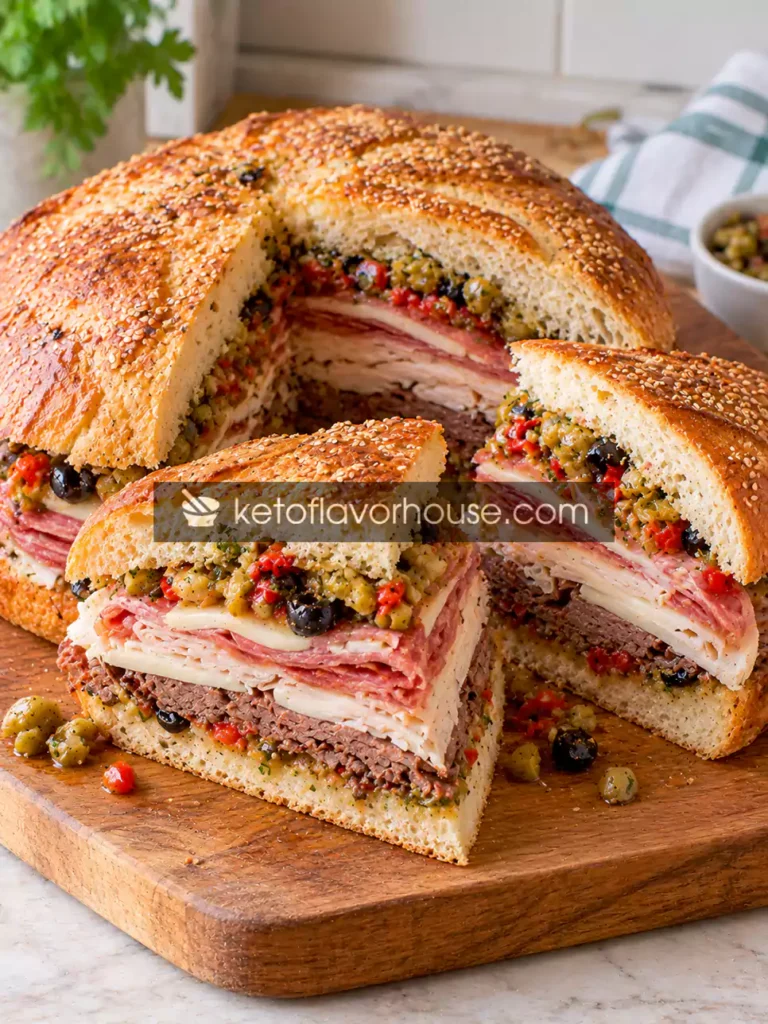
There is something especially satisfying about a giant Italian-style sandwich: crusty bread, layers of savory deli meat, creamy cheese, and a bold olive salad that brings everything together. This Weight Watchers Giant Muffuletta Sandwich keeps those signature flavors while using turkey and lean roast beef in place of traditional pork-based deli fillings. It is made for sharing, easy to assemble ahead, and ideal when you want a substantial lunch for the whole family.
The olive salad is the heart of a muffuletta. Chopped olives, tangy pickled vegetables, garlic, and red wine vinegar bring salty, briny flavor to every bite. Rather than pouring on a heavy dressing, a measured amount of olive oil helps the ingredients meld together. Combined with provolone, mozzarella, and layers of deli meat, the result is a colorful sandwich with plenty of texture and flavor.
This is not a zero-Point sandwich, and I would not describe it as an automatically low-Point recipe. The bread, cheese, cured turkey salami, and olive oil all contribute to its total. The advantage is that you can control the portions, select the ingredients deliberately, and enjoy the classic muffuletta idea without using pork.
Why You’ll Love This Weight Watchers Giant Muffuletta Sandwich
Big sandwich flavor
A crowd-pleasing Italian classic
Bold olive salad
Olives, pickled vegetables, garlic, and vinegar give the filling its tangy, salty character without needing a thick mayonnaise-based sauce.
Made for sharing
A large round loaf can be cut into six substantial portions, making it practical for family lunches, picnics, or casual gatherings.
Layers of texture
Tender deli meat, provolone, mozzarella, and crisp bread create a satisfying contrast in every slice.
Convenient preparation
Prepare the olive salad ahead, assemble the loaf, and let the flavors mingle before slicing. There is no complicated cooking involved.
One of the best things about this sandwich is that its flavor comes from several components rather than a single rich sauce. The olive salad brings acidity and saltiness, while the cheeses soften the sharper flavors of the pickled vegetables. The turkey-based deli filling makes it possible to enjoy a generous Italian-inspired sandwich without traditional pork salami or mortadella.
It is also a useful option when feeding a group. Instead of preparing six separate sandwiches, you assemble one large loaf and cut it into portions. That makes serving easier and allows everyone to enjoy the same combination of ingredients.
Here are a few reasons it works well for home cooks:
- 🫒 Flavor without a heavy dressing: The olive salad provides plenty of sharp, savory flavor.
- 🥩 Pork-free filling: Turkey salami, turkey breast, and lean roast beef create a varied deli-style filling.
- 📏 Manageable portions: Six equal slices make the recipe easier to track in your WW app.
- 🥬 Flexible ingredients: You can change the deli meats or cheese, but the nutrition and Points must be recalculated.
- 🥡 Make-ahead friendly: The olive salad can be prepared in advance, though the sandwich should be stored properly to protect the bread’s texture.
The aim is not to remove the ingredients that make a muffuletta distinctive. It is to measure the calorie-dense components and let the olive salad, pickled vegetables, and herbs do much of the flavor work.
WW SmartPoints Information
The recipe is designed to make 6 servings, with each serving representing one-sixth of the assembled sandwich. Using the ingredient quantities in the recipe card, an initial independent estimate is 15–18 SmartPoints per serving, or approximately 90–108 SmartPoints for the whole sandwich under the same assumed calculation.
These numbers are estimates, not verified results from the official WW calculator. The traditional SmartPoints system and the current WW Points program are not necessarily identical, and a member’s app may produce a different result. Use your current app to calculate the exact ingredients and serving count for your plan.
The largest contributors are likely to be the bread, cheese, cured turkey salami, and olive oil. The olive salad also contains olives, which contribute fat and calories, although their strong flavor means a modest quantity can go a long way.
Portion-planning dashboard
Know your sandwich serving
Independent estimate only. Ingredient brands, product labels, serving size, and the applicable WW plan can change the result.
How to Get Your Personal Points Value
For the most accurate result, enter the full recipe into the recipe builder in your current WW app. Use the nutrition details for the exact bread, turkey salami, turkey breast, roast beef, provolone, mozzarella, olives, and olive oil you purchase. Set the total yield to six servings.
If you substitute a lower-fat cheese, change the deli meat, or reduce the olive oil, recalculate the entire recipe. Do not subtract a guessed number of Points from the original estimate. Likewise, do not assume that lean meat, pickled vegetables, or any other ingredient has the same Points treatment for every member.
A giant sandwich can be satisfying, but portion size matters. Dividing it into equal pieces provides a more reliable basis for tracking than cutting irregular wedges and estimating their size afterward.
My Personal Experience With a Giant Muffuletta Sandwich
The detail I would focus on most when making this sandwich is the olive salad. It might look like a small topping compared with the large loaf and all those layers of meat and cheese, but it is the ingredient that gives a muffuletta its unmistakable identity. Chopping the olives and pickled vegetables into small pieces helps them spread throughout the sandwich, so you get their salty, tangy flavor in every portion rather than in only a few bites.
I would also take time to layer the meats and cheeses evenly. If all the turkey salami is placed on one side and the roast beef on the other, the first slices will taste quite different from the last. Alternating the ingredients makes the sandwich more balanced and creates attractive layers when you cut through the loaf. The cheese also provides a little barrier between the moist olive salad and the soft interior of the bread.
My preference would be to assemble the sandwich, wrap it firmly, and let it rest in the refrigerator for about 30 minutes before cutting. That short rest helps the ingredients settle and makes the loaf easier to portion. I would not press it so heavily that the filling squeezes out or the bread becomes flattened. The goal is a compact sandwich, not a dense block of bread.
For a lighter variation, I would first adjust the quantities of cheese and olive oil rather than removing the olive salad altogether. The vinegar, garlic, oregano, olives, and pickled vegetables are what make the sandwich taste like a muffuletta. Preserving those bold flavors is more useful than cutting ingredients indiscriminately.
Required Equipment
Serrated Bread Knife
A long serrated knife works best for cutting a round loaf without crushing its crust. Use gentle sawing motions rather than pressing straight down. Once the sandwich is assembled and rested, the same knife can cut clean wedges through the layers.
Cutting Board
Choose a large board that can hold the whole loaf. A stable surface makes it easier to halve the bread, chop the olive salad ingredients, and portion the finished sandwich safely. Use a separate clean area for preparing vegetables after handling deli meat.
Small Mixing Bowl
A small or medium bowl is enough to combine the chopped olives, giardiniera, capers, garlic, vinegar, oil, and seasonings. Mixing the salad separately means you can taste it before it goes into the sandwich and correct the balance if needed.
Chef’s Knife
A sharp chef’s knife makes it easier to chop olives and pickled vegetables into small, even pieces. Very large chunks may fall out when the sandwich is cut, while an overly fine puree can make the filling watery.
Measuring Cups and Spoons
Measuring the oil, vinegar, olives, cheese, and deli meats keeps the recipe consistent. This is especially useful for WW tracking because the ingredients that add the most energy can be easy to underestimate when assembling a large sandwich.
Plastic Wrap or Food-Safe Reusable Wrap
Wrap the completed sandwich firmly before resting it in the refrigerator. This helps the loaf hold its shape and prevents the cut surfaces from drying out. Use food-safe wrapping material and refrigerate promptly because the sandwich contains perishable meats and cheeses.
Ingredients and Substitutions
The recipe below makes one large round sandwich divided into six substantial portions. The ingredient quantities are designed to provide generous filling while leaving enough room for the bread to close properly.
Bread
One large round Italian bread loaf, approximately 10–12 inches in diameter and about 24 ounces (680 g).
The bread provides structure and the chewy crust associated with a muffuletta. A round loaf is traditional in appearance, but a large round country loaf can work if it has a sturdy crumb.
Bread is also one of the main contributors to the sandwich’s carbohydrates, calories, and estimated Points. If your loaf is considerably heavier or lighter than 24 ounces, its contribution will change. Use the nutrition label whenever available.
A smaller loaf may be easier to portion, but it will hold less filling. Do not simply transfer the same quantity of ingredients into a much smaller loaf, because the sandwich may become difficult to close and the filling may slide out.
Olive Salad
- 1 cup chopped pitted green olives: Provide the classic salty, briny flavor and a firm texture. Olives contain fat and calories, so measure the quantity rather than adding handfuls.
- ½ cup chopped black or Kalamata olives: Add a deeper, fruitier olive flavor. Use pitted olives to avoid hard pieces in the filling.
- ½ cup drained giardiniera: This mix of pickled vegetables adds acidity and crunch. Drain it well so excess brine does not soak the bread.
- 2 tablespoons capers, rinsed and drained: Add concentrated salty, tangy flavor. Rinsing can help control excess surface salt.
- 2 garlic cloves, finely minced: Give the olive salad a savory backbone. Chop finely so no one bite becomes overwhelmingly garlicky.
- 2 tablespoons red wine vinegar: Brighten the salty, rich filling and help the olive salad taste fresh.
- 1 tablespoon olive oil: Brings the ingredients together and adds a rounded mouthfeel. Measure carefully because oil is a concentrated source of energy.
- 1 teaspoon dried oregano: Provides a familiar Italian-herb aroma.
- 1 tablespoon chopped fresh parsley (optional): Adds a fresh green note.
- ¼ teaspoon black pepper: Adds gentle warmth. Additional salt may not be needed because the olives, capers, giardiniera, and deli meats already contain sodium.
The olive salad should be chunky, moist, and easy to spoon. It should not be swimming in oil or vinegar. If it releases liquid after mixing, allow it to drain briefly before assembling the sandwich.
Deli Meats
- 6 ounces turkey salami: Provides the savory, seasoned flavor associated with Italian deli sandwiches. Turkey salami is still a processed deli product, and its calories, fat, sodium, and Points vary by brand.
- 8 ounces sliced turkey breast: Adds a milder, leaner layer that balances the stronger flavor of the salami. Choose a product with a nutrition label so you can track the actual amount used.
- 8 ounces lean roast beef, thinly sliced: Provides a richer, meaty flavor and a little variety in the filling. Trimmed deli roast beef is generally easier to layer than thick chunks.
These pork-free meats preserve the spirit of a generously layered sandwich while avoiding traditional pork-based salami, mortadella, and ham. You can substitute another turkey- or beef-based deli meat, but the final nutrition and Points should be recalculated using the product label.
Cheese
- 6 slices provolone, approximately 6 ounces total: Gives the sandwich a smooth, savory cheese layer. Provolone is flavorful enough that you do not need a large quantity of it.
- 6 ounces part-skim mozzarella, thinly sliced: Adds a milder, creamy texture that complements the brininess of the olive salad.
Cheese contributes protein but also adds calories, fat, and saturated fat. You can use a single cheese instead of two varieties or choose a reduced-fat version if you enjoy its flavor and texture. Compare product labels rather than assuming any particular cheese automatically lowers the Points value.
Smart Substitution Guide
Choose swaps that preserve flavor
All substitution effects are qualitative. Exact nutrition and Points changes depend on the products and amounts used.
How to Make Weight Watchers Giant Muffuletta Sandwich
Step 1: Chop the Olive Salad Ingredients
Drain the green olives, black olives, giardiniera, and capers thoroughly. Chop them into small pieces and transfer them to a mixing bowl. Add the minced garlic, red wine vinegar, olive oil, oregano, black pepper, and optional parsley.
Stir everything together until the ingredients are evenly coated. The mixture should look glossy and chunky, with enough moisture to hold together when spooned but not so much liquid that it pools at the bottom of the bowl.
Taste a little before adding salt. Olives, capers, pickled vegetables, and deli meats can already be quite salty, so extra salt may not be necessary.
Step 2: Prepare the Bread
Place the round loaf on a large cutting board. Using a serrated knife, slice it horizontally through the middle to create a top and bottom half.
If the loaf has a very thick interior, gently remove a little of the soft bread from the center of each half, leaving enough structure to hold the sandwich together. This is optional, but it can create additional room for the filling. Avoid removing too much, because the bread needs to support the weight of the meats, cheese, and olive salad.
Keep the top half nearby. Once the filling is layered, you will need to close the loaf without pressing the ingredients out of the sides.
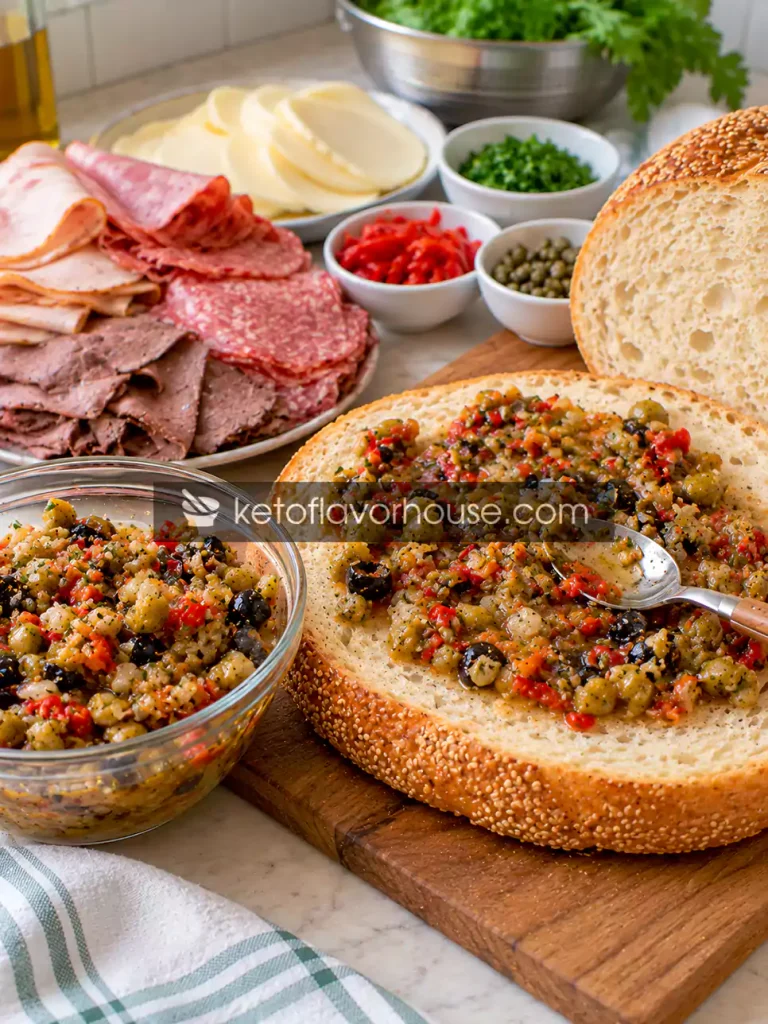
Step 3: Spread the Olive Salad
Spoon the drained olive salad over the cut surface of the bottom half of the loaf, spreading it evenly toward the edges.
A thin, even layer is better than a large mound in the center. You want olive flavor throughout the sandwich, but too much wet filling in one place can make the bread soggy and cause the ingredients to slide when you cut it.
Reserve any excess liquid in the bowl rather than pouring it into the sandwich. If your salad seems especially wet, use a slotted spoon to transfer the solids.
Step 4: Layer the Meat and Cheese
Arrange the provolone over the olive salad, followed by the turkey salami, turkey breast, roast beef, and mozzarella. You can alternate the meats and cheeses to create several layers, or divide each type into two smaller layers.
Try to distribute everything evenly across the bread. Fold large meat slices rather than bunching them into a thick pile. An evenly layered filling makes the sandwich easier to cut and gives every wedge a similar balance of ingredients.
Keep the filling slightly inside the edge of the loaf. If the meat and cheese extend too far beyond the bread, they may slide out when the top is added.
Step 5: Close and Wrap the Sandwich
Place the top half of the bread over the filling. Press gently with your palms to settle the layers, but stop before the sandwich becomes compressed or the filling begins squeezing out.
Wrap the entire loaf securely in food-safe wrap. The wrap should hold the sandwich together without crushing the crust.
Step 6: Rest Before Slicing
Refrigerate the wrapped sandwich for about 30 minutes. This helps the loaf settle and makes it easier to slice into even wedges. It also gives the olive salad time to mingle with the other ingredients.
Because the sandwich includes deli meats and cheese, keep it refrigerated during the resting period. Do not leave it on the counter for an extended time.
Step 7: Cut Into Six Portions
Unwrap the sandwich and place it on a sturdy cutting board. Use a serrated knife to cut it into six wedges, applying gentle sawing motions rather than pressing straight down.
Check that the filling remains distributed across the portions. If some wedges are larger than others, use the loaf’s overall weight or divide the ingredients into measured portions next time for more consistent WW tracking.
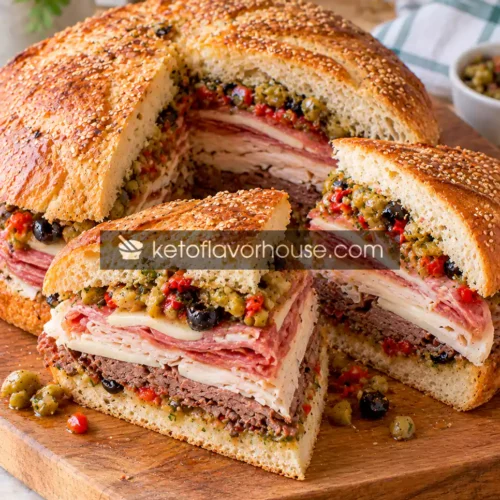
Serve cold or slightly cool. The bread should remain sturdy, the olive salad tangy, and the meat and cheese layers visible.
Step-by-Step Visual Guide
Build the sandwich in layers
Chop everything finely and drain excess liquid. Visual cue: chunky, glossy olives and pickled vegetables, not a watery dressing.
Cut the bread horizontally and spread the olive salad on the bottom half. Visual cue: an even layer with a little bread visible around the edge.
Spread the filling evenly rather than creating one tall pile. Visual cue: a balanced stack that stays inside the loaf.
Chill for 30 minutes, then cut into six wedges. Visual cue: firm slices with distinct layers of bread, cheese, meat, and olive salad.
Common Mistakes to Avoid
Using a Wet Olive Salad
Too much brine or vinegar can soak into the bread and make the center mushy.
The fix: Drain the pickled vegetables and olives well. Mix the salad separately, and use a slotted spoon if excess liquid collects.
Overfilling the Loaf
A very thick mound of meat and cheese can make it difficult to close the sandwich. It can also cause the filling to slide out when you cut it.
The fix: Divide the filling evenly and keep it slightly inside the edge of the loaf. Fold large meat slices instead of stacking them in one bulky pile.
Cutting Immediately After Assembly
An unrested sandwich can shift as you cut through the soft filling and crust.
The fix: Wrap it firmly and chill for about 30 minutes before slicing. Use a serrated knife and cut with gentle sawing motions.
Adding Too Much Oil
Olive oil adds flavor, but a heavy pour can make the salad greasy and increase the recipe’s energy and Points.
The fix: Measure the oil and use vinegar, garlic, oregano, and chopped pickled vegetables to provide the rest of the flavor.
Guessing Portion Sizes
A larger wedge may contain more bread, meat, cheese, and olive salad than another.
The fix: Cut six similar wedges and calculate the full recipe using six servings. If you change the loaf size or yield, recalculate the recipe.
Pro Tips for the Best Results
- Choose a sturdy loaf. Soft sandwich bread may compress too much under the filling. A crusty Italian loaf gives the sandwich better structure.
- Drain the vegetables carefully. The olive salad should be moist enough to flavor the bread, not wet enough to soak through it.
- Make the olive salad ahead. Preparing it a few hours in advance can allow the garlic, oregano, olives, and pickled vegetables to mingle. Keep it covered in the refrigerator.
- Use thin slices of deli meat. Thin meat layers are easier to distribute evenly and produce cleaner wedges.
- Keep the cheese measured. Two cheeses create a rounded flavor, but one variety can simplify the recipe and may reduce nutrition totals if you use less overall.
- Wrap before chilling. This helps the loaf hold together and protects it from drying out.
- Slice with a serrated knife. A gentle sawing motion cuts the crust without crushing the sandwich.
WW-Specific Nutrition and Strategy
This is a hearty sandwich, so it is useful to think about both the portion and the overall meal. The bread contributes most of the carbohydrate, while deli meat and cheese provide protein. The olive salad adds a big flavor payoff, but its olives and olive oil also contribute fat and calories.
Portion Size Is the Practical Starting Point
One-sixth of the sandwich is the serving used in the estimate. If you eat a larger wedge, the ingredients increase proportionally, so the Points value may be higher. Dividing the loaf into six even portions before serving is more reliable than cutting it into pieces that look similar but differ substantially in weight.
Choose Leaner Meats and Measure the Cheese
Turkey breast and lean roast beef can help balance the richer flavor of turkey salami. Product labels still matter: some sliced deli meats contain added sugar, fat, and sodium, and the nutrition profiles can differ widely.
Cheese contributes flavor as well as protein, but the amount matters. You might prefer one strong cheese rather than a larger amount of two cheeses. Make the change only if you still enjoy the sandwich, then recalculate the entire recipe using the revised amounts.
Use the Olive Salad Strategically
The olive salad is the signature ingredient, so I would not remove it. Instead, measure the oil, drain the pickled vegetables, and use enough vinegar, garlic, and oregano to keep the flavor lively. You can reduce the oil modestly, but the salad should still be pleasant and easy to spread.
Build the Rest of the Meal Around It
This sandwich can be served with a green salad, cucumber and tomato salad, or a bowl of vegetable soup. These sides add freshness without requiring another rich dressing or large bread portion.
Your daily WW budget is personal, and no single sandwich Points value is appropriate for everyone. The practical approach is to calculate the exact sandwich in your current app, decide on your portion, and plan your other meals according to your usual needs.
Variations You Can Try
Turkey-Only Muffuletta
Replace the turkey salami and roast beef with additional sliced turkey breast. This makes the flavor milder and the filling less varied, but the olive salad, provolone, and mozzarella still provide plenty of character. Fat, calories, protein, and Points will depend on the deli turkey you choose and the quantities used.
Roast Beef and Provolone Muffuletta
Use roast beef as the main deli meat and keep provolone as the only cheese. The result tastes more like a classic roast-beef deli sandwich while retaining the olive salad that identifies a muffuletta. If you use less cheese or a leaner roast beef product, the nutrition may change, but the exact Points effect should be calculated rather than assumed.
Spicy Olive Salad Sandwich
Add a small amount of chopped pickled hot peppers or red pepper flakes to the olive salad. This increases the heat without requiring a creamy sauce. Pickled peppers may add sodium, and the amount used should be included if you are tracking the full recipe.
One-Cheese Version
Use provolone alone or mozzarella alone rather than both. Provolone brings a more assertive, savory flavor, while mozzarella is milder and creamier. Using one cheese may reduce the total if you reduce the overall cheese quantity, but simply switching varieties will not necessarily lower Points.
Individual Muffuletta Rolls
Instead of one large loaf, use six small crusty rolls. Divide the olive salad, meat, and cheese among the rolls as evenly as possible. Individual rolls make portioning straightforward, but their bread weight varies, so weigh or check the label and calculate the recipe with the correct yield.
A Lighter Olive Salad
Use a little less olive oil and increase the red wine vinegar slightly if you prefer a sharper flavor. Keep the chopped olives, giardiniera, capers, and garlic so the mixture still tastes distinctive. The texture may be less glossy, and the salad should remain moist enough to spread without becoming watery.
Tips for Serving and Presentation
For the best-looking sandwich, wait until the loaf has rested before cutting it. A freshly assembled sandwich can shift under the knife, while a chilled loaf tends to hold its layers more cleanly.
Use a large board or platter and arrange the six wedges in a circle, with the colorful cut sides facing upward. That makes the olive salad, cheese, and deli meat visible and shows that the sandwich has distinct layers. A few olives or pickled vegetables on the side can add color without requiring more dressing.
If you are serving a crowd, keep the sandwich wrapped and refrigerated until close to serving time. Unwrap it, cut the wedges, and return any unused pieces to the refrigerator promptly. The crust is generally best on the day of assembly because the olive salad slowly softens the interior bread.
For a website photograph, show the complete giant sandwich or all six wedges on a serving board. Use a vertical portrait composition, soft natural daylight, and a simple wooden surface. Keep props minimal; the crust, olive salad, and filling layers should remain the main focus.
Optional Additions
- Roasted red peppers: Add sweetness and a softer texture. Drain them well because their moisture can soften the bread.
- Fresh basil: Offers a fragrant, herbal note that works with the cheeses and olives.
- Pickled hot peppers: Bring extra heat and acidity, but may increase sodium.
- Extra provolone: Makes the sandwich richer and cheesier while adding fat, calories, and potentially more Points.
- More olive salad: Intensifies the classic briny flavor but can increase fat, sodium, and moisture depending on the amount and dressing.
- A little Dijon mustard: Adds sharpness, though it changes the flavor from a more traditional olive-salad profile. Measure it if you are tracking the recipe precisely.
I would start with the base recipe before experimenting with additions. If you change a significant ingredient or serving quantity, recalculate the whole sandwich instead of estimating an arbitrary Points increase.
Serving Ideas
What to serve with a muffuletta
Crisp green salad
Fresh greens and a light vinegar dressing balance the salty, rich sandwich without competing with the olive salad.
Tomato and cucumber
A fresh chopped salad adds crunch and juiciness alongside the crusty bread and deli filling.
Vegetable soup
A simple broth-based soup makes a comforting lunch combination, especially on a cool day.
Roasted vegetables
Peppers, zucchini, or eggplant offer a savory side. Keep added oil measured if you are tracking Points.
For a picnic or lunch gathering, serve the sandwich with fresh vegetables and let each person take one wedge. For a sit-down meal, pair a wedge with soup or a green salad. Since the sandwich is substantial, the side dish does not need to be elaborate.
Storage Recommendations
Refrigerating the Sandwich
Because this sandwich contains deli meats and cheeses, refrigerate it promptly. Keep it wrapped or in an airtight container at 40°F (4°C) or below, and do not leave it at room temperature for more than two hours (or one hour in temperatures above 90°F/32°C).
For best texture, enjoy it the day it is assembled. Properly refrigerated leftovers should generally be used within 3–4 days, but the bread may become softer as the olive salad’s moisture moves into the crumb. If the olive salad has a lot of liquid, storing some separately can help preserve the bread.
Can You Freeze It?
Freezing the fully assembled sandwich is not ideal. The bread may become soggy after thawing, and the texture of the cheese and pickled vegetables can change. A better make-ahead strategy is to prepare the olive salad separately and refrigerate it in a covered container. Assemble the sandwich closer to serving time.
If you do freeze portions, wrap them tightly and expect some texture changes. Thaw in the refrigerator, not on the counter, and inspect the quality before serving. Do not freeze a sandwich that has already been held at unsafe temperatures.
Reheating
A muffuletta is traditionally served cold or at room temperature rather than hot. If you prefer a warm sandwich, warm a portion gently in an oven until heated to your liking, but be aware that the bread may crisp while the olive salad softens. Do not microwave for too long, as this can make the bread chewy.
Reheating the same ingredients does not materially change the original Points calculation. However, changes in serving size or additional ingredients should be counted.
Storage Timeline
Make ahead without soggy bread
Make the salad
Mix and chill the olive salad separately. Drain excess liquid before spreading it onto the bread.
Wrap and chill
Rest for about 30 minutes in the refrigerator so the filling settles and the sandwich is easier to slice.
Refrigerate
Keep covered at 40°F or below. Aim to use leftovers within 3–4 days, understanding that bread texture may soften.
Prefer components
Freeze only if necessary; storing the olive salad separately and assembling later gives the best texture.
Frequently Asked Questions
1. What makes a muffuletta different from an ordinary Italian sandwich?
A muffuletta is known for its large, round loaf and olive salad, which gives it a briny, tangy flavor. The filling is usually layered with Italian deli meats and cheese. This version uses turkey salami, turkey breast, and lean roast beef instead of traditional pork-based deli fillings.
2. Can I make this sandwich the night before?
You can prepare the olive salad the night before and refrigerate it separately. For the best bread texture, assemble the sandwich closer to serving time. If you need to assemble it ahead, keep it tightly wrapped and refrigerated, and understand that the bread may soften as it absorbs moisture from the salad.
3. How can I lower the Points value?
Start by checking the bread’s nutrition label, measuring the olive oil, and considering a smaller total amount of cheese. You can also replace some or all of the turkey salami with additional sliced turkey breast, depending on the products available. These changes affect flavor, fat, protein, and calories, so recalculate the whole recipe in your WW app.
4. Can I use only one type of cheese?
Yes. Provolone provides a more noticeable savory flavor, while mozzarella gives the sandwich a milder, creamier finish. Choose the one you prefer and measure the total quantity. If you reduce the amount of cheese, the sandwich will have a different texture and the nutrition calculation will change.
5. Is the olive salad the same as olive tapenade?
Not exactly. Both feature olives, but muffuletta olive salad usually contains chopped olives and pickled vegetables, often with capers, garlic, herbs, vinegar, and oil. Tapenade can be much smoother and may include additional ingredients. You can use a commercial olive spread in a pinch, but check its nutrition label and texture before substituting it.
6. Can I serve this sandwich warm?
Yes, although a muffuletta is commonly served cold or at room temperature. Warm individual portions gently if you prefer softened cheese and a warmer filling. The bread may become crisp, while the olive salad may lose some of its fresh texture.
7. Will my WW app show the same Points value?
Not necessarily. The estimate in this article is not an official WW calculation, and your app may use a different program or ingredient treatment. Enter your exact bread, meat, cheese, and olive salad quantities, then set the recipe to six servings to obtain the result for your current plan.
Nutritional Breakdown Per Serving
These are preliminary estimates for one-sixth of the sandwich, using the ingredient amounts listed in the recipe card. Actual nutrition can vary substantially by bread size, deli meat brand, cheese type, and olive product. The SmartPoints estimate is independent and should be verified in your current WW app.
| Nutrient | Estimated amount per serving |
|---|---|
| Calories | 650–750 kcal |
| Protein | 35–45 g |
| Total fat | 25–35 g |
| Total carbohydrates | 50–60 g |
| Fiber | 3–5 g |
| Net carbohydrates | 45–57 g |
| Sugar | 4–8 g |
| Sodium | 1,400–2,000 mg |
| Estimated SmartPoints | Approximately 15–18, unverified |
The sodium level can be high because olives, capers, giardiniera, deli meats, and cheese are all commonly salty foods. If sodium intake is a consideration for you, look for lower-sodium deli meats and pickled vegetables, rinse capers, and use smaller amounts of the saltier ingredients. Net carbohydrates are calculated as total carbohydrates minus fiber; they are not a substitute for WW Points.
Nutrition Dashboard
Recipe Snapshot
- Prep Time: 25 minutes
- Resting Time: 30 minutes
- Cook Time: None
- Total Time: Approximately 55 minutes
- Course: Lunch or main dish
- Cuisine: Italian-American inspired
- Servings: 6
- Calories per Serving: Approximately 650–750 kcal
- Estimated SmartPoints per Serving: Approximately 15–18, not officially verified
Closing note: The signature flavor in a muffuletta comes from the olive salad, so keep that tangy, savory combination at the center of the recipe. Measure the oil, choose deli meats you enjoy, and cut the loaf into six even portions. The current WW app should be your final reference for the Points value of the exact ingredients you use.
Weight Watchers Giant Muffuletta Sandwich

Ingredients
For the olive salad:
- 1 cup chopped pitted green olives
- ½ cup chopped pitted black or Kalamata olives
- ½ cup drained giardiniera chopped
- 2 tablespoons capers rinsed and drained
- 2 garlic cloves finely minced
- 2 tablespoons red wine vinegar
- 1 tablespoon olive oil
- 1 teaspoon dried oregano
- 1 tablespoon chopped fresh parsley optional
- ¼ teaspoon black pepper
For the sandwich:
- 1 large round Italian bread loaf approximately 10–12 inches wide and 24 ounces (680 g)
- 6 ounces turkey salami
- 8 ounces sliced turkey breast
- 8 ounces thinly sliced lean roast beef
- 6 slices provolone approximately 6 ounces total
- 6 ounces part-skim mozzarella thinly sliced
Instructions
- Drain and chop the olives and giardiniera. Combine them with the capers, garlic, red wine vinegar, olive oil, oregano, parsley, and black pepper in a bowl. Stir well and taste before adding any salt.
- Slice the Italian loaf horizontally into two halves using a serrated knife.
- Spread the olive salad evenly over the cut surface of the bottom half. Drain away excess liquid before adding it to the bread.
- Layer the provolone, turkey salami, turkey breast, roast beef, and mozzarella evenly over the olive salad. Keep the filling slightly inside the loaf’s edges.
- Place the top half of the bread over the filling and press gently to settle the layers without squeezing them out.
- Wrap the sandwich securely in food-safe wrap and refrigerate for about 30 minutes.
- Unwrap and cut the loaf into six even wedges with a serrated knife.
- Serve cold or slightly cool with a green salad, tomato-cucumber salad, or vegetable soup.