This post may contains Amazon affiliate and other affiliate links. If you make a purchase through these links, I may earn a small commission at no extra cost to you. Your support helps me continue to provide quality content. I only recommend products I personally trust and believe will add value to your experience. For more details, please visit my Privacy Policy.
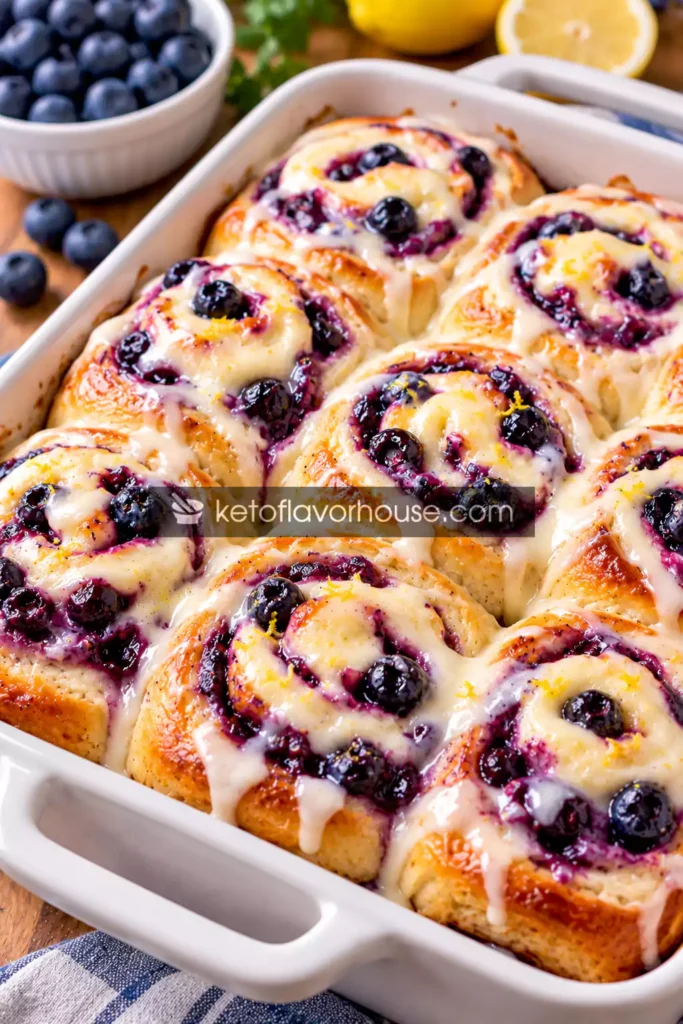
These Keto Blueberry Cream Cheese Sweet Rolls bring together three things that make a sweet breakfast feel special: a soft, tender dough, a creamy cheesecake-style filling, and juicy blueberries in every bite. Instead of the traditional wheat-flour dough and sugar-heavy filling used in bakery sweet rolls, this version uses almond flour, mozzarella, cream cheese, and a keto-friendly sweetener to create a lower-carbohydrate alternative.
The flavor combination is familiar and comforting. Cream cheese gives the filling its smooth, tangy character, blueberries contribute little bursts of fruity sweetness, and a light vanilla glaze brings everything together. A touch of lemon zest can make the berries taste brighter without needing a large amount of sweetener. These rolls are especially appealing when you want something that feels like a weekend bakery treat but fits more easily into a low-carb meal plan.
There is one important difference from conventional yeast-raised rolls: this recipe uses a quick, yeast-free dough, so the texture is more tender and pastry-like than traditional fluffy cinnamon-roll dough. The advantage is that you do not need to wait for yeast to rise. Once the dough is mixed, filled, rolled, and sliced, the oven takes care of the rest. Serve the rolls for breakfast, brunch, or an afternoon coffee break, and save any extras for another day.
Before getting started, it helps to understand the recipe’s timing, texture, and approximate carbohydrate profile.
Why You’ll Love These Keto Blueberry Cream Cheese Sweet Rolls
These rolls offer a sweet, creamy breakfast option without relying on conventional white flour or added table sugar. A few details make the recipe especially practical.
- Blueberry and cheesecake flavor: Tart cream cheese balances the sweet berries, while vanilla rounds out the filling.
- No yeast or proofing: The dough is prepared with baking powder, so you can shape it without waiting for a rise.
- A controlled berry portion: Blueberries provide fruity flavor and color, while measuring them helps keep the carbohydrate contribution predictable.
- A make-ahead option: The rolls can be prepared in advance and refrigerated, which is convenient for brunch or weekday breakfasts.
- Easy to portion: Cutting the rolled dough into nine slices makes individual servings easy to manage.
- Flexible sweetness: You can adjust the sweetener to suit your taste, although large changes may affect the flavor and texture.
A bakery-style treat with a different kind of dough
Traditional sweet rolls usually depend on wheat flour for gluten structure. That structure allows yeast dough to stretch, trap gas, and rise into a fluffy spiral. Almond flour does not behave the same way, and melted mozzarella provides elasticity rather than gluten. The resulting rolls are softer and more delicate, with a rich, slightly chewy bite.
That difference is worth embracing rather than trying to hide. These are not identical copies of bakery brioche. They are an alternative for readers who enjoy blueberry pastries and cream cheese filling but prefer a lower-carb recipe.
The filling makes every slice count
The filling is more than a thin smear of cream cheese. It should be smooth enough to spread over the dough and thick enough to stay mostly in place when the roll is sliced. Fresh blueberries add pockets of moisture and a light fruity tang, so you do not need a heavy layer of glaze to make the rolls taste complete.
A little lemon zest is an optional but useful addition. It highlights the berries and balances the richness of the cream cheese. Use only the colored outer zest, avoiding the bitter white pith beneath the peel.
What Makes the Recipe Work?
Each ingredient has a specific role. The dough needs structure and elasticity, the filling needs a creamy consistency, and the blueberries need to be distributed without making the pastry wet.
A Note About the Blogger-Style Approach
The appeal of this recipe is the contrast between the rich dough, cool-tasting cream cheese filling, and fruit that softens as it bakes. It’s a combination that works for a relaxed weekend breakfast as well as a small brunch spread. Because low-carb dough can behave differently from wheat-based dough, the most useful approach is to pay attention to its feel at each stage instead of expecting it to look exactly like conventional bread dough.
The most important preparation detail is temperature. Mozzarella and cream cheese need to be warm enough to combine smoothly, but the mixture should not be scorching hot when the egg is added. Likewise, the filling should be softened enough to spread without tearing the dough. Those two details make the rolling process much easier and help produce recognizable spirals once the rolls are cut.
For serving, these rolls are best when the centers have set and the glaze is added after a short cooling period. If the glaze goes onto very hot pastries, it may melt and run into the pan. A few minutes of patience gives it a thicker, creamier finish.
Personal Recipe Notes: What Matters Most
When developing a low-carb pastry recipe, I think it helps to focus on the experience the recipe is meant to deliver rather than trying to reproduce every quality of a conventional bakery roll. Here, the goal is a soft spiral, creamy filling, visible blueberries, and a pleasant balance between sweetness and tang. The almond-flour dough supports those flavors without needing traditional wheat flour.
I would pay particular attention to how the dough handles before adding the filling. If it feels too soft or sticky to roll, a short rest in the refrigerator can make it easier to manage. If it becomes stiff as the melted cheese cools, a few seconds of gentle reheating may help restore flexibility. These small adjustments are more helpful than adding lots of extra flour, which can make the finished rolls dry.
The other detail I would keep simple is the glaze. These rolls already contain cream cheese in the filling, so they do not need a thick blanket of icing. A modest amount of vanilla cream cheese glaze gives them a bakery-style finish while letting the blueberry flavor remain noticeable. If you prefer a less sweet breakfast, you can serve the glaze on the side and add only a little to each roll.
Equipment You’ll Need
You can make this recipe with common kitchen tools. A microwave makes melting the cheese easier, but a small saucepan over low heat also works.
Mixing bowls
Use one bowl for the dry ingredients and another for the cream cheese filling. Separate bowls help ensure the baking powder and flours are evenly combined before the warm cheese mixture is added. A small bowl is also useful for mixing the glaze.
Microwave-safe bowl or small saucepan
Mozzarella and cream cheese need to soften and melt into a workable mixture. A microwave-safe bowl lets you heat them in short bursts, stirring between each interval. Alternatively, warm them gently in a saucepan over low heat, stirring often to prevent sticking or scorching.
Measuring cups and kitchen scale
A scale is especially useful for almond flour, mozzarella, and cream cheese. Cup measurements can vary depending on how tightly an ingredient is packed, and differences in flour quantity can change the dough’s texture. When possible, use the gram weights listed in the recipe card.
Rolling pin and parchment paper
Roll the dough between two sheets of parchment paper. This prevents it from sticking to the rolling pin and counter while reducing the temptation to add extra flour. The top sheet can be peeled away slowly when the dough is evenly flattened.
Sharp knife or unflavored dental floss
A sharp knife works well for slicing the log into nine rolls. For cleaner cuts, use unflavored dental floss: slide it beneath the log, cross the ends over the top, and pull to slice through the dough. Avoid flavored floss, which can leave an unwanted taste.
Baking pan
An approximately 8-inch or 9-inch square pan works well for nine rolls. Line it with parchment paper to make serving and cleanup easier. Rolls baked close together may support one another and remain softer along their sides; rolls spaced farther apart may brown more around the edges.
Spatula and small whisk
Use a flexible spatula to spread the cream cheese filling without tearing the dough. A small whisk helps smooth the glaze, especially when the cream cheese has been softened properly.
Ingredients and Substitutions
The ingredient measurements below are designed for nine rolls. Keep the dough proportions as close to the recipe as possible for the most predictable result.
Almond flour — 2 cups (224 g)
Blanched almond flour forms the main structure of the dough. Its fine texture helps create a more even interior than coarse almond meal. It also contributes fat, some protein, fiber, and carbohydrates.
Substitution: Almond meal can work, but the rolls may look coarser and feel more grainy. Coconut flour is much more absorbent, so it is not a one-to-one substitute. Replacing almond flour entirely with coconut flour would require a substantially different formula and could make the dough dry or crumbly.
Coconut flour — 1 tablespoon (about 7 g)
A small amount of coconut flour absorbs some moisture and helps the dough hold its shape. Its strong absorbency means that even a small change in quantity can influence the texture.
Substitution: You can omit it only with the understanding that the dough may be softer and harder to handle. Do not replace it with an equal amount of almond flour and expect the same result.
Baking powder — 2 teaspoons
Baking powder provides some lift, helping the dough feel less dense. It does not create the same structure as yeast in conventional sweet rolls.
Substitution: Use a compatible double-acting baking powder if available. Baking soda alone is not a direct substitute because it needs an appropriate acidic ingredient and a different quantity.
Powdered allulose — 6 tablespoons total
The sweetener is divided between the dough, filling, and glaze. Powdered allulose dissolves smoothly and generally avoids the pronounced cooling sensation associated with some erythritol-heavy sweeteners.
Substitution: A powdered monk fruit sweetener or erythritol blend may work, but check the product’s sweetness ratio. Some blends are much sweeter than sugar, while others may create a cooling sensation or become slightly gritty as they cool. Different sweeteners may also affect browning and moisture.
Shredded low-moisture mozzarella — 1½ cups (about 168 g)
Mozzarella provides the elasticity that makes this style of dough rollable. Choose low-moisture mozzarella rather than fresh mozzarella packed in liquid, which adds too much moisture.
Substitution: Another low-moisture melting cheese may behave differently in both flavor and elasticity. A strongly flavored cheese can overwhelm the blueberries. Shredded cheese with a very different moisture level may require adjustments, so the results will not be identical.
Cream cheese — 8 ounces (227 g) total
Use 2 ounces in the dough, 4 ounces in the filling, and 2 ounces in the glaze. Full-fat cream cheese gives the filling and glaze a creamy consistency and contributes to the rich flavor.
Substitution: Reduced-fat cream cheese may work, but its moisture and consistency can differ. Neufchâtel-style products may produce a softer filling or glaze. Dairy-free cream cheese also varies widely in composition and may require a separate recipe test.
Egg — 1 large
The egg helps bind the dough and contributes protein, fat, and moisture. It also helps the ingredients hold together as the rolls bake.
Substitution: An egg replacement will alter the dough’s structure, particularly because almond flour contains no gluten. This recipe has not been calibrated for a flax egg or commercial egg replacer, so those changes should not be expected to produce the same texture.
Vanilla extract — 1¼ teaspoons total
Use 1 teaspoon in the dough and ¼ teaspoon in the glaze. Vanilla helps round out the cream cheese and blueberry flavors.
Substitution: A small amount of vanilla bean paste can work, although some products contain added sugar. Check the label if you are trying to avoid added sugar.
Blueberries — ¾ cup (about 110 g)
Fresh blueberries provide fruity flavor, moisture, color, and natural sugars. Measure them rather than adding a heaping amount, because extra berries can release more juice and make the dough soggy.
Substitution: Frozen blueberries can work if used directly from the freezer and distributed gently. They may release more moisture as they bake, and the finished rolls can require extra time to set. Raspberries or chopped strawberries can provide a different flavor, but their carbohydrate and moisture contributions will differ.
Lemon zest and lemon juice — optional
One teaspoon of lemon zest adds freshness to the filling. Up to one teaspoon of lemon juice can add extra tang, but too much liquid may loosen the mixture.
Heavy cream — 1 tablespoon
A tablespoon of heavy cream loosens the cream cheese glaze so it can be spread or drizzled. Heavy cream adds fat and calories, with a small amount of lactose-derived carbohydrate.
Substitution: A little unsweetened almond milk may thin the glaze, but it will be less rich. Add liquid gradually because a small quantity can noticeably change the consistency.
The table below summarizes the main substitution trade-offs.
How to Make Keto Blueberry Cream Cheese Sweet Rolls
The technique is straightforward, but the order matters. Melt the cheese first, combine the dough while it is warm and workable, and let the rolled log firm up briefly if it feels too soft to slice neatly.
Step 1: Prepare the oven and dry ingredients
Preheat the oven to 350°F (175°C). Line an 8-inch or 9-inch square baking pan with parchment paper, leaving enough overhang to help lift the baked rolls out later.
In a medium bowl, whisk together the almond flour, coconut flour, baking powder, powdered allulose, and salt. Breaking up any almond flour lumps at this stage helps prevent dry pockets in the finished dough.
Step 2: Melt the mozzarella and cream cheese
Place the mozzarella and 2 ounces of cream cheese in a microwave-safe bowl. Heat in 20–30-second intervals, stirring each time, until the cheese is soft and mostly melted. Depending on the microwave, this usually takes about 60–90 seconds in total.
Stop when the mixture can be stirred into a cohesive mass. It does not need to bubble or become extremely hot. If using a saucepan, warm the cheeses over low heat and stir continuously.
Step 3: Add the egg and vanilla
Let the melted cheese mixture cool briefly so it is warm rather than scorching hot. Beat the egg with the vanilla, then work it into the cheese mixture, stirring quickly.
If the cheese mixture is too hot, the egg may begin to cook into small strands. If that happens, the dough may still be usable, but it will be less even. Letting the cheese cool slightly reduces this risk.
Step 4: Combine the dough
Add the dry ingredients to the warm cheese mixture. Stir with a sturdy spatula until a rough dough forms, then gently knead it until the flour is evenly incorporated.
The dough should be pliable and slightly tacky, but it should hold together when pressed. If it becomes stiff while the cheese cools, warm it for another 5–10 seconds. If it is very sticky, refrigerate it briefly before rolling rather than adding a large amount of extra flour.
Step 5: Prepare the cream cheese filling
In another bowl, beat the softened 4 ounces of cream cheese with 2 tablespoons of powdered allulose and the lemon zest until smooth. If using lemon juice, add no more than 1 teaspoon and mix again.
The filling should be spreadable, not runny. If the cream cheese is cold, it may form lumps or tear the dough when spread. Allow it to soften at room temperature before mixing.
Step 6: Roll out the dough
Place the dough between two sheets of parchment paper. Roll it into a rectangle approximately 10 by 12 inches, aiming for an even thickness.
Peel back the top sheet gently. If sections of dough stick to the parchment or begin to tear, press them back together with your fingertips. Leave a small border around the edges so the filling has room to spread as the dough rolls.
Avoid making the dough paper-thin. A very thin sheet can split under the weight of the filling, while an overly thick sheet produces bulky rolls with less distinct spirals.
Step 7: Add the filling and blueberries
Spread the cream cheese filling over the dough in an even layer, leaving about ½ inch uncovered along one long edge. Distribute the blueberries across the surface, keeping them in a single layer where possible.
Press the berries lightly into the filling so they stay in place as you roll. If your berries are unusually large, gently halve a few of them, but avoid crushing them into a wet mixture.
Step 8: Roll the dough into a log
Starting from the long edge opposite the uncovered border, lift the parchment to help guide the dough into a log. Roll slowly and evenly, using your fingers to prevent the filling from being pushed out in front.
When you reach the final edge, gently pinch the seam closed. Do not squeeze the log tightly, as excessive pressure can force filling from the ends. If the dough feels too soft, refrigerate the log for around 10 minutes before slicing.
Step 9: Slice and arrange the rolls
Cut the log into 9 roughly equal pieces with a sharp knife. Wipe the blade between cuts if the cream cheese filling begins to smear. Alternatively, use unflavored dental floss to cut cleaner slices.
Arrange the rolls cut-side up in the prepared pan. Leave a little room between them, but do not worry if they are close together. This dough does not rise like yeast dough, so large gaps are not necessary.
Step 10: Bake until set
Bake for 22–28 minutes, checking toward the earlier end of the range. The tops should look lightly golden, the edges should be set, and the dough should no longer look wet in the center.
The exact time will depend on your pan, oven, dough thickness, and whether you used frozen berries. If the tops brown too quickly while the centers remain soft, loosely cover the pan with foil and continue baking until the rolls are set.
Step 11: Make the glaze
While the rolls cool, mix the remaining 2 ounces of softened cream cheese with 2 tablespoons of powdered allulose, 1 tablespoon of heavy cream, and ¼ teaspoon of vanilla. Whisk until smooth.
For a thicker topping, use slightly less cream. For a drizzle, add a few extra drops at a time. Sweeteners vary in sweetness, so taste and adjust gradually.
Step 12: Cool, glaze, and serve
Allow the rolls to cool in the pan for about 10–15 minutes before adding the glaze. This lets the centers firm up and keeps the glaze from melting completely into the hot rolls.
Serve warm or at room temperature. Because the dough contains melted cheese and almond flour rather than yeast and wheat flour, the texture is best described as tender and rich rather than airy like a traditional bakery roll.
The complete process can be summarized in this visual guide.
Common Mistakes and How to Fix Them
Low-carb dough can be less forgiving than conventional yeast dough. These are the most useful issues to watch for.
The dough is too sticky to roll
Why it happens: The cheese mixture may be too warm, the kitchen may be hot, or the flour measurements may be slightly low.
What to do: Chill the dough briefly between sheets of parchment. Avoid adding lots of extra almond flour, because that can make the rolls dense and dry.
The dough breaks when rolled
Why it happens: The dough may have cooled and stiffened, or it may have been rolled too thin.
What to do: Let the dough warm slightly or gently reheat it for a few seconds if necessary. Press small cracks together before spreading the filling, and maintain an even thickness.
The filling leaks out
Why it happens: The filling is too loose, the log was rolled too tightly, or the long edge was not sealed.
What to do: Use softened but not melted cream cheese, leave a narrow uncovered border, and guide the dough into a log without squeezing it. A little filling at the edges is normal.
The rolls are wet in the center
Why it happens: The log may be too thick, the pan may be crowded, or the berries may have released extra moisture.
What to do: Continue baking until the center is set and the dough no longer looks wet. Loosely cover the top with foil if it is browning too quickly. Frozen berries may require additional baking time.
The rolls are dry or crumbly
Why it happens: Too much flour, excess baking time, or a high proportion of coconut flour can dry out the dough.
What to do: Measure the flours accurately, especially the coconut flour. Begin checking the rolls at 22 minutes and remove them once the center is set.
The glaze is lumpy
Why it happens: The cream cheese was too cold or the sweetener did not incorporate evenly.
What to do: Let the cream cheese soften before mixing. Whisk thoroughly and add the heavy cream gradually. If needed, let the glaze sit briefly at room temperature before whisking again.
Pro Tips for Better Results
Use finely ground almond flour. A fine, blanched product produces a more delicate texture than coarse almond meal. If the flour has clumps, whisk or sift it before measuring.
Work while the cheese is pliable. Fathead-style dough becomes firmer as the melted mozzarella cools. Have your dry ingredients, egg, rolling pin, and parchment ready before melting the cheese.
Use parchment instead of dusting with flour. Parchment makes the dough easier to roll without significantly altering the flour ratio or nutritional estimate.
Keep the filling layer thin and even. If the cream cheese is piled too thickly in the center, it can squeeze outward as the dough rolls. Spread it from edge to edge while preserving a small uncovered border on one long side.
Use a light hand with the berries. More fruit is not always better in low-carb baking. Excess berries contribute more carbohydrates and moisture and can make the pastry harder to slice.
Let the rolls set before glazing. They are more delicate when piping hot. A short rest makes them easier to lift from the pan and helps the glaze stay where you place it.
Taste the glaze before spreading it. Powdered sweeteners vary in sweetness. Starting with the listed amount and adjusting gradually is more reliable than adding a large amount at once.
Keto Considerations: Blueberries, Almond Flour, and Sweetener
A keto recipe is not defined by one ingredient. Its suitability depends on the total carbohydrate content of the complete recipe, the portion size, and how it fits into an individual’s overall eating plan.
Almond flour changes the carbohydrate profile
Almond flour is used in place of ordinary wheat flour, which makes a substantial difference in the recipe’s structure and nutrition. It contributes fat, protein, and fiber, but it still contains carbohydrates. The quantity matters, and using a different flour can change the final numbers significantly.
Blueberries contribute natural carbohydrates
Blueberries bring flavor, color, and fiber, but they also contain naturally occurring sugars and carbohydrates. This recipe uses ¾ cup across nine rolls, spreading the berry contribution over multiple portions. Increasing the berry quantity will change both the carbohydrate estimate and the moisture level of the filling.
Allulose replaces added sugar
Allulose gives sweetness without the same carbohydrate contribution as conventional sugar under common net-carb calculations. However, nutrition-label treatment can differ by country and product, so review the manufacturer’s label and apply a consistent calculation method. Some sweetener blends include erythritol or other ingredients, and they should not automatically be counted the same way as pure allulose.
Cream cheese and mozzarella add richness
The cheeses contribute fat and protein and are responsible for much of the dough’s texture. They also contribute calories and some carbohydrates. Full-fat products may produce a richer dough, while reduced-fat products can behave differently and may change the nutrition per serving.
No single ingredient causes ketosis or guarantees weight loss. For a more reliable estimate, calculate the full recipe using the products you actually buy and divide the finished rolls into nine similar portions.
Variations You Can Try
The base recipe has a classic blueberry-and-cream-cheese flavor, but you can change the fruit, citrus, or spices to create a different finish. Remember that substitutions can alter the moisture, texture, and nutritional profile.
Lemon Blueberry Rolls
Add a little extra lemon zest to the filling and a few drops of lemon juice to the glaze. The citrus brightens the blueberry flavor and balances the cream cheese’s richness. Avoid adding much more liquid to the filling, because that can make it harder to roll the dough.
Cinnamon Blueberry Rolls
Add ½ teaspoon of ground cinnamon to the dry dough ingredients or dust a small amount over the filling. Cinnamon gives the rolls a warmer, bakery-style aroma. It adds very few carbohydrates in the quantity used, but it will not make the rolls taste like traditional cinnamon rolls unless you also change the filling.
Mixed Berry Cream Cheese Rolls
Replace some of the blueberries with raspberries or chopped strawberries. Raspberries provide a more tart flavor, while strawberries bring a softer, familiar berry sweetness. Keep the total fruit amount around ¾ cup to help maintain the intended balance of moisture and carbohydrates.
Vanilla Cheesecake Rolls
For a more pronounced cheesecake flavor, increase the vanilla in the filling slightly and leave out the lemon zest. This version tastes creamier and less tangy. Adding more cream cheese can make the filling heavier, so keep the overall filling quantity close to the recipe.
Almond-Vanilla Rolls
Add a very small amount of almond extract to the glaze alongside the vanilla. Almond extract is concentrated, so start with just a few drops. This variation highlights the almond-flour dough and makes a good pairing for blueberries, but too much extract can overpower the fruit.
A Less-Sweet Breakfast Version
Reduce the powdered allulose slightly in the filling and use a thin glaze or leave it off entirely. The blueberries will still contribute some natural sweetness. Because sweetener adds bulk as well as sweetness in some recipes, reducing it can slightly change the filling and dough, so make modest adjustments rather than removing it all at once.
Optional Additions
Optional toppings can make the rolls feel more substantial, but even small additions affect nutrition when used in quantity.
- Chopped pecans: Sprinkle a tablespoon over the filling for a nutty crunch. Pecans add fat, calories, and a small amount of protein and carbohydrates.
- A little extra lemon zest: Gives a fresh citrus aroma with minimal impact on the overall carbohydrate count.
- A pinch of cinnamon: Adds warmth without requiring extra sweetener.
- A few sliced almonds: Place some on the glaze for a delicate crunch. They add texture but also contribute calories and fat.
- Extra blueberries: Useful when you want stronger fruit flavor, but they increase both moisture and carbohydrates. Keep the total portion in mind.
- A lighter glaze: Thin the glaze only as much as needed. More cream or milk changes the nutrition slightly and can make the topping runnier.
Avoid mixing a large amount of syrup, jam, or sweetened blueberry sauce into the filling if you are aiming to keep carbohydrates controlled. Even products marketed as natural may contain concentrated sweeteners or added sugars.
Serving Ideas
These rolls can be the sweet part of a breakfast, brunch, or coffee break. Because they are rich, one roll alongside a simple accompaniment is often more balanced than serving several rolls with additional heavy toppings.
With eggs for breakfast
Serve one sweet roll alongside scrambled eggs or a boiled egg. The savory flavor of the eggs contrasts with the cream cheese filling. The combination also adds protein beyond what the roll provides by itself.
As part of a weekend brunch
Place the rolls on a platter with eggs, sliced cucumber, and a simple savory dish. Keeping the savory options straightforward lets the blueberry flavor remain the highlight without making the meal overly rich.
With coffee or tea
A single roll pairs naturally with unsweetened coffee or tea. Vanilla and blueberry are pronounced enough that you do not need a sweetened drink to complete the snack.
With plain Greek yogurt
A small serving of unsweetened Greek yogurt can add a cool, tangy contrast. Choose a plain product and check its carbohydrate and protein values; dairy products vary by brand and serving size.
As an afternoon treat
Serve a roll slightly warmed, with the glaze just softening on top. A small serving works well when you want something sweet without preparing a full dessert.
For guests
Make the rolls in advance, refrigerate them safely, and warm them shortly before serving. Offer the glaze separately if guests have different sweetness preferences. This also lets the tops remain more distinct instead of absorbing all the glaze at once.
Storage and Reheating
Because the filling and glaze contain cream cheese, these rolls should be refrigerated rather than left at room temperature for long periods.
Refrigerating leftovers
Allow the rolls to cool, then store them in an airtight container in the refrigerator within two hours of baking. They are generally best for about 3–4 days when kept refrigerated at 40°F (4°C) or below. For the best texture, store them in a single layer or separate layers with parchment.
The dough firms as it chills, so a roll straight from the refrigerator will feel denser than one that has been gently warmed. That is a texture change rather than a sign that the recipe has failed.
Reheating
For one roll, microwave it in short intervals, typically around 10–20 seconds to begin with, then add a little more time if needed. Avoid overheating, because the cheese-based dough can become rubbery and the filling may turn very hot.
For several rolls, warm them in a 300°F (150°C) oven for about 5–10 minutes, checking that they are heated through. If the glaze is already on the rolls, expect it to soften. You can also warm the rolls without glaze and add freshly mixed glaze afterward.
Freezing
For longer storage, freeze the baked rolls once they have cooled. Arrange them on a tray until firm, then transfer them to a freezer-safe container with parchment between layers. For best texture, aim to use them within about 2–3 months.
Thaw them in the refrigerator, then warm gently before serving. Freezing may soften the blueberries and slightly change the cream cheese filling, so the texture will not be exactly the same as freshly baked rolls.
Preparing ahead
You can prepare the filling and measure the dry ingredients in advance. For easier handling, make the dough close to assembly time, since the melted mozzarella becomes firmer as it cools.
You can also shape and slice the rolls, cover the pan, and refrigerate it before baking, provided you keep the filling refrigerated and bake within about a day for best quality. The dough may firm in the refrigerator, so allow a little extra time for baking and check the centers carefully.
Frequently Asked Questions
Are these Keto Blueberry Cream Cheese Sweet Rolls suitable for a keto diet?
They may fit into a ketogenic eating plan when the portion size works with your personal carbohydrate target. Each roll is estimated to contain about 6–7 grams of net carbohydrates, but the exact amount depends on the brands and ingredient quantities used. Calculate the nutrition from your actual products rather than relying on the estimate alone.
How many net carbs are in one roll?
One roll is estimated at approximately 6–7 grams of net carbohydrates when the recipe is divided into nine equal portions. The calculation subtracts estimated dietary fiber from total carbohydrates and treats allulose according to common U.S. net-carb calculations. Check your sweetener’s label and use a consistent method when tracking.
Can I use frozen blueberries?
Yes. Frozen blueberries can be used without fully thawing them first. They may release more liquid than fresh berries, so distribute them gently and expect the rolls to need a little extra baking time. Check that the centers are set before removing the pan from the oven.
Can I make these rolls without mozzarella?
Mozzarella is important to the elasticity of this particular dough. Replacing it with another cheese may change the way the dough melts, stretches, and holds together. A soft cheese with a different moisture level will not necessarily produce the same result. For a reliable first attempt, follow the listed dough ingredients.
Can I use a different keto sweetener?
Yes, but results may vary. A powdered monk fruit blend or erythritol blend can work if its sweetness is suitable, although it may create a cooling sensation or a slightly grainy texture. Some sweeteners are far sweeter than allulose, so check the manufacturer’s conversion guidance rather than automatically using the same amount.
Can I make the rolls dairy-free?
This recipe relies heavily on mozzarella and cream cheese for both structure and flavor, so a dairy-free version would need a different formulation. Plant-based cheeses vary in melting behavior, moisture, and fat content. A direct substitution is not guaranteed to work, and the nutrition would need to be recalculated using the specific replacements.
Why are my rolls not as fluffy as traditional sweet rolls?
This is a yeast-free dough made with almond flour and melted cheese, rather than wheat flour and yeast. It will be softer and more pastry-like than a conventional yeast roll. The goal is a tender spiral with a set center, not the airy, stretchy crumb of a traditional bakery bun.
Can I prepare them the night before?
You can mix the dry ingredients and prepare the filling in advance. You can also shape the rolls and refrigerate the covered pan before baking, then bake within about a day for best quality. The chilled dough may be firmer and could require extra baking time. Check that the centers are fully set before serving.
Nutritional Breakdown Per Serving
The estimated nutrition below assumes nine equal rolls, made with the specified ingredient amounts. It is a planning estimate, not a laboratory analysis. Brand differences in almond flour, cream cheese, mozzarella, blueberries, heavy cream, and sweetener can change the values.
- Calories: approximately 310
- Protein: approximately 12 g
- Fat: approximately 26 g
- Total carbohydrates: approximately 10 g
- Fiber: approximately 4 g
- Net carbohydrates: approximately 6 g
Net carbohydrates are calculated as total carbohydrates minus dietary fiber. This estimate follows a common U.S. recipe-calculation approach in which allulose is not included in the total carbohydrate figure. Sweetener labeling conventions differ, so check the product you use and calculate consistently.
Recipe Snapshot
- Recipe name: Keto Blueberry Cream Cheese Sweet Rolls
- Prep time: 25 minutes
- Cook time: 22–28 minutes
- Total time: Approximately 50–55 minutes, plus brief cooling
- Course: Breakfast, brunch, or dessert
- Cuisine: American-inspired
- Servings: 9 rolls
- Calories per serving: Approximately 310
- Total carbohydrates per serving: Approximately 10 g
- Net carbohydrates per serving: Approximately 6 g
A Final Note
Low-carb baking works best when you treat each recipe as its own technique rather than expecting it to behave exactly like a wheat-flour pastry. These blueberry cream cheese rolls are designed to offer a tender, rich alternative with a fruity center and a light vanilla finish. Keep the portions consistent, refrigerate the cream cheese filling safely, and adjust the sweetness to suit your taste. For a weekend breakfast or a small brunch gathering, they offer a practical way to enjoy blueberry-and-cheesecake flavors while keeping track of the ingredients that matter to your low-carb goals.
Keto Blueberry Cream Cheese Sweet Rolls: Quick Success Checklist
Before baking, run through these final checks to help the rolls hold their shape and bake evenly.
- Use blanched almond flour and measure the coconut flour carefully.
- Melt the mozzarella and cream cheese gently, stirring between heating intervals.
- Let the cheese mixture cool slightly before adding the egg.
- Roll the dough between parchment sheets instead of adding extra flour.
- Keep the cream cheese filling thick and spread it in an even layer.
- Measure the blueberries and avoid crushing them into the filling.
- Bake until the centers are set, not just until the tops look golden.
- Cool briefly before applying the glaze.
- Refrigerate leftover rolls because the filling and glaze contain cream cheese.
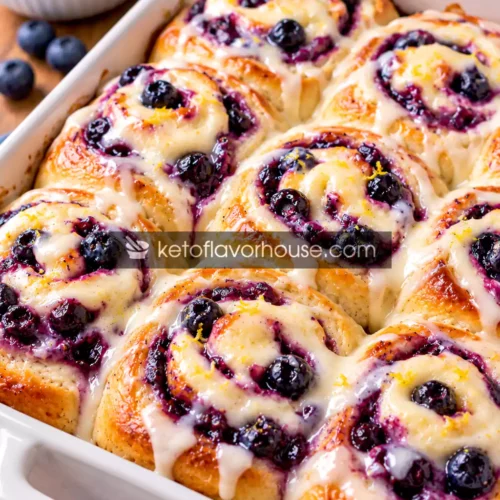
Keto Blueberry Cream Cheese Sweet Rolls Recipe

Ingredients
For the dough
- 2 cups 224 g blanched almond flour
- 1 tablespoon about 7 g coconut flour
- 2 teaspoons baking powder
- 2 tablespoons powdered allulose
- ¼ teaspoon salt
- 1½ cups about 168 g shredded low-moisture mozzarella
- 2 ounces 56 g cream cheese
- 1 large egg
- 1 teaspoon vanilla extract
For the filling
- 4 ounces 113 g softened cream cheese
- 2 tablespoons powdered allulose
- 1 teaspoon lemon zest
- ¾ cup about 110 g blueberries
- Up to 1 teaspoon lemon juice optional
For the glaze
- 2 ounces 56 g softened cream cheese
- 2 tablespoons powdered allulose
- 1 tablespoon heavy cream
- ¼ teaspoon vanilla extract
Instructions
- Preheat the oven to 350°F (175°C). Line an 8-inch or 9-inch square baking pan with parchment paper.
- Whisk the almond flour, coconut flour, baking powder, allulose, and salt in a bowl.
- Microwave the mozzarella and 2 ounces of cream cheese in 20–30-second intervals, stirring until melted and combined. Alternatively, heat gently in a saucepan over low heat.
- Let the cheese mixture cool until warm rather than scorching hot. Beat in the egg and 1 teaspoon vanilla, stirring quickly.
- Add the dry ingredients and mix until a pliable dough forms. If the dough is too sticky, chill it briefly; if it stiffens as the cheese cools, warm it gently for a few seconds.
- Beat the filling’s 4 ounces of cream cheese with 2 tablespoons allulose and the lemon zest until smooth. Add the optional lemon juice if desired.
- Roll the dough between two sheets of parchment into an approximately 10-by-12-inch rectangle.
- Spread the cream cheese filling over the dough, leaving about ½ inch uncovered along one long edge. Scatter the blueberries evenly over the filling.
- Starting from the opposite long edge, roll the dough into a log. Seal the seam gently and refrigerate for about 10 minutes if the log is too soft to slice.
- Cut the log into 9 equal pieces and place them cut-side up in the prepared pan.
- Bake for 22–28 minutes, checking toward the earlier end of the range. The rolls should be lightly golden and set in the center. Cover loosely with foil if they brown before the centers are ready.
- Mix the remaining 2 ounces of cream cheese with 2 tablespoons allulose, the heavy cream, and ¼ teaspoon vanilla until smooth.
- Cool the baked rolls for 10–15 minutes, then drizzle or spread the glaze over them. Serve warm or at room temperature.